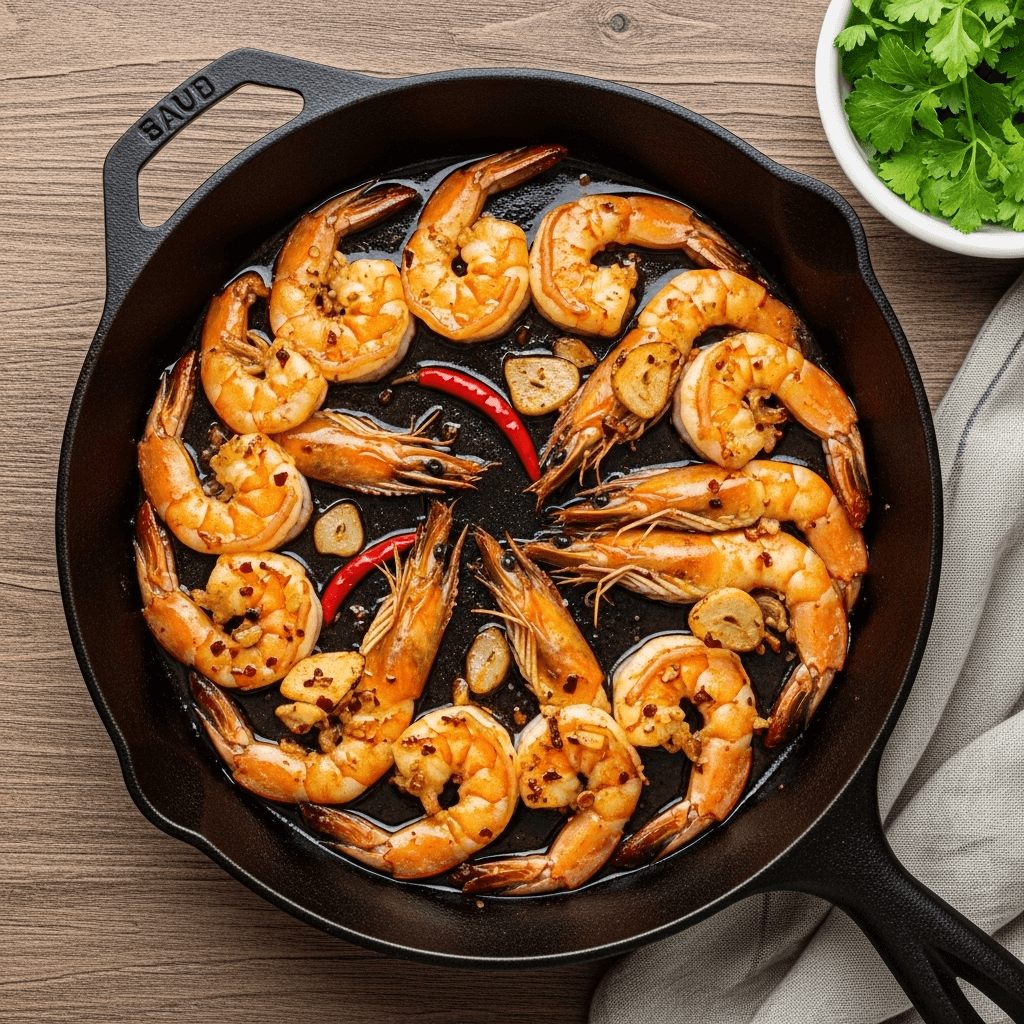

If you’re looking for a quick, flavorful dinner that feels restaurant-quality but comes together in just 15 minutes, this spicy shrimp recipe is about to become your new weeknight hero. Tender, succulent shrimp seared to perfection and coated in a bold, spicy sauce that packs just the right amount of heat—it’s the kind of dish that makes you feel like a culinary genius with minimal effort.
This easy spicy shrimp recipe delivers incredible flavor with a simple combination of seasonings that creates a beautifully caramelized exterior while keeping the shrimp juicy and tender inside. The sauce is a perfect balance of heat, garlic, butter, and bright citrus that coats every piece of shrimp without being heavy or overwhelming. Unlike some seafood dishes that require precise timing and technique, this recipe is wonderfully forgiving and perfect even for beginners.
What makes this spicy garlic shrimp particularly special is its versatility. Serve it over rice or pasta for a complete meal, toss it with vegetables for a lighter option, pile it into tacos for Taco Tuesday, or simply enjoy it as an impressive appetizer for entertaining. It’s elegant enough for date night, quick enough for busy weeknights, and delicious enough that everyone will be asking for seconds. Plus, shrimp cooks so quickly that you can have dinner on the table faster than ordering takeout!
History & Background of Spicy Shrimp
Spicy shrimp dishes have a rich culinary heritage that spans multiple cultures and cuisines around the world. From the Cajun-Creole traditions of Louisiana to the fiery preparations of Southeast Asia and the zesty flavors of Latin American coastal cooking, cultures that have access to fresh seafood have long understood that shrimp and heat are a match made in culinary heaven.
In Louisiana, spicy shrimp preparations like BBQ shrimp (which despite its name isn’t grilled) became iconic in New Orleans restaurants in the mid-20th century. These dishes typically feature shrimp swimming in buttery, spicy sauces heavily seasoned with Creole spices, Worcestershire sauce, and plenty of black pepper. The combination of rich butter with fiery heat became a signature of Louisiana cooking.
Meanwhile, in Asian cuisines, spicy shrimp dishes have ancient roots. Chinese Sichuan cuisine features mouth-numbing spicy shrimp with chili peppers and Sichuan peppercorns, while Thai cuisine offers fiery preparations like shrimp with chili paste and basil. These preparations often balance heat with other flavor elements like sweetness, sourness, and umami, creating complex, layered dishes.
Latin American coastal regions, particularly in Mexico and the Caribbean, developed their own spicy shrimp traditions. Mexican camarones a la diabla (deviled shrimp) features shrimp in an intensely spicy red chile sauce, while Caribbean preparations often incorporate Scotch bonnet peppers and jerk seasonings for incredible heat and flavor.
This recipe draws inspiration from these various traditions while remaining accessible to American home cooks. It captures that perfect balance of heat and flavor—spicy enough to be exciting but not so overwhelming that it obscures the sweet, delicate flavor of the shrimp itself. The quick sauté method ensures the shrimp stay tender while developing that gorgeous caramelized exterior that makes restaurant-style shrimp so irresistible.
What makes spicy shrimp enduringly popular is its ability to feel both indulgent and healthy, simple yet impressive, familiar but exciting. It’s proof that great cooking doesn’t require complicated techniques or exotic ingredients—just quality seafood, bold flavors, and the confidence to turn up the heat.
Why You’ll Love This Spicy Shrimp Recipe
This isn’t just another shrimp recipe—this is the quick and easy spicy shrimp that will have your family thinking you’ve been secretly taking cooking classes. I make this recipe at least twice a month because it’s incredibly delicious, ridiculously quick, and never fails to impress.
Here’s why this recipe will revolutionize your weeknight dinners:
- Incredibly fast—ready in just 15 minutes – From start to finish, you’ll have a complete, restaurant-quality meal on the table before delivery could even arrive
- One-pan simplicity – Everything cooks in a single skillet, meaning minimal cleanup and maximum flavor development
- Budget-friendly without tasting cheap – Shrimp is often on sale, and this recipe uses affordable pantry staples to create something that tastes expensive
- Naturally low-carb and keto-friendly – Packed with protein and healthy fats, this fits perfectly into low-carb, keto, paleo, and Whole30 diets
- Adjustable heat level – Easily dial the spice up or down to suit your family’s preferences without compromising flavor
- Impressive presentation with zero fuss – Looks and tastes like something from an upscale restaurant but requires no advanced cooking skills
- Kid-friendly (with modifications) – Make a mild version for kids using the same technique, keeping everyone happy at dinner
- Perfect for meal prep – Cooks quickly and reheats beautifully, making it ideal for make-ahead lunches throughout the week
- Gluten-free naturally – No need for modifications or specialty ingredients—it’s already gluten-free as written
- Endlessly versatile – Serve it dozens of different ways to keep meals interesting all week long
- Uses simple pantry ingredients – No hunting down exotic spices or specialty items—everything is available at any grocery store
Whether you’re a seafood lover looking for new ways to prepare shrimp, a busy parent who needs quick healthy dinners, or someone trying to eat lower-carb without sacrificing flavor, this easy spicy shrimp recipe delivers on every level.
Ingredient Notes
Understanding your ingredients helps you create the most flavorful spicy shrimp possible. Let’s break down what makes this recipe sing.
Shrimp: Use large shrimp (26-30 count per pound) or jumbo shrimp (16-20 count) for the best results. Both raw and frozen shrimp work perfectly—just thaw frozen shrimp by running cold water over them for 10 minutes. I prefer peeled and deveined shrimp with tails on for beautiful presentation, but tail-off works fine too. Never use pre-cooked shrimp in this recipe, as they’ll become rubbery when reheated.
Olive Oil and Butter: The combination of olive oil and butter is key. Olive oil has a higher smoke point, allowing you to get a good sear without burning, while butter adds richness and helps create the sauce. You can use all olive oil for dairy-free needs, or substitute with ghee or coconut oil.
Garlic: Fresh garlic is essential—don’t use jarred minced garlic or garlic powder here. The fresh cloves cook in the butter and create an aromatic base that defines the entire dish. Use 4-6 cloves depending on your garlic love level.
Red Pepper Flakes: These provide the primary heat. Standard grocery store red pepper flakes work perfectly. For more heat, increase the amount; for less heat, reduce it or omit entirely. You can also substitute with cayenne pepper (use less, as it’s hotter) or fresh chili peppers like jalapeños or serranos.
Paprika: Both regular paprika and smoked paprika work beautifully here. Smoked paprika adds a subtle smoky depth that’s absolutely divine. Paprika provides color and mild sweetness that balances the heat.
Lemon Juice: Fresh lemon juice brightens the entire dish and cuts through the richness of the butter. Always use fresh-squeezed—bottled lemon juice has a flat, metallic taste. You can substitute with lime juice for a different citrus profile.
White Wine (Optional): A splash of dry white wine adds acidity and depth, deglazing the pan to incorporate all those flavorful browned bits. If you prefer not to cook with alcohol, substitute with low-sodium chicken broth or additional lemon juice.
Fresh Parsley: Chopped fresh parsley adds a pop of color and fresh flavor at the end. Cilantro makes a delicious substitution if you prefer it, or use fresh basil for an Italian twist.
Salt and Black Pepper: These basics are crucial for proper seasoning. Shrimp benefits from generous seasoning, so don’t be shy with the salt.
Equipment Needed
This recipe requires minimal equipment, making it perfect for any kitchen:
- Large skillet or frying pan – A 12-inch skillet is ideal for cooking shrimp in a single layer without crowding
- Tongs or spatula – For flipping shrimp and stirring
- Sharp knife – For mincing garlic and chopping parsley
- Cutting board – For prep work
- Measuring spoons – For accurate seasoning
- Small bowl – To combine spices if desired
- Paper towels – Essential for patting shrimp dry
- Citrus juicer (optional) – Makes squeezing lemons easier
- Serving platter – For presenting your beautiful shrimp
Pro tip: A stainless steel or cast iron skillet works best for developing that gorgeous caramelized sear on the shrimp. Non-stick pans work but won’t create as much fond (those browned bits) that make the sauce so flavorful.
Print
Spicy Shrimp Recipe
- Total Time: 15 minutes
- Yield: 4 servings 1x
- Diet: Gluten Free
Description
These easy spicy shrimp are seared to perfection in a garlicky, buttery sauce with just the right amount of heat. Ready in just 15 minutes, this restaurant-quality dish is perfect for busy weeknights or impressive entertaining. Naturally low-carb and keto-friendly!
Ingredients
For the Spicy Shrimp:
- 1½ pounds large shrimp (26–30 count), peeled and deveined
- 2 tablespoons olive oil
- 3 tablespoons unsalted butter
- 6 cloves garlic, minced
- 1 teaspoon red pepper flakes (adjust for heat preference)
- 1 teaspoon smoked paprika
- ½ teaspoon cayenne pepper (optional, for extra heat)
- ½ teaspoon salt
- ½ teaspoon black pepper
- ¼ cup dry white wine (or chicken broth)
- 3 tablespoons fresh lemon juice (about 1 lemon)
- 2 tablespoons fresh parsley, chopped
- Lemon wedges for serving
Instructions
Step 1: Prepare the Shrimp
Pat the shrimp completely dry with paper towels—this is crucial for achieving a good sear. Arrange them on a plate in a single layer. In a small bowl, combine the red pepper flakes, smoked paprika, cayenne pepper (if using), salt, and black pepper. Sprinkle this seasoning mixture evenly over both sides of the shrimp, pressing gently so it adheres.
Step 2: Heat Your Skillet
Heat a large skillet over medium-high heat for 2 minutes until very hot. Add the olive oil and swirl to coat the pan. The oil should shimmer but not smoke—if it smokes, reduce heat slightly.
Step 3: Sear the Shrimp (First Side)
Carefully arrange the shrimp in a single layer in the hot skillet, making sure they don’t overlap or touch. Work in batches if necessary—crowding creates steam instead of a sear. Let them cook undisturbed for 2 minutes. The shrimp should develop a beautiful golden-pink color on the bottom with slightly caramelized edges.
Step 4: Flip and Continue Cooking
Using tongs, flip each shrimp to the other side. Cook for an additional 1-2 minutes until the shrimp are just cooked through and opaque. They should curl into a loose “C” shape—avoid overcooking or they’ll become rubbery. Transfer the cooked shrimp to a plate and set aside.
Step 5: Make the Spicy Garlic Sauce
Reduce heat to medium and add the butter to the same skillet. Once melted and foaming, add the minced garlic. Sauté for 30-45 seconds, stirring constantly, until fragrant and just beginning to turn golden. Be careful not to burn the garlic—it turns bitter quickly.
Step 6: Deglaze the Pan
Pour in the white wine (or chicken broth) and lemon juice. Use a wooden spoon to scrape up all those flavorful browned bits stuck to the bottom of the pan. Let the sauce simmer for 1-2 minutes until slightly reduced and thickened.
Step 7: Combine and Finish
Return the cooked shrimp to the skillet along with any accumulated juices from the plate. Toss everything together, coating the shrimp thoroughly in the sauce. Cook for just 30 seconds to reheat the shrimp and let the flavors meld. Remove from heat.
Step 8: Garnish and Serve
Sprinkle the chopped fresh parsley over the shrimp and toss once more. Transfer to a serving platter and serve immediately with lemon wedges on the side for squeezing. The shrimp are best enjoyed piping hot right from the skillet!
Notes
- Shrimp Size Matters: Larger shrimp (16-20 count) need an extra minute of cooking time, while smaller shrimp (31-40 count) cook faster. Adjust timing accordingly to prevent overcooking.
- Don’t Overcook: Shrimp are done when they turn opaque and curl into a “C” shape. Overcooked shrimp curl tightly into an “O” shape and become tough and rubbery.
- Heat Level Adjustment: For mild, use ½ teaspoon red pepper flakes and omit cayenne. For extra spicy, double the red pepper flakes and add ½ teaspoon cayenne.
- Wine Substitute: If not using wine, replace with equal parts chicken broth or vegetable broth. You can also use clam juice for extra seafood flavor.
- Make It Dairy-Free: Replace butter with additional olive oil, coconut oil, or ghee.
- Serving Variations: Serve over rice, pasta, cauliflower rice, zucchini noodles, or with crusty bread for soaking up the amazing sauce.
- Prep Time: 10 minutes
- Cook Time: 5 minutes
- Category: Appetizer
- Method: Stovetop
- Cuisine: American
Nutrition
- Serving Size: Approximately 6 oz shrimp with sauce (¼ of recipe)
- Calories: 285
- Sugar: 1g
- Sodium: 685mg
- Fat: 16g
- Saturated Fat: 7g
- Unsaturated Fat: 8g
- Trans Fat: 0g
- Carbohydrates: 4g
- Fiber: 0.5g
- Protein: 29g
- Cholesterol: 285mg
Tips & Variations
The beauty of this spicy shrimp recipe is how easily you can customize it to create exciting new flavors and accommodate different dietary preferences.
Flavor Variations:
Cajun Spicy Shrimp: Replace the spice blend with 2 tablespoons Cajun seasoning for authentic Louisiana flavor. Add a splash of hot sauce and a squeeze of lime.
Asian-Inspired Spicy Shrimp: Use sesame oil instead of olive oil, add 2 tablespoons soy sauce, 1 tablespoon honey, 1 teaspoon grated ginger, and top with sesame seeds and sliced green onions.
Mediterranean Spicy Shrimp: Add sun-dried tomatoes, Kalamata olives, capers, and fresh oregano along with the garlic. Finish with crumbled feta cheese.
Coconut Curry Shrimp: Add 1 tablespoon red curry paste and ½ cup coconut milk to create a creamy, spicy sauce. Finish with fresh basil and lime.
Honey Sriracha Shrimp: Mix 2 tablespoons honey with 1-2 tablespoons sriracha and toss with the cooked shrimp for sweet-heat perfection.
Taco-Style Spicy Shrimp: Add cumin and chili powder to the spice blend, squeeze fresh lime juice, and serve in warm tortillas with cabbage slaw and avocado.
Extra Vegetable Boost: Add sliced bell peppers, cherry tomatoes, or zucchini to the pan after cooking the shrimp. Sauté until tender-crisp before making the sauce.
Meal Prep Version: Triple the recipe and portion into meal prep containers with your choice of grain and vegetables for ready-to-reheat lunches all week.
Pro Chef Tips
1. Dry Shrimp Are Key to Perfect Searing: Wet shrimp steam instead of sear, preventing that gorgeous caramelization. Use paper towels to thoroughly pat each shrimp dry before seasoning. This one step dramatically improves the final texture and appearance.
2. Don’t Move the Shrimp Too Soon: Resist the urge to flip or move shrimp before they’re ready. Let them sit undisturbed for the full 2 minutes on the first side. They’ll release naturally from the pan when properly seared. Moving them too early tears the surface and prevents proper browning.
3. Use High Heat Confidently: Many home cooks cook shrimp over too-low heat, resulting in rubbery texture. Medium-high to high heat creates that restaurant-quality sear while keeping the interior tender and juicy. Just watch carefully to avoid burning the garlic.
4. Batch Cooking for Best Results: If your shrimp don’t fit in a single layer without touching, cook them in two batches. Crowding creates steam, lowers pan temperature, and prevents proper searing. The few extra minutes are worth it for perfect texture.
5. Season Aggressively: Shrimp can handle bold seasoning. Don’t be timid with the spice blend—the shrimp’s sweet flavor shines through while the seasonings create complexity and depth. Under-seasoned shrimp taste bland no matter how good your technique.
6. Fresh Garlic Timing is Critical: Garlic burns easily and becomes bitter when burned. Add it to melted butter over medium heat (not high), and stir constantly for just 30-45 seconds until fragrant. The residual heat continues cooking it after you add the liquids.
7. Deglaze for Maximum Flavor: Those browned bits stuck to the pan (called fond) contain concentrated flavor. The wine or broth dissolves them, incorporating all that deliciousness into your sauce. Scrape thoroughly with a wooden spoon.
Common Mistakes to Avoid
Mistake #1: Overcooking the Shrimp
This is the most common error that results in rubbery, tough shrimp. Shrimp cook incredibly quickly—usually just 2-3 minutes total. They’re done when they turn from translucent to opaque and curl into a loose “C” shape. The moment they’re opaque throughout, remove them from heat immediately. Carryover heat continues cooking even after removal, so slightly underdone is better than overdone.
Mistake #2: Not Patting Shrimp Dry
Skipping this step seems insignificant, but moisture is the enemy of proper searing. Wet shrimp won’t brown properly—they’ll steam instead, resulting in gray, unappetizing shrimp with no caramelization. Those extra 30 seconds of patting dry make a dramatic difference in both appearance and texture.
Mistake #3: Crowding the Pan
When shrimp touch each other in the pan, they release moisture that gets trapped, creating steam instead of a sear. Each shrimp needs space for hot air to circulate around it. If your pan isn’t large enough, cook in two batches—your patience will be rewarded with perfectly seared shrimp.
Mistake #4: Adding Garlic Too Early or Over High Heat
Raw garlic added to a screaming hot pan burns within seconds, turning bitter and acrid. Always reduce heat to medium before adding garlic, and add it to the melted butter rather than hot oil. Stir constantly and add the liquid immediately if the garlic starts browning too quickly.
Mistake #5: Using Pre-Cooked Shrimp
Pre-cooked shrimp are already fully cooked, so “cooking” them again makes them rubbery and tough. This recipe requires raw shrimp—look for packages labeled “raw” or shrimp that are gray or translucent in color rather than pink.
Mistake #6: Forgetting to Remove Tails
While tails look pretty, they’re impractical if you’re serving the shrimp over pasta or rice where guests need to eat with a fork. If serving family-style or as a main course, remove tails before cooking for easier eating. Keep tails on only for appetizer presentations.
Storage & Meal Prep
Refrigerator Storage:
Store leftover spicy shrimp in an airtight container in the refrigerator for up to 3 days. Keep the shrimp and sauce together so the shrimp stay moist. The flavors actually intensify overnight, making leftovers incredibly delicious.
Reheating Instructions:
Gently reheat shrimp in a skillet over medium-low heat for 2-3 minutes, stirring frequently, just until warmed through. Microwave reheating is acceptable but can make shrimp rubbery—if microwaving, use 50% power in 30-second intervals. Never boil or overheat during reheating, which toughens the shrimp.
Meal Prep Strategy:
This spicy shrimp is perfect for meal prep! Cook the shrimp on Sunday and portion into meal prep containers with your choice of rice, quinoa, pasta, or cauliflower rice plus vegetables. The shrimp reheat beautifully and taste fantastic all week long. Keep sauce and shrimp together rather than separate.
Shelf Life:
Properly stored cooked shrimp maintain quality for 3 days in the refrigerator. After that, the texture begins to deteriorate and the seafood flavor becomes stronger. Always smell before eating—shrimp should smell fresh and ocean-like, never fishy or ammonia-like.
Food Safety:
Never leave cooked shrimp at room temperature for more than 2 hours (1 hour if temperature exceeds 90°F). Refrigerate promptly after serving. When reheating, ensure shrimp reach 165°F throughout for food safety.
Make-Ahead & Freezer Notes
Make-Ahead Options:
You can prep components ahead to speed up cooking time. Peel and devein shrimp up to 24 hours in advance, storing them covered in the refrigerator. Mix your spice blend and mince garlic ahead of time (store minced garlic in a small container with a splash of olive oil). When ready to cook, the entire dish comes together in minutes.
Cooking from Frozen Raw Shrimp:
Frozen raw shrimp work perfectly for this recipe! Place frozen shrimp in a colander and run cold water over them for 10-15 minutes until fully thawed. Pat dry thoroughly before proceeding with the recipe. Never cook shrimp from frozen—they won’t sear properly and will release too much moisture.
Freezing Cooked Shrimp:
While you can freeze cooked shrimp, I don’t recommend it for this recipe. Freezing and thawing causes shrimp to lose moisture and become rubbery. If you must freeze leftovers, use them within 1 month. Thaw overnight in the refrigerator and reheat very gently.
Best Make-Ahead Strategy:
Rather than freezing cooked shrimp, buy frozen raw shrimp in bulk when on sale. Store them frozen and thaw only what you need for each meal. This gives you the convenience of having shrimp ready whenever you want it while maintaining the best texture and flavor.
Advance Seasoning:
You can season raw shrimp with the spice blend up to 4 hours ahead and refrigerate covered. This actually enhances flavor penetration. Just pat dry again before cooking to ensure proper searing.
Serving Suggestions
This versatile spicy shrimp pairs beautifully with countless sides and can be served in many different ways to keep meals interesting.
Classic Serving Options:
Serve over fluffy white rice, brown rice, or jasmine rice to soak up every drop of that delicious sauce. The mild rice perfectly balances the spicy shrimp. For a lower-carb option, cauliflower rice works wonderfully. Pasta lovers should toss the shrimp and sauce with linguine, angel hair, or fettuccine for a quick seafood pasta dinner.
Vegetable Pairings:
Roasted asparagus, sautéed green beans, or steamed broccoli make excellent vegetable sides. A simple arugula salad with lemon vinaigrette provides peppery freshness that complements the heat. Zucchini noodles (zoodles) create a light, healthy base that lets the shrimp shine.
Bread for Sauce Soaking:
Crusty French bread, garlic bread, or warm dinner rolls are essential for mopping up every bit of that buttery, garlicky sauce. Don’t let any of that liquid gold go to waste!
Grain Alternatives:
Quinoa, farro, or couscous provide nutty flavors and interesting textures that pair beautifully with spicy shrimp. For a Southern twist, serve over creamy cheese grits or polenta.
Taco and Bowl Options:
Build shrimp tacos with warm corn tortillas, shredded cabbage, avocado slices, and cilantro-lime crema. Create burrito bowls with rice, black beans, corn, pico de gallo, and the spicy shrimp on top. Add shrimp to tossed salads for a protein-packed lunch.
Beverage Pairings:
A crisp, cold white wine like Sauvignon Blanc or Pinot Grigio complements the shrimp beautifully. For beer lovers, a light lager or wheat beer refreshes the palate between bites. Sparkling water with lime provides a non-alcoholic refreshing option.
Appetizer Presentation:
Serve the shrimp on small plates with toothpicks as an elegant appetizer for parties. Arrange on a platter with lemon wedges and fresh herbs for a stunning presentation that disappears quickly.
FAQs Section
Q: Can I use frozen shrimp for this recipe?
A: Absolutely! Frozen shrimp work perfectly. Just thaw them completely by running cold water over them for 10-15 minutes. Pat them very dry with paper towels before seasoning and cooking. Never cook shrimp directly from frozen—they won’t sear properly and will release too much water, making them steam instead.
Q: How do I know when shrimp are cooked perfectly?
A: Look for three signs: the shrimp should turn from translucent/gray to opaque pink throughout, they should curl into a loose “C” shape, and they should feel firm but not hard when pressed gently. Total cooking time is usually just 3-4 minutes. Overcooked shrimp curl tightly into an “O” and become rubbery.
Q: Can I make this recipe less spicy?
A: Definitely! For mild shrimp, reduce red pepper flakes to ¼ teaspoon or omit entirely, skip the cayenne pepper, and use sweet paprika instead of smoked. You’ll still have amazing garlicky, buttery shrimp without the heat. The technique and flavor remain fantastic even without spice.
Q: What’s the best way to remove tails from shrimp?
A: Hold the shrimp body firmly with one hand and grip the tail with your other hand. Gently pinch and twist—the tail should pop right off. You can also use kitchen scissors to snip the tail off if it’s stubborn. Removing tails makes eating much easier, especially when serving over pasta or rice.
Q: Can I double this recipe for a crowd?
A: Yes, but you’ll need to work in batches unless you have a very large skillet or two pans. Crowding the pan prevents proper searing. Cook the shrimp in batches, keeping cooked shrimp warm on a plate while you finish the rest, then make the sauce and combine everything at the end.
Q: What if I don’t have white wine?
A: No problem! Substitute with equal parts low-sodium chicken broth, vegetable broth, or even clam juice for extra seafood flavor. You can also use additional lemon juice mixed with a splash of water. The wine adds depth but isn’t absolutely essential.
Q: Are shrimp tails edible?
A: While technically edible, shrimp tails are not pleasant to eat—they’re hard, crunchy, and flavorless. Most people remove them before eating. In some cultures, they’re left on for presentation or flavor during cooking (they do add a subtle seafood flavor to the sauce), but they’re typically discarded before eating.
Q: Can I use this same recipe with chicken or other proteins?
A: Yes! The seasoning and technique work beautifully with chicken breast cut into bite-sized pieces (cook 5-7 minutes total), scallops (2-3 minutes per side), or even firm white fish cut into chunks. Cooking times will vary, so adjust accordingly based on protein thickness and type.
Conclusion
And there you have it—your complete guide to making absolutely perfect spicy shrimp that rivals anything you’d get at a fancy restaurant! This easy spicy shrimp recipe has rescued countless weeknight dinners in my own kitchen, and I’m confident it will become one of your go-to recipes too.
What I love most about this dish is how it delivers maximum flavor with minimal time and effort. In the time it takes to cook rice or boil pasta, you can have restaurant-quality spicy garlic shrimp ready to serve. The combination of tender shrimp, bold spices, buttery garlic sauce, and bright lemon creates layers of flavor that taste like you spent hours cooking, when really you spent just 15 minutes.
The best part? Once you master this simple technique, you can adapt it endlessly with different flavor profiles, spice levels, and serving options. It’s the recipe that keeps on giving—perfect for meal prep, weeknight dinners, date nights, and entertaining. Your family will never get tired of it because you can serve it differently every time.
I’d absolutely love to hear about your experience with this spicy shrimp recipe! Did you adjust the heat level? What did you serve it with? Did your family devour it as quickly as mine does? Drop a comment below and share your shrimp success story—I read every single one and love hearing how this recipe works in your kitchen.
If this recipe helped you create a quick, delicious dinner that everyone loved, please PIN it to your dinner recipe boards on Pinterest so you can find it again easily! Sharing it helps other home cooks discover how easy and amazing weeknight shrimp can be. 📌🦐
Now grab those shrimp and get cooking—dinner is just 15 minutes away!