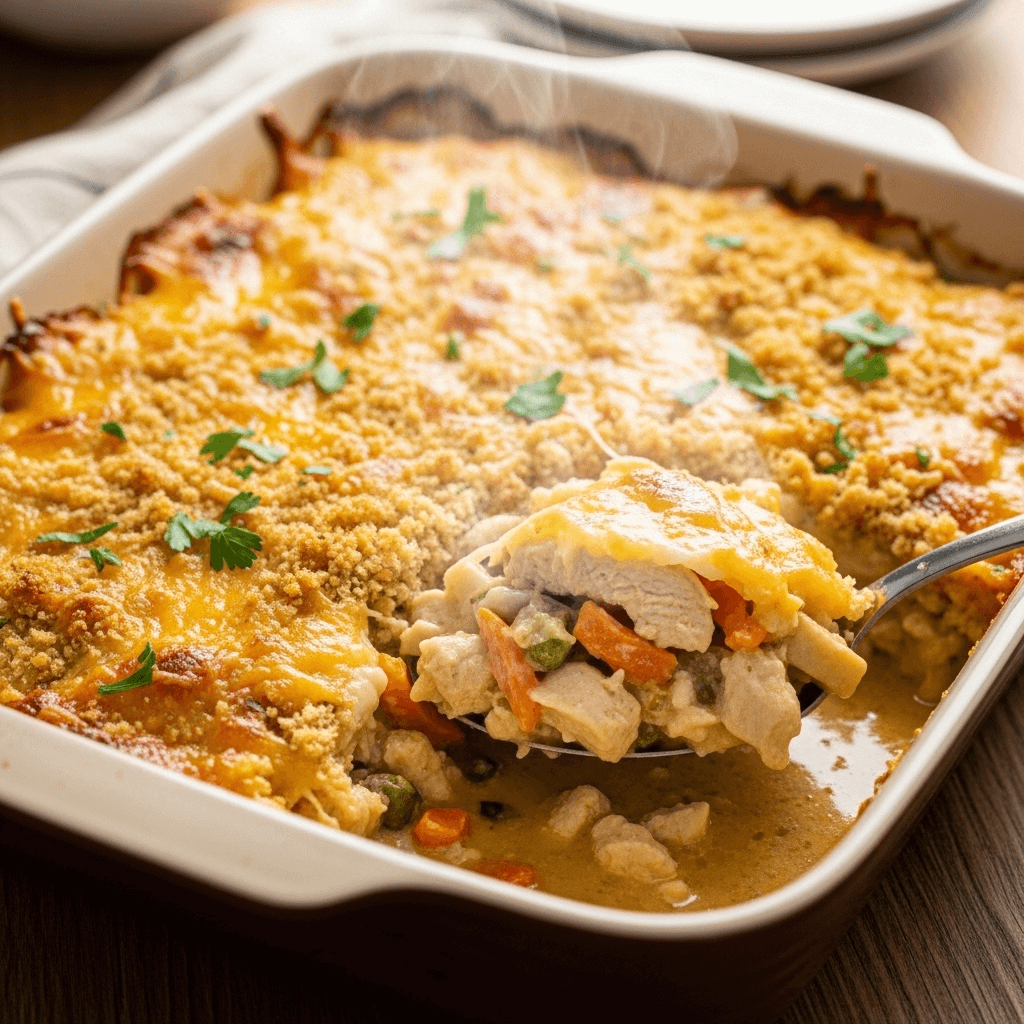

If you’re looking for the ultimate comfort food that brings the whole family running to the dinner table, this creamy chicken casserole is exactly what you need. Imagine tender chunks of chicken swimming in a rich, velvety cream sauce, mixed with perfectly cooked pasta or rice, topped with golden, bubbly cheese, and baked until everything comes together in pure, comforting deliciousness. This is the kind of dish that makes you want to curl up on the couch with a big serving and forget about everything else.
This creamy chicken casserole is the definition of cozy comfort food – it’s warm, filling, satisfying, and feels like a hug from the inside. The combination of juicy chicken, creamy sauce, tender pasta, and melted cheese creates layers of flavor and texture that make every bite absolutely irresistible. It’s not just a meal; it’s an experience that brings people together around the table.
What makes this recipe so special is its incredible versatility and convenience. It’s perfect for busy weeknights when you need something hearty that the whole family will love. It’s ideal for potlucks and church dinners where you need to feed a crowd. It’s wonderful for meal prep – make it on Sunday and enjoy easy dinners all week. And it’s comforting enough to bring to friends going through difficult times, earning it the nickname “funeral casserole” in many communities (though we prefer to think of it as celebration food!).
This creamy chicken casserole works for so many occasions: busy weeknight dinners, Sunday family meals, potluck gatherings, holiday buffets, or anytime you want something delicious that requires minimal effort. You can assemble it ahead of time, pop it in the oven when you’re ready, and have a complete, satisfying meal with very little hands-on work. It’s the kind of recipe every home cook needs in their arsenal.
History / Background
Casseroles have a rich history in American home cooking, with roots stretching back to European one-pot meals but truly coming into their own during the mid-20th century. The word “casserole” comes from the French term for the deep dish used to bake these meals, but the concept of layered, baked dishes exists in cuisines worldwide.
The golden age of American casseroles occurred in the 1950s and 1960s, coinciding with several cultural shifts. The rise of convenience foods like canned cream soups, frozen vegetables, and pre-cooked chicken made it easier than ever to prepare hearty meals quickly. Women were entering the workforce in greater numbers and needed recipes that could be assembled in advance and baked when needed. The proliferation of home refrigerators and freezers meant families could store ingredients and even prepare dishes ahead of time.
Creamy chicken casserole specifically became a staple of Midwestern and Southern home cooking during this era. It epitomizes the “comfort food” movement that emphasized hearty, filling meals that brought families together. The combination of chicken (an affordable, versatile protein), cream sauce (rich and satisfying), and a starch component (pasta or rice) created a complete meal in one dish that could feed a family economically.
Campbell’s Cream of Chicken soup, introduced in the 1930s but popularized in the post-war period, became synonymous with creamy chicken casserole. While our homemade version uses real cream and fresh ingredients for superior flavor, countless variations exist using convenience products, each family passing down their own special recipe through generations.
In Southern communities, creamy chicken casserole became known as “funeral food” – a dish brought to grieving families because it was easy to transport, fed many people, and could be reheated easily. This tradition speaks to the casserole’s role as more than just food; it’s a gesture of care and community support. Today, chicken casserole has evolved beyond its mid-century origins while retaining its essential character as comfort food that brings people together.
Why You’ll Love This Recipe
This creamy chicken casserole recipe has been refined and perfected to deliver the best possible flavor, texture, and ease of preparation. Unlike some casseroles that can be heavy, bland, or overly processed, this version strikes the perfect balance – it’s rich and comforting without being overwhelming, flavorful without relying on canned soups or artificial ingredients, and satisfying without leaving you feeling weighed down.
What sets this recipe apart is the homemade cream sauce that’s surprisingly easy to make. By creating your own sauce from butter, flour, broth, and cream, you control the flavor and avoid the overly salty, artificial taste of canned soups. The result is a casserole that tastes restaurant-quality yet comes together easily enough for weeknight cooking. The chicken stays tender and moist, the pasta or rice absorbs all those delicious flavors, and the cheese topping adds that irresistible golden, bubbly finish.
Here’s why this creamy chicken casserole will become a family favorite:
- Ultimate comfort food – warm, cozy, and deeply satisfying in every way
- Complete one-dish meal – protein, vegetables, and starch all in one pan
- Family-friendly – kids and adults alike love this mild, creamy dish
- Make-ahead friendly – assemble hours or a day in advance, bake when ready
- Perfect for feeding a crowd – easily doubles or triples for gatherings
- Budget-friendly – uses affordable ingredients and stretches chicken to feed many
- Great for leftovers – reheats beautifully and tastes even better the next day
- Customizable – endless variations to suit your family’s preferences
- Freezer-friendly – make extra and freeze for future easy dinners
- Minimal cleanup – everything bakes in one dish with little mess
- Impressive but easy – looks and tastes like you spent hours, but it’s simple
- Reliable crowd-pleaser – virtually everyone loves this comforting classic
Ingredient Notes
Understanding your ingredients helps you make the best casserole possible:
Cooked Chicken: The protein foundation of your casserole. You’ll need about 3-4 cups of cooked, diced or shredded chicken. Rotisserie chicken is the ultimate shortcut – just remove the skin, shred the meat, and you’re done. Leftover baked or grilled chicken works perfectly. You can also poach chicken breasts specifically for this recipe (simmer in broth for 15-20 minutes). Chicken thighs are juicier than breasts if you prefer. Store-bought pre-cooked chicken strips also work in a pinch.
Butter: Creates the base for your cream sauce (called a roux). Unsalted butter is preferred so you can control the salt level. Don’t substitute with margarine – real butter provides irreplaceable flavor. The butter is essential for creating the smooth, rich sauce that makes this casserole so creamy.
All-Purpose Flour: Thickens the cream sauce to perfect consistency. The flour is cooked with butter to make a roux, which prevents lumps and creates silky texture. For gluten-free casserole, substitute with a gluten-free flour blend or use cornstarch (though the method differs slightly).
Chicken Broth: Provides savory depth to the cream sauce. Use low-sodium broth so you can control salt levels. Homemade chicken stock is wonderful if you have it, but quality store-bought works perfectly. The broth adds chicken flavor throughout the sauce, not just from the chicken pieces.
Heavy Cream or Half-and-Half: Creates that signature rich, creamy texture. Heavy cream provides the richest result, while half-and-half is slightly lighter but still delicious. Whole milk can work but won’t be as creamy. Avoid skim milk as it’s too thin and lacks richness.
Pasta or Rice: The starch component that makes this a complete meal. Egg noodles are traditional and classic. Penne, rotini, or shells work beautifully. Long-grain white rice or brown rice are excellent alternatives. Cook the pasta or rice before adding to the casserole – it should be tender and ready to eat, not raw.
Cheese: Shredded cheddar is classic, providing sharp, tangy flavor and gorgeous golden color. Mozzarella adds stretch and mild creaminess. A combination of both is ideal. Parmesan adds nutty, salty notes. Use freshly shredded cheese rather than pre-shredded for better melting and flavor.
Vegetables: Frozen mixed vegetables (peas, carrots, corn, green beans) add nutrition, color, and texture. Fresh vegetables like broccoli, mushrooms, or bell peppers work wonderfully. The vegetables should be bite-sized and cooked or blanched before adding to the casserole.
Seasonings: Garlic powder, onion powder, salt, pepper, and herbs (thyme, parsley, or Italian seasoning) add essential flavor. Don’t skip the seasonings – they prevent blandness and create depth.
Optional Add-ins: Diced onions and celery sautéed in butter add aromatic depth. Cooked bacon adds smoky richness. A splash of white wine adds sophistication. Hot sauce or cayenne adds heat for those who like spice.
Equipment Needed
You’ll need basic equipment for this straightforward casserole:
- 9×13 inch baking dish – the standard size for casseroles, feeds 8-10 people
- Large pot or Dutch oven – for making the cream sauce and cooking pasta/rice
- Whisk – essential for smooth, lump-free sauce
- Wooden spoon or silicone spatula – for stirring and combining
- Measuring cups and spoons – for accurate measurements
- Cutting board and knife – for chopping chicken (if needed) and prep
- Aluminum foil – for covering during initial baking
Optional but helpful:
- Cheese grater if shredding your own cheese
- Large mixing bowl for combining ingredients before transferring to baking dish
- Kitchen timer to track baking time

Creamy Chicken Casserole Recipe
- Total Time: 55 minutes
- Yield: 8-10 servings 1x
- Diet: Gluten Free
Description
This creamy chicken casserole features tender chicken, pasta (or rice), and vegetables in a rich, homemade cream sauce, topped with golden melted cheese. It’s the ultimate comfort food that’s perfect for family dinners, potlucks, and meal prep. Easy to make ahead and absolutely delicious!
Ingredients
Casserole Base:
- 3 to 4 cups cooked chicken, diced or shredded
- 3 cups cooked pasta (egg noodles, penne, or rotini) or 3 cups cooked white rice
- 2 cups frozen mixed vegetables or 2 cups fresh vegetables (chopped broccoli, peas, carrots)
- 2 cups shredded cheddar cheese, divided
- ½ cup shredded mozzarella cheese (optional, for extra creaminess)
Cream Sauce:
- 4 tablespoons (½ stick) unsalted butter
- ¼ cup all-purpose flour
- 2 cups chicken broth (low-sodium)
- 1 cup heavy cream or half-and-half
- 1 teaspoon garlic powder
- ½ teaspoon onion powder
- ½ teaspoon dried thyme or Italian seasoning
- ¾ teaspoon salt (adjust to taste)
- ¼ teaspoon black pepper
Optional Topping:
- ½ cup breadcrumbs or crushed crackers
- 2 tablespoons melted butter
- ¼ cup grated Parmesan cheese
Instructions
Step 1: Preheat and Prepare
Preheat your oven to 350°F (175°C). Lightly grease a 9×13 inch baking dish with butter or non-stick cooking spray. Set aside.
Step 2: Make the Cream Sauce
In a large pot or Dutch oven, melt the 4 tablespoons of butter over medium heat. Once melted and foamy, sprinkle in the flour and whisk constantly for 1-2 minutes until the mixture is golden and smells slightly nutty. This is your roux. Gradually pour in the chicken broth, whisking constantly to prevent lumps. Continue whisking until smooth. Add the heavy cream, garlic powder, onion powder, thyme, salt, and pepper. Bring to a gentle simmer, whisking frequently. The sauce will thicken in 3-5 minutes. Once it coats the back of a spoon, remove from heat. Taste and adjust seasonings as needed.
Step 3: Combine Ingredients
To the cream sauce, add the cooked chicken, cooked pasta (or rice), vegetables, and 1 cup of the shredded cheddar cheese. Stir everything together until well combined and evenly coated with the cream sauce. The mixture should look creamy and cohesive.
Step 4: Transfer to Baking Dish
Pour the mixture into your prepared 9×13 inch baking dish, spreading it evenly with a spatula. The casserole should fill the dish but not overflow. Sprinkle the remaining 1 cup of cheddar cheese and the mozzarella cheese (if using) evenly over the top.
Step 5: Add Optional Topping
If using the breadcrumb topping, mix the breadcrumbs or crushed crackers with 2 tablespoons of melted butter and the Parmesan cheese. Sprinkle this mixture over the cheese layer for extra crunch and flavor.
Step 6: Bake Covered
Cover the baking dish tightly with aluminum foil. Bake in the preheated oven for 25 minutes. This covered baking allows everything to heat through without the top burning.
Step 7: Uncover and Finish Baking
Remove the foil and continue baking uncovered for an additional 10-15 minutes, or until the cheese is melted, bubbly, and lightly golden around the edges. If using breadcrumb topping, it should be golden and crispy.
Step 8: Rest and Serve
Remove from the oven and let the casserole rest for 5 minutes before serving. This allows the sauce to set slightly, making it easier to serve. Garnish with fresh parsley if desired and serve hot.
Notes
- Pre-cook your starch: The pasta or rice must be fully cooked before adding to the casserole. Undercooked pasta/rice won’t finish cooking properly in the casserole.
- Sauce consistency: If your sauce seems too thick, thin it with a bit more broth or cream. If too thin, simmer longer or add a bit more flour.
- Cheese options: Use any melting cheese you prefer – Monterey Jack, Colby, Swiss, or Gruyere all work well.
- Make it ahead: Assemble completely through Step 4, cover tightly, and refrigerate for up to 24 hours. Add 10-15 minutes to covered baking time if starting cold.
- Gluten-free: Use gluten-free pasta and substitute flour with cornstarch (use 2 tablespoons cornstarch mixed with ¼ cup cold water instead of the flour roux).
- Don’t overbake: Remove when cheese is melted and bubbly. Overbaking can dry out the casserole.
- Prep Time: 20 minutes
- Cook Time: 35 minutes
- Category: Main Dish
- Method: Baking
- Cuisine: American
Nutrition
- Serving Size: About 1 cup
- Calories: 385
- Sugar: 3g
- Sodium: 520mg
- Fat: 20g
- Saturated Fat: 11g
- Unsaturated Fat: 8g
- Trans Fat: 0g
- Carbohydrates: 28g
- Fiber: 2g
- Protein: 24g
- Cholesterol: 95mg
Tips & Variations
Broccoli Chicken Casserole:
Replace mixed vegetables with 3 cups of chopped broccoli florets (fresh or frozen). Blanch fresh broccoli for 2-3 minutes before adding. This creates a classic chicken and broccoli casserole that’s restaurant-style delicious. Add extra cheddar cheese for ultimate comfort.
Chicken and Wild Rice Casserole:
Use 3 cups of cooked wild rice blend instead of pasta for nutty, hearty flavor and interesting texture. Wild rice makes the casserole feel more sophisticated and is especially popular for holiday gatherings. Increase liquid slightly as rice absorbs more than pasta.
Southwestern Chicken Casserole:
Add 1 can of drained black beans, 1 cup of corn, and 1 can of diced green chiles to the mixture. Use Mexican cheese blend instead of cheddar. Season with cumin and chili powder. Top with crushed tortilla chips instead of breadcrumbs. Serve with salsa, sour cream, and avocado.
Mushroom Chicken Casserole:
Sauté 8 ounces of sliced mushrooms in butter until golden before making the cream sauce. Add them to the casserole mixture. Mushrooms add umami depth and meaty texture. Use Swiss or Gruyere cheese for sophisticated flavor that complements the mushrooms beautifully.
Lightened-Up Version:
Use half-and-half or whole milk instead of heavy cream, reduce butter to 3 tablespoons, and use reduced-fat cheese. Add extra vegetables to bulk up the dish with fewer calories. While not as rich, it’s still creamy and satisfying with fewer calories and less fat.
Bacon Cheddar Chicken Casserole:
Cook 6-8 strips of bacon until crispy, crumble, and add to the casserole mixture. Use sharp cheddar cheese and add diced green onions. Top with extra bacon before serving. The smoky bacon adds incredible flavor that takes this casserole to the next level.
Italian-Style Chicken Casserole:
Use penne pasta, add Italian seasoning, use mozzarella and Parmesan cheeses, and stir in sun-dried tomatoes and spinach. Top with Italian breadcrumbs mixed with Parmesan. This gives the casserole a completely different but equally delicious flavor profile.
King Ranch Chicken Casserole:
A Texas favorite – layer flour tortillas with the chicken mixture, add diced tomatoes and green chiles, use Mexican cheese, and add a can of cream of chicken soup to the sauce for richness. Named after the famous ranch, this Tex-Mex variation is incredibly popular in the South.
Pro Chef Tips
Tip #1: Season in Layers
Professional chefs season at multiple stages of cooking, not just at the end. Season your chicken when cooking it, season the cream sauce as it cooks, taste and adjust before adding to the casserole, and season again if needed after assembling. This creates depth of flavor rather than flat, one-dimensional taste. Many home cooks under-season casseroles, resulting in bland comfort food that needs salt at the table.
Tip #2: Don’t Skip the Roux
The roux (butter and flour cooked together) is what creates smooth, lump-free cream sauce. Many people try to skip this step or rush it, resulting in lumpy, paste-like sauce. Take the full 1-2 minutes to cook the roux until it’s golden and smells nutty. This removes the raw flour taste and creates better flavor. When adding liquid, whisk constantly and add gradually at first to prevent lumps.
Tip #3: Use Quality Cheese and Shred Your Own
Pre-shredded cheese contains anti-caking agents (usually cellulose) that prevent smooth melting and can create grainy texture. For the creamiest, smoothest results, buy block cheese and shred it yourself. It only takes a few extra minutes and the difference in texture and flavor is significant. The cheese will melt more smoothly and taste fresher.
Tip #4: Don’t Overcook Your Pasta
Since the pasta continues cooking in the oven, you want it slightly undercooked (al dente) when you add it to the casserole. If you cook it fully tender before baking, it becomes mushy in the finished dish. Cook it 1-2 minutes less than package directions. It will absorb sauce and finish cooking perfectly in the oven.
Tip #5: Let It Rest Before Serving
Just like meat, casseroles benefit from resting after baking. Let it sit for 5-10 minutes before serving. This allows the sauce to thicken and set slightly, making serving much easier. If you cut into it immediately, the casserole will be soupy and fall apart. Those few minutes of patience result in cleaner portions and better texture.
Tip #6: Taste and Adjust
Always taste your cream sauce before combining with other ingredients. It should taste well-seasoned on its own – slightly over-seasoned, actually, since it will be diluted by the pasta, chicken, and vegetables. If it tastes bland before baking, it will definitely taste bland after. Don’t be afraid to add more salt, pepper, garlic powder, or herbs until it tastes delicious.
Common Mistakes to Avoid
Mistake #1: Adding Raw Pasta or Rice
One of the most common errors is adding uncooked or undercooked pasta/rice thinking it will cook in the casserole. There isn’t enough liquid for this to work properly. The pasta stays crunchy and absorbs all the sauce, resulting in dry, undercooked casserole. Always fully cook (or slightly undercook) your starch before adding to the mixture.
Mistake #2: Making the Sauce Too Thick or Too Thin
Sauce consistency is crucial. Too thick and your casserole will be dry and pasty. Too thin and it will be soupy and won’t hold together. The sauce should coat the back of a spoon but still be pourable – similar to gravy consistency. You can always adjust by adding more liquid (thin) or simmering longer (thicken).
Mistake #3: Overbaking
Many people bake casseroles too long, thinking more time equals better results. Over-baked casseroles become dry, with the edges hardened and the cheese browned too much. The casserole is done when heated through (165°F internally), cheese is melted and bubbly, and edges are just lightly golden. This usually takes 35-40 minutes total.
Mistake #4: Skipping the Covered Baking Step
Some cooks bake uncovered the entire time, which causes the top to brown too quickly while the center stays cold. Always bake covered first (25 minutes) to heat everything through, then uncover (10-15 minutes) to brown and bubble the cheese. This two-stage baking ensures even heating and perfect browning.
Mistake #5: Not Letting It Cool Enough
Serving casserole immediately from the oven results in a soupy mess that doesn’t hold its shape. The sauce needs a few minutes to set and thicken as it cools slightly. Be patient and let it rest 5-10 minutes before serving. It will still be hot, but it will serve much more cleanly and look more appealing on plates.
Storage & Meal Prep
Refrigerator Storage:
Store leftover creamy chicken casserole in an airtight container or cover the baking dish tightly with plastic wrap or aluminum foil. It will keep in the refrigerator for 3-4 days. The flavors actually develop and improve after a day, making leftovers sometimes even better than the original meal. The casserole will firm up when cold but returns to creamy consistency when reheated.
Reheating Instructions:
For best results, reheat in a 350°F oven covered with foil for 20-25 minutes until warmed through. This preserves the creamy texture better than microwaving. For individual portions, microwave on 50% power in 1-minute intervals, stirring between each, until heated through. Add a splash of milk or broth if it seems dry after refrigeration.
Meal Prep Strategy:
This casserole is ideal for meal prep. Make a full batch on Sunday and portion into individual containers for easy grab-and-go lunches throughout the week. It reheats beautifully and provides balanced nutrition with protein, vegetables, and carbs all in one dish. You can also make two casseroles at once – serve one for dinner and refrigerate or freeze the second for later.
Portion Control:
If meal prepping for the week, divide the casserole into individual portions before storing. This makes it easier to track serving sizes and grab exactly what you need for lunch without having to dish it out multiple times. Glass meal prep containers work wonderfully and can go from fridge to microwave easily.
Make-Ahead & Freezer Notes
Complete Make-Ahead:
This casserole is perfect for making ahead. Assemble completely through Step 4 (before baking), cover tightly with plastic wrap and then aluminum foil, and refrigerate for up to 24 hours. When ready to bake, remove from refrigerator and let sit at room temperature for 20-30 minutes, then bake as directed, adding 10-15 extra minutes to the covered baking time since you’re starting with a cold casserole.
Freezing Unbaked Casserole:
Assemble the casserole in a freezer-safe dish, wrap tightly with plastic wrap and then two layers of aluminum foil. Freeze for up to 3 months. To bake, thaw overnight in the refrigerator, then bring to room temperature and bake as directed with extra time. Or bake from frozen at 350°F covered for 1 hour, then uncovered for 20-25 minutes until bubbly and heated through to 165°F.
Freezing Baked Casserole:
Cool completely, wrap tightly, and freeze for up to 2 months. Thaw overnight in refrigerator and reheat covered at 350°F for 30-40 minutes until warmed through. While texture changes slightly, it’s still delicious and convenient. Baked casserole doesn’t freeze quite as well as unbaked but is still perfectly acceptable.
Best Freezing Practices:
Use disposable aluminum pans if you want to free up your good baking dishes. Label clearly with contents, date, and reheating instructions. Consider freezing in smaller portions for more flexibility. Remove as much air as possible to prevent freezer burn. Frozen casserole is perfect for new parents, busy weeks, or having emergency dinners ready.
Thawing Tips:
Always thaw frozen casserole in the refrigerator, never on the counter (food safety). Plan ahead – a full 9×13 casserole takes 24 hours to thaw completely. You can speed up the process by breaking it into smaller portions. In a true emergency, you can bake from frozen but it takes much longer and risks uneven cooking.
Serving Suggestions
This creamy chicken casserole is a complete meal on its own, but these sides complement it beautifully:
Simple Side Salads:
Balance the richness of the casserole with fresh, crisp salads:
- Mixed green salad with vinaigrette
- Caesar salad with crispy romaine and croutons
- Cucumber tomato salad with Italian dressing
- Apple walnut salad with blue cheese
- Coleslaw for tangy crunch
Bread Options:
Serve with bread for soaking up that creamy sauce:
- Garlic bread or garlic knots
- Buttermilk biscuits (Southern classic with casseroles)
- Crusty French baguette
- Dinner rolls
- Cornbread (especially with Southwestern variations)
Vegetable Sides:
Add extra vegetables for complete nutrition:
- Roasted Brussels sprouts or broccoli
- Steamed green beans with almonds
- Glazed carrots
- Roasted asparagus
- Sautéed spinach with garlic
Complete Meal Ideas:
- Serve casserole with Caesar salad and garlic bread for Italian-American dinner
- Pair with coleslaw and cornbread for Southern comfort meal
- Add roasted vegetables and dinner rolls for family Sunday dinner
- Serve with simple green salad and fruit for lighter accompaniment
Beverage Pairings:
- Crisp white wine like Chardonnay or Pinot Grigio
- Light beer or wheat ale
- Iced tea (sweetened or unsweetened)
- Sparkling water with lemon
- Cold milk (kids love this with casserole)
Garnishes:
Elevate presentation with simple toppings:
- Fresh chopped parsley
- Sliced green onions
- Crumbled bacon
- Extra shredded cheese
- Crushed crackers or potato chips
- Fresh cracked black pepper
FAQs Section
Q: Can I use canned cream of chicken soup instead of making the sauce?
Yes, this is a common shortcut. Replace the butter, flour, broth, and cream with 2 cans (10.5 oz each) of cream of chicken soup mixed with 1 cup of milk or chicken broth. While homemade sauce tastes fresher and less salty, canned soup works in a pinch and is more convenient. The texture will be slightly different but still good.
Q: Can I make this casserole without pasta or rice?
Absolutely! For a low-carb version, increase the vegetables to 4-5 cups and eliminate the pasta/rice entirely. Use cauliflower rice, zucchini noodles, or simply more vegetables like broccoli, cauliflower, and bell peppers. The casserole will be lighter but still satisfying. This works well for keto or paleo diets.
Q: Why is my casserole watery?
Watery casserole usually results from not cooking the roux long enough (which prevents proper thickening), using vegetables that release too much moisture (always drain canned or frozen vegetables well), or not letting the casserole rest before serving. Make sure your cream sauce is properly thickened before mixing with other ingredients, and always let the finished casserole rest 5-10 minutes after baking.
Q: Can I use leftover turkey instead of chicken?
Yes! This casserole is perfect for using leftover Thanksgiving turkey. Simply substitute an equal amount of cooked, diced turkey for the chicken. It’s a delicious way to use up holiday leftovers and is why this casserole is often called “leftover turkey casserole” the day after Thanksgiving.
Q: How do I know when the casserole is done baking?
The casserole is done when it’s heated through to at least 165°F in the center (check with an instant-read thermometer), the cheese on top is melted, bubbly, and lightly golden, and the edges are bubbling. This typically takes 35-40 minutes total (25 covered, 10-15 uncovered). If the top browns too quickly, cover with foil for the remainder of baking time.
Q: Can I add more vegetables?
Definitely! Feel free to increase vegetables or add different types. Broccoli, cauliflower, mushrooms, bell peppers, zucchini, and spinach all work wonderfully. Just make sure vegetables are cut to bite-sized pieces and pre-cooked or blanched if they’re dense (like broccoli or carrots). Don’t add so many vegetables that the casserole becomes too bulky to bind together with the sauce.
Q: My cheese is oily and separated on top. What happened?
This happens when cheese gets too hot or bakes too long. The fat separates from the protein, creating an oily surface. To prevent this, don’t overbake the casserole, remove it as soon as the cheese is melted and bubbly. Using freshly shredded cheese instead of pre-shredded also helps, as does not using too high a temperature. The oil can be blotted with paper towels, and it doesn’t affect taste, just appearance.
Conclusion
There you have it – everything you need to create the most comforting, delicious, crowd-pleasing creamy chicken casserole that will have everyone asking for seconds! This recipe delivers all the cozy comfort food vibes you crave while being practical enough for busy weeknights and special enough for gatherings.
The beauty of this creamy chicken casserole is its perfect balance of ease and flavor. It comes together without complicated techniques, uses ingredients you probably already have, and delivers restaurant-quality results that make you look like a culinary genius. Whether you’re feeding your family on a Tuesday night, bringing a dish to a potluck, or setting up meals for the week ahead, this casserole has you covered.
I hope this recipe becomes a beloved staple in your home like it has in mine! There’s something so satisfying about pulling a bubbling, golden casserole from the oven and watching it disappear as everyone enjoys comfort food at its finest. The combination of tender chicken, creamy sauce, and melted cheese is simply irresistible.
I’d love to hear how your casserole turns out! Did you try any of the variations? What did you serve it with? Leave a comment below and let me know. If this became a family favorite, please give it a five-star rating and share it with friends who need an easy, delicious dinner solution.