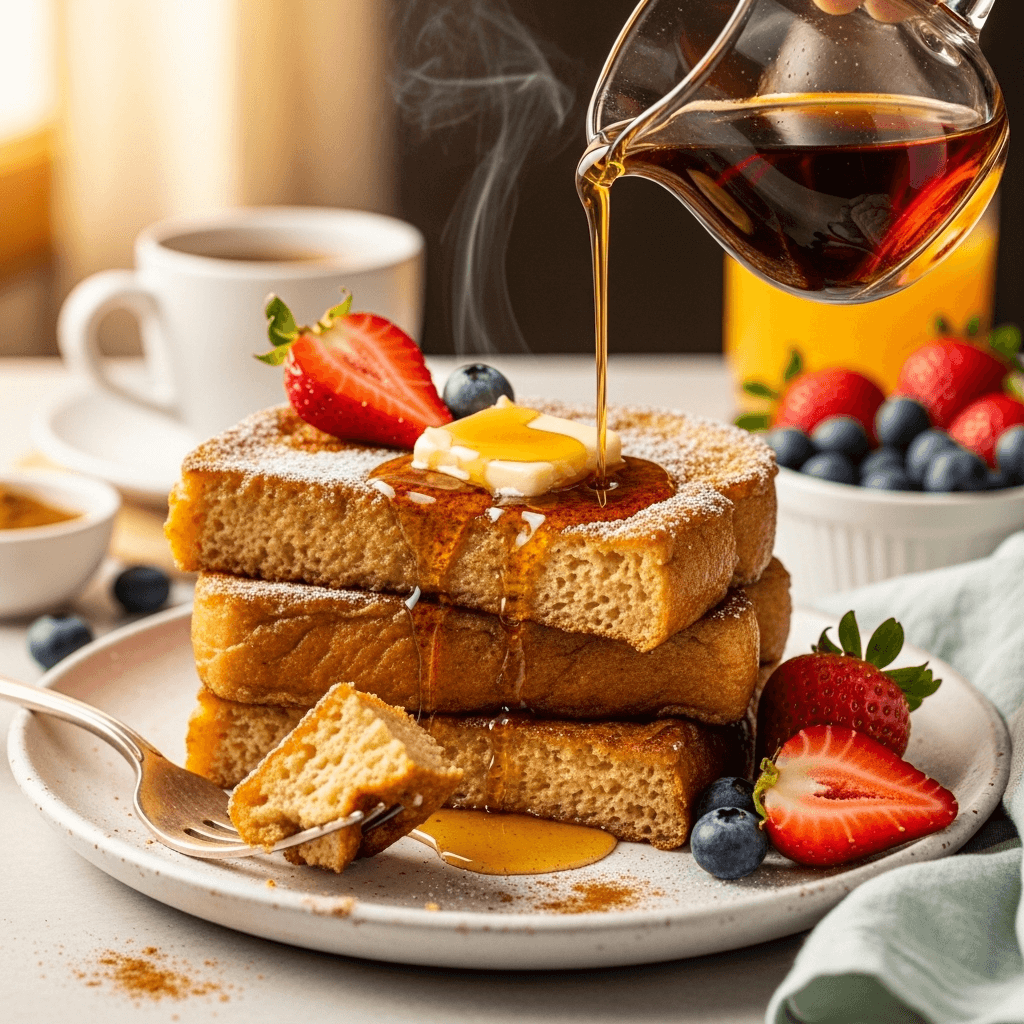

There’s something absolutely magical about waking up to the warm, sweet aroma of cinnamon french toast sizzling on the griddle. This classic breakfast favorite transforms ordinary bread into golden, crispy-on-the-outside, custardy-on-the-inside perfection that’s been bringing smiles to breakfast tables for generations. Our cinnamon french toast recipe delivers restaurant-quality results with a beautifully caramelized exterior, tender interior, and just the right amount of sweet cinnamon flavor in every bite.
This isn’t just any french toast – this is the kind that makes weekend mornings feel special, that turns lazy Sunday brunches into memorable occasions, and that kids (and adults!) request by name. The secret lies in the perfect egg mixture enriched with cream, vanilla, and aromatic cinnamon, combined with the right bread and proper cooking technique. Every piece comes out gorgeously golden brown with crispy edges and a soft, custardy center that practically melts in your mouth.
Cinnamon french toast is incredibly versatile and works for countless occasions. It’s perfect for weekend family breakfasts when you have a little extra time to make something special. It’s ideal for holiday mornings like Christmas, Easter, or Mother’s Day when you want an impressive yet easy breakfast. It’s wonderful for brunch gatherings with friends, and it’s even elegant enough to serve at breakfast-in-bed occasions. Plus, it’s a fantastic way to use up slightly stale bread, making it both delicious and practical.
What makes this recipe truly special is how it elevates a simple concept into something extraordinary. With just basic pantry ingredients – eggs, milk, bread, cinnamon, and vanilla – you can create a breakfast that tastes indulgent and feels like a treat, but comes together in less than 20 minutes. It’s comfort food at its finest, accessible to even beginner cooks, yet impressive enough to serve to guests.
History / Background
French toast has a fascinating history that predates France by centuries, despite its name. The concept of soaking bread in eggs and milk before frying dates back to ancient Rome, where a similar dish called “pan dulcis” appeared in a cookbook from the 4th or 5th century. This practical recipe was likely developed as a way to use up stale bread, transforming it into something delicious rather than letting it go to waste.
The dish appeared throughout medieval Europe under various names. In England, it was called “poor knights pudding” or “eggy bread.” In Germany, it was known as “Arme Ritter” (poor knights), again emphasizing its economical origins. The French called it “pain perdu,” which translates to “lost bread” – referring to stale bread that would otherwise be lost or thrown away. This name is still used in France today and in Louisiana Creole cuisine.
So how did “french toast” get its name in America? The most popular theory credits Joseph French, an Albany, New York, innkeeper who allegedly created the dish in 1724. However, historians note that he apparently didn’t understand possessive grammar and advertised it as “French Toast” rather than “French’s Toast.” Whether this story is true or apocryphal, the name stuck, and “french toast” became the standard American term for this beloved breakfast.
The addition of cinnamon to french toast is particularly American. While European versions often kept the dish simple or savory, American cooks in the 18th and 19th centuries began adding sweeteners and spices, especially cinnamon, which was becoming more affordable and accessible. By the early 20th century, cinnamon french toast had become a breakfast staple in American diners and home kitchens.
During the Great Depression, french toast gained even more popularity as an economical way to feed families. Stale bread was plentiful and cheap (or free from bakeries at closing time), eggs were affordable, and milk could be stretched. The dish provided a filling, protein-rich breakfast without requiring expensive ingredients. This association with comfort and resourcefulness helped cement french toast’s place in American food culture.
Today, cinnamon french toast remains a beloved classic that bridges generations. It’s the kind of recipe grandmothers teach grandchildren, that appears on diner menus nationwide, and that home cooks return to again and again for its perfect combination of simplicity, deliciousness, and nostalgia.
Why You’ll Love This Recipe
This cinnamon french toast recipe has been tested and perfected to deliver the absolute best texture and flavor every single time. What sets it apart is the ideal ratio of eggs to dairy, the addition of vanilla extract for depth, and the perfect amount of cinnamon that flavors every bite without overwhelming the dish. The technique ensures you get that coveted golden-brown, slightly crispy exterior while maintaining a soft, custardy interior.
The beauty of this recipe is its reliability. Follow these simple steps and you’ll achieve perfect french toast whether it’s your first attempt or your hundredth. No more soggy, undercooked centers or burnt exteriors. No more bland, eggy-tasting bread. Just consistently delicious, bakery-style cinnamon french toast that makes every breakfast feel like a special occasion.
Here’s why this cinnamon french toast recipe will become your go-to:
- Quick and easy – ready in just 20 minutes from start to finish
- Simple ingredients – uses basic pantry staples you likely already have
- Kid-approved – children absolutely love the sweet cinnamon flavor
- Budget-friendly – inexpensive to make and perfect for feeding a crowd
- Foolproof technique – works perfectly even for beginner cooks
- Customizable – easily adapted with different toppings and variations
- Uses up stale bread – actually works better with day-old bread
- Perfect texture – crispy golden outside, soft custardy inside
- Restaurant-quality – tastes like it came from your favorite brunch spot
- Great for meal prep – can be made ahead and reheated beautifully
- Crowd-pleaser – universally loved at family breakfasts and brunches
- Special occasion worthy – impressive enough for holidays and entertaining
Ingredient Notes
Understanding your ingredients ensures perfect cinnamon french toast every time:
Bread: The foundation of great french toast. Thick-sliced bread (about 3/4 to 1 inch thick) works best as it absorbs the egg mixture without falling apart. French bread, brioche, challah, or Texas toast are ideal choices. Slightly stale bread (1-2 days old) is actually better than fresh as it’s drier and absorbs more custard without becoming soggy. Avoid thin sandwich bread as it becomes too soggy and falls apart.
Eggs: Provide structure, richness, and that custardy texture. Large eggs are standard. The eggs bind everything together and create the coating that turns golden when cooked. You’ll need about 1 egg per 2 slices of bread. Fresh eggs work perfectly – no need for room temperature.
Milk or Cream: Adds moisture and richness to the egg mixture. Whole milk creates classic french toast, while half-and-half or heavy cream makes it extra rich and decadent. 2% milk works in a pinch but won’t be as rich. Avoid skim milk as it’s too watery. The dairy balances the eggs and adds creaminess.
Ground Cinnamon: The star flavoring that makes this cinnamon french toast special. Use fresh, quality ground cinnamon for best flavor. Old cinnamon loses its potency and can taste dusty. The cinnamon should be fragrant and slightly sweet-spicy. Don’t skip this ingredient – it’s essential for that warm, comforting flavor.
Vanilla Extract: Adds depth and aromatic sweetness. Pure vanilla extract tastes significantly better than imitation, though either works. Vanilla enhances the cinnamon and adds complexity that makes the french toast taste more sophisticated and bakery-style.
Sugar: A small amount of granulated sugar sweetens the egg mixture and helps with caramelization. The sugar also helps create that beautiful golden-brown exterior. Don’t skip it even though you’ll add syrup later – the sugar in the batter is important for flavor and texture.
Salt: Just a pinch balances the sweetness and enhances all the other flavors. Never skip salt in sweet recipes – it makes everything taste better and more rounded.
Butter: For cooking the french toast. Butter adds flavor and creates that gorgeous golden crust. Use unsalted butter so you control salt levels. Don’t substitute with oil – butter’s flavor is essential. You’ll need about 1 tablespoon per batch.
Equipment Needed
You’ll need minimal, basic kitchen equipment:
- Large shallow bowl or pie dish – for the egg mixture; shallow makes dipping easier
- Whisk or fork – for beating the egg mixture smooth
- Large non-stick skillet or griddle – for cooking; non-stick prevents sticking
- Spatula – for flipping; a wide, thin spatula works best
- Measuring cups and spoons – for accurate measurements
- Plate or platter – for serving finished french toast
Optional but helpful:
- Electric griddle for cooking multiple pieces simultaneously
- Kitchen timer to track cooking time
- Baking sheet in a warm oven (200°F) to keep finished pieces warm while cooking batches
Cinnamon French Toast Recipe
- Total Time: 17 minutes
- Yield: 6 slices (3 servings) 1x
- Diet: Vegetarian
Description
This classic cinnamon french toast features thick slices of bread dipped in a perfectly spiced egg mixture and cooked until golden brown and crispy. With a custardy center and caramelized exterior, it’s the ultimate comfort breakfast that’s ready in just 20 minutes!
Ingredients
For the French Toast:
- 6 slices thick bread (French bread, brioche, challah, or Texas toast)
- 3 large eggs
- ⅔ cup whole milk or half-and-half
- 1 tablespoon granulated sugar
- 1½ teaspoons ground cinnamon
- 1 teaspoon vanilla extract
- Pinch of salt
- 2–3 tablespoons unsalted butter (for cooking)
For Serving:
- Maple syrup
- Powdered sugar for dusting
- Fresh berries (optional)
- Whipped cream (optional)
Instructions
Step 1: Prepare the Egg Mixture
In a large shallow bowl or pie dish, whisk together the eggs, milk, sugar, cinnamon, vanilla extract, and salt. Whisk vigorously until completely combined and the mixture is smooth with no streaks of egg white visible. The cinnamon should be fully incorporated throughout.
Step 2: Prep the Bread
If using fresh bread, let it sit out for 30 minutes to dry slightly, or toast lightly. Cut into 3/4 to 1-inch thick slices if not pre-sliced. Arrange your bread slices near the stove so they’re ready to dip.
Step 3: Heat the Pan
Place a large non-stick skillet or griddle over medium heat. Add 1 tablespoon of butter and let it melt, swirling to coat the entire cooking surface. The butter should foam but not brown. Medium heat is crucial – too high and the outside burns before the inside cooks.
Step 4: Dip the Bread
Working with one slice at a time, place the bread in the egg mixture. Let it soak for 3-5 seconds on each side, ensuring both sides are thoroughly coated but not falling apart. The bread should be saturated but still hold its shape. If bread is very stale, it may need a bit longer; if very fresh, less time. Use your spatula to transfer the coated bread directly to the hot skillet, letting excess drip off.
Step 5: Cook First Side
Place the egg-coated bread in the heated skillet. Cook for 2-3 minutes without moving it, until the bottom is deep golden brown and caramelized. You should see the edges starting to look set and golden. Resist the urge to flip too early – proper browning takes time.
Step 6: Flip and Cook Second Side
Using a spatula, carefully flip the french toast. Cook the second side for another 2-3 minutes until equally golden brown and the center is cooked through (no longer jiggly or wet). The french toast should feel firm when gently pressed.
Step 7: Keep Warm and Continue
Transfer the finished french toast to a plate and keep warm (you can hold in a 200°F oven). Add more butter to the pan and repeat the dipping and cooking process with remaining bread slices. Don’t crowd the pan – cook in batches for best results.
Step 8: Serve
Arrange the cinnamon french toast on serving plates. Dust with powdered sugar, drizzle with warm maple syrup, and add fresh berries or whipped cream if desired. Serve immediately while hot for best texture and flavor.
Notes
- Bread thickness matters: Too thin and it falls apart; too thick and it won’t cook through. Aim for 3/4 to 1 inch thick slices.
- Don’t over-soak: Bread should be coated but not falling apart. 3-5 seconds per side is usually perfect.
- Medium heat is key: Too high burns the outside before cooking through; too low makes soggy french toast.
- Stale bread works best: Day-old bread absorbs custard better without becoming mushy. Fresh bread can be lightly toasted first.
- Customize cinnamon: Use 1 teaspoon for subtle flavor, up to 2 teaspoons for strong cinnamon lovers.
- Butter each batch: Add fresh butter to the pan for each batch to prevent sticking and ensure even browning.
- Prep Time: 5 minutes
- Cook Time: 12 minutes
- Category: Breakfast
- Method: Stovetop
- Cuisine: American
Nutrition
- Serving Size: 2 slices
- Calories: 385
- Sugar: 15g
- Sodium: 420mg
- Fat: 16g
- Saturated Fat: 8g
- Unsaturated Fat: 7g
- Trans Fat: 0g
- Carbohydrates: 48g
- Fiber: 2g
- Protein: 13g
- Cholesterol: 200mg
Tips & Variations
Stuffed Cinnamon French Toast:
Create a decadent breakfast by spreading cream cheese, Nutella, or peanut butter between two slices of bread before dipping in the egg mixture. Dip and cook as one thick piece, adding 1-2 minutes to cooking time. This creates a melty, indulgent center that’s absolutely delicious.
Berry Topped French Toast:
Top finished cinnamon french toast with warm berry compote made by simmering fresh or frozen berries with a tablespoon of sugar and lemon juice. The tart berries balance the sweet french toast beautifully. Strawberries, blueberries, and raspberries all work wonderfully.
Cinnamon Roll French Toast:
Use thick slices of day-old cinnamon rolls instead of regular bread. The cinnamon swirl creates amazing flavor and the sweet icing adds extra indulgence. Skip the sugar in the egg mixture since the rolls are already sweet. This is perfect for special occasions!
Banana Foster French Toast:
Top with caramelized bananas made by cooking sliced bananas in butter, brown sugar, and a splash of rum (or vanilla). Add pecans or walnuts for crunch. This New Orleans-inspired version is incredibly decadent and perfect for impressing brunch guests.
Pumpkin Spice French Toast:
Add 2 tablespoons of pumpkin puree and 1 teaspoon of pumpkin pie spice to the egg mixture for fall-flavored french toast. Top with whipped cream and a sprinkle of cinnamon. This seasonal variation is perfect for autumn weekends.
Savory French Toast:
Omit the sugar and cinnamon. Add herbs (thyme, chives), garlic powder, and black pepper to the egg mixture. Top with avocado, tomatoes, cheese, or use as a base for eggs Benedict. This versatile variation works for lunch or dinner too.
Overnight French Toast Casserole:
Cube bread and arrange in a greased baking dish. Pour the egg mixture over top, cover, and refrigerate overnight. In the morning, bake at 350°F for 45 minutes. This hands-off version is perfect for feeding a crowd at brunch.
Healthier French Toast:
Use whole wheat or whole grain bread for added fiber. Substitute almond milk or oat milk for dairy. Use egg whites or liquid egg substitute to reduce cholesterol. Top with fresh fruit and Greek yogurt instead of syrup for a lighter breakfast.
Pro Chef Tips
Tip #1: Use Stale Bread for Best Results
Professional breakfast chefs know that slightly stale bread (1-2 days old) makes superior french toast. Fresh bread is too soft and absorbs too much egg mixture, becoming soggy and falling apart. Stale bread has a drier texture that can soak up the custard without disintegrating. If you only have fresh bread, leave it uncovered on the counter for a few hours or lightly toast it before dipping.
Tip #2: The Dip Time Sweet Spot
The most common mistake is either under-soaking (dry spots remain) or over-soaking (bread falls apart). The perfect soak time depends on your bread: 3-5 seconds per side for sturdy breads like brioche or challah, slightly longer (5-7 seconds) for denser breads, and less time (2-3 seconds) for softer breads. The bread should look thoroughly coated and slightly darker from the egg mixture, but still hold its shape when lifted.
Tip #3: Temperature Control is Everything
Medium heat creates that perfect golden-brown crust with a cooked-through interior. Many home cooks use too-high heat in an attempt to speed things up, resulting in burnt exteriors and raw centers. The butter should gently sizzle when bread is added, not smoke or brown immediately. If your butter is browning too quickly, your heat is too high. If bread isn’t sizzling at all, heat is too low. Finding that medium-heat sweet spot transforms your french toast.
Tip #4: Don’t Skimp on Butter
Restaurants use more butter than most home cooks, which is part of why their french toast tastes so good. Add a full tablespoon of butter between each batch, letting it fully melt and foam before adding the next pieces. The butter creates flavor, prevents sticking, and contributes to that beautiful caramelized exterior. This isn’t the time to be stingy with butter.
Tip #5: Let It Cook Undisturbed
Resist the urge to constantly check or move the french toast. Let each side cook for the full 2-3 minutes without touching it. This undisturbed cooking time is what develops that gorgeous golden-brown crust. Flipping too early results in pale, undercooked french toast that sticks to the pan. You should see golden-brown edges creeping up the sides before you flip.
Tip #6: Whisk Until Completely Smooth
Take the extra 30 seconds to thoroughly whisk your egg mixture until no streaks of egg white remain and the cinnamon is fully incorporated. Lumpy egg mixture creates uneven coating with streaks of plain egg on your bread. A smooth, homogeneous mixture coats every inch of bread evenly, creating consistent flavor and color throughout.
Common Mistakes to Avoid
Mistake #1: Using Bread That’s Too Thin
Thin sandwich bread becomes soggy and falls apart during cooking. It can’t support the egg mixture and collapses when you try to flip it. Always use thick-sliced bread – at least 3/4 inch, preferably 1 inch thick. If your bread is pre-sliced and thin, you can make “french toast sandwiches” by pressing two slices together after dipping.
Mistake #2: Cooking on Too High Heat
High heat is tempting because it seems faster, but it burns the outside while leaving the center undercooked and soggy. The eggs need time to cook through and the bread needs time to develop that golden crust without burning. Medium heat is non-negotiable for perfect french toast. Be patient – good things take a little time.
Mistake #3: Soaking Bread Too Long
Letting bread sit in the egg mixture for minutes rather than seconds turns it into mush that falls apart when you try to transfer it to the pan. Quick dips on each side (3-5 seconds) are all you need. The goal is saturated but structurally intact bread, not french toast soup.
Mistake #4: Not Adding Sugar to the Egg Mixture
Some people skip the sugar thinking syrup will provide enough sweetness. However, sugar in the batter does more than sweeten – it helps with caramelization, creating that beautiful golden-brown color and slightly crispy exterior. Without it, your french toast will be pale and lacking that signature caramelized flavor.
Mistake #5: Crowding the Pan
Trying to cook too many slices at once lowers the pan temperature dramatically and creates steam, resulting in soggy rather than crispy french toast. The bread pieces also stick together. Give each piece space – cook in batches if necessary. Your patience will be rewarded with much better texture and appearance.
Storage & Meal Prep
Refrigerator Storage:
Store leftover cinnamon french toast in an airtight container in the refrigerator for up to 3 days. Place parchment paper between slices to prevent sticking. The texture won’t be quite as crispy as fresh, but it still tastes delicious and reheats well. This makes it perfect for meal prep – cook a batch on Sunday for easy breakfasts throughout the week.
Reheating Instructions:
For best results, reheat in a toaster or toaster oven until warmed through and slightly crispy. This restores some of the original crispiness. You can also reheat in a 350°F oven for 5-7 minutes. Microwave works in a pinch (30-45 seconds) but makes the french toast softer rather than crispy. The toaster method is hands-down the best for restoring that fresh-made texture.
Meal Prep Strategy:
French toast is excellent for meal prep. Make a full batch on Sunday, let cool completely, and store properly. In the morning, pop slices in the toaster while you’re getting ready. Add fresh toppings and you have a hot, delicious breakfast in minutes. This is perfect for busy work mornings when you want something better than cereal but don’t have time to cook.
Keeping Warm for Serving:
When cooking french toast for a crowd, you want to serve everyone together rather than in shifts. Keep finished pieces warm in a 200°F oven on a baking sheet while you cook the remaining batches. Don’t stack them or they’ll steam and lose crispiness – arrange in a single layer. They’ll stay warm and ready for 20-30 minutes this way.
Make-Ahead & Freezer Notes
Prep the Night Before:
You can whisk together the egg mixture the night before and refrigerate it in a covered bowl. This makes morning preparation even faster – just give it a quick whisk and start dipping. Some people even dip the bread slices, arrange them on a baking sheet, cover with plastic wrap, and refrigerate overnight, then cook them in the morning (though freshly dipped works better).
Freezing Cooked French Toast:
Cinnamon french toast freezes beautifully! Cool completely, then freeze in a single layer on a baking sheet. Once frozen solid, transfer to a freezer bag with parchment paper between slices. Freeze for up to 2 months. This is perfect for having homemade breakfast ready anytime. Pop frozen slices directly into the toaster or toaster oven until heated through and crispy.
Freezing Tips:
Make a double or triple batch specifically for freezing. Having homemade french toast in the freezer is like having your own personal breakfast restaurant. The frozen french toast reheats better in a toaster than a microwave – the dry heat helps restore crispiness. You can also heat directly from frozen in a 375°F oven for 8-10 minutes.
French Toast Sticks for Kids:
Cut french toast into strips before freezing for kid-friendly “french toast sticks.” These are perfect for little hands and fun for dipping. They toast up quickly and evenly. Make a big batch and have easy breakfast ready for busy school mornings. Kids love having “special” breakfast that’s still quick and convenient.
Serving Suggestions
Cinnamon french toast is delicious on its own but even better with these accompaniments:
Classic Toppings:
- Warm maple syrup (the real stuff tastes so much better)
- Powdered sugar dusted on top
- Butter pat melting into the warm toast
- Whipped cream for extra indulgence
- Fresh berries (strawberries, blueberries, raspberries)
Fruit Accompaniments:
Create a complete breakfast by serving alongside:
- Fresh fruit salad with mint
- Sliced bananas with a drizzle of honey
- Caramelized apples or pears
- Berry compote or preserves
- Orange slices or grapefruit segments
Protein Sides:
Balance the sweet french toast with savory proteins:
- Crispy bacon strips
- Breakfast sausage links or patties
- Ham slices
- Turkey bacon for lighter option
- Scrambled or fried eggs
Beverages:
Complete the breakfast experience with:
- Hot coffee (light or dark roast)
- Orange juice (fresh-squeezed is amazing)
- Hot chocolate for kids or cozy mornings
- Chai tea latte with complementary spices
- Milk (regular, almond, or oat)
- Smoothies for extra nutrition
Special Brunch Spreads:
Create an impressive brunch by serving french toast with:
- Fresh fruit platter
- Yogurt parfaits
- Breakfast potatoes or hash browns
- Bacon and sausage variety
- Scrambled eggs or quiche
- Mimosas or bellinis for adults
Make It a Bar:
Set up a french toast topping bar for gatherings:
- Multiple syrup options (maple, berry, butter pecan)
- Various fresh fruits
- Whipped cream
- Nuts (pecans, walnuts, almonds)
- Chocolate chips
- Peanut or almond butter
- Nutella
- Powdered sugar shaker
FAQs Section
Q: Can I use different types of bread for french toast?
Absolutely! While classic choices like French bread, brioche, challah, and Texas toast work beautifully, you can experiment with sourdough (adds tangy flavor), whole wheat (for health), cinnamon raisin bread (extra sweet), croissants (ultra-rich), or even Hawaiian sweet bread. The key is using thick slices (3/4 to 1 inch) and slightly stale bread. Each bread type creates a unique flavor profile and texture.
Q: Why is my french toast soggy in the middle?
Soggy french toast usually results from soaking the bread too long, cooking at too low a temperature, or using bread that’s too fresh and soft. The solution: dip for only 3-5 seconds per side, cook on medium heat (butter should sizzle but not smoke), and use day-old bread or lightly toast fresh bread first. Make sure to cook long enough – 2-3 minutes per side minimum for thoroughly cooked centers.
Q: Can I make french toast without milk?
Yes! You can use alternatives like almond milk, oat milk, soy milk, coconut milk, or even orange juice for a different flavor. For dairy-free french toast, these work perfectly. You can also use just eggs and no liquid at all, though the texture will be denser and more egg-forward. Heavy cream or half-and-half instead of milk makes it richer.
Q: How do I prevent french toast from sticking to the pan?
Use a good non-stick skillet or griddle and add adequate butter (don’t be stingy – use 1 tablespoon per batch). Make sure the pan is properly heated before adding the bread, and don’t flip too early – let the first side cook completely until golden brown. If french toast is sticking, your pan isn’t hot enough, you need more butter, or you’re trying to flip too soon. Also, using a thin, flexible spatula helps.
Q: Can I make french toast ahead of time for a crowd?
Yes! Cook all the french toast, let it cool, and refrigerate for up to 2 days. When ready to serve, reheat in a 350°F oven for 5-10 minutes until warmed through. For better texture, reheat in batches in a toaster or toaster oven. You can also freeze cooked french toast for up to 2 months and toast directly from frozen. For the absolute freshest taste, keep cooked french toast warm in a 200°F oven while cooking batches.
Q: What’s the difference between French toast and pancakes?
French toast uses sliced bread dipped in egg mixture and cooked, while pancakes are made from scratch using flour, eggs, milk, and leavening agents to create a pourable batter. French toast has a custardy interior from the egg-soaked bread, while pancakes are fluffy throughout. French toast is often easier and faster since you’re just coating existing bread rather than making batter from scratch.
Q: Why do I need cinnamon specifically? Can I use other spices?
Cinnamon is traditional because its warm, sweet spice perfectly complements the eggy custard and maple syrup. However, you can absolutely experiment! Try nutmeg, cardamom, pumpkin pie spice, or even a pinch of ginger. Some people love adding orange or lemon zest to the egg mixture. The spice adds flavor complexity that elevates french toast from simple to special.
Q: Is french toast healthy?
French toast can be part of a balanced diet in moderation. It provides protein from eggs and carbohydrates from bread. To make it healthier: use whole grain bread for fiber, egg whites to reduce cholesterol, almond milk to reduce calories, and top with fresh fruit instead of syrup. While it’s a treat food, homemade is much healthier than restaurant versions which often use excessive butter and sugar.
Conclusion
There you have it – everything you need to make the most perfect, golden, delicious cinnamon french toast that will have your family requesting it every weekend! This classic breakfast recipe proves that simple ingredients and straightforward techniques can create something truly special that brings joy to breakfast tables.
The beauty of this cinnamon french toast is how it transforms ordinary bread into an extraordinary breakfast experience. With just eggs, milk, cinnamon, and vanilla, you create restaurant-quality results that taste indulgent yet are surprisingly easy to make. Whether it’s a lazy Sunday morning, a special holiday breakfast, or meal prep for the week ahead, this recipe delivers every single time.
I hope this recipe becomes a beloved staple in your home like it is in mine! There’s something wonderfully comforting about the aroma of cinnamon french toast cooking on the griddle, and the happy faces when you serve those golden, crispy slices topped with butter and syrup. It’s the kind of breakfast that creates memories and traditions.
I’d love to hear how your cinnamon french toast turns out! Did you try any of the variations? What’s your favorite topping? Leave a comment below and share your experience. If this became a breakfast favorite, please give it a five-star rating and share it with friends who need an amazing french toast recipe. Don’t forget to save this to your Pinterest breakfast boards so you can make it again and again. Here’s to perfect french toast mornings!