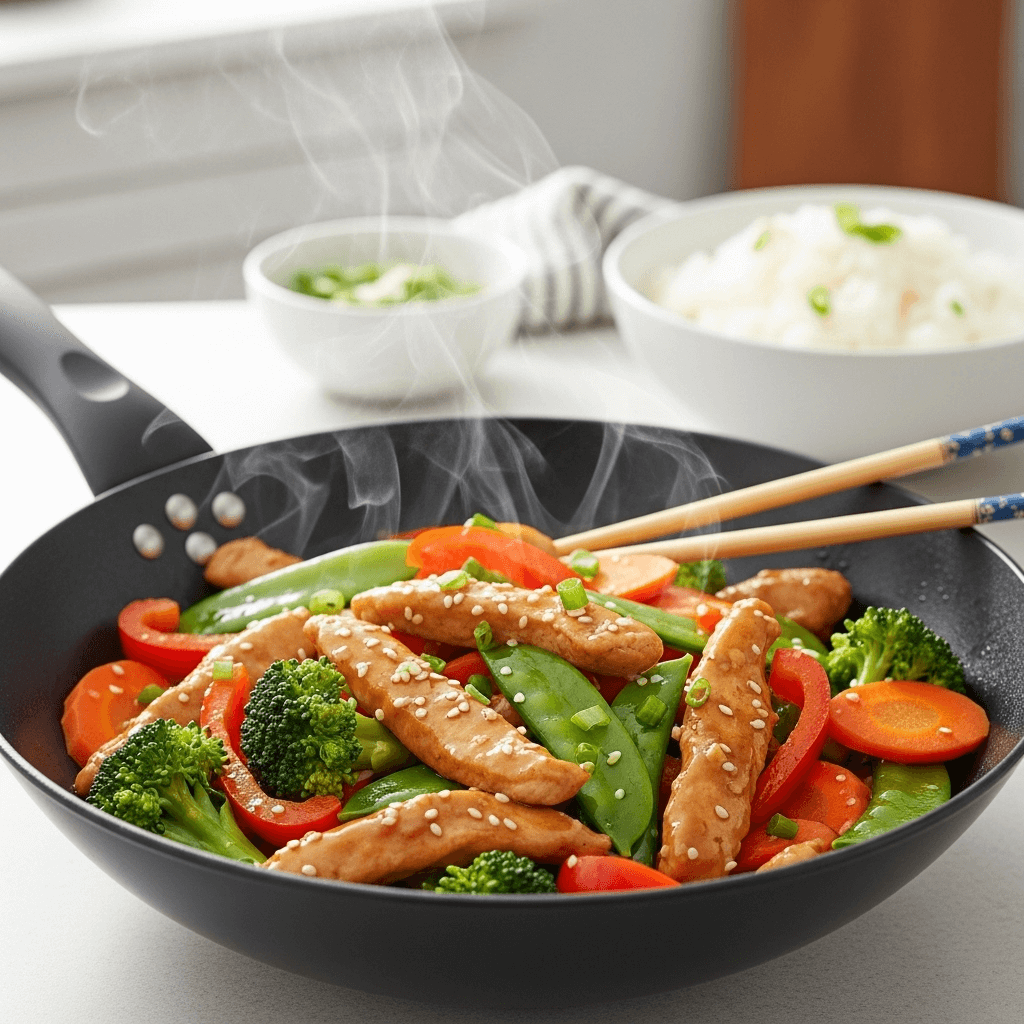

There’s nothing quite like the sizzle and aroma of a perfectly cooked chicken stir fry fresh from your own kitchen – that magical combination of tender chicken, crisp vegetables, and savory sauce coming together in one spectacular dish. This best chicken stir fry recipe brings authentic Asian-inspired flavors to your weeknight dinner table in just 25 minutes, making it faster than ordering takeout yet infinitely more delicious and budget-friendly. Whether you’re seeking a quick weeknight meal that impresses the whole family, looking for a healthy dinner option packed with vegetables, or craving restaurant-quality stir fry without the delivery fee, this easy chicken stir fry recipe delivers outstanding results every single time.
What makes this homemade chicken stir fry recipe so special is the perfect balance of crisp vegetables, juicy chicken, and incredibly flavorful sauce that tastes like it came straight from your favorite Asian restaurant. Unlike restaurant versions that can be heavy with oil and sodium, this chicken stir fry recipe uses quality ingredients and simple technique to create authentic flavors you can feel great about serving your family. In just 25 minutes from prep to plate, you’ll have a restaurant-quality chicken stir fry that’s healthier, cheaper, and more customizable than takeout. This simple yet impressive chicken stir fry recipe has become a family favorite because it’s quick, nutritious, delicious, and works perfectly for busy weeknight cooking.
History / Background
Stir frying is an ancient Chinese cooking technique that dates back thousands of years, with origins tracing to the Han Dynasty (206 BCE – 220 CE). The technique emerged from practical necessity – using minimal fuel and time to cook large quantities of food quickly. Stir frying combined high heat, constant motion, and quick cooking to preserve nutrients while creating complex flavors through rapid cooking.
The wok, the essential tool for stir frying, was developed in China and refined over centuries. Its curved shape and thin metal create the ideal surface for rapid cooking and easy ingredient movement. Traditional Chinese stir fries often featured small pieces of protein (chicken, pork, beef, or seafood) combined with seasonal vegetables and aromatic ingredients like garlic, ginger, and soy sauce.
Stir frying remained primarily a Chinese and Asian cooking method until the mid-20th century when Asian immigration to Western countries introduced the technique to broader audiences. Chinese restaurants opened throughout America, and stir fry dishes appeared on menus, introducing American home cooks to this efficient, delicious cooking method.
The American adaptation of chicken stir fry became particularly popular during the 1970s and 1980s as home cooks sought quick, healthy meal options. The introduction of woks in Western kitchens, combined with increasingly available Asian ingredients, made stir frying accessible to home cooks. Chicken stir fry became a beloved weeknight dinner option – faster than traditional American cooking methods, healthier than many alternatives, and aligned with the busy lifestyle of modern American families.
Today, chicken stir fry represents a fusion of Chinese tradition and American practicality. It appears on restaurant menus worldwide, in home kitchens across the United States, and in countless cookbooks as a go-to recipe for quick, healthy, delicious dinners. The dish demonstrates how culinary traditions adapt and evolve while maintaining their essential character, creating something that honors its origins while serving modern needs.
Why You’ll Love This Recipe
This easy chicken stir fry recipe is the ultimate weeknight dinner solution – fast, healthy, delicious, and absolutely customizable. I’ve perfected this recipe through countless weeknight dinners to bring you the definitive version that delivers restaurant-quality chicken stir fry every single time.
Here’s why this best chicken stir fry recipe will become your new favorite:
- Ready in just 25 minutes – From prep to dinner plate in less time than ordering takeout delivery
- Restaurant-quality flavor – Tastes like it came from your favorite Asian restaurant but costs a fraction of the price
- Packed with vegetables – Load it with your favorite veggies for nutrition and volume without added calories
- Naturally healthy – High in protein, loaded with vegetables, lower sodium than takeout versions
- Budget-friendly – Costs significantly less than restaurant stir fry while tasting even better
- Perfectly customizable – Choose your own vegetables, heat level, and sauce intensity
- One-wok meal – Everything cooks in one pan for minimal cleanup and maximum efficiency
- Kids love it – Customize vegetables and sauce for picky eaters while adults enjoy spicier versions
- Make-ahead friendly – Prep ingredients ahead for faster weeknight cooking
- Freezer-ready – Leftover stir fry freezes beautifully for grab-and-go lunches
- No special equipment required – Use a regular skillet if you don’t have a wok
- Naturally gluten-free option – Use tamari or coconut aminos instead of soy sauce
Ingredient Notes
Creating perfect chicken stir fry requires understanding key ingredients and choosing quality options that work together to create authentic, delicious results.
Chicken Breast – One and a half pounds of boneless, skinless chicken breast, sliced into thin strips (about ¼-inch thick), provides lean protein that cooks quickly in high heat. Slicing against the grain creates more tender pieces. Cutting chicken into uniform sizes ensures even cooking. Chicken breast is ideal for stir fry because it cooks fast and stays tender with proper technique.
Soy Sauce – Three tablespoons of soy sauce provides the foundational salty, umami-rich flavor that defines Asian stir fry. Use regular soy sauce for traditional flavor, or tamari for gluten-free option. Soy sauce brings depth and complexity that salt alone can’t replicate. The umami flavor is crucial – don’t skip it or use reduced amounts.
Ginger and Garlic – One tablespoon each of minced fresh ginger and garlic provide aromatic depth and complexity. Fresh ginger and garlic taste dramatically better than powdered versions. These aromatics are essential to authentic stir fry flavor – they create the characteristic Asian stir fry aroma and taste.
Sesame Oil – One and a half tablespoons of toasted sesame oil adds rich, nutty flavor. Sesame oil burns easily, so add it near the end of cooking. A little goes a long way – you don’t need much for significant flavor impact. Quality sesame oil makes an enormous difference.
Rice Vinegar – One tablespoon of rice vinegar adds brightness and slight tanginess that balances the richness of soy sauce. Rice vinegar’s milder flavor is better than distilled vinegar for Asian-inspired dishes. The acidity cuts through richness while brightening overall flavor.
Cornstarch – One and a half tablespoons mixed with water creates the slurry that thickens the sauce. Cornstarch creates a silky, lightly thickened sauce that coats the chicken and vegetables beautifully. The thickening is what transforms liquid sauce into the glossy coating you expect in stir fry.
Honey or Brown Sugar – One tablespoon adds subtle sweetness that balances salty soy sauce and acidic vinegar. A touch of sweetness is traditional in many Asian stir fry sauces. Honey dissolves easily and adds complexity beyond simple sugar.
Chicken Broth – Half a cup of chicken broth provides liquid for the sauce. Use low-sodium broth so you can control salt level. The broth creates volume for the sauce while adding savory flavor.
Vegetables – Four to five cups of mixed vegetables (broccoli, bell peppers, snap peas, carrots, onions) provide nutrition, fiber, and texture. Cut vegetables into similar sizes so they cook evenly. Harder vegetables like carrots should be cut smaller than softer vegetables like peppers.
Optional Additions:
- Red pepper flakes for heat
- Fresh cilantro for brightness
- Scallions for garnish
- Cashews for crunch
- Pineapple chunks for sweetness
Substitutions: Use coconut aminos instead of soy sauce for soy-free option. Replace sesame oil with neutral oil if unavailable, though flavor will differ. Use maple syrup instead of honey for different flavor profile. Substitute chicken with pork, beef, shrimp, or tofu. Replace broth with water if necessary.
Equipment Needed
- Wok or large skillet – 12-14 inch wok is ideal; a large skillet works if wok isn’t available
- Cutting board and sharp knife – For slicing chicken and chopping vegetables
- Measuring cups and spoons – For accurate ingredient quantities
- Small bowl – For mixing sauce ingredients
- Wooden spoon or wooden spatula – For stirring in the wok (prevents scratching)
- Tongs – For moving ingredients around while cooking
- Garlic mincer – Optional but helpful for mincing fresh garlic
- Ginger grater or microplane – For mincing fresh ginger
- Strainer or colander – If preparing vegetables ahead
- Large mixing bowl – For organizing prepped ingredients
- Whisk – For mixing sauce until cornstarch is fully incorporated
- Serving platter or individual bowls – For presenting finished stir fry
- Stove with high heat capability – High heat is essential for proper stir fry
Chicken Stir Fry Recipe
- Total Time: 27 minutes
- Yield: 4 servings 1x
- Diet: Gluten Free
Description
This best chicken stir fry recipe delivers tender, juicy chicken with crisp vegetables in a savory Asian-inspired sauce, all ready in just 25 minutes. Made with simple, quality ingredients and proper high-heat technique, this easy homemade chicken stir fry tastes restaurant-quality while being healthier and more budget-friendly than takeout.
Ingredients
For the Chicken:
- 1½ pounds boneless, skinless chicken breast, sliced into thin strips (about ¼-inch thick)
- 2 tablespoons neutral oil (vegetable or canola) for cooking chicken
For the Sauce:
- ½ cup chicken broth (low-sodium)
- 3 tablespoons soy sauce (or tamari for gluten-free)
- 1 tablespoon rice vinegar
- 1 tablespoon honey or brown sugar
- 1½ tablespoons toasted sesame oil
- 1½ tablespoons cornstarch mixed with 2 tablespoons water (cornstarch slurry)
For the Stir Fry:
- 1 tablespoon minced fresh ginger
- 3 cloves garlic, minced
- 2 tablespoons neutral oil for cooking vegetables
- 4–5 cups mixed vegetables (suggestions: 2 cups broccoli florets, 1 bell pepper sliced, 1 cup snap peas, 1 cup carrots sliced thin, ½ cup sliced onion)
- ¼ teaspoon red pepper flakes (optional, for heat)
- 2 tablespoons sliced scallions or fresh cilantro for garnish (optional)
- Sesame seeds for garnish (optional)
Instructions
- Prepare all ingredients before cooking. Slice chicken breast into thin strips about ¼-inch thick (slicing against the grain creates more tender pieces). Prepare all vegetables by chopping them into bite-sized pieces, with harder vegetables (carrots) cut slightly smaller than softer ones (peppers) so everything cooks evenly. Mince ginger and garlic. Mix sauce ingredients together in a small bowl until cornstarch is fully dissolved – this prevents lumps when sauce is added to the hot wok.
- Mix the sauce ingredients. In a small bowl, whisk together chicken broth, soy sauce, rice vinegar, honey, and sesame oil. In a separate small bowl, mix cornstarch with water to create a slurry (mix until cornstarch is fully dissolved – no lumps). Don’t add the cornstarch slurry to the sauce yet; you’ll add it near the end of cooking. Having the sauce prepared before cooking starts ensures you’re not scrambling when the wok is hot.
- Heat wok and prepare to cook chicken. Place a wok or large skillet over high heat. Let it preheat for 1-2 minutes until very hot – it should almost smoke. This high heat is essential for proper stir frying, which creates the characteristic brown exterior and tender interior. Don’t skip the preheating step; cold pans result in steamed rather than seared chicken.
- Sear the chicken. Add one tablespoon of neutral oil to the hot wok and let it heat for 30 seconds until shimmering. Working in batches to avoid overcrowding (crowded wok creates steam instead of sear), add chicken strips in a single layer. Let them cook undisturbed for 2-3 minutes until golden brown on the bottom. Stir and continue cooking until chicken is mostly cooked through (still slightly pink in the center is fine – it will finish cooking when vegetables are added).
- Remove chicken and set aside. Transfer cooked chicken to a clean plate or bowl. Don’t worry if it’s not completely cooked through – it will finish cooking when returned to the wok with the vegetables. This prevents overcooking and keeps chicken tender.
- Add oil and prepare to cook vegetables. Add another tablespoon of oil to the wok. Wait for it to shimmer and heat through (about 30 seconds). The wok should be very hot.
- Cook aromatic vegetables first. Add minced ginger and garlic to the hot wok and cook for about 30 seconds, stirring constantly, until fragrant. Don’t let them burn or they become bitter. This quick cooking releases essential oils and aromatics that flavor the entire dish.
- Add harder vegetables first. Add carrots and any other harder vegetables that take longer to cook. Stir-fry for 2-3 minutes, stirring constantly. These vegetables need more cooking time, so add them first.
- Add remaining vegetables. Add broccoli, peppers, snap peas, and other vegetables. Stir-fry for another 2-3 minutes until vegetables are bright colored but still slightly crisp. Don’t overcook – you want vegetables to be tender-crisp, not soft. Constant stirring and movement is essential in stir frying.
- Return chicken to wok. Add the cooked chicken back to the wok with the vegetables. Stir to combine everything.
- Add sauce to wok. Pour the prepared sauce over the chicken and vegetables. Stir everything together and let the sauce come to a simmer. This takes about 30-60 seconds.
- Thicken sauce with cornstarch slurry. Once the sauce is simmering, pour in the cornstarch slurry (the mixture of cornstarch and water). Stir constantly for about 1-2 minutes until the sauce thickens and becomes glossy. The sauce should coat the chicken and vegetables beautifully. Don’t skip this thickening step – it transforms thin sauce into the silky coating that defines great stir fry.
- Taste and adjust seasonings. Taste the stir fry and adjust seasonings as needed. Add a pinch more salt if needed, or a splash more soy sauce for deeper flavor. Adjust heat level if desired by adding red pepper flakes.
- Serve immediately. Transfer stir fry to a serving platter or individual bowls. Garnish with sliced scallions, fresh cilantro, and sesame seeds if desired. Serve immediately while hot, over steamed rice, noodles, or cauliflower rice.
Notes
- Mise en place is essential – Having all ingredients prepped and sauce mixed before cooking ensures smooth, fast stir frying
- High heat is crucial – Stir fry requires high heat to create the characteristic browning and tender-crisp vegetables
- Don’t overcrowd the wok – Cook chicken in batches if necessary; crowding creates steam instead of browning
- Constant movement – Stir continuously during cooking; this is what defines stir frying
- Vegetables should be crisp-tender – Slightly undercooked is better than overcooked; they’ll soften as they sit
- Cornstarch prevents lumps – Mix with water before adding to avoid lumps in the sauce
- Serve immediately – Stir fry is best enjoyed hot right off the stove
- Customize freely – Choose your favorite vegetables and adjust sauce to your taste preferences
- Prep Time: 15 minutes
- Cook Time: 12 minutes
- Category: Dinner
- Method: Stovetop
- Cuisine: Chinese
Nutrition
- Serving Size: 1 serving (about 1½ cups)
- Calories: 285
- Sugar: 8g
- Sodium: 720mg
- Fat: 10g
- Saturated Fat: 2g
- Unsaturated Fat: 7g
- Trans Fat: 0g
- Carbohydrates: 18g
- Fiber: 3g
- Protein: 38g
- Cholesterol: 85mg
Tips & Variations
Vegetable Variations:
- Classic Asian Stir Fry: Broccoli, snap peas, water chestnuts, baby corn, and sliced onion
- Colorful Rainbow Stir Fry: Mix red, yellow, and orange bell peppers with broccoli and carrots for maximum color
- Heat-Forward Stir Fry: Add sliced jalapeños, Thai chili peppers, and increase red pepper flakes for spicy kick
- Mushroom Lover’s Stir Fry: Add sliced shiitake, oyster, or button mushrooms for earthy flavor
- Pineapple Chicken Stir Fry: Add fresh pineapple chunks and red bell peppers for sweet-savory balance
- Leafy Green Stir Fry: Add bok choy, Chinese broccoli, or spinach near the end of cooking for nutrition
Protein Variations:
- Beef Stir Fry: Use thinly sliced beef (flank or sirloin) instead of chicken, increase cooking time slightly
- Pork Stir Fry: Use sliced pork tenderloin for tender, quick-cooking stir fry
- Shrimp Stir Fry: Use large shrimp instead of chicken; reduce cooking time to just 2-3 minutes total
- Vegetarian Stir Fry: Use extra-firm tofu or chickpeas instead of chicken for plant-based protein
- Mixed Protein: Combine chicken with shrimp or add cashews for mixed texture
Sauce Variations:
- Spicy Szechuan Stir Fry: Add 1-2 teaspoons chili oil and Szechuan peppercorns for numbing heat
- Teriyaki Chicken Stir Fry: Reduce soy sauce to 2 tablespoons, increase honey to 2 tablespoons for sweeter sauce
- Coconut Ginger Stir Fry: Replace half the broth with coconut milk for creamy, tropical flavor
- Thai-Inspired Stir Fry: Add 1-2 tablespoons red curry paste and use coconut milk instead of broth
- Orange Sauce Stir Fry: Add fresh orange juice and zest for bright citrus flavor
Heat Level Customizations:
- Mild for Kids: Omit red pepper flakes and reduce garlic for family-friendly version
- Medium Heat: Use ¼ teaspoon red pepper flakes and add sliced jalapeños
- Spicy: Use ½ teaspoon red pepper flakes, add Thai chili peppers, and include Sriracha in sauce
Make-Ahead Strategies:
- Prep the night before: Chop all vegetables and slice chicken, store in separate containers
- Make sauce ahead: Combine sauce ingredients (except cornstarch slurry) several hours before cooking
- Half-prep method: Cook chicken and vegetables, refrigerate separately, combine and sauce just before serving
Healthier Versions:
- Lower sodium: Reduce soy sauce to 2 tablespoons and use low-sodium broth
- Lighter oil: Use only 1 tablespoon total oil instead of 4 tablespoons
- Extra vegetables: Increase vegetable amount to 6-7 cups for more volume and fewer calories per serving
Pro Chef Tips
Mise en place creates efficiency – Having all ingredients prepped, measured, and sauce mixed before cooking starts ensures smooth stir frying. Stir frying happens so fast that scrambling to prep ingredients mid-cooking ruins the dish. Prepare everything before the wok is hot.
High heat is non-negotiable – Proper stir frying requires high heat to create browning and cook quickly. Medium heat results in steamed, soggy vegetables rather than tender-crisp ones. Your wok or skillet should be nearly smoking hot.
Don’t overcrowd – Adding too much chicken or vegetables to the wok at once lowers the temperature and creates steam instead of browning. Work in batches if needed; properly cooked stir fry in batches beats crowded, steamed stir fry.
Slice chicken uniformly – Cutting chicken into similar-sized pieces ensures even cooking. Thicker pieces overcook while thinner ones finish cooking. Uniformity creates consistency throughout the dish.
Use cornstarch slurry properly – Mixing cornstarch with water before adding prevents lumps. The slurry dissolves smoothly into the sauce, creating an even, glossy thickening without graininess.
Taste and adjust – Every ingredient varies slightly in salt content and intensity. Taste the final dish and adjust seasoning with additional soy sauce, vinegar, or sesame oil to match your preferences.
Keep everything moving – Constant stirring and turning ingredients is what defines stir frying. Letting ingredients sit in the hot wok burns them. The movement distributes heat evenly and prevents sticking.
Cook vegetables to tender-crisp – Slightly underdone vegetables are better than overdone. Vegetables continue softening slightly after cooking as residual heat continues working. Bright color indicates proper cooking – faded vegetables are overcooked.
Serve immediately – Stir fry is best eaten hot right off the stove. Letting it sit makes vegetables soft and flavors fade. Have rice or noodles ready before you start cooking.
Quality sesame oil matters – Good toasted sesame oil adds incredible depth of flavor. Use authentic, quality sesame oil – the difference is significant compared to cheap versions.
Common Mistakes to Avoid
Using medium heat instead of high heat – Medium heat results in steamed, soft vegetables instead of tender-crisp, properly cooked stir fry. High heat is essential. Your wok should be smoking hot before adding oil.
Adding too many ingredients at once – Overcrowding the wok lowers temperature and creates steam instead of browning. Work in batches or use a larger wok if stir-frying for a crowd.
Not prepping ingredients before cooking – Stir frying happens so fast that scrambling to chop vegetables mid-cooking ruins timing. Everything must be prepped and sauce mixed before the wok gets hot.
Overcooking vegetables – Soft, faded-colored vegetables indicate overcooking. Watch carefully and remove vegetables when bright-colored and slightly firm. They continue softening slightly from residual heat.
Adding cornstarch directly to sauce without making a slurry – This creates lumps throughout the sauce. Always mix cornstarch with water first, creating a smooth slurry before adding to the hot wok.
Not tasting and adjusting seasonings – Different brands of soy sauce vary in saltiness. Taste the final dish and adjust seasonings to match your preferences before serving.
Using pre-made stir fry sauce – Homemade sauce tastes far better and allows complete control over ingredients. Store-bought sauces often contain excessive sodium and sugar.
Storage & Meal Prep
Storing Leftovers: Keep leftover chicken stir fry in an airtight container in the refrigerator for up to 4 days. The stir fry maintains good flavor and texture throughout this time, though vegetables soften slightly.
Reheating Instructions: Reheat stir fry on the stovetop over medium heat in a covered skillet or wok with a splash of water or broth to prevent drying. Stir occasionally until heated through, about 5-7 minutes. Alternatively, microwave in a microwave-safe container, stirring halfway through, though stovetop reheating preserves texture better.
Separating Components: Store chicken, vegetables, and sauce separately for maximum flexibility. You can reheat components separately and combine just before serving for fresher-tasting stir fry. Use separate containers for best results.
Shelf Life: Properly stored in the refrigerator, chicken stir fry maintains best quality for 3-4 days, though still safe to eat for up to 5 days. The vegetables soften and flavors meld over time.
Freezing: Cool stir fry completely, then freeze in airtight containers for up to 3 months. Thaw overnight in the refrigerator before reheating. Freezing slightly affects vegetable texture – they become softer – but flavor remains excellent.
Meal Prep Strategy: Prep all vegetables and chicken the night before, keeping them in separate containers. Cook stir fry fresh on your target days for optimal texture and fresh flavor.
Make-Ahead & Freezer Notes
Can You Make It Ahead? Absolutely! Prep all ingredients ahead and store separately in the refrigerator for up to 24 hours. Make sauce ahead and refrigerate for up to 3 days. Cook stir fry fresh when ready to eat for best results, or cook and refrigerate for up to 4 days.
Freezer-Friendly Details: Cooked chicken stir fry freezes beautifully for up to 3 months. Cool completely before freezing in airtight containers. The stir fry emerges from freezing with slightly softer vegetables but excellent flavor.
Best Reheating Method: Thaw overnight in the refrigerator, then reheat gently on the stovetop over medium heat in a covered skillet with a splash of water or broth, stirring occasionally, for 5-7 minutes. This method preserves texture better than microwave reheating.
Component Freezing: Freeze chicken separately from vegetables and sauce for maximum flexibility. Thaw components overnight, then combine and reheat just before serving. This approach maintains better texture than freezing everything together.
Make-Ahead Timeline:
- Three days ahead: Make sauce and refrigerate in airtight container
- One day ahead: Prep and chop all vegetables and chicken, store separately
- Morning of: Arrange ingredients for final cooking
- Cooking time: Assemble stir fry in about 25 minutes
- Leftovers: Refrigerate for up to 4 days or freeze for up to 3 months
Batch Cooking Strategy: Make multiple batches simultaneously using multiple woks or cooking in batches with one wok. Cool separately, portion into individual containers, and freeze for grab-and-go lunches.
Marinating Ahead: If desired, marinate chicken in a mixture of soy sauce, ginger, and garlic for 1-24 hours before cooking for extra flavor.
Serving Suggestions
Perfect homemade chicken stir fry deserves equally delicious accompaniments and serving occasions that enhance its savory, aromatic appeal.
Rice Options:
- Jasmine rice for authentic Asian flavor
- Brown rice for nuttier taste and added nutrition
- Basmati rice for fragrant, fluffy grain
- Cauliflower rice for lower-carb option
- Sticky rice for traditional presentation
- Coconut rice for creamy richness
Noodle Accompaniments:
- Chow mein noodles for crispy texture
- Rice noodles for light, delicate texture
- Ramen noodles for heartier option
- Udon noodles for thick, chewy texture
- Lo mein noodles for silky, tender option
- Egg noodles for Western-style variation
Vegetable Sides:
- Fried rice as a complete carb option
- Steamed bok choy with garlic
- Cucumber salad with vinegar dressing
- Edamame with sea salt
- Stir-fried gai lan (Chinese broccoli)
- Roasted Brussels sprouts
Salad Options:
- Asian cucumber salad with rice vinegar
- Sesame spinach salad
- Coleslaw with ginger-sesame dressing
- Spring rolls or fresh rolls
- Lettuce wraps
- Asian pear and candied walnut salad
Beverage Pairings:
- Beer – lager or pilsner for crisp contrast
- White wine – Sauvignon Blanc or Riesling
- Tea – green tea or jasmine tea for traditional pairing
- Sparkling water with lime
- Ginger ale for spicy complement
- Coconut water for tropical element
- Sake for authentic Asian pairing
Sauce Accompaniments:
- Chili oil for added heat
- Sriracha sauce on the side
- Fresh lime wedges
- Soy sauce for additional saltiness
- Rice vinegar for brightness
- Hoisin sauce for added depth
- Hot sauce of choice
Complete Meal Examples:
- Chicken stir fry over jasmine rice with cucumber salad and iced tea
- Stir fry with chow mein noodles and steamed edamame, served with beer
- Cauliflower rice stir fry with spring rolls and green tea
- Traditional version with brown rice, stir-fried bok choy, and sake
Occasion Ideas:
- Weeknight family dinner
- Quick meal prep lunch
- Date night at home
- Dinner party impressive main course
- Potluck contribution in individual servings
- Casual entertaining
- Sunday family gathering
- Office lunch-and-learn or potluck
FAQs Section
Can I make chicken stir fry without a wok? Absolutely! A large skillet (12-14 inches) works perfectly as an alternative. The technique remains the same – high heat, constant stirring, quick cooking. A skillet doesn’t conduct heat quite as evenly as a wok, but you’ll achieve excellent results. Flat-bottomed skillets work better than sloped ones for stir frying.
How do I get vegetables tender-crisp instead of soft? Use high heat, keep vegetables moving constantly, and remove them from the heat when they’re still bright-colored with slight firmness. Softer vegetables like peppers need less time than harder vegetables like carrots. The vegetables continue cooking from residual heat after removal, so slightly underdone is perfect.
Can I prep chicken stir fry ahead of time? Yes! Prep all vegetables and slice chicken the night before, storing in separate containers. Make sauce several hours or days ahead. Cook the stir fry fresh when ready to eat for best texture and flavor. Cooked stir fry can be refrigerated for up to 4 days.
What’s the best rice to serve with stir fry? Jasmine rice is traditional and offers authentic flavor and aroma. Brown rice provides nuttier taste and more nutrition. Any long-grain rice works. For low-carb option, use cauliflower rice. Cook rice ahead and reheat when stir fry is ready – timing works out perfectly.
Can I make stir fry without soy sauce? You can use tamari (gluten-free soy sauce), coconut aminos, or liquid smoke combined with salt for different flavor profiles. Soy sauce is traditional and creates the signature flavor, but alternatives work when necessary. Adjust salt content based on alternative used.
How spicy will this stir fry be? The base recipe is mild-to-medium with no heat. Red pepper flakes in the sauce add gentle heat. Add more for spicier version, or omit entirely for family-friendly mild version. You can also pass hot sauce on the side for individual customization.
Is chicken stir fry healthy? Yes! The stir fry is high in protein (38 grams per serving), packed with vegetables providing fiber and nutrients, and relatively low in calories (285 per serving without rice/noodles). The cooking method preserves nutrients while using minimal oil. Serve over vegetables or cauliflower rice to keep calories low.
Conclusion
There you have it – the ultimate guide to making the best chicken stir fry recipe that tastes absolutely restaurant-quality yet comes together in your own kitchen in just 25 minutes! This easy chicken stir fry recipe proves that impressive, authentic Asian-inspired meals don’t require complicated techniques or hard-to-find ingredients. With just simple quality ingredients, a hot wok or skillet, and about 25 minutes of your time, you can create restaurant-quality homemade chicken stir fry that’s healthier, more delicious, and significantly cheaper than takeout.
The magic of this chicken stir fry recipe lies in its beautiful simplicity combined with incredible flavor and nutrition. The combination of high heat, quick cooking, quality ingredients, and proper technique creates something restaurant-quality that’s also budget-friendly and healthy.