If you’re looking for a delicious, healthy alternative to traditional rice that’s low in carbs, packed with nutrients, and incredibly versatile, then cauliflower rice is about to become your new best friend in the kitchen! This clever vegetable swap has taken the health and wellness world by storm, and for good reason—it delivers a surprisingly rice-like texture while cutting calories and carbs dramatically compared to regular rice.
Perfect as a side dish for stir-fries, curries, grilled proteins, or Mexican-inspired bowls, this easy cauliflower rice recipe is a blank canvas that adapts beautifully to any flavor profile you’re craving. Whether you’re following a keto diet, trying to eat more vegetables, managing your blood sugar, or simply looking to lighten up your meals without sacrificing satisfaction, this low-carb cauliflower rice delivers on all fronts. The best part? It comes together in just 15 minutes from start to finish, making it faster than cooking regular rice! You can make it on the stovetop with just a skillet, season it simply with butter and garlic, or jazz it up with herbs, spices, and aromatics. Once you learn this basic technique for making homemade cauliflower rice, you’ll find yourself reaching for it again and again as a healthy, delicious, and budget-friendly way to bulk up meals, sneak in extra veggies, and keep your family eating well without anyone feeling deprived!
History / Background
Cauliflower, a member of the cruciferous vegetable family (along with broccoli, cabbage, and kale), has been cultivated for over 2,000 years, with origins tracing back to the Mediterranean region and Asia Minor. Ancient civilizations, including the Romans and Greeks, prized cauliflower for both culinary and medicinal purposes. The vegetable made its way through Europe during the Renaissance period and eventually reached America in the late 18th century, though it remained relatively unpopular until recent decades.
For most of modern history, cauliflower was typically prepared in traditional ways—steamed, boiled, roasted, or incorporated into casseroles and gratins. However, the vegetable underwent a dramatic transformation in culinary perception during the early 2000s with the explosion of low-carb and paleo diets. Creative home cooks and health-conscious chefs began experimenting with cauliflower as a substitute for high-carbohydrate foods, discovering its remarkable ability to mimic textures and absorb flavors.
The concept of cauliflower rice specifically emerged from this low-carb movement, with early adopters discovering that when raw cauliflower is pulsed in a food processor into tiny, rice-sized pieces, it creates an uncanny resemblance to rice grains. The technique gained serious momentum around 2012-2014 as paleo and keto diets surged in popularity, and food bloggers began sharing their cauliflower rice recipes across the internet. What started as a niche dietary hack quickly became mainstream.
The true breakthrough came when major grocery chains and food companies recognized the demand and began offering pre-riced cauliflower in the produce and frozen sections around 2016. Trader Joe’s, in particular, helped popularize store-bought cauliflower rice, making it accessible to busy home cooks who wanted the health benefits without the prep work. This convenience factor catapulted cauliflower rice from a specialty diet food to a mainstream staple found in millions of American kitchens.
Today, cauliflower rice has secured its place as one of the most successful vegetable innovations of the 21st century. It’s no longer seen as just a diet food but as a legitimate, delicious vegetable preparation in its own right. Restaurants from fast-casual chains to fine dining establishments offer cauliflower rice options, and the ingredient has spawned countless variations—from cilantro-lime cauliflower rice to fried cauliflower rice to Mediterranean-spiced versions. The beauty of this simple preparation is that it allows the humble cauliflower to shine while providing a nutritious, low-calorie base that adapts to virtually any cuisine or flavor profile you can imagine.
Why You’ll Love This Recipe
This cauliflower rice is about to revolutionize the way you think about healthy eating! It proves that nutritious food doesn’t have to be boring or feel like deprivation—this versatile side dish is genuinely delicious and satisfying in its own right.
Here’s why this recipe will become a regular in your meal rotation:
- Incredibly Low in Carbs – With only about 5 grams of carbs per cup compared to 45 grams in regular rice, cauliflower rice is perfect for anyone following keto, low-carb, or diabetic-friendly diets without feeling restricted.
- Lightning Fast – Ready in just 10-15 minutes from start to finish! That’s actually faster than cooking traditional rice, making it perfect for busy weeknights when you need a healthy side dish in a hurry.
- Nutritional Powerhouse – Cauliflower is loaded with vitamins C and K, fiber, antioxidants, and beneficial plant compounds. You’re not just cutting calories—you’re adding serious nutrition to your plate!
- Budget-Friendly – A whole head of cauliflower costs just a few dollars and yields 4-6 servings of rice. It’s an economical way to stretch meals and feed your family healthily without breaking the bank.
- Endlessly Versatile – This recipe works as a blank canvas for any flavor profile! Season it Mexican-style, Asian-inspired, Mediterranean, or simply with butter and herbs. It adapts to whatever cuisine you’re serving.
- Kid-Approved Veggie Trick – Even picky eaters often enjoy cauliflower rice because it doesn’t taste strongly of cauliflower when properly seasoned. It’s a sneaky way to get more vegetables into reluctant eaters!
- Texture Victory – When cooked correctly (not mushy or watery), cauliflower rice has a surprisingly satisfying, fluffy texture that pairs beautifully with saucy dishes, stir-fries, and proteins.
- Meal Prep Champion – Make a big batch on Sunday and use it throughout the week in different dishes. It reheats beautifully and saves precious time on hectic weeknights.
- Gluten-Free and Allergen-Friendly – Naturally gluten-free, grain-free, nut-free, and suitable for virtually every dietary restriction, making it perfect for serving mixed groups.
- No Special Equipment Required – While a food processor makes life easier, you can even make this with a box grater if needed. It’s accessible no matter what tools you have in your kitchen.
Ingredient Notes
The beauty of cauliflower rice is its simplicity! Here’s what you need and why each component matters for the best results.
Fresh Cauliflower – The star of the show! One large head (about 2 pounds) yields approximately 4-6 cups of cauliflower rice. Look for heads that are tight, compact, and creamy white without brown spots or yellowing. The fresher the cauliflower, the better the texture and milder the flavor. Substitution: Store-bought pre-riced cauliflower (fresh or frozen) saves time but costs more. If using frozen, thaw and squeeze out excess moisture thoroughly before cooking.
Olive Oil or Butter – Provides fat for sautéing and adds richness and flavor. Olive oil keeps it dairy-free and adds a subtle fruity note, while butter creates a richer, more indulgent taste. Substitution: Avocado oil, coconut oil, or ghee all work beautifully. For lowest calorie, use cooking spray though you’ll sacrifice some flavor.
Garlic – Fresh minced garlic adds incredible aromatic flavor that elevates cauliflower from bland to delicious. It’s optional but highly recommended! Substitution: Garlic powder works in a pinch (use ½ teaspoon), but fresh garlic provides superior flavor.
Salt and Pepper – Essential for bringing out cauliflower’s natural sweetness and adding depth. Don’t skimp on seasoning—cauliflower can taste bland without proper salting. Tip: Season in layers—a pinch while cooking and more to taste at the end.
Optional Flavor Add-Ins – This is where you can get creative! Fresh herbs (parsley, cilantro, basil), lemon juice or zest, grated Parmesan cheese, red pepper flakes, or any spice blend transforms basic cauliflower rice into something spectacular. The base recipe is intentionally simple so you can adapt it to complement whatever main dish you’re serving.
Equipment Needed
Making cauliflower rice requires minimal equipment, and you probably have everything already! Here’s what you’ll need:
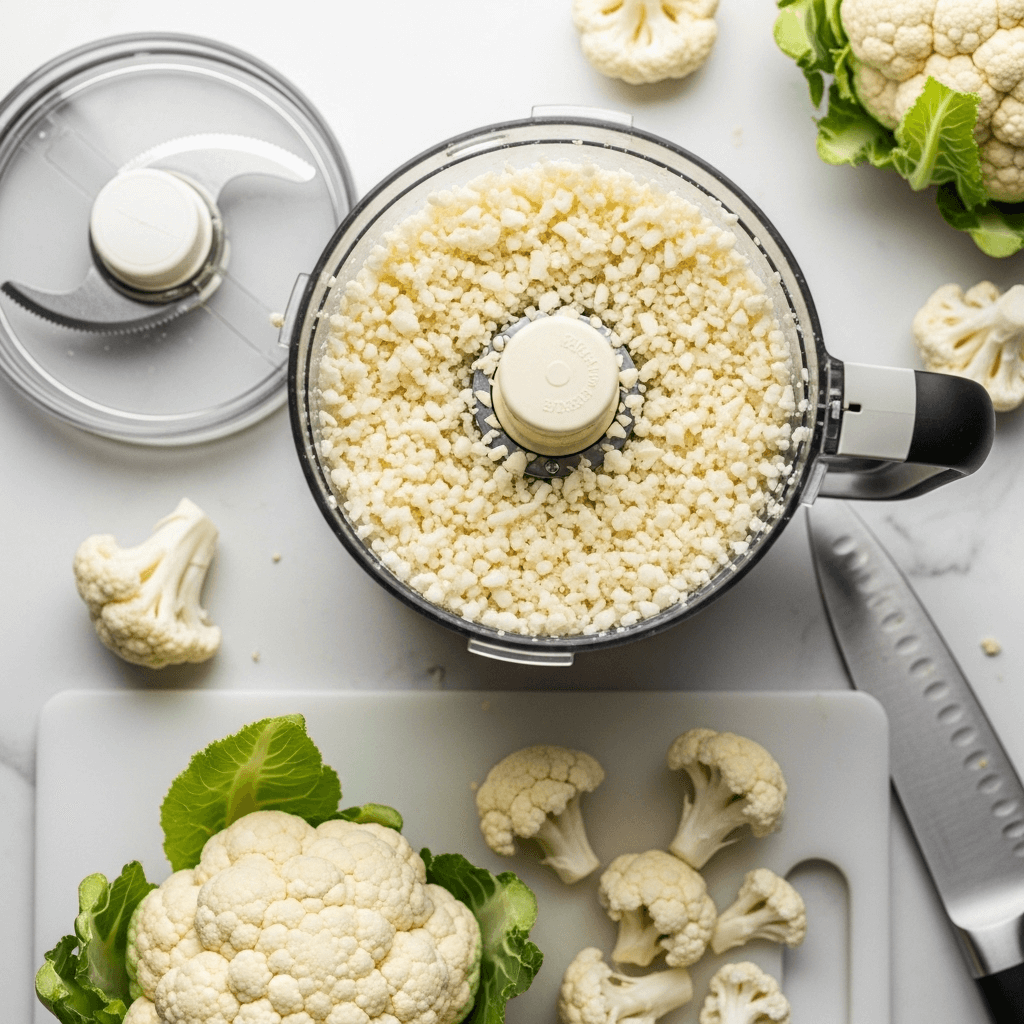
- Food Processor – The fastest and most efficient way to rice cauliflower. The S-blade attachment pulses cauliflower florets into perfect rice-sized pieces in seconds. Alternative: A box grater (medium holes) works but requires more arm power. Some people also use a high-powered blender in short pulses, though it can quickly over-process.
- Chef’s Knife – For breaking down the cauliflower head into florets small enough to process easily.
- Cutting Board – A sturdy surface for cauliflower prep work.
- Large Skillet or Sauté Pan – Ideally 12 inches or larger with a lid. A wide surface area allows moisture to evaporate quickly, preventing mushy cauliflower rice. Non-stick, stainless steel, or cast iron all work great.
- Wooden Spoon or Spatula – For stirring and breaking up any clumps as the cauliflower cooks.
- Measuring Cups and Spoons – For accurate measurements, though cauliflower rice is quite forgiving.
- Kitchen Towel or Paper Towels – Essential for squeezing out excess moisture if using frozen cauliflower rice or if your riced cauliflower seems wet.
- Garlic Press (Optional) – Makes mincing garlic easier, though a knife works fine.

Cauliflower Rice Recipe
- Total Time: 18 minutes
- Yield: 4 servings 1x
- Diet: Gluten Free
Description
Quick and easy cauliflower rice made in just 15 minutes! This healthy, low-carb rice substitute is light, fluffy, and full of flavor. Perfect as a versatile side dish for any meal—naturally gluten-free, keto-friendly, and packed with nutrients.
Ingredients
Basic Cauliflower Rice:
- 1 large head cauliflower (about 2 pounds), or 4-5 cups pre-riced cauliflower
- 2 tablespoons olive oil or butter
- 2 cloves garlic, minced
- ½ teaspoon salt (or to taste)
- ¼ teaspoon black pepper
- Optional: 1 tablespoon fresh lemon juice
- Optional: 2 tablespoons fresh parsley or cilantro, chopped
Instructions
- Prepare the Cauliflower: Remove the leaves and cut the cauliflower into florets, discarding the thick core (or save it for other uses). You want florets roughly 1-2 inches in size. Rinse them under cold water and pat dry with a towel—excess moisture will make your cauliflower rice soggy.
- Rice the Cauliflower: Working in batches if necessary, add the florets to your food processor fitted with the S-blade. Pulse 8-12 times in short bursts until the cauliflower resembles rice grains—small, even pieces about the size of couscous. Don’t over-process or it will turn into mush! You should have about 4-5 cups of riced cauliflower. If any large chunks remain, remove them and pulse separately.
- Heat the Pan: Place a large skillet over medium heat and add the olive oil or butter. Let it heat until shimmering (for oil) or melted and slightly foaming (for butter), about 1 minute.
- Sauté the Garlic: Add the minced garlic to the hot oil and sauté for about 30 seconds, stirring constantly until fragrant but not browned. Be careful not to burn it—garlic burns quickly and turns bitter.
- Add the Cauliflower Rice: Add all of the riced cauliflower to the skillet. Stir well to coat everything evenly with the oil and garlic. Spread it out in an even layer across the pan—this helps moisture evaporate rather than steam.
- Season: Sprinkle with salt and pepper. Stir to distribute the seasonings evenly throughout.
- Cook: Let the cauliflower cook for 5-7 minutes, stirring occasionally (every 1-2 minutes), until it’s tender but still has a slight bite—similar to al dente rice. You want it fluffy and light, not mushy or wet. If you notice excess moisture pooling in the pan, increase heat slightly and cook uncovered to evaporate it. For softer cauliflower rice, cover the pan for 2-3 minutes of the cooking time.
- Finish and Serve: Remove from heat. Taste and adjust seasoning with additional salt and pepper if needed. If using, stir in fresh lemon juice and chopped herbs. Serve immediately while hot, or use in your favorite recipes!
Notes
- Don’t Overcrowd the Pan: If your skillet isn’t large enough to hold all the riced cauliflower in a relatively thin layer, cook it in two batches. Overcrowding creates steam and leads to mushy, watery results.
- Frozen Cauliflower Rice: If using frozen pre-riced cauliflower, thaw it completely and squeeze out all excess moisture using a kitchen towel before cooking. Frozen cauliflower contains more water and needs this extra step.
- Storage: Cooked cauliflower rice keeps refrigerated in an airtight container for 4-5 days. Reheat in a skillet over medium heat, stirring frequently.
- Texture Preference: For rice-like texture, cook 5-6 minutes. For softer, more tender cauliflower, cook 7-8 minutes covered.
- Seasoning Variations: This basic recipe is intentionally simple. Feel free to add your favorite seasonings, spices, or mix-ins to complement your meal!
- Prep Time: 10 minutes
- Cook Time: 8 minutes
- Category: Side Dish
- Method: Stovetop
- Cuisine: American
Nutrition
- Serving Size: 1 cup (about 1/4 of recipe)
- Calories: 85
- Sugar: 3g
- Sodium: 320mg
- Fat: 7g
- Saturated Fat: 1g
- Unsaturated Fat: 6g
- Trans Fat: 0g
- Carbohydrates: 7g
- Fiber: 3g
- Protein: 3g
- Cholesterol: 0mg
Tips & Variations
The basic cauliflower rice recipe is just the beginning! Here are delicious ways to customize it and make it your own.
Flavor Variations:
- Cilantro-Lime Rice: Add the zest and juice of 1 lime, ¼ cup chopped fresh cilantro, and a pinch of cumin after cooking. Perfect for Mexican and Tex-Mex meals!
- Garlic-Herb Rice: Double the garlic and add 2 tablespoons of mixed fresh herbs (parsley, basil, thyme, oregano) for an Italian-inspired side.
- Asian-Style Fried Rice: Add 1 tablespoon sesame oil, 2 tablespoons soy sauce or tamari, diced carrots, peas, green onions, and scrambled egg for a complete meal.
- Mediterranean Rice: Stir in sun-dried tomatoes, kalamata olives, crumbled feta cheese, fresh oregano, and a squeeze of lemon.
- Coconut Rice: Replace half the oil with coconut oil and add ¼ cup coconut cream and a squeeze of lime juice for a tropical twist.
- Spanish Rice: Sauté with diced onion and bell pepper, add tomato paste, cumin, and paprika for a Spanish rice alternative.
- Curry Rice: Add 1-2 teaspoons curry powder, ¼ cup coconut milk, and fresh cilantro for an Indian-inspired accompaniment.
Add-In Ideas:
- Sautéed onions or shallots for sweetness
- Bell peppers, zucchini, or other diced vegetables
- Toasted pine nuts, slivered almonds, or cashews for crunch
- Dried cranberries or raisins for sweetness
- Grated Parmesan, feta, or nutritional yeast for cheesy flavor
- Red pepper flakes or jalapeños for heat
- Fresh ginger for Asian dishes
Cooking Method Variations:
- Roasted: Spread riced cauliflower on a baking sheet, toss with oil and seasonings, and roast at 425°F for 15-20 minutes until golden and slightly crispy.
- Steamed: Steam for 5-6 minutes for the lightest, lowest calorie version (though less flavorful without fat).
- Microwave: Place riced cauliflower in a microwave-safe bowl, cover, and microwave on high for 4-5 minutes for ultra-quick prep.
Pro Chef Tips
These professional techniques will help you achieve the absolute best cauliflower rice texture and flavor every single time!
Dry is Better: The number one secret to fluffy, rice-like cauliflower (not mushy mush) is managing moisture. After rinsing your cauliflower florets, pat them completely dry with towels. Any excess water will steam the cauliflower instead of sautéing it, creating that dreaded soggy texture. If using frozen cauliflower rice, this step is even more critical—thaw it completely, then squeeze it in a clean kitchen towel to wring out every drop of water before cooking.
Uniform Sizing Matters: When pulsing in the food processor, aim for consistent rice-grain sized pieces. If pieces are too large, they won’t cook evenly and will have a raw, bitter taste. Too small (cauliflower dust), and you’ll end up with mush. Pulse in short bursts and check frequently. It’s better to under-process slightly than over-process—you can always pulse more.
Don’t Overcrowd: This is crucial! If you pile too much cauliflower rice into a small pan, it creates steam rather than allowing moisture to evaporate. The result is wet, mushy cauliflower that never develops good texture. Use a large skillet (12 inches minimum) or cook in batches. The cauliflower should be no more than ½-inch deep in the pan.
Medium Heat is Perfect: Too high heat burns the garlic and can scorch the cauliflower before it cooks through. Too low heat steams it instead of sautéing. Medium heat (or medium-high for gas stoves) creates gentle sizzling that cooks the cauliflower perfectly while allowing moisture to evaporate.
Resist Stirring Constantly: While you do need to stir occasionally for even cooking, constant stirring prevents the cauliflower from making contact with the hot pan long enough to develop a little color and deeper flavor. Let it sit undisturbed for 1-2 minutes between stirs.
Season Generously: Raw cauliflower is quite bland and needs assertive seasoning to taste delicious. Don’t be shy with salt—it brings out the natural sweetness and makes the flavors pop. Season while cooking (to penetrate the cauliflower) and again at the end to taste. Cauliflower can handle bold flavors, so don’t hold back on garlic, spices, or acids like lemon juice.
Fresh Herbs at the End: If using fresh herbs, add them after removing from heat so they stay bright green and aromatic rather than wilting and turning drab. The residual heat warms them just enough to release their flavors without cooking them.
Taste and Adjust: Always taste your cauliflower rice before serving and adjust seasoning. It might need more salt, a squeeze of acid (lemon or lime) to brighten it, or an extra drizzle of oil for richness.
Common Mistakes to Avoid
Even simple recipes have pitfalls! Here’s what to watch out for to ensure perfect cauliflower rice every time.
Over-Processing in the Food Processor: This is the most common mistake beginners make. Pulsing too long or too continuously turns your cauliflower into a fine powder or even a purée rather than rice-sized grains. Use SHORT pulses—each about 1 second—and check the texture frequently. Stop when pieces are the size of rice grains, even if some slightly larger chunks remain. You can always pick those out and pulse them separately, but you can’t un-mush over-processed cauliflower.
Cooking While Still Wet: Moisture is the enemy of good texture! If your cauliflower florets are wet when you add them to the food processor, or if you’re using frozen cauliflower rice that hasn’t been thoroughly squeezed dry, you’ll end up with a soggy, waterlogged mess. The excess water steams the cauliflower instead of sautéing it, creating mushy, flavorless results. Always thoroughly dry fresh cauliflower, and squeeze frozen cauliflower rice in a clean kitchen towel until no more water comes out.
Using Too Small a Pan: Cramming all your riced cauliflower into a small skillet creates a thick layer that steams rather than sautés. The moisture has nowhere to go, and you end up with wet, mushy cauliflower instead of light and fluffy rice. Use a large skillet (at least 12 inches) or cook in two batches. The cauliflower layer should be relatively thin so steam can escape and moisture can evaporate.
Overcooking: While undercooked cauliflower rice is crunchy and raw-tasting, overcooked cauliflower rice is mushy and wet with zero texture. You want it tender-crisp, similar to al dente rice—soft enough to eat comfortably but still with a slight bite. This typically takes just 5-7 minutes over medium heat. Watch it carefully and test for texture as you go. Remember, it continues cooking slightly after you remove it from heat.
Under-Seasoning: Plain cauliflower is quite mild and can taste bland if not properly seasoned. Many people are too timid with salt, garlic, and other seasonings, resulting in cauliflower rice that tastes like nothing and disappoints. Season assertively! Cauliflower can handle bold flavors and actually needs them to shine. When in doubt, add more seasoning than you think you need—you can always taste and adjust, but you can’t fix bland food that’s already on the plate.
Storage & Meal Prep
Cauliflower rice is perfect for meal prep! Here’s how to store and reheat it for the best results throughout the week.
Refrigerator Storage: Let cooked cauliflower rice cool completely to room temperature (spread it on a baking sheet to cool faster if you’re in a hurry). Transfer to airtight containers and refrigerate for up to 4-5 days. The texture will soften slightly as it sits, but it reheats well and is still delicious. Store unseasoned if possible, so you can adapt the flavor to different meals throughout the week.
Reheating Methods:
- Stovetop (Best Method): Heat a tablespoon of oil or butter in a skillet over medium heat. Add the refrigerated cauliflower rice and stir frequently for 3-4 minutes until heated through and any condensation evaporates.
- Microwave (Quickest): Place in a microwave-safe bowl, cover loosely, and microwave on high for 1-2 minutes, stirring halfway through. Be careful not to overheat or it will become mushy.
- Avoid: Don’t reheat in the oven—it dries out the cauliflower rice too much.
Meal Prep Strategy: Make a large batch of plain, simply seasoned cauliflower rice on Sunday, then divide it into 4-5 containers for the week. Add different seasonings and mix-ins each day to keep things interesting without doing extra work. One batch becomes Mexican rice one night, Asian fried rice another, and Mediterranean rice the next!
Raw Riced Cauliflower Storage: If you’ve processed the raw cauliflower but haven’t cooked it yet, store it in an airtight container in the refrigerator for up to 4 days. Pat it dry again before cooking if any moisture has accumulated. This is perfect for prepping ahead so you can cook fresh cauliflower rice in just minutes on busy nights.
Signs It’s Gone Bad: Discard cauliflower rice if it develops an off smell, slimy texture, or visible mold. Properly stored cauliflower rice should smell fresh and slightly sweet, not sour or pungent.
Make-Ahead & Freezer Notes
Want to stock up on cauliflower rice? Here’s everything you need to know about freezing and advance preparation.
Freezing Raw Riced Cauliflower: This is actually the best way to freeze! After processing the cauliflower into rice-sized pieces, spread it on a parchment-lined baking sheet in a thin layer. Freeze until solid (about 2 hours), then transfer to freezer bags, removing as much air as possible. Label with the date. Frozen raw riced cauliflower keeps for up to 3 months. When ready to use, there’s no need to thaw—cook it directly from frozen, adding an extra minute or two to the cooking time.
Freezing Cooked Cauliflower Rice: You can freeze cooked cauliflower rice, though the texture won’t be quite as good as fresh. Let it cool completely, then portion into freezer-safe containers or bags, removing excess air. Freeze for up to 2 months. Thaw overnight in the refrigerator before reheating. The texture will be slightly softer, so it works best mixed into casseroles, soups, or dishes with sauce rather than as a standalone side.
Thawing Frozen Cauliflower Rice: For raw frozen cauliflower rice, cook directly from frozen—no thawing needed! Just add 1-2 extra minutes to the cooking time and make sure all ice crystals melt and evaporate. For cooked frozen cauliflower rice, thaw overnight in the refrigerator, then reheat using the stovetop method for best results.
Batch Cooking for the Freezer: If you find fresh cauliflower on sale, buy several heads, rice them all at once, and freeze in portions. This gives you instant cauliflower rice ready to go whenever you need it, without paying premium prices for pre-riced versions.
Best Uses for Frozen: Frozen cauliflower rice (whether you froze it raw or cooked) works beautifully in stir-fries, casseroles, soups, and mixed dishes where it’s combined with other ingredients and sauces. It’s less ideal as a simple side dish where texture is paramount, as freezing does soften it slightly.
Serving Suggestions
Cauliflower rice is incredibly versatile and pairs beautifully with almost anything! Here are delicious ways to serve it.
Perfect Protein Pairings:
- Grilled chicken, steak, or fish of any kind
- Shrimp scampi or coconut shrimp
- Teriyaki salmon or glazed chicken thighs
- Carnitas, carne asada, or shredded chicken for burrito bowls
- Indian butter chicken or chicken tikka masala
- Pork chops, meatballs, or meatloaf
- Tofu, tempeh, or chickpeas for vegetarian meals
Cuisine-Specific Servings:
Mexican/Tex-Mex: Use cilantro-lime cauliflower rice as the base for burrito bowls, topped with black beans, grilled fajita vegetables, pico de gallo, guacamole, sour cream, and cheese. Serve alongside tacos, enchiladas, or fajitas.
Asian: Make Asian-style fried cauliflower rice with soy sauce, sesame oil, and vegetables, then serve with teriyaki chicken, orange chicken, or stir-fried beef and broccoli. Top with green onions and sesame seeds.
Mediterranean: Prepare garlic-herb cauliflower rice and serve with grilled lamb, chicken souvlaki, or falafel. Add cucumber-tomato salad, hummus, and tzatziki on the side.
Indian: Season with curry spices and serve alongside butter chicken, tikka masala, saag paneer, or dal. Add naan bread and raita for a complete meal.
Simple Weeknight: Plain buttery cauliflower rice pairs perfectly with any grilled protein and roasted vegetables for an easy, healthy dinner.
Complete Bowl Ideas:
- Mediterranean Bowl: Cauliflower rice + grilled chicken + cucumber + tomatoes + olives + feta + tzatziki
- Teriyaki Bowl: Asian cauliflower rice + teriyaki salmon + edamame + avocado + sesame seeds
- Burrito Bowl: Cilantro-lime cauliflower rice + seasoned ground beef + black beans + cheese + salsa + sour cream
- Curry Bowl: Curry cauliflower rice + chickpeas + spinach + coconut curry sauce + naan
As an Ingredient: Use cauliflower rice in stuffed peppers, cabbage rolls, casseroles, or as a pizza crust base for even more low-carb options!
FAQs Section
Q: Does cauliflower rice really taste like rice?
A: While cauliflower rice doesn’t taste exactly like white or brown rice (it has a subtle cauliflower flavor), when properly seasoned and cooked, it provides a similar texture and acts as an excellent vehicle for sauces and seasonings. The key is generous seasoning—plain cauliflower rice will taste bland. When well-prepared with garlic, herbs, and salt, and served alongside flavorful dishes, most people find it a satisfying rice substitute. Think of it less as a perfect rice replica and more as a delicious, healthy alternative in its own right!
Q: Why is my cauliflower rice mushy and watery?
A: Mushy, watery cauliflower rice happens when there’s too much moisture during cooking. The main culprits are: (1) not drying the cauliflower thoroughly after washing, (2) using frozen cauliflower rice without squeezing out the excess water, (3) overcrowding the pan so steam can’t escape, or (4) cooking covered for too long. To fix this, make sure your cauliflower is completely dry before cooking, use a large skillet to allow moisture to evaporate, and cook uncovered over medium heat. If it does become watery, increase the heat and cook longer uncovered, stirring frequently to evaporate the excess liquid.
Q: Can I make cauliflower rice without a food processor?
A: Absolutely! While a food processor is the fastest method, you can use a box grater (use the medium-sized holes) to grate the cauliflower florets into rice-sized pieces. This takes more time and arm strength but works perfectly fine. Some people also use a cheese grater or even carefully chop the cauliflower very finely with a sharp knife, though this is more labor-intensive. High-powered blenders can work in very small batches with careful pulsing, but it’s easy to over-process and turn it to mush.
Q: How many servings does one head of cauliflower make?
A: One large head of cauliflower (about 2 pounds) yields approximately 4-6 cups of riced cauliflower, which typically serves 4-6 people as a side dish (about 1 cup per serving). The exact yield depends on the size of the cauliflower and how much of the core you include. If you’re using it as a base for burrito bowls or similar dishes where it’s the star, plan for larger portions (1½ cups per person).
Q: Is frozen cauliflower rice as good as fresh?
A: Frozen pre-riced cauliflower is incredibly convenient and still healthy, but fresh cauliflower rice you make yourself generally has better texture—it’s less watery and holds up better during cooking. Frozen tends to release more moisture and can become softer. That said, frozen cauliflower rice is a huge time-saver and works perfectly well, especially in dishes with sauces or when mixed with other ingredients. If using frozen, the key is to thaw it completely and squeeze out ALL the excess moisture with a kitchen towel before cooking.
Q: How do I prevent the cauliflower smell when cooking?
A: Fresh cauliflower cooked properly shouldn’t have an overpowering smell. That strong, sulfurous cabbage-like odor typically comes from overcooking. Cook cauliflower rice for just 5-7 minutes—enough to soften it but not so long that it breaks down and releases those compounds. Adding aromatic ingredients like garlic, onions, lemon juice, or fresh herbs also helps mask any mild cauliflower scent and makes the dish smell appetizing instead.
Q: Can I eat cauliflower rice raw?
A: Yes, raw cauliflower rice is perfectly safe to eat and actually retains more nutrients since cooking can destroy some vitamins. Raw cauliflower rice works wonderfully in cold salads, grain bowls, or as a crunchy topping. However, it does have a more pronounced raw cauliflower flavor and a crunchier texture than cooked. Most people prefer it lightly sautéed, which softens it slightly and mellows the flavor while still keeping it al dente. If you want to use it raw, dress it well with vinaigrette, lemon juice, and plenty of seasonings to make it more palatable.
Conclusion
If you’ve been searching for a healthy, delicious way to lighten up your meals without sacrificing flavor or satisfaction, this cauliflower rice recipe is exactly what you need! It proves that eating more vegetables doesn’t have to feel like a chore or taste like punishment—when prepared correctly with good technique and generous seasoning, low-carb cauliflower rice is genuinely delicious and something the whole family will enjoy.
This easy cauliflower rice has become an absolute staple in my kitchen, and I know it will in yours too! Whether you’re following a specific diet (keto, paleo, low-carb, gluten-free) or simply trying to incorporate more vegetables into your family’s meals, this versatile side dish adapts beautifully to any cuisine and pairs with virtually everything. The fact that it comes together in just 15 minutes makes it perfect for busy weeknights when you need something healthy fast. Plus, with endless seasoning variations and flavor combinations, you’ll never get bored!
I hope this recipe empowers you to make nutritious choices that don’t feel like sacrifices. Homemade cauliflower rice is one of those simple techniques that, once mastered, opens up a whole world of healthier eating without deprivation. It’s budget-friendly, family-friendly, meal-prep friendly, and most importantly—actually tasty! The beauty of learning to make it yourself is that you control the texture, seasoning, and quality, creating results that are often better than store-bought versions at a fraction of the cost.
Ready to give cauliflower rice a try? Pin this recipe to your favorite Pinterest board so you can find it whenever you need a healthy side dish! I would absolutely love to see your creations—share photos of your cauliflower rice on social media and tag me so I can celebrate with you! Drop a comment below telling me how it turned out or what seasonings you used. Did you make one of the flavor variations? What did you serve it with? Your feedback helps other home cooks feel confident trying new healthy recipes, and I genuinely love hearing about your experiences!
So grab that cauliflower, fire up your food processor, and get ready to discover your new favorite healthy side dish. Once you see how easy and delicious cauliflower rice can be, you’ll wonder why you waited so long to try it! Here’s to eating more veggies without feeling deprived!