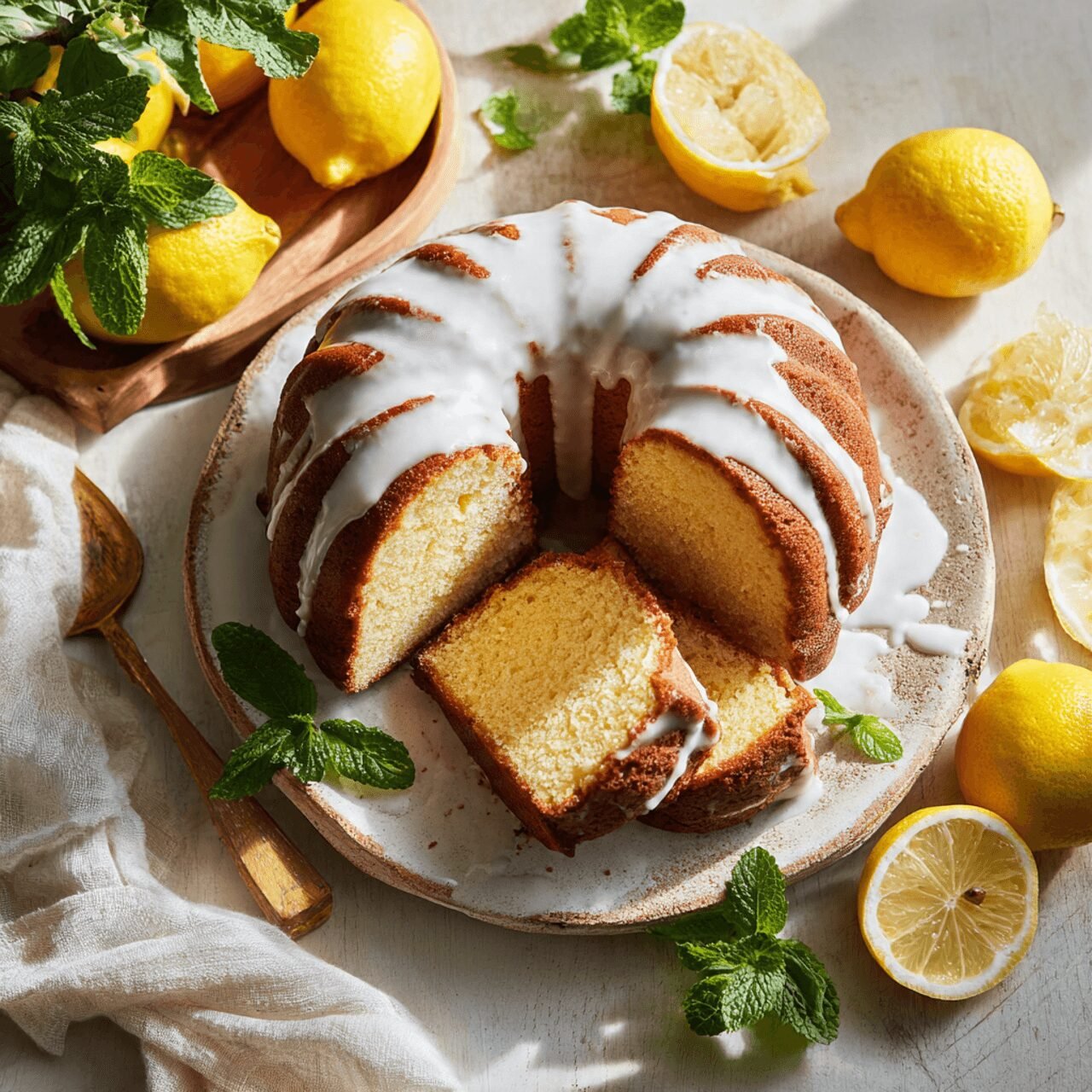

There’s something utterly magical about slicing into a perfectly golden lemon pound cake—the way the knife glides through that tender, buttery crumb, the intoxicating aroma of fresh lemon zest filling your kitchen, and that first bite that’s somehow both rich and refreshing at the same time. This isn’t just any lemon pound cake; this is the kind that becomes your signature dessert, the recipe friends beg you to make for every gathering, and the cake that disappears from the counter faster than you can say “just one more slice.”
Introduction of Recipe
Lemon pound cake is a timeless American classic that brings together the dense, buttery richness of traditional pound cake with the bright, sunny flavor of fresh lemons. This recipe creates a beautifully moist cake with a tight, velvety crumb and an intense lemon flavor that comes from both zest and juice. Unlike lighter cakes, pound cake has a satisfying density and substantial texture that makes every bite feel indulgent. It’s perfect for afternoon tea, weekend brunch, holiday gatherings, or simply when you need a slice of something sweet with your morning coffee. The beauty of this cake lies in its versatility—it’s elegant enough for special occasions yet simple enough to whip up on a Tuesday evening when you’re craving homemade goodness. Whether you’re serving it plain, dusted with powdered sugar, or drizzled with a tangy lemon glaze, this cake delivers pure citrus bliss in every bite.
History / Background
The pound cake has a fascinating history that dates back to the early 1700s in Northern Europe, particularly England. The name “pound cake” comes from the traditional recipe that called for one pound each of four simple ingredients: butter, sugar, eggs, and flour. This easy-to-remember formula made the recipe accessible to cooks of all skill levels, and it could be scaled up or down depending on how many people you needed to feed. The original pound cakes were quite plain, relying on the quality of the butter and the technique of creaming for their delicious flavor and tender texture.
As the recipe traveled across the Atlantic to America, particularly to the Southern states, it became a beloved staple of American baking. Southern cooks embraced pound cake with enthusiasm, and it became a fixture at church socials, family reunions, and Sunday dinners. Over time, creative bakers began adding flavors to the basic recipe—vanilla, almond, chocolate, and of course, lemon. The addition of citrus was a natural evolution, as lemons provided a bright counterpoint to the cake’s rich butteriness.
Lemon pound cake specifically gained popularity in the mid-20th century when home baking was at its peak in American culture. The combination proved irresistible: the dense, buttery cake provided a luxurious mouthfeel while the lemon added a refreshing zing that prevented the cake from feeling too heavy. Today, lemon pound cake remains one of the most beloved variations, celebrated for its perfect balance of indulgence and brightness. It represents the best of American home baking—taking a classic European foundation and making it distinctly our own.
Why You’ll Love This Recipe
This lemon pound cake recipe is about to become your new favorite dessert, and here’s why: it delivers bakery-quality results with straightforward techniques that any home baker can master. The recipe has been tested and perfected to ensure consistent success every single time you make it.
Here’s what makes this recipe truly special:
- Incredibly Moist Texture – The combination of butter, sour cream, and the right ratio of ingredients creates a cake that stays moist for days
- Intense Lemon Flavor – We use both lemon zest and fresh lemon juice to maximize that bright, sunny citrus taste
- Simple Ingredients – Everything you need is probably already in your pantry and refrigerator
- Foolproof Method – Clear, detailed instructions ensure perfect results even for beginner bakers
- Impressive Presentation – This cake looks stunning with minimal effort, making it perfect for gifting or serving to guests
- Versatile Serving Options – Enjoy it plain, glazed, with whipped cream, or alongside fresh berries
- Make-Ahead Friendly – Actually tastes even better the next day as the flavors meld together
- Crowd-Pleaser – Appeals to both kids and adults, and it’s always the first dessert to disappear at gatherings
Ingredient Notes
Let’s talk about what goes into this spectacular cake and why each ingredient matters:
Unsalted Butter – The foundation of any great pound cake. Butter provides richness, flavor, and helps create that tender crumb. Use unsalted so you can control the salt level. Make sure it’s at room temperature for proper creaming. If you only have salted butter, reduce the added salt by half.
Granulated Sugar – Provides sweetness and helps create structure. When creamed with butter, sugar creates air pockets that give the cake its texture. Don’t substitute with other sweeteners as it will affect the texture.
Eggs – These provide structure, moisture, and richness. Large eggs are standard for baking. Room temperature eggs incorporate better into the batter. If your eggs are cold, place them in warm water for 5 minutes before using.
All-Purpose Flour – The structural backbone of the cake. Measure carefully by spooning flour into your measuring cup and leveling it off. Too much flour makes a dry cake; too little makes it dense and gummy.
Sour Cream – This is the secret ingredient for moisture and tenderness. The acidity also enhances the lemon flavor. You can substitute with full-fat Greek yogurt in a pinch, but sour cream gives the best results.
Fresh Lemons – Both the zest and juice are essential. Always use fresh lemons, never bottled juice. The zest contains oils that provide intense lemon flavor, while the juice adds brightness and acidity. You’ll need about 3-4 medium lemons for this recipe.
Vanilla Extract – Enhances all the other flavors and adds depth. Pure vanilla extract is worth the investment.
Baking Powder – Provides a little lift to what would otherwise be a very dense cake. Don’t skip it or substitute with baking soda.
Salt – Balances the sweetness and enhances all the flavors. Even though it’s a small amount, it’s crucial.
Equipment Needed
Having the right tools makes baking so much easier and more enjoyable. Here’s what you’ll need:
- 9×5-inch loaf pan – Standard size for pound cake; metal pans work best for even browning
- Electric mixer – Either stand mixer or hand mixer for creaming butter and sugar
- Mixing bowls – At least two medium bowls for separating wet and dry ingredients
- Measuring cups and spoons – Accurate measurements are crucial in baking
- Microplane or fine grater – For zesting lemons without getting the bitter white pith
- Citrus juicer – Makes extracting lemon juice easy and efficient
- Rubber spatula – For scraping down the bowl and folding ingredients gently
- Wire cooling rack – Essential for proper cooling to prevent a soggy bottom
- Parchment paper – For lining the pan to ensure easy removal
- Toothpick or cake tester – For checking doneness
- Sifter or fine-mesh strainer – Optional but helpful for dusting with powdered sugar

Lemon Pound Cake Recipe
- Total Time: 1 hour 20 minutes
- Yield: 10-12 slices 1x
- Diet: Vegetarian
Ingredients
For the Cake:
- 1 cup (226g) unsalted butter, softened to room temperature
- 2 cups (400g) granulated sugar
- 4 large eggs, room temperature
- 3 cups (375g) all-purpose flour
- ½ teaspoon baking powder
- ½ teaspoon salt
- 1 cup (240ml) sour cream, room temperature
- ¼ cup (60ml) fresh lemon juice
- 2 tablespoons lemon zest (from about 3–4 lemons)
- 2 teaspoons vanilla extract
For the Lemon Glaze (Optional):
- 1½ cups (180g) powdered sugar
- 3–4 tablespoons fresh lemon juice
- 1 teaspoon lemon zest
Instructions
- Prepare Your Pan and Oven: Preheat your oven to 325°F (163°C). Grease a 9×5-inch loaf pan generously with butter or non-stick spray, then line the bottom with parchment paper, leaving an overhang on the long sides for easy removal. Lightly dust the pan with flour, tapping out any excess.
- Cream Butter and Sugar: In a large mixing bowl using an electric mixer, beat the softened butter on medium speed for about 2 minutes until creamy and smooth. Gradually add the sugar and continue beating on medium-high speed for 4-5 minutes until the mixture is light, fluffy, and pale in color. This step is crucial for incorporating air into the cake.
- Add Eggs: Reduce mixer speed to medium and add eggs one at a time, beating well after each addition (about 30 seconds per egg). Scrape down the sides of the bowl as needed. The mixture should look smooth and emulsified.
- Mix Dry Ingredients: In a separate medium bowl, whisk together the flour, baking powder, and salt until well combined.
- Combine Wet Ingredients: In a small bowl, stir together the sour cream, lemon juice, lemon zest, and vanilla extract until smooth.
- Alternate Adding Ingredients: With the mixer on low speed, add the flour mixture to the butter mixture in three additions, alternating with the sour cream mixture in two additions, beginning and ending with the flour. Mix just until combined after each addition—do not overmix. The batter should be thick and smooth with no flour streaks visible.
- Bake the Cake: Pour the batter into the prepared loaf pan and smooth the top with a spatula. Tap the pan gently on the counter a few times to release any air bubbles. Bake for 60-75 minutes, or until the top is golden brown and a toothpick inserted into the center comes out with just a few moist crumbs. If the top starts browning too quickly, tent it loosely with aluminum foil during the last 15-20 minutes.
- Cool Completely: Remove the cake from the oven and let it cool in the pan for 15 minutes on a wire rack. Then, use the parchment paper overhang to lift the cake out of the pan and transfer it to the wire rack to cool completely, about 1-2 hours.
- Make the Glaze (Optional): In a medium bowl, whisk together the powdered sugar, lemon juice, and lemon zest until smooth. Start with 3 tablespoons of lemon juice and add more if needed to reach your desired consistency—it should be thick but pourable.
- Glaze and Serve: Once the cake is completely cool, drizzle the glaze over the top, letting it drip down the sides naturally. Allow the glaze to set for about 15 minutes before slicing. Cut into thick slices and serve.
Notes
- Room temperature ingredients are essential for proper emulsification and a smooth batter.
- Don’t overmix the batter once you add the flour, as this can lead to a tough, dense cake.
- Every oven is different—start checking for doneness at 60 minutes but don’t be surprised if it needs the full 75 minutes.
- The cake can be made without the glaze and simply dusted with powdered sugar for a more subtle presentation.
- For extra lemon intensity, poke holes in the warm cake with a skewer and brush with a lemon simple syrup before glazing.
- Prep Time: 20 minutes
- Cook Time: 60 minutes
- Category: Dessert
- Method: Baking
- Cuisine: American
Nutrition
- Serving Size: 1 slice (based on 12 slices)
- Calories: 425
- Sugar: 38g
- Sodium: 180mg
- Fat: 20g
- Saturated Fat: 12g
- Unsaturated Fat: 6g
- Trans Fat: 0.5g
- Carbohydrates: 57g
- Fiber: 1g
- Protein: 6g
- Cholesterol: 110mg
Tips & Variations
Lemon Poppy Seed Pound Cake: Add 2 tablespoons of poppy seeds to the batter for a delightful crunch and classic flavor combination.
Lemon Blueberry Pound Cake: Gently fold 1 cup of fresh blueberries tossed in a tablespoon of flour into the finished batter before baking.
Lemon Lavender Pound Cake: Add 1 tablespoon of culinary lavender to the sugar and let it sit for 30 minutes before creaming with the butter. Strain out the lavender before adding eggs.
Meyer Lemon Version: Substitute Meyer lemons for regular lemons for a sweeter, more floral citrus flavor.
Reduced Sugar Option: You can reduce the sugar by ¼ cup without significantly affecting the texture, though the cake will be less sweet.
Gluten-Free Adaptation: Use a 1:1 gluten-free baking flour blend with xanthan gum for a gluten-free version.
Lemon Cream Cheese Frosting: Instead of glaze, try a tangy cream cheese frosting with lemon zest for a richer topping.
Individual Mini Loaves: Divide the batter among 4 mini loaf pans and reduce baking time to 35-45 minutes.
Pro Chef Tips
Zest Before Juicing: Always zest your lemons before cutting them to juice—it’s nearly impossible to zest a halved lemon efficiently.
The Creaming Method Matters: Take your time creaming the butter and sugar. This step creates the air pockets that give pound cake its structure. The mixture should be noticeably lighter in color and fluffy in texture.
Temperature Control: All ingredients should be at room temperature (about 65-70°F). Cold eggs can cause the butter to seize up, resulting in a lumpy batter that won’t bake evenly.
Low and Slow Baking: Pound cakes need a lower temperature and longer baking time than other cakes. This prevents the outside from over-browning while the center finishes cooking.
The Toothpick Test: A few moist crumbs clinging to the toothpick is perfect—if it comes out completely clean, the cake may be slightly overbaked.
Patience with Cooling: Don’t rush the cooling process. A warm cake is fragile and can break when you try to remove it from the pan. Wait the full 15 minutes.
Flavor Development: Pound cake actually tastes better the next day as the flavors meld and the texture becomes even more tender. Wrap it well and let it rest overnight if you have the patience.
Invest in Quality Butter: Since butter is such a prominent flavor in pound cake, using high-quality European-style butter with higher fat content makes a noticeable difference.
Common Mistakes to Avoid
Overmixing the Batter: Once you add the flour, mix just until combined. Overmixing develops gluten, which makes the cake tough and dense instead of tender.
Skipping the Room Temperature Step: Cold ingredients don’t emulsify properly, leading to a grainy texture and uneven baking. Plan ahead and set everything out 1-2 hours before baking.
Opening the Oven Door Too Early: Resist the urge to check on your cake before the 55-minute mark. Opening the door releases heat and can cause the cake to sink in the middle.
Using Old Leavening Agents: Baking powder loses its potency over time. If yours is more than 6 months old, it might not provide adequate lift. Test it by adding a spoonful to hot water—it should fizz vigorously.
Not Greasing the Pan Properly: Even with non-stick pans, you need adequate greasing. Use the parchment paper sling method for foolproof removal every time.
Slicing Too Soon: Cutting into a warm cake can cause it to fall apart or become gummy. Wait until it’s completely cool for clean, beautiful slices.
Storage & Meal Prep
Room Temperature Storage: Wrap the cooled, unglazed cake tightly in plastic wrap or store in an airtight container. It will stay moist and delicious at room temperature for up to 4 days. If glazed, wait until the glaze sets completely before wrapping.
Refrigerator Storage: You can refrigerate the cake for up to 1 week. Wrap it well to prevent it from absorbing refrigerator odors. Note that refrigeration can dry out the cake slightly, so room temperature storage is preferred if you’ll eat it within a few days.
Shelf Life: The high butter and sugar content act as natural preservatives, giving pound cake a longer shelf life than many other cakes.
Reheating: While delicious at room temperature, you can warm individual slices in the microwave for 10-15 seconds to restore that fresh-from-the-oven softness. Alternatively, warm slices in a 300°F oven for 5-7 minutes.
Maintaining Moisture: If the cake starts to dry out, brush slices lightly with a lemon simple syrup or serve with whipped cream to add moisture back.
Make-Ahead & Freezer Notes
Making Ahead: This cake is actually an excellent make-ahead dessert. Bake it 1-2 days before you need it, wrap it well, and store it at room temperature. The flavors deepen and the texture becomes even more tender as it sits.
Freezing Instructions: Pound cake freezes beautifully for up to 3 months. Wrap the completely cooled, unglazed cake tightly in plastic wrap, then wrap again in aluminum foil or place in a freezer-safe bag. Label with the date.
Freezing Slices: For portion control, slice the cake first, then wrap individual slices in plastic wrap and freeze in a freezer bag. This way you can thaw just what you need.
Thawing: For best results, thaw the cake overnight in the refrigerator, still wrapped. Then bring to room temperature before serving, about 1 hour. For quicker thawing, leave it at room temperature for 2-3 hours.
Glazing After Freezing: Always add the glaze after thawing. Glaze doesn’t freeze well and can become watery and unattractive.
Freezing Batter: In a pinch, you can freeze the unbaked batter in the prepared pan for up to 1 month. Thaw in the refrigerator overnight, then bring to room temperature and bake as directed, adding 5-10 minutes to the baking time.
Serving Suggestions
Lemon pound cake is incredibly versatile and pairs beautifully with so many accompaniments:
Classic Presentations: Serve slices dusted with powdered sugar alongside hot tea or coffee for an elegant afternoon treat. Add a dollop of freshly whipped cream and a few fresh berries for a simple yet stunning dessert.
Fruit Pairings: Fresh strawberries, blueberries, or raspberries complement the lemon beautifully. You can also serve it with macerated berries (berries tossed with a little sugar and left to release their juices) or a berry compote.
Ice Cream and Sorbet: A scoop of vanilla ice cream or lemon sorbet transforms this into a more substantial dessert. Try it with raspberry sorbet for a beautiful color contrast.
Whipped Toppings: Vanilla whipped cream, lemon curd, or mascarpone cream all make wonderful accompaniments. For something extra special, make a lemon mascarpone cream by folding lemon curd into whipped mascarpone.
Breakfast or Brunch: Toast slices lightly and spread with butter, cream cheese, or lemon curd for a decadent breakfast. It’s also perfect alongside a fruit salad or yogurt parfait.
Beverages: Serve with Earl Grey tea, chamomile tea, or a light white wine like Moscato or Prosecco. For brunch, it pairs wonderfully with mimosas or bellinis.
Warm Dessert: Warm a slice and serve with lemon curd and vanilla ice cream for a restaurant-quality plated dessert. Garnish with candied lemon peel and fresh mint.
FAQs Section
Q: Why did my pound cake turn out dense and heavy?
A: The most common cause is overmixing the batter after adding the flour, which develops too much gluten. It could also be from using cold ingredients that didn’t emulsify properly, or from not creaming the butter and sugar long enough to incorporate enough air. Make sure to follow the timing guidelines in the recipe closely.
Q: Can I make this cake without sour cream?
A: Yes, you can substitute full-fat Greek yogurt in the same amount. The texture will be very similar, though sour cream does provide slightly more richness. You can also use buttermilk, though the texture will be slightly less dense and more cake-like.
Q: How do I know when the pound cake is done baking?
A: Insert a toothpick or cake tester into the center of the cake. It should come out with just a few moist crumbs clinging to it—not wet batter, but not completely clean either. The top should be golden brown and spring back lightly when touched. The internal temperature should be around 200-205°F if you’re using a thermometer.
Q: Why did my cake crack on top?
A: A crack on top is actually normal and traditional for pound cakes! It happens because the top sets and forms a crust while the center is still rising. It’s not a flaw—it’s a characteristic feature. If you want to minimize cracking, you can try lowering the oven temperature by 25°F and baking slightly longer.
Q: Can I use bottled lemon juice instead of fresh?
A: For best flavor, always use fresh lemon juice. Bottled lemon juice often has a bitter, artificial taste that will come through in the cake. Fresh lemons provide bright, natural flavor that makes all the difference. This is one place where fresh really matters.
Q: My cake sank in the middle. What happened?
A: This usually happens from opening the oven door too early (before 55 minutes), which causes a temperature drop. It can also occur from using old baking powder that’s lost its leavening power, or from an oven that’s not calibrated correctly and is running cooler than the dial indicates. Invest in an oven thermometer to check your actual temperature.
Q: How can I make my pound cake more lemony?
A: For extra lemon punch, make a lemon simple syrup (equal parts sugar and lemon juice, heated until sugar dissolves) and brush it over the warm cake before glazing. You can also add an extra tablespoon of lemon zest to the batter. Be careful about adding more juice to the batter itself, as too much liquid can affect the texture.
Conclusion
There you have it—the ultimate lemon pound cake recipe that’s going to become your go-to dessert for every occasion! This cake has everything you could want: that perfect buttery richness balanced with bright, zingy lemon flavor, a tender crumb that stays moist for days, and a gorgeous appearance that looks like it came straight from a fancy bakery. Whether you’re baking for a special celebration, bringing something to share with friends, or just treating yourself to a slice with your afternoon tea, this lemon pound cake delivers pure joy in every bite.
The beauty of this recipe is that it’s both impressive and approachable—you don’t need fancy equipment or advanced baking skills to create something truly spectacular. Just follow the steps, take your time with the creaming process, and let the oven work its magic. Before you know it, your kitchen will smell absolutely heavenly, and you’ll be slicing into the most gorgeous golden cake.
I’d love to hear how your lemon pound cake turns out! Drop a comment below with your experience, any variations you tried, or questions you might have. And if you love this recipe as much as I do, please share it with your fellow baking enthusiasts and save it to your Pinterest boards so you can find it again and again. Happy baking, friends—here’s to filling your home with the irresistible aroma of freshly baked lemon pound cake! 🍋