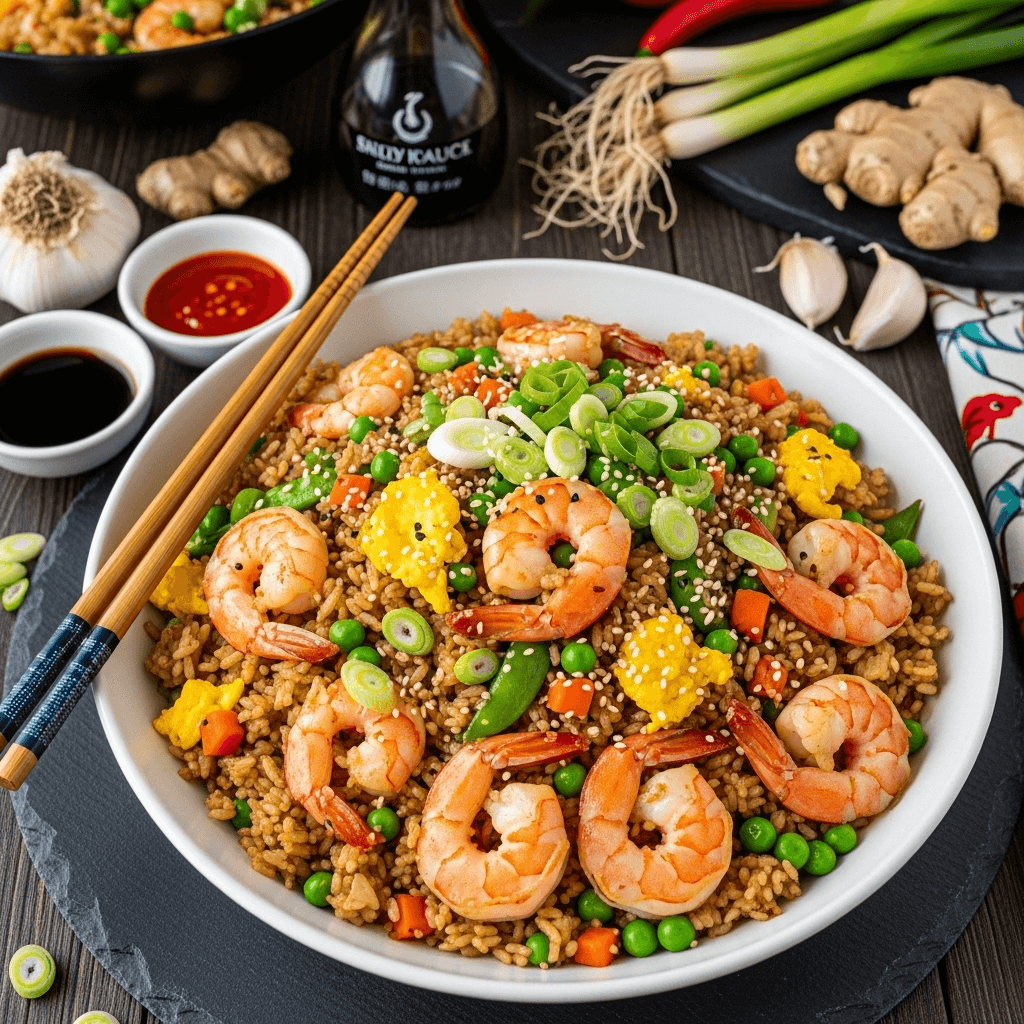
Craving restaurant-quality Asian food but don’t want to order delivery? This easy shrimp fried rice recipe is about to become your new weeknight favorite! Imagine perfectly cooked rice with tender, juicy shrimp, colorful vegetables, scrambled eggs, and all those savory Asian flavors you love—ready in just 20 minutes and tasting even better than your favorite Chinese restaurant.
Shrimp fried rice is one of those magical one-pan meals that transforms simple ingredients into something extraordinary. It’s the ultimate flexible dinner that uses up leftover rice and whatever vegetables you have in your fridge, while delivering that satisfying combination of protein, carbs, and veggies all in one delicious dish. The shrimp adds a sweet, delicate flavor and makes the meal feel special and restaurant-worthy.
What makes this shrimp fried rice recipe truly special is how it achieves that authentic restaurant taste and texture at home. Each grain of rice is perfectly separated and coated in savory seasonings, the shrimp are tender and flavorful (never rubbery!), the vegetables are crisp-tender, and everything comes together with that signature “wok hei” flavor. Perfect for busy weeknights, meal prep, using up leftovers, impressing dinner guests, or anytime you want a quick, delicious, healthier alternative to takeout!
History / Background
Shrimp fried rice, while deeply associated with Chinese-American cuisine, has roots that trace back over 1,500 years to the Sui Dynasty in China. Fried rice itself was born from practicality—Chinese cooks discovered that day-old rice could be transformed into a completely new dish when stir-fried with whatever ingredients were available. This resourceful approach to leftovers became a cornerstone of Chinese home cooking.
The original fried rice in China was quite simple, often just rice stir-fried with a bit of oil, soy sauce, and green onions. As the dish evolved through different Chinese dynasties and regions, cooks began adding proteins like eggs, pork, and chicken. Coastal regions, particularly in Southern China where seafood is abundant, naturally incorporated shrimp and other seafood into their fried rice, creating regional specialties that showcased local ingredients.
Shrimp fried rice as Americans know it today evolved significantly when Chinese immigrants came to the United States in the 19th and early 20th centuries. These immigrants opened restaurants and adapted traditional Chinese dishes to American tastes and available ingredients. Chinese-American cuisine emerged as its own unique culinary tradition, distinct from authentic Chinese cooking but beloved in its own right.
In American Chinese restaurants, shrimp fried rice became a menu staple because shrimp was perceived as a premium ingredient that could command higher prices than chicken or pork versions. The dish was often sweeter and included vegetables like peas and carrots that weren’t traditionally used in Chinese fried rice but appealed to American palates. This Americanized version became so popular that it’s now what most Americans think of as “authentic” Chinese food.
The beauty of shrimp fried rice is its incredible versatility. In Cantonese cuisine, you’ll find “Yang Chow fried rice” with shrimp, char siu pork, and multiple proteins. Thai cuisine has its own version called “khao pad goong” with distinct Thai flavors. Indonesian “nasi goreng” features shrimp with sweet soy sauce and spices. Each culture has embraced and adapted fried rice to their own tastes.
Today, shrimp fried rice represents the perfect fusion of cultures and flavors. It’s quick, affordable, customizable, and uses simple ingredients that most people have on hand. Whether you’re making it as a humble weeknight dinner or serving it at a dinner party, shrimp fried rice remains a beloved dish that brings comfort and satisfaction with every bite.
Why You’ll Love This Recipe
This isn’t just any shrimp fried rice recipe—it’s been carefully developed to deliver restaurant-quality results with foolproof techniques that guarantee perfect texture and flavor every single time. Unlike mushy, greasy takeout or bland homemade versions, this recipe hits all the right notes with tender shrimp, fluffy rice, and authentic seasoning.
Here’s why this recipe will become your go-to:
- Restaurant Quality at Home – Tastes better than takeout with fresher ingredients
- Ready in 20 Minutes – Faster than delivery and perfect for busy weeknights
- One-Pan Meal – Everything cooks in a single wok or large skillet for easy cleanup
- Protein-Packed – Shrimp and eggs provide substantial protein to keep you satisfied
- Budget-Friendly – More affordable than ordering out and feeds the whole family
- Healthier Option – Control the oil, sodium, and ingredients unlike restaurant versions
- Perfect for Leftovers – The best way to use up day-old rice
- Customizable – Easily adapt to your taste preferences and dietary needs
- Meal Prep Friendly – Makes excellent lunches throughout the week
- Kid-Approved – Even picky eaters love this mild, flavorful dish
- Impressive Yet Easy – Looks and tastes gourmet but requires basic cooking skills
- Flexible Ingredients – Use whatever vegetables you have on hand
Ingredient Notes
Understanding your ingredients helps you achieve the best shrimp fried rice possible. Here’s what you need and why each component matters:
Shrimp – The star protein! Use medium to large shrimp (31-40 count or 21-30 count per pound), peeled and deveined. Fresh or frozen shrimp both work perfectly—if using frozen, thaw them completely and pat very dry with paper towels. The shrimp should be raw, not pre-cooked, so you can cook them fresh in the dish. Plan on about 4-6 ounces of shrimp per serving.
Day-Old Cooked Rice – This is absolutely crucial! Day-old rice that’s been refrigerated is drier and firmer, preventing mushy fried rice. Freshly cooked rice contains too much moisture and becomes sticky and clumpy when stir-fried. Use white rice—jasmine or long-grain work best. You’ll need about 4 cups of cold, cooked rice (which is roughly 1.5 cups uncooked rice). If you only have fresh rice, spread it on a baking sheet and refrigerate uncovered for 2-3 hours to dry it out.
Eggs – Scrambled eggs add protein, richness, and authentic texture. They’re cooked separately first, then mixed back in at the end. Room temperature eggs scramble more evenly than cold eggs.
Vegetables – Classic choices include diced carrots, frozen peas, and sliced green onions. The carrots add sweetness and color, peas provide pops of flavor and texture, and green onions give freshness. You can customize with bell peppers, corn, broccoli, or any vegetables you prefer. Use about 1.5-2 cups total mixed vegetables.
Soy Sauce – The primary seasoning that gives fried rice its signature savory, umami flavor. Use regular soy sauce or low-sodium if you’re watching salt intake. For gluten-free, use tamari or coconut aminos. The quality of soy sauce matters—better soy sauce means better-tasting fried rice!
Oyster Sauce – This thick, savory-sweet sauce adds incredible depth and that authentic restaurant flavor. It’s made from oyster extract and has a rich umami taste. Don’t skip this ingredient if you want restaurant-quality results! Vegetarian oyster sauce (made from mushrooms) works as a substitute.
Sesame Oil – Just a small amount of toasted sesame oil adds that signature Asian restaurant aroma and flavor. It’s very potent, so a little goes a long way. Add it at the end of cooking, not for stir-frying, as it has a low smoke point.
Garlic and Ginger – Fresh minced garlic and ginger add aromatic flavor and warmth. Always use fresh, not jarred, for the best taste. Mince them finely so they distribute evenly.
Vegetable Oil – For high-heat stir-frying. Use a neutral oil with a high smoke point like vegetable oil, canola oil, or peanut oil. Avoid olive oil, which can’t handle the high heat needed for proper stir-frying.
Green Onions (Scallions) – Both white and green parts are used. The white parts cook with the rice for flavor, while the green parts are stirred in at the end for freshness and color.
Optional Seasonings:
- White Pepper – Traditional in Chinese cooking, adds subtle heat
- Rice Vinegar – A splash adds brightness and balances flavors
- Sriracha or Chili Oil – For heat if you like spicy food
Substitutions:
- Shrimp: Chicken, pork, tofu, or mixed seafood
- Soy Sauce: Tamari (gluten-free) or coconut aminos (soy-free)
- Rice: Brown rice or cauliflower rice (adjust cooking time)
- Oyster Sauce: Hoisin sauce or vegetarian oyster sauce
Equipment Needed
You don’t need specialized equipment to make restaurant-quality shrimp fried rice, just a few kitchen essentials:
- Large wok or large skillet – A 14-inch wok is ideal for stir-frying, but a 12-inch skillet works great too
- Spatula or wooden spoon – For stirring and tossing the rice
- Small bowl – For beating eggs
- Cutting board and sharp knife – For chopping vegetables and green onions
- Measuring cups and spoons – For accurate ingredient measurements
- Plate or bowl – For holding cooked shrimp and eggs temporarily
- Paper towels – For drying shrimp thoroughly
- Garlic press or fine grater – Optional, for mincing garlic and ginger quickly
Pro tip: The larger your cooking surface, the better! Fried rice needs room to spread out so it fries rather than steams. If your pan is small, cook in batches for best results.
Print
Shrimp Fried Rice Recipe
- Total Time: 22 minutes
- Yield: 4 servings 1x
- Diet: Gluten Free
Description
This easy shrimp fried rice tastes better than takeout! Made with tender shrimp, fluffy day-old rice, scrambled eggs, and crisp vegetables, all tossed in savory soy and oyster sauce. Ready in just 20 minutes for a quick, delicious, restaurant-quality dinner the whole family will love.
Ingredients
- 1 pound medium shrimp, peeled and deveined
- 4 cups cold cooked rice (day-old is best)
- 3 tablespoons vegetable oil, divided
- 3 large eggs, lightly beaten
- 3 cloves garlic, minced
- 1 tablespoon fresh ginger, minced
- 1 cup diced carrots
- 1 cup frozen peas
- 4 green onions, sliced (white and green parts separated)
- 3 tablespoons soy sauce
- 1 tablespoon oyster sauce
- 2 teaspoons sesame oil
- 1/2 teaspoon white pepper (or black pepper)
- Salt to taste
Instructions
- Prep ingredients: If your rice is clumpy, break it up with your hands or a fork into individual grains. Pat shrimp completely dry with paper towels and season lightly with salt and pepper. Have all ingredients prepped and within reach—stir-frying moves quickly!
- Cook the eggs: Heat 1 tablespoon of vegetable oil in a large wok or skillet over medium-high heat. Pour in the beaten eggs and let sit undisturbed for 20 seconds, then gently scramble until just cooked through, about 1 minute. Transfer to a plate and break into small pieces. Set aside.
- Cook the shrimp: Add another tablespoon of oil to the same wok over high heat. When hot and shimmering, add the shrimp in a single layer. Cook undisturbed for 1-2 minutes until pink on the bottom, then flip and cook another 1-2 minutes until fully pink and cooked through. Transfer to the plate with eggs. Don’t overcook or shrimp become rubbery!
- Stir-fry aromatics and vegetables: Add the remaining tablespoon of oil to the wok. Add minced garlic, ginger, and white parts of green onions. Stir-fry for 30 seconds until fragrant but not browned. Add diced carrots and stir-fry for 2-3 minutes until slightly softened. Add frozen peas and cook for 1 minute until heated through.
- Add the rice: Push vegetables to the sides of the wok, creating a well in the center. Add the cold rice to the center, breaking up any remaining clumps. Spread the rice out and let it sit undisturbed for 30-45 seconds to develop a slight crisp. Then toss everything together, incorporating the vegetables, and stir-fry for 2-3 minutes until the rice is heated through and starting to get slightly crispy.
- Season the rice: Drizzle the soy sauce and oyster sauce evenly over the rice. Add the white pepper. Toss everything vigorously for 1-2 minutes until the rice is evenly coated with the sauces and slightly golden in color. Each grain should look glossy and separated.
- Combine everything: Add the cooked shrimp, scrambled eggs, and green parts of the green onions back to the wok. Drizzle with sesame oil. Toss everything together for 1 minute until combined and heated through.
- Taste and serve: Taste and adjust seasoning with more soy sauce, salt, or pepper if needed. Serve immediately while hot, garnished with extra green onions if desired. Enjoy your restaurant-quality shrimp fried rice!
Notes
- Day-old rice is crucial: Fresh rice is too moist and will become mushy. Plan ahead or spread fresh rice on a baking sheet and refrigerate for 2-3 hours.
- High heat is essential: Keep your heat at medium-high to high throughout. This creates that signature “wok hei” flavor and prevents steaming.
- Don’t overcrowd: If your pan is small, cook in batches. Overcrowding causes steaming instead of frying.
- Pat shrimp very dry: Excess moisture causes steaming and prevents proper searing.
- Work quickly: Have everything prepped before you start. Stir-frying happens fast!
- Customize freely: This recipe is very flexible. Swap vegetables, adjust seasonings, or add extra protein as desired.
- Prep Time: 10 minutes
- Cook Time: 12 minutes
- Category: Main Dish
- Method: Stovetop
- Cuisine: Asian
Nutrition
- Serving Size: About 2 cups (1/4 of recipe)
- Calories: 425
- Sugar: 4g
- Sodium: 965mg
- Fat: 15g
- Saturated Fat: 2g
- Unsaturated Fat: 12g
- Trans Fat: 0g
- Carbohydrates: 48g
- Fiber: 3g
- Protein: 28g
- Cholesterol: 245mg
Tips & Variations
Make this shrimp fried rice recipe your own with these creative variations and helpful tips:
Protein Variations:
- Chicken Fried Rice – Replace shrimp with diced cooked chicken breast or thighs
- Combo Fried Rice – Use half shrimp, half chicken or pork for variety
- Beef Fried Rice – Use thinly sliced flank steak or ground beef
- Tofu Fried Rice – Pan-fry cubed extra-firm tofu until golden for vegetarian version
- Crab Fried Rice – Use lump crab meat for a luxurious twist
- Bacon Fried Rice – Add crispy bacon for smoky flavor
Vegetable Variations:
- Add diced bell peppers (any color)
- Include broccoli florets (blanch first)
- Mix in corn kernels
- Add edamame for extra protein
- Include diced zucchini or summer squash
- Toss in bean sprouts at the end
- Add snap peas or snow peas
Flavor Variations:
- Spicy Shrimp Fried Rice – Add 1-2 teaspoons sriracha or chili garlic sauce
- Thai-Style – Use fish sauce instead of soy sauce, add Thai basil
- Pineapple Shrimp Fried Rice – Add 1 cup diced fresh pineapple and cashews
- Kimchi Fried Rice – Stir in 1 cup chopped kimchi for Korean twist
- Curry Fried Rice – Add 1-2 teaspoons curry powder
- Garlic Butter Fried Rice – Finish with butter and extra garlic
Dietary Modifications:
- Low-Carb: Replace rice with cauliflower rice (reduce cooking time)
- Gluten-Free: Use tamari or coconut aminos instead of soy sauce
- Low-Sodium: Use low-sodium soy sauce and reduce amount
- Paleo: Use cauliflower rice and coconut aminos
- Whole Grain: Substitute brown rice (use day-old brown rice)
Pro Chef Tips
Transform your shrimp fried rice from good to absolutely restaurant-quality with these professional techniques:
The Day-Old Rice Rule: This cannot be stressed enough! Day-old refrigerated rice is the single most important factor in great fried rice. When rice cools and sits overnight, the starch structure changes—it becomes firmer and drier, which prevents it from turning mushy when stir-fried. Fresh rice, even if cooled completely, still contains too much moisture. If you’re planning fried rice for dinner, cook the rice the night before or early in the day.
Extremely Dry Shrimp: After thawing frozen shrimp or rinsing fresh shrimp, pat them absolutely bone-dry with paper towels. Excess moisture is the enemy of proper stir-frying—it causes the shrimp to steam rather than sear, and they won’t develop that nice golden color. Really squeeze those paper towels against the shrimp to remove every bit of surface moisture.
High Heat is Non-Negotiable: The signature flavor of great fried rice—called “wok hei” or “breath of the wok”—comes from cooking over very high heat. Your oil should be smoking-hot before you add ingredients. This high temperature creates slight charring and smoky flavor while ensuring ingredients fry rather than steam. Don’t be afraid of your stove’s high setting!
The Rice Resting Technique: After adding rice to the wok, press it down and let it sit completely undisturbed for 30-45 seconds before tossing. This allows the bottom layer to develop a slightly crispy, golden crust—one of the hallmarks of excellent fried rice. Then toss everything together and repeat this process once more if desired.
Cook Components Separately: Professional chefs cook eggs and protein separately before adding rice. This prevents overcooking these delicate ingredients and ensures everything has the perfect texture. It also prevents overcrowding the pan, which would lower the temperature and cause steaming instead of frying.
Season in Layers: Don’t dump all your soy sauce in at once. Add it gradually while tossing, which ensures even distribution. This prevents some bites from being too salty while others are bland. Taste as you go and adjust—you can always add more seasoning but can’t take it away.
The Sesame Oil Secret: Sesame oil has a low smoke point and burns easily, creating bitter flavor. Always add it at the very end of cooking as a finishing oil, not as a cooking oil. Just 2 teaspoons drizzled over the finished fried rice adds incredible aroma and flavor without any bitterness.
Two-Spatula Method: For easier stirring and better control, use two spatulas or a spatula and a large spoon. One hand pushes while the other lifts and tosses. This technique helps break up rice clumps and ensures even mixing without crushing the grains.
The Spray Bottle Trick: Keep a spray bottle of water nearby. If your rice starts to stick or seems too dry, a few spritzes of water (not too much!) can help. The water evaporates immediately on the hot surface, creating steam that loosens the rice without making it soggy.
Common Mistakes to Avoid
Don’t let these common shrimp fried rice pitfalls ruin your dish:
Using Fresh Rice: This is the number one mistake! Freshly cooked rice is too moist and sticky for fried rice. It will clump together and turn mushy no matter how carefully you cook it. The rice needs to be day-old and refrigerated, which dries it out and firms up the starch structure. If you’re in an absolute pinch, spread fresh rice on a baking sheet and refrigerate uncovered for at least 2-3 hours, but overnight is always better.
Overcooking the Shrimp: Shrimp cook incredibly quickly—just 1-2 minutes per side. Overcooked shrimp become rubbery, tough, and lose their sweet, delicate flavor. Cook them just until they turn pink and opaque throughout, then immediately remove them from the heat. Remember they’ll heat through again when you add them back at the end, so slightly undercooking them initially is better than overcooking.
Cooking Over Too-Low Heat: Medium or low heat causes fried rice to steam and become soggy instead of developing that characteristic slight crispness and smoky flavor. Your wok should be smoking-hot before adding ingredients. The high temperature is what creates “wok hei” and properly fried rice. If you smell burning, your heat is too high, but most home cooks err on the side of too-low heat.
Overcrowding the Pan: Trying to cook too much at once drops the temperature dramatically and causes steaming instead of frying. The rice should spread out in a relatively thin layer with lots of contact with the hot surface. If your pan is small, cook in batches—it takes a few extra minutes but makes a huge difference in texture.
Not Drying Vegetables: Frozen peas and other vegetables should be thawed and patted dry before adding. Excess moisture contributes to soggy fried rice. Carrots should be diced small so they cook quickly without releasing too much moisture. If using fresh vegetables with high water content (like zucchini), salt them lightly and let them drain for 10 minutes, then pat dry before cooking.
Adding Soy Sauce Too Early: If you add soy sauce at the beginning or while the rice is still heating up, it soaks into the rice unevenly and makes some parts soggy. Add soy sauce only after the rice is heated through and slightly crispy, then toss quickly to coat. This ensures even distribution and maintains texture.
Forgetting to Prep Everything First: Stir-frying happens incredibly fast—we’re talking 10-12 minutes from start to finish. If you stop mid-cooking to chop vegetables or measure soy sauce, your rice will burn or cook unevenly. The French term “mise en place” (everything in its place) is absolutely critical for successful stir-frying. Have every ingredient prepped, measured, and within arm’s reach before you turn on the heat.
Storage & Meal Prep
Shrimp fried rice is fantastic for meal prep and stores beautifully when handled properly:
Refrigerator Storage: Let the fried rice cool to room temperature (don’t leave out longer than 2 hours), then transfer to airtight containers and refrigerate immediately. Properly stored, shrimp fried rice keeps for 3-4 days in the refrigerator. Store in individual portion-sized containers for easy grab-and-go lunches.
Reheating Methods:
- Microwave (Quickest): Place fried rice in a microwave-safe bowl, add 1-2 tablespoons water or chicken broth, cover with a damp paper towel, and microwave for 2-3 minutes, stirring halfway through.
- Stovetop (Best Texture): Heat a large skillet over medium-high heat with a small amount of oil. Add cold fried rice and stir-fry for 3-5 minutes until heated through and slightly crispy. This method actually refreshes the texture!
- Oven: Spread fried rice in a baking dish, cover with foil, and heat at 350°F for 15-20 minutes. Less ideal but works for large quantities.
Meal Prep Strategy: Shrimp fried rice is perfect for meal prep! Make a large batch on Sunday and portion into individual containers with extra vegetables on the side. Keep separate from any sauces or toppings until ready to eat. The rice actually tastes great cold, warm, or room temperature, making it ideal for packed lunches.
Food Safety: Always refrigerate shrimp fried rice promptly within 2 hours of cooking (1 hour if room temperature is above 90°F). Shrimp and rice are both foods that can harbor bacteria if left at room temperature too long, so proper storage is important for food safety.
Make-Ahead & Freezer Notes
Shrimp fried rice can be prepared in advance, though freezing has some considerations:
Make-Ahead Prep: The best make-ahead strategy is to prep all your components separately. Cook the rice 1-2 days ahead and refrigerate it uncovered (perfect for fried rice!). Prep and marinate shrimp, chop all vegetables, and mix your sauces up to 24 hours ahead. Store everything separately in the fridge, then quickly stir-fry when ready to eat.
Freezing Shrimp Fried Rice: Fried rice can be frozen, though the texture of the rice changes slightly upon thawing—it becomes a bit softer and less fluffy. If you want to freeze it, let the fried rice cool completely, portion into freezer-safe containers or bags (remove as much air as possible), and freeze for up to 2 months. Label with the date.
Thawing and Reheating Frozen: Thaw frozen fried rice overnight in the refrigerator. Reheat in a hot skillet with a little oil, breaking up any clumps and stir-frying until heated through. The stovetop method works much better than microwave for frozen fried rice, as it helps restore some texture. You can also reheat directly from frozen—just add 5-7 more minutes and stir frequently.
Freezing Tips: The shrimp may become slightly tougher after freezing, so some people prefer to freeze fried rice without the shrimp, then add freshly cooked shrimp when reheating. The rice and vegetables freeze much better than the protein.
Best Practice: Since fried rice is so quick to make (just 20 minutes!), it’s often better to make it fresh or only 1-2 days ahead rather than freezing. However, freezing works in a pinch for meal prep or using up leftovers.
Serving Suggestions
Transform your shrimp fried rice into a complete, satisfying meal with these delicious pairings:
Traditional Asian Accompaniments:
- Egg drop soup or hot and sour soup as a starter
- Vegetable spring rolls or egg rolls
- Pot stickers or dumplings (steamed or pan-fried)
- Crab rangoon or wonton strips
- Asian cucumber salad with rice vinegar dressing
- Steamed edamame with sea salt
- Stir-fried green beans or bok choy
Protein Additions: If serving as a side dish rather than main course, pair with:
- Orange chicken or General Tso’s chicken
- Teriyaki salmon or grilled fish
- Beef and broccoli stir-fry
- Sweet and sour pork
- Mongolian beef
- Sesame chicken
- Honey walnut shrimp
Beverage Pairings:
- Hot jasmine tea or green tea
- Iced tea (sweetened or unsweetened)
- Asian beer (Tsingtao, Sapporo, Singha)
- Sake (warm or chilled)
- Ginger ale or Sprite
- Fresh limeade
- White wine like Riesling or Sauvignon Blanc
Garnish & Toppings:
- Extra sliced green onions
- Toasted sesame seeds
- Crispy fried onions or shallots
- Fresh cilantro leaves
- Lime wedges for squeezing
- Sriracha or chili oil for heat
- Fried wontons strips for crunch
Make It a Bowl: Create a shrimp fried rice bowl by topping with:
- A fried egg with runny yolk
- Sliced avocado
- Pickled vegetables
- Crispy seaweed sheets
- Furikake seasoning
FAQs Section
Can I use fresh rice instead of day-old rice?
While day-old rice is strongly preferred for the best texture, you can use fresh rice in a pinch if you dry it out first. Spread freshly cooked hot rice in a thin layer on a large baking sheet and refrigerate uncovered for at least 2-3 hours (overnight is better). Fluff and separate the grains every 30 minutes to help it dry evenly. The cold, dry rice is essential for preventing mushy fried rice—fresh hot rice contains too much moisture and will clump together and turn soggy when stir-fried.
How do I prevent my shrimp from becoming rubbery?
Rubbery shrimp result from overcooking. Shrimp cook very quickly—just 1-2 minutes per side until they turn pink and opaque. The moment they’re pink throughout, remove them from heat. Pat shrimp very dry before cooking so they sear rather than steam. Cook over high heat in a single layer without overcrowding. Remember the shrimp will heat through again when added back at the end, so slightly undercooking them initially is better than overcooking. If your shrimp are large, butterfly them so they cook more evenly and quickly.
What’s the best type of rice for fried rice?
Long-grain white rice (like jasmine or regular long-grain) is ideal for fried rice because the grains stay separate and don’t clump together. Jasmine rice is particularly popular because of its subtle fragrance and perfect texture. Medium-grain rice works but tends to be slightly stickier. Avoid short-grain sushi rice, which is too sticky for fried rice. Brown rice can be used for a healthier version, but it has a chewier texture and nuttier flavor that differs from traditional fried rice. Cauliflower rice works for low-carb diets but requires significantly less cooking time.
Can I make this recipe vegetarian or vegan?
Absolutely! For vegetarian shrimp fried rice, simply omit the shrimp and add extra vegetables like bell peppers, broccoli, mushrooms, or edamame. You can also add cubed firm tofu pan-fried until golden. For vegan, omit both shrimp and eggs (or use scrambled tofu seasoned with a pinch of turmeric for color). Make sure your oyster sauce is vegetarian (mushroom-based oyster sauce is widely available). The recipe is extremely flexible and works beautifully without animal proteins.
Why does my fried rice turn out mushy or clumpy?
Mushy, clumpy fried rice happens for several reasons: using fresh rice that’s too moist, cooking over too-low heat (causing steaming instead of frying), overcrowding the pan, adding too much soy sauce or liquid, or not breaking up the rice properly before cooking. To fix this, always use cold day-old rice, cook over high heat, use a large pan or cook in batches, add soy sauce sparingly at the end, and break up rice clumps with your hands before starting. The rice should be relatively dry and each grain separate before it goes in the pan.
Can I add other proteins or make combination fried rice?
Yes! Combination fried rice is delicious and often served in restaurants. You can use any combination of shrimp, chicken, pork, beef, or tofu. Cook each protein separately, remove from the pan, then add them all back at the end. Popular combinations include shrimp and chicken, shrimp and pork (Chinese BBQ pork/char siu is traditional), or all three proteins together. Just keep the total amount of protein to about 1-1.5 pounds for this recipe so the ratio stays balanced.
How do I get that “restaurant flavor” in my fried rice?
The secret to restaurant-quality flavor includes several factors: using day-old rice, cooking over very high heat to develop “wok hei” (smoky flavor), using both soy sauce AND oyster sauce (oyster sauce is key!), finishing with sesame oil (not cooking with it), adding white pepper, and ensuring your garlic and ginger are fresh and fragrant. Restaurants also use high-BTU burners that home stoves can’t match, but following these techniques gets you very close. Don’t skip the oyster sauce—it’s the secret ingredient that makes restaurant fried rice taste so good!
Conclusion
And there you have it—everything you need to make the most amazing, restaurant-quality shrimp fried rice right in your own kitchen! This recipe proves that you don’t need to order takeout to enjoy perfectly seasoned, flavorful fried rice with tender shrimp and crisp vegetables. With just 20 minutes and simple ingredients, you can create a meal that tastes better than delivery and is healthier and more affordable too.
The beauty of this easy shrimp fried rice recipe is its incredible versatility and convenience. It’s perfect for busy weeknights when you need dinner fast, ideal for using up leftover rice and vegetables, excellent for meal prep, and impressive enough to serve to guests. Plus, once you master the basic technique, you can customize it endlessly with your favorite proteins, vegetables, and seasonings.
I hope this recipe becomes a regular part of your dinner rotation! The combination of sweet, tender shrimp with savory fried rice is simply irresistible, and knowing how quick and easy it is to make means you’ll never need to settle for disappointing takeout again.
Now it’s your turn to fire up that wok and create some magic! When you make this shrimp fried rice, I’d absolutely love to hear how it turned out. What vegetables did you add? Did you make it spicy? Drop a comment below and share your experience!
Don’t forget to save this recipe to your favorite Pinterest board so you’ll have it ready the next time you’re craving delicious Asian food at home! Share it with your friends who love quick, tasty dinners, and if you make it, snap a photo and tag me on social media—I love seeing your beautiful cooking creations!
Happy cooking, and may your fried rice always be perfectly fluffy and never mushy! 🍤