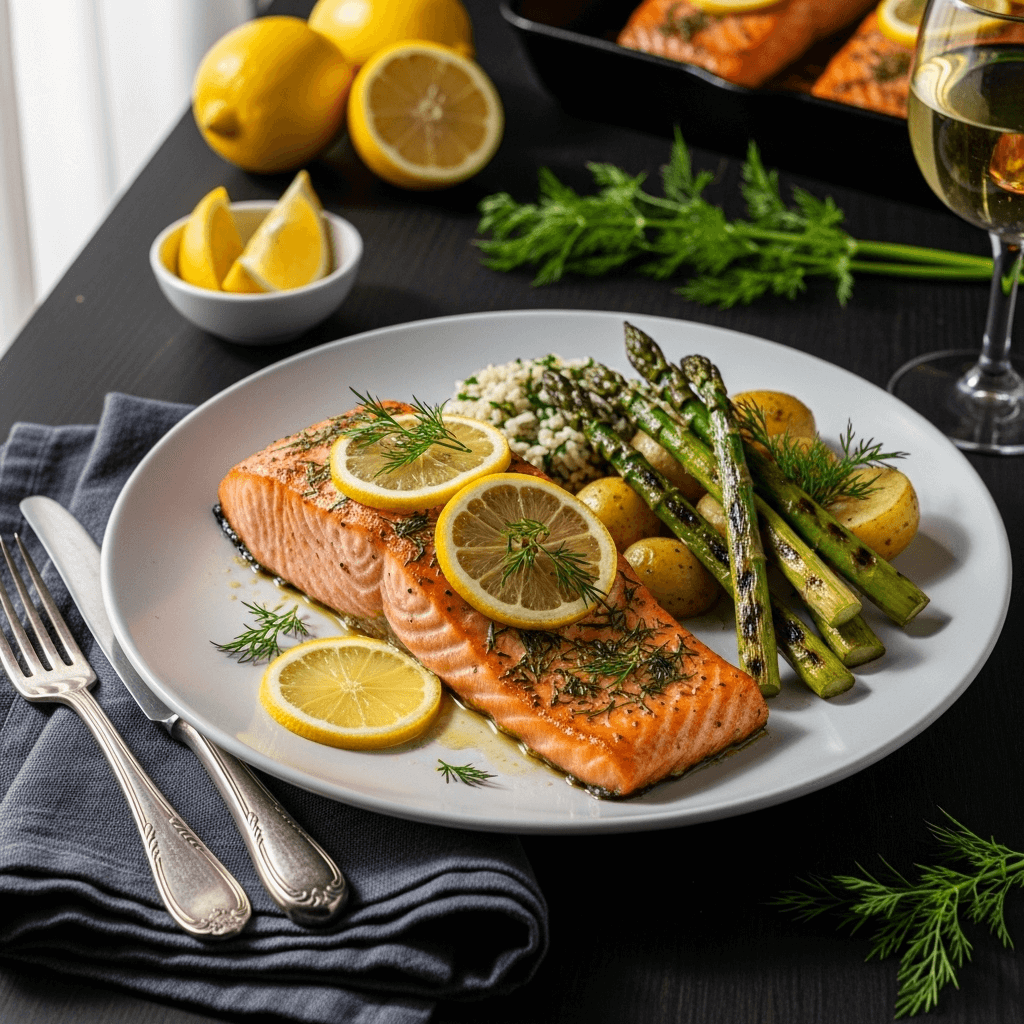
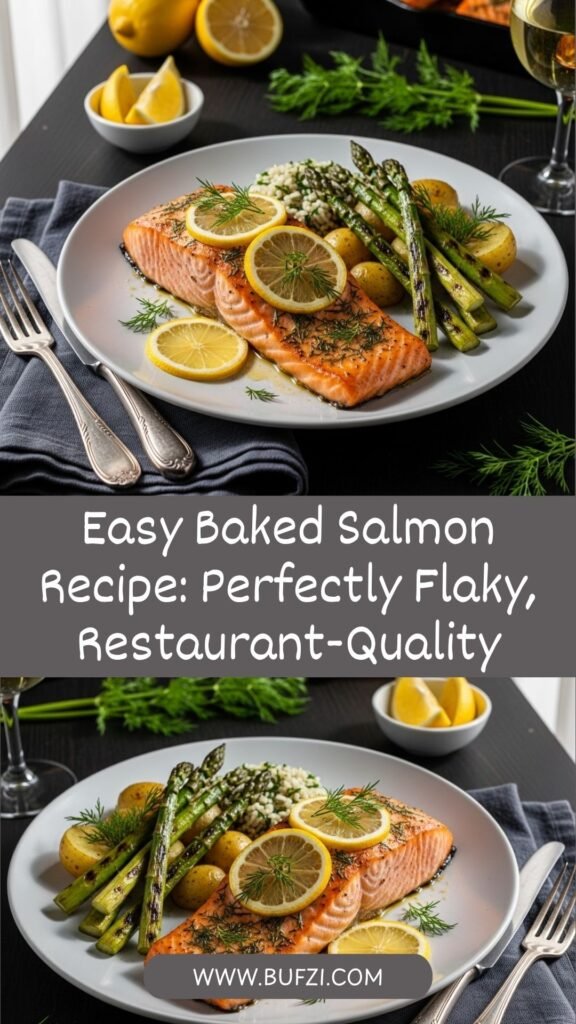
If you’re looking for a healthy, impressive dinner that comes together in less than 30 minutes, this easy baked salmon recipe is exactly what you need. This simple baked salmon delivers perfectly flaky, moist fish with a beautiful golden exterior and tender, buttery interior that practically melts in your mouth. Unlike complicated seafood preparations that intimidate home cooks, this foolproof method requires just a handful of ingredients and one baking sheet—no special techniques, no flipping, no fuss. The result is restaurant-quality salmon that looks and tastes like you spent hours in the kitchen, when you actually spent less time than it takes to order delivery.
This quick salmon recipe is perfect for busy weeknight dinners when you need something nutritious fast, special occasion meals when you want to impress guests, meal prep Sundays when you’re cooking for the week ahead, or romantic date nights at home when you want elegance without stress. Ready in just 20 minutes from prep to plate, it’s beginner-friendly enough for those who’ve never cooked fish before, yet sophisticated enough to serve at dinner parties. The mild seasonings enhance rather than overpower salmon’s natural flavor, making it appealing to fish lovers and skeptics alike. Whether you’re serving it with roasted vegetables, over rice, alongside a crisp salad, or with creamy mashed potatoes, this versatile salmon recipe consistently delivers perfect results that will have everyone thinking you’re a culinary genius.
History / Background
Salmon has been a prized food source for thousands of years, particularly for indigenous peoples of the Pacific Northwest and Alaska, where wild salmon runs were abundant and formed the basis of entire economies and cultures. Native American tribes developed sophisticated methods for catching, preserving, and preparing salmon long before European contact.
The popularization of salmon as an everyday protein for American home cooks is a more recent phenomenon. In the early-to-mid 20th century, salmon was primarily consumed canned or smoked in most parts of the United States, considered a luxury fresh fish available only in coastal regions or upscale restaurants. The development of commercial fishing, improved refrigeration, and particularly the rise of salmon farming in Norway in the 1960s-1970s transformed salmon’s accessibility and affordability.
By the 1980s and 1990s, health consciousness brought renewed attention to salmon as a “superfood” rich in omega-3 fatty acids, high-quality protein, and essential nutrients. Medical recommendations to eat fish twice weekly, combined with increased availability and falling prices (thanks to aquaculture), made salmon a mainstream protein choice.
The simple baked salmon method we use today represents a shift from complex French preparations toward clean, minimalist cooking that emerged in the late 20th century. Rather than heavy sauces and elaborate techniques, modern home cooks embraced the philosophy of using quality ingredients simply prepared to let natural flavors shine. Baking salmon in a hot oven creates a foolproof method that’s nearly impossible to mess up—perfect for busy families and novice cooks.
Television cooking shows and food blogs in the 2000s-2010s further democratized salmon cooking, teaching home cooks that preparing restaurant-quality fish wasn’t intimidating or complicated. Today’s easy baked salmon recipe reflects this evolution—accessible, healthy, quick, and absolutely delicious without requiring culinary school training.
Why You’ll Love This Recipe
This easy baked salmon isn’t just another fish recipe—it’s a game-changer that will transform how you think about cooking seafood at home. The salmon comes out perfectly every time with flaky, moist texture and delicate flavor that even self-proclaimed fish haters enjoy. Unlike stovetop methods that can burn easily or leave your kitchen smoky, baking is hands-off and foolproof. Here’s why this recipe will become your go-to healthy dinner:
- Ready in 20 minutes – From fridge to table faster than takeout delivery
- Foolproof method – Nearly impossible to mess up, perfect for beginners
- Minimal cleanup – One baking sheet means easy cleanup
- Restaurant-quality – Looks and tastes like expensive restaurant salmon
- Incredibly healthy – Packed with omega-3s, protein, and nutrients
- Naturally gluten-free – Perfect for gluten-sensitive diets
- Keto and paleo-friendly – Fits multiple dietary lifestyles
- Budget-conscious – Salmon is surprisingly affordable when on sale
- Meal prep perfect – Makes excellent leftovers for salads and bowls
- Impressively elegant – Sophisticated enough for guests, easy enough for Tuesday
Ingredient Notes
Quality ingredients and understanding their roles creates perfect salmon every time. Here’s what you need and why each component matters:
Salmon Fillets: The star of the show. Look for fresh, high-quality salmon with vibrant color and no fishy smell. Atlantic salmon (usually farmed) is milder and fattier; wild-caught salmon (sockeye, coho, king) has more pronounced flavor and leaner texture. Both work beautifully. Choose fillets about 1 to 1½ inches thick for even cooking. Skin-on or skinless both work—skin helps protect fish during cooking and crisps up nicely.
Olive Oil: Creates a protective barrier that keeps salmon moist while promoting browning. Use extra virgin olive oil for best flavor. Can substitute with avocado oil (higher smoke point) or melted butter for richer taste.
Lemon: Fresh lemon juice adds brightness that cuts through salmon’s richness. Use fresh-squeezed, never bottled—the flavor difference is dramatic. Lemon slices on top during baking infuse subtle citrus flavor and look beautiful.
Garlic: Fresh minced garlic adds aromatic depth without overpowering delicate fish. Use 2-3 cloves, minced finely or pressed. Garlic powder (½ teaspoon) can substitute in a pinch but lacks fresh garlic’s complexity.
Salt and Black Pepper: Essential for enhancing salmon’s natural flavor. Use quality sea salt or kosher salt and freshly ground black pepper. Don’t be shy with seasoning—salmon can handle it.
Fresh Herbs: Dill is the classic pairing with salmon (earthy, slightly tangy), but parsley, thyme, or basil work beautifully too. Fresh herbs are vastly superior to dried for this simple preparation.
Optional Add-Ons: Honey or maple syrup (1 tablespoon) for subtle sweetness, Dijon mustard (1 teaspoon) for tang, paprika (½ teaspoon) for color and mild spice, or red pepper flakes for heat.
Equipment Needed
This simple recipe requires minimal equipment you definitely already own:
- Baking sheet or sheet pan – For baking salmon; line with parchment or foil for easy cleanup
- Parchment paper or aluminum foil – Prevents sticking and makes cleanup effortless
- Small bowl – For mixing seasonings
- Brush or spoon – For applying oil and seasonings to salmon
- Sharp knife – For slicing lemon and checking doneness
- Measuring spoons – For accurate seasoning amounts
- Instant-read thermometer – Optional but helpful for perfect doneness (should read 145°F)
- Spatula – For transferring cooked salmon to plates
Easy Baked Salmon Recipe
- Total Time: 20 minutes
- Yield: 4 servings 1x
- Diet: Gluten Free
Description
Easy baked salmon with simple seasonings that’s perfectly flaky, moist, and delicious every time. This foolproof recipe delivers restaurant-quality salmon in just 20 minutes with minimal effort and one pan.
Ingredients
For the Salmon:
- 4 salmon fillets (6 oz each, about 1 to 1½ inches thick)
- 2 tablespoons olive oil
- 2 tablespoons fresh lemon juice
- 3 cloves garlic, minced
- 1 teaspoon salt
- ½ teaspoon black pepper
- 1 teaspoon paprika (optional, for color)
- 2 tablespoons fresh dill, chopped (or parsley)
For Serving:
- Lemon wedges
- Extra fresh herbs for garnish
Optional Glaze:
- 1 tablespoon honey or maple syrup
- 1 teaspoon Dijon mustard
Instructions
- Preheat Oven: Preheat your oven to 400°F (200°C). This high heat ensures salmon cooks quickly while developing a beautiful exterior. Position rack in center of oven.
- Prepare Baking Sheet: Line a large baking sheet with parchment paper or aluminum foil for easy cleanup. Lightly spray or brush with oil to prevent sticking.
- Pat Salmon Dry: Remove salmon from packaging and pat completely dry with paper towels. This crucial step ensures proper seasoning adhesion and helps achieve a beautiful exterior. Moisture prevents browning.
- Arrange on Pan: Place salmon fillets on prepared baking sheet, skin-side down if using skin-on salmon. Leave at least 2 inches between fillets for even heat circulation.
- Make Seasoning Mixture: In a small bowl, combine olive oil, lemon juice, minced garlic, salt, black pepper, paprika (if using), and half the fresh herbs. Mix well to create a flavorful coating.
- Season Salmon: Brush or spoon the seasoning mixture generously over the top and sides of each salmon fillet. Make sure every surface is coated—this creates flavor and moisture.
- Add Optional Glaze: If using honey and Dijon, mix them together and brush lightly over seasoned salmon for subtle sweetness and tang.
- Bake: Place baking sheet in preheated oven. Bake for 12-15 minutes depending on thickness. General rule: 4-6 minutes per ½-inch thickness. Salmon is done when it flakes easily with a fork and internal temperature reaches 145°F.
- Check Doneness: At 12 minutes, check thickest part of salmon. Gently press with fork—if it flakes easily and looks opaque in the center with a slightly translucent core, it’s perfect. If still translucent throughout, give it 2-3 more minutes.
- Rest Briefly: Remove from oven and let rest for 2-3 minutes. Salmon continues cooking slightly from residual heat, and resting allows juices to redistribute.
- Garnish and Serve: Sprinkle with remaining fresh herbs, add lemon wedges for squeezing, and serve immediately while hot.
Notes
- Thickness matters: Adjust cooking time based on fillet thickness—thinner cooks faster, thicker needs more time
- Don’t overcook: Salmon continues cooking after removing from oven; slight translucence in center is perfect
- Skin removal: If using skin-on salmon, skin peels off easily after cooking
- Even cooking: Choose fillets of similar thickness for uniform doneness
- Make ahead: Season salmon up to 4 hours ahead, refrigerate, then bake when ready
- Frozen salmon: Thaw completely in refrigerator overnight before cooking
- Prep Time: 5 minutes
- Cook Time: 15 minutes
- Category: Dinner
- Method: Baking
- Cuisine: American
Nutrition
- Serving Size: 1 fillet (6 oz)
- Calories: 340
- Sugar: 0g
- Sodium: 650mg
- Fat: 20g
- Saturated Fat: 3g
- Unsaturated Fat: 16g
- Trans Fat: 0g
- Carbohydrates: 2g
- Fiber: 0g
- Protein: 37g
- Cholesterol: 95mg
Tips & Variations
Flavor Variations:
- Asian-Inspired: Brush with soy sauce, sesame oil, ginger, and honey glaze
- Mediterranean: Top with cherry tomatoes, olives, capers, and oregano
- Cajun Spiced: Use Cajun seasoning blend instead of paprika
- Maple Glazed: Brush with maple syrup, Dijon, and rosemary
- Teriyaki: Use teriyaki sauce, sesame seeds, and green onions
- Lemon Herb: Extra lemon zest, thyme, and parsley for bright flavor
- Garlic Butter: Replace oil with melted butter and double the garlic
Topping Ideas:
- Pesto sauce drizzled over cooked salmon
- Cream cheese and dill spread
- Mango or pineapple salsa for tropical twist
- Avocado slices for healthy fats
- Compound butter (herb butter melting on hot salmon)
Cooking Method Variations:
- Broiled: Cook under broiler for 8-10 minutes for more caramelization
- Grilled: Grill over medium-high heat for 4-6 minutes per side
- Pan-Seared: Sear skin-side down in hot skillet, finish in oven
- Air Fryer: Cook at 400°F for 7-9 minutes
Dietary Modifications:
- Whole30: Skip honey, use compliant seasonings
- Low-Sodium: Reduce salt, use herbs and lemon for flavor
- Paleo: Already compliant as written
- Keto: Already compliant as written
Pro Chef Tips
Pat Salmon Completely Dry: Moisture is the enemy of browning and proper seasoning adhesion. Take an extra moment to thoroughly pat salmon dry with paper towels before seasoning. This simple step dramatically improves the final result.
Room Temperature Matters: Take salmon out of refrigerator 15-20 minutes before cooking to bring to room temperature. Cold fish straight from fridge cooks unevenly—cold center, overcooked exterior. Room temp ensures even cooking throughout.
High Heat, Short Time: 400°F is the sweet spot for baked salmon. Lower temperatures dry it out; higher can burn exterior before interior cooks. The high heat cooks fish quickly, preserving moisture and creating slight caramelization.
Don’t Overcook: Salmon should be slightly translucent in the very center when you remove it from oven. It continues cooking from residual heat (carryover cooking) and will be perfectly opaque by serving time. Overcooked salmon is dry and chalky—no fixing that.
Use a Thermometer: An instant-read thermometer removes guesswork. Pull salmon at 140-145°F internal temperature in the thickest part. It will reach perfect 145°F during resting.
Quality Over Cost: When possible, choose wild-caught salmon over farmed for superior flavor, texture, and nutrition. If budget requires farmed, Atlantic salmon is still delicious and nutritious—just be discerning about quality and freshness.
Season Generously: Fish can handle more seasoning than you think. Don’t be shy with salt, garlic, and herbs. Salmon’s mild flavor benefits from assertive seasoning that enhances rather than masks its natural taste.
Common Mistakes to Avoid
Mistake #1: Overcooking the Salmon – This is the number one error home cooks make. Overcooked salmon is dry, chalky, and disappointing. Remember that salmon continues cooking after leaving the oven from residual heat. Pull it when there’s still slight translucence in the center—it will finish cooking to perfect doneness during the 2-3 minute rest.
Mistake #2: Not Patting Salmon Dry – Wet salmon won’t brown properly and seasonings won’t adhere. Surface moisture creates steam that prevents the beautiful exterior we want. Always thoroughly pat salmon dry with paper towels before seasoning.
Mistake #3: Using Fillets of Different Thicknesses – If one fillet is 1 inch thick and another is ½ inch, they cook at different rates. The thin one will be overcooked by the time the thick one is done. Choose fillets of similar thickness or adjust cooking times individually.
Mistake #4: Baking at Too Low Temperature – Temperatures below 375°F result in longer cooking times that dry out salmon. The sweet spot is 400°F—hot enough for quick cooking and slight caramelization, not so hot that exterior burns.
Mistake #5: Skipping the Rest Period – Cutting into salmon immediately after removing from oven releases all the juices onto the plate instead of staying in the fish. The brief 2-3 minute rest allows juices to redistribute for moister, more flavorful salmon.
Storage & Meal Prep
Refrigerator Storage: Let cooked salmon cool to room temperature (within 2 hours for food safety), then transfer to airtight containers. Store in refrigerator for up to 3 days. Salmon is safe to eat cold, making it perfect for meal prep.
Reheating Instructions: Salmon is actually delicious cold in salads or grain bowls, but if you prefer it warm, reheat gently to avoid drying out. Microwave covered on 50% power for 1-2 minutes, or reheat in 275°F oven wrapped in foil for 10-15 minutes. Don’t overheat or it becomes dry.
Cold Uses: Leftover salmon is fantastic flaked into salads, mixed into pasta, added to grain bowls, stuffed into avocados, or used in salmon salad (like tuna salad). The possibilities are endless.
Meal Prep Strategy: Bake a large batch (4-6 fillets) on Sunday. Portion into containers with vegetables and grains for ready-made healthy lunches all week. Salmon reheats reasonably well or can be enjoyed cold.
Preventing Dryness: When storing, include a small pat of butter on top or drizzle with olive oil to help maintain moisture. Cover tightly to prevent drying out in refrigerator.
Make-Ahead & Freezer Notes
Prep Ahead: Season salmon up to 4 hours before cooking. Place seasoned fillets on baking sheet, cover tightly with plastic wrap, and refrigerate. When ready to cook, remove from fridge, let sit 15 minutes, then bake as directed.
Freezing Cooked Salmon: Cooked salmon freezes acceptably for up to 2 months, though texture changes slightly. Wrap cooled fillets individually in plastic wrap, then place in freezer bags. Thaw overnight in refrigerator before eating cold or gently reheating.
Freezing Raw Salmon: If you bought fresh salmon but won’t use immediately, season lightly, wrap tightly in plastic wrap then foil, and freeze for up to 3 months. Thaw overnight in refrigerator before cooking as directed.
Best Thawing Method: Always thaw salmon in refrigerator overnight, never at room temperature or in hot water. Quick thawing compromises texture and safety.
Not Ideal for Freezing: While salmon can be frozen, it’s always best fresh. The texture becomes slightly dryer and flakier after freezing and thawing. If possible, buy only what you’ll cook within 2 days.
Serving Suggestions
Baked salmon is incredibly versatile and pairs beautifully with countless sides:
Vegetable Sides: Roasted asparagus, Brussels sprouts, broccoli, green beans, or mixed vegetables. Steamed vegetables with butter and lemon also complement salmon perfectly.
Starch Sides: Serve over rice (white, brown, wild, or cauliflower rice), quinoa, couscous, or alongside roasted potatoes, sweet potatoes, or mashed potatoes.
Salad Pairings: Caesar salad, arugula salad with lemon vinaigrette, Greek salad, or simple mixed greens create light, balanced meals.
Grain Bowls: Create bowls with salmon, grain (rice or quinoa), roasted vegetables, avocado, and drizzle with tahini or Asian-inspired sauce.
Pasta Dishes: Flake leftover salmon into pasta with cream sauce, pesto, or lemon butter sauce.
Bread Options: Garlic bread, dinner rolls, or crusty French bread are perfect for soaking up any delicious juices.
Wine Pairings: Chardonnay, Sauvignon Blanc, Pinot Grigio, or Pinot Noir complement salmon beautifully.
Complete Meals: Pair with two sides—one starch, one vegetable—for balanced, satisfying dinners that feel complete and restaurant-quality.
FAQs Section
Q: How do I know when salmon is done?
A: Salmon is done when it flakes easily with a fork and the internal temperature reaches 145°F in the thickest part. Visually, it should be opaque throughout with just a slight translucence in the very center. Another test: gently press the top—it should feel firm with slight give, not mushy or too firm.
Q: Should I remove the skin before or after cooking?
A: It’s easier to remove skin after cooking—it peels right off. However, you can remove it before if you prefer. Cooking with skin on protects the fish and helps it cook more evenly. The skin also crisps up nicely and some people enjoy eating it.
Q: Can I use frozen salmon?
A: Yes, but you must thaw it completely first. Never cook salmon from frozen—it won’t cook evenly. Thaw overnight in refrigerator, pat very dry, then cook as directed. Expect slightly more moisture, so extra drying is crucial.
Q: Why is my salmon tough and dry?
A: Overcooking is the culprit. Salmon cooks quickly and continues cooking after leaving the oven. Pull it from oven when there’s still slight translucence in the center. It will finish cooking during the rest period. Use a thermometer for precision—pull at 140-145°F.
Q: Can I cook salmon at lower temperature?
A: You can, but it takes longer and risks drying out. Lower temps (325-350°F) require 18-25 minutes, increasing the window for overcooking. High heat (400°F) for short time (12-15 minutes) is most reliable for moist salmon.
Q: What’s the white stuff that comes out of salmon?
A: That’s albumin, a harmless protein that coagulates and emerges when salmon cooks, especially if cooked at high heat or slightly overcooked. It’s completely safe but not attractive. Minimize it by not overcooking and cooking at moderate-high (not extremely high) heat.
Q: Is wild-caught or farmed salmon better?
A: Wild-caught generally has superior flavor, firmer texture, and better nutritional profile, but costs more. Farmed salmon is milder, fattier, more affordable, and widely available. Both are nutritious and delicious—choose based on budget and preference. Freshness matters more than origin.
Conclusion
And there you have it—everything you need to create perfectly cooked, restaurant-quality baked salmon that will make you feel like a seafood expert! This easy recipe proves that cooking fish at home doesn’t have to be intimidating, complicated, or stressful. With simple seasonings, one baking sheet, and just 20 minutes, you can create a healthy, delicious dinner that rivals anything from an expensive restaurant.
The beauty of this baked salmon recipe lies in its incredible simplicity and versatility. Make it for quick weeknight dinners, elegant date nights, meal prep, or special occasions. Customize it endlessly with your favorite herbs, glazes, and seasonings, or keep it beautifully simple as written. However you choose to enjoy it, this foolproof method delivers consistent, impressive results that will have your family thinking you’re a culinary genius.
I’d love to hear about your salmon success! Did you try any of the flavor variations? What sides did you serve with it? Do you have any tips to share with fellow home cooks? Drop a comment below and let me know—I always enjoy connecting with readers and hearing your experiences!
If this recipe helped you conquer your fear of cooking fish or became your new favorite healthy dinner, please share it with friends who need easy, nutritious meal ideas, and don’t forget to pin it to your favorite Pinterest boards using #EasySalmonRecipe. Let’s help more home cooks discover just how simple and delicious cooking salmon at home can be!
Happy cooking, and may your salmon always be perfectly flaky, beautifully seasoned, and absolutely delicious! 🐟