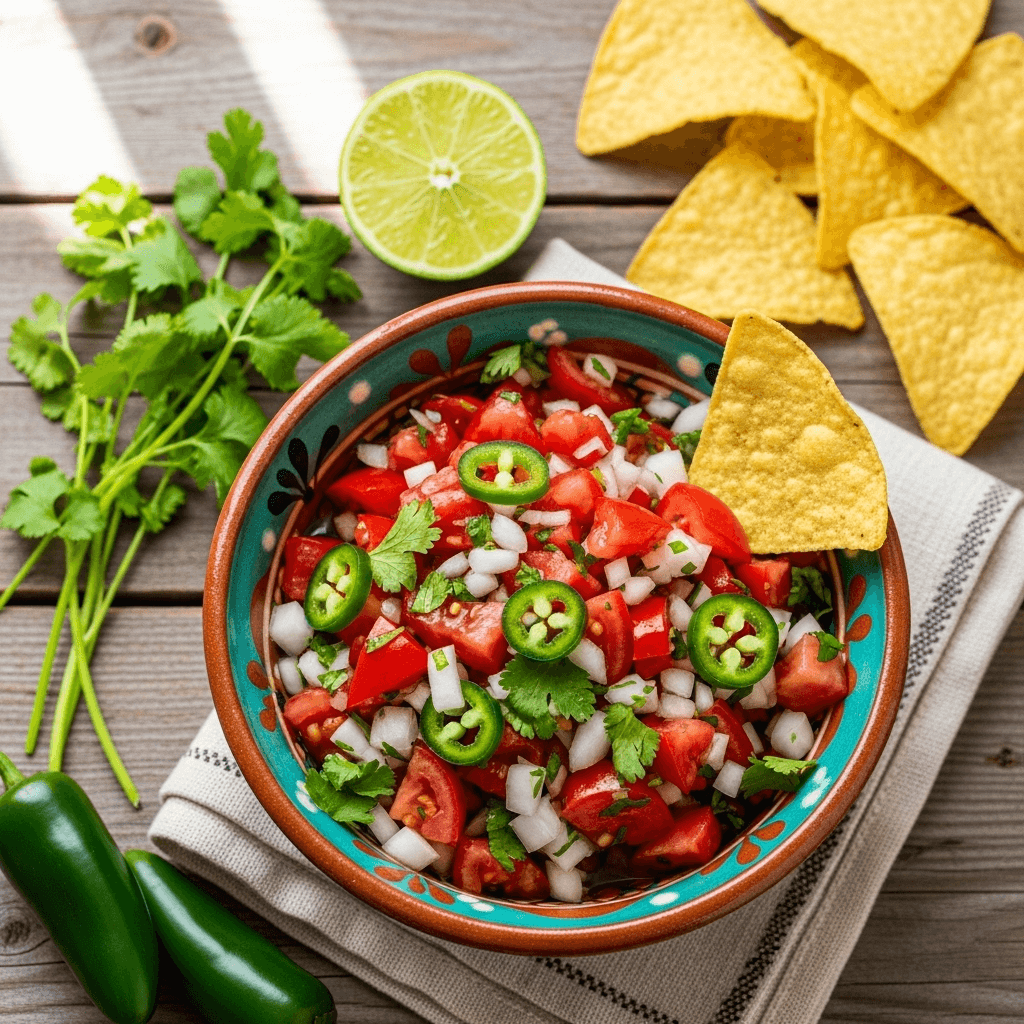
Pico de gallo is the fresh, vibrant Mexican salsa that brings life to every taco, chip, and grilled protein it touches. Unlike jarred salsas or cooked tomato sauces, this chunky salsa fresca is made entirely with raw, fresh ingredients that create an explosion of flavor in every bite. The combination of juicy tomatoes, crisp onions, spicy jalapeños, fragrant cilantro, and zesty lime creates a refreshing condiment that’s become a staple in American kitchens.
This homemade pico de gallo recipe is perfect for summer cookouts, taco Tuesdays, game day parties, or any time you’re craving something fresh and flavorful. It takes just 10 minutes to prepare and requires no cooking whatsoever. Serve it with tortilla chips as an appetizer, spoon it over grilled chicken or fish, pile it onto tacos and burritos, or use it to brighten up scrambled eggs for breakfast. Once you taste the difference between homemade pico de gallo and store-bought salsa, you’ll never go back.
The beauty of this easy pico de gallo recipe lies in its simplicity. With just six basic ingredients and a sharp knife, you can create a restaurant-quality salsa that rivals anything you’d find at your favorite Mexican restaurant. The freshness of the ingredients shines through, making this authentic pico de gallo taste like summer in a bowl.
History / Background
Pico de gallo, which literally translates to “rooster’s beak” in Spanish, has been a cornerstone of Mexican cuisine for centuries. The origin of its colorful name has been debated by food historians for years. Some believe it refers to the way people originally ate this salsa by pinching it between their thumb and forefinger, resembling a rooster pecking at food. Others suggest the name comes from the bright red, white, and green colors of the salsa, which mirror the colors of Mexico’s flag and resemble a rooster’s vibrant plumage.
Originating in the states of Jalisco and Sinaloa in Mexico, pico de gallo has been a traditional accompaniment to meals for generations. Mexican families have passed down their versions of this recipe through the years, with each household adding their own personal touch. The salsa was traditionally prepared using a molcajete, a volcanic stone mortar and pestle, though modern cooks typically use a knife and cutting board for convenience.
In Mexican cuisine, pico de gallo is classified as a “salsa cruda” or raw salsa, distinguishing it from cooked salsas like salsa roja or salsa verde. It became increasingly popular in the United States during the 1980s and 1990s as Mexican food culture exploded in popularity across American restaurants and home kitchens. Today, it’s considered an essential component of Tex-Mex cuisine and has become a beloved staple that transcends cultural boundaries.
Why You’ll Love This Recipe
This homemade pico de gallo recipe will quickly become your go-to fresh salsa for countless reasons. Unlike store-bought versions that often contain preservatives and have been sitting on shelves for weeks, your homemade version bursts with garden-fresh flavor that truly makes a difference. The ingredients are so simple and accessible that you probably already have most of them in your kitchen right now.
Here’s why this fresh pico de gallo will become your new obsession:
- Ready in 10 minutes – Perfect for last-minute entertaining or when you need a quick, flavorful addition to dinner
- Budget-friendly – Costs just a few dollars to make and yields plenty of salsa for the whole family
- No cooking required – Simply chop, mix, and enjoy without heating up your kitchen
- Naturally healthy – Low in calories, packed with vitamins, and contains only fresh, whole ingredients
- Incredibly versatile – Works as a dip, topping, side dish, or ingredient in countless recipes
- Customizable heat level – Easily adjust the spice to suit your preference by adding more or fewer jalapeños
- Make-ahead friendly – Tastes even better after the flavors meld together in the refrigerator
- Crowd-pleaser – Appeals to everyone from kids to adults, and always disappears quickly at parties
- Gluten-free and vegan – Naturally suits multiple dietary preferences without any modifications
Ingredient Notes
The key to exceptional pico de gallo lies in using the freshest, highest-quality ingredients you can find. Since this salsa isn’t cooked, each component’s flavor stands out prominently, making ingredient selection crucial for the best results.
Roma Tomatoes: These are the gold standard for pico de gallo because they have fewer seeds, less water content, and firmer flesh than regular slicing tomatoes. This means your salsa won’t become watery and soggy. Choose tomatoes that are ripe but still firm to the touch. If Roma tomatoes aren’t available, grape or cherry tomatoes work well, though you’ll need to quarter them. In a pinch, regular tomatoes can work, but be sure to scoop out the seeds and excess juice.
White Onion: White onions provide the sharp, clean bite that’s traditional in authentic pico de gallo. They’re less sweet than yellow onions and less pungent than red onions, creating the perfect balance. If you find raw onion too strong, you can soak the chopped onion in cold water for 10 minutes, then drain and pat dry before using. Red onion can substitute if needed, though it will add a slightly different flavor and purple tint to your salsa.
Fresh Jalapeños: These peppers provide the signature kick in pico de gallo. The heat level varies significantly between individual jalapeños, so it’s wise to taste a small piece before deciding how much to use. For milder salsa, remove all the seeds and white membranes where most of the heat resides. For spicier versions, leave some seeds in or add serrano peppers instead. Always wash your hands thoroughly after handling hot peppers.
Fresh Cilantro: This herb is absolutely essential to authentic pico de gallo flavor. Its bright, citrusy notes complement the other ingredients perfectly. Use only the leaves and tender stems, discarding the thick, woody stems at the bottom. If you’re among the small percentage of people with the genetic variation that makes cilantro taste like soap, you can substitute fresh parsley, though the flavor will be different.
Fresh Lime Juice: Freshly squeezed lime juice is non-negotiable for the best pico de gallo. Bottled lime juice simply doesn’t provide the same vibrant, fresh citrus flavor that brings all the ingredients together. You’ll need about 2-3 limes for sufficient juice. Roll the limes firmly on the counter before cutting to release more juice. Lemon juice can work in a pinch, but lime is traditional and preferred.
Kosher Salt: Salt enhances and brings out the natural flavors of all the vegetables. Kosher salt is preferred because its larger crystals dissolve evenly and are easier to control. Start with a conservative amount and add more to taste, as you can always add salt but can’t remove it.
Equipment Needed
One of the best things about making fresh pico de gallo is that it requires minimal equipment. You don’t need any fancy appliances or specialized tools. Here’s what you’ll need:
- Sharp Chef’s Knife – Essential for cleanly dicing all your vegetables without crushing them
- Cutting Board – Preferably a large one to give you plenty of workspace
- Medium Mixing Bowl – For combining all the ingredients together
- Citrus Juicer or Reamer (optional) – Makes squeezing limes easier, though you can squeeze by hand
- Measuring Cups and Spoons – For accurate ingredient proportions
- Serving Bowl – For presenting your beautiful homemade salsa
- Plastic Gloves (optional) – Helpful when handling jalapeños to protect your hands from capsaicin
Fresh Pico De Gallo Recipe
- Total Time: 10 minutes
- Yield: 3 cups (12 servings) 1x
- Diet: Gluten Free
Description
This fresh and easy pico de gallo recipe combines ripe tomatoes, crisp onions, spicy jalapeños, cilantro, and lime juice for an authentic Mexican salsa that’s ready in just 10 minutes. Perfect for chips, tacos, and more!
Ingredients
- 6 medium Roma tomatoes, diced small (about 3 cups)
- 1 medium white onion, finely diced (about 1 cup)
- 2 medium jalapeño peppers, seeded and finely diced
- 1/2 cup fresh cilantro, finely chopped
- 3 tablespoons fresh lime juice (from 2–3 limes)
- 1 teaspoon kosher salt (or to taste)
- Optional: 1 clove garlic, minced
Instructions
- Prepare the tomatoes: Wash the Roma tomatoes and pat them dry. Cut each tomato in half lengthwise, then slice out the core. Dice the tomatoes into small, uniform pieces (about 1/4-inch cubes). Place the diced tomatoes in a medium mixing bowl.
- Dice the onion: Peel the white onion and dice it very finely, about half the size of your tomato pieces. The finer you dice the onion, the better it will distribute throughout the salsa. Add the diced onion to the bowl with the tomatoes.
- Prepare the jalapeños: Put on plastic gloves if desired. Cut the jalapeños in half lengthwise and use a small spoon to scrape out the seeds and white membranes (this is where most of the heat is). Dice the jalapeños very finely and add them to the bowl. Remember, you can always add more heat later, so start conservatively if you’re unsure about spice levels.
- Chop the cilantro: Rinse the cilantro and shake off excess water. Bundle the leaves and tender stems together and chop them finely. You want the cilantro pieces small enough to distribute evenly. Add the chopped cilantro to the bowl.
- Add lime juice and salt: Roll your limes on the counter with firm pressure to release the juices. Cut them in half and squeeze the fresh lime juice directly over the bowl, catching any seeds with your other hand. Add the kosher salt.
- Mix thoroughly: Using a large spoon or spatula, gently fold all the ingredients together until everything is well combined and evenly distributed. The salt will start pulling moisture from the vegetables, creating a light, flavorful juice.
- Taste and adjust: Taste your pico de gallo and adjust the seasonings as needed. Add more salt, lime juice, or jalapeño to suit your preferences. Keep in mind that the flavors will intensify as it sits.
- Rest before serving: For the best flavor, cover the bowl and let the pico de gallo rest in the refrigerator for at least 15-30 minutes before serving. This allows the flavors to meld together beautifully. Give it a quick stir before serving and drain excess liquid if desired.
Notes
- For the freshest flavor and best texture, make pico de gallo no more than 4-6 hours before serving.
- If your tomatoes are very juicy, you can seed them to prevent excess liquid, though this isn’t strictly necessary with Roma tomatoes.
- The heat level of jalapeños varies greatly. Start with one pepper and add more if desired after tasting.
- To reduce onion sharpness, soak diced onions in cold water for 10 minutes, then drain and pat dry before adding.
- Pico de gallo will become more watery as it sits due to the salt drawing moisture from the vegetables. Simply drain excess liquid before serving.
- Prep Time: 10 minutes
- Cook Time: 0 minutes
- Category: Appetizer
- Method: No-Cook
- Cuisine: Mexican
Nutrition
- Serving Size: 1/4 cup
- Calories: 15
- Sugar: 2g
- Sodium: 150mg
- Fat: 0g
- Saturated Fat: 0g
- Unsaturated Fat: 0g
- Trans Fat: 0g
- Carbohydrates: 3g
- Fiber: 1g
- Protein: 1g
- Cholesterol: 0mg
Tips & Variations
The beauty of homemade pico de gallo is how easily you can customize it to match your preferences or what you have on hand. Here are some delicious ways to make this recipe your own:
Spice Level Adjustments: For milder pico de gallo, remove all jalapeño seeds and membranes, or reduce to just one pepper. For extra heat, leave some seeds in, add serrano peppers, or include a pinch of cayenne pepper. For smoky heat, try adding finely diced chipotle peppers in adobo sauce.
Fruit Variations: Add diced mango, pineapple, or peach for a sweet-spicy version that pairs beautifully with grilled fish or pork. Watermelon pico de gallo is refreshing in summer, while pomegranate seeds add a festive touch for holiday gatherings.
Corn Pico de Gallo: Stir in a cup of fresh or grilled corn kernels for added sweetness and texture. This version is particularly popular in the Southwest and pairs wonderfully with fish tacos.
Black Bean Addition: Mix in a can of drained and rinsed black beans for a heartier salsa that can double as a side dish or light meal when served with chips.
Avocado Pico de Gallo: Gently fold in diced avocado just before serving for a creamy element that makes this salsa even more luxurious. Add the avocado last to prevent browning.
Cucumber Pico de Gallo: Add diced English cucumber for extra crunch and a cooling element that balances the heat beautifully.
Roasted Version: For deeper flavor, char your tomatoes, jalapeños, and onion on a grill or under the broiler before dicing. This creates a smoky version that’s less traditional but incredibly delicious.
Pro Chef Tips
Take your pico de gallo from good to restaurant-quality with these professional techniques that make all the difference:
Dice size matters: Keep your dice uniform and relatively small (about 1/4 inch for tomatoes, even smaller for onions and jalapeños). Consistent sizing ensures every chip or bite gets the perfect ratio of all ingredients. Professional chefs call this “brunoise” for the finest dice, but you don’t need to be that precise at home.
Salt at the right time: While the recipe calls for adding salt when mixing, professional chefs often salt the tomatoes separately and let them sit for 5 minutes, then drain the excess liquid before adding other ingredients. This prevents watery pico de gallo while still seasoning the tomatoes properly. However, for maximum freshness, add salt just before serving.
Chill your ingredients: For the most refreshing pico de gallo, especially in summer, chill all your vegetables before chopping. This creates a crisp, cool salsa that’s incredibly refreshing and stays fresh longer.
Use a sharp knife: A dull knife crushes the cells in tomatoes and releases excess water, making your salsa soggy. A sharp knife makes clean cuts that preserve texture and prevent mushiness. Take the time to sharpen your knife before starting.
Add lime juice gradually: Start with 2 tablespoons of lime juice, then add more to taste. Too much lime can make the salsa watery and overpower the other flavors. You can always add more, but you can’t take it away.
Master the scoop technique: When serving pico de gallo, use a slotted spoon to leave excess liquid in the bowl. This prevents soggy chips and allows the chunky vegetables to shine.
Toast your jalapeños: For an extra layer of flavor, quickly char whole jalapeños over an open flame or under the broiler before seeding and dicing. This adds a subtle smokiness that elevates the entire dish.
Common Mistakes to Avoid
Even though pico de gallo is incredibly simple, a few common mistakes can prevent your salsa from reaching its full potential:
Using the wrong tomatoes: Regular slicing tomatoes contain too much water and too many seeds, resulting in soupy salsa. Always choose Roma (plum) tomatoes, or seed regular tomatoes thoroughly if that’s all you have available. Underripe or overripe tomatoes also produce inferior results—look for tomatoes that are ripe but still firm.
Chopping ingredients too large: Oversized chunks don’t work well with tortilla chips and create an unbalanced flavor in each bite. Take the extra time to dice everything small and uniform. Your guests will notice the difference in both texture and flavor distribution.
Making it too far in advance: While the flavors improve after 30 minutes of resting, making pico de gallo more than 6 hours ahead causes it to become watery and lose its fresh, crisp texture as the salt draws moisture from the vegetables. For best results, make it the same day you plan to serve it.
Not adjusting for jalapeño heat: Jalapeño heat levels vary dramatically even from the same plant. Always taste a tiny piece of each pepper before adding it to your salsa, and start with less than you think you need. You can always add more heat, but you can’t remove it once it’s mixed in.
Skipping the resting time: Mixing everything together and serving immediately means the flavors haven’t had time to marry. Even just 15-20 minutes in the refrigerator makes a noticeable difference in how the flavors blend together harmoniously.
Storage & Meal Prep
Proper storage ensures your homemade pico de gallo stays fresh and delicious for as long as possible. Here’s everything you need to know about storing and keeping your salsa at peak quality:
Refrigerator Storage: Transfer your pico de gallo to an airtight container or cover your bowl tightly with plastic wrap. Store it in the refrigerator, where it will stay fresh for 2-3 days. After the first day, you’ll notice the salsa releases more liquid as the salt continues to draw moisture from the vegetables. Simply drain this liquid before serving, or stir it back in if you prefer a juicier salsa.
Drainage Tip: When storing, place a paper towel directly on the surface of the salsa before sealing the container. This absorbs excess moisture and helps maintain better texture for longer. Replace the paper towel each time you open the container.
Preventing Browning: The lime juice in pico de gallo naturally helps prevent browning, but if you notice any discoloration on top, simply stir the salsa before serving or spoon off the top layer. Press plastic wrap directly onto the surface of the salsa to minimize air exposure.
Best Practice: For optimal freshness and texture, try to make only as much pico de gallo as you’ll consume within 2-3 days. The recipe is so quick that making fresh batches is more practical than trying to extend storage time.
Do Not Store at Room Temperature: Never leave pico de gallo at room temperature for more than 2 hours, or 1 hour if the temperature is above 90°F. The combination of raw vegetables and moisture creates an environment where bacteria can grow quickly.
Reheating: Pico de gallo is meant to be served fresh and cold or at room temperature. It should never be heated, as this would change its character entirely and turn it into something more like cooked salsa.
Make-Ahead & Freezer Notes
While pico de gallo is best enjoyed fresh, there are some strategies for preparing components ahead of time to save time when you need it:
Advance Prep (Same Day): You can dice your tomatoes, onions, and jalapeños up to 4 hours ahead and store them separately in airtight containers in the refrigerator. Keep the cilantro in a damp paper towel in a separate container. When ready to serve, simply combine everything with fresh lime juice and salt. This method maintains the best texture and flavor.
Overnight Prep (Limited): If you must prepare the night before, dice all your vegetables but keep them in separate containers. Do not add the lime juice, salt, or cilantro until a few hours before serving. This prevents excessive liquid release and maintains better texture.
Freezing Pico de Gallo: Unfortunately, pico de gallo does not freeze well at all. The high water content in tomatoes causes them to become mushy and watery when thawed, completely ruining the fresh, crisp texture that makes this salsa special. The onions and cilantro also break down significantly. If you have leftover pico de gallo that you can’t use in time, consider cooking it down into a cooked salsa or using it in soups, stews, or sauces where texture isn’t as critical.
Alternative Freezing Method: If you absolutely must freeze it, consider turning your leftover pico de gallo into ice cubes. Puree it first, then freeze in ice cube trays. These cubes can be added to cooked dishes like chili, soup, or rice for a burst of flavor, though they shouldn’t be thawed and used as fresh salsa.
Best Approach: Given how quick and easy pico de gallo is to make from scratch (only 10 minutes!), it’s always better to prepare a fresh batch rather than trying to freeze or make it too far in advance. Consider it one of those recipes that rewards you for making it fresh.
Serving Suggestions
Pico de gallo is incredibly versatile and elevates so many dishes. Here are some delicious ways to enjoy your homemade salsa:
Classic Chip & Dip: Serve with warm, crispy tortilla chips as an appetizer. For an upscale presentation, make your own baked tortilla chips and serve the pico de gallo in a colorful Mexican pottery bowl.
Taco & Burrito Topping: Spoon generously over any style of tacos (beef, chicken, fish, or vegetarian), burritos, burrito bowls, quesadillas, or enchiladas. The fresh, bright flavors cut through rich, heavy fillings perfectly.
Grilled Protein Topper: Serve over grilled chicken breasts, steak, fish (especially mahi-mahi or tilapia), or shrimp. The acidity and freshness complement smoky grilled flavors beautifully.
Breakfast Boost: Top scrambled eggs, omelets, breakfast burritos, or huevos rancheros with a generous spoonful. It’s also delicious mixed into avocado toast or served alongside egg casseroles.
Baked Potato Bar: Use as a healthier alternative to sour cream and butter on baked potatoes or sweet potatoes. It’s especially good on twice-baked potatoes.
Salad Enhancement: Toss with mixed greens, grilled chicken, and corn for a Mexican-inspired salad, or use it as a chunky salad dressing over a taco salad.
Burger & Sandwich Topping: Add a fresh twist to burgers (beef, turkey, or veggie), sandwiches, or wraps. It’s particularly good on Cuban sandwiches and grilled chicken sandwiches.
Side Dish Pairing: Serve alongside Mexican rice, refried beans, elote (Mexican street corn), guacamole, queso dip, or carne asada. It also pairs wonderfully with anything grilled.
Creative Uses: Mix into black bean salad, spoon into lettuce cups for a fresh appetizer, layer in seven-layer dip, stuff into bell peppers, or mix with canned tuna for a Mexican-inspired tuna salad.
Beverage Pairings: Complement your pico de gallo with classic margaritas (frozen or on the rocks), Mexican beer (Corona, Modelo, or Dos Equis with lime), fresh limeade, agua fresca, or horchata.
FAQs Section
Q: Can I make pico de gallo without cilantro?
A: Yes, though cilantro is traditional and provides the authentic flavor. If you dislike cilantro or have the genetic variation that makes it taste soapy, you can substitute with fresh flat-leaf parsley, though the flavor profile will be different. Some people use a combination of parsley and a pinch of ground coriander (cilantro seeds) to mimic the cilantro flavor. You can also simply omit the cilantro altogether for a simpler salsa, though it won’t taste quite as authentic.
Q: How can I make my pico de gallo less watery?
A: There are several strategies to reduce wateriness. First, use Roma tomatoes instead of regular tomatoes as they have less moisture and fewer seeds. Second, you can seed your tomatoes by cutting them in half and gently squeezing or scooping out the seeds and gel. Third, add salt just before serving rather than hours ahead, as salt draws moisture from vegetables. Fourth, use a slotted spoon when serving to leave excess liquid behind. Finally, if your pico de gallo has been sitting and released liquid, simply drain it before serving.
Q: What’s the difference between pico de gallo and salsa?
A: Pico de gallo is a specific type of fresh salsa made with raw, chopped ingredients, while “salsa” is a broader term that encompasses many sauce varieties. Traditional jarred salsa is often cooked and pureed to a smoother consistency, while pico de gallo is always chunky and fresh (never cooked). Pico de gallo is also sometimes called “salsa fresca” or “salsa cruda” (fresh or raw salsa). Think of pico de gallo as a specific style within the larger salsa category.
Q: Can I use cherry or grape tomatoes instead of Roma tomatoes?
A: Absolutely! Cherry and grape tomatoes work wonderfully in pico de gallo and are sometimes even sweeter and more flavorful than Roma tomatoes, especially in winter when good Roma tomatoes are hard to find. Simply quarter them and proceed with the recipe. They may release slightly more liquid than Roma tomatoes, so you might want to drain excess moisture before serving.
Q: How long does homemade pico de gallo last in the refrigerator?
A: Freshly made pico de gallo will stay good for 2-3 days in an airtight container in the refrigerator. It’s at its absolute best within the first 24 hours. After that, it becomes progressively more watery as the salt draws moisture from the vegetables, and the vegetables begin to soften. While still safe to eat for up to 3 days, the texture and fresh flavor diminish over time. Always check for any off smells or signs of spoilage before consuming stored pico de gallo.
Q: Can I make pico de gallo spicy without jalapeños?
A: Yes! If you can’t find jalapeños or want to try different peppers, serrano peppers work beautifully and are slightly hotter. Fresno peppers are similar to jalapeños with a bit more sweetness. You can also use poblano peppers for very mild heat, habaneros for extreme heat (use sparingly!), or cayenne pepper flakes or hot sauce to taste. Some people also add a pinch of crushed red pepper flakes or diced chipotle peppers in adobo sauce for smoky heat.
Q: Is pico de gallo healthy?
A: Yes! Pico de gallo is incredibly healthy and nutritious. It’s naturally low in calories (only about 15 calories per 1/4 cup), fat-free, and packed with vitamins and minerals. Tomatoes provide lycopene, vitamin C, and potassium. Onions offer antioxidants and anti-inflammatory compounds. Jalapeños contain capsaicin, which may boost metabolism. Cilantro provides vitamins A, C, and K. Lime juice adds vitamin C and helps with iron absorption. It’s naturally gluten-free, vegan, paleo, Whole30-compliant, and keto-friendly, making it suitable for virtually any diet.
Conclusion
There you have it—the ultimate guide to making fresh, authentic pico de gallo right in your own kitchen! This simple yet incredibly flavorful Mexican salsa proves that the best recipes don’t need to be complicated. With just six fresh ingredients and 10 minutes of your time, you can create a restaurant-quality condiment that will transform everything from taco night to summer cookouts.
The beauty of this homemade pico de gallo recipe lies in its versatility and freshness. Whether you’re serving it as a dip with tortilla chips, spooning it over grilled chicken, or adding it to your breakfast eggs, this chunky salsa brings bright, zesty flavors that store-bought versions simply can’t match. Once you experience the difference that fresh ingredients make, you’ll find yourself making this easy pico de gallo again and again.
Remember, the key to perfect pico de gallo is using ripe Roma tomatoes, chopping everything into small, uniform pieces, and giving the flavors time to meld together. Don’t be afraid to customize it to your taste—add more jalapeños for heat, extra lime for zing, or try one of the delicious variations we shared.
I’d love to hear how your pico de gallo turns out! Did you try any of the variations? What did you serve it with? Leave a comment below sharing your experience, and don’t forget to rate this recipe. If you loved it as much as I know you will, please share it on Pinterest so other home cooks can discover this easy, authentic recipe too. Happy cooking, and enjoy every fresh, flavorful bite!