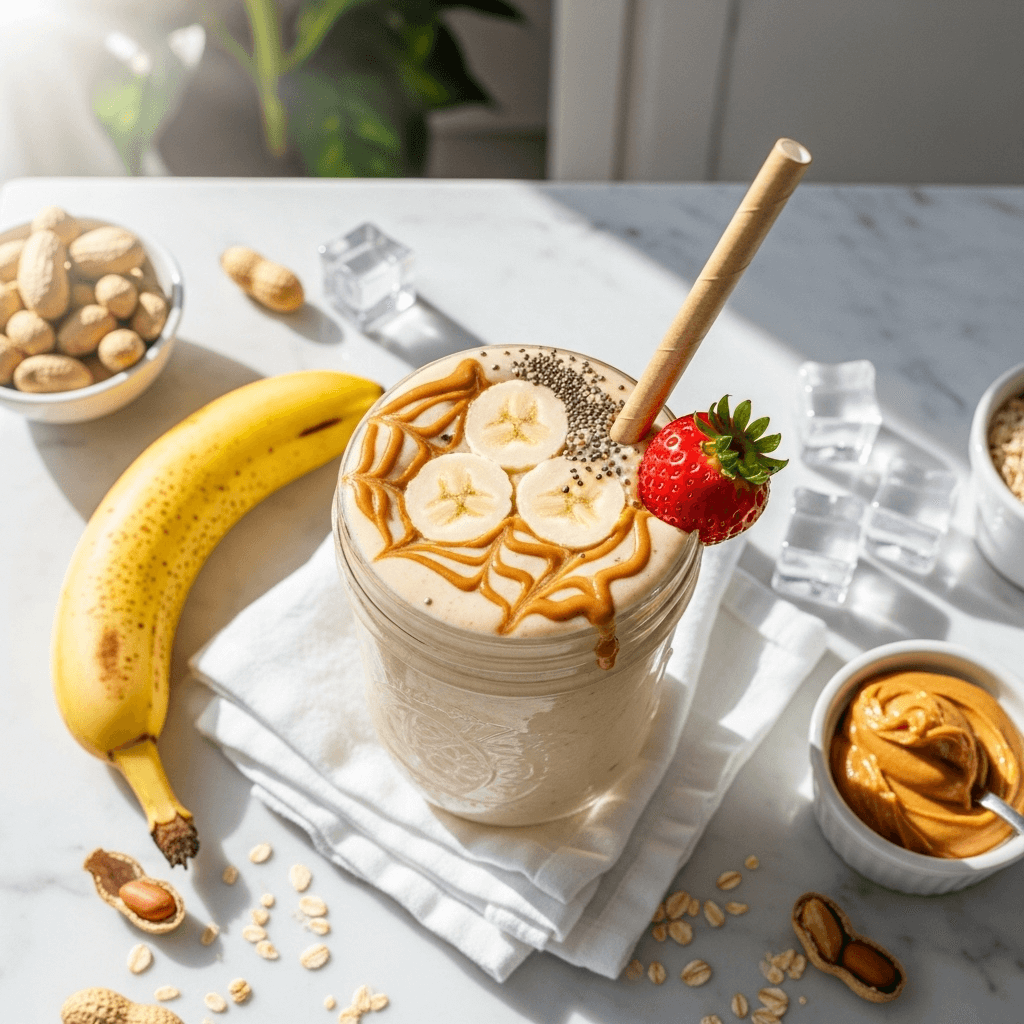

There’s something absolutely magical about a thick, creamy peanut butter smoothie that hits all the right notes. This easy peanut butter smoothie recipe is the perfect answer when you’re craving something sweet, satisfying, and packed with protein to fuel your day. Whether you need a quick breakfast smoothie, a post-workout refuel, or a healthy afternoon pick-me-up, this peanut butter banana smoothie delivers every single time.
What makes this recipe truly special is its incredible versatility and foolproof nature. With just five simple ingredients and five minutes of your time, you can whip up a restaurant-quality smoothie right in your own kitchen. The combination of creamy peanut butter, sweet banana, and cold milk creates a texture so luxurious and velvety, you’d swear it came from your favorite smoothie shop. It’s nutritious enough for breakfast, indulgent enough for dessert, and convenient enough for those chaotic mornings when you’re rushing out the door.
This healthy peanut butter smoothie works beautifully as a protein-packed breakfast for busy families, a satisfying snack for kids after school, or even a wholesome dessert alternative when you’re trying to make better choices. The best part? It’s endlessly customizable to suit your dietary needs and taste preferences.
History / Background
The peanut butter smoothie has become an iconic staple in American health and fitness culture, but its roots trace back to the broader smoothie revolution of the 1960s and 1970s. While smoothies themselves gained popularity in California during the health food movement, the specific combination of peanut butter and banana in a blended drink became a phenomenon thanks to gym culture and the bodybuilding community of the 1980s.
Peanut butter itself has been a beloved American staple since its introduction at the 1904 World’s Fair in St. Louis, where it was promoted as a nutritious protein source. Fast forward to the fitness boom of the late 20th century, and nutritionists began recognizing the power combination of peanut butter’s healthy fats and protein paired with the quick-digesting carbohydrates found in bananas. This dynamic duo became a go-to for athletes and fitness enthusiasts looking for natural, whole-food nutrition.
The peanut butter banana smoothie specifically gained mainstream popularity in the early 2000s as blenders became more powerful and affordable for home cooks. Smoothie shops began popping up across the country, and the peanut butter smoothie consistently ranked as one of the top-selling flavors. Its appeal crossed generational lines—parents loved it as a way to sneak nutrition into their children’s diets, college students embraced it as a quick meal replacement, and fitness enthusiasts relied on it for pre and post-workout fuel.
Today, the peanut butter smoothie has evolved beyond its gym-rat origins to become a beloved recipe in home kitchens across America. It represents the perfect marriage of nutrition and indulgence, proving that healthy eating doesn’t have to be boring or tasteless. The recipe has been adapted countless ways, but the classic combination of peanut butter, banana, and milk remains the gold standard that keeps people coming back for more.
Why You’ll Love This Recipe
This creamy peanut butter smoothie is about to become your new morning obsession, and here’s why: it tastes like a milkshake but fuels your body like a champion. The rich, nutty flavor combined with natural sweetness creates a treat that satisfies cravings while actually nourishing your body. It’s the rare recipe that checks every single box—delicious, nutritious, quick, and budget-friendly.
Here’s what makes this peanut butter protein smoothie absolutely irresistible:
- Lightning Fast: Ready in just 5 minutes from start to finish, making it perfect for hectic mornings
- Protein Powerhouse: Packed with protein from peanut butter and milk to keep you full for hours
- Kid-Approved: Even picky eaters love this naturally sweet, dessert-like smoothie
- Budget-Friendly: Uses affordable, pantry-staple ingredients you probably already have
- Customizable: Easily adapt to be vegan, add extra protein, boost with superfoods, or adjust sweetness
- No Added Sugar Needed: The banana provides all the natural sweetness you need
- Perfect Texture: Thick, creamy, and sippable—never watery or grainy
- Filling & Satisfying: Keeps hunger at bay for 3-4 hours thanks to healthy fats and protein
- Meal Prep Friendly: Make smoothie packs ahead for even quicker preparation
- Gym Bag Ready: Doubles as an excellent post-workout recovery drink
This is the kind of recipe that works for absolutely everyone—busy parents, college students, fitness enthusiasts, and anyone who wants a delicious way to start their day. It requires zero cooking skills, minimal cleanup, and delivers consistent results every single time.
Ingredient Notes
Let’s break down exactly what goes into this simple peanut butter smoothie and why each ingredient plays a crucial role in creating that perfect, creamy texture and rich flavor.
Peanut Butter: The star of the show! Use natural or regular creamy peanut butter—your choice. Natural peanut butter (just peanuts and salt) provides a cleaner ingredient list, while regular peanut butter offers a sweeter, more traditional flavor. Avoid using crunchy peanut butter unless you enjoy texture chunks. For nut-free versions, substitute with sunflower seed butter, almond butter, or cashew butter. Each brings its own unique flavor profile while maintaining that creamy, rich texture.
Banana: This provides natural sweetness, creamy texture, and helps thicken the smoothie to milkshake consistency. Use ripe bananas with brown spots for maximum sweetness. Frozen banana slices create an extra-thick, ice cream-like texture that’s absolutely divine. If you’re not a banana fan, substitute with frozen mango, avocado for creaminess, or cooked and cooled sweet potato for an unexpected twist.
Milk: Any milk works beautifully here. Whole milk creates the richest, creamiest result. For dairy-free options, almond milk, oat milk, soy milk, or coconut milk all work wonderfully. Oat milk provides extra creaminess, while almond milk keeps things light. The milk adds protein (if using dairy or soy), creates the right consistency, and helps everything blend smoothly.
Honey or Maple Syrup: Optional sweetener for those who prefer things extra sweet. If your banana is very ripe, you may not need any additional sweetener at all. Maple syrup works for vegan versions, while honey adds floral notes. Start with less—you can always add more.
Ice Cubes: These make your smoothie cold, refreshing, and extra thick. If using frozen banana, you can reduce or skip the ice entirely. The ice also dilutes the smoothie slightly, creating the perfect sippable consistency rather than something too thick to drink through a straw.
Optional Add-Ins: Greek yogurt adds extra protein and tang, chia seeds provide omega-3s and fiber, cocoa powder transforms it into a chocolate peanut butter smoothie, vanilla extract enhances overall flavor, and a pinch of cinnamon adds warmth and depth.
Equipment Needed
The beauty of this peanut butter smoothie recipe is that it requires minimal equipment—most of which you probably already have in your kitchen. Here’s what you’ll need:
- High-Powered Blender: A quality blender is essential for achieving that perfectly smooth, creamy texture. Vitamix, Blendtec, or NutriBullet work excellently, but any decent blender with at least 500 watts will do the job. The more powerful your blender, the smoother your results.
- Measuring Cups and Spoons: For accurate ingredient measurements to ensure consistent results every time.
- Knife and Cutting Board: To slice your banana if using fresh (not pre-frozen).
- Tall Glass or To-Go Cup: For serving your smoothie. Mason jars work beautifully and are Instagram-worthy!
- Reusable Straw: Optional but recommended for the full smoothie experience. Stainless steel or silicone straws are eco-friendly choices.
- Spatula: Helpful for scraping down the sides of the blender to ensure everything gets incorporated.
That’s truly all you need! No fancy appliances, no special tools—just a blender and a few basic kitchen items. This is accessibility at its finest.
Print
Peanut Butter Smoothie Recipe
- Total Time: 5 minutes
- Yield: 1 large smoothie (or 2 small servings) 1x
- Diet: Gluten Free
Description
This creamy peanut butter smoothie is a protein-packed, naturally sweetened breakfast or snack that tastes like a milkshake but fuels your body with wholesome nutrition. Ready in just 5 minutes with simple pantry ingredients!
Ingredients
- 2 tablespoons creamy peanut butter (natural or regular)
- 1 large ripe banana (fresh or frozen)
- 1 cup milk (dairy or non-dairy such as almond, oat, or soy milk)
- 1 tablespoon honey or maple syrup (optional, adjust to taste)
- 1 cup ice cubes (reduce if using frozen banana)
- Optional: 1/4 cup Greek yogurt for extra protein
- Optional: 1 tablespoon chia seeds or flax seeds
- Optional: 1 teaspoon vanilla extract
- Optional: 1 tablespoon cocoa powder for chocolate version
Instructions
Step 1: Prepare Your Ingredients
Peel and slice the banana if using fresh. Measure out your peanut butter, milk, and any optional add-ins. If using frozen banana, you can add it directly from the freezer.
Step 2: Add Ingredients to Blender
Add ingredients to your blender in this order for best blending: liquid (milk) first, then peanut butter, banana, sweetener, and ice cubes on top. This layering helps the blender blades work more efficiently.
Step 3: Blend Until Smooth
Blend on high speed for 30-60 seconds until completely smooth and creamy. Stop and scrape down the sides with a spatula if needed, then blend for another 15-20 seconds. The smoothie should be thick, creamy, and free of any ice chunks.
Step 4: Check Consistency
If your smoothie is too thick, add a splash more milk and blend again. If it’s too thin, add a few more ice cubes or another frozen banana chunk and blend until desired consistency is reached.
Step 5: Taste and Adjust
Give it a quick taste. Add more sweetener if needed, or a pinch of salt to enhance the peanut butter flavor. Blend briefly to incorporate any additions.
Step 6: Serve Immediately
Pour into a tall glass, add a straw, and enjoy right away for the best texture and temperature. Smoothies are best consumed fresh but can be stored if needed.
Notes
- For Meal Prep: Freeze pre-portioned smoothie packs with sliced banana, measured peanut butter portions, and any dry add-ins in freezer bags. When ready, dump contents into blender with milk and ice, then blend.
- Thickness Control: The key to a thick smoothie is using frozen fruit and less liquid. Start with less milk than you think you need—you can always thin it out.
- Protein Boost: Add a scoop of protein powder, Greek yogurt, or silken tofu for extra protein without changing the flavor significantly.
- Nut-Free Version: Substitute peanut butter with sunflower seed butter or tahini for schools and allergen-free environments.
- Make it Vegan: Use plant-based milk, maple syrup instead of honey, and skip any dairy-based protein additions.
- Prep Time: 5 minutes
- Cook Time: 0 minutes
- Category: Breakfast
- Method: Blending
- Cuisine: American
Nutrition
- Serving Size: 1 large smoothie (approximately 16 oz)
- Calories: 380
- Sugar: 28g
- Sodium: 180mg
- Fat: 18g
- Saturated Fat: 3g
- Unsaturated Fat: 12g
- Trans Fat: 0g
- Carbohydrates: 45g
- Fiber: 5g
- Protein: 13g
- Cholesterol: 10mg
Tips & Variations
The beauty of this peanut butter smoothie recipe is how easily you can customize it to match your preferences, dietary needs, or whatever ingredients you have on hand. Here are some delicious ways to switch things up:
Chocolate Peanut Butter Cup Smoothie: Add 1-2 tablespoons of unsweetened cocoa powder and a handful of dark chocolate chips. This transforms your smoothie into a healthy version of a Reese’s cup!
Green Peanut Butter Smoothie: Sneak in a big handful of fresh spinach or kale. The peanut butter and banana mask the taste completely while you get all those leafy green nutrients. Your smoothie will turn an interesting color, but kids often find this fun!
Peanut Butter Oatmeal Smoothie: Add 1/4 cup of rolled oats for extra fiber and staying power. This creates an even more filling breakfast that’ll keep you satisfied until lunch. Let the oats soak in the milk for 5 minutes before blending for the smoothest texture.
Berry Peanut Butter Twist: Add 1/2 cup of frozen strawberries, blueberries, or mixed berries. The combination of fruit and peanut butter is unexpectedly delicious and adds beautiful color.
Coffee Smoothie: Replace half the milk with cold brew coffee or add 1 shot of espresso. Perfect for coffee lovers who want their caffeine and breakfast in one convenient package.
Protein-Packed Version: Add a scoop of vanilla or chocolate protein powder, or stir in 1/4 cup of Greek yogurt for an extra protein boost that’s perfect post-workout.
Tropical Twist: Swap the banana for frozen mango and add 1/4 cup of coconut milk. Use coconut as your liquid base for a vacation-in-a-glass experience.
Lower Calorie Option: Use powdered peanut butter (PB2) instead of regular peanut butter, unsweetened almond milk, skip the sweetener, and load up on ice for volume. You’ll save about 100 calories while maintaining that peanut butter flavor.
Pro Chef Tips
Want to take your peanut butter smoothie from good to absolutely incredible? Here are professional-level tips that make all the difference:
Freeze Your Bananas in Advance: Peel ripe bananas, slice them into chunks, and freeze them in a single layer on a baking sheet before transferring to a freezer bag. Frozen banana creates a thick, ice cream-like texture that’s far superior to using fresh banana with ice. This is the number one trick for professional-quality smoothies.
Layer Ingredients Strategically: Always add liquid to your blender first, then soft ingredients like peanut butter, then harder ingredients like frozen fruit and ice on top. This prevents the blender blades from jamming and ensures everything blends smoothly without having to stop and stir.
Use High-Quality Peanut Butter: The flavor of your peanut butter directly impacts the final smoothie. Natural peanut butter with just peanuts and salt tends to have a more pronounced, authentic nutty flavor compared to heavily processed varieties with added oils and sugars.
Salt Enhances Everything: A tiny pinch of sea salt (about 1/8 teaspoon) enhances the peanut butter flavor and balances the sweetness. This is a chef’s secret that makes flavors pop without tasting salty.
Pre-Chill Your Glass: Place your serving glass in the freezer for 10-15 minutes before making your smoothie. This keeps your smoothie cold longer and prevents it from melting too quickly, maintaining that perfect thick texture.
Don’t Over-Blend: Once your smoothie reaches a smooth consistency, stop blending. Over-blending generates heat from friction, which can thin out your smoothie and warm it up. Aim for 30-60 seconds of blending time maximum.
Room Temperature Peanut Butter Blends Better: If your natural peanut butter is refrigerated and solid, let it sit at room temperature for 15-20 minutes or microwave it for 10-15 seconds. This makes it easier to measure and helps it incorporate more smoothly without leaving chunks.
Add Ingredients Gradually for Perfect Consistency: Start with less liquid than the recipe calls for. You can always add more to thin it out, but you can’t take liquid back out if you’ve made it too thin. This gives you complete control over texture.
Common Mistakes to Avoid
Even with a simple recipe like this, there are a few pitfalls that can turn your perfect smoothie into a disappointing drink. Here’s what to watch out for:
Using Too Much Liquid: This is the most common mistake that results in a thin, watery smoothie instead of a thick, milkshake-like texture. Always start with less milk than you think you need. You can add more in small splashes, but once it’s too thin, your only option is adding more frozen fruit or ice, which dilutes the flavor.
Skipping the Frozen Element: If you use fresh banana and skip the ice, your smoothie will be warm, thin, and unappetizing. The frozen component (either frozen banana or ice cubes) is absolutely essential for proper texture and temperature. Frozen banana is vastly superior to ice because it adds creaminess without watering down the flavor.
Not Using Ripe Enough Bananas: A greenish or barely yellow banana lacks sweetness and has a starchy, unpleasant taste. Use bananas with brown spots for maximum natural sweetness. If you only have unripe bananas, you’ll need to add more sweetener to compensate, which adds unnecessary sugar.
Expecting it to Keep: Smoothies are meant to be enjoyed immediately. They begin to separate within 15-20 minutes as heavier ingredients sink and lighter ones rise. The texture also becomes less appealing as ice melts. If you must store it, give it a good shake or quick re-blend before drinking.
Blending on Low Speed: Using low or medium speed won’t properly break down the ice and frozen fruit, leaving you with a chunky, icy texture instead of smooth and creamy. Always use the highest speed setting on your blender, and if yours has a “smoothie” button, use that function.
Forgetting to Taste and Adjust: Everyone’s taste preferences differ, and ingredient brands vary. Always taste your smoothie before serving and adjust sweetness, thickness, or flavor as needed. This 30-second step ensures perfect results every time.
Storage & Meal Prep
While peanut butter smoothies are absolutely best enjoyed fresh, there are times when you need to prepare ahead or save leftovers. Here’s how to handle storage properly:
Immediate Consumption: For the best taste and texture, drink your smoothie within 5-10 minutes of blending. The texture is at its peak, the temperature is perfect, and ingredients haven’t had time to separate.
Short-Term Storage (Same Day): If you need to make your smoothie a few hours ahead, pour it into an airtight container or mason jar, filling it to the very top to minimize air exposure. Store in the refrigerator for up to 4-6 hours. The smoothie will separate, so shake vigorously or give it a quick 10-second re-blend before drinking. The texture won’t be quite as perfect as fresh, but it’s still perfectly drinkable.
Overnight Storage: You can store a peanut butter smoothie in the refrigerator overnight (up to 24 hours), but expect significant separation and a change in texture. The smoothie will be thinner, and some oxidation may occur, causing slight discoloration. Shake well or re-blend before consuming.
Freezer Storage (Not Recommended for Finished Smoothies): Freezing a blended smoothie isn’t ideal because the texture changes dramatically when thawed. However, you can freeze it in popsicle molds for healthy frozen treats that kids absolutely love! Pour the smoothie into popsicle molds and freeze for 4-6 hours for delicious peanut butter banana pops.
Smart Meal Prep Strategy: Instead of storing finished smoothies, prep smoothie freezer packs. Place sliced banana, measured peanut butter (freeze it in ice cube trays or drop dollops onto parchment paper), and any dry add-ins into individual freezer bags or containers. Label and freeze for up to 3 months. When ready to use, dump the contents into your blender, add fresh milk and ice, and blend. You get a fresh smoothie in the same 5 minutes with almost zero prep work in the morning!
Make-Ahead & Freezer Notes
Meal prepping your smoothie ingredients is a game-changer for busy mornings. Here’s exactly how to do it for maximum convenience:
Banana Prep: This is the most important make-ahead step. Peel very ripe bananas, slice them into 1-inch chunks, and spread them in a single layer on a parchment-lined baking sheet. Freeze for 2-3 hours until solid, then transfer to a freezer-safe bag or container. Store for up to 3 months. Frozen bananas create the best texture and eliminate the need for as much ice. Always let them sit at room temperature for 2-3 minutes before blending for easier processing.
Smoothie Freezer Packs: Create individual smoothie portions by combining dry and solid ingredients in freezer bags: 1 sliced banana (about 6-8 chunks), a measured portion of peanut butter frozen in an ice cube tray, and any dry add-ins like oats, chia seeds, or protein powder. Label each bag with the date and additional wet ingredients needed (milk, ice, sweetener). Store flat in your freezer for up to 2 months. When ready to blend, simply dump the contents of one bag into your blender with your liquid ingredients.
Peanut Butter Cubes: Measure 1-2 tablespoons of peanut butter into each compartment of an ice cube tray. Freeze until solid (about 2 hours), then pop out and store in a freezer bag. These make smoothie prep incredibly easy and ensure perfect portions every time. They’ll keep for up to 2 months in the freezer.
Best Reheating Method: There’s no reheating involved since this is a cold smoothie, but if your frozen smoothie packs are too solid to blend, let them sit at room temperature for 3-5 minutes to slightly soften, or use the pulse function on your blender to break things up before blending on high speed.
Day-Of Assembly: Morning of, take out one smoothie pack (or grab your pre-frozen banana and a peanut butter cube), add to the blender with 1 cup of fresh milk, a handful of ice if needed, optional sweetener, and blend. You’ll have a fresh, perfect smoothie in under 3 minutes with minimal effort.
Time-Saving Tip: Prep 5-7 smoothie packs on Sunday evening. You’ll have grab-and-blend smoothies ready for the entire work week. This system is perfect for people who struggle with healthy eating in the mornings due to time constraints.
Serving Suggestions
While this peanut butter smoothie is absolutely perfect on its own, here are some wonderful ways to serve it and complementary items that pair beautifully:
Breakfast Combinations: Serve your smoothie alongside whole grain toast with mashed avocado, a veggie-packed egg muffin, or a bowl of mixed berries for a complete, balanced breakfast. The smoothie provides protein and healthy fats, while these sides add fiber and additional nutrients.
Snack Time Pairings: Pair with homemade granola bars, apple slices with a sprinkle of cinnamon, whole grain crackers with cheese, or a handful of almonds for a substantial afternoon snack that keeps energy levels steady.
Post-Workout Recovery: Enjoy this smoothie within 30 minutes after exercise for optimal recovery. The banana provides quick-acting carbohydrates to replenish glycogen stores, while the peanut butter offers protein for muscle repair. Pair with a hard-boiled egg or turkey roll-ups for extra protein if you’ve had an intense workout.
Kid-Friendly Presentation: Pour into colorful cups with fun straws, top with a dollop of whipped cream and a drizzle of peanut butter, or add a few mini chocolate chips on top. Serve alongside whole grain waffles, pancakes, or French toast for a weekend breakfast kids will actually get excited about.
Smoothie Bowl Transformation: Make your smoothie extra thick (use frozen banana, reduce liquid by half), pour into a bowl, and top with sliced banana, granola, chia seeds, coconut flakes, and a drizzle of honey. This turns your drinkable smoothie into an Instagram-worthy smoothie bowl that’s perfect for leisurely weekend mornings.
Lunch Companion: Pair with a turkey and cheese wrap, a big colorful salad, or veggie sticks with hummus for a light lunch that’s satisfying without being heavy. The smoothie adds creaminess and protein to balance lighter lunch items.
Dessert Alternative: Serve in a fancy glass with a dusting of cocoa powder or cinnamon on top, add a dollop of coconut whipped cream, and enjoy as a healthy dessert that satisfies sweet cravings without derailing your nutrition goals.
FAQs Section
Can I make this smoothie without a banana?
Yes! While banana provides natural sweetness and creamy texture, you can substitute it with frozen mango for tropical sweetness, half an avocado for richness without banana flavor, frozen cauliflower for thickness with neutral taste, or cooked and cooled sweet potato for natural sweetness and creaminess. You may need to add a bit more sweetener since these alternatives aren’t quite as sweet as banana. Another option is using 1/2 cup of Greek yogurt plus extra ice for thickness.
How can I make this smoothie thicker?
For an ultra-thick, spoonable smoothie texture, use frozen banana instead of fresh, reduce the milk by 1/4 cup, add 1/4 cup of Greek yogurt or silken tofu, throw in 2 tablespoons of rolled oats, or use less ice and more frozen fruit. You can also add a tablespoon of chia seeds and let the smoothie sit for 5 minutes—the chia will absorb liquid and create a pudding-like thickness. Start with less liquid than the recipe calls for and gradually add more only if absolutely needed.
Is this smoothie good for weight loss?
Peanut butter smoothies can absolutely fit into a weight loss plan when portioned appropriately. At around 380 calories with whole milk and honey, this makes a substantial meal replacement for breakfast or lunch. To reduce calories, use unsweetened almond milk (30 calories vs. 150 for whole milk), powdered peanut butter instead of regular (45 calories vs. 180 for 2 tablespoons), skip added sweeteners, and bulk it up with ice and spinach for volume without calories. The protein and healthy fats help keep you satisfied, reducing overall calorie intake throughout the day by preventing constant snacking.
Can I prep this smoothie the night before?
While you can technically store a blended smoothie overnight in the refrigerator, it’s not ideal. The texture changes significantly, ingredients separate, and it won’t taste as fresh. A much better approach is prepping smoothie freezer packs the night before (or for the whole week). Portion your solid ingredients into bags, then simply dump and blend in the morning with fresh liquid ingredients. This gives you the convenience of prep-ahead with the quality of a fresh smoothie. If you must make it the night before, store in an airtight container filled to the brim, and plan to give it a vigorous shake or quick re-blend before drinking.
What’s the best milk for peanut butter smoothies?
The “best” milk depends on your dietary needs and preferences. Whole dairy milk creates the richest, creamiest texture and adds protein and calcium. For dairy-free options, oat milk provides excellent creaminess and slightly sweet flavor, almond milk keeps things light and nutty (but is thinner), soy milk offers comparable protein to dairy milk, and coconut milk adds tropical richness. For maximum creaminess in any plant-based option, choose “barista” or “extra creamy” versions. Avoid watery milks like rice milk or low-fat varieties, as they produce thin, less satisfying smoothies.
Can I add protein powder to this smoothie?
Absolutely! This smoothie is an excellent base for protein powder. Add one scoop (typically 20-30 grams) of your favorite protein powder. Vanilla and chocolate protein powders work particularly well with peanut butter flavor. When adding protein powder, you may need to increase the liquid slightly since protein powder can thicken the smoothie considerably. Start by adding an extra 2-3 tablespoons of milk and adjust from there. Blend thoroughly to prevent protein powder clumps.
How do I make this smoothie nut-free for school?
For nut-free versions safe for schools and allergy-conscious environments, replace peanut butter with sunflower seed butter (SunButter) for a remarkably similar taste and texture, tahini (sesame seed paste) for a slightly different but delicious nutty flavor, or soy nut butter made from roasted soybeans. Use the same amount as you would peanut butter. Sunflower seed butter is the closest substitute and most kids can’t tell the difference. Always check labels to ensure products are processed in nut-free facilities if severe allergies are a concern.
Conclusion
There you have it—everything you need to know to make the most incredible, creamy, satisfying peanut butter smoothie right in your own kitchen! This simple five-ingredient recipe proves that healthy eating doesn’t have to be complicated, time-consuming, or boring. Whether you’re fueling up for a busy day, recovering from a tough workout, or just treating yourself to something delicious, this smoothie delivers on every level.
The best part about this recipe is how forgiving and adaptable it is. Make it your own by trying different variations, adjusting the sweetness to your preference, and experimenting with add-ins that match your nutritional goals. Once you master this basic technique, you’ll find yourself reaching for your blender every morning instead of hitting the drive-through.
I’d absolutely love to hear how your peanut butter smoothie turns out! Did you try any of the variations? Do you have your own secret ingredient that makes it even better? Drop a comment below and share your experience. And if you loved this recipe, please pin it to your favorite Pinterest board so you can find it again and again. Your friends who are always looking for quick, healthy breakfast ideas will thank you for sharing!
Now grab that blender, round up your ingredients, and treat yourself to the smoothie you deserve. Happy blending!