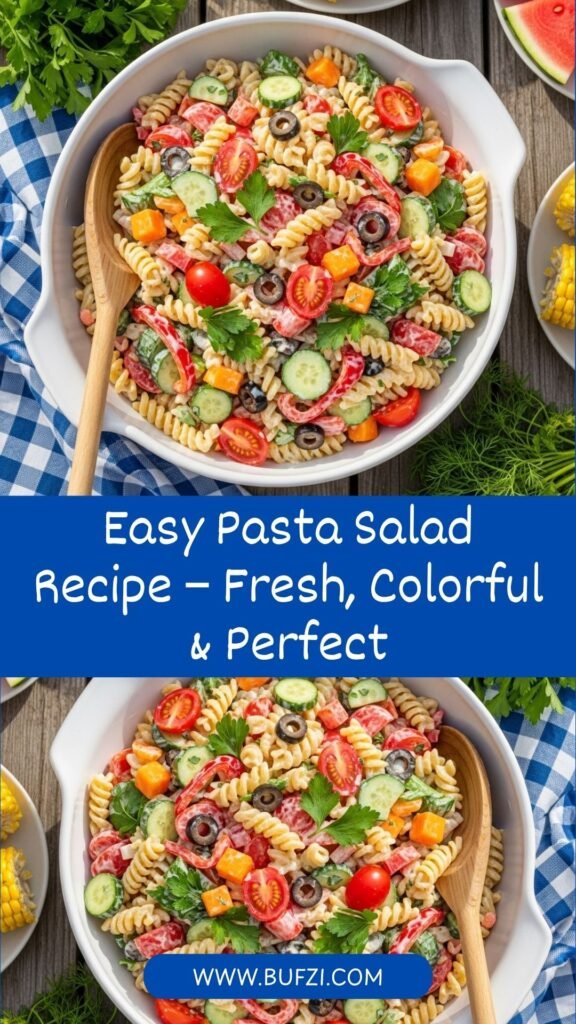
If you’re looking for a crowd-pleasing side dish that’s colorful, refreshing, and incredibly versatile, this easy pasta salad recipe is exactly what you need. Whether you’re heading to a summer barbecue, packing lunches for the week, or need a quick potluck contribution, this classic pasta salad delivers every single time. It’s loaded with crisp vegetables, tender pasta, and a creamy, tangy dressing that brings everything together beautifully.
What makes this recipe truly special is its flexibility. You can customize it to your family’s preferences, make it ahead of time, and serve it cold or at room temperature. It’s one of those reliable recipes that works for casual weeknight dinners, holiday gatherings, and everything in between. Plus, it’s budget-friendly and uses simple ingredients you probably already have in your kitchen.
This cold pasta salad is the perfect answer when you need something that feeds a crowd without keeping you stuck in the kitchen. It comes together in about 30 minutes, and the flavors actually get better as it sits in the refrigerator, making it an ideal make-ahead dish for busy families and meal preppers.
History / Background
Pasta salad as we know it today became wildly popular in America during the 1980s and 1990s, appearing at virtually every picnic, potluck, and family reunion across the country. However, the concept of cold pasta dishes dates back much further, with Italian cuisine featuring room-temperature pasta preparations for centuries.
The American version of pasta salad emerged from the post-World War II era when convenience foods and mayonnaise-based salads dominated home cooking. As pasta became more mainstream in American households and refrigeration improved, creative home cooks began combining Italian pasta with American salad traditions. The result was a fusion dish that married the heartiness of pasta with the freshness of garden vegetables and the creamy richness of mayo-based dressings.
Regional variations developed across the United States, with Southern cooks adding pickles and hard-boiled eggs, Midwestern families incorporating cheddar cheese and ranch dressing, and West Coast versions featuring sun-dried tomatoes and Italian herbs. The beauty of pasta salad lies in its adaptability—it reflects local tastes and available ingredients, making it a truly American dish despite its Italian roots.
During the 1970s and 80s, pasta salad became synonymous with summer entertaining and outdoor gatherings. It solved the problem of feeding large groups with a dish that didn’t require reheating and could withstand sitting out at room temperature better than many alternatives. Today, it remains one of the most requested side dishes for warm-weather celebrations, church potlucks, and casual get-togethers.
Why You’ll Love This Recipe
This easy pasta salad recipe has earned its place as a family favorite for countless reasons. It’s the kind of dish that disappears quickly at gatherings, with people coming back for seconds and thirds. The combination of textures—tender pasta, crunchy vegetables, and creamy dressing—creates a satisfying experience in every bite.
Here’s why this recipe will become your go-to:
- Incredibly versatile – Easily customize with your favorite vegetables, proteins, or cheese
- Make-ahead friendly – Actually tastes better after chilling overnight, perfect for meal prep
- Budget-conscious – Uses affordable, everyday ingredients that won’t break the bank
- Feeds a crowd – One batch serves 10-12 people, making it perfect for potlucks and parties
- Kid-approved – Mild, familiar flavors that even picky eaters enjoy
- No reheating required – Serve cold or at room temperature with zero fuss
- Customizable dietary needs – Easy to adapt for vegetarian, gluten-free, or dairy-free diets
- Minimal cooking skills needed – If you can boil pasta, you can make this recipe
- Stays fresh for days – Keeps well in the refrigerator for up to 5 days
- Portable and travel-friendly – Perfect for picnics, beach days, and outdoor events
The best part? You probably have most of these ingredients already sitting in your pantry and refrigerator right now.
Ingredient Notes
Understanding your ingredients helps you make smart substitutions and achieve the best results every time. Here’s what you need to know about the stars of this colorful pasta salad:
Pasta: Short pasta shapes like rotini, penne, or bow tie (farfalle) work best because they hold the dressing well and are easy to eat with a fork. Rotini is my personal favorite because its spiral shape catches bits of vegetables and dressing in every bite. You’ll need about 1 pound of dried pasta. Whole wheat pasta adds fiber and nutty flavor, while gluten-free varieties work perfectly for those with dietary restrictions. Cook the pasta al dente—it will continue to soften slightly as it absorbs the dressing.
Mayonnaise: The creamy base of our dressing. Full-fat mayo provides the richest flavor and best texture, but light mayo works if you’re watching calories. For a tangier version, replace half the mayo with Greek yogurt. Avoid fat-free mayo as it can make the salad watery.
Sour Cream: Adds tanginess and helps thin the mayo to the perfect consistency. Greek yogurt is an excellent substitute that adds protein and probiotics while reducing calories.
Apple Cider Vinegar: Provides brightness and cuts through the richness of the mayo. White wine vinegar or red wine vinegar also work beautifully. The acid is essential—it prevents the salad from tasting heavy or one-dimensional.
Cherry Tomatoes: Add pops of color, sweetness, and juiciness. Halve them so they’re bite-sized. Grape tomatoes work equally well. In winter when tomatoes lack flavor, consider roasting them first or substituting with sun-dried tomatoes.
Cucumber: Provides refreshing crunch. English cucumbers are ideal because they have fewer seeds and thinner skin. If using regular cucumbers, peel them and scoop out the seeds to prevent excess water from diluting your dressing.
Bell Peppers: Any color works, but a mix creates a gorgeous rainbow effect. Red and yellow peppers are sweeter than green, which can be slightly bitter. Dice them small for the best texture distribution.
Red Onion: Adds sharp, aromatic bite. Soak diced red onion in ice water for 10 minutes before adding to mellow its intensity—this is a game-changer if you find raw onions too strong. Green onions or shallots make milder alternatives.
Fresh Herbs: Italian parsley and fresh dill are traditional, but basil, chives, or cilantro work depending on your flavor preferences. Fresh herbs make a noticeable difference compared to dried—they add brightness and color that dried herbs simply can’t match.
Cheese: Cubed cheddar, crumbled feta, or small mozzarella balls (bocconcini) add richness and protein. Omit for dairy-free versions or use dairy-free cheese alternatives.
Optional Add-ins: Black olives, pepperoni, salami, hard-boiled eggs, chickpeas, artichoke hearts, or peas can all enhance this basic recipe based on your preferences.
Equipment Needed
You won’t need any fancy equipment to make this easy pasta salad recipe—just basic kitchen tools that most home cooks already have:
- Large pot (at least 6-quart capacity) for boiling pasta
- Colander for draining pasta
- Large mixing bowl (4-5 quart capacity) to hold all ingredients
- Medium mixing bowl for preparing the dressing
- Whisk or fork for combining dressing ingredients
- Sharp knife for chopping vegetables
- Cutting board (preferably separate boards for vegetables)
- Measuring cups and spoons for accurate ingredient proportions
- Wooden spoon or large silicone spatula for tossing the salad
- Plastic wrap or airtight container for storage
- Serving bowl or platter for presentation
Easy Pasta Salad Recipe
- Total Time: 30 minutes
- Yield: 10-12 servings 1x
- Diet: Vegetarian
Description
A classic, crowd-pleasing easy pasta salad loaded with colorful vegetables, tender pasta, and a creamy, tangy dressing. Perfect for potlucks, barbecues, picnics, and meal prep. This cold pasta salad keeps well in the refrigerator and actually tastes better the next day as the flavors meld together.
Ingredients
For the Pasta Salad:
- 1 pound rotini pasta (or penne, bow tie)
- 2 cups cherry tomatoes, halved
- 1 large English cucumber, diced
- 1 red bell pepper, diced
- 1 yellow or orange bell pepper, diced
- ½ red onion, finely diced (soaked in cold water for 10 minutes, then drained)
- 1½ cups cubed cheddar cheese (or feta, mozzarella)
- ½ cup sliced black olives (optional)
- ¼ cup fresh parsley, chopped
- 2 tablespoons fresh dill, chopped
For the Creamy Dressing:
- 1 cup mayonnaise (full-fat recommended)
- ½ cup sour cream (or Greek yogurt)
- 2 tablespoons apple cider vinegar
- 1 tablespoon Dijon mustard
- 2 teaspoons sugar or honey
- 1 teaspoon garlic powder
- 1 teaspoon onion powder
- ½ teaspoon salt (plus more to taste)
- ½ teaspoon black pepper
- ¼ teaspoon paprika (optional)
Instructions
- Cook the pasta: Bring a large pot of salted water to a rolling boil. Add the pasta and cook according to package directions until al dente, typically 8-10 minutes. You want the pasta slightly firm because it will continue to soften as it absorbs the dressing. Drain in a colander and rinse thoroughly under cold water to stop the cooking process and cool the pasta completely. Shake off excess water and transfer to a large mixing bowl.
- Prepare the vegetables: While the pasta is cooking, prep all your vegetables. Halve the cherry tomatoes, dice the cucumber and bell peppers into bite-sized pieces, and finely dice the red onion. Place the diced onion in a small bowl of ice water and let it soak for 10 minutes to remove some of its sharpness—this prevents the salad from tasting too onion-forward. Drain the onion well before adding to the salad.
- Make the dressing: In a medium mixing bowl, whisk together the mayonnaise, sour cream, apple cider vinegar, Dijon mustard, sugar, garlic powder, onion powder, salt, pepper, and paprika. Mix until completely smooth and creamy. Taste and adjust seasonings as needed—you want a good balance of creamy, tangy, and slightly sweet flavors. The dressing should be pourable but not runny.
- Combine everything: Add all the prepared vegetables to the bowl with the cooled pasta. Add the cubed cheese, black olives (if using), and chopped fresh herbs. Pour the dressing over the pasta and vegetables.
- Toss thoroughly: Using a large spoon or spatula, gently but thoroughly toss everything together until every piece of pasta and vegetable is coated with dressing. Be patient with this step—it takes a few minutes of tossing to ensure even distribution. You want to see dressing clinging to all the pasta spirals.
- Chill and let flavors develop: Cover the bowl tightly with plastic wrap or transfer to an airtight container. Refrigerate for at least 2 hours before serving, though overnight is even better. The chilling time allows the pasta to absorb the dressing and all the flavors to meld together beautifully.
- Serve: Before serving, give the pasta salad a good stir as some dressing may have settled to the bottom. Taste and adjust seasonings if needed—you might want to add more salt, pepper, or a splash of vinegar to brighten the flavors. Transfer to a serving bowl and garnish with additional fresh herbs if desired. Serve cold or at room temperature.
Notes
- Pasta water: Salting your pasta cooking water generously (it should taste like the ocean) ensures well-seasoned pasta that doesn’t taste bland even under all that dressing.
- Don’t skip rinsing: Rinsing the cooked pasta is essential to remove excess starch that would make the salad gummy and prevent the dressing from adhering properly.
- Dressing consistency: If the salad seems dry after chilling, stir in an extra tablespoon or two of mayo or sour cream. Pasta absorbs dressing as it sits.
- Make it ahead: This salad is best made at least 4 hours ahead, or even the night before. The flavors improve dramatically with time.
- Serving temperature: Remove from refrigerator 15-20 minutes before serving to take the chill off—the flavors are more pronounced at cool room temperature rather than ice cold.
- Leftovers: Store covered in the refrigerator for up to 5 days. The vegetables will soften slightly over time but it remains delicious.
- Prep Time: 20 minutes
- Cook Time: 10 minutes
- Category: Side Dish
- Method: Stovetop
- Cuisine: American
Nutrition
- Serving Size: 1 cup (approximately)
- Calories: 285
- Sugar: 4g
- Sodium: 345mg
- Fat: 16g
- Saturated Fat: 4.5g
- Unsaturated Fat: 10g
- Trans Fat: 0g
- Carbohydrates: 28g
- Fiber: 2g
- Protein: 8g
- Cholesterol: 22mg
Tips & Variations
The beauty of this easy pasta salad recipe lies in its incredible versatility. Here are some fantastic ways to customize it to your tastes:
Protein Additions:
- Add 2 cups diced cooked chicken for a heartier main dish pasta salad
- Toss in chopped hard-boiled eggs for classic American-style pasta salad
- Include cooked, crumbled bacon for smoky richness
- Mix in diced salami, pepperoni, or ham for Italian-inspired flavors
- Add chickpeas or white beans for vegetarian protein
Vegetable Variations:
- Substitute or add broccoli florets (blanched briefly for best texture)
- Include diced celery for extra crunch
- Add thawed frozen peas for sweetness and color
- Mix in chopped artichoke hearts for Mediterranean flair
- Try shredded carrots for color and mild sweetness
- Add corn kernels (fresh or frozen-thawed) for summery sweetness
Dressing Modifications:
- Italian-style: Replace half the mayo with Italian dressing and add Italian seasoning
- Ranch-style: Use ranch seasoning mix instead of garlic and onion powder
- Greek-style: Use all Greek yogurt instead of mayo/sour cream, add oregano and lemon juice
- Spicy version: Add cayenne pepper, red pepper flakes, or diced jalapeños
- Lighter version: Replace mayo with half Greek yogurt and half light mayo
- Vegan version: Use vegan mayo and omit cheese or use dairy-free alternatives
Cheese Options:
- Crumbled feta for tangy, Mediterranean flavor
- Fresh mozzarella pearls for mild, creamy bites
- Shredded Parmesan for Italian elegance
- Cubed pepper jack for a spicy kick
- Blue cheese crumbles for bold flavor
Herb Substitutions:
- Use fresh basil for Italian flair
- Try cilantro for Mexican-inspired variations
- Add fresh chives for mild onion flavor
- Mix in fresh oregano for Greek-style salad
Pro Chef Tips
Want to take your pasta salad from good to absolutely incredible? Here are professional techniques that make all the difference:
Salt your pasta water generously. Professional chefs use about 1 tablespoon of salt per 4 quarts of water. Properly seasoned pasta doesn’t need as much dressing because it’s flavorful on its own. This is the only opportunity to season the pasta itself, so don’t skip it.
Undercook your pasta by 1 minute. Pasta labeled “al dente” on the package should be cooked 1 minute less than the minimum recommended time. It will continue to soften as it sits in the dressing, and slightly undercooked pasta has better texture retention.
Shock the pasta properly. After draining, spread the pasta on a large baking sheet in a single layer and let it cool for 5-10 minutes before adding the dressing. This prevents the residual heat from wilting your vegetables and helps the pasta cool evenly without becoming waterlogged from excessive rinsing.
Season in layers. Don’t just season the dressing—season each component. Salt your pasta water, taste and season your vegetables, and then adjust the final salad. This creates depth of flavor that you can’t achieve by adding all the seasoning at once.
Let the onions weep. Soaking diced onions in ice water for 10 minutes removes some of their harsh sulfur compounds while maintaining their crisp texture. This prevents the salad from developing an overwhelmingly oniony taste after it sits.
Dress while slightly warm. Add about half the dressing to the pasta when it’s still slightly warm (not hot). Warm pasta absorbs dressing better than completely cold pasta. Add the remaining dressing after the salad has chilled.
Use quality mayonnaise. The mayo is the foundation of your dressing, so use a brand you actually like the taste of. Duke’s, Hellmann’s, or Kewpie mayo will give you distinctly different but delicious results.
Balance your acid. Taste your dressing before adding it to the salad. It should taste slightly too tangy on its own—the pasta and vegetables will mellow and balance those flavors. If it tastes perfect alone, it’ll be bland in the salad.
Don’t overdress. You can always add more dressing, but you can’t take it away. Start with three-quarters of the dressing, toss, and add more as needed. This prevents the dreaded soggy pasta salad.
Add a secret ingredient. A tablespoon of pickle juice or pepperoncini brine in the dressing adds a subtle complexity that guests can’t quite identify but absolutely love.
Common Mistakes to Avoid
Even experienced cooks can stumble with pasta salad. Here are the most common pitfalls and how to sidestep them:
Not salting the pasta water enough. Underseasoned pasta makes for a bland salad no matter how much you season the dressing. Your pasta water should taste pleasantly salty, like seawater. If you’re not salting your water, you’re missing the foundation of flavor.
Adding dressing to hot pasta. This seems like a time-saver, but hot pasta causes mayonnaise-based dressings to break down, become oily, and taste off. It also wilts your vegetables and melts your cheese. Always cool your pasta completely first—patience here pays off big time.
Skipping the rinse. I know some pasta purists cringe at rinsing pasta, but for cold pasta salad, it’s essential. Unrinsed pasta is coated in starch that makes the salad gummy and sticky. Rinsing removes excess starch and stops the cooking process immediately.
Making it too far in advance. While pasta salad benefits from chilling time, making it more than 24 hours ahead can result in mushy vegetables and overly softened pasta. The sweet spot is 4-12 hours before serving.
Not reserving extra dressing. Pasta continues to absorb dressing as it sits, especially if you’re keeping leftovers. Make a little extra dressing and keep it separate. You can refresh the salad before serving by stirring in a few tablespoons of fresh dressing.
Using the wrong pasta shape. Long pasta like spaghetti or fettuccine doesn’t work well in pasta salad—it’s difficult to eat and doesn’t hold dressing effectively. Stick with short shapes that have ridges, curves, or holes to catch the dressing.
Overcrowding with vegetables. While vegetables are great, too many can overwhelm the pasta and make the salad difficult to toss and serve. Aim for roughly equal parts pasta to vegetables for proper balance.
Serving it too cold. Straight-from-the-refrigerator pasta salad has muted flavors. Let it sit at room temperature for 15-20 minutes before serving so the flavors wake up and the dressing loosens slightly.
Storage & Meal Prep
Pasta salad is a meal prepper’s dream because it keeps beautifully and requires no reheating. Here’s how to store it properly:
Refrigerator Storage: Transfer your pasta salad to an airtight container or keep it covered tightly with plastic wrap in your mixing bowl. It will stay fresh in the refrigerator for up to 5 days. The vegetables will soften gradually over time, but the salad remains delicious and safe to eat throughout this period.
Container Choice: Glass or plastic containers with tight-fitting lids work best. Avoid metal containers, as the acid in the dressing can react with certain metals and create an off taste. If you’re meal prepping individual portions, divide the salad into single-serving containers for grab-and-go lunches.
Preventing Sogginess: If you know you’ll have leftovers for several days, consider keeping some of the dressing separate and adding it to portions as you serve them. This keeps the pasta from becoming oversaturated and maintains better texture throughout the week.
Stirring Before Serving: Always give refrigerated pasta salad a good stir before serving. The dressing tends to settle to the bottom, and stirring redistributes it evenly. You may need to add a tablespoon or two of extra mayo, sour cream, or even a splash of milk to loosen the dressing after it’s been refrigerated for a day or more.
Travel and Transport: Pasta salad is perfect for picnics and potlucks because it travels well. Keep it in a cooler with ice packs if you’ll be outside for more than an hour, especially in hot weather. Mayonnaise-based salads should never sit at room temperature for more than 2 hours for food safety reasons.
Food Safety Note: If your pasta salad has been sitting out at a party or picnic for more than 2 hours (or 1 hour if the temperature is above 90°F), it should be discarded. Bacteria grow rapidly in the “danger zone” between 40°F and 140°F.
Make-Ahead & Freezer Notes
The make-ahead nature of this recipe makes it perfect for busy schedules and advance party planning.
Best Make-Ahead Timeline: This pasta salad is actually better when made ahead. The ideal preparation window is 4-24 hours before serving. This allows the pasta to absorb the dressing, the flavors to meld together, and the vegetables to marinate slightly, creating a more cohesive dish. I always make mine the night before serving when possible.
Day-Before Preparation: Cook and cool your pasta completely, chop all your vegetables, and prepare the dressing. You can combine everything the night before and refrigerate, or keep components separate and assemble the morning of your event. If assembling the night before, you may need to add a bit more dressing before serving as the pasta will absorb it overnight.
Component Prep: You can prep components up to 2 days ahead. Store cooked, cooled pasta in one container, chopped vegetables in another, and dressing in a third—all refrigerated. Combine them the day before or morning of serving. This approach keeps vegetables crisper.
Freezing Pasta Salad: Unfortunately, this easy pasta salad recipe doesn’t freeze well. Mayonnaise-based dressings separate and become watery when frozen and thawed, and the vegetables become mushy and release excess water. The texture and consistency after thawing are generally unappetizing and very different from the fresh version.
If You Must Freeze: If you absolutely need to freeze pasta salad, prepare it without the dressing, tomatoes, and cucumbers (which have high water content). Freeze the pasta and heartier vegetables like bell peppers for up to 1 month. Thaw overnight in the refrigerator, then add fresh tomatoes, cucumbers, and the dressing before serving. Honestly though, it’s so quick to make that freezing isn’t necessary.
Refreshing Leftovers: If your refrigerated pasta salad seems dry or the dressing has been absorbed, don’t throw it away. Stir in 2-3 tablespoons of mayo mixed with a splash of vinegar or lemon juice. This revives the creaminess and brightens the flavors, making day-old pasta salad taste freshly made.
Serving Suggestions
This versatile easy pasta salad pairs beautifully with countless main dishes and occasions. Here are some delicious serving ideas:
Classic BBQ Pairing:
- Grilled burgers and hot dogs
- BBQ ribs or pulled pork
- Grilled chicken breasts or thighs
- Smoked brisket
- Grilled corn on the cob
- Baked beans
- Coleslaw
Summer Picnic Spread:
- Fried chicken (hot or cold)
- Deviled eggs
- Watermelon slices
- Potato chips and dip
- Fresh fruit salad
- Lemonade or iced tea
Potluck and Party Ideas:
- Serve in a large, decorative bowl garnished with fresh herbs
- Provide serving spoons and small plates
- Set out alongside other sides like potato salad and coleslaw
- Keep chilled on ice if the event is outdoors
Main Dish Transformation: Add grilled chicken, shrimp, or chickpeas to turn this side dish into a complete meal. Serve it with:
- Garlic bread or breadsticks
- A simple green salad
- Fresh fruit
- Iced tea or cold white wine
Lunch and Meal Prep: This pasta salad makes excellent packed lunches for work or school. Pack it in individual containers with:
- Crackers or pita chips on the side
- Cherry tomatoes or baby carrots
- A piece of fruit
- A cookie or brownie for dessert
Casual Dinner Side: Surprisingly, pasta salad works year-round as a dinner side dish alongside:
- Baked chicken or pork chops
- Grilled fish or salmon
- Meatloaf
- Roasted vegetables
- Dinner rolls
Portion Sizes: As a side dish, plan for about 3/4 to 1 cup per person. If serving as a main course, increase to 1.5 to 2 cups per person. This recipe makes about 12 cups of pasta salad, so adjust your batch size accordingly based on your guest count.
FAQs Section
Can I make pasta salad without mayonnaise?
Absolutely! For a mayo-free version, use a vinaigrette-based dressing instead. Combine 1/2 cup olive oil, 1/4 cup red wine vinegar, 1 tablespoon Dijon mustard, 1 teaspoon honey, and Italian herbs. You can also use all Greek yogurt for a protein-rich, tangy dressing. Alternatively, bottled Italian dressing works in a pinch—just use about 1 cup and add extra veggies for freshness.
Why is my pasta salad dry?
Pasta continues to absorb dressing as it sits, especially when refrigerated. This is completely normal. To fix dry pasta salad, stir in 2-4 tablespoons of mayonnaise mixed with a splash of vinegar or milk to loosen it up. Always make your dressing slightly more generous than you think you need, and consider reserving some dressing to add before serving. Some cooks even make 1.5 times the dressing recipe to ensure they have enough for refreshing leftovers.
How long does pasta salad last in the refrigerator?
Properly stored in an airtight container, this pasta salad stays fresh for 4-5 days in the refrigerator. The vegetables will soften slightly after day 3, but it remains safe and delicious to eat. Always use clean utensils when serving to avoid introducing bacteria. If you notice any off smells, discoloration, or mold, discard the salad immediately.
Can I use a different type of pasta?
Yes! Any short pasta shape works beautifully. Rotini, penne, bow ties (farfalle), shells, cavatappi, or even elbow macaroni are all excellent choices. The key is using a shape with texture or curves that can hold onto the dressing. Avoid long pasta like spaghetti or linguine, as they’re difficult to mix and eat in a salad format. Whole wheat, chickpea, or gluten-free pasta all work perfectly—just cook according to package directions.
Do I have to rinse the pasta?
For cold pasta salad, yes, you absolutely should rinse the cooked pasta. Rinsing serves two important purposes: it stops the cooking process immediately so your pasta doesn’t become mushy, and it removes excess surface starch that would make your salad gummy and sticky. Hot pasta is sticky from starch, and that starch prevents the dressing from adhering properly. Use cold water and rinse thoroughly until the pasta feels cool to the touch.
Can I make this pasta salad vegan?
Definitely! Use vegan mayonnaise (Follow Your Heart and Just Mayo are popular brands) in place of regular mayo, and replace the sour cream with unsweetened plant-based yogurt or additional vegan mayo. Omit the cheese or use dairy-free cheese alternatives. The rest of the ingredients are already plant-based, so these simple swaps make it completely vegan-friendly without sacrificing flavor or creaminess.
What’s the best way to prevent pasta salad from getting watery?
Watery pasta salad usually results from excess moisture in vegetables. Pat tomatoes and cucumbers dry with paper towels after cutting them. If using cucumbers with lots of seeds, scoop the seeds out. Ensure your pasta is thoroughly drained and not dripping with water when you add the dressing. Some cooks even let the cooked pasta sit on a baking sheet for a few minutes to air-dry before mixing. Finally, don’t overdress the salad—you can always add more dressing later.
Can I add protein to make it a main dish?
Absolutely! This pasta salad transforms easily into a complete meal. Add 2-3 cups of diced cooked chicken, grilled shrimp, cubed ham, salami, pepperoni, or hard-boiled eggs. For vegetarian protein, try chickpeas, white beans, or cubed tofu. The protein makes the salad more filling and substantial enough to serve as a main course for lunch or a light dinner.
Conclusion
This easy pasta salad recipe is destined to become a staple in your cooking rotation. It’s the kind of reliable, crowd-pleasing dish that makes entertaining easier and weeknight dinners more enjoyable. Whether you’re feeding your family on a busy Tuesday or bringing a contribution to the neighborhood block party, this colorful, flavorful pasta salad delivers every single time.
What I love most about this recipe is its forgiving nature. Forgot an ingredient? Swap it out. Need to feed more people? Double the batch. Want to make it ahead? It actually tastes better the next day. This flexibility makes it perfect for both experienced cooks and beginners who are just finding their confidence in the kitchen.
The combination of tender pasta, crisp vegetables, and creamy, tangy dressing creates something truly special—a dish that’s simultaneously comforting and refreshing. It bridges seasons, works for any occasion, and pleases even the pickiest eaters at your table.
I’d love to hear how your pasta salad turns out! Did you add any fun variations or personal touches? Snap a photo of your beautiful creation and share it on Pinterest so other home cooks can discover this recipe too. Don’t forget to pin this to your favorite recipe boards for easy access whenever you need a reliable side dish.
If you tried this recipe, please leave a comment below letting me know what you thought. Your feedback helps other readers and makes this little corner of the internet a more helpful place for home cooks everywhere. Happy cooking, and enjoy every delicious, colorful bite of your homemade pasta salad!