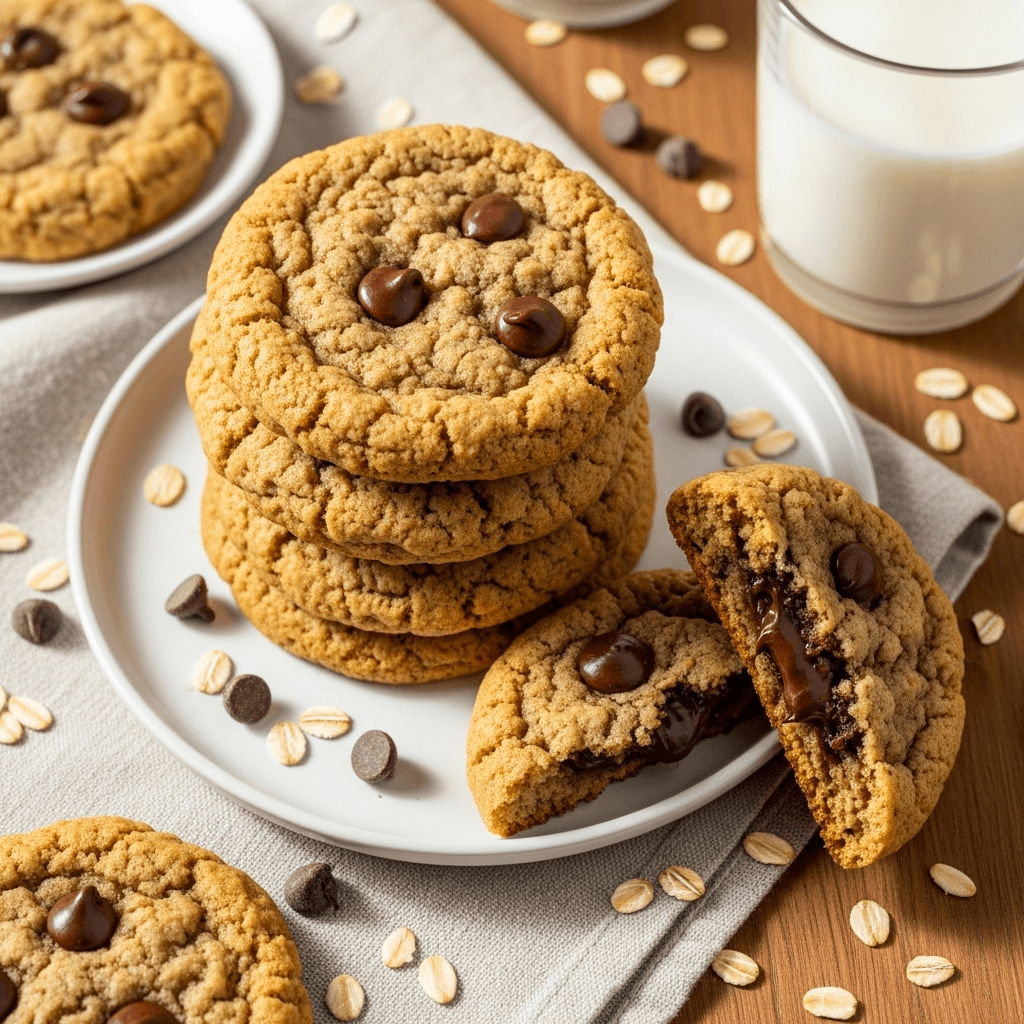

There’s nothing quite like the aroma of fresh-baked chewy oatmeal cookies wafting through your home. This classic oatmeal cookie recipe combines wholesome oats, warm spices, and just the right amount of sweetness to create cookies that are tender, chewy, and absolutely irresistible. Whether you’re looking for a simple treat to pack in lunch boxes, a comfort food for afternoon snacking, or homemade cookies to gift to friends and family, this easy oatmeal cookie recipe delivers every single time.
What makes this best oatmeal cookie recipe so special is the perfect texture – crispy edges paired with a gloriously chewy center that stays soft for days. Unlike store-bought cookies with their mysterious ingredients and artificial flavors, these homemade oatmeal cookies use real, recognizable ingredients you can pronounce. In just 25 minutes, you’ll have a full batch of delicious cookies that taste like they came from a specialty bakery. This simple oatmeal cookie recipe has become a family favorite because it’s foolproof, budget-friendly, and endlessly customizable.
History / Background
Oatmeal cookies have a fascinating history that reflects the evolution of American baking and the democratization of ingredients once reserved for the wealthy. Oats themselves have been cultivated for thousands of years, particularly in Scotland and Northern Europe where the climate suited their growth. Oatmeal was historically considered a humble, economical staple food rather than a luxury ingredient.
The oatmeal cookie as we know it today emerged in America during the late 1800s and early 1900s when several factors converged to make it possible. The expansion of railways brought oats from the American Midwest to markets nationwide. The Industrial Revolution made sugar and butter more accessible to middle-class families. Standardized recipes began appearing in cookbooks and newspapers, including Fannie Farmer’s influential “The Boston Cooking-School Cook Book” published in 1896.
Oatmeal cookies gained particular popularity during the Great Depression when families sought affordable yet satisfying recipes using inexpensive staple ingredients. The cookies combined economical oats with pantry basics like butter, sugar, and flour, creating something that felt indulgent despite its humble origins. They appeared regularly in lunchboxes, church bake sales, and family gatherings throughout the 20th century.
The introduction of rolled oats (as opposed to steel-cut oats) in the late 1800s revolutionized oatmeal baking, making cookies easier to produce and more consistent in texture. The Quaker Oats Company, founded in 1901, became synonymous with oatmeal and actively promoted oatmeal cookies through recipe booklets and advertising, cementing their place in American culinary tradition.
Today, oatmeal cookies remain one of America’s most beloved cookie varieties. They appear on restaurant menus as comfort food, feature prominently in specialty bakeries, and remain a staple in home kitchens from coast to coast. The beauty of the oatmeal cookie lies in its versatility – the classic version is delicious on its own, yet it readily accepts additions like raisins, nuts, chocolate chips, dried cranberries, and spices, allowing endless personalization while maintaining its essential character.
Why You’ll Love This Recipe
This easy oatmeal cookie recipe is the definition of comfort food perfection – simple, wholesome, and absolutely delicious. I’ve perfected this recipe through countless batches to bring you the ultimate version that works for beginners and experienced bakers alike.
Here’s why this chewy oatmeal cookie recipe will become your new favorite:
- Ready in just 25 minutes – From mixing to fresh-baked cookies, you’ll have warm, delicious treats ready to eat in half an hour
- Simple, wholesome ingredients – Just eight basic ingredients you likely already have in your pantry
- Perfectly chewy texture – Crispy edges with gloriously soft, chewy centers that stay perfect for days
- Budget-friendly – Costs just a few dollars to make multiple batches, perfect for frugal baking
- Kid-approved – Children love helping make these cookies and eating the warm, chewy results
- Naturally customizable – Easily add your favorite mix-ins like raisins, nuts, chocolate chips, or dried fruit
- Make-ahead and freezer-friendly – Bake ahead and freeze for up to three months of ready-made treats
- No special equipment needed – Just mixing bowls and a baking sheet are all you need for success
- Impressive enough for guests – Tastes like it came from a bakery but requires zero fancy techniques
- Healthier option available – The wholesome oats provide fiber and nutrients, unlike many cookie recipes
Ingredient Notes
Creating the perfect chewy oatmeal cookie starts with understanding each ingredient’s role and choosing quality options that work in harmony.
Old-Fashioned Rolled Oats – The star of this recipe, rolled oats provide hearty texture, nutty flavor, and a toothsome bite that defines great oatmeal cookies. Use old-fashioned rolled oats, not instant oatmeal packets which contain added sugars and dried fruit. Quick oats work in a pinch but create slightly less textural interest. Steel-cut oats are too chunky and won’t distribute evenly. Three cups of oats creates that signature oatmeal cookie character without making them too dense or oat-heavy. The oats should make up roughly one-third to one-half of the dry ingredients by volume.
Butter – Real butter is essential for flavor and texture. Use unsalted butter so you can control the salt level, or use salted butter and reduce the added salt slightly. Butter contributes richness, helps create chewy texture through moisture retention, and provides that incomparable butter flavor. Room temperature butter creams more easily with sugar, creating better texture. One cup (two sticks) of butter creates the right ratio of fat to flour for chewy cookies.
Brown Sugar and Granulated Sugar – Brown sugar contains molasses, which adds moisture, creates chewiness, and provides subtle caramel and toffee notes. Granulated sugar adds sweetness and helps create crispy edges through caramelization. Using a combination of both creates cookies with complex flavor and ideal texture – crispy edges with chewy centers. Brown sugar should be packed firmly when measuring to get accurate quantities. One cup packed brown sugar combined with ½ cup granulated sugar creates perfect balance.
Eggs – Eggs bind ingredients together, add moisture that creates chewiness, and help achieve the right rise during baking. One large egg per batch is sufficient. Room temperature eggs incorporate more smoothly with butter and sugar, creating better texture. Eggs contribute some protein that structures the cookies and helps them maintain shape.
All-Purpose Flour – Provides structure without creating cookies that are too cake-like or too hard. One cup of flour combined with baking soda creates enough gluten development for proper texture without overdoing it. Spoon flour into the measuring cup and level off rather than scooping directly from the bag, which compacts flour and can add up to 20% extra.
Baking Soda – A chemical leavening agent that helps cookies rise slightly and spread properly. One teaspoon is the right amount – too much creates cookies that spread too much and taste metallic; too little creates dense cookies. Baking soda also helps browning through the Maillard reaction, creating those desirable golden edges.
Cinnamon and Salt – One and a half teaspoons of ground cinnamon provides warm spice without overpowering oat flavor. Fresh cinnamon (replaced annually) tastes noticeably better than old cinnamon that’s lost potency. A small pinch of salt enhances all the flavors, making sweetness and spice taste more pronounced while adding no perceptible salty taste.
Vanilla Extract – One teaspoon of pure vanilla extract adds subtle vanilla notes that round out the overall flavor profile. Pure vanilla tastes infinitely better than imitation vanilla extract. Some people prefer omitting vanilla entirely to let oat and cinnamon flavors shine.
Substitutions: Use coconut oil instead of butter for slightly different texture (result will be slightly less rich). Try white whole wheat flour for half the all-purpose flour for added nutrition and heartier texture. Replace some brown sugar with coconut sugar for different flavor notes. Use maple syrup or honey instead of part of the sugar for moisture and flavor (reduce liquid slightly). Add applesauce for moisture without adding fat for a lighter version.
Equipment Needed
- Mixing bowls – Two medium or large bowls (one for wet ingredients, one for dry)
- Measuring cups and spoons – Essential for accurate ingredient quantities
- Electric mixer or wooden spoon – For creaming butter and sugar; hand mixing works fine for this recipe
- Whisk – For mixing dry ingredients together smoothly
- Baking sheets – Preferably light-colored aluminum or steel that conducts heat evenly
- Parchment paper or silicone baking mats – Prevents sticking and ensures even browning
- Wooden spoon or cookie scoop – For mixing dough and portioning cookies
- Cooling racks – Allows air circulation so cookies cool properly and stay crispy
- Oven thermometer – Optional but helpful to ensure baking temperature is accurate
- Timer – Essential for knowing when cookies are perfectly baked
- Rubber spatula – For scraping down bowls and folding in additions

Oatmeal Cookie Recipe
- Total Time: 22 minutes
- Yield: 24 cookies 1x
- Diet: Vegetarian
Description
This best chewy oatmeal cookie recipe combines wholesome oats with warm cinnamon spice, creating cookies with crispy edges and gloriously chewy centers. Made with simple, wholesome ingredients and ready in just 25 minutes, these easy oatmeal cookies taste like they came from a specialty bakery.
Ingredients
- 1 cup (2 sticks) unsalted butter, softened to room temperature
- 1 cup packed brown sugar
- ½ cup granulated sugar
- 1 large egg, at room temperature
- 1 teaspoon pure vanilla extract
- 1 cup all-purpose flour
- 1 teaspoon baking soda
- 1½ teaspoons ground cinnamon
- ¼ teaspoon salt
- 3 cups old-fashioned rolled oats
Optional Add-Ins (choose 1-2 cups total):
- Raisins
- Chopped walnuts or pecans
- Chocolate chips
- Dried cranberries
- Chopped dried apples
- Shredded coconut
- Chopped dates
Instructions
- Preheat your oven. Position an oven rack in the center and preheat to 350°F (175°C). Proper oven temperature is essential for cookies that bake evenly – use an oven thermometer if you suspect your oven runs hot or cool. Line baking sheets with parchment paper or silicone baking mats to prevent sticking and ensure even browning on the bottom.
- Cream butter and sugars. Place softened butter in a large mixing bowl. Add packed brown sugar and granulated sugar. Using an electric mixer on medium speed, beat for 2-3 minutes until the mixture is light, fluffy, and pale – almost the texture of frosting. If mixing by hand, cream with a wooden spoon for about 5 minutes until well combined and fluffy. This creaming process incorporates air, which helps cookies rise slightly and creates tender texture.
- Add egg and vanilla. Beat in the room temperature egg until fully incorporated, about 30-45 seconds. Add vanilla extract and beat again to combine. The mixture should be smooth and well combined. Scrape down the bowl occasionally to ensure all ingredients are evenly mixed.
- Combine dry ingredients. In a separate bowl, whisk together flour, baking soda, cinnamon, and salt. Whisking combines these ingredients evenly and aerates the flour, contributing to better texture. This step prevents pockets of baking soda or spice in the finished cookies.
- Mix wet and dry ingredients. Add the dry ingredients to the butter mixture in two additions, stirring on low speed or by hand just until combined after each addition. Do not overmix – stir until you don’t see any streaks of flour remaining, then stop. Overmixing develops too much gluten, making cookies tough rather than chewy.
- Fold in oats and add-ins. Using a wooden spoon or rubber spatula, fold in the old-fashioned rolled oats until evenly distributed throughout the dough. If using optional add-ins like raisins, nuts, or chocolate chips, fold them in now, adding up to 2 cups total of your choices. The dough will be thick and relatively stiff, which is exactly right for chewy oatmeal cookies.
- Portion cookies onto baking sheets. Drop dough by rounded tablespoons onto prepared baking sheets, spacing them about 2 inches apart as they’ll spread slightly during baking. For uniform cookies, use a cookie scoop – this ensures each cookie is roughly the same size and bakes evenly. You’ll fit about 12 cookies per standard baking sheet.
- Bake cookies until golden brown. Bake for 11-13 minutes until the edges are golden brown but the centers still look slightly underdone – they’ll appear almost too soft. This is the secret to chewy cookies! The residual heat will continue cooking the centers as they cool, resulting in the perfect chewy texture. Overbaking creates hard, crispy cookies rather than chewy ones.
- Cool on baking sheets. Remove cookies from the oven and let them cool on the baking sheet for 5 minutes without moving them. This allows them to firm up slightly and become stable enough to transfer without breaking. After 5 minutes, transfer cookies to a cooling rack to cool completely. This cooling process is important – moving them too early breaks them, and they firm up too much if left on the baking sheet too long.
- Store and enjoy. Once completely cool, store cookies in an airtight container at room temperature for up to 5 days. The cookies will soften slightly as they sit, becoming increasingly chewy. Some people prefer adding a slice of bread to the container to help retain moisture, though it’s not necessary.
Notes
- Chewy texture secret – Remove cookies from the oven when they look slightly underdone in the center; residual heat finishes cooking them perfectly
- Room temperature ingredients – Butter and egg should be at room temperature for proper creaming and mixing
- Don’t overmix – Overmixing develops gluten and creates tough cookies instead of tender ones
- Add-ins flexibility – Use any combination of dried fruit, nuts, or chocolate totaling 1-2 cups
- Batch baking – If making multiple batches, let baking sheets cool between batches or use additional sheets
- Frozen dough option – Scoop dough onto baking sheets, freeze, then bake from frozen, adding 2-3 extra minutes
- Half-batch possible – Divide all ingredients by two for smaller batches if needed
- Prep Time: 10 minutes
- Cook Time: 12 minutes
- Category: Dessert
- Method: Baking
- Cuisine: American
Nutrition
- Serving Size: 1 cookie
- Calories: 165
- Sugar: 12g
- Sodium: 145mg
- Fat: 8g
- Saturated Fat: 5g
- Unsaturated Fat: 2.5g
- Trans Fat: 0g
- Carbohydrates: 21g
- Fiber: 1g
- Protein: 2g
- Cholesterol: 18mg
Tips & Variations
Classic Flavor Variations:
- Raisin Oatmeal Cookies: Add 1½ cups raisins for traditional oatmeal raisin cookies; soak raisins in warm water for 5 minutes before adding for extra plumpness
- Oatmeal Walnut Cookies: Add 1½ cups chopped walnuts for nutty flavor and textural contrast
- Chocolate Chip Oatmeal Cookies: Add 1 cup chocolate chips for chocolate lovers; semi-sweet, dark chocolate, or milk chocolate all work wonderfully
- Cranberry Orange Oatmeal Cookies: Add 1 cup dried cranberries and 1 tablespoon orange zest for tart, bright flavor
- Apple Cinnamon Oatmeal Cookies: Add 1 cup chopped dried apples and increase cinnamon to 2 teaspoons for warm, comforting flavor
- Maple Pecan Oatmeal Cookies: Replace ¼ cup brown sugar with maple sugar and add 1 cup chopped pecans
- Coconut Oatmeal Cookies: Add 1 cup shredded coconut for tropical flavor and chewier texture
Spice Variations:
- Chai Spice Oatmeal Cookies: Add ½ teaspoon ginger, ¼ teaspoon cloves, and ⅛ teaspoon cardamom for warm chai spice flavor
- Pumpkin Pie Spiced Oatmeal Cookies: Add ½ teaspoon pumpkin pie spice to the cinnamon for extra warmth and depth
- Molasses Oatmeal Cookies: Add 1 tablespoon molasses with the egg for deeper, more complex flavor
Healthier Versions:
- Whole Wheat Oatmeal Cookies: Replace half the all-purpose flour with white whole wheat flour for added nutrition
- Lower Sugar Oatmeal Cookies: Reduce brown sugar to ¾ cup and granulated sugar to ¼ cup, add 2 tablespoons honey or maple syrup
- Applesauce Oatmeal Cookies: Replace ½ cup butter with ½ cup unsweetened applesauce for lighter cookies
- Vegan Oatmeal Cookies: Replace butter with coconut oil and egg with flax egg (1 tablespoon ground flax mixed with 3 tablespoons water, let sit 5 minutes)
Texture Variations:
- Extra Chewy: Use 1¼ cups brown sugar and reduce granulated sugar to ¼ cup for maximum moisture
- Crispy Oatmeal Cookies: Bake 2-3 minutes longer until medium golden brown throughout for crispier texture
- Thick and Hearty: Use a scoop to make larger cookies, space farther apart, and bake 1-2 minutes longer
Pro Chef Tips
Room temperature is essential – Butter, eggs, and other ingredients at room temperature incorporate more smoothly, creating better texture and more uniform cookies. Cold butter makes creaming difficult; cold eggs don’t emulsify properly with butter.
Cream butter and sugar thoroughly – This incorporates air that helps cookies rise and creates lighter texture. Adequate creaming takes 2-3 minutes with a mixer or 5+ minutes by hand. You’ll know it’s done when the mixture is noticeably lighter in color and fluffy in texture.
Don’t overmix after adding flour – Once you add dry ingredients, mix just enough to combine. Overmixing develops gluten, which creates tough cookies instead of tender ones. Stop as soon as you don’t see streaks of flour remaining.
Remove cookies while slightly underdone – This is the secret to chewy oatmeal cookies. The residual heat on the hot baking sheet continues cooking the centers as they cool. Cookies that look slightly too soft when removed from the oven will be perfectly chewy when cool.
Cool on baking sheet, then transfer – The 5-minute cooling on the baking sheet allows cookies to firm up enough to transfer without breaking. Transferring too early tears them; waiting too long makes them stick to the sheet.
Use parchment paper or baking mats – These prevent sticking and create more even browning on the bottom of cookies. They also make cleanup much easier. Reuse them for multiple batches – they’ll last for years.
Rotate baking sheets halfway through – If baking multiple sheets at once, rotate them halfway through baking so all cookies brown evenly. Different areas of your oven may have hot spots.
Make cookies uniform in size – Using a cookie scoop ensures all cookies are roughly the same size, so they bake evenly. Uniform cookies finished at the same time instead of some being raw while others are overbaked.
Freeze dough for convenience – Scoop dough onto baking sheets and freeze, then transfer to a freezer bag. You can bake cookies straight from frozen, adding just 2-3 extra minutes of baking time. This allows you to have fresh-baked cookies on demand.
Common Mistakes to Avoid
Overbaking cookies – This is the most common mistake that results in hard, crispy cookies instead of chewy ones. Remove cookies when edges are golden but centers still look slightly underdone. They’ll firm up as they cool, reaching perfect chewy texture.
Using expired baking soda – Baking soda loses potency over time. If your cookies aren’t rising properly or taste flat, check the date on your baking soda and replace if it’s more than a few months old. Fresh leavening agents make a dramatic difference.
Using cold butter or eggs – Cold ingredients don’t incorporate smoothly, resulting in uneven mixing and potential dense spots in cookies. Let butter and eggs sit at room temperature for 20-30 minutes before baking.
Measuring flour incorrectly – Scooping directly from the bag compacts flour, adding too much to your recipe and creating dense, tough cookies. Spoon flour into the measuring cup and level off for accurate measurement, or weigh flour on a kitchen scale for absolute precision.
Overmixing the dough – Once dry ingredients are added, mix just until combined. Overmixing develops gluten, creating tough cookies instead of tender, chewy ones. Stop as soon as you don’t see flour streaks.
Not spacing cookies far enough apart – Cookies need room to spread. If they’re too close together, they’ll stick to each other or spread into odd shapes. Space cookies at least 2 inches apart on the baking sheet.
Storage & Meal Prep
Storing Cookies: Keep baked chewy oatmeal cookies in an airtight container at room temperature for up to 5 days. The cookies will actually become more chewy as they sit, absorbing any residual moisture from each other. Don’t refrigerate, as cold temperatures speed up staling.
Extended Storage: For storage beyond 5 days, freeze baked cookies in an airtight container or freezer bag for up to 3 months. Thaw at room temperature for about 30 minutes before serving. The cookies emerge from freezing tasting just as fresh as when frozen.
Storage with Added Moisture: Some people place a slice of bread in the container with cookies to help keep them moist and chewy longer. Change the bread every day or two as it absorbs moisture. This trick is particularly helpful if you live in a dry climate.
Dough Storage: Refrigerate dough in an airtight container for up to 3 days before baking. Cold dough can actually be easier to work with for some people. Allow dough to come to room temperature for about 15 minutes before scooping and baking if it’s been refrigerated.
Freezing Dough: Scoop dough into balls on a baking sheet and freeze for about 2 hours until solid, then transfer to a freezer bag and freeze for up to 3 months. Bake directly from frozen, adding 2-3 minutes to the baking time.
Meal Prep Strategy: Bake multiple batches on a weekend and store in the freezer for grab-and-go treats throughout the month. This approach ensures you always have homemade cookies on hand for lunchboxes, snacking, or unexpected guests.
Make-Ahead & Freezer Notes
Can You Make It Ahead? Absolutely! This chewy oatmeal cookie recipe is perfect for advance preparation. Make dough ahead and refrigerate for up to 3 days before baking, or scoop and freeze for convenient future baking.
Freezer-Friendly Details: Both dough and baked cookies freeze beautifully for up to 3 months. Baked cookies maintain excellent quality for about 2-3 months; beyond that, they become slightly stale though still edible. Frozen dough keeps for similar duration, remaining perfect for baking from frozen.
Best Reheating Method: Thawed cookies need no reheating if served at room temperature. If you prefer warm cookies, place on a baking sheet and warm in a 300°F oven for about 5 minutes. Or microwave individual cookies for about 10 seconds – they’ll taste freshly baked.
Baking From Frozen: Scoop dough onto baking sheets and freeze until solid (about 2 hours), then transfer to freezer bags. When ready to bake, place frozen dough balls directly on prepared baking sheets and bake at 350°F for 14-16 minutes (add 2-3 extra minutes to standard baking time).
Make-Ahead for Events: Bake cookies up to a week ahead and store in an airtight container. Bring to room temperature before serving for best texture and flavor. For particularly important events, freeze well in advance, then thaw a day or two before serving.
Batch Baking Strategy: Make a triple batch on a weekend, keeping one batch fresh for immediate eating, refrigerating one batch to bake fresh during the week, and freezing one batch for later. This provides fresh-baked cookies throughout the month with minimal effort.
Component Freezing: If making multiple batches, prepare a large batch of dough, scoop it all at once, and freeze all at once, rather than making dough multiple times. This saves time and ensures consistent results across all batches.
Serving Suggestions
Perfect chewy oatmeal cookies deserve equally delicious accompaniments and serving occasions that enhance their wholesome, comforting appeal.
Beverage Pairings:
- Cold milk – the classic pairing with any cookie
- Hot coffee or espresso for afternoon snacking
- Hot tea – black tea, chamomile, or herbal varieties all complement cookies
- Hot chocolate with whipped cream
- Cold iced tea or lemonade
- Apple cider, hot or cold depending on season
- Smoothies for a sweet breakfast treat
Serving Occasions:
- After-school snacks for hungry kids
- Lunch box treats packed with a note of love
- Coffee shop-style afternoon snack with espresso
- Dessert after a light meal instead of heavier options
- Holiday gift boxes for family and friends
- Bake sale fundraiser items
- Potluck contributions
- Simple dessert after casual family dinners
Presentation Ideas:
- Stack cookies on a pretty plate or cake stand
- Wrap individually in parchment paper tied with twine for gifting
- Arrange on a wooden cutting board for casual entertaining
- Display in a clear jar on the kitchen counter for easy snacking
- Layer in gift boxes with parchment between layers for presents
- Serve on antique plates for a touch of elegance
Flavor Complements:
- Pair raisin oatmeal cookies with strong coffee for contrasting flavors
- Serve chocolate chip cookies with cold milk for classic combination
- Enjoy cranberry orange cookies with herbal tea for bright, complementary flavors
- Pair apple cinnamon cookies with hot spiced cider for autumn coziness
- Serve with nut-based cookies with espresso for sophisticated pairing
Occasion Pairings:
- Weeknight comfort food with hot cocoa
- Weekend brunch with coffee and fresh fruit
- Afternoon break during work or studying
- Post-workout snack with cold milk for refueling
- Picnic or outdoor gathering treat
- Holiday cookie platter with other varieties
- Birthday or celebration addition to dessert table
FAQs Section
Can I use quick oats instead of old-fashioned rolled oats? You can, though the results will be slightly different. Quick oats are smaller and break down more easily during mixing and baking, resulting in cookies with less distinct oat texture. Old-fashioned rolled oats maintain their shape better, creating the characteristic chewy oatmeal cookie texture. If using quick oats, use the same amount but expect cookies that are slightly more cake-like and less toothsome.
Why are my cookies too hard instead of chewy? You’re likely overbaking them. Remove cookies when the edges are golden brown but the centers still look slightly underdone – they’ll appear almost too soft. The residual heat on the hot baking sheet and in the oven finishes cooking them to perfect chewy texture. If you bake until they look completely done, they’ll be hard and crispy. Temperature and timing matter enormously for chewy texture.
Can I make these cookies gluten-free? Yes! Replace all-purpose flour with a gluten-free flour blend that includes xanthan gum (or add ¼ teaspoon xanthan gum if your blend doesn’t include it). Use the same amount of gluten-free flour as you would all-purpose flour. The resulting cookies will be slightly more delicate but equally delicious. Some people prefer adding 2 tablespoons of cornstarch to the gluten-free blend for better texture.
How do I make these cookies vegan? Replace butter with coconut oil in equal amounts, and replace the egg with a flax egg (1 tablespoon ground flax mixed with 3 tablespoons water, let sit 5 minutes before using). The cookies will be slightly different in texture but still delicious. You can also use aquafaba (liquid from canned chickpeas) in place of egg – use 3 tablespoons of aquafaba to replace one egg.
Why does my dough seem too dry or too wet? This usually results from incorrect flour measurement or humidity in your kitchen affecting the oats. If dough seems too dry, add milk or water 1 tablespoon at a time. If too wet, add more oats 2 tablespoons at a time. The dough should be thick, holdable, and slightly moist but not wet. Some adjustment is normal depending on ingredient variables.
Can I add a frosting or glaze to these cookies? While not traditional, you could add a simple glaze of powdered sugar and milk if desired, though it changes the character of the cookie. Many people prefer them plain to showcase the oat and cinnamon flavors. If frosting, let cookies cool completely first, then drizzle or dip lightly in glaze.
How long do these cookies stay fresh? Baked cookies store at room temperature in an airtight container for up to 5 days, becoming increasingly chewy as they sit. For storage beyond 5 days, freeze for up to 3 months. The cookies actually taste fresher when thawed from frozen than when stale at room temperature, so freezing is recommended for longer storage.
Conclusion
There you have it – the ultimate guide to making the best chewy oatmeal cookie recipe that tastes just as good as your grandmother’s version but comes together in just 25 minutes! This easy oatmeal cookie recipe proves that homemade treats don’t require complicated techniques or hard-to-find ingredients. With just a handful of pantry staples and about 30 minutes of your time, you can create batches of delicious cookies that beat any store-bought version.
The magic of this chewy oatmeal cookie recipe lies in its perfect balance of simplicity and deliciousness. The combination of wholesome oats, warm cinnamon spice, brown sugar chewiness, and simple technique creates cookies that are greater than the sum of their parts. Whether you’re making them for your own snacking pleasure, packing in lunchboxes for loved ones, gifting to friends, or sharing at potlucks, these cookies deliver consistent, delicious results every single time.
I’d absolutely love to hear about your cookie-baking adventures! What’s your favorite variation – traditional raisin, chocolate chip, or something creative? Did you bake multiple batches and freeze them for later? Drop a comment below and let me know how your oatmeal cookies turned out. And if you loved this recipe, please save it to your favorite Pinterest board so you can find it again easily, and share it with friends and family who need an easy, delicious cookie recipe in their lives!
Happy baking, and may your kitchen always be filled with the aroma of freshly baked chewy oatmeal cookies!