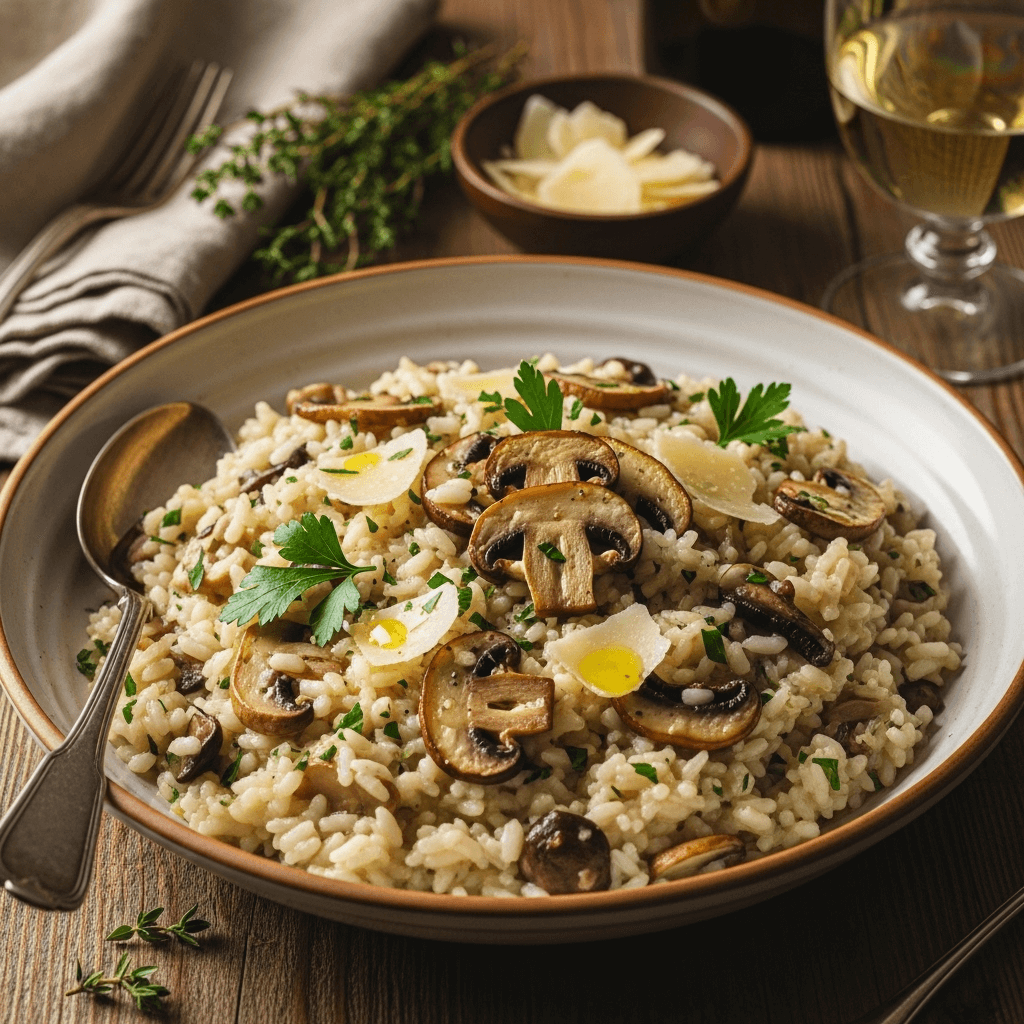

There’s something undeniably luxurious about a perfectly cooked mushroom risotto. This creamy, velvety Italian rice dish has won hearts around the world with its rich flavor and comforting texture. Unlike ordinary rice dishes, risotto requires patience and attention, rewarding you with a restaurant-quality meal that feels elegant yet incredibly satisfying.
Mushroom risotto is the ultimate comfort food that works beautifully for both weeknight dinners and special occasions. Whether you’re hosting a dinner party, celebrating date night at home, or simply craving something indulgent, this creamy mushroom risotto delivers every single time. The earthy mushrooms combined with perfectly cooked Arborio rice, white wine, and Parmesan cheese create a dish that’s both sophisticated and soul-warming.
What makes this recipe particularly special is its versatility. It can stand alone as a vegetarian main course or serve as an elegant side dish alongside roasted chicken, seared steak, or grilled fish. And while risotto has a reputation for being difficult, I’m here to show you that with the right technique and a little patience, anyone can master this classic Italian dish in their own kitchen.
History / Background
Risotto originated in Northern Italy, particularly in the Lombardy region where rice cultivation thrives in the Po Valley. The dish dates back to the 19th century, though rice had been grown in Italy since the Middle Ages, introduced by Arab traders and later cultivated extensively by Italian farmers.
The most famous origin story involves a young apprentice working on the stained glass windows of the Milan Cathedral in 1574. His master would joke that he used so much saffron in his paints that he’d probably add it to his food too. At the master’s daughter’s wedding, the apprentice did exactly that – adding saffron to the rice dish, creating what we now know as Risotto alla Milanese, the golden ancestor of all risotto variations.
Mushroom risotto (Risotto ai Funghi) evolved as a regional variation, particularly popular in areas where wild mushrooms like porcini flourished. Italian cooks discovered that the creamy, starchy texture of properly cooked Arborio rice was the perfect canvas for showcasing the deep, earthy flavors of seasonal mushrooms.
Traditional Italian risotto follows a specific technique: slowly adding warm broth to rice while stirring constantly, allowing the rice to release its starches and create that signature creamy consistency without any cream. This methodical cooking process transforms humble ingredients into something truly extraordinary – a testament to Italian cooking philosophy that values technique and quality ingredients above all else.
Today, mushroom risotto has become a beloved dish worldwide, adapted by home cooks and celebrated by fine dining establishments. It represents the beautiful simplicity of Italian cuisine: taking a few quality ingredients and treating them with respect and proper technique to create something magical.
Why You’ll Love This Recipe
This homemade mushroom risotto brings all the elegance of Italian dining straight to your kitchen without requiring professional chef skills. While it does need your attention, the process is actually quite straightforward and deeply satisfying. There’s something almost meditative about the stirring process, and watching the rice transform into creamy perfection is genuinely rewarding.
Here’s why this easy mushroom risotto recipe will become your new favorite:
- Restaurant-quality results at home – Impress your family and guests with a dish that tastes like it came from a high-end Italian restaurant
- Naturally vegetarian – Perfect for meatless Mondays or serving vegetarian guests without feeling like you’re compromising on flavor
- Customizable and versatile – Easily adapt with different mushrooms, herbs, or add-ins to suit your taste preferences
- Comfort food at its finest – Creamy, rich, and incredibly satisfying without being heavy
- Special occasion worthy – Elegant enough for holidays, dinner parties, or romantic dinners, yet simple enough for any night
- Uses pantry-friendly ingredients – Most ingredients are kitchen staples, with mushrooms being the star fresh ingredient
- One-pot wonder – Less cleanup means more time enjoying your delicious creation
- Budget-friendly luxury – Tastes expensive but costs a fraction of ordering risotto at a restaurant
Ingredient Notes
Let’s talk about what makes this mushroom risotto recipe truly shine. Each ingredient plays an important role in creating that perfect creamy texture and deep, savory flavor.
Arborio Rice: This short-grain Italian rice is essential for authentic risotto. Its high starch content creates that signature creamy texture when cooked properly. Don’t substitute with regular long-grain rice – it simply won’t work. If you can’t find Arborio, Carnaroli or Vialone Nano are acceptable Italian alternatives that also have the necessary starch content.
Mixed Mushrooms: I recommend using a combination of mushrooms for depth of flavor. Cremini mushrooms provide earthiness, shiitake add umami richness, and oyster mushrooms contribute a delicate texture. You can also use button mushrooms, portobello, or wild mushrooms like porcini when available. Fresh mushrooms work best, but you can supplement with dried porcini for extra flavor – just rehydrate them first and save that soaking liquid to add to your broth.
Vegetable or Chicken Broth: This is your cooking liquid and flavor base. Always keep it warm in a separate pot – cold broth will shock the rice and interrupt the cooking process. Homemade stock is ideal, but quality store-bought works perfectly fine. For vegetarian risotto, stick with vegetable broth; for extra richness, use chicken stock.
Dry White Wine: This adds acidity and brightness that balances the richness of the dish. Use something you’d actually drink – Pinot Grigio, Sauvignon Blanc, or Chardonnay all work beautifully. If you don’t cook with alcohol, substitute with additional broth plus a tablespoon of lemon juice for acidity.
Parmesan Cheese: Freshly grated Parmigiano-Reggiano is non-negotiable for authentic flavor. The pre-shredded stuff contains anti-caking agents that prevent proper melting. Buy a wedge and grate it yourself – it makes a tremendous difference. For a vegan version, use nutritional yeast or vegan parmesan alternative.
Butter and Olive Oil: Starting with olive oil prevents burning during the initial sauté, while finishing with butter adds luxurious richness and helps create that glossy, creamy final texture. This combination is traditional and creates the best results.
Shallots and Garlic: These aromatics build the flavor foundation. Shallots are milder and sweeter than onions, making them perfect for risotto. If you don’t have shallots, use finely diced yellow onion instead.
Fresh Herbs: Thyme complements mushrooms beautifully during cooking, while fresh parsley adds brightness as a garnish. Fresh herbs always taste better than dried in this application.
Equipment Needed
Having the right tools makes preparing this Italian mushroom risotto much easier and more enjoyable:
- Large, heavy-bottomed saucepan or deep skillet (at least 4-quart capacity) – Essential for even heat distribution and preventing scorching
- Medium saucepan – For keeping your broth warm throughout cooking
- Wooden spoon or heat-resistant spatula – For constant stirring without scratching your pan
- Sharp chef’s knife – For slicing mushrooms and chopping aromatics
- Cutting board – Preferably a separate one for vegetables
- Ladle – Makes adding broth incrementally much easier and more precise
- Measuring cups and spoons – For accurate ingredient portions
- Box grater or microplane – For freshly grating Parmesan cheese
- Kitchen timer – Helpful for tracking cooking times, though your eyes and taste are the best judges
Creamy Mushroom Risotto Recipe
- Total Time: 50 minutes
- Yield: 4 servings 1x
- Diet: Vegetarian
Description
This creamy mushroom risotto recipe delivers restaurant-quality results right in your home kitchen. With tender Arborio rice, earthy mixed mushrooms, white wine, and Parmesan cheese, this classic Italian dish is both comforting and elegant. Perfect for dinner parties or a cozy night in, this risotto is rich, flavorful, and absolutely irresistible.
Ingredients
- 6 cups vegetable or chicken broth, low-sodium
- 3 tablespoons olive oil, divided
- 1 pound mixed mushrooms (cremini, shiitake, oyster), sliced
- Salt and black pepper, to taste
- 3 tablespoons unsalted butter, divided
- 2 medium shallots, finely diced (about ½ cup)
- 4 cloves garlic, minced
- 1½ cups Arborio rice
- ½ cup dry white wine
- 1 cup Parmesan cheese, freshly grated, plus more for serving
- 2 teaspoons fresh thyme leaves
- 2 tablespoons fresh parsley, chopped
- 1 tablespoon lemon juice (optional, for brightness)
Instructions
- Prepare the broth: Pour the broth into a medium saucepan and bring to a gentle simmer over medium-low heat. Keep warm throughout the cooking process – this is crucial for proper risotto texture.
- Sauté the mushrooms: Heat 2 tablespoons of olive oil in a large, heavy-bottomed saucepan or deep skillet over medium-high heat. Add the sliced mushrooms in a single layer (work in batches if needed to avoid crowding). Cook without stirring for 3-4 minutes until golden brown on one side, then stir and cook for another 3-4 minutes until tender and caramelized. Season with salt and pepper. Transfer mushrooms to a plate and set aside.
- Start the risotto base: In the same pan, reduce heat to medium and add 1 tablespoon olive oil and 1 tablespoon butter. Once the butter melts, add the diced shallots. Sauté for 2-3 minutes until softened and translucent. Add the minced garlic and fresh thyme, cooking for another 30 seconds until fragrant.
- Toast the rice: Add the Arborio rice to the pan, stirring constantly for 1-2 minutes until the grains are well-coated with the oil and butter mixture and slightly translucent around the edges. This toasting step is important for flavor and texture.
- Deglaze with wine: Pour in the white wine and stir continuously until the wine is completely absorbed by the rice, about 2-3 minutes. You’ll hear the sizzling sound fade as the liquid evaporates.
- Begin adding broth: Using a ladle, add about ¾ cup of warm broth to the rice. Stir frequently (but you don’t need to stir constantly at this stage) until the liquid is mostly absorbed. The rice should be bubbling gently.
- Continue the cooking process: Keep adding broth, one ladle at a time (about ¾ cup), stirring regularly and allowing each addition to be absorbed before adding more. This gradual process takes about 20-25 minutes total. The rice should always look creamy, not dry or soupy.
- Test for doneness: After about 20 minutes, start tasting the rice. It should be tender but still have a slight firmness in the center (al dente). If it’s still too firm, continue adding broth and cooking. You may not need all the broth, or you might need a bit more – trust your judgment.
- Finish the risotto: When the rice is perfectly cooked, remove the pan from heat. Stir in the remaining 2 tablespoons of butter, the grated Parmesan cheese, and most of the cooked mushrooms (reserve some for garnish). Stir vigorously for about a minute until everything is combined and the risotto looks creamy and glossy. If it seems too thick, add a splash more broth. Taste and adjust seasoning with salt and pepper.
- Serve immediately: Divide the risotto among shallow bowls. Top with the reserved mushrooms, extra Parmesan cheese, fresh parsley, and a drizzle of good olive oil if desired. Add a squeeze of lemon juice for brightness. Serve right away while hot and creamy.
Notes
- Stirring frequency: You don’t need to stir constantly, but frequent stirring (every 30-60 seconds) helps release the rice’s starches for that creamy texture.
- Broth temperature: Keeping the broth warm is crucial – cold liquid will stop the cooking process and result in uneven texture.
- Consistency: Proper risotto should be all’onda (wavy) – it should slowly spread when spooned onto a plate, not sit in a stiff mound or run like soup.
- Timing: Risotto is best served immediately. It continues to absorb liquid as it sits, becoming thick and gluey.
- Wine substitute: If avoiding alcohol, use extra broth plus 1 tablespoon lemon juice or white wine vinegar for acidity.
- Make it vegan: Use vegan butter and nutritional yeast or vegan parmesan instead of dairy products.
- Prep Time: 15 minutes
- Cook Time: 35 minutes
- Category: Main Course
- Method: Stovetop
- Cuisine: Italian
Nutrition
- Serving Size: 1¼ cups (approximately ¼ of recipe)
- Calories: 445
- Sugar: 4g
- Sodium: 720mg
- Fat: 18g
- Saturated Fat: 8g
- Unsaturated Fat: 9g
- Trans Fat: 0g
- Carbohydrates: 57g
- Fiber: 3g
- Protein: 14g
- Cholesterol: 35mg
Tips & Variations
Protein additions: Transform this into a heartier main course by adding cooked chicken, shrimp, Italian sausage, or pancetta. Cook proteins separately and stir in at the end to maintain proper texture.
Different mushroom combinations: Experiment with wild mushrooms like chanterelles, morels, or hen of the woods when in season. Dried porcini mushrooms add incredible depth – rehydrate them and add the soaking liquid to your broth for extra umami flavor.
Truffle luxury: For an ultra-luxurious version, finish with a drizzle of truffle oil or shave fresh truffles over the top just before serving.
Herb variations: Try fresh sage instead of thyme for an earthier flavor, or add fresh basil at the end for a brighter, more summery version.
Cheese options: While Parmesan is traditional, you can experiment with Pecorino Romano for a sharper flavor, Gorgonzola for blue cheese lovers, or Gruyère for nuttiness.
Add greens: Stir in fresh spinach, arugula, or peas during the last few minutes of cooking for added nutrition and color.
Lemon mushroom risotto: Add extra lemon zest and juice at the end for a bright, citrusy version that’s perfect for spring.
Spicy kick: Add red pepper flakes with the garlic for a subtle heat, or stir in a spoonful of truffle-infused hot honey for sweet-spicy complexity.
Pro Chef Tips
Mise en place is everything: Have all your ingredients prepped and measured before you start cooking. Once you begin adding broth, you can’t step away, so everything needs to be ready.
Reserve pasta water (broth) strategy: Professional chefs always make extra broth. If your risotto gets too thick after cooking, you can loosen it with additional warm broth rather than water, maintaining flavor integrity.
The mantecatura technique: This is the professional finishing step where you vigorously beat butter and cheese into the risotto off the heat. This creates that restaurant-quality creamy, glossy texture. Stir with enthusiasm for about a minute.
Pan size matters: Use a wide, shallow pan rather than a tall, narrow pot. This allows for better evaporation and more consistent cooking. The rice should spread in a relatively thin layer.
Don’t oversaturate your mushrooms: When sautéing mushrooms, give them space in the pan. Crowded mushrooms steam instead of brown. Cook in batches if necessary – the caramelization adds tremendous flavor.
The two-temperature trick: Keep your broth at a simmer, but cook your risotto at a moderate temperature. Too high and the liquid evaporates before the rice can absorb it; too low and you’ll be there all night.
Taste constantly: The best chefs taste throughout cooking. This helps you understand how the rice is progressing and when it reaches that perfect al dente texture.
Resting is optional: Unlike most dishes, risotto doesn’t benefit from resting. Serve it immediately for the best texture. Some chefs even under-cook it slightly, knowing it continues cooking in the residual heat.
Common Mistakes to Avoid
Using cold broth: Adding cold broth to hot rice shocks the cooking process and results in uneven texture. Always keep your broth simmering in a separate pot throughout cooking.
Not toasting the rice: Skipping the step where you toast the rice in oil and butter means missing out on important flavor development and proper texture. Those few minutes of toasting make a real difference.
Stirring too much or too little: There’s a balance here. Constant aggressive stirring can break the rice grains, but neglecting to stir allows the risotto to stick and cook unevenly. Aim for frequent, gentle stirring every 30-60 seconds.
Adding too much liquid at once: Dumping in multiple ladles of broth at once defeats the purpose of risotto’s gradual cooking method. The slow absorption is what creates creaminess. Be patient and add broth incrementally.
Over-cooking the rice: Mushy risotto is disappointing. The rice should be al dente – tender with a slight firmness in the center. Start tasting at the 20-minute mark and stop cooking when it’s still got that gentle bite.
Forgetting to season properly: Risotto needs adequate seasoning throughout the cooking process. Taste and adjust with salt and pepper as you go, not just at the end. Remember that Parmesan adds saltiness too, so account for that.
Letting it sit too long before serving: Risotto waits for no one. It continues to absorb liquid as it sits, quickly becoming gluey and overcooked. Plate and serve immediately for the best creamy texture.
Storage & Meal Prep
Refrigerator storage: Transfer leftover risotto to an airtight container and refrigerate for up to 3 days. The texture will firm up significantly as it cools, which is completely normal.
Reheating risotto: The best method is to reheat gently in a skillet or saucepan over medium-low heat. Add a few tablespoons of broth, water, or milk and stir frequently until warmed through and creamy again. You can also microwave in 30-second intervals, stirring between each, and adding liquid to loosen the texture.
Repurposing leftovers: Cold risotto is perfect for making arancini (Italian fried rice balls). Form the chilled risotto into balls, bread them, and fry until golden and crispy. You can also press leftover risotto into a baking dish, top with cheese, and bake for a risotto casserole.
Texture changes: Be aware that reheated risotto will never have quite the same creamy, flowing texture as fresh risotto. It’s still delicious, just different. Adding liquid and stirring vigorously helps revive some of that creaminess.
Food safety: Always cool risotto quickly if you’re planning to store it. Spread it in a shallow container rather than leaving it in a deep pot to ensure it cools rapidly and safely.
Make-Ahead & Freezer Notes
Partial make-ahead method: You can cook risotto about three-quarters of the way through, then spread it on a baking sheet to cool quickly. Refrigerate for up to 24 hours. When ready to serve, reheat with broth and finish the cooking process. This works well for dinner parties when you want to minimize cooking time during service.
Prepping ingredients: Chop your shallots, garlic, and mushrooms up to 24 hours in advance. Store in airtight containers in the refrigerator. Have your broth ready to heat. This mise en place makes the actual cooking much smoother.
Freezing risotto: While you can technically freeze risotto for up to 2 months in an airtight, freezer-safe container, the texture suffers significantly. The rice tends to become mushy and separated when thawed. If you do freeze it, plan to use it in arancini or baked dishes rather than as traditional creamy risotto.
Thawing and reheating frozen risotto: Thaw overnight in the refrigerator, then reheat gently in a pan with additional broth, stirring frequently. Expect a texture that’s more like rice pilaf than classic risotto.
Best practice: Honestly, risotto is one of those dishes best made fresh. If you’re planning for a crowd, consider using the partial cooking method mentioned above rather than trying to fully prepare and store it. The hands-on cooking time is only about 30 minutes, which is manageable even when entertaining.
Serving Suggestions
Mushroom risotto is incredibly versatile and pairs beautifully with many dishes, or stands perfectly well on its own.
As a main course: Serve generous portions in shallow bowls with a simple arugula salad dressed in lemon vinaigrette on the side. Add crusty Italian bread for soaking up every last bit of creamy goodness. A glass of the same white wine you cooked with completes the meal beautifully.
As a side dish: Smaller portions of mushroom risotto complement:
- Pan-seared salmon or sea bass
- Grilled or roasted chicken (especially with herbs like rosemary or lemon)
- Braised short ribs or osso buco
- Roasted lamb chops
- Seared scallops or shrimp
Salad pairings: Balance the richness of risotto with fresh, acidic salads:
- Arugula with lemon, olive oil, and shaved Parmesan
- Mixed greens with balsamic vinaigrette
- Tomato and cucumber salad with red wine vinegar
- Caesar salad (the classic Italian-American combination)
Vegetable sides: If serving risotto as a side, consider roasted vegetables:
- Roasted asparagus with lemon
- Balsamic-glazed Brussels sprouts
- Roasted cherry tomatoes
- Grilled zucchini and summer squash
Wine pairings: Choose wines that complement the earthy mushrooms and creamy texture:
- Pinot Grigio or Pinot Blanc (crisp and light)
- Chardonnay with light oak (creamy and complementary)
- Barbera or Dolcetto (if you prefer red wine)
- Prosecco (for a celebratory touch)
Garnish ideas: Elevate your presentation with:
- Extra fresh herbs (parsley, thyme, or chives)
- Toasted pine nuts or walnuts for crunch
- Crispy fried sage leaves
- Drizzle of truffle oil
- Microgreens for an elegant touch
- Lemon zest for brightness
FAQs Section
Can I make risotto without wine?
Absolutely! While wine adds acidity and depth, you can make delicious risotto without it. Simply use additional broth and add a tablespoon of lemon juice or white wine vinegar when you would have added the wine. This provides the necessary acidity to balance the richness. Some cooks also use a splash of vermouth as an alternative.
Why is my risotto gummy or gluey?
This usually happens for one of three reasons: over-stirring (breaking the rice grains), over-cooking (the rice becomes too soft), or using the wrong type of rice. Always use Arborio or another short-grain Italian rice variety, stir frequently but gently, and stop cooking when the rice is al dente. Also, serving risotto immediately is crucial – it becomes gluey as it sits and over-absorbs liquid.
Do I really need to stir constantly?
The myth of constant stirring is one of risotto’s biggest misconceptions. You need to stir frequently (every 30-60 seconds), but you don’t need to stand there stirring non-stop for 30 minutes. Frequent stirring helps release starches for creaminess and prevents sticking, but constant aggressive stirring can actually break the rice grains. Find a comfortable rhythm of regular stirring while monitoring the pan.
Can I use brown rice or other rice varieties?
Traditional risotto requires the high starch content of Arborio, Carnaroli, or Vialone Nano rice. Brown rice won’t release enough starch to create that signature creaminess, and long-grain rice will become mushy. If you want a healthier option, look for “brown Arborio rice” specifically, but note that it will take much longer to cook (45-50 minutes) and still won’t be quite as creamy as white Arborio.
How can I tell when the risotto is done?
Risotto is done when the rice is al dente – tender but still slightly firm in the center when you bite into a grain. The overall texture should be creamy and flow slowly when spooned onto a plate (Italians call this all’onda or “wavy”). Start tasting around the 20-minute mark. If the rice is chalky or crunchy in the center, keep cooking. If it’s mushy, you’ve gone too far.
Can I double this recipe for a crowd?
You can, but risotto becomes more challenging in large quantities. If doubling, use a very wide pan to ensure even cooking and heat distribution. You’ll need to increase your stirring attention. Alternatively, consider making two batches rather than one giant one. For truly large crowds, the partial cooking method (cook ¾ of the way, cool, then finish before serving) works better.
What’s the best way to reheat leftover risotto?
Reheat gently in a skillet over medium-low heat, adding broth or water a few tablespoons at a time while stirring frequently. This helps revive some of the creaminess. You can also microwave it, stirring every 30 seconds and adding liquid to loosen it up. Just know that reheated risotto will never be quite as creamy as fresh. Consider repurposing leftovers into arancini (fried rice balls) instead.
Conclusion
There you have it – a complete guide to making perfect, creamy mushroom risotto right in your own kitchen! While this classic Italian dish has a reputation for being intimidating, I hope I’ve shown you that with the right technique and a little patience, anyone can master it. The process is actually quite therapeutic, and the results are absolutely worth it.
This mushroom risotto recipe delivers everything you want in comfort food: rich, creamy texture, deep earthy flavors from the mushrooms, and that satisfying warmth that makes you want to curl up with a bowl and a good glass of wine. Whether you’re making it for a quiet weeknight dinner or impressing guests at your next dinner party, this dish never fails to delight.
Remember, the key to great risotto is patience and attention. Keep that broth warm, add it gradually, stir with love, and taste as you go. Before you know it, you’ll have restaurant-quality risotto that’ll have everyone asking for seconds.
Now it’s your turn! I’d love to hear how your mushroom risotto turns out. Did you add any special touches? Try any of the variations? Drop a comment below and let me know! And if you loved this recipe, please share it on Pinterest – your friends will thank you for introducing them to their new favorite comfort food. Don’t forget to pin it to your dinner recipes board so you can find it again whenever that risotto craving hits!
Happy cooking, and buon appetito!