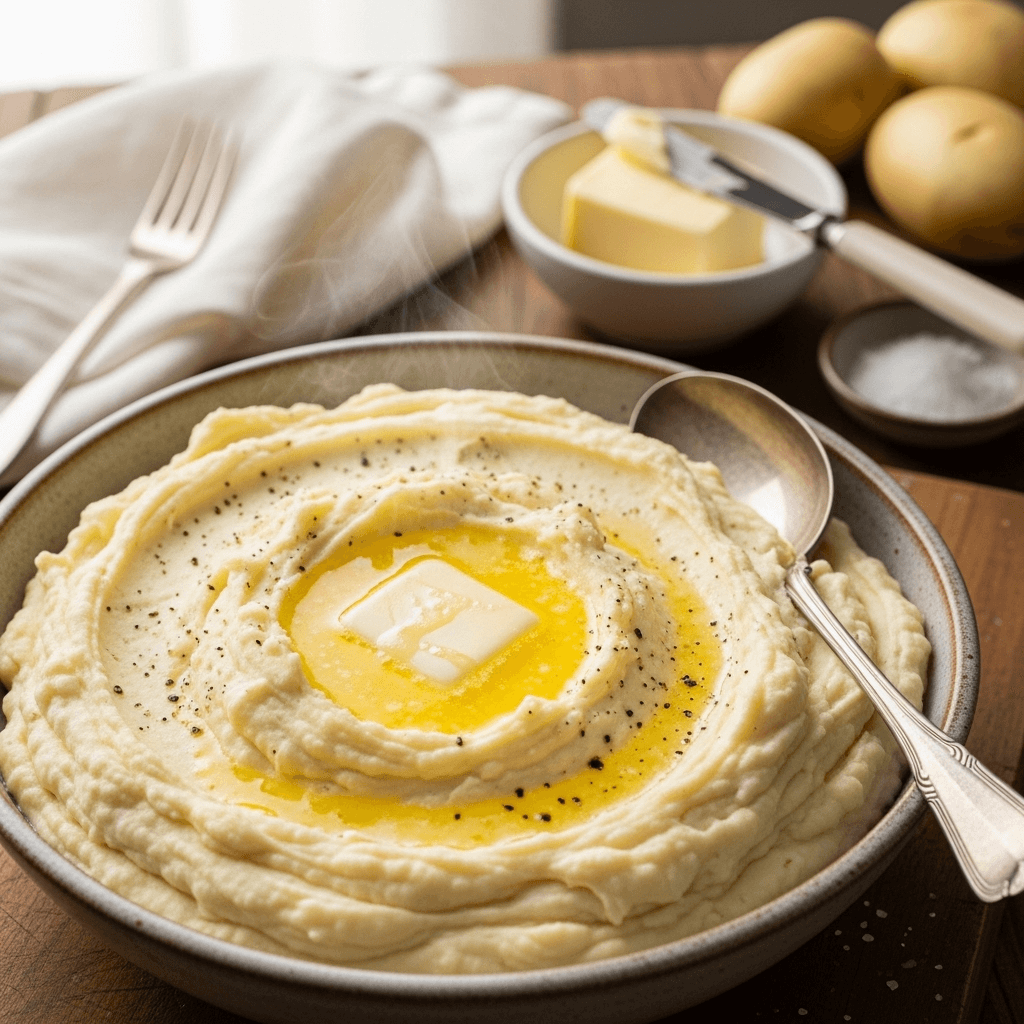
If you’ve been searching for the ultimate mashed potato recipe that delivers cloud-like, buttery perfection every single time, you’ve found it! These creamy mashed potatoes are everything you dream of—silky smooth, rich, and so incredibly fluffy they practically melt in your mouth. This easy mashed potatoes recipe uses simple techniques and everyday ingredients to create restaurant-quality results that will have everyone asking for your secret. Whether you’re preparing them for a holiday feast, Sunday dinner, or regular weeknight meal, these homemade mashed potatoes are guaranteed to become your go-to side dish that steals the show.
Introduction of Recipe
Mashed potatoes are a classic comfort food side dish made by boiling potatoes until tender, then mashing them with butter, cream or milk, and seasonings until smooth and fluffy. The beauty of perfect mashed potatoes lies in their texture—they should be light, creamy, and luxurious without being gluey or gummy. When done right, mashed potatoes are more than just a side dish; they’re the comforting hug your plate needs, the perfect vehicle for gravy, and the one thing everyone agrees is always welcome at the table.
What makes this creamy mashed potatoes recipe so universally loved is its incredible versatility and crowd-pleasing appeal. Serve these fluffy mashed potatoes for Thanksgiving and Christmas dinners as the classic holiday side, Sunday family dinners with roast chicken or beef, weeknight meals alongside meatloaf or pork chops, backyard BBQs with grilled meats, potlucks where you need a reliable crowd-pleaser, or meal prep for easy weeknight dinners. They pair beautifully with virtually any main course and somehow make every meal feel more special and comforting.
The secret to exceptional mashed potatoes isn’t complicated—it’s about choosing the right potatoes, not overworking them, and being generous with butter and cream. Once you master this simple recipe, you’ll never need another mashed potato recipe again. These are the mashed potatoes that become family legend, the ones people request year after year.
History / Background
Mashed potatoes have a surprisingly rich history that spans continents and centuries. Potatoes themselves originated in the Andes Mountains of South America over 7,000 years ago, where indigenous peoples cultivated and consumed them long before European contact. When Spanish conquistadors arrived in Peru in the 1500s, they brought potatoes back to Europe, though it took decades for them to gain widespread acceptance as food (they were initially grown as ornamental plants!).
The concept of mashing potatoes likely emerged in the 1700s as potatoes became a dietary staple across Europe, particularly in Ireland, where they became so central to the diet that the Great Famine of the 1840s was devastating. The earliest written reference to mashed potatoes appears in “The Art of Cookery Made Plain and Easy” by Hannah Glasse in 1747, though the dish was likely common before being documented.
In America, potatoes arrived with early European settlers and quickly became an agricultural staple due to their hardiness, nutritional value, and versatility. By the 19th century, mashed potatoes had become a beloved American side dish, particularly in the form we recognize today—creamy, buttery, and served with roasted meats. The dish fit perfectly into American food culture’s emphasis on comfort, abundance, and home cooking.
The addition of butter and cream to mashed potatoes is a relatively modern innovation that reflects increasing prosperity and the availability of dairy products. Earlier versions were simpler, sometimes made with just boiled water or milk. The rich, indulgent mashed potatoes we love today—loaded with butter and cream—became standard in American cuisine during the mid-20th century as convenience and comfort food reached their peak.
Interestingly, different cultures have their own takes on mashed potatoes. The French make pommes purée with an almost ridiculous amount of butter, creating an ultra-silky, refined version. The Irish make “champ” by adding scallions and butter. In the UK, “bangers and mash” (sausages with mashed potatoes) is pub food classic. Each version reflects local preferences and available ingredients, but they all celebrate the humble potato transformed into something luxurious.
Today, mashed potatoes remain one of America’s most beloved side dishes, especially during holidays. They’re comfort food at its finest—familiar, satisfying, and capable of bringing people together around the table. The debate over lumpy versus smooth, the discussions about garlic or no garlic, and the fierce loyalty people have to their family’s recipe show just how important this simple dish has become to our food culture.
Why You’ll Love This Recipe
This perfect mashed potatoes recipe is about to revolutionize your side dish game, and here’s why:
Picture yourself scooping a generous spoonful of these fluffy mashed potatoes onto your plate—they’re so creamy they form soft peaks, so buttery they glisten, and so delicious that you might eat them all before touching the rest of your meal. That’s what you’re about to create!
- Restaurant-quality texture: Achieves that perfect silky-smooth consistency without being gluey or heavy
- Incredibly easy: Simple ingredients and straightforward technique mean anyone can make these successfully
- Ready in 30 minutes: From peeling to plating, you’re looking at just half an hour
- Foolproof method: Clear instructions prevent the common mistakes that ruin mashed potatoes
- Seriously crowd-pleasing: Everyone loves creamy mashed potatoes—there are never leftovers!
- Budget-friendly: Potatoes are inexpensive, making this an affordable side for feeding crowds
- Endlessly customizable: Add garlic, herbs, cheese, or keep them classic—they adapt to any flavor profile
- Make-ahead friendly: Can be prepared in advance and kept warm, perfect for holiday meal planning
- Kid-approved: Even picky eaters love smooth, buttery mashed potatoes
- Pairs with everything: Complements virtually any main course from casual to elegant
- Comfort food at its finest: Delivers that warm, nostalgic, satisfying feeling we all crave
Ingredient Notes
Let’s break down what makes these creamy mashed potatoes so incredibly delicious:
Potatoes: The foundation of your dish, and choosing the right type matters! Yukon Gold potatoes are ideal because they’re naturally buttery, creamy, and hold together well without becoming gluey. Russet potatoes (Idaho potatoes) create fluffier, lighter mashed potatoes but can become gluey if overworked. Red potatoes work but tend to be a bit waxy and less smooth. For the creamiest results, stick with Yukon Golds or use a combination of Yukon Gold and Russet. Plan on about 2 pounds (roughly 6-8 medium potatoes) to serve 6 people generously.
Butter: This is where flavor happens! Use real, unsalted butter—not margarine or spreads. Unsalted butter allows you to control the salt level yourself. European-style butter with higher butterfat content creates even richer mashed potatoes, but regular American butter works beautifully. Don’t skimp on butter—it’s essential for that luscious, indulgent texture and flavor. The butter should be at room temperature or gently melted for best incorporation.
Heavy Cream: Creates that ultra-creamy, luxurious texture. Heavy cream (or heavy whipping cream) has enough fat content to make mashed potatoes silky without making them runny. You can substitute with half-and-half for slightly lighter mashed potatoes, or use whole milk if you prefer less rich (though they won’t be quite as creamy). For the most decadent version, use all cream. For a lighter version, use all milk. Warm your cream or milk before adding to the potatoes—cold dairy can make them gluey.
Salt: Essential for bringing out the flavor of the potatoes and balancing all the other ingredients. You’ll need salt in the cooking water (generous amounts—the water should taste salty like the sea) and additional salt to season the finished mashed potatoes. Kosher salt or sea salt are best for even seasoning. Under-seasoned mashed potatoes taste bland and disappointing, so taste as you go and don’t be shy with salt.
Black Pepper: Freshly ground black pepper adds a subtle, peppery note that enhances without overwhelming. White pepper is sometimes used instead for a more refined appearance (no black specks), but black pepper tastes better.
Optional Add-Ins: Roasted garlic adds mellow, sweet garlic flavor (roast a whole head, squeeze out the soft cloves, and mash them in). Fresh herbs like chives, parsley, or rosemary add color and freshness. Sour cream or cream cheese creates tangier, richer mashed potatoes. Grated parmesan adds umami depth. The possibilities are endless!
Equipment Needed
You’ll need these basic kitchen tools:
- Large pot (for boiling potatoes)
- Colander (for draining)
- Potato masher, ricer, or food mill (for mashing)
- Large mixing bowl (optional, for mashing)
- Potato peeler (if peeling potatoes)
- Sharp knife and cutting board (for cutting potatoes)
- Measuring cups and spoons
- Wooden spoon (for mixing)
- Small saucepan (for warming cream)
Perfect Creamy Mashed Potatoes Recipe
- Total Time: 30 minutes
- Yield: 6 servings 1x
- Diet: Vegetarian
Description
These perfect creamy mashed potatoes feature a silky-smooth texture and rich, buttery flavor that rivals any restaurant. Made with Yukon Gold potatoes, heavy cream, and plenty of butter, this easy recipe delivers foolproof results every time. Whether you’re preparing them for holidays or weeknight dinners, these fluffy mashed potatoes are the ultimate comfort food side dish!
Ingredients
- 2½ pounds Yukon Gold potatoes (about 6–8 medium potatoes)
- ½ cup (1 stick) unsalted butter, at room temperature
- ½ cup heavy cream, warmed
- 1½ teaspoons salt (plus more for cooking water)
- ½ teaspoon black pepper
- Optional: 2-3 cloves roasted garlic, mashed
- Optional: 2 tablespoons chopped fresh chives or parsley
Instructions
Step 1: Prep the Potatoes
Peel the potatoes using a vegetable peeler (or leave skins on for rustic mashed potatoes). Cut them into evenly-sized chunks, about 1½ to 2 inches—uniform size ensures even cooking. Rinse the cut potatoes in cold water to remove excess starch, which helps prevent gluey texture.
Step 2: Boil the Potatoes
Place potato chunks in a large pot and cover with cold water by about 1 inch. Add 1-2 tablespoons of salt to the water—it should taste noticeably salty. Bring to a boil over high heat, then reduce to medium-high and maintain a steady simmer. Cook for 15-20 minutes until potatoes are fork-tender—a knife should slide through easily with no resistance. Don’t overcook or they’ll absorb too much water and become waterlogged.
Step 3: Drain Thoroughly
Drain potatoes in a colander and let them sit for 1-2 minutes to allow excess steam to escape. This step is crucial for avoiding watery mashed potatoes. You can even return them to the hot pot for 30 seconds over low heat to evaporate any remaining moisture.
Step 4: Mash the Potatoes
While still hot, mash the potatoes using your preferred method. For smoothest results, use a potato ricer or food mill. A traditional potato masher works great for rustic, slightly chunky texture. Never use a food processor or blender—these overwork the starches and create gluey, gummy potatoes. Mash until no large lumps remain but don’t overwork.
Step 5: Add Butter
Add the room-temperature butter to the hot mashed potatoes. Stir gently with a wooden spoon until butter is completely melted and incorporated. The butter should melt into the potatoes, creating a rich, glossy appearance.
Step 6: Add Warm Cream
Warm your heavy cream in the microwave or on the stovetop—it should be hot but not boiling. Gradually add the warm cream to the potatoes, stirring gently to incorporate. Add as much or as little as needed to reach your desired consistency—some people like thicker mashed potatoes, others prefer them looser and creamier. Stir just until combined.
Step 7: Season and Serve
Add salt and pepper to taste, starting with 1½ teaspoons salt and ½ teaspoon pepper. Stir gently and taste, adjusting seasoning as needed. If using garlic, herbs, or other add-ins, fold them in now. Serve immediately while hot, with an extra pat of butter melting on top if desired. For keeping warm, see notes below.
Notes
- Potato Choice Matters: Yukon Golds create the creamiest texture. Russets work but require gentler handling to avoid glueyness.
- Start with Cold Water: Always start potatoes in cold water, not boiling water. This ensures even cooking throughout.
- Don’t Overmash: Stop mashing once lumps are gone. Overworking releases too much starch and creates gluey texture.
- Warm the Cream: Cold cream can make mashed potatoes gluey and is harder to incorporate smoothly. Always warm it first.
- Adjust Consistency: Add more cream for looser potatoes, less for thicker. It’s easier to add liquid than take it away.
- Keeping Warm: To keep mashed potatoes warm for up to 2 hours, place in a heatproof bowl over a pot of barely simmering water (double boiler method), stirring occasionally and adding a splash of cream if they thicken.
- Prep Time: 10 minutes
- Cook Time: 20 minutes
- Category: Side Dish
- Method: Stovetop
- Cuisine: American
Nutrition
- Serving Size: About 1 cup (⅙ of recipe)
- Calories: 285
- Sugar: 2g
- Sodium: 620mg
- Fat: 18g
- Saturated Fat: 11g
- Unsaturated Fat: 6g
- Trans Fat: 0g
- Carbohydrates: 28g
- Fiber: 3g
- Protein: 4g
- Cholesterol: 54mg
Tips & Variations
Let’s explore delicious ways to customize these creamy mashed potatoes:
Garlic Mashed Potatoes: Roast a whole head of garlic (cut off top, drizzle with oil, wrap in foil, roast at 400°F for 40 minutes). Squeeze out soft cloves and mash them into the potatoes. Or sauté 3-4 minced garlic cloves in butter before adding to potatoes.
Loaded Mashed Potatoes: Stir in shredded cheddar cheese, crumbled bacon, and sliced green onions for a “loaded baked potato” twist. Top with sour cream when serving.
Herb Mashed Potatoes: Add 2-3 tablespoons fresh chopped herbs—chives, parsley, rosemary, thyme, or a combination. Fresh herbs add beautiful color and bright flavor.
Parmesan Mashed Potatoes: Stir in ½ cup freshly grated parmesan cheese for nutty, umami-rich flavor. Pecorino Romano also works beautifully.
Buttermilk Mashed Potatoes: Replace heavy cream with warm buttermilk for tangy, lighter mashed potatoes. The acidity creates extra-fluffy texture.
Sour Cream and Chive Mashed Potatoes: Add ½ cup sour cream along with (or instead of) some of the heavy cream, and fold in fresh chopped chives.
Horseradish Mashed Potatoes: Add 2-3 tablespoons prepared horseradish for a spicy kick that pairs beautifully with beef.
Roasted Garlic and Rosemary Mashed Potatoes: Add roasted garlic and 1 tablespoon fresh chopped rosemary for an elegant, aromatic version.
Lighter Mashed Potatoes: Use milk instead of cream and reduce butter to ¼ cup. They won’t be quite as rich but still delicious and significantly lighter in calories.
Vegan Mashed Potatoes: Replace butter with vegan butter or olive oil, and use unsweetened non-dairy milk (oat or soy work best) instead of cream.
Pro Chef Tips
Want restaurant-quality mashed potatoes? These professional secrets make all the difference:
Use a Potato Ricer: Professional kitchens almost always use a ricer or food mill for the smoothest, fluffiest mashed potatoes. The ricer pushes potatoes through tiny holes, creating a light, airy texture impossible to achieve with a masher. It’s worth the investment if you make mashed potatoes regularly.
Add Butter Before Liquid: Always incorporate butter into the hot potatoes before adding cream or milk. The fat from the butter coats the starch molecules, preventing them from absorbing too much liquid and becoming gluey. This professional technique is called “fat-coating” and makes a huge difference.
Warm Your Dairy: Cold cream or milk shocks the starches and can create a gummy texture. Always warm your dairy to at least room temperature, preferably hot. Some chefs even infuse the cream with garlic, herbs, or peppercorns while heating for extra flavor.
Season the Cooking Water Generously: The cooking water is your only opportunity to season the potatoes from the inside. It should taste like seawater—about 1-2 tablespoons salt per pot. Well-seasoned cooking water creates better-flavored mashed potatoes than trying to season afterward.
Don’t Overcook: Overcooked potatoes absorb too much water, making your mashed potatoes watery and requiring more liquid to achieve creamy consistency, which then makes them heavier. Cook just until fork-tender.
Return to Heat Briefly: After draining, return the pot to low heat for 30-60 seconds, stirring constantly. This evaporates excess moisture clinging to the potatoes, preventing watery mashed potatoes.
Work Quickly While Hot: Mash potatoes while they’re still piping hot. Cold potatoes don’t absorb butter and cream as smoothly and can become lumpy or require overworking.
Taste and Adjust: Always taste before serving and adjust seasoning. Potatoes can handle quite a bit of salt and butter—don’t be timid! The difference between good and great mashed potatoes often comes down to proper seasoning.
Use Room Temperature Butter: Cold butter is harder to incorporate evenly. Room temperature butter melts smoothly into hot potatoes, creating silky texture.
Common Mistakes to Avoid
Even experienced cooks make these mashed potato mistakes:
Using a Food Processor or Blender: This is the #1 way to ruin mashed potatoes. These appliances overwork the starches, releasing too much starch and creating gluey, gummy, paste-like potatoes that are impossible to fix. Always use a masher, ricer, or food mill—nothing with a blade or motor!
Adding Cold Cream or Milk: Cold dairy causes the starches to seize and creates lumpy, gluey texture. Always warm your cream or milk first—this simple step makes a huge difference in achieving smooth, creamy consistency.
Overcooking the Potatoes: Waterlogged, overcooked potatoes absorb too much water and become watery, requiring more cream and butter to achieve the right consistency, which then makes them heavy. Cook just until fork-tender.
Overmashing: Once the lumps are gone, stop! Continuing to mash releases excess starch and creates gluey texture. The goal is smooth and creamy, not baby food. Be gentle and stop as soon as they’re lump-free.
Under-seasoning: Bland mashed potatoes are disappointing. Salt the cooking water generously, then add more salt when finishing. Taste and adjust—potatoes can handle quite a bit of salt. Don’t forget pepper either!
Not Draining Well: Leaving excess water on the potatoes after draining creates watery mashed potatoes. Let them sit in the colander for a minute or two, or return them briefly to the hot pot to evaporate moisture.
Using the Wrong Potatoes: Waxy potatoes like red potatoes don’t mash as smoothly. Stick with starchy or all-purpose potatoes like Yukon Gold or Russet for best results.
Storage & Meal Prep
Here’s how to handle leftover mashed potatoes:
Refrigerator Storage: Let mashed potatoes cool completely, then transfer to an airtight container and refrigerate for up to 5 days. They’ll thicken and firm up as they cool—this is completely normal.
Reheating Methods: The best way to reheat is gently on the stovetop over low heat, stirring frequently and adding a splash of milk or cream to restore creaminess. You can also microwave in 30-second intervals, stirring between each, adding a bit of liquid to prevent drying. For oven reheating, place in a covered baking dish at 350°F for 20-30 minutes, stirring halfway through.
Restoring Creaminess: Leftover mashed potatoes always thicken and dry out slightly. Add warm milk, cream, or melted butter while reheating to bring back that creamy texture.
Preventing Browning: Mashed potatoes can develop a gray tinge from oxidation. This doesn’t affect safety or flavor, just appearance. Press plastic wrap directly against the surface before refrigerating to minimize air exposure.
Meal Prep Strategy: Mashed potatoes are excellent for meal prep! Make a large batch, portion into containers, and reheat throughout the week as needed. They pair with different proteins each night for easy, satisfying dinners.
Make-Ahead & Freezer Notes
Mashed potatoes can definitely be prepared in advance:
Make-Ahead (Up to 2 Days): Prepare mashed potatoes completely, let cool, and refrigerate in an airtight container. When ready to serve, reheat gently on the stovetop or in the oven, adding a splash of cream or milk to restore consistency. This is perfect for holiday meal planning!
Keeping Warm for Hours: To keep mashed potatoes warm for serving (up to 2 hours), place them in a heatproof bowl set over a pot of barely simmering water (double boiler method). Stir occasionally and add a splash of warm cream if they start to thicken. Cover with foil or a lid to retain moisture.
Slow Cooker Method: Transfer finished mashed potatoes to a slow cooker set on low or warm. They’ll stay hot and creamy for 2-4 hours. Stir occasionally and add liquid if needed.
Freezing Mashed Potatoes: Yes, you can freeze them! Cool completely, portion into freezer-safe containers or bags (remove as much air as possible), and freeze for up to 2 months. Note that texture changes slightly after freezing—they may be a bit grainy or separated. Add extra butter and cream when reheating to improve texture.
Thawing and Reheating Frozen: Thaw overnight in the refrigerator, then reheat gently on the stovetop, adding cream or butter to restore smooth texture. Stir frequently to prevent sticking. While not quite as perfect as fresh, properly reheated frozen mashed potatoes are still quite good.
Why Fresh is Best: While mashed potatoes can be made ahead or frozen, they’re always best freshly made. The texture is lighter and creamier within the first few hours. That said, the convenience of make-ahead is worth the slight texture change for busy holidays!
Serving Suggestions
These creamy mashed potatoes pair beautifully with countless dishes:
Classic Pairings: Serve alongside roast chicken, turkey, or beef for traditional comfort food. They’re perfect with pot roast, meatloaf, pork chops, or baked ham.
With Gravy: Make a well in the center of your mashed potatoes and fill it with turkey gravy, brown gravy, or mushroom gravy. The combination is pure comfort.
Holiday Menus: Essential for Thanksgiving and Christmas dinners alongside turkey, stuffing, and cranberry sauce. Also wonderful for Easter ham dinners.
Breakfast: Top with a fried egg and sautéed vegetables for a hearty breakfast hash alternative.
Shepherd’s Pie Base: Use as the topping for shepherd’s pie or cottage pie—spread over seasoned ground meat and vegetables, then bake until golden.
With Fish: Surprisingly delicious with salmon, cod, or other fish, especially if you add herbs to the mashed potatoes.
BBQ Sides: Excellent alongside BBQ ribs, pulled pork, or brisket—they balance the smoky, tangy flavors beautifully.
Vegetarian Mains: Pair with roasted vegetables, mushroom dishes, or vegetable pot pie for satisfying vegetarian meals.
Complete Meal Ideas: Serve with roasted vegetables and grilled chicken for a balanced dinner. Add sautéed green beans and roasted carrots for a classic “meat and three” Southern meal.
FAQs Section
What’s the best potato for mashed potatoes?
Yukon Gold potatoes are ideal for creamy mashed potatoes because they’re naturally buttery, have a creamy texture, and hold up well without becoming gluey. Russet potatoes (Idaho potatoes) create fluffier, lighter mashed potatoes but require gentler handling. Red potatoes are too waxy and don’t mash as smoothly. For the creamiest results, use Yukon Golds or a mix of Yukon Gold and Russet.
Why are my mashed potatoes gluey or gummy?
This happens when potatoes are overworked, releasing too much starch. Using a food processor or blender is the fastest way to create gluey potatoes. Adding cold dairy can also contribute. To prevent: use a masher or ricer (not a food processor), stop mashing once lumps are gone, warm your cream before adding, and handle potatoes gently.
Can I make mashed potatoes ahead of time?
Yes! Prepare them completely, let cool, and refrigerate for up to 2 days. Reheat gently on the stovetop or in the oven, adding warm cream or milk to restore creaminess. For keeping warm up to 2 hours before serving, use a double boiler method or slow cooker on low.
Do I have to peel the potatoes?
Not necessarily! Leaving skins on creates rustic, textured mashed potatoes with added nutrition and fiber. Yukon Gold skins are thin and fairly mild. Russet skins are thicker and can be tougher. If leaving skins on, scrub potatoes thoroughly and cut off any blemishes or eyes.
Why are my mashed potatoes watery?
Watery mashed potatoes result from not draining potatoes well after cooking, overcooking them so they absorb excess water, or adding too much liquid. Fix by letting drained potatoes sit for a minute to steam off moisture, or return them briefly to the hot pot over low heat to evaporate excess water before mashing.
Can I use milk instead of heavy cream?
Yes, though the result will be less rich and creamy. Whole milk works better than low-fat or skim. For a middle ground, use half-and-half. Whatever you use, make sure to warm it before adding to prevent gluey texture.
How do I reheat mashed potatoes?
The best method is on the stovetop over low heat, stirring frequently and adding warm milk or cream to restore creaminess. Microwave works too—heat in 30-second intervals, stirring between, and add liquid to prevent drying. Oven reheating works for large quantities: place in a covered baking dish at 350°F for 20-30 minutes.
Conclusion
There you have it—everything you need to make perfect, creamy, restaurant-quality mashed potatoes every single time! This easy mashed potatoes recipe proves that comfort food doesn’t have to be complicated. With the right potatoes, proper technique, and generous amounts of butter and cream, you can create fluffy mashed potatoes that will have everyone at your table asking for seconds (and thirds!).
The secret to exceptional mashed potatoes is understanding the simple science: keep things hot, don’t overwork the potatoes, warm your dairy, and season generously. Follow these principles and you’ll achieve that silky-smooth, buttery, cloud-like texture that makes mashed potatoes one of the world’s most beloved comfort foods.
Ready to make these perfect creamy mashed potatoes? I’d love to hear how yours turn out! Drop a comment below sharing your experience—did you add garlic? Try a variation? Serve them with a favorite main dish? Your fellow home cooks want to know! And if this recipe becomes your go-to (I’m betting it will), please pin it to your favorite Pinterest board so you can find it easily whenever mashed potato cravings strike. Share it with friends who need a foolproof recipe that delivers every time. Happy cooking!