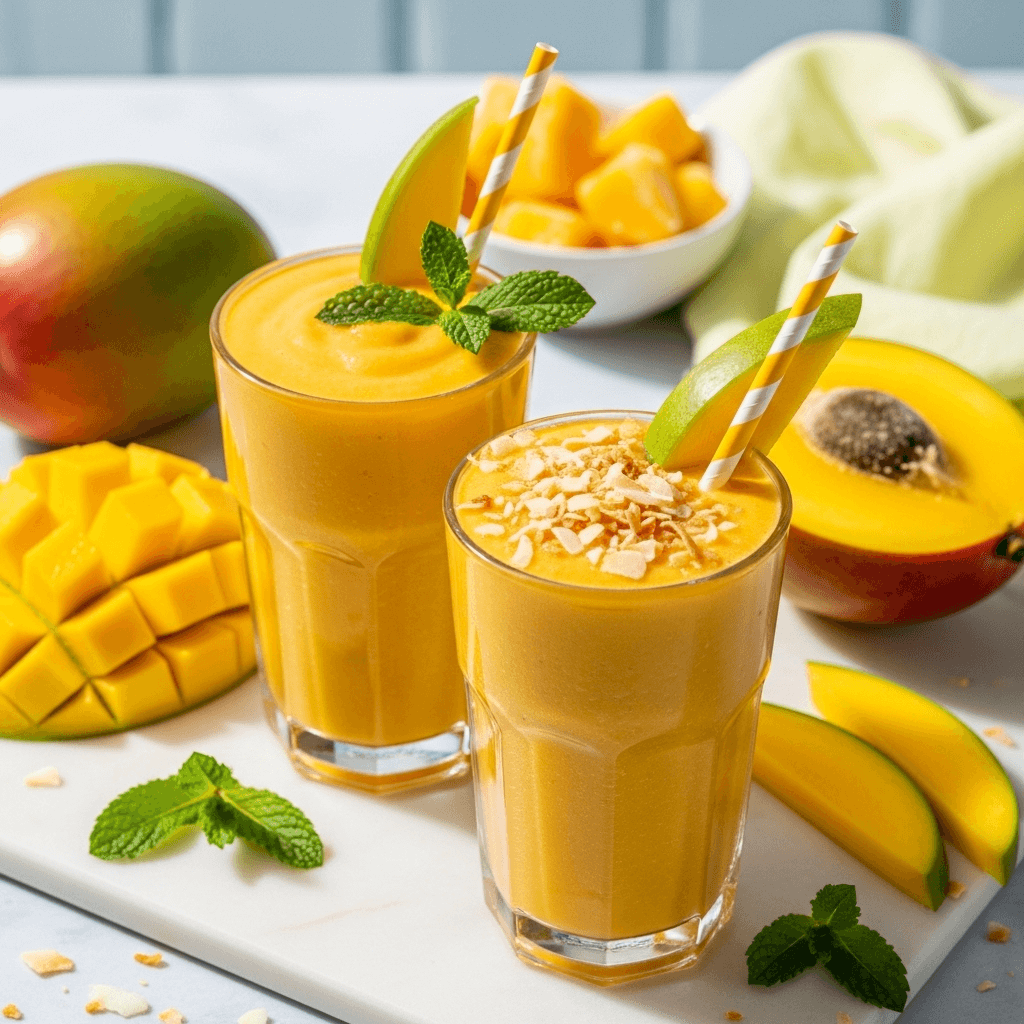
Get ready to blend up the most delicious, creamy mango smoothie that tastes like sunshine in a glass! This easy tropical mango smoothie is perfectly thick, naturally sweet, and bursting with fresh mango flavor that’ll transport you straight to a tropical paradise. Whether you’re looking for a refreshing breakfast, a healthy snack, or a post-workout treat, this simple mango smoothie delivers pure tropical bliss in every sip.
There’s something absolutely magical about a well-made mango smoothie. The silky texture, the vibrant golden-orange color, and that perfect balance of sweet tropical flavor create a drink that’s both indulgent and incredibly nutritious. This isn’t just any smoothie – it’s thick enough to eat with a spoon, naturally sweet without added sugar, and packed with vitamins and fiber that make you feel as good as it tastes.
What makes this mango smoothie recipe truly special is its simplicity and versatility. With just four basic ingredients and five minutes, you’ll have a restaurant-quality smoothie that’s naturally gluten-free, dairy-free (if you choose), and loved by kids and adults alike. Make it for a quick breakfast on busy mornings, blend it for an afternoon pick-me-up, enjoy it as a healthy dessert, or prep smoothie packs for the week ahead. Plus, it’s the perfect way to enjoy mangoes year-round using frozen fruit!
History / Background
The mango smoothie represents a delicious fusion of ancient fruit tradition and modern healthy beverage culture. Mangoes themselves have an incredibly rich history dating back over 4,000 years to the Indian subcontinent, where they’ve been cultivated since around 2000 BCE. Known as the “king of fruits” in India, mangoes hold cultural and religious significance and appear in ancient Hindu texts and Buddhist literature.
The mango spread from India through Southeast Asia via Buddhist monks, then to the Middle East and Africa through trade routes. Portuguese explorers introduced mangoes to Brazil and West Africa in the 16th century, and Spanish colonizers brought them to Mexico and the Philippines. By the 18th and 19th centuries, mangoes had reached the Caribbean and South America, thriving in tropical climates.
In India and Southeast Asia, mango-based beverages have existed for centuries. Mango lassi, a yogurt-based mango drink, has been a traditional Indian refreshment for hundreds of years. In the Philippines, mango shakes became popular street food beverages. Throughout tropical regions, mangoes were blended with milk, yogurt, or coconut water to create cooling drinks perfect for hot climates.
The modern smoothie as we know it – a thick, blended fruit beverage – emerged in the United States during the 1960s and 1970s health food movement. The invention of more powerful home blenders and the growing interest in fresh fruit-based drinks created the perfect environment for smoothies to flourish. Health food stores and juice bars began popularizing fruit smoothies as nutritious alternatives to milkshakes.
The mango smoothie specifically gained popularity in America during the 1980s and 1990s as mangoes became more widely available in U.S. grocery stores and smoothie chains like Jamba Juice and Smoothie King emerged. The tropical fruit trend coincided with American consumers’ growing interest in exotic flavors and healthy eating. Mango’s naturally sweet flavor, creamy texture when blended, and beautiful color made it ideal for smoothies.
Today, mango smoothies are enjoyed worldwide and have become one of the most popular smoothie flavors. They’re found everywhere from upscale juice bars to fast-food chains, from tropical resorts to suburban kitchens. The drink’s universal appeal lies in its perfect combination of nutrition and indulgence – it tastes like a treat but provides vitamins A and C, fiber, and antioxidants.
In many ways, the mango smoothie represents globalization at its best – taking a fruit beloved in South Asia for millennia and transforming it into a beverage embraced worldwide, adapted to local tastes while honoring the mango’s tropical roots. It’s proof that some flavors are truly universal!
Why You’ll Love This Recipe
This tropical mango smoothie recipe is about to become your new morning ritual! It combines the exotic sweetness of mangoes with a creamy, satisfying texture for a drink that feels like vacation in a glass but takes just minutes to make.
Here’s why this mango smoothie will become your favorite:
- Ready in 5 Minutes – Literally the fastest breakfast or snack you’ll ever make
- Only 4 Ingredients – Just mango, banana, liquid, and optional extras
- Naturally Sweet – No added sugar needed! The fruit provides perfect sweetness
- Thick & Creamy – Restaurant-quality thick texture without any ice cream
- Incredibly Healthy – Packed with vitamins A and C, fiber, and antioxidants
- Kid-Approved – Even picky eaters love this sweet, tropical flavor
- Dairy-Free Option – Easily made vegan with plant-based milk
- Budget-Friendly – Costs less than $2 per serving using frozen mango
- Meal Prep Champion – Make smoothie packs ahead for grab-and-go convenience
- Gorgeous Color – That beautiful golden-orange hue is Instagram-worthy
- Tropical Escape – Tastes like a beach vacation no matter the weather
- Energy Boosting – Natural fruit sugars provide sustained energy
Ingredient Notes
Let’s break down the simple ingredients that create this perfectly creamy, tropical mango smoothie. Quality ingredients make all the difference!
Mango – The star of the show! You’ll need about 2 cups of mango chunks (fresh or frozen). Frozen mango is actually ideal for smoothies – it’s pre-cut, available year-round, and creates that thick, frosty texture. Fresh mango works beautifully too when in season. Choose ripe mangoes that are fragrant and yield slightly to pressure. Popular varieties include Alphonso (sweet and creamy), Ataulfo/Honey mangoes (small, golden, intensely sweet), and Tommy Atkins (widely available). Frozen mango is usually picked at peak ripeness and flash-frozen, preserving nutrients and flavor.
Banana – The secret ingredient for creaminess! One medium to large ripe banana adds natural sweetness, creates silky texture, and helps everything blend smoothly. Choose bananas with brown spots – they’re sweeter and more flavorful. For extra-thick smoothies, use frozen banana chunks. The banana isn’t just for flavor; it acts as a natural thickener that makes the smoothie rich and satisfying without dairy or ice cream.
Liquid – You’ll need ¾ to 1 cup depending on desired thickness. Options include regular dairy milk (whole milk is creamiest), coconut milk (adds tropical flavor), almond milk (light and slightly nutty), oat milk (creamy and naturally sweet), orange juice (intensifies tropical flavor), or coconut water (light and refreshing). Start with less liquid – you can always thin it out, but you can’t make it thicker without adding more fruit!
Optional Add-Ins for Extra Nutrition:
- Greek yogurt (½ cup adds protein and tanginess)
- Protein powder (1 scoop for post-workout)
- Fresh lime juice (1 tablespoon brightens flavors)
- Honey or agave (1 tablespoon if fruit isn’t sweet enough)
- Chia seeds or flaxseeds (1 tablespoon for omega-3s)
- Spinach (handful – you won’t taste it!)
- Turmeric (¼ teaspoon for anti-inflammatory benefits)
- Coconut flakes (for garnish and tropical flair)
Ice – Only needed if using fresh (not frozen) mango. Use 4-6 ice cubes for cold, thick texture. Skip if using frozen fruit.
Equipment Needed
Making this mango smoothie requires just one essential piece of equipment and a few basic tools:
Essential Equipment:
- High-Speed Blender – The key to smooth, creamy results! Vitamix, Blendtec, Ninja, or any good-quality blender with at least 600 watts works great. Even budget blenders can work if you let frozen fruit soften slightly first.
Helpful Tools:
- Measuring Cups – For accurate fruit and liquid measurements
- Knife and Cutting Board – If using fresh mango (for cutting)
- Tall Glasses – For serving (16-20 oz glasses are perfect)
- Straws – Reusable or paper straws for sipping
- Spoon – For thick smoothie bowls
Optional but Nice:
- Smoothie cups with lids (for on-the-go)
- Tamper (if your blender has one, for pushing ingredients down)
- Mason jars (great for storage and serving)
Blender Tip: If your blender struggles with frozen fruit, let it sit at room temperature for 5-10 minutes to soften slightly before blending.
Print
Mango Smoothie Recipe
- Total Time: 5 minutes
- Yield: 2 servings (about 16 oz each) 1x
- Diet: Gluten Free
Description
This tropical mango smoothie is thick, creamy, and bursting with fresh mango flavor! Made with just 4 simple ingredients including mango, banana, and your choice of milk, it’s naturally sweet, incredibly healthy, and ready in 5 minutes. Perfect for breakfast, snacks, or post-workout refreshment. Naturally gluten-free and easily made vegan!
Ingredients
- 2 cups frozen mango chunks (or fresh mango + ice)
- 1 large ripe banana, peeled (fresh or frozen)
- ¾–1 cup milk of choice (dairy, coconut, almond, or oat milk)
- ½ cup Greek yogurt (optional, for extra creaminess and protein)
- 1 tablespoon honey or agave (optional, if fruit isn’t sweet enough)
- 1 tablespoon fresh lime juice (optional but brightens flavor)
- 4–6 ice cubes (only if using fresh mango instead of frozen)
Optional Add-Ins:
- 1 scoop vanilla protein powder
- 1 tablespoon chia seeds or ground flaxseed
- Handful of spinach (for extra nutrients)
- ¼ teaspoon turmeric
- Pinch of cardamom (for Indian-inspired flavor)
For Garnish:
- Fresh mango slices
- Coconut flakes
- Mint leaves
- Lime wedge
Instructions
Step 1: Prep Your Ingredients
If using fresh mango, peel and cut into chunks. Peel the banana and break into pieces. If you’re using frozen fruit, you can skip the ice. Measure out your liquid and any optional add-ins.
Step 2: Layer Ingredients in Blender
For smoothest blending, add ingredients in this order: liquid first (¾ cup milk), then yogurt if using, then banana pieces, then frozen mango chunks on top. This order helps the blender blades move freely and pulls ingredients down efficiently.
Step 3: Blend Until Smooth
Secure the lid tightly. Start blending on low speed for a few seconds, then quickly increase to high speed. Blend for 30-60 seconds until completely smooth with no chunks remaining. Use your blender’s tamper if needed to push ingredients toward the blades. If the mixture is too thick and your blender is struggling, stop and add 2-4 tablespoons more liquid, then blend again.
Step 4: Check Consistency
Stop the blender and check the thickness. The smoothie should be thick enough to coat a spoon but still pourable. For thicker smoothie: add ½ cup more frozen mango or frozen banana chunks and blend again. For thinner smoothie: add more liquid 2 tablespoons at a time until desired consistency.
Step 5: Taste and Adjust
Taste your smoothie. If it needs more sweetness, add honey or a few drops of agave and blend briefly. If you want brighter flavor, add lime juice and pulse to combine. Adjust to your preference!
Step 6: Serve Immediately
Pour the mango smoothie into tall glasses. Smoothies are best enjoyed immediately while thick and frosty! Garnish with fresh mango slices, coconut flakes, or a mint leaf if desired. Insert a thick straw or serve with a spoon if it’s extra thick.
Notes
- Frozen vs Fresh: Frozen mango creates the thickest, coldest smoothies. Fresh mango + ice works but won’t be quite as thick.
- Ripeness Matters: Use very ripe bananas (with brown spots) for maximum sweetness and creaminess.
- Start with Less Liquid: It’s easier to thin a thick smoothie than thicken a watery one. Add liquid gradually.
- Make It Vegan: Use plant-based milk and skip the yogurt or use coconut yogurt.
- Protein Boost: Add protein powder or Greek yogurt for a more substantial breakfast.
- No Banana: Substitute with mango-flavored Greek yogurt or avocado for creaminess.
- Prep Time: 5 minutes
- Cook Time: 0 minutes
- Category: Breakfast
- Method: Blending
- Cuisine: Tropical
Nutrition
- Serving Size: 1 smoothie (16 oz, ½ of recipe made with almond milk, no yogurt)
- Calories: 185
- Sugar: 35g
- Sodium: 85mg
- Fat: 2g
- Saturated Fat: 0g
- Unsaturated Fat: 1.5g
- Trans Fat: 0g
- Carbohydrates: 44g
- Fiber: 5g
- Protein: 3g
- Cholesterol: 0mg
Tips & Variations
Flavor Variations:
- Mango Pineapple: Replace ½ cup mango with frozen pineapple
- Mango Coconut: Use coconut milk + add 2 tablespoons coconut cream
- Mango Peach: Use half mango, half frozen peaches
- Mango Strawberry: Add ½ cup frozen strawberries
- Mango Lassi Style: Add ½ cup yogurt, pinch of cardamom, touch of rosewater
- Green Mango: Add 1 cup fresh spinach (you won’t taste it!)
- Tropical Paradise: Add pineapple + coconut milk + splash of orange juice
Thickness Adjustments:
- Smoothie Bowl: Use only ½ cup liquid for spoonable consistency, top with granola, fresh fruit, coconut
- Thin & Drinkable: Increase liquid to 1¼ cups for lighter consistency
- Ultra Creamy: Add ½ avocado or ½ cup full-fat Greek yogurt
Dietary Modifications:
- Vegan: Use plant milk + skip dairy yogurt or use coconut yogurt
- Paleo: Use coconut milk + skip yogurt, sweeten with dates
- Low-Sugar: Use only half a banana, add ice for volume
- High-Protein: Add protein powder + Greek yogurt
- Keto-Friendly: Use ½ cup mango only, add MCT oil, use unsweetened almond milk
Add-In Ideas:
- Chia seeds or flaxseeds (omega-3s and fiber)
- Protein powder (vanilla or unflavored)
- Collagen peptides
- Spinach or kale (nutrients without affecting taste)
- Turmeric (anti-inflammatory)
- Fresh ginger (adds zing)
- Oats (makes it more filling)
Pro Chef Tips
Tip #1: Use Frozen Mango for Best Texture
Frozen mango creates the thickest, creamiest smoothies without diluting flavor like ice does. It’s also more convenient – no peeling or cutting! Buy frozen mango chunks in bulk at warehouse stores for the best value.
Tip #2: Ripen Bananas for Maximum Sweetness
Use bananas with brown spots – they’re significantly sweeter than yellow bananas. If your bananas ripen faster than you can use them, peel, slice, and freeze them in bags for perfect smoothie-ready portions.
Tip #3: Liquid Last, Fruit First in Reverse
Despite Step 2 advice, some prefer adding liquid LAST (mango first). This method lets you control thickness better since you can see how much liquid you actually need. Experiment to find what works for your blender.
Tip #4: Let Frozen Fruit Soften Slightly
If your blender struggles, let frozen fruit sit at room temperature for 5-10 minutes before blending. This slight softening helps blades cut through fruit more easily without fully thawing it.
Tip #5: Blend in Stages
For stubborn blenders, pulse 5-6 times to break up large chunks before running continuously. This prevents the motor from struggling and creates smoother results.
Tip #6: Don’t Over-Blend
Once smooth (30-60 seconds), stop! Over-blending generates heat through friction, warming your smoothie and making it thin instead of thick and frosty.
Common Mistakes to Avoid
Mistake #1: Using Too Much Liquid
This creates thin, watery smoothies instead of thick, creamy ones. Solution: Start with just ½-¾ cup liquid and add more only if needed. Remember: you can’t remove liquid once it’s in!
Mistake #2: Using Unripe Mangoes
Unripe mangoes are sour, fibrous, and lack that sweet tropical flavor. Solution: Choose mangoes that smell fragrant and yield slightly to pressure, or buy frozen mango which is picked ripe. If using fresh, let firm mangoes ripen at room temperature for a few days.
Mistake #3: Skipping the Banana
Without banana, the smoothie lacks that creamy, thick texture. Solution: The banana is essential for creaminess! If you can’t use banana due to allergies, substitute with ½ avocado or ½ cup mango-flavored yogurt.
Mistake #4: Adding Ice with Frozen Fruit
Using both frozen fruit AND ice makes smoothies too icy and dilutes flavor. Solution: Use frozen fruit OR ice, not both. Frozen fruit creates better texture and maintains flavor intensity.
Mistake #5: Not Tasting Before Serving
Sweetness varies based on fruit ripeness. What tastes perfect one day might need adjustment another. Solution: Always taste and adjust! Add honey for sweetness, lime for brightness, or more liquid for thinner consistency before serving.
Storage & Meal Prep
Immediate Consumption (Best):
Smoothies are absolutely best enjoyed immediately after blending when they’re thick, frosty, and at peak texture. Within 10-15 minutes, they start separating and thinning as they warm.
Refrigerator Storage (Short-Term):
If you must store: Pour into an airtight container or jar with tight lid and refrigerate for up to 24 hours. The smoothie will separate – this is natural. Before drinking, shake vigorously or re-blend briefly to recombine. The texture won’t be as perfect as fresh but still tastes good!
Smoothie Packs (Best Meal Prep Method):
This is genius for busy mornings! Pre-portion ingredients into freezer bags:
- Add 2 cups frozen mango + 1 banana (sliced) per bag
- Seal, removing excess air
- Freeze flat for easy stacking
- Label with date and liquid amount needed
- In the morning: dump one pack into blender, add liquid, blend!
These packs last 3 months in the freezer and save so much time!
Leftover Smoothie Ideas:
- Pour into popsicle molds for healthy ice pops
- Freeze in ice cube trays, then re-blend with fresh liquid for instant smoothie
- Use as base for smoothie bowl
Make-Ahead & Freezer Notes
Pre-Prep Fruit:
- Peel and slice bananas, freeze in single layer, then transfer to bags
- Portion frozen mango into 2-cup servings in bags
- Store fresh mango chunks in freezer for up to 3 months
Smoothie Packs (Ultimate Convenience):
Assemble complete smoothie kits:
- In each freezer bag: 2 cups mango + 1 banana + any add-ins
- Write on bag: “Add ¾ cup [type of milk]”
- Freeze flat, stack, and grab as needed
- Total time savings: 10+ minutes per morning!
Freeze Leftover Smoothie:
Pour extra smoothie into:
- Popsicle molds (freeze 4-6 hours for healthy treats)
- Ice cube trays (blend cubes later with fresh liquid)
- Mason jars (thaw overnight, shake, and enjoy)
Can’t Freeze:
Don’t add yogurt or protein powder to make-ahead packs as texture changes. Add these fresh when blending.
Serving Suggestions
Breakfast Pairings:
- Whole grain toast with almond butter
- Granola or trail mix
- Breakfast burrito
- Egg muffins or frittata
- Overnight oats
Snack Time:
- Fresh fruit skewers
- Veggie sticks with hummus
- Rice cakes with nut butter
- Energy balls
- Greek yogurt parfait
Smoothie Bowl Toppings: Make it thick (use less liquid) and serve in a bowl with:
- Granola or muesli
- Fresh mango, kiwi, berries
- Coconut flakes
- Chia seeds
- Sliced almonds
- Honey drizzle
- Cacao nibs
Post-Workout: Pair with protein-rich foods:
- Hard-boiled eggs
- Protein bar
- Handful of almonds
- String cheese
Occasions Perfect For:
- Quick breakfast before work/school
- Post-workout recovery
- Afternoon energy boost
- Healthy dessert alternative
- Kids’ snack time
- Brunch beverage
FAQs Section
Q: Can I use fresh mango instead of frozen?
A: Absolutely! Use 2 cups fresh ripe mango chunks and add 4-6 ice cubes to create that cold, thick texture. Frozen mango is just more convenient and creates slightly thicker consistency.
Q: Why is my mango smoothie watery?
A: Too much liquid is usually the culprit. Start with just ½ cup liquid next time and add more gradually. Also ensure you’re using frozen fruit or ice – room temperature fruit creates thin smoothies.
Q: Can I make this smoothie without banana?
A: Yes, though banana provides that creamy texture. Substitute with ½ ripe avocado (won’t taste it!), ½ cup Greek yogurt, or ½ cup frozen cauliflower (sounds weird but works!). Or just use extra mango.
Q: How do I make my smoothie thicker?
A: Use less liquid (start with ½ cup), use frozen fruit (not fresh), add frozen banana, include Greek yogurt, or add a handful of ice. You can also let it sit in freezer for 10 minutes to firm up.
Q: Is mango smoothie healthy?
A: Yes! It’s packed with vitamins A and C, fiber, antioxidants, and natural fruit sugars for energy. One smoothie provides significant daily vitamin needs. To make it even healthier, add spinach, protein powder, or chia seeds, and skip added sweeteners.
Q: Can I add vegetables to mango smoothie?
A: Definitely! Add 1 cup fresh spinach or kale – you won’t taste it at all thanks to the sweet mango. This boosts nutrition without affecting flavor. Frozen cauliflower also works for creaminess.
Q: How long does mango smoothie last?
A: Best consumed immediately. Refrigerated in airtight container, it lasts 24 hours but will separate (shake before drinking). For longer storage, freeze in portions and re-blend when needed or enjoy as smoothie popsicles!
Conclusion
And there you have it – everything you need to make the perfect tropical mango smoothie that tastes like vacation in a glass! This simple recipe proves that healthy can be absolutely delicious. With just a few ingredients and five minutes, you’ve got a nutritious breakfast or snack that’s naturally sweet, beautifully thick, and bursting with sunny mango flavor.
I’d love to hear how your mango smoothie turns out! Did you try any of the variations? What’s your favorite topping for smoothie bowls? Do your kids request this as much as mine do? Drop a comment below and share your tropical smoothie experience. If this becomes your morning go-to (and I think it will!), please give it a five-star rating and share it with friends who need more fruit in their lives.
Don’t forget to pin this recipe to your Pinterest boards so you can find it whenever you’re craving that tropical goodness! Here’s to many more thick, creamy, sunshine-filled mango smoothies. Happy blending!