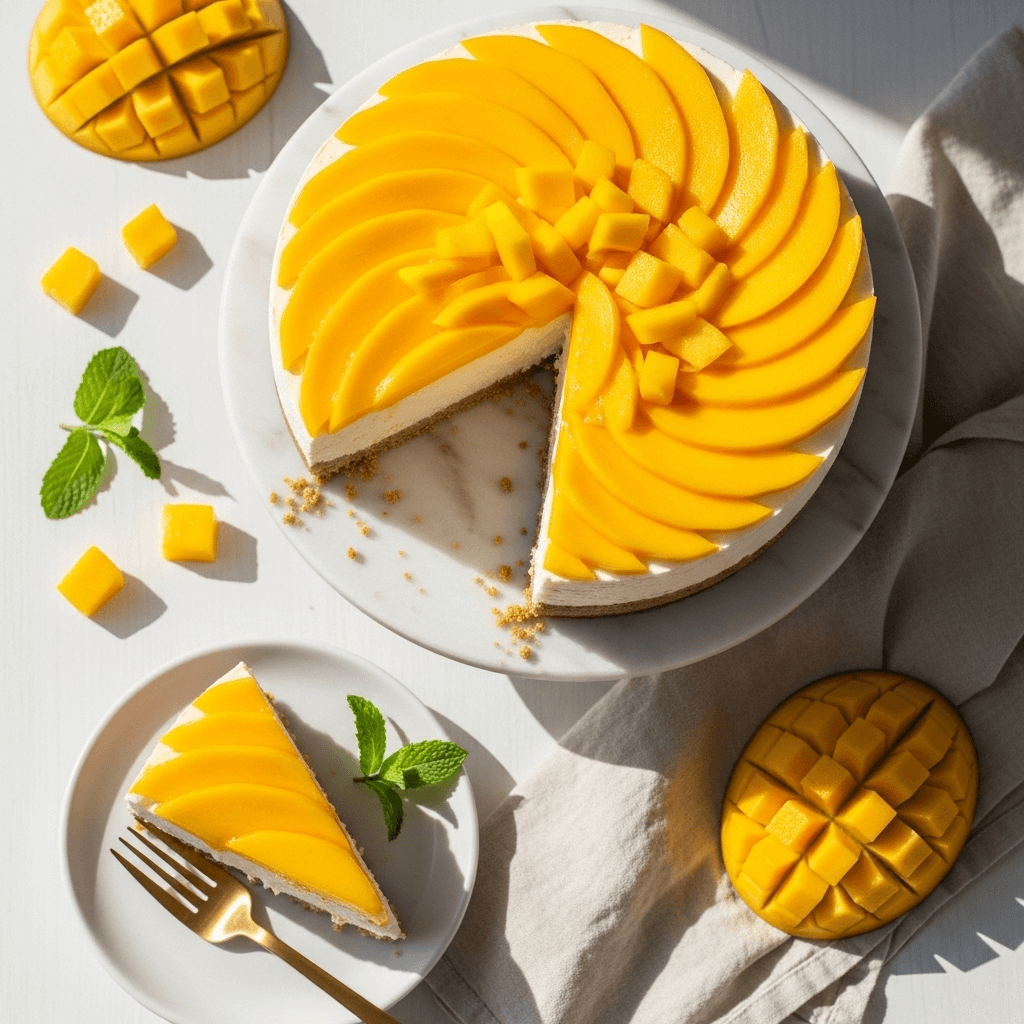
Imagine cutting into a slice of velvety, creamy cheesecake crowned with vibrant, golden mango—it’s like taking a mini vacation to a tropical paradise with every bite! This mango cheesecake recipe combines the rich, tangy creaminess of classic cheesecake with the sweet, luscious flavor of fresh mangoes, creating a dessert that’s both elegant and utterly irresistible.
Perfect for summer gatherings, birthday celebrations, dinner parties, or any time you want to impress your guests with minimal effort, this no-bake mango cheesecake is a game-changer for home bakers. You don’t need an oven, a water bath, or complicated baking techniques—just a little patience while it chills in the refrigerator. The buttery graham cracker crust provides the perfect crunchy contrast to the silky smooth filling, while the fresh mango topping adds a gorgeous pop of color and natural sweetness. Whether you’re celebrating a special occasion or simply treating yourself to something special, this easy mango cheesecake delivers bakery-quality results with surprisingly simple steps that even beginner bakers can master!
History / Background
Cheesecake has an incredibly ancient and fascinating history that dates back over 4,000 years! The earliest recorded mention comes from ancient Greece, where it was served to athletes during the first Olympic games in 776 B.C. The Greeks believed this protein-rich dessert provided energy and strength. When the Romans conquered Greece, they adapted the recipe, adding eggs and baking it under a hot brick, creating something closer to what we recognize as cheesecake today.
The modern cheesecake we know and love evolved significantly when it reached America in the 18th century. The game-changer came in 1872 when American dairyman William Lawrence accidentally invented cream cheese while trying to recreate French Neufchâtel cheese in Chester, New York. This creamy, smooth product became the foundation for the rich, dense New York-style cheesecake that became iconic in American dessert culture.
However, the mango cheesecake is a much more contemporary creation—a beautiful fusion of Western baking tradition and tropical flavors. As mangoes became more widely available in Western markets during the late 20th century, creative bakers began incorporating this “king of fruits” into their desserts. The combination proved to be magical! Mangoes, which originated in South Asia over 5,000 years ago and are deeply significant in Indian, Filipino, Thai, and many other cultures, brought a vibrant, exotic twist to the classic cheesecake.
This tropical mango cheesecake represents the beautiful trend of global flavor fusion in modern baking. It’s particularly popular in countries with significant mango cultivation like India, the Philippines, Thailand, and Mexico, but has gained worldwide popularity thanks to its stunning appearance and incredible taste. The no-bake version became especially beloved as it allows the fresh mango flavor to shine without any cooking, and it’s perfect for hot summer days when you don’t want to turn on your oven. Today, mango cheesecake has secured its place as a favorite dessert in cafes, restaurants, and home kitchens around the world—a testament to how beautifully different culinary traditions can come together to create something extraordinary.
Why You’ll Love This Recipe
This mango cheesecake is about to become your new go-to dessert for every occasion, and once you try it, you’ll understand why it’s earned rave reviews from everyone who tastes it! The combination of creamy, tangy filling with sweet, tropical mango is simply irresistible, and the best part? It’s easier to make than you might think.
Here’s what makes this recipe absolutely spectacular:
- No Baking Required – This is a no-bake cheesecake, which means no oven, no water bath, no stress about cracks or uneven baking. Just mix, chill, and enjoy! Perfect for summer when you don’t want to heat up your kitchen.
- Stunning Visual Appeal – The vibrant orange-yellow mango topping against the creamy white filling is absolutely gorgeous. This dessert photographs beautifully and will be the star of any dessert table, making it perfect for Pinterest-worthy moments!
- Fresh, Tropical Flavor – The natural sweetness and floral notes of fresh mango elevate this beyond ordinary cheesecake. It’s light, refreshing, and tastes like sunshine in dessert form.
- Make-Ahead Friendly – This cheesecake actually needs to chill for several hours or overnight, which means you can (and should!) make it ahead of time. Less stress on the day of your event, and the flavors develop beautifully as it sits.
- Impressive Yet Easy – Your guests will think you spent hours on this restaurant-quality dessert, but the actual hands-on time is minimal. It’s the perfect “wow” dessert that doesn’t require advanced baking skills.
- Customizable – Once you master the base recipe, you can easily adapt it with different mango preparations, add layers, or incorporate other tropical fruits for endless variations.
- Perfect Portion Control – Unlike many desserts, cheesecake slices beautifully into clean portions, making it ideal for serving at parties and gatherings. Plus, that graham cracker crust provides a natural “plate” for each slice.
- Crowd-Pleaser – The combination of familiar cheesecake with exotic mango appeals to both adventurous eaters and those who prefer classic flavors. It’s sophisticated enough for adults but fruity and sweet enough that kids love it too.
- Less Sugar Than Many Desserts – The natural sweetness of mangoes means you don’t need to load this dessert with excessive sugar. It’s indulgent but not overwhelmingly sweet.
Ingredient Notes
Understanding your ingredients is crucial for creating the perfect creamy, dreamy mango cheesecake. Here’s what you need and why each component matters!
Graham Crackers – The foundation of your crust, providing a sweet, slightly honey-flavored base with a satisfying crunch. Graham crackers have just the right texture when crushed and mixed with butter. Substitution: Digestive biscuits, vanilla wafers, or even Oreos (without the filling) work wonderfully. For a gluten-free version, use gluten-free graham crackers or almond flour mixed with a bit of sugar.
Butter – Binds the crumbs together to create a firm, sliceable crust that holds up beautifully under the creamy filling. Use unsalted butter so you can control the salt level. Tip: Make sure it’s fully melted for easy mixing, but let it cool slightly before adding to avoid making the crust greasy.
Cream Cheese – The star of any cheesecake! It provides that signature tangy, rich, ultra-creamy texture. Always use full-fat cream cheese (not the whipped or light versions) for the best results. Critical: Bring it to room temperature before mixing—this is non-negotiable! Cold cream cheese will create lumps and won’t incorporate smoothly. Leave it out for 1-2 hours or microwave briefly in 10-second intervals.
Granulated Sugar – Sweetens the filling and helps create that smooth, creamy texture. The amount used is carefully balanced to complement the mango without being overpowering. Substitution: You can use superfine sugar for even smoother incorporation, or reduce sugar slightly if your mangoes are particularly sweet.
Heavy Cream – Adds luxurious richness and helps create that impossibly smooth, mousse-like texture in a no-bake cheesecake. When whipped, it lightens the density of the cream cheese, making each bite melt in your mouth. Substitution: For a tangier flavor, you can replace half the heavy cream with sour cream.
Vanilla Extract – Enhances all the other flavors and adds warmth and depth to the filling. Always use pure vanilla extract rather than imitation for the best taste. Tip: If you have vanilla bean paste, use ½ teaspoon for beautiful vanilla bean specks throughout your cheesecake.
Gelatin – The secret ingredient that helps a no-bake cheesecake set firm enough to slice cleanly without baking. Unflavored gelatin powder works perfectly and won’t affect the taste. Important: Always bloom gelatin in cold water first, then dissolve it completely before adding to avoid clumps. Substitution: Vegetarian? Use agar-agar powder (use 1 teaspoon for every tablespoon of gelatin and follow package instructions as preparation differs).
Fresh Mangoes – The crown jewel of this dessert! Use ripe, sweet mangoes for the best flavor. Ataulfo (champagne/honey) mangoes are ideal for their creamy texture and minimal fibers, but any sweet variety works. How to choose: Look for mangoes that give slightly when gently squeezed and have a sweet, fruity aroma at the stem end. Substitution: In a pinch, frozen mango chunks (thawed and drained) can work, though fresh is always best for topping. You can also use high-quality mango puree.
Lemon Juice – A small amount brightens the flavors and balances the sweetness while enhancing the mango’s natural tang. It also helps preserve the mango’s vibrant color. Tip: Always use fresh lemon juice, not bottled, for the best flavor.
Powdered Sugar (for mango topping) – A touch of sweetness for the mango layer, plus it helps create a smoother consistency when blended. Optional: You can omit this if your mangoes are very sweet or if you prefer less sweetness overall.
Equipment Needed
Having the right tools makes creating this beautiful mango cheesecake effortless. Here’s what you’ll need:
- 9-inch Springform Pan – Essential for no-bake cheesecakes! The removable sides make it easy to unmold your cheesecake without damaging it. Make sure it doesn’t leak by wrapping the bottom with aluminum foil or placing it on a baking sheet while chilling.
- Food Processor or Blender – For crushing graham crackers into fine, even crumbs and for creating smooth mango puree. A food processor works best, but a sturdy blender can do both jobs.
- Electric Mixer (Stand or Hand) – While you can make cheesecake by hand, an electric mixer makes the job much easier and ensures a perfectly smooth, lump-free filling. It’s especially important for whipping the heavy cream to the right consistency.
- Large Mixing Bowls – You’ll need at least two: one for the cream cheese mixture and one for whipping cream. Stainless steel or glass bowls work best.
- Rubber Spatula – For scraping down the sides of your bowls and folding ingredients together gently without deflating the whipped cream.
- Measuring Cups and Spoons – Accurate measurements are crucial in baking, even for no-bake desserts!
- Small Saucepan or Microwave-Safe Bowl – For blooming and dissolving the gelatin. A small saucepan on low heat gives you the most control.
- Offset Spatula or Butter Knife – For smoothing the top of your cheesecake filling to create a perfectly level surface before adding the mango layer.
- Sharp Knife – For slicing mangoes and cutting clean cheesecake slices. Wipe the blade clean between cuts for picture-perfect slices.
- Cutting Board – A sturdy surface for preparing your mangoes.
- Plastic Wrap or Aluminum Foil – To cover the cheesecake while it chills, protecting it from absorbing refrigerator odors.
- Serving Plate or Cake Stand – For presenting your beautiful creation! Choose something that complements the tropical, elegant vibe.
Mango Cheesecake Recipe
- Total Time: 6 hours (or overnight)
- Yield: 6 hours 30 minutes 1x
- Diet: Vegetarian
Description
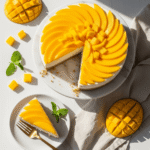
Luxuriously creamy no-bake cheesecake topped with fresh, vibrant mango puree and slices. This stunning tropical dessert features a buttery graham cracker crust, silky smooth cream cheese filling, and a gorgeous mango layer that tastes like sunshine. No oven required—just chill and serve!
Ingredients
For the Graham Cracker Crust:
- 2 cups graham cracker crumbs (about 14–16 full crackers)
- ⅓ cup unsalted butter, melted
- 3 tablespoons granulated sugar
- Pinch of salt
For the Cheesecake Filling:
- 24 oz (3 packages) cream cheese, softened to room temperature
- ¾ cup granulated sugar
- 1 cup heavy whipping cream, cold
- 2 teaspoons vanilla extract
- 1 tablespoon unflavored gelatin powder
- ¼ cup cold water
For the Mango Topping:
- 3 large ripe mangoes (about 3 cups diced)
- 2 tablespoons powdered sugar
- 1 tablespoon fresh lemon juice
- 1 teaspoon unflavored gelatin powder (optional, for firmer topping)
- 2 tablespoons cold water (if using gelatin)
Instructions
- Prepare the Crust: Add graham crackers to a food processor and pulse until you have fine, even crumbs. Transfer to a medium bowl and mix with melted butter, sugar, and salt until the mixture resembles wet sand and holds together when squeezed. Press firmly and evenly into the bottom of a 9-inch springform pan, using the bottom of a measuring cup or glass to compact it. Place in the refrigerator while you prepare the filling.
- Bloom the Gelatin: In a small bowl, sprinkle 1 tablespoon of gelatin over ¼ cup cold water and let it sit for 5 minutes to bloom and absorb the water. It will look spongy and solid. Then, gently heat it in the microwave for 15-20 seconds or over a double boiler until completely dissolved and liquid. Set aside to cool slightly but don’t let it set.
- Beat the Cream Cheese: In a large bowl using an electric mixer, beat the softened cream cheese on medium speed for 2-3 minutes until completely smooth, light, and fluffy with no lumps. Scrape down the sides of the bowl frequently. Add the sugar and beat for another 2 minutes until well incorporated and creamy.
- Add Gelatin: With the mixer on low speed, slowly drizzle the dissolved gelatin into the cream cheese mixture. Add vanilla extract and beat until everything is smoothly combined. Don’t worry if it looks slightly thin—the whipped cream will thicken it.
- Whip the Cream: In a separate clean, cold bowl, whip the heavy cream on high speed until stiff peaks form (3-4 minutes). The cream should hold its shape firmly when you lift the beaters. Be careful not to overbeat or it will turn grainy.
- Fold Together: Using a rubber spatula, gently fold about one-third of the whipped cream into the cream cheese mixture to lighten it. Then fold in the remaining whipped cream in two additions, using gentle folding motions to maintain the airiness. Fold just until no white streaks remain—don’t overmix.
- Assemble: Pour the filling over the chilled crust and smooth the top with an offset spatula or the back of a spoon, creating an even, level surface. Tap the pan gently on the counter a few times to release any air bubbles.
- First Chill: Cover the cheesecake loosely with plastic wrap and refrigerate for at least 3-4 hours until mostly set and firm to the touch. This partial set is important before adding the mango layer.
- Prepare Mango Topping: Peel and dice 2 of the mangoes. Add them to a blender or food processor with powdered sugar and lemon juice. Blend until completely smooth and silky. Taste and adjust sweetness if needed. For a firmer mango layer, bloom 1 teaspoon gelatin in 2 tablespoons cold water for 5 minutes, dissolve it, and mix into the mango puree.
- Add Mango Layer: Once the cheesecake is mostly set, pour or spoon the mango puree over the top, spreading it gently to the edges. If desired, slice the remaining mango and arrange decorative slices on top of the puree in a beautiful pattern.
- Final Chill: Cover again and refrigerate for at least 3 more hours, or preferably overnight (8-12 hours total chilling time). This ensures clean slicing and fully developed flavors.
- Serve: When ready to serve, run a thin knife around the edge of the springform pan, then carefully release and remove the sides. Transfer to a serving plate or cake stand. For the cleanest slices, dip your knife in hot water and wipe clean between each cut.
Notes
- Room Temperature is Key: Make sure your cream cheese is truly soft. Cold cream cheese will create lumps that are nearly impossible to smooth out.
- Don’t Skip the Gelatin: While some recipes claim you can make no-bake cheesecake without gelatin, it’s essential for a firm, sliceable result that doesn’t weep or separate.
- Crust Variations: Try using vanilla wafers, Biscoff cookies, or even shortbread for different flavor profiles.
- Mango Ripeness: The riper and sweeter your mangoes, the better your cheesecake will taste. Under-ripe mangoes can be tart and fibrous.
- Make it Ahead: This cheesecake actually tastes better the next day after the flavors have had time to meld. Make it 1-2 days ahead for best results.
- Serving Temperature: For the creamiest texture, let the cheesecake sit at room temperature for 15-20 minutes before slicing and serving.
- Prep Time: 30 minutes
- Cook Time: 0 minutes (no-bake)
- Category: Dessert
- Method: No-Bake
- Cuisine: Fusion
Nutrition
- Serving Size: 1 slice (1/12 of cheesecake)
- Calories: 385
- Sugar: 28g
- Sodium: 285mg
- Fat: 26g
- Saturated Fat: 16g
- Unsaturated Fat: 8g
- Trans Fat: 0g
- Carbohydrates: 35g
- Fiber: 1g
- Protein: 6g
- Cholesterol: 80mg
Tips & Variations
This versatile mango cheesecake recipe is just the beginning! Once you’ve mastered the basic technique, try these creative variations and helpful tips to make it your own.
Mango Variations:
- Mango Swirl: Instead of a top layer, drop spoonfuls of mango puree onto the cream cheese filling and swirl with a knife for a beautiful marbled effect.
- Chunky Mango: Mix some finely diced fresh mango into the mango puree layer for interesting texture contrast.
- Mango-Passion Fruit: Add 3-4 tablespoons of passion fruit puree to your mango layer for added tropical complexity and gorgeous color.
- Caramelized Mango: Briefly sauté mango slices in butter and brown sugar until golden before arranging on top for deeper, caramel notes.
Flavor Additions:
- Coconut Cream: Replace ½ cup of heavy cream with coconut cream and add ½ cup toasted coconut to the crust for a tropical coconut-mango combination.
- Lime Twist: Add 1 tablespoon of fresh lime juice and 1 teaspoon of lime zest to the filling for a key lime pie meets mango cheesecake fusion.
- Cardamom Spice: Add ¼ teaspoon ground cardamom to the filling for a subtle Indian-inspired flavor that pairs beautifully with mango.
- White Chocolate: Melt 4 oz white chocolate and fold into the cream cheese mixture before adding whipped cream for extra richness.
Crust Alternatives:
- Coconut Macaroon Crust: Use crushed coconut macaroons instead of graham crackers for intense coconut flavor.
- Gingersnap Crust: Swap graham crackers for gingersnaps for a spicy, warming contrast to the sweet mango.
- No-Crust Version: Skip the crust entirely and serve in individual glasses or jars for elegant parfait-style presentations.
- Pretzel Crust: Use crushed pretzels for a sweet-salty combination that’s surprisingly delicious.
Presentation Ideas:
- Mini Cheesecakes: Make individual servings in a muffin tin lined with cupcake papers for perfect portion control and easy serving.
- Mango Mirror Glaze: For a professional finish, top with a clear mango-flavored mirror glaze that creates a stunning reflective surface.
- Fresh Fruit Medley: Combine mango with other tropical fruits like kiwi, pineapple, and dragon fruit for a colorful fruit salad topping.
- Toasted Coconut Garnish: Sprinkle toasted coconut flakes around the edge for added texture and tropical flair.
Dietary Modifications:
- Reduced Fat: Use low-fat cream cheese (though the texture won’t be quite as creamy) and replace heavy cream with Greek yogurt for a lighter version.
- Dairy-Free: Use vegan cream cheese, coconut cream, and dairy-free butter for a completely plant-based version. You may need to adjust gelatin quantity.
- Sugar-Free: Replace sugar with erythritol or your preferred sugar substitute, keeping in mind this may affect texture slightly.
Pro Chef Tips
Want to elevate your mango cheesecake from delicious to absolutely spectacular? These professional techniques will help you achieve bakery-quality results at home!
The Room Temperature Rule: This cannot be emphasized enough—room temperature cream cheese is the single most important factor in achieving silky smooth cheesecake filling. Cold cream cheese creates lumps that no amount of beating will eliminate. Plan ahead and leave your cream cheese out for 2 hours, or use the “softening trick”: cut it into cubes and let it sit for 30 minutes, which speeds up the warming process.
Dissolve Gelatin Completely: One of the most common mistakes is adding gelatin that hasn’t fully dissolved, which creates unpleasant rubbery bits throughout your cheesecake. After blooming, make absolutely certain it’s completely liquid and clear with no granules visible. Let it cool slightly before adding to your mixture, but don’t let it cool so much that it starts to set, or you’ll get clumps.
Don’t Overbeat After Adding Gelatin: Once gelatin is incorporated, minimize mixing time. Overbeating can cause the gelatin to start setting prematurely, creating an uneven texture. Mix just until combined, then move on to folding in the whipped cream.
Stiff Peaks Matter: When whipping your cream, stop at true stiff peaks—the cream should hold a firm peak that doesn’t droop when you lift the beaters. Under-whipped cream won’t provide enough structure, but over-whipped cream becomes grainy and can turn into butter. Watch carefully during the last minute of whipping.
Folding Technique: Proper folding is crucial for maintaining the airiness of your whipped cream. Use a rubber spatula and cut down through the center of the mixture, scrape across the bottom, and fold up and over. Rotate the bowl a quarter turn and repeat. This gentle motion preserves the air bubbles that make your cheesecake light and fluffy. Stop as soon as no white streaks remain—don’t overmix.
Pack That Crust: A loose, crumbly crust ruins an otherwise perfect cheesecake. Press firmly using the bottom of a flat measuring cup or glass, really compacting the crumbs. The goal is to create a solid, cookie-like base that holds together when sliced. Pay extra attention to the edges where the crust meets the pan sides.
Chill in Stages: The two-stage chilling process (first after adding the cream cheese layer, then after adding the mango) ensures clean, distinct layers without bleeding. If you add mango puree to a completely set cheesecake, it won’t adhere properly; if you add it too soon, the layers will mix.
Mango Puree Consistency: Your mango puree should be smooth but not too liquid. If it’s very watery, it can seep into the cream cheese layer. For best results, puree should be thick enough to coat the back of a spoon. If your mangoes are very juicy, consider straining out some liquid or adding a tiny bit of gelatin to the mango layer.
The Hot Knife Trick: For photograph-perfect slices, dip a sharp knife in very hot water, wipe it completely dry, then make your cut. Clean and reheat the knife between each slice. This melts through the cheesecake rather than dragging and creates those gorgeous clean edges.
Patience is Everything: The hardest part of making no-bake cheesecake is waiting! Resist the urge to check it constantly or unmold it early. A properly chilled cheesecake (ideally overnight) will have the best texture, the cleanest slices, and the most developed flavors. Good things come to those who wait!
Common Mistakes to Avoid
Even simple no-bake recipes can go wrong if you’re not aware of common pitfalls. Here’s what to watch out for when making this mango cheesecake:
Using Cold Cream Cheese: This is the number one mistake that leads to lumpy, grainy cheesecake filling. Cold cream cheese won’t blend smoothly no matter how long you beat it. Those lumps will be noticeable in every bite. Always plan ahead—leave cream cheese at room temperature for 1-2 hours before starting. If you’re in a hurry, cut it into small cubes to help it warm faster, but never microwave it to soften or you risk melting it unevenly.
Adding Gelatin Incorrectly: Gelatin mistakes come in two forms: not blooming it properly first, or adding it while it’s too hot or already starting to set. Always bloom gelatin in cold water for 5 minutes until spongy, then dissolve it completely until liquid and clear. Let it cool slightly (but not set) before drizzling it slowly into your cream cheese mixture while beating on low speed. Adding set gelatin will create rubber lumps; adding too-hot gelatin can cause the mixture to separate.
Overbeating the Cream Cheese: While you want smooth cream cheese, overbeating incorporates too much air and can lead to cracks or a foamy texture. Beat just until smooth and creamy (2-3 minutes on medium speed), not longer. The goal is smooth, not fluffy—you’ll get the fluffiness from the whipped cream.
Deflating the Whipped Cream: Aggressive mixing after adding whipped cream destroys those delicate air bubbles that make your cheesecake light and creamy. Always fold gently with a rubber spatula using proper folding technique. It should take 30-40 gentle folds to incorporate—if you’re stirring or beating, you’re doing it wrong. Some white streaks are fine; they’ll disappear with just a few more folds.
Not Chilling Long Enough: Impatience is the enemy of no-bake cheesecake! If you try to unmold or slice it before it’s fully set, it will be soupy, will fall apart, and won’t slice cleanly. The bare minimum is 6 hours, but overnight (8-12 hours) is truly ideal. The cheesecake continues to firm up as it chills, and the flavors meld and improve with time. Mark your calendar and make it a day ahead!
Using Unripe Mangoes: Under-ripe mangoes are tart, fibrous, and lack that gorgeous golden color. They’ll make your topping look pale and taste disappointingly sour. Choose mangoes that give slightly when gently squeezed, have a sweet aroma at the stem end, and show some yellow or red coloring. When cut, the flesh should be deep golden-orange and buttery smooth. If your mangoes are under-ripe, let them sit on the counter for a few days until perfectly ripe.
Forgetting to Grease the Springform Pan: While springform pans are designed for easy removal, a light spray of non-stick spray on the sides helps ensure your beautiful cheesecake releases perfectly without sticking or tearing. You can also line the bottom with parchment paper for extra insurance.
Storage & Meal Prep
Proper storage is key to maintaining the perfect texture and flavor of your mango cheesecake. Here’s everything you need to know!
Refrigerator Storage: Store your mango cheesecake covered in the refrigerator for up to 5-6 days. Keep it in the springform pan if you haven’t sliced it yet, covered with plastic wrap or aluminum foil. Once sliced, you can store individual pieces in an airtight container. Always keep cheesecake refrigerated—it contains dairy and cannot be left at room temperature for more than 2 hours.
Covering Properly: To prevent your cheesecake from absorbing refrigerator odors or drying out, cover it well. Tent aluminum foil or plastic wrap over it loosely so it doesn’t touch the surface (which would mar the beautiful mango topping). Alternatively, if your springform pan has a lid, use that for protection.
Sliced Pieces: Once cut, cheesecake slices can be individually wrapped in plastic wrap and stored in an airtight container. This makes it easy to grab a single serving without cutting the whole cheesecake repeatedly. Wrapped pieces will stay fresh for 4-5 days.
Serving Temperature: While cheesecake is stored cold, it actually tastes best when allowed to come closer to room temperature. Remove it from the refrigerator 15-20 minutes before serving to allow the filling to soften slightly. It will be creamier and the flavors more pronounced. Don’t leave it out longer than 30 minutes though, especially on hot days.
Mango Topping Freshness: The fresh mango topping is best within the first 3-4 days. After that, the mango may start to brown slightly (though the lemon juice helps prevent this) or release liquid. If you notice any separation, simply blot gently with a paper towel before serving.
Preventing Sogginess: The graham cracker crust can sometimes absorb moisture from the filling over time, especially after several days. To minimize this, make sure your filling is properly set before the initial serving, and store the cheesecake covered but not in an airtight container that traps condensation.
Make-Ahead & Freezer Notes
One of the best things about this mango cheesecake is that it’s actually better when made ahead! Here’s how to plan for maximum convenience and flavor.
Make-Ahead Timeline: This cheesecake is the perfect make-ahead dessert for parties and special occasions. You can make it 1-3 days in advance with excellent results. In fact, I recommend making it at least one day ahead—the flavors meld beautifully, and the texture becomes even creamier as it sits. Make it in the evening, let it chill overnight, and it’s ready for the next day’s gathering.
Freezing the Whole Cheesecake: Yes, you can freeze mango cheesecake! However, I recommend freezing it WITHOUT the mango topping layer for best results. Make and chill the cream cheese filling and crust completely, then wrap it tightly in plastic wrap (two layers), followed by a layer of aluminum foil. Label with the date and freeze for up to 2 months. When ready to serve, thaw it in the refrigerator overnight, then add fresh mango topping before serving.
Freezing Individual Slices: For ultimate convenience, slice the cheesecake (without mango topping), then wrap each slice individually in plastic wrap and place in a freezer-safe container or bag. This lets you thaw and enjoy single servings anytime. Individual slices can be frozen for up to 3 months. Thaw in the refrigerator for 4-6 hours or overnight.
Freezing With Mango Topping: While possible, I don’t recommend freezing the cheesecake with the fresh mango topping. Mango releases water when frozen and thawed, which can make the topping watery and affect the texture. If you must freeze it complete, the texture won’t be quite as perfect when thawed.
Best Thawing Method: Never thaw cheesecake at room temperature or in the microwave—this can cause it to become mushy or watery. Always thaw slowly in the refrigerator. For a whole cheesecake, this takes 8-12 hours (overnight). For individual slices, 4-6 hours is sufficient. Plan ahead!
Crust Preparation Ahead: You can make and press the graham cracker crust into the pan up to 2 days ahead. Cover it with plastic wrap and keep it refrigerated until you’re ready to add the filling.
Refreshing Frozen Cheesecake: After thawing, you might notice slight condensation on the surface. Gently blot this with a paper towel before adding your fresh mango topping. The texture should be nearly identical to fresh cheesecake if you’ve thawed it properly.
Quick-Thaw Emergency Method: If you need a frozen slice more quickly, you can leave it at room temperature for 1-2 hours, though refrigerator thawing is always preferable for the best texture.
Serving Suggestions
This stunning mango cheesecake is versatile enough to serve at any occasion, and these pairing ideas will make your dessert experience even more memorable!
Classic Presentation: Serve slices on individual dessert plates with a dollop of freshly whipped cream on the side and a sprig of fresh mint for color. A light dusting of powdered sugar around the plate adds an elegant touch. Pair with hot coffee or espresso for a sophisticated dessert course.
Tropical Brunch Spread: This cheesecake is perfect for brunch! Serve it alongside fresh tropical fruit salad (pineapple, kiwi, papaya, passion fruit), coconut macaroons, and tropical-flavored mimosas or mango lassi. The bright, fruity flavors complement morning gatherings beautifully.
Summer Dinner Party Finale: After a grilled dinner on a warm evening, this refreshing cheesecake is the perfect cool-down dessert. Serve with glasses of sparkling wine, Prosecco, or a sweet Moscato that complements the mango’s natural sweetness. Add a scoop of coconut sorbet on the side for extra tropical flair.
Birthday Celebration: This cheesecake makes a stunning birthday cake alternative! Add candles directly into the top (the gelatin-set surface holds them well), and decorate with edible flowers like hibiscus or orchids for a show-stopping presentation. Kids and adults alike will love this unique birthday treat.
Beverage Pairings: Beyond coffee and wine, try pairing with:
- Iced chai tea latte (the spices complement mango beautifully)
- Coconut water for a light, refreshing match
- Passion fruit iced tea for double tropical flavor
- Mango lassi (for mango lovers who can’t get enough!)
- Dessert wines like late-harvest Riesling or Sauternes
Sauce & Topping Add-Ons:
- Drizzle with white chocolate ganache or caramel sauce
- Add fresh raspberry or passion fruit coulis alongside for color contrast
- Sprinkle with toasted coconut flakes or crushed macadamia nuts
- Garnish with candied ginger for a spicy-sweet element
- Add a small scoop of mango, coconut, or vanilla ice cream
Plating Presentation: For restaurant-style plating, place the cheesecake slice slightly off-center on the plate. Add three small dots of mango puree in a line using a squeeze bottle, drag a toothpick through them for an artistic effect. Place a small fresh mint leaf and a thin mango fan (thinly sliced mango still attached at one end, fanned out) on top.
Party Serving Ideas: For large gatherings, cut the cheesecake into smaller, bite-sized squares and serve on small dessert plates or in shot glasses for easy finger-food style service. This also helps with portion control since cheesecake is quite rich!
Seasonal Twists: In fall, serve with spiced pumpkin coffee or apple cider. In winter, pair with hot chocolate or mulled wine. The tropical mango provides a lovely reminder of summer no matter the season!
FAQs Section
Q: Can I make this cheesecake without gelatin?
A: While some no-bake cheesecake recipes claim you can skip gelatin, I strongly recommend including it for this recipe. Gelatin is what allows the cheesecake to set firm enough to slice cleanly without baking. Without it, you’ll end up with a soft, mousse-like texture that won’t hold its shape and may weep liquid. If you’re vegetarian, you can substitute agar-agar powder following package directions (typically about 1 teaspoon agar powder replaces 1 tablespoon gelatin, but preparation methods differ).
Q: My cheesecake won’t come out of the springform pan. What should I do?
A: First, make sure the cheesecake is completely chilled and set (at least 6 hours, preferably overnight). Run a thin, sharp knife or offset spatula around the inside edge of the pan, going all the way to the bottom, to loosen the sides. Warm the knife under hot water and wipe dry between sections if needed. You can also wrap a warm, damp towel around the outside of the pan for 30-60 seconds to slightly warm the edges, making release easier. Next time, lightly spray the pan with non-stick spray before adding the crust to prevent sticking.
Q: Can I use canned or frozen mango instead of fresh?
A: Yes, with some considerations! Frozen mango works well—just thaw it completely and drain any excess liquid before pureeing. The flavor won’t be quite as bright as fresh, but it’s a perfectly acceptable substitute, especially when fresh mangoes aren’t in season. Canned mango in light syrup can work but tends to be softer and less flavorful; drain it very well and you may need less added sugar since the syrup adds sweetness. For the decorative mango slices on top, fresh always looks best, but thawed frozen can work in a pinch.
Q: Why is my cheesecake filling grainy or lumpy?
A: This almost always comes down to cold cream cheese that wasn’t properly softened before mixing. Even vigorous beating won’t smooth out cream cheese that’s too cold—the lumps will remain. To fix it for next time, always bring cream cheese to room temperature (1-2 hours on the counter). If you’re already mixing and notice lumps, you can try passing the mixture through a fine-mesh strainer before folding in the whipped cream, though this is tedious. Prevention is much easier than fixing!
Q: How do I know when my mangoes are ripe enough?
A: Perfect mango ripeness is key to this dessert! Ripe mangoes will give slightly when gently squeezed (like a ripe avocado), have a sweet, fruity aroma at the stem end, and show some golden-yellow or red coloring depending on variety. When you cut into it, the flesh should be deep golden-orange, very juicy, and easily cut with minimal fibers. Avoid mangoes that are rock hard (under-ripe), have shriveled skin (over-ripe), or show dark spots or mold. If your mangoes aren’t quite ripe, leave them on the counter for 2-4 days until perfect.
Q: Can I make mini versions of this cheesecake?
A: Absolutely! Mini mango cheesecakes are adorable and perfect for parties. Use a standard muffin tin lined with cupcake papers. Divide the crust mixture among 12 cups (about 1½-2 tablespoons each), press firmly, then divide the filling (about ¼ cup per cup). Chill for 4-6 hours, then top each with a spoonful of mango puree and a small mango slice. You can also make them in small mason jars or clear dessert cups for a beautiful layered effect that shows off all the components.
Q: My cheesecake has cracks on top. What went wrong?
A: Good news—this is a no-bake cheesecake, so cracking is very rare! If you do see cracks, it might be from overmixing after adding gelatin (which can cause it to set unevenly), or from temperature shock (like putting a very cold cheesecake in a warm room). The beauty of this recipe is that any minor imperfections will be completely hidden by the gorgeous mango topping layer, so don’t stress! Just make sure to fold gently after adding whipped cream and allow proper chilling time.
Q: How long will this cheesecake stay fresh?
A: When properly stored in the refrigerator in a covered container or covered with plastic wrap, your mango cheesecake will stay delicious for 5-6 days. The first 3-4 days are optimal when the mango topping is at its freshest and brightest. After that, the mango may darken slightly or release some liquid, though it’s still safe and tasty to eat. For longest freshness, only slice what you plan to serve and keep the rest uncut, as cut surfaces dry out faster.
Conclusion
If you’ve been dreaming of a show-stopping dessert that’s both elegant and surprisingly easy to make, this mango cheesecake recipe is your answer! With its buttery graham cracker crust, impossibly creamy filling, and vibrant tropical mango topping, it’s a dessert that truly delivers on every level—taste, texture, and visual appeal. The best part? You don’t need an oven, advanced baking skills, or hours of labor to create something that looks and tastes like it came from a high-end bakery.
This no-bake mango cheesecake has become a favorite in my kitchen for good reason. It’s the dessert I turn to when I want to impress guests without stress, when I’m craving something refreshing and indulgent, or when I need a make-ahead dessert that actually improves overnight. The tropical flavors transport you to paradise with every creamy, dreamy bite, and the gorgeous presentation never fails to earn compliments. Whether you’re celebrating a birthday, hosting a dinner party, enjoying a summer brunch, or simply treating yourself to something special, this easy mango cheesecake is guaranteed to become your new go-to dessert.
I truly hope you love this recipe as much as my family and I do! There’s something magical about serving a dessert you made with your own hands, especially when it looks this beautiful and tastes this incredible. Once you make it the first time and see how simple it is, you’ll find yourself coming back to it again and again, maybe trying different variations or adding your own creative touches.
Ready to make your own slice of tropical heaven? Pin this recipe to your favorite Pinterest dessert board so you can find it easily whenever you need an impressive treat! I would absolutely love to see your gorgeous mango cheesecakes—please share photos on social media and tag me, or leave a comment below telling me how it turned out! Did you add any special touches? What occasion did you serve it for? Your feedback and photos truly brighten my day and inspire other home bakers to give this recipe a try.
Now, what are you waiting for? Grab those ripe mangoes, pull out your springform pan, and get ready to create the most delicious, Instagram-worthy tropical mango cheesecake you’ve ever tasted! Your taste buds (and your lucky guests) will thank you!