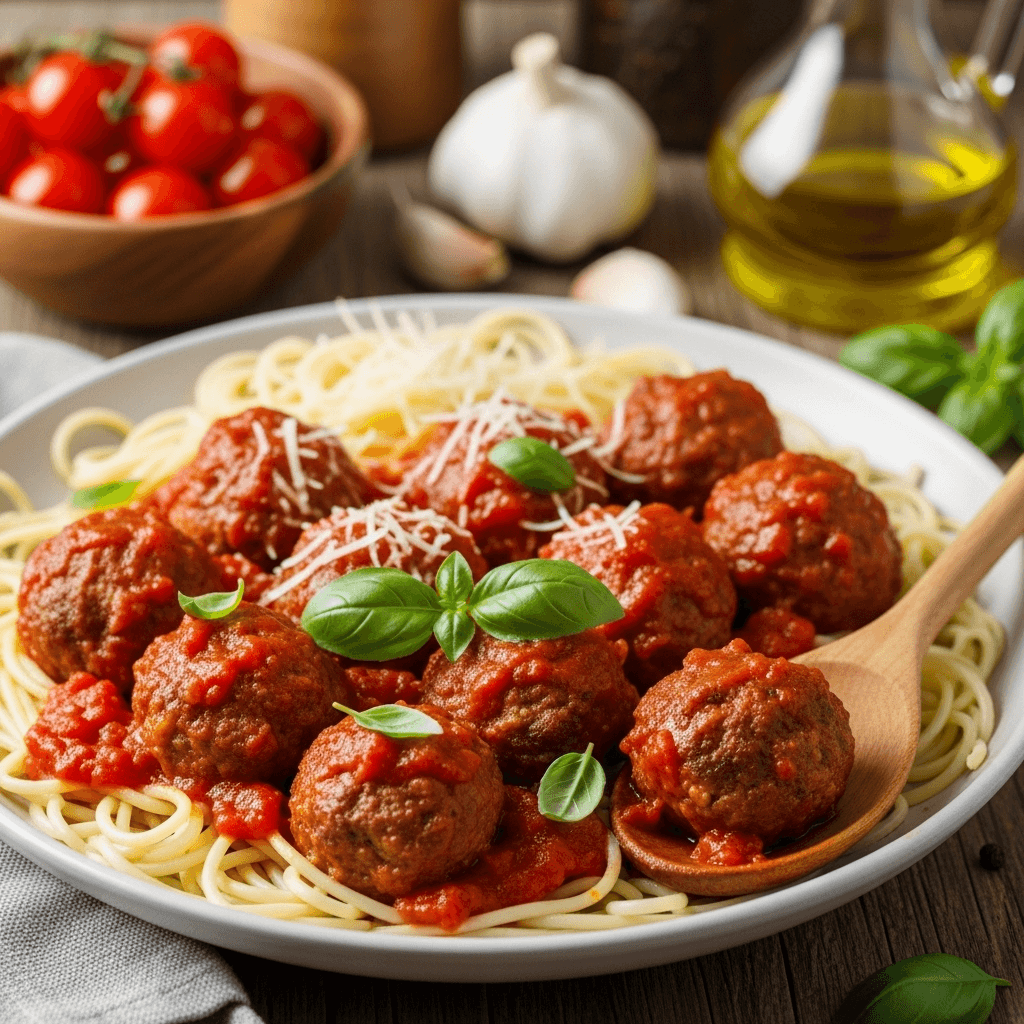
There’s something universally comforting about a plate of tender, flavorful meatballs, and this easy meatball recipe is about to become your family’s new favorite! These homemade meatballs are incredibly juicy, perfectly seasoned, and so versatile that you’ll find yourself making them again and again. Whether you’re serving them over spaghetti for a classic Italian dinner, making meatball subs, adding them to soup, or serving them as appetizers at a party, these meatballs deliver every single time.
What makes this the best easy meatball recipe is how it combines simple, everyday ingredients with foolproof techniques to create meatballs that taste like they came from an Italian grandmother’s kitchen. They’re tender without being mushy, flavorful without being overpowering, and they hold together beautifully whether you bake them, fry them, or simmer them in sauce. Plus, they come together in about 30 minutes from start to finish, making them perfect for busy weeknights.
These Italian-style meatballs are ideal for so many occasions – weeknight family dinners, meal prep sessions (they freeze beautifully!), potluck gatherings, game day parties, or any time you’re craving that satisfying combination of savory meat, aromatic herbs, and Parmesan cheese. Serve them with your favorite marinara sauce over pasta, stuff them into hoagie rolls for incredible meatball subs, or keep them warm in a slow cooker for appetizers. However you serve them, these homemade meatballs are guaranteed to disappear fast!
History / Background
Meatballs have an incredibly rich history that spans cultures and continents, though most Americans associate them primarily with Italian cuisine thanks to the popularity of spaghetti and meatballs. Interestingly, the concept of ground or minced meat formed into balls and cooked is ancient and nearly universal – variations exist in virtually every cuisine from Swedish meatballs to Middle Eastern kofta, Chinese lion’s head meatballs to Spanish albondigas.
The Italian meatballs we know and love today have roots in Italy, where they’re called “polpette.” However, traditional Italian polpette are quite different from their Italian-American cousins. In Italy, meatballs are typically smaller (about walnut-sized), made with different meats depending on the region, and are rarely served with pasta. Instead, they’re often enjoyed as a separate course, served in broth, or eaten as a simple main dish with vegetables.
The large, hearty meatballs served over spaghetti that Americans recognize are actually an Italian-American creation that developed in the late 19th and early 20th centuries. When Italian immigrants arrived in the United States, particularly in cities like New York, Philadelphia, and Boston, they found meat to be much more abundant and affordable than it had been in Italy. This newfound access to meat allowed them to be more generous with portions and ingredients.
Italian-American cuisine evolved as immigrants adapted their traditional recipes to available ingredients and American tastes. Meatballs grew larger, meat became the star rather than a modest addition, and the practice of serving them over pasta with red sauce became standard. This combination was practical for feeding large immigrant families on a budget – the meat was stretched with breadcrumbs and the generous pasta portion made the meal filling and economical.
The “Sunday gravy” tradition – simmering meatballs (along with sausages and sometimes other meats) in tomato sauce for hours – became a cornerstone of Italian-American family life. Many families still maintain this tradition today, with Sunday afternoons dedicated to preparing this labor-of-love meal that brings everyone together around the table.
By the mid-20th century, spaghetti and meatballs had become so embedded in American culture that it was practically synonymous with Italian food, even though this specific combination is rarely found in Italy. Today, meatballs remain one of the most beloved comfort foods in American homes, representing not just great taste but also family, tradition, and the melting pot that is American cuisine.
This recipe honors both traditions – creating tender, flavorful meatballs that work beautifully whether you’re making a quick weeknight dinner or carrying on a cherished family tradition.
Why You’ll Love This Recipe
This easy homemade meatball recipe is about to transform your dinner routine, and here’s why: these meatballs are genuinely foolproof. Even if you’ve never made meatballs before, this recipe walks you through every step to ensure success. The technique is straightforward, the ingredients are simple and accessible, and the results are consistently delicious – tender, juicy meatballs that taste like they took hours to perfect.
What sets these meatballs apart is the perfect balance of texture and flavor. They’re moist and tender thanks to the panade (a breadcrumb and milk mixture) that keeps them from becoming dense or dry, yet they hold together beautifully without falling apart. The blend of Italian seasonings, fresh garlic, and Parmesan cheese creates layers of flavor that make every bite satisfying.
Here’s why this recipe will become your go-to for meatballs:
- Quick and Easy: Ready in just 30 minutes from start to finish, these meatballs are perfect for busy weeknights when you need dinner fast.
- Incredibly Tender: The secret panade technique ensures these meatballs stay moist and tender, never dry or tough.
- Family-Friendly: Kids and adults alike love these meatballs – they’re flavorful without being too bold or spicy.
- Budget-Friendly: Uses affordable ground beef and pantry staples to create a meal that feeds a crowd without breaking the bank.
- Versatile: Serve them with pasta, in subs, as appetizers, in soup, or in countless other ways – one recipe, endless possibilities.
- Freezer-Friendly: Makes a large batch that freezes beautifully, giving you homemade meatballs ready whenever you need them.
- Perfect for Meal Prep: Make them on Sunday and enjoy quick, delicious meals all week long.
- Kid-Approved: Even picky eaters love these meatballs – they’re a guaranteed dinner win.
- Customizable: Easily adapt the recipe for different flavors, dietary needs, or whatever ingredients you have on hand.
- Restaurant-Quality: These homemade meatballs taste better than anything you’d get from a restaurant or frozen bag.
- No Special Skills Required: If you can mix ingredients in a bowl and shape them into balls, you can make these meatballs!
Ingredient Notes
Every ingredient in this easy meatball recipe plays an important role in creating that perfect texture and flavor. Let’s break down what you’ll need:
Ground Beef: The foundation of the meatballs. I recommend using 80/20 ground beef (80% lean, 20% fat) for the best flavor and moisture. Ground chuck works perfectly. The fat content is crucial – it keeps the meatballs juicy and flavorful. You can use 85/15 if you prefer something slightly leaner, but avoid anything leaner than 90/10 or the meatballs will be dry.
Breadcrumbs: Essential for the panade, which is the secret to tender meatballs. Plain or Italian-seasoned breadcrumbs both work great. The breadcrumbs absorb moisture and prevent the meat proteins from binding too tightly, which would create dense, tough meatballs. Fresh breadcrumbs made from day-old bread are ideal, but panko or regular dried breadcrumbs work perfectly too.
Milk: Soaks into the breadcrumbs to create the panade. This mixture is what keeps meatballs tender and moist. Whole milk works best, but any milk (2%, skim, or even non-dairy alternatives) will do. Some recipes use water, but milk adds richness and helps create that melt-in-your-mouth texture.
Eggs: Act as the binder that holds everything together. Eggs provide structure so your meatballs don’t fall apart during cooking. They also add richness and moisture. Don’t skip the eggs – they’re essential for meatballs that hold their shape.
Parmesan Cheese: Adds savory, umami-rich flavor and helps bind the mixture. Freshly grated Parmesan tastes significantly better than the pre-grated kind in the green can, but either works. The cheese also adds saltiness, so be mindful when seasoning.
Garlic: Fresh minced garlic provides aromatic, pungent flavor that’s essential to Italian-style meatballs. Fresh garlic tastes much better than garlic powder here, though you can substitute ½ teaspoon garlic powder in a pinch.
Fresh Parsley: Adds brightness, color, and a fresh herbal note that balances the richness of the meat. Italian flat-leaf parsley has the best flavor, but curly parsley works too. Dried parsley can be substituted (use 1 tablespoon), but fresh is definitely better.
Italian Seasoning: A blend of dried herbs (typically oregano, basil, thyme, and rosemary) that gives meatballs their characteristic Italian flavor. You can make your own blend or use store-bought.
Salt and Black Pepper: Essential for bringing out all the other flavors. Don’t be shy with seasoning – bland meatballs are disappointing meatballs!
Olive Oil (for cooking): If pan-frying, olive oil adds flavor and creates a nice crust on the meatballs. For baking, you’ll need just a light coating to prevent sticking.
Optional Add-ins: Some people like to add a splash of Worcestershire sauce for extra umami, red pepper flakes for heat, or finely diced onion for sweetness and moisture.
Equipment Needed
You won’t need any fancy equipment to make these easy meatballs – just basic kitchen tools:
- Large Mixing Bowl: For combining all the meatball ingredients. Glass, stainless steel, or ceramic all work great.
- Small Bowl: For creating the panade (soaking the breadcrumbs in milk).
- Fork or Whisk: For beating the eggs and mixing the panade.
- Measuring Cups and Spoons: For accurate ingredient measurements.
- Knife and Cutting Board: For mincing garlic and chopping parsley.
- Large Rimmed Baking Sheet: If baking the meatballs. Line it with parchment paper or aluminum foil for easy cleanup.
- Large Skillet or Frying Pan: If pan-frying the meatballs. A 12-inch skillet works best.
- Cookie Scoop or Ice Cream Scoop (optional): A 2-tablespoon cookie scoop ensures all meatballs are the same size for even cooking.
- Tongs or Slotted Spoon: For turning meatballs while cooking.
- Instant-Read Thermometer (optional but recommended): To ensure meatballs reach safe internal temperature of 160°F (71°C).
Easy Homemade Meatball Recipe
- Total Time: 30 minutes
- Yield: 24-30 meatballs (6-8 servings) 1x
- Diet: Gluten Free
Description
This easy homemade meatball recipe creates tender, juicy, perfectly seasoned meatballs that are ready in just 30 minutes! Made with simple ingredients and foolproof technique, these Italian-style meatballs are ideal for serving over pasta, making meatball subs, or enjoying as appetizers. They’re family-friendly, freezer-friendly, and absolutely delicious!
Ingredients
For the Meatballs:
- 2 pounds ground beef (80/20 recommended)
- 1 cup breadcrumbs (plain or Italian-seasoned)
- ½ cup whole milk
- 2 large eggs, lightly beaten
- ½ cup freshly grated Parmesan cheese
- 3 cloves garlic, minced
- ¼ cup fresh parsley, finely chopped
- 2 teaspoons Italian seasoning
- 1½ teaspoons salt
- ½ teaspoon black pepper
- ¼ teaspoon red pepper flakes (optional, for heat)
- 2 tablespoons olive oil (if pan-frying)
Optional for Serving:
- 4–5 cups marinara sauce
- Cooked spaghetti or pasta of choice
- Extra Parmesan cheese for topping
- Fresh basil for garnish
Instructions
- Prepare the Panade: In a small bowl, combine the breadcrumbs and milk. Stir together and let it sit for 5 minutes. This allows the breadcrumbs to fully absorb the milk, creating a paste-like mixture called a panade. This is the secret to tender, moist meatballs – don’t skip this step!
- Mix the Ingredients: In a large mixing bowl, combine the ground beef, soaked breadcrumb mixture, beaten eggs, Parmesan cheese, minced garlic, chopped parsley, Italian seasoning, salt, black pepper, and red pepper flakes (if using). Using your hands (it’s the best tool for this job!), gently mix everything together until just combined. Don’t overmix or squeeze the meat – this makes meatballs tough and dense. Mix just until you no longer see streaks of egg or dry pockets of seasoning, about 1-2 minutes of gentle mixing.
- Shape the Meatballs: Using your hands or a 2-tablespoon cookie scoop, form the mixture into balls about 1½ inches in diameter (roughly the size of a golf ball). Roll them gently between your palms to create smooth, round shapes. Place shaped meatballs on a plate or baking sheet as you work. You should get 24-30 meatballs depending on size. Tip: Slightly wet your hands with water to prevent sticking while rolling.
- Choose Your Cooking Method – Baking (recommended for hands-off cooking): Preheat your oven to 400°F (200°C). Line a large rimmed baking sheet with parchment paper or lightly greased aluminum foil. Arrange the meatballs on the baking sheet, leaving about 1 inch of space between each one. Lightly brush or spray the tops with olive oil. Bake for 18-22 minutes, until the meatballs are browned on the outside and cooked through to an internal temperature of 160°F (71°C). They should be golden brown with slightly crispy edges.
- Alternative Cooking Method – Pan-Frying (for crispy exterior): Heat 2 tablespoons of olive oil in a large skillet over medium-high heat. Once the oil is shimmering, add the meatballs in a single layer (work in batches if necessary – don’t overcrowd the pan). Cook for 2-3 minutes per side, turning carefully with tongs, until all sides are golden brown and the meatballs reach an internal temperature of 160°F (71°C), about 10-12 minutes total. The meatballs will be beautifully browned and have a delicious crust.
- Simmer in Sauce (optional but recommended): Whether you baked or fried your meatballs, simmering them in marinara sauce for 10-15 minutes infuses them with even more flavor and ensures they’re incredibly tender. Heat your marinara sauce in a large pot or deep skillet, add the cooked meatballs, and simmer gently, stirring occasionally. This step is optional but highly recommended for the best flavor!
- Serve: Serve your meatballs hot over cooked spaghetti or your favorite pasta, spooning extra marinara sauce over the top. Garnish with freshly grated Parmesan cheese and fresh basil leaves. You can also serve them in sub rolls for meatball sandwiches, keep them warm in a slow cooker for appetizers, or use them in soups and other dishes.
Notes
- Uniform Size: Making all meatballs the same size ensures even cooking. A 2-tablespoon cookie scoop is incredibly helpful for this.
- Don’t Overmix: The biggest mistake in making meatballs is over-mixing, which creates dense, tough texture. Mix gently and just until combined.
- Temperature Check: Ground beef must reach 160°F (71°C) internal temperature for food safety. An instant-read thermometer eliminates guesswork.
- Gluten-Free: Use gluten-free breadcrumbs or substitute with almond flour or crushed gluten-free crackers.
- Leaner Meat: If using 90/10 or leaner ground beef, add 1-2 tablespoons of olive oil to the mixture to prevent dryness.
- Make Them Smaller: For appetizer-sized meatballs, make them 1 inch in diameter and reduce cooking time to 12-15 minutes.
- Combination Meats: For extra flavor, use a mixture of ground beef and ground pork (1 pound each), or beef and Italian sausage.
- Fresh vs Dried Herbs: If using dried parsley instead of fresh, use only 1 tablespoon.
- Prep Time: 15 minutes
- Cook Time: 15 minutes
- Category: Dinner
- Method: Baking
- Cuisine: Italian
Nutrition
- Serving Size: 4-5 meatballs
- Calories: 365
- Sugar: 2g
- Sodium: 720mg
- Fat: 22g
- Saturated Fat: 9g
- Unsaturated Fat: 12g
- Trans Fat: 0g
- Carbohydrates: 10g
- Fiber: 1g
- Protein: 30g
- Cholesterol: 22g
Tips & Variations
The wonderful thing about meatballs is how versatile they are! Here are some fantastic ways to customize this easy meatball recipe:
Meat Variations: Try a combination of ground beef and pork (1 pound each) for richer flavor and extra tenderness. Use ground turkey or chicken for a leaner option (add an extra tablespoon of olive oil to the mixture). Mix in Italian sausage (half beef, half sausage removed from casings) for extra spice and flavor. For traditional Italian polpette, use a combination of beef, pork, and veal.
Different Flavors: Create Swedish meatballs by adding nutmeg, allspice, and serving with cream gravy. Make Greek-style meatballs by adding oregano, mint, and lemon zest, then serve with tzatziki. Try Asian-inspired meatballs with ginger, soy sauce, and green onions, served with sweet chili sauce.
Extra Vegetables: Sneak in nutrition by adding finely grated zucchini or carrots (squeeze out excess moisture first). Finely minced onion adds sweetness and moisture. Finely diced bell peppers add color and nutrition.
Cheese Variations: Stuff each meatball with a small cube of mozzarella for a melty surprise. Use Romano or Asiago instead of Parmesan for different flavor profiles. Mix in ricotta cheese for extra creamy, tender meatballs.
Spicy Meatballs: Add more red pepper flakes, incorporate diced jalapeños, or mix in a tablespoon of sriracha or hot sauce. Top with spicy arrabbiata sauce instead of regular marinara.
Low-Carb/Keto: Replace breadcrumbs with almond flour, crushed pork rinds, or simply omit them and add an extra egg. These work perfectly for low-carb diets.
Gluten-Free: Use certified gluten-free breadcrumbs or substitute with crushed gluten-free crackers, rolled oats (ground in a food processor), or almond flour.
Mini Meatballs: Make appetizer-sized meatballs (about 1 inch diameter) – perfect for parties! Keep them warm in a slow cooker with marinara or sweet and sour sauce.
Air Fryer Method: Arrange meatballs in a single layer in your air fryer basket and cook at 380°F for 10-12 minutes, shaking halfway through.
Pro Chef Tips
Want to elevate your homemade meatballs from good to absolutely spectacular? Here are professional techniques:
The Panade is Non-Negotiable: Soaking breadcrumbs in milk before mixing creates what chefs call a panade. This prevents the meat proteins from binding too tightly, which would create tough, dense meatballs. The panade keeps them tender and moist. Never skip this step!
Don’t Overmix – Seriously: This is the most common mistake home cooks make. Over-mixing develops the proteins too much, resulting in tough, rubbery meatballs. Mix gently with your hands just until combined, about 1-2 minutes maximum. It’s okay if the mixture looks slightly uneven.
Wet Your Hands: When shaping meatballs, keep a small bowl of water nearby and wet your hands frequently. This prevents the meat from sticking to your hands and makes rolling much easier and faster.
Make Them Uniform: Use a cookie scoop or ice cream scoop to ensure all meatballs are the same size. This isn’t just for aesthetics – uniform size means even cooking, so everything finishes at the same time.
Don’t Pack Too Tightly: When forming meatballs, roll them gently with light pressure. Packing them too tightly creates dense texture. They should hold together but not feel like hard balls.
Brown Before Simmering: Whether baking or pan-frying, browning the meatballs first develops flavor through the Maillard reaction (those delicious brown crusts). Then simmering in sauce keeps them moist and infuses them with flavor. Skipping the browning means missing out on depth of flavor.
Let Them Rest: After removing meatballs from the oven or pan, let them rest for 3-5 minutes. This allows juices to redistribute throughout the meat, keeping them moist when you bite in.
Test One First: Before making all your meatballs, cook just one as a test. Taste it and adjust seasonings if needed. It’s much easier to fix under-seasoned meat mixture than to deal with 30 bland meatballs!
Temperature, Not Time: Don’t rely solely on cooking times – use an instant-read thermometer. Meatballs are done at 160°F (71°C) internal temperature. This ensures food safety while preventing overcooking.
Chill for Easier Handling: If the meat mixture is too soft to shape easily, refrigerate it for 15-20 minutes. The cold firms up the fat, making rolling much easier.
The Sauce Finish: Even if you’ve baked or fried your meatballs completely, simmering them in marinara sauce for 10-15 minutes before serving makes them even more tender and flavorful. This is how Italian grandmothers do it!
Common Mistakes to Avoid
Even though meatballs are straightforward, there are several common pitfalls that can prevent them from being perfect:
Using Meat That’s Too Lean: Extra-lean ground beef (93/7 or higher) doesn’t have enough fat to keep meatballs moist. They’ll turn out dry and crumbly. Always use 80/20 or at most 85/15 ground beef. If you must use lean meat, add extra olive oil to compensate for the lack of fat.
Skipping or Rushing the Panade: If you don’t let the breadcrumbs soak in milk for at least 5 minutes, they won’t absorb enough moisture and won’t do their job of keeping meatballs tender. Be patient with this step – it makes all the difference!
Over-Mixing the Meat: This is the number one mistake! Treating the mixture like bread dough and mixing aggressively develops too much protein structure, resulting in tough, dense meatballs. Mix gently with your hands for no more than 1-2 minutes, just until combined.
Making Meatballs Too Large: Giant meatballs look impressive but are hard to cook evenly – the outside burns before the inside is done. Stick with 1½-inch diameter (golf ball size) for best results. If you want larger meatballs, reduce oven temperature to 375°F and increase cooking time.
Overcrowding the Pan: When pan-frying, leaving space between meatballs is crucial. Overcrowding causes them to steam rather than brown, and you miss out on that delicious crust. Cook in batches if necessary.
Not Checking Internal Temperature: Guessing when meatballs are done leads to either undercooked (unsafe) or overcooked (dry) results. Ground beef must reach 160°F (71°C) for food safety. Invest in a simple instant-read thermometer.
Using Pre-Shredded Parmesan: The pre-grated Parmesan in the green can contains anti-caking agents that affect texture and flavor. Freshly grated Parmesan (from a block) tastes significantly better and melts into the mixture properly.
Storage & Meal Prep
Meatballs are absolutely fantastic for meal prep and storage, making them perfect for busy families:
Refrigerator Storage: Let cooked meatballs cool completely, then store in an airtight container in the refrigerator for up to 4 days. Store them with or without sauce – both work fine. If storing without sauce, they’ll reheat with slightly crispier exteriors.
Reheating from Refrigerator: The best method is reheating in marinara sauce on the stovetop over medium-low heat for 10-15 minutes until heated through. This keeps them moist and adds flavor. You can also microwave individual portions for 1-2 minutes, or reheat in a 350°F (175°C) oven for 10-15 minutes.
Meal Prep Ideas: Make a big batch on Sunday and use throughout the week: Monday – spaghetti and meatballs, Tuesday – meatball subs, Wednesday – meatball soup, Thursday – meatballs over creamy polenta, Friday – leftover meatballs in a sandwich or salad.
Storing Uncooked Meatballs: Shaped but uncooked meatballs can be refrigerated for up to 24 hours before cooking. Place them on a plate or baking sheet covered with plastic wrap. This is great for prep-ahead convenience.
Portioning for Meal Prep: Divide cooked meatballs into individual or family-sized portions with sauce in separate containers. This creates grab-and-go meals that just need reheating.
Make-Ahead & Freezer Notes
Meatballs are one of the most freezer-friendly foods, making them perfect for batch cooking and future meals:
Freezing Cooked Meatballs: This is the best method for meal prep! Let cooked meatballs cool completely. Arrange them in a single layer on a baking sheet and freeze until solid (about 2 hours). This prevents them from sticking together. Once frozen, transfer to freezer bags or containers, label with the date, and freeze for up to 3 months.
Freezing Uncooked Meatballs: Shape the meatballs, arrange on a parchment-lined baking sheet, and freeze until solid. Transfer to freezer bags. These can be cooked directly from frozen – just add 5-10 minutes to the cooking time. Internal temperature should still reach 160°F (71°C).
Freezing with Sauce: You can freeze fully cooked meatballs already in marinara sauce. Use freezer-safe containers, leaving some headspace for expansion. This creates complete meals that just need reheating. Freeze for up to 3 months.
Thawing Instructions: The safest method is thawing overnight in the refrigerator. For faster thawing, place sealed freezer bags in a bowl of cold water, changing the water every 30 minutes until thawed (1-2 hours).
Cooking from Frozen: You can cook frozen uncooked meatballs without thawing! Add them directly to simmering marinara sauce and cook for 25-30 minutes until cooked through to 160°F. Or bake frozen meatballs at 375°F for 25-30 minutes.
Reheating Frozen Cooked Meatballs: Reheat frozen cooked meatballs in simmering marinara sauce for 15-20 minutes, in the oven at 350°F for 20-25 minutes (covered with foil), or in the microwave (thaw first for best results).
Pro Freezer Tip: Flash-freezing meatballs individually before bagging them means you can remove exactly the number you need rather than having to thaw the entire batch.
Serving Suggestions
Homemade meatballs are incredibly versatile! Here are delicious ways to serve them:
Classic Italian: Serve over spaghetti or your favorite pasta with marinara sauce, topped with freshly grated Parmesan cheese and torn fresh basil. Add garlic bread and a simple Caesar salad for a complete Italian meal.
Meatball Subs: Pile meatballs into toasted hoagie rolls or sub buns, top with extra marinara sauce and melted mozzarella or provolone cheese. Broil for 2-3 minutes to melt the cheese. Serve with chips or fries.
Appetizer Style: Keep meatballs warm in a slow cooker with marinara sauce, sweet and sour sauce, or BBQ sauce. Provide toothpicks for easy grabbing. Perfect for parties and game days!
Meatball Soup: Add meatballs to Italian wedding soup, minestrone, or any vegetable soup for added protein and heartiness.
Over Polenta or Mashed Potatoes: Serve meatballs with sauce over creamy polenta, mashed potatoes, or cauliflower mash for a comforting, stick-to-your-ribs meal.
Meatball Pizza: Use meatballs as a pizza topping! Slice them in half and add to your favorite pizza along with marinara and mozzarella.
Pasta Alternatives: Serve over zucchini noodles, spaghetti squash, or cauliflower rice for low-carb options.
Side Dish Pairings: Traditional sides include garlic bread, Italian bread, Caesar salad, caprese salad, roasted vegetables (zucchini, bell peppers, eggplant), sautéed green beans, or roasted Brussels sprouts.
Beverages: Pair with Italian red wine (Chianti, Sangiovese), sparkling water with lemon, Italian soda, or beer (a light lager works nicely).
Complete Meal Ideas: For a full Italian feast: start with bruschetta or antipasto, serve meatballs and pasta with marinara as the main course, add a side salad and garlic bread, and finish with tiramisu or gelato for dessert.
FAQs Section
Why are my meatballs dry?
Dry meatballs usually result from using meat that’s too lean (use 80/20 or 85/15 ground beef with adequate fat), skipping the panade step (breadcrumbs soaked in milk), or overcooking them. Always check internal temperature with a thermometer and remove from heat at exactly 160°F. Simmering finished meatballs in sauce for 10-15 minutes also helps keep them moist.
Can I make meatballs without breadcrumbs?
Yes! You can substitute breadcrumbs with several alternatives: crushed crackers, rolled oats (ground in a food processor), almond flour (for gluten-free/low-carb), crushed pork rinds (for keto), or even cooked rice. Each creates slightly different texture, but all work as binders. You can also make meatballs without any filler, though they’ll be denser and less tender.
Should I bake or fry meatballs?
Both methods work great! Baking is hands-off, healthier (less oil), and allows you to cook large batches at once – it’s perfect for meal prep. Pan-frying creates a more flavorful, caramelized crust and is faster for small batches. Many cooks do both: brown meatballs in a skillet first for flavor, then finish cooking in the oven or simmer in sauce. Choose based on your priorities!
How do I keep meatballs from falling apart?
Meatballs fall apart when there isn’t enough binder. Make sure you’re using the correct amount of eggs and breadcrumbs as specified in the recipe. The panade (breadcrumb and milk mixture) is crucial for binding. Also, avoid over-handling or packing the meatballs too loosely – they should be gently but firmly shaped. Finally, let the meatballs rest for 10-15 minutes after shaping and before cooking – this helps them set.
Can I use ground turkey instead of beef?
Absolutely! Ground turkey makes excellent meatballs and is a leaner option. Use ground turkey with some fat content (93/7 or 85/15) rather than extra-lean, and add 1-2 tablespoons of olive oil to the mixture to compensate for turkey.