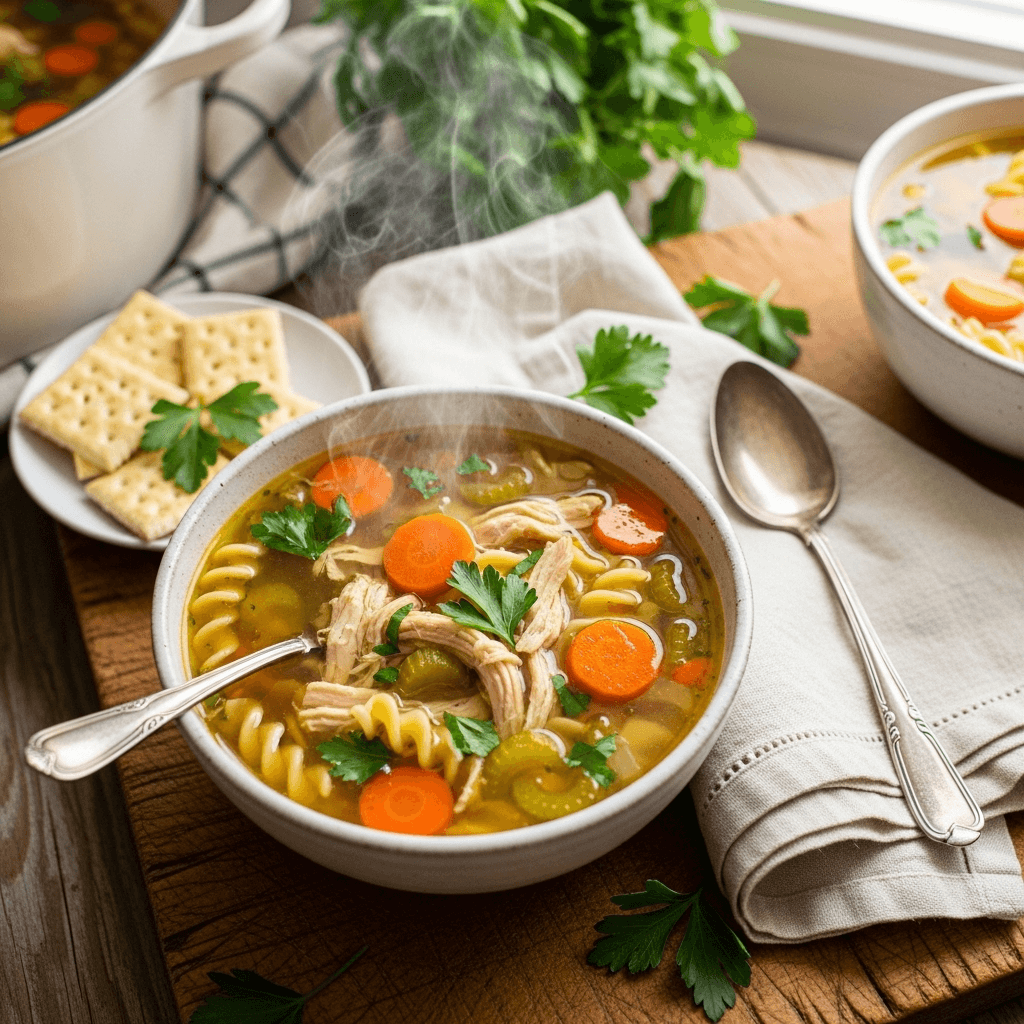

There’s a reason chicken soup has been called “Jewish penicillin” and comfort food for the soul—few dishes can warm your body and lift your spirits quite like a steaming bowl of homemade chicken soup. This classic chicken soup recipe is everything you want in a bowl: tender chicken, hearty vegetables, perfectly cooked noodles or rice, and a rich, golden broth that tastes like a warm hug.
This easy homemade chicken soup is the kind of recipe every home cook needs in their repertoire. It’s the soup you make when someone’s feeling under the weather, the one you crave on cold winter days, and the perfect way to use up a rotisserie chicken or leftover roasted chicken. Unlike canned soup that tastes flat and oversalted, this from-scratch version is vibrant, nourishing, and deeply flavorful.
Perfect for sick days, cozy weeknight dinners, meal prep Sunday sessions, or whenever you need something soothing and satisfying, this chicken noodle soup recipe serves 6-8 people generously. While it does simmer for a bit to develop that rich, golden broth, the actual hands-on time is minimal, and your kitchen will smell absolutely incredible. Once you taste the difference homemade makes, you’ll never want to go back to the canned stuff again.
History / Background
Chicken soup has been a healing remedy and comfort food across virtually every culture for thousands of years. Ancient Greek physician Hippocrates prescribed chicken soup for various ailments as early as 400 BC, and ancient Chinese medicine has used chicken broth for healing purposes for over 2,000 years.
The Jewish tradition of chicken soup, often called “Jewish penicillin,” has particularly strong roots in Eastern European communities. Jewish grandmothers have been making their famous golden chicken soup (often served with matzo balls) for generations, passing down recipes and techniques that create that rich, deeply flavorful broth that seems to cure everything from colds to broken hearts.
In America, chicken noodle soup became a household staple in the early 20th century, gaining massive popularity during the Great Depression when families needed economical, filling meals. Campbell’s introduced condensed chicken noodle soup in 1934, making it accessible to millions, though homemade versions remained the gold standard in family kitchens.
The science behind chicken soup’s healing reputation has been studied extensively. Research from the University of Nebraska Medical Center found that chicken soup has mild anti-inflammatory properties that can help ease cold symptoms. The hot liquid helps with hydration and loosening congestion, while the vegetables provide vitamins and nutrients, and the chicken offers protein for healing and energy.
Different cultures have their own versions: Italian wedding soup with tiny meatballs and greens, Mexican caldo de pollo with rice and lime, Chinese chicken congee, Filipino arroz caldo, and Korean samgyetang with ginseng. Each variation reflects local ingredients and traditions, but they all share that same soul-warming quality.
Today, homemade chicken soup remains a universal symbol of care, comfort, and home cooking. It’s the meal we make for people we love, the recipe that defines “comfort food,” and the dish that truly does seem to make everything feel a little bit better.
Why You’ll Love This Recipe
This isn’t just any chicken soup—it’s the recipe that’ll become your go-to for everything from fighting off winter colds to simply enjoying a cozy dinner. It’s straightforward enough for beginners but delivers the kind of flavor depth that makes people think you’ve been cooking all day.
Here’s why this recipe will earn a permanent spot in your collection:
- Incredibly Flavorful Broth: Golden, rich, and deeply savory—not thin or bland like store-bought
- Flexible Protein Options: Use rotisserie chicken, leftover chicken, or raw chicken pieces
- One-Pot Wonder: Everything cooks in one pot for easy cleanup
- Naturally Healing: Packed with nutrients, hydrating, and genuinely comforting when you’re under the weather
- Budget-Friendly: Stretches affordable ingredients to feed many people
- Meal Prep Friendly: Makes a big batch that tastes even better the next day
- Customizable: Easily adapt to your preferences (more veggies, different noodles, rice instead)
- Kid-Approved: Even picky eaters love this mild, familiar soup
- Freezer Superstar: Freezes beautifully for future quick meals
- Simple Ingredients: Made with basic vegetables and pantry staples
Whether you’re nursing a cold, feeding a hungry family, or just craving something warm and soothing, this homemade chicken noodle soup delivers every single time.
Ingredient Notes
Understanding your ingredients helps you make the best soup possible. Here’s what you need to know:
Chicken: The star of the show! You have several options: bone-in, skin-on chicken pieces (thighs and breasts) create the richest broth; a whole chicken makes incredibly flavorful stock; rotisserie chicken saves time (add it at the end); or leftover cooked chicken works perfectly. Bone-in pieces create more flavor than boneless.
Chicken Broth or Stock: Use low-sodium chicken broth as your base, or go next-level with homemade stock. Low-sodium lets you control the salt level. You can even use water if cooking with bone-in chicken—it’ll create its own flavorful broth. Avoid high-sodium broth or your soup will be too salty.
Aromatics (Onion, Celery, Carrots): The holy trinity of soup-making! These vegetables create the flavor foundation. Use roughly equal amounts of each. The onion adds sweetness and depth, celery brings earthiness and that classic soup aroma, and carrots add natural sweetness and color. Don’t skip the celery—it’s essential to that authentic chicken soup flavor.
Garlic: Fresh garlic adds aromatic depth that powder can’t match. Use at least 3-4 cloves for noticeable flavor without overwhelming the soup.
Bay Leaves: These dried leaves add subtle herbal complexity. Always remove before serving (they’re not pleasant to eat). Fresh or dried both work, but dried are more concentrated.
Fresh Herbs: Thyme and parsley are traditional. Thyme adds earthy, slightly minty notes, while parsley brightens everything. Fresh herbs deliver better flavor than dried, but use what you have (dried herbs are about 1/3 the amount of fresh).
Noodles: Egg noodles are traditional, but any pasta works—small shells, orzo, ditalini. You can also use rice, quinoa, or skip the starch entirely. Cook noodles separately if meal prepping to prevent them from getting mushy in storage.
Salt and Pepper: Season throughout the cooking process and adjust at the end. Proper seasoning is what separates good soup from great soup.
Equipment Needed
Having the right tools makes soup-making effortless:
- Large Pot or Dutch Oven (6-8 quart): Essential for making soup in quantity. Dutch ovens are perfect because they distribute heat evenly and can go from stovetop to oven if needed.
- Sharp Chef’s Knife: For chopping vegetables and cutting chicken.
- Cutting Board: Preferably separate boards for meat and vegetables.
- Wooden Spoon or Ladle: For stirring and serving.
- Measuring Cups and Spoons: For accurate seasoning and liquid measurements.
- Slotted Spoon or Spider: For removing chicken from broth.
- Fine-Mesh Strainer: Optional, for straining broth if you want crystal-clear soup.
- Large Bowl: For holding cooked chicken while you shred it.
- Two Forks: The best tools for shredding chicken.
- Ladle: For serving soup into bowls.
- Storage Containers: For refrigerating or freezing leftovers.
Homemade Chicken Soup
- Total Time: 60 minutes
- Yield: 6-8 servings 1x
- Diet: Gluten Free
Description
This classic homemade chicken soup features tender chicken, hearty vegetables, and egg noodles in a rich, golden broth that’s pure comfort in a bowl. Perfect for cold days, sick days, or anytime you need something warm and nourishing. This easy chicken noodle soup recipe tastes like it came straight from grandma’s kitchen.
Ingredients
For the Soup:
- 2 tablespoons olive oil or butter
- 1 large onion, diced
- 3 large carrots, peeled and sliced into rounds
- 3 celery ribs, sliced
- 4 cloves garlic, minced
- 8 cups low-sodium chicken broth
- 2 bay leaves
- 3–4 fresh thyme sprigs (or 1 teaspoon dried thyme)
- 1½ pounds bone-in, skin-on chicken (breasts or thighs), or 3 cups cooked chicken
- 2 cups egg noodles (or small pasta of choice)
- 1/4 cup fresh parsley, chopped
- Salt and black pepper to taste
- Optional: 1 teaspoon poultry seasoning
For Serving:
- Fresh parsley for garnish
- Crackers or crusty bread
- Lemon wedges (optional but delicious)
Instructions
- Sauté the Aromatics: Heat olive oil or butter in a large pot or Dutch oven over medium heat. Add diced onion, carrots, and celery. Sauté for 6-8 minutes, stirring occasionally, until vegetables begin to soften and onion becomes translucent. Add minced garlic and cook for 1 more minute until fragrant. This step builds the flavor foundation of your soup.
- Add Broth and Chicken: Pour in the chicken broth. Add bay leaves, thyme sprigs, and a pinch of salt and pepper. If using raw chicken, nestle the chicken pieces into the broth, skin-side up. Increase heat to high and bring to a boil.
- Simmer the Soup: Once boiling, reduce heat to medium-low to maintain a gentle simmer. Cover partially and cook for 30-35 minutes if using raw chicken with bones, or 20 minutes for boneless chicken. The chicken is done when it reaches 165°F internal temperature and is no longer pink inside.
- Remove and Shred Chicken: Using tongs or a slotted spoon, carefully remove the chicken pieces from the pot and transfer to a large bowl. Let cool for 5 minutes until you can handle it safely. Remove and discard skin and bones. Use two forks to shred the chicken into bite-sized pieces. Set aside.
- Add Noodles: Remove bay leaves and thyme stems from the soup (they’ve done their job). Increase heat to bring soup back to a boil. Add egg noodles and cook according to package directions, usually 6-8 minutes, stirring occasionally to prevent sticking.
- Return Chicken: Once noodles are tender, add the shredded chicken back to the pot. If using pre-cooked or rotisserie chicken, add it now and heat through for 2-3 minutes.
- Season and Finish: Stir in fresh chopped parsley. Taste and adjust seasoning with salt and black pepper as needed—this is crucial for great flavor. Start with 1/2 teaspoon salt, taste, and add more if needed. The soup should be well-seasoned but not salty.
- Serve: Ladle hot soup into bowls and garnish with additional fresh parsley. Serve immediately with crackers or crusty bread on the side. A squeeze of fresh lemon juice right before eating adds a wonderful brightness!
Notes
- Rotisserie Chicken Shortcut: Skip steps 2-4. Add broth and vegetables, simmer 20 minutes, then add shredded rotisserie chicken and noodles in the last 10 minutes.
- Make Noodles Separately: For meal prep, cook noodles separately and add to individual servings. This prevents them from absorbing too much liquid and getting mushy in storage.
- Rich Broth Tip: For the richest flavor, use bone-in, skin-on chicken and remove the skin after cooking (it adds flavor during simmering).
- Low-Carb Option: Skip the noodles and add extra vegetables or use cauliflower florets.
- Gluten-Free: Use gluten-free noodles or rice instead of traditional egg noodles.
- Prep Time: 15 minutes
- Cook Time: 45 minutes
- Category: Soup
- Method: Stovetop
- Cuisine: American
Nutrition
- Serving Size: 1½ cups (1/8 of recipe)
- Calories: 245
- Sugar: 5g
- Sodium: 650mg
- Fat: 8g
- Saturated Fat: 2g
- Unsaturated Fat: 5g
- Trans Fat: 0g
- Carbohydrates: 20g
- Fiber: 2g
- Protein: 24g
- Cholesterol: 75mg
Tips & Variations
Creamy Chicken Soup: Stir in 1/2 cup heavy cream or half-and-half at the end for a richer, creamier version. This transforms it into a comfort food masterpiece.
Chicken and Rice Soup: Replace noodles with 3/4 cup long-grain white rice or wild rice blend. Add rice when you add the noodles and cook according to rice package directions (usually 15-20 minutes).
Vegetable-Packed Version: Add more vegetables like diced potatoes, green beans, corn, peas, or chopped spinach in the last 5-10 minutes of cooking for extra nutrition.
Lemon Chicken Soup (Greek-Inspired): Add the juice of 2 lemons at the end and finish with fresh dill instead of parsley. Use orzo pasta for an authentic Greek avgolemono-style soup.
Asian-Inspired Chicken Soup: Add fresh ginger with the garlic, use rice noodles, finish with sesame oil and green onions, and serve with a squeeze of lime.
Spicy Chicken Soup: Add 1 diced jalapeño with the vegetables, include 1/2 teaspoon cayenne pepper, and finish with hot sauce to taste.
Tortilla Chicken Soup: Add cumin, chili powder, and diced tomatoes. Skip the noodles. Serve topped with tortilla strips, avocado, lime, and cilantro.
Slow Cooker Method: Add all ingredients except noodles and parsley to slow cooker. Cook on low 6-8 hours or high 3-4 hours. Remove chicken, shred, return to pot. Add noodles and cook on high 15 minutes.
Pro Chef Tips
Season in Layers: Don’t wait until the end to season. Add salt and pepper at each stage—when sautéing vegetables, when adding broth, and again at the end. This builds depth of flavor that one-time seasoning can’t achieve.
Don’t Rush the Vegetable Sauté: Those 6-8 minutes of cooking the onion, carrot, and celery are crucial. This caramelizes their natural sugars and creates a flavor foundation. If you rush this step, your soup will taste flat.
Use Bone-In, Skin-On Chicken: Yes, it’s more work to remove bones and skin, but they add tremendous flavor and body to the broth. The gelatin from bones creates that silky, rich mouthfeel that makes homemade soup special.
Skim the Surface: As the soup simmers, foam and impurities rise to the surface. Skim these off with a spoon for clearer, cleaner-tasting broth. Not essential, but it makes a difference.
Save Vegetable Scraps: Keep carrot peels, celery tops, onion ends, and herb stems in a freezer bag. Use them to make homemade stock for even more flavorful soup next time.
The Parsley Finish: Adding fresh herbs at the very end (not during cooking) keeps them bright green and vibrant, adding fresh flavor rather than cooked-away bitterness.
Taste, Taste, Taste: The difference between good soup and great soup is proper seasoning. Taste multiple times as you cook and adjust. The soup should be well-seasoned, with all flavors balanced—not bland, not overly salty, just right.
Common Mistakes to Avoid
Using High-Sodium Broth Without Adjusting: If you accidentally use regular (not low-sodium) broth, don’t add any additional salt until the very end after you’ve tasted it. Regular broth is often salty enough on its own, and you can easily oversalt your soup.
Boiling Instead of Simmering: A rolling boil makes the broth cloudy and can make chicken tough. Maintain a gentle simmer—you should see small bubbles occasionally breaking the surface, not vigorous bubbling.
Adding Noodles Too Early: If you add noodles at the beginning, they’ll overcook and turn mushy, and they’ll absorb too much broth, leaving you with thick, pasta-heavy soup rather than broth-based soup. Add them in the last 10 minutes.
Not Removing Skin and Bones: While they add flavor during cooking, leaving them in makes the soup difficult to eat and unpleasant. Always remove skin and bones before serving.
Underseasoning: The most common mistake! Soup needs more salt than you think because you’re seasoning a large volume of liquid. Taste and adjust—your soup should taste vibrant and flavorful, not bland or watery.
Storing with Noodles: If you plan to save leftovers, store noodles separately or accept that they’ll absorb liquid and become soft. Alternatively, cook fresh noodles each time you reheat the soup.
Storage & Meal Prep
Refrigerator Storage: Let soup cool to room temperature (within 2 hours), then transfer to airtight containers. Store in the refrigerator for up to 4-5 days. The flavors actually improve after a day as they meld together, making leftovers extra delicious.
Reheating Instructions: Reheat gently on the stovetop over medium heat, stirring occasionally, until heated through. Add a splash of broth or water if the soup has thickened (noodles absorb liquid as they sit). Microwave individual portions for 2-3 minutes, stirring halfway through.
Noodle Storage Tip: For best leftovers, store soup and noodles separately. Cook fresh noodles when reheating, or add cooked noodles to individual bowls before ladling hot soup over them.
Meal Prep Sunday: Make a big batch on Sunday and portion into individual containers. Add cooked noodles to each container, or keep noodles separate and add when reheating. Perfect grab-and-go lunches all week.
Container Recommendations: Use glass containers with tight-fitting lids—they won’t absorb odors or stain. Wide-mouth mason jars work beautifully for individual portions and look great in your fridge.
Make-Ahead & Freezer Notes
Make-Ahead Instructions: You can make the entire soup (minus the noodles) up to 2 days in advance. Store in the refrigerator, then reheat and add freshly cooked noodles when ready to serve. The broth flavors deepen beautifully.
Freezing the Soup: Chicken soup freezes exceptionally well! Cool completely, then freeze in airtight containers or heavy-duty freezer bags for up to 3 months. For easy portioning, freeze in individual servings using mason jars (leave 1 inch headspace for expansion).
Important Freezing Note: Do NOT freeze soup with noodles—they turn mushy and unpleasant. Freeze the broth with chicken and vegetables only. Cook fresh noodles when you reheat.
Freezing in Bags: Pour cooled soup into gallon-size freezer bags, squeeze out air, seal, and lay flat to freeze. These stack beautifully and take up minimal freezer space. Label with contents and date.
Thawing Method: Thaw frozen soup overnight in the refrigerator for best results. For faster thawing, place the sealed container in a bowl of cold water, changing the water every 30 minutes.
Reheating from Frozen: You can actually reheat frozen soup directly on the stovetop. Place frozen soup in a pot over medium-low heat, breaking it up as it thaws. Once melted, increase heat and bring to a simmer. Add fresh noodles and heat through.
Freezer-to-Microwave: Thaw frozen soup, transfer to a microwave-safe bowl, and heat in 2-minute intervals, stirring between each, until hot throughout.
Serving Suggestions
Classic Accompaniments:
- Saltine crackers (the traditional choice!)
- Crusty French bread or sourdough
- Buttered dinner rolls
- Oyster crackers sprinkled on top
- Cornbread for a Southern twist
Sandwiches for a Complete Meal:
- Grilled cheese sandwich (the ultimate soup pairing)
- Turkey and avocado sandwich
- BLT on toasted bread
- Tuna salad sandwich
- Simple ham and cheese
Salad Pairings:
- Simple garden salad with vinaigrette
- Caesar salad with homemade croutons
- Spinach salad with cranberries and pecans
- Wedge salad with blue cheese dressing
Toppings Bar: Set up a DIY topping station for fun: fresh herbs (parsley, dill), grated Parmesan cheese, red pepper flakes, lemon wedges, oyster crackers, and hot sauce. Let everyone customize their bowl.
Beverage Pairings:
- Hot tea (chamomile or green tea)
- Ginger ale or lemon-lime soda
- Fresh lemonade
- Iced tea
- Light white wine like Pinot Grigio
For Sick Days: Serve with ginger tea, honey, and plenty of tissues nearby. The steam helps clear sinuses, the warmth soothes sore throats, and the nutrients support healing.
FAQs Section
Q: Can I make chicken soup without noodles?
A: Absolutely! Noodle-free chicken soup is delicious and keeps the focus on the flavorful broth, tender chicken, and vegetables. It’s also lower in carbs and calories. You can add rice, quinoa, or extra vegetables instead, or keep it simple with just chicken, broth, and veggies.
Q: Why is my chicken soup bland?
A: Under-seasoning is the most common issue. Make sure to season at multiple stages and taste before serving. You need more salt than you think because you’re seasoning a large volume of liquid. Also ensure you’re sautéing your aromatics properly at the beginning—this builds flavor. If soup still tastes flat, try adding a squeeze of lemon juice for brightness.
Q: Can I use boneless, skinless chicken?
A: Yes, but your broth won’t be quite as rich and flavorful. Bones and skin add gelatin, fat, and depth that boneless chicken can’t provide. If using boneless chicken breasts or thighs, reduce the simmering time to 15-20 minutes so they don’t dry out. Consider adding an extra cup of broth or using homemade stock to compensate for flavor.
Q: How do I keep noodles from getting mushy in soup?
A: The best solution is to cook noodles separately and add them to individual bowls when serving. If that’s not practical, add noodles in the last 8-10 minutes of cooking and slightly undercook them—they’ll continue cooking in the hot soup. For leftovers, always store noodles separately from the soup.
Q: Can I make this soup in a slow cooker?
A: Yes! Add chicken, vegetables, broth, and seasonings to your slow cooker. Cook on low for 6-8 hours or high for 3-4 hours. Remove chicken, shred, and return to pot. For noodles, either add in the last 30 minutes on high, or cook separately and add when serving.
Q: My soup is too salty. How do I fix it?
A: Add a peeled, halved potato and simmer for 15-20 minutes—it absorbs excess salt. Remove before serving. You can also dilute with unsalted broth or water, though this may require re-seasoning with herbs. Adding a splash of cream or a squeeze of lemon can also balance excessive saltiness.
Q: What’s the white foam that forms on top while cooking?
A: That’s protein and impurities from the chicken rising to the surface. It’s harmless but can make broth cloudy and slightly bitter. Skim it off with a spoon and discard for clearer, cleaner-tasting soup. This is especially important if making soup with raw chicken.
Conclusion
There’s something almost magical about a pot of homemade chicken soup simmering on the stove—the way it fills your home with warmth and comfort, the promise of something nourishing and healing in every bowl. This classic chicken soup recipe is more than just food; it’s care in edible form, a hug in a bowl, and proof that the simplest dishes are often the most meaningful.
Making soup from scratch might seem like a lost art in our world of takeout and convenience foods, but I promise you—it’s easier than you think and absolutely worth the minimal effort. Once you taste the difference between this golden, flavorful homemade version and anything from a can, there’s simply no going back. This is the soup that’ll earn you praise from family, requests from friends, and a reputation as someone who makes “the best chicken soup.”
The beauty of this recipe is its flexibility. Make it your own by adding extra vegetables you love, switching to rice if you prefer, going creamy when you want something richer, or keeping it simple and classic. However you make it, you’ll have a pot of comfort ready to share, freeze for later, or savor whenever you need something warm and healing.
Ready to make the best homemade chicken soup you’ve ever tasted? I can’t wait to hear how yours turns out! Did you add any special touches? Discover any helpful tips? Have questions about making it? Drop a comment below—I love hearing about your cooking experiences and answering questions.
Pin this recipe to your Pinterest boards! Save it to your “Comfort Food Recipes,” “Soup Recipes,” or “Meal Prep Ideas” collections so you always know where to find it when soup-craving strikes. And if this recipe brings comfort to your table, please share it with friends and family who deserve a bowl of homemade goodness.
Here’s to golden broth, tender chicken, and the simple magic of soup made with love!