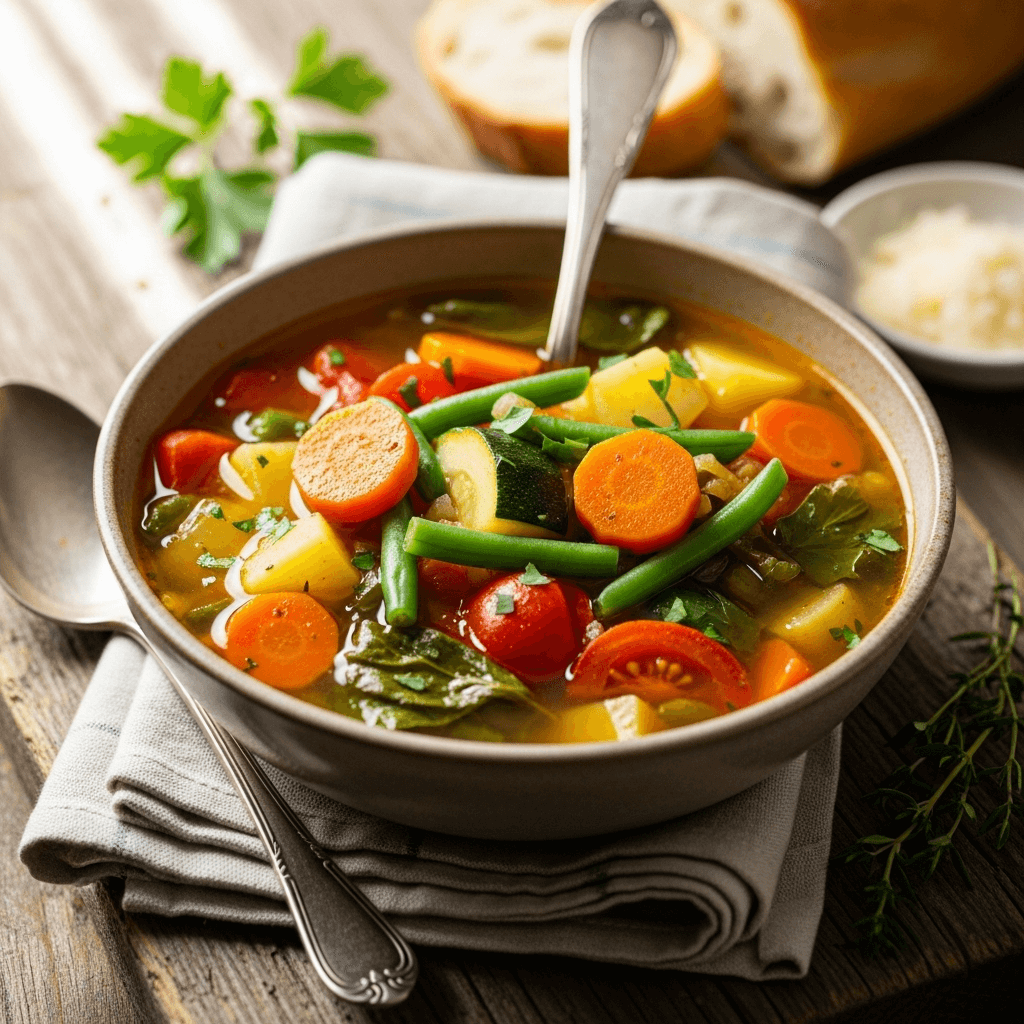
Welcome to the ultimate comfort food that’s as nourishing as it is delicious! This hearty vegetable soup recipe is loaded with colorful vegetables, aromatic herbs, and a flavorful broth that warms you from the inside out. Whether you’re looking for a healthy weeknight dinner, meal prep option, or simply craving something wholesome and satisfying, this easy vegetable soup delivers every time.
This homemade vegetable soup is incredibly versatile—you can use whatever vegetables you have on hand, adjust seasonings to your taste, and make it as thick or brothy as you prefer. It’s naturally vegan and vegetarian-friendly, gluten-free, low-calorie, and packed with nutrients. The best part? It tastes even better the next day as the flavors meld together!
Perfect for chilly evenings, sick days, post-holiday detoxing, or anytime you want a bowl of pure comfort, this vegetable soup recipe is a kitchen staple that everyone should know how to make. Serve it with crusty bread for dipping, over rice for a heartier meal, or simply enjoy it on its own as a light but satisfying dish. Once you master this basic recipe, you’ll find yourself making it again and again all year long!
History / Background
Vegetable soup is one of humanity’s oldest and most universal dishes, with variations found in virtually every culture around the world. The concept of cooking vegetables in liquid dates back thousands of years to when humans first discovered that boiling made tough vegetables tender and created nourishing broths.
In ancient times, soup was often called “pottage” and was a staple food for peasants and nobility alike. The beauty of soup was its economy—you could use whatever vegetables, grains, or scraps you had available, add water, and create a filling, nutritious meal that could feed many people. Nothing went to waste, and the cooking liquid itself became part of the nutrition.
French cuisine gave us “potage,” which evolved into countless elegant vegetable soups. Italian cuisine contributed “minestrone,” a hearty vegetable soup that varies by region and season. Asian cuisines developed their own vegetable-forward soups with distinctive flavor profiles using ingredients like miso, ginger, and lemongrass. Every culture has its version, from Russian borscht to Middle Eastern shorba to Mexican caldo de verduras.
In America, vegetable soup gained popularity during times of scarcity—the Great Depression and wartime rationing—when home cooks needed to stretch ingredients and feed families economically. Campbell’s Vegetable Soup, introduced in the early 1900s, brought a convenient canned version to American tables, but nothing compares to homemade.
The modern healthy eating movement has renewed appreciation for vegetable soup as a nutrient-dense, low-calorie meal that’s naturally plant-based. Today’s home cooks appreciate vegetable soup not just for its economy and nutrition, but for its incredible flavor, comfort factor, and the satisfaction of making wholesome food from scratch.
What makes vegetable soup special is its beautiful simplicity. There’s no single “correct” recipe—it adapts to seasons, regions, and what’s in your refrigerator. It’s forgiving, flexible, and nearly impossible to ruin. This democratic, accessible dish has fed families for millennia and continues to be a beloved comfort food that transcends cultures and generations!
Why You’ll Love This Recipe
This homemade vegetable soup is pure comfort in a bowl! It’s loaded with tender vegetables swimming in a flavorful, aromatic broth that’s both satisfying and healthy. Every spoonful delivers that cozy, nourishing feeling that only a good homemade soup can provide.
Here’s why this hearty vegetable soup recipe will become a regular in your meal rotation:
- Incredibly Healthy – Packed with vitamins, minerals, fiber, and antioxidants from multiple vegetables
- Budget-Friendly – Uses affordable, everyday vegetables and stretches to feed a crowd for pennies per serving
- Perfect for Meal Prep – Makes a big batch and keeps beautifully all week for quick, healthy meals
- Naturally Vegan & Vegetarian – Plant-based, dairy-free, and satisfying without any animal products
- Gluten-Free – Naturally gluten-free with no modifications needed
- Low-Calorie & Filling – High volume, low calories—perfect for healthy eating goals
- Endlessly Customizable – Use whatever vegetables you have; no two batches need to be the same
- Kid-Friendly – Even picky eaters enjoy this mild, comforting soup
- Great for Using Up Produce – Perfect way to use vegetables before they go bad
- Freezer-Friendly – Freezes beautifully for future quick meals
- One-Pot Wonder – Everything cooks in one pot for minimal cleanup
- Tastes Better with Time – Flavors deepen and improve over 2-3 days
Whether you’re trying to eat more vegetables, need a reliable healthy recipe, want to save money on groceries, or simply love a good bowl of soup, this easy vegetable soup recipe checks all the boxes. It’s simple enough for beginners yet satisfying enough to serve to company!
Ingredient Notes
Let’s break down what makes this vegetable soup so delicious. The beauty is you can customize based on what you have!
Olive Oil – Used for sautéing the aromatics to build flavor base. Extra virgin adds more flavor; regular olive oil works fine. You’ll need 2 tablespoons. Substitution: Any cooking oil, butter, or omit for oil-free (use vegetable broth to sauté).
Onion – Foundation of flavor! One large yellow or white onion, diced. Onions provide sweetness and depth when sautéed. Substitution: Leeks, shallots, or even frozen diced onions work.
Garlic – Fresh minced garlic (3-4 cloves) adds aromatic depth. Don’t skip this! Substitution: Garlic powder works in a pinch (1 teaspoon = 3 cloves).
Carrots – Add natural sweetness, color, and nutrition. Peel and chop 3-4 medium carrots into bite-sized pieces. They hold up well during cooking and add body to the soup.
Celery – Classic soup vegetable that adds savory flavor and texture. Use 3-4 stalks, chopped. The combination of onion, celery, and carrots is called “mirepoix” in French cooking—the flavor foundation of many soups.
Potatoes – Provide heartiness and help thicken the broth slightly. Use 2-3 medium russet or Yukon gold potatoes, diced. Substitution: Sweet potatoes, parsnips, or omit for lower-carb version.
Green Beans – Add color, texture, and nutrition. Fresh or frozen both work—about 1 cup, cut into 1-inch pieces. Substitution: Peas, edamame, or lima beans.
Zucchini – Adds bulk and nutrition without strong flavor. One medium zucchini, diced. Add toward the end as it cooks quickly. Substitution: Yellow squash or omit.
Tomatoes – One 14.5-ounce can of diced tomatoes adds acidity, umami, and body. Fire-roasted tomatoes add extra depth. Substitution: Fresh tomatoes (about 2 large, chopped) or tomato sauce.
Vegetable Broth – The liquid base that becomes your flavorful soup! Use 6-8 cups depending on how thick you like your soup. Good quality broth makes a difference. Substitution: Chicken broth (if not vegetarian), water with bouillon cubes, or homemade stock.
Herbs & Spices:
- Bay Leaves – 2 leaves add subtle earthy flavor (remove before serving)
- Dried Thyme – 1 teaspoon adds herbal notes
- Dried Basil – 1 teaspoon adds Italian flair
- Dried Oregano – ½ teaspoon adds depth
- Salt & Pepper – Essential for bringing out flavors; adjust to taste
Optional Add-Ins:
- Cabbage (adds heartiness)
- Corn kernels (adds sweetness)
- Bell peppers (adds flavor and color)
- Spinach or kale (adds nutrition, add at end)
- White beans or chickpeas (adds protein and makes it more filling)
- Small pasta or rice (makes it heartier)
Equipment Needed
This is a simple one-pot meal that requires minimal equipment:
- Large Soup Pot or Dutch Oven – 6-8 quart capacity is ideal for making a big batch. Heavy-bottomed pots distribute heat evenly.
- Sharp Knife – For chopping all those vegetables.
- Cutting Board – Large cutting board gives you space to prep multiple vegetables.
- Wooden Spoon or Ladle – For stirring the soup.
- Measuring Cups and Spoons – For accurate measurements of liquids and seasonings.
- Can Opener – For opening canned tomatoes.
- Vegetable Peeler – For carrots and potatoes (optional—you can leave skins on).
Optional but Helpful:
- Immersion Blender – If you want to partially blend for creamier texture
- Food Processor – Speeds up vegetable chopping
- Ladle – For serving soup into bowls
Hearty Vegetable Soup
- Total Time: 50 minutes
- Yield: 8 servings (about 10 cups) 1x
- Diet: Vegetarian
Description
This hearty homemade vegetable soup is loaded with colorful vegetables in a flavorful herb-infused broth. Healthy, comforting, and endlessly customizable, this easy vegetable soup is perfect for meal prep, using up produce, or serving as a wholesome family dinner. Naturally vegan, gluten-free, and budget-friendly!
Ingredients
- 2 tablespoons olive oil
- 1 large onion, diced
- 3–4 cloves garlic, minced
- 3 medium carrots, peeled and chopped
- 3 celery stalks, chopped
- 2–3 medium potatoes, peeled and diced
- 1 medium zucchini, diced
- 1 cup green beans, cut into 1-inch pieces (fresh or frozen)
- 1 can (14.5 oz) diced tomatoes
- 6–8 cups vegetable broth (depending on desired thickness)
Seasonings:
- 2 bay leaves
- 1 teaspoon dried thyme
- 1 teaspoon dried basil
- ½ teaspoon dried oregano
- 1 teaspoon salt (adjust to taste)
- ½ teaspoon black pepper
- ¼ teaspoon red pepper flakes (optional, for subtle heat)
Optional Add-Ins:
- 1 cup corn kernels
- 1 cup chopped cabbage
- 1 can (15 oz) white beans or chickpeas, drained and rinsed
- 2 cups fresh spinach or kale (added at end)
- ½ cup small pasta (like ditalini or orzo)
- Fresh parsley for garnish
Instructions
Step 1: Prep Your Vegetables
Wash and prepare all your vegetables: dice the onion, mince the garlic, peel and chop carrots into half-moons or rounds, chop celery into small pieces, dice potatoes into bite-sized cubes, cut green beans into 1-inch pieces, and dice zucchini. Having everything prepped and ready makes the cooking process smooth and enjoyable. This “mise en place” (everything in its place) is key to stress-free cooking!
Step 2: Sauté the Aromatics
Heat olive oil in a large soup pot or Dutch oven over medium heat. Once shimmering, add the diced onion and cook for 4-5 minutes, stirring occasionally, until softened and translucent. Add the minced garlic and cook for another 30-60 seconds until fragrant. This step builds the flavor foundation of your soup by caramelizing the onions and blooming the garlic’s aroma. Don’t skip this—raw onion and garlic don’t taste as good!
Step 3: Add Harder Vegetables
Add the carrots, celery, and potatoes to the pot. Stir well to coat with the oil and aromatics. Cook for about 5 minutes, stirring occasionally. This gives the harder vegetables a head start since they take longer to cook than softer vegetables. The vegetables will start to develop more flavor as they sauté slightly in the aromatic oil.
Step 4: Add Liquids and Seasonings
Pour in the vegetable broth and add the canned diced tomatoes (with their juice). Stir in the bay leaves, thyme, basil, oregano, salt, pepper, and red pepper flakes if using. Increase heat to high and bring the soup to a boil. Once boiling, reduce heat to medium-low and let it simmer. The boil helps integrate flavors quickly, then the simmer gently cooks everything to tender perfection.
Step 5: Simmer Until Tender
Cover the pot partially (leave a small gap for steam to escape) and simmer for 15-20 minutes, stirring occasionally, until the carrots and potatoes are tender when pierced with a fork. The vegetables should be soft but not mushy, and the broth will be infused with their flavors. Taste the broth and adjust seasoning with more salt and pepper if needed.
Step 6: Add Quick-Cooking Vegetables
Add the green beans and zucchini to the pot. If using corn, cabbage, or beans, add them now too. Simmer for an additional 8-10 minutes until all vegetables are tender and cooked through. Zucchini and green beans cook quickly, so adding them later prevents them from becoming mushy. You want distinct vegetable pieces, not vegetable mush!
Step 7: Final Touches
If adding leafy greens like spinach or kale, stir them in now and cook just until wilted (1-2 minutes). If using pasta, add it earlier in step 5 so it has time to cook (follow package directions for timing). Remove and discard the bay leaves—they’ve done their job of infusing flavor. Taste the soup one final time and adjust seasonings as needed. Some people like more salt, others like more herbs—make it yours!
Step 8: Serve and Enjoy
Ladle the hot vegetable soup into bowls. Garnish with fresh chopped parsley, a drizzle of olive oil, a squeeze of lemon juice, or grated Parmesan if not keeping it vegan. Serve with crusty bread, crackers, or grilled cheese sandwiches. Enjoy this nourishing, comforting bowl of goodness!
Notes
- Vegetable Flexibility: This recipe is extremely flexible! Use whatever vegetables you have on hand. Good additions include bell peppers, parsnips, turnips, butternut squash, cauliflower, or mushrooms.
- Broth Amount: Start with 6 cups of broth for thicker soup, or use 8 cups for a brothier soup. You can always add more liquid if it’s too thick.
- Cutting Size: Cut vegetables into similar-sized pieces for even cooking. Aim for roughly ½ to ¾-inch pieces.
- Fresh vs. Frozen: Frozen vegetables work great! They’re pre-cut, convenient, and often frozen at peak freshness. No need to thaw first.
- Salt Adjustment: Vegetable broth brands vary in saltiness. Start with less salt and add more at the end to taste.
- Thickness: For thicker soup, mash some potatoes against the side of the pot, or use an immersion blender to partially blend (leaving some chunks).
- Storage: Soup keeps for 5-7 days refrigerated and freezes beautifully for up to 3 months.
- Prep Time: 15 minutes
- Cook Time: 35 minutes
- Category: Soup
- Method: Stovetop
- Cuisine: American
Nutrition
- Serving Size: 1½ cups (⅛ of recipe)
- Calories: 135
- Sugar: 7g
- Sodium: 680mg
- Fat: 4g
- Saturated Fat: 0.5g
- Unsaturated Fat: 3g
- Trans Fat: 0g
- Carbohydrates: 24g
- Fiber: 5g
- Protein: 3g
- Cholesterol: 0mg
Tips & Variations
Creamy Vegetable Soup: Stir in ½ cup of heavy cream or coconut milk at the end for a creamy, luxurious texture. You can also blend part of the soup smooth.
Italian-Style Minestrone: Add white beans, small pasta (ditalini or orzo), and Italian seasoning. Finish with fresh basil and Parmesan cheese.
Mexican-Inspired: Add cumin, chili powder, and a can of black beans. Garnish with avocado, cilantro, and lime juice.
Asian-Style: Use sesame oil for sautéing, add ginger with the garlic, use soy sauce instead of salt, add bok choy and mushrooms, and finish with a drizzle of sesame oil.
Hearty Protein Boost: Add cooked chicken, turkey, or ham for meat-eaters. For vegetarians, add beans, lentils, or tofu for protein.
Tuscan White Bean: Add cannellini beans, fresh rosemary, kale, and finish with a Parmesan rind simmered in the broth for depth.
Root Vegetable Version: Use parsnips, turnips, rutabaga, and sweet potatoes for a heartier, earthier soup perfect for winter.
Detox/Cleanse Soup: Keep it simple with just vegetables and herbs, no oil. Add turmeric and ginger for anti-inflammatory benefits.
Chunky vs. Smooth: For a creamier texture without dairy, blend half the soup and stir it back in for body while keeping vegetable chunks.
Spicy Kick: Add more red pepper flakes, diced jalapeños, or a dash of hot sauce for those who like heat.
Pro Chef Tips
Layer Your Flavors: Professional chefs know that flavor comes from layering. Sautéing the aromatics first creates a flavor base (called a “sofrito” or “mirepoix” depending on cuisine). Each step adds depth, so don’t skip the sautéing step—it’s where the magic begins!
Season as You Go: Don’t wait until the end to season! Add salt at different stages—when sautéing onions, after adding broth, and at the end. This builds flavor throughout rather than just on the surface. Under-seasoned soup is the most common mistake home cooks make.
Save Your Vegetable Scraps: Professional kitchens make their own stock from vegetable scraps (onion skins, carrot peels, celery leaves, herb stems). Keep a freezer bag of scraps and make homemade broth when it’s full. Your soup will taste exponentially better with homemade stock!
Control the Simmer: A rolling boil will break down vegetables into mush. A gentle simmer (small bubbles breaking the surface) cooks vegetables perfectly while allowing flavors to meld. Low and slow wins the race with soup.
The Acid Test: A squeeze of lemon juice or splash of vinegar at the very end brightens all the flavors and makes the soup taste more complex and “finished.” This is a restaurant secret that elevates home-cooked soup!
Texture Matters: Cut vegetables uniformly for even cooking and professional appearance. Nobody wants some vegetables raw while others are mushy. Take an extra minute to make your cuts consistent.
Taste, Taste, Taste: Professional chefs taste constantly throughout cooking and adjust. Your soup should taste delicious at every stage. If it tastes bland, add salt. If it’s flat, add acid. If it needs complexity, add herbs. Trust your palate!
Common Mistakes to Avoid
Not Sautéing Aromatics: Throwing everything into the pot at once without sautéing the onions and garlic first means missing out on crucial flavor development. Those few minutes of cooking aromatics in oil create the foundation that makes soup taste complex and delicious. Raw onions taste harsh; sautéed onions taste sweet and rich.
Overcooking Vegetables: Leaving soup on high heat for too long or cooking it uncovered at a rapid boil turns your beautiful vegetables into mushy, flavorless mush. Different vegetables need different cooking times. Add harder vegetables first (carrots, potatoes), then add softer ones (zucchini, greens) near the end.
Under-Seasoning: This is the most common mistake! Vegetable soup needs adequate salt to bring out the flavors of all those vegetables. Taste your soup before serving and adjust seasoning. It should taste vibrant and flavorful, not bland and watery. Remember that broth brands vary in saltiness.
Using Only Water: While you can make soup with water, using quality vegetable or chicken broth adds so much more flavor and depth. If you must use water, increase your herbs and seasonings significantly, and consider adding a bouillon cube or paste for flavor boost.
Adding Leafy Greens Too Early: Spinach, kale, and other greens only need 1-2 minutes of cooking. If added too early, they become slimy and lose their vibrant color. Always add them at the very end, just before serving.
Crowding the Pot: Using too small of a pot means you can’t stir properly and vegetables won’t cook evenly. Use a large pot (6-8 quarts) to give everything room. A crowded pot also makes it harder to adjust liquid ratios.
Storage & Meal Prep
Refrigerator Storage: This vegetable soup stores beautifully! Let it cool to room temperature (don’t leave out longer than 2 hours), then transfer to airtight containers and refrigerate for 5-7 days. The flavors actually improve after a day or two as everything melds together. Many people say it tastes even better on day 2 or 3!
Portioning for Meal Prep: This soup is perfect for meal prep! Portion into individual containers (about 1½ to 2 cups each) for grab-and-go lunches throughout the week. Label with the date. You can also freeze individual portions for easy future meals.
Reheating Instructions: Reheat gently on the stovetop over medium heat, stirring occasionally, until heated through (about 5-7 minutes). Microwave method: Heat individual portions in microwave-safe bowls for 2-3 minutes, stirring halfway through. You may need to add a splash of broth or water when reheating as soup thickens as it sits.
Texture Changes: If you added pasta, note that it will continue absorbing liquid and may become very soft. Some people prefer to cook pasta separately and add it to individual bowls when serving to prevent this. Rice does the same thing.
Freezing in Batches: Cool soup completely, then portion into freezer-safe containers or heavy-duty freezer bags, leaving 1 inch of headspace for expansion. Label with date and contents. Freeze flat for easy stacking.
Make-Ahead & Freezer Notes
Prep-Ahead Strategy: You can chop all vegetables 1-2 days ahead and store them in airtight containers in the refrigerator. When ready to cook, everything comes together quickly! This is perfect for weekend meal prep or getting ahead on busy weeks.
Freezing Instructions: This vegetable soup freezes beautifully for up to 3 months! Cool soup completely, then transfer to freezer-safe containers or bags. Remove as much air as possible to prevent freezer burn. Freeze in portion sizes that work for your household (individual portions or family-sized batches).
Freezing Tips: If you plan to freeze, slightly undercook the vegetables—they’ll finish cooking when reheated. Don’t add pasta or rice before freezing as they become mushy; add fresh when reheating. Potatoes can become slightly grainy when frozen but are still tasty. Consider leaving them out if this bothers you.
Thawing and Reheating: Best method: Thaw overnight in the refrigerator, then reheat on the stovetop over medium heat until hot throughout. Quick method: You can reheat frozen soup directly in a pot over low heat, stirring occasionally as it thaws and warms (add 15-20 minutes to reheating time).
Refreshing After Freezing: After freezing and thawing, your soup may need a flavor refresh. Add a squeeze of fresh lemon juice, a handful of fresh herbs, or adjust salt and pepper. A splash of fresh vegetable broth can also revive the flavors.
Make-Ahead for Parties: Make soup 2-3 days before serving. The flavors will be at their peak! Reheat gently and adjust seasonings before serving. This takes the stress out of entertaining.
Serving Suggestions
Classic Accompaniments: Serve with crusty bread, garlic bread, or dinner rolls for dunking. Grilled cheese sandwiches and tomato soup might be iconic, but grilled cheese and vegetable soup is equally delicious!
Bread Options: Sourdough bread, French baguette, cornbread, focaccia, breadsticks, or crackers all pair beautifully with vegetable soup.
Make it a Meal: While vegetable soup is satisfying on its own, you can make it even heartier by serving over rice, quinoa, or with a side of pasta. This stretches the soup further and adds more substance.
Topping Bar: Set out toppings for everyone to customize their bowls: grated Parmesan cheese, fresh herbs (parsley, basil, dill), croutons, a drizzle of olive oil, a squeeze of lemon, dollop of pesto, or a swirl of cream.
Salad Pairing: Serve alongside a simple green salad with vinaigrette for a complete, light meal. Caesar salad, Greek salad, or a basic mixed greens salad all work well.
Protein Additions: If serving to meat-eaters, offer cooked chicken breast, rotisserie chicken, Italian sausage, or bacon bits as optional add-ins.
Lunch Box Friendly: Pack in thermoses for hot school or work lunches. Include crackers or bread on the side. Add a piece of fruit and you have a complete, nutritious lunch!
Soup and Sandwich Combo: Pair with half a sandwich—turkey and avocado, hummus and vegetables, or classic PB&J for kids—for a satisfying lunch or light dinner.
Beverage Pairings: Serve with iced tea, lemonade, or sparkling water with lemon. For adults, a crisp white wine or light beer complements the soup nicely.
Dinner Party Presentation: Serve as an elegant first course in small bowls, garnished beautifully with fresh herbs and a drizzle of good olive oil, before the main course.
FAQs Section
Can I use frozen vegetables instead of fresh?
Absolutely! Frozen vegetables are convenient, affordable, and frozen at peak ripeness, so they’re often very nutritious. No need to thaw them first—just add directly to the soup. Mixed frozen vegetables work great and save chopping time. The texture will be slightly different than fresh but still delicious. Frozen vegetables may release more water, so you might use slightly less broth.
How can I make this soup more filling?
To make vegetable soup more substantial and filling, add protein and/or carbohydrates: white beans, chickpeas, or lentils add plant-based protein and fiber; cooked quinoa, rice, or small pasta makes it heartier; diced tofu or tempeh for vegetarians; or cooked chicken for meat-eaters. These additions transform light soup into a complete meal that will keep you satisfied for hours.
Can I make this in a slow cooker or Instant Pot?
Yes! Slow Cooker: Sauté aromatics in a skillet first (or skip), then add everything to the slow cooker. Cook on low for 6-8 hours or high for 3-4 hours. Add quick-cooking vegetables and greens in the last 30 minutes. Instant Pot: Sauté aromatics using the sauté function, add everything else, pressure cook on high for 8 minutes, natural release 10 minutes. Both methods work beautifully!
Why does my vegetable soup taste bland?
The most common reason is under-seasoning! Soup needs more salt than you might think—the large volume of liquid dilutes flavors. Taste and add salt gradually until flavors pop. Also: sauté your aromatics for flavor base, use good quality broth (not just water), add herbs and spices, and finish with a squeeze of lemon juice or splash of vinegar to brighten everything.
Can I make this soup without oil?
Yes! For oil-free soup, sauté the onions and garlic in a few tablespoons of vegetable broth instead of oil. This technique is called “water sautéing” or “broth sautéing.” You won’t get quite the same depth of flavor that oil provides, but it still works and keeps the soup completely fat-free if that’s your goal.
How do I make creamy vegetable soup?
Several options: 1) Blend half the soup smooth and stir back in for creamy texture with vegetable chunks, 2) Stir in ½ cup heavy cream or coconut milk at the end, 3) Add a peeled, diced potato—it breaks down and naturally thickens/creams the soup, 4) Blend in white beans for creamy texture and protein boost, or 5) Make a roux (flour and butter) and stir it in.
What vegetables should I NOT put in vegetable soup?
Most vegetables work great, but a few aren’t ideal: avoid bitter greens like radicchio (too bitter); be cautious with beets (they turn everything pink—cook separately if using); Brussels sprouts can be overpowering unless you love them; and delicate vegetables like asparagus tips get mushy (add at the very end if using). Otherwise, experiment freely!
Conclusion
There you have it—everything you need to make the most delicious, nourishing, comforting homemade vegetable soup! This hearty vegetable soup recipe is truly a kitchen essential that every home cook should master. It’s healthy, budget-friendly, endlessly customizable, and tastes absolutely wonderful. The best part? It’s nearly impossible to mess up, and it actually gets better as it sits!
Whether you’re making this easy vegetable soup for meal prep, to warm up on a chilly day, to use up produce in your fridge, or simply because you’re craving something wholesome and comforting, this recipe delivers every single time. The flexibility means you can make it your own, using your favorite vegetables and adjusting seasonings to your taste. No two batches need to be exactly the same!
I’d love to hear about your vegetable soup adventures! What vegetables did you include? Did you add any special touches? How many bowls did you eat in one sitting? Leave a comment below and share your experience! And if this recipe helped you create a delicious pot of comfort, please pin it to Pinterest so other home cooks can discover the joy of homemade vegetable soup too. Your pins help support this blog and inspire me to keep creating nourishing recipes for you!
Now grab that big pot, gather your vegetables, and get ready to make the most satisfying bowl of vegetable soup you’ve ever tasted. Your kitchen will smell amazing, and your body will thank you for all that wholesome goodness. Happy cooking!