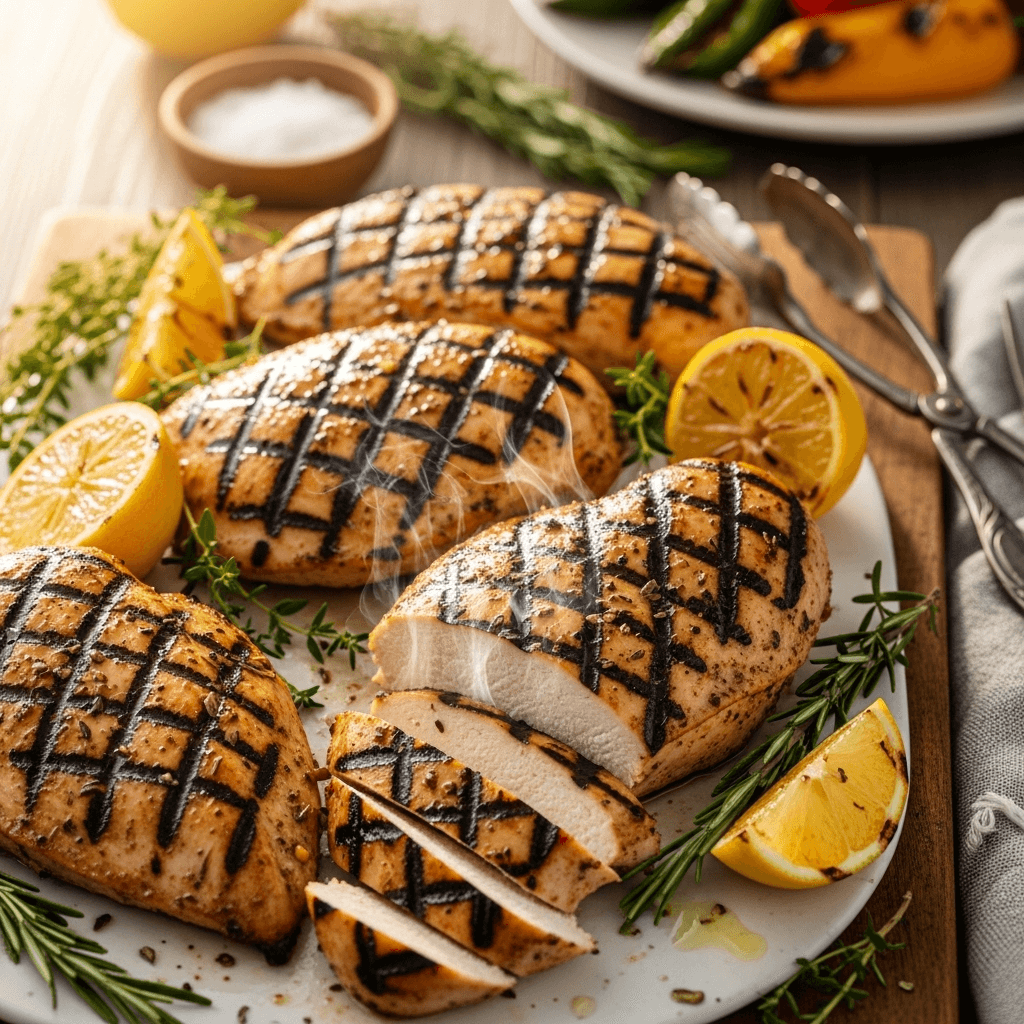

There’s something magical about perfectly grilled chicken—the beautiful char marks, the smoky flavor, the juicy, tender meat that makes every bite satisfying. This easy grilled chicken recipe delivers restaurant-quality results right from your backyard grill with a simple marinade that infuses incredible flavor into every piece. Whether you’re using bone-in chicken pieces or boneless breasts, this foolproof method ensures your chicken stays moist and flavorful, never dry or rubbery, with that coveted golden-brown exterior and gorgeous grill marks everyone loves.
This juicy grilled chicken recipe is incredibly versatile and perfect for so many occasions—weeknight family dinners when you want something healthy and delicious, summer cookouts and barbecues, meal prep for easy lunches throughout the week, or casual entertaining when you need a crowd-pleasing main dish. It pairs beautifully with everything from fresh salads and grilled vegetables to corn on the cob, potato salad, and coleslaw. The best part? The active cooking time is minimal—just 15-20 minutes on the grill—though you’ll want to marinate the chicken for at least 30 minutes beforehand for maximum flavor. This simple preparation means you can have dinner on the table quickly while still serving something that tastes like you spent hours in the kitchen. Plus, grilled chicken is naturally lean and protein-rich, making it a smart choice for healthy eating without sacrificing flavor or satisfaction.
History / Background
Grilling meat over open flames is one of humanity’s oldest cooking methods, dating back to when our ancestors first discovered fire. However, the modern practice of grilling chicken as we know it today—particularly in American backyard culture—emerged more recently as a beloved tradition tied to outdoor cooking and social gatherings.
In the United States, backyard grilling gained widespread popularity after World War II as suburban living expanded and outdoor leisure time became more valued. The 1950s saw an explosion of grill culture, with families gathering around charcoal grills for weekend cookouts. Chicken became a grilling favorite because it was affordable, readily available, and could feed a crowd—though early home grillers often struggled with dry, overcooked results until better techniques were developed and shared.
The marinade-based approach to grilled chicken has influences from many culinary traditions around the world. Mediterranean cuisines contributed herb and lemon-based marinades, Asian traditions brought soy sauce and ginger combinations, Latin American cooking introduced citrus and spice blends, and American Southern cooking developed butter and spice rubs. Today’s grilled chicken recipes often represent a fusion of these global influences, adapted to American tastes and cooking styles.
The technique of properly grilling chicken—managing heat zones, knowing when to flip, achieving the right internal temperature—has been refined over decades through trial and error by home cooks and grill masters alike. What was once seen as tricky (chicken is notoriously easy to overcook) has now become accessible thanks to better understanding of cooking temperatures, the importance of marinades for moisture retention, and the widespread availability of instant-read thermometers that take the guesswork out of doneness.
Today, grilled chicken represents the quintessential American summer meal, equally at home at Fourth of July celebrations, casual Sunday dinners, and weeknight meals when you don’t want to heat up the kitchen. It’s a testament to how a simple cooking method, when done right, can create something truly special.
Why You’ll Love This Recipe
This perfect grilled chicken recipe solves all the common problems people face when grilling chicken—it’s never dry, never bland, and always turns out beautifully with minimal effort.
- Incredibly juicy and flavorful – The marinade keeps chicken moist and infuses it with delicious flavor throughout
- Simple ingredients – Uses pantry staples you likely already have on hand
- Versatile and customizable – Easy to adjust seasonings to match any flavor profile you crave
- Quick cooking time – Just 15-20 minutes on the grill for tender, perfectly cooked chicken
- Healthy and lean – High in protein and low in carbs, perfect for various diet plans
- Great for meal prep – Grills multiple pieces at once and leftovers stay delicious all week
- Budget-friendly – Chicken is affordable and feeds a crowd without breaking the bank
- No oven heating – Keeps your kitchen cool during hot summer months
- Perfect for entertaining – Looks impressive and feeds many people effortlessly
- Beginner-friendly – Simple technique that even grill novices can master quickly
- Creates those coveted grill marks – Beautiful presentation that looks restaurant-quality
Ingredient Notes
Chicken: This recipe works with various cuts—boneless skinless chicken breasts, bone-in chicken thighs, chicken drumsticks, or even whole chicken pieces. Boneless breasts cook fastest (12-15 minutes), while bone-in pieces need 25-30 minutes. Choose pieces of similar size for even cooking. For the juiciest results, many chefs prefer thighs over breasts since the higher fat content makes them more forgiving and harder to dry out.
Olive Oil: Creates the base of the marinade and helps the chicken stay moist during grilling. The oil also helps seasonings adhere to the meat and promotes browning. Extra virgin olive oil provides the best flavor, though regular olive oil or avocado oil works well too.
Lemon Juice: Provides acidity that tenderizes the meat and adds bright, fresh flavor. Always use fresh lemon juice rather than bottled for the best taste. The acid also helps break down proteins slightly, making the chicken more tender. Lime juice can substitute for a different citrus profile.
Garlic: Fresh minced garlic is best for maximum flavor, though garlic powder works in a pinch (use 1 teaspoon powder for every 3 cloves fresh). Garlic adds savory depth that complements chicken beautifully.
Herbs and Spices: This recipe uses a combination of dried oregano, paprika, salt, and black pepper for a classic, well-rounded flavor. Fresh herbs like rosemary, thyme, or basil can enhance the marinade further. The paprika adds subtle sweetness and helps with browning.
Honey (Optional): A tablespoon of honey in the marinade adds subtle sweetness and helps with caramelization on the grill. It also helps balance the acidity from the lemon juice. Maple syrup or brown sugar can substitute.
Dijon Mustard (Optional): Adds tanginess and helps emulsify the marinade so it coats the chicken better. It also contributes to flavor complexity without making the dish taste “mustardy.”
Equipment Needed
- Gas grill or charcoal grill
- Grill brush (for cleaning grates)
- Large zip-top bag or shallow dish (for marinating)
- Tongs (long-handled for safety)
- Instant-read meat thermometer (highly recommended)
- Measuring cups and spoons
- Small bowl and whisk (for mixing marinade)
- Basting brush (optional)
- Aluminum foil (for resting)
- Cutting board
- Sharp knife
Pro Tip: Long-handled tongs are essential for safe grilling—they keep your hands away from heat while allowing you to easily flip and move chicken pieces. An instant-read thermometer takes the guesswork out of doneness and prevents overcooking.
Print
Grilled Chicken Recipe
- Total Time: 55 minutes to 4.5 hours
- Yield: 4-6 servings 1x
- Diet: Gluten Free
Description
This easy grilled chicken recipe produces perfectly juicy, flavorful chicken every single time. Marinated in a simple mixture of olive oil, lemon juice, garlic, and herbs, then grilled to golden perfection with beautiful char marks, this is the ultimate go-to recipe for summer cookouts, healthy meal prep, or any time you want delicious grilled chicken without the fuss.
Ingredients
For the Marinade:
- ¼ cup olive oil
- 3 tablespoons fresh lemon juice (about 1 large lemon)
- 3 cloves garlic, minced
- 1 tablespoon honey (optional)
- 1 teaspoon Dijon mustard (optional but recommended)
- 1 teaspoon dried oregano
- 1 teaspoon paprika
- 1 teaspoon salt
- ½ teaspoon black pepper
- ¼ teaspoon red pepper flakes (optional, for heat)
For the Chicken:
- 2 pounds boneless, skinless chicken breasts (about 4 medium breasts) OR 2 pounds bone-in chicken thighs or drumsticks
Instructions
- Prepare the marinade: In a small bowl, whisk together olive oil, lemon juice, minced garlic, honey (if using), Dijon mustard (if using), oregano, paprika, salt, black pepper, and red pepper flakes (if using) until well combined.
- Pound chicken (if using breasts): If using chicken breasts, place them between two pieces of plastic wrap or in a large zip-top bag. Gently pound with a meat mallet or rolling pin to an even ¾-inch thickness. This ensures even cooking and prevents dry edges. Skip this step if using thighs or drumsticks.
- Marinate the chicken: Place chicken in a large zip-top bag or shallow dish. Pour the marinade over the chicken, turning to coat all pieces evenly. Seal the bag or cover the dish with plastic wrap. Refrigerate for at least 30 minutes, or up to 4 hours for maximum flavor. Turn the bag occasionally to redistribute marinade.
- Preheat the grill: Preheat your grill to medium-high heat (about 375-400°F). Clean the grill grates thoroughly with a grill brush, then oil them lightly by dipping a folded paper towel in oil and rubbing it over the grates using tongs. This prevents sticking.
- Prepare chicken for grilling: Remove chicken from marinade, letting excess drip off. Discard the used marinade. Let chicken sit at room temperature for 10-15 minutes before grilling—this promotes even cooking.
- Grill the chicken: Place chicken on the preheated grill at a slight diagonal to create attractive grill marks. Close the lid. For boneless breasts: Grill for 6-7 minutes without moving, then flip and grill for another 6-7 minutes until the internal temperature reaches 165°F. For bone-in pieces: Grill for 12-15 minutes per side (25-30 minutes total) until internal temperature reaches 165°F in the thickest part, not touching bone.
- Check for doneness: Use an instant-read thermometer to check the internal temperature in the thickest part of the chicken. It should read 165°F. The chicken should also feel firm (not squishy) when pressed, and juices should run clear.
- Rest before serving: Transfer grilled chicken to a clean plate or cutting board and tent loosely with aluminum foil. Let rest for 5 minutes before slicing or serving. This allows juices to redistribute, keeping the meat moist.
- Serve: Slice boneless breasts if desired, or serve pieces whole. Garnish with fresh herbs and lemon wedges if desired.
Notes
- Don’t skip pounding chicken breasts to even thickness—this is crucial for even cooking.
- Marinate for at least 30 minutes, but 2-4 hours is ideal for maximum flavor penetration.
- Never reuse marinade that touched raw chicken—discard it to prevent foodborne illness.
- If chicken is browning too quickly on the outside before cooking through, move it to indirect heat (cooler part of grill) and close the lid.
- Internal temperature is the only reliable indicator of doneness—invest in an instant-read thermometer.
- For extra-flavorful chicken, reserve some marinade before adding chicken, then brush it on during the last few minutes of grilling.
- Chicken continues to cook slightly after removing from grill, so you can pull it at 160-162°F and let it coast to 165°F while resting.
- Prep Time: 10 minutes (plus 30 minutes to 4 hours marinating)
- Cook Time: 15-20 minutes
- Category: Dinner
- Method: Grilling
- Cuisine: American
Nutrition
- Serving Size: 1 chicken breast (about 6 oz cooked)
- Calories: 245
- Sugar: 2g
- Sodium: 485mg
- Fat: 11g
- Saturated Fat: 2g
- Unsaturated Fat: 8g
- Trans Fat: 0g
- Carbohydrates: 3g
- Fiber: 0g
- Protein: 35g
- Cholesterol: 95mg
Tips & Variations
Mediterranean grilled chicken: Add 2 teaspoons of dried rosemary and 1 teaspoon of dried thyme to the marinade. Serve with tzatziki sauce and Greek salad.
Asian-inspired: Replace lemon juice with lime juice, add 2 tablespoons soy sauce, 1 tablespoon sesame oil, and 1 teaspoon fresh grated ginger to the marinade.
Spicy Southwest chicken: Add 1 tablespoon chili powder, 1 teaspoon cumin, and ½ teaspoon cayenne to the marinade. Serve with salsa and avocado.
Italian herb chicken: Use fresh basil, rosemary, and thyme instead of dried oregano. Add ¼ cup grated Parmesan to the marinade.
Teriyaki grilled chicken: Replace the marinade with ½ cup teriyaki sauce mixed with 2 tablespoons honey and 1 tablespoon rice vinegar.
BBQ grilled chicken: Skip the marinade and dry rub chicken with BBQ seasoning. Brush with your favorite BBQ sauce during the last 5 minutes of grilling.
Lemon herb: Double the lemon juice and add 2 tablespoons fresh chopped parsley and 1 tablespoon fresh dill to the marinade.
For bone-in pieces: Increase marinade time to 4-8 hours since bone-in chicken benefits from longer marinating.
Pro Chef Tips
The two-zone fire setup: Create two heat zones on your grill—one side with direct high heat, one side with indirect lower heat (or burners off on gas grills). Start chicken over direct heat to get beautiful grill marks and color, then move to indirect heat to finish cooking through without burning the outside. This technique is especially crucial for bone-in pieces that need longer cooking times.
Oil the chicken, not the grates: While oiling grates helps prevent sticking, the most effective method is ensuring your chicken has enough oil in the marinade. The oil creates a barrier between the meat and hot grates, preventing sticking and promoting browning.
The finger test for doneness: While a thermometer is most accurate, experienced grillers can check doneness by touch. Press the thickest part of the chicken—if it feels firm and springs back (like pressing the fleshy part of your palm below your thumb when you touch thumb to pinky), it’s done. Soft and squishy means undercooked.
Resist the urge to flip constantly: Many home cooks flip chicken too often, which prevents proper searing and those beautiful grill marks. Flip only once for boneless breasts (maybe twice for bone-in pieces). Let the chicken cook undisturbed on each side to develop that gorgeous caramelized crust.
Let it rest—seriously: This isn’t optional. Resting allows the muscle fibers to relax and reabsorb juices that were pushed to the center during cooking. Cut into chicken immediately and those juices run all over your cutting board instead of staying in the meat. Five minutes of patience makes a huge difference in juiciness.
Brine for extra juiciness: For the absolute juiciest chicken, brine it before marinating. Dissolve ¼ cup salt in 4 cups water, submerge chicken for 30 minutes to 2 hours, rinse well, pat dry, then proceed with marinade. The brine helps chicken retain moisture during grilling.
Pound for even thickness: Chicken breasts naturally taper from thick to thin, meaning the thin end overcooks while the thick end finishes. Pounding to uniform thickness solves this completely. Aim for ¾ inch throughout—not paper-thin, just even.
Common Mistakes to Avoid
Grilling over too-high heat: The most common mistake is cranking the grill to maximum heat thinking it will cook faster. This chars the outside while leaving the inside raw. Medium-high heat (375-400°F) is ideal—hot enough for good browning and grill marks, but not so hot that the outside burns before the inside cooks through.
Not preheating the grill properly: Placing chicken on a grill that hasn’t fully preheated leads to sticking and uneven cooking. Always preheat for 10-15 minutes with the lid closed until the grill reaches the proper temperature. This also burns off residue from previous cooking sessions.
Overcooking the chicken: This is the cardinal sin of chicken grilling. Chicken breast especially goes from perfectly done to dry and rubbery very quickly once it passes 165°F. The difference between 165°F and 175°F is dramatic in terms of texture and moisture. Use a thermometer and remove chicken the moment it hits 165°F (or even 162°F, letting it coast to 165°F while resting).
Moving and flipping too much: Constantly fussing with the chicken prevents proper searing and releases moisture. Place chicken on the grill, close the lid, and leave it alone for at least 6-7 minutes before flipping. You should only flip once or twice during the entire cooking process.
Cutting into chicken to check doneness: Every time you cut into chicken to “just check” if it’s done, you release precious juices. This is why thermometers exist—they give you accurate information without compromising the meat. If you must cut to check, do it once at the very end, not repeatedly throughout cooking.
Storage & Meal Prep
Refrigerator storage: Store cooled grilled chicken in an airtight container in the refrigerator for up to 4 days. Store whole pieces or slice them—sliced chicken dries out slightly faster but is more convenient for meal prep. Keep separate from very wet ingredients if meal prepping to prevent sogginess.
Reheating methods: For best results, reheat in a 350°F oven for 10-15 minutes until warmed through. You can also microwave for 60-90 seconds, though this can make chicken slightly tougher. Adding a splash of chicken broth or water when reheating helps prevent drying. For salads or cold preparations, grilled chicken is delicious served chilled straight from the fridge.
Meal prep strategy: Grill a double or triple batch on Sunday for easy protein throughout the week. Use the grilled chicken in salads, grain bowls, wraps, sandwiches, pasta dishes, or alongside different sides each night. Store in portion-sized containers for grab-and-go convenience.
Freezer storage: Grilled chicken freezes beautifully for up to 3 months. Cool completely first, then wrap individual pieces or portions tightly in plastic wrap, followed by aluminum foil, or place in freezer-safe containers or bags. Label with date and contents.
Thawing and reheating from frozen: Thaw overnight in the refrigerator for best results. In a pinch, you can defrost in the microwave using the defrost setting, checking every minute. Reheat thawed chicken in the oven at 350°F for 12-15 minutes, or microwave for 2-3 minutes.
Make-Ahead & Freezer Notes
Marinate in advance: You can marinate chicken up to 24 hours ahead (4 hours is optimal, but longer works too). This makes weeknight dinners incredibly easy—marinate the night before, grill when you get home. Don’t marinate longer than 24 hours or the acid can make the texture mushy.
Freeze in marinade: For ultimate convenience, place raw chicken and marinade in a freezer bag, press out air, and freeze for up to 3 months. The chicken marinates as it thaws. To use: thaw in the refrigerator overnight (it will marinate during thawing), then grill as directed.
Pre-grilled and frozen: Grill chicken fully, cool completely, then freeze as described in storage section. This gives you pre-cooked protein ready to add to any meal. Simply thaw and reheat, or add frozen directly to soups and stews (add extra cooking time).
Batch grilling: If you’re firing up the grill anyway, maximize your time by grilling multiple pounds of chicken at once. Different marinades can be used on different batches—just keep them separate on the grill. Freeze the extras for future meals.
Prep shortcuts: Keep frozen, pre-marinated chicken on hand for the ultimate weeknight shortcut. Pull from freezer to fridge in the morning, grill that evening—dinner is done in 20 minutes with minimal effort.
Serving Suggestions
Grilled chicken is wonderfully versatile and pairs beautifully with countless sides and preparations.
Classic cookout sides: Serve with corn on the cob, coleslaw, potato salad, baked beans, and watermelon for a traditional American summer meal.
Healthy dinner plates: Pair with quinoa or brown rice, roasted vegetables (zucchini, bell peppers, asparagus), and a fresh green salad for a nutritious, balanced meal.
Mediterranean spread: Serve over Greek salad with feta, olives, and cucumber, alongside hummus, pita bread, and tabbouleh.
Taco Tuesday: Slice grilled chicken and use for taco filling with all your favorite toppings—salsa, guacamole, cheese, sour cream, and cilantro.
Pasta dishes: Slice and toss with pasta, pesto or marinara sauce, and Parmesan cheese for a quick, satisfying dinner.
Salad toppers: Slice grilled chicken over Caesar salad, Cobb salad, strawberry spinach salad, or any green salad for added protein.
Sandwich stars: Use in paninis, wraps, or regular sandwiches with lettuce, tomato, avocado, and your favorite spread.
Grain bowls: Create healthy bowls with grilled chicken over rice or quinoa, topped with roasted vegetables, avocado, and a flavorful sauce like tahini or peanut sauce.
Light summer dinners: Serve with fresh caprese salad, grilled vegetables, and crusty bread for an easy, elegant meal.
FAQs Section
How do I prevent chicken from sticking to the grill?
Three keys prevent sticking: properly preheated and clean grill grates, adequately oiled chicken (through the marinade), and patience—don’t try to flip too early. When chicken is ready to flip, it will naturally release from the grates. If it’s sticking, give it another minute or two. Also ensure your grill grates are well-oiled before adding chicken.
How long should I marinate chicken?
Minimum 30 minutes for decent flavor penetration, but 2-4 hours is ideal for maximum flavor. You can marinate up to 24 hours, but beyond that, the acid can start to make the texture mushy. For quick weeknight meals, even 30 minutes makes a significant difference.
What temperature should the grill be for chicken?
Medium-high heat, around 375-400°F, is ideal. This is hot enough to create beautiful grill marks and browning without burning the outside before the inside cooks through. If you hold your hand 5 inches above the grates, you should only be able to keep it there for 3-4 seconds at the right temperature.
Can I grill frozen chicken?
It’s not recommended. Frozen chicken will take much longer to cook through (nearly double the time), and the outside will likely burn or overcook before the inside reaches safe temperature. The texture also won’t be as good. Always thaw chicken completely in the refrigerator before grilling.
How do I know when chicken is done without a thermometer?
While a thermometer is most reliable (165°F internal temperature), you can check by pressing the thickest part—it should feel firm and spring back. Cut into the thickest part and check that juices run clear (not pink) and the meat is white throughout with no pink color. That said, thermometers are inexpensive and worth it for consistently perfect results.
Why is my grilled chicken dry?
The most common causes are: overcooking (going past 165°F), grilling over too-high heat (burning outside while inside cooks), not marinating long enough (no moisture retention), not letting chicken rest before cutting (juices escape), or using chicken breasts without pounding to even thickness (thin parts overcook).
Can I use this recipe for grilling chicken indoors?
Yes! Use a grill pan on your stovetop over medium-high heat. Preheat the pan for 5 minutes, lightly oil it, then cook chicken for 6-7 minutes per side for boneless breasts. You won’t get quite the same smoky flavor, but you’ll still get nice grill marks and delicious results. You can also broil in the oven as an alternative (4-5 inches from broiler element, 6-8 minutes per side).
Conclusion
This perfect grilled chicken recipe proves that simple ingredients and straightforward techniques can create something truly special. With its juicy, tender interior, flavorful marinade, and those gorgeous grill marks that make every piece look restaurant-worthy, this is the kind of recipe that becomes your go-to all summer long—and really, all year round. Whether you’re grilling for a crowd at a backyard barbecue or meal prepping protein for healthy lunches, this easy method delivers consistently delicious results every single time.
The beauty of mastering grilled chicken is that once you nail the basic technique, you can customize the flavors endlessly with different marinades, rubs, and seasonings to keep things exciting. But honestly, this classic lemon-herb version is so good, you might find yourself making it exactly as written again and again.
I’d love to hear about your grilled chicken success! What’s your favorite way to serve it? Did you try any of the marinade variations? How did it turn out on your grill? Drop a comment below sharing your experience, and please rate the recipe so other home cooks know what to expect. If this recipe helped you create juicy, flavorful grilled chicken, share it on Pinterest—your pins help other food lovers discover how easy perfect grilled chicken can be!
Now go fire up that grill and get ready to make the juiciest, most flavorful chicken you’ve ever tasted. Happy grilling, friend! 🔥🍗