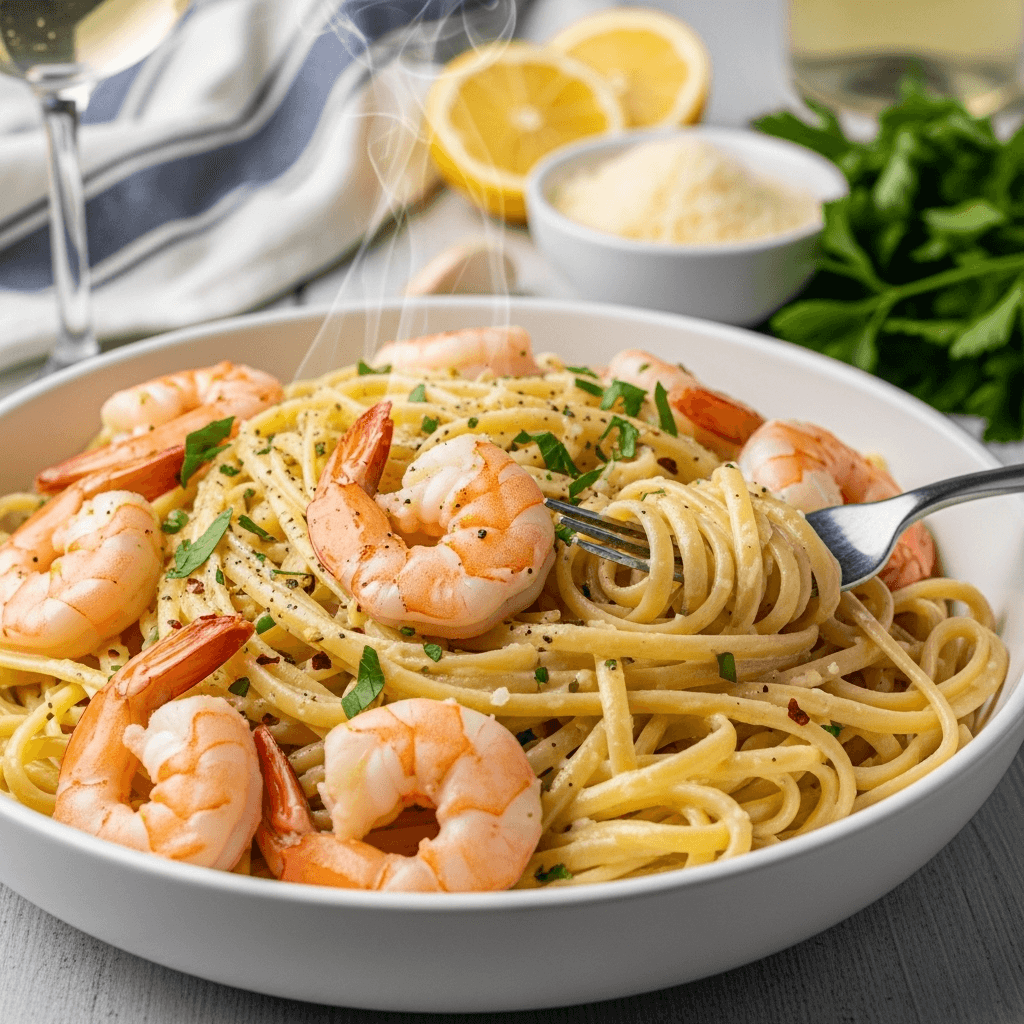

If you’re looking for a dinner that tastes like it came from an upscale Italian restaurant but comes together in your own kitchen in just 30 minutes, this creamy garlic shrimp pasta is calling your name. Imagine perfectly cooked shrimp swimming in a luscious, garlicky cream sauce that clings to every strand of pasta—it’s pure comfort food elevated to something truly special.
This easy shrimp pasta recipe combines tender, succulent shrimp with a rich Parmesan cream sauce infused with tons of garlic, white wine, and fresh herbs. It’s the kind of dish that looks and tastes impressive enough for date night or entertaining guests, yet simple enough to make on a busy weeknight when you want something better than takeout. The best part? It all comes together in one pan, which means minimal cleanup and maximum flavor.
Perfect for romantic dinners, special occasions, or those evenings when you want to treat yourself to something extraordinary, this creamy garlic shrimp pasta delivers restaurant-quality results every single time. Whether you’re a seafood lover or just looking to expand your pasta repertoire, this recipe is about to become your new weeknight hero and special occasion star.
History / Background
The marriage of shrimp and pasta is a relatively modern culinary innovation that reflects the evolution of Italian-American cuisine. While Italy has a long tradition of seafood pasta dishes along its extensive coastline—particularly in regions like Sicily, Liguria, and Campania—the cream-based garlic shrimp pasta we know today is more of an Italian-American creation that emerged in the United States.
Traditional Italian seafood pasta tends to be lighter, often featuring olive oil, white wine, tomatoes, or simple garlic and herb sauces. The addition of heavy cream reflects American tastes and the fusion cooking style that developed when Italian immigrants adapted their recipes to American ingredients and preferences in the early-to-mid 20th century.
Shrimp became widely available in the United States after World War II when improved refrigeration and transportation made it accessible to home cooks nationwide. Before this, shrimp was considered a luxury ingredient reserved for coastal areas or special occasions. As shrimp became more affordable and popular in the 1950s and 60s, American cooks began incorporating it into Italian-inspired dishes.
The garlic shrimp pasta we know today gained tremendous popularity in the 1980s and 90s as Italian-American restaurants proliferated and home cooks sought recipes that were both elegant and accessible. Dishes like “shrimp scampi” and “shrimp Alfredo” became menu staples, combining rich cream sauces with tender shrimp and pasta.
Today, creamy shrimp pasta represents the best of Italian-American cuisine—it honors Italian techniques and flavor profiles while embracing American ingredients and preferences for rich, indulgent sauces. It’s become a beloved comfort food that bridges the gap between everyday cooking and special occasion dining.
Why You’ll Love This Recipe
This creamy garlic shrimp pasta recipe is about to become your new favorite dinner for so many reasons. It delivers that perfect combination of elegance and ease—the kind of dish that makes you feel like a culinary genius without requiring hours in the kitchen or advanced cooking skills.
Here’s why this recipe is absolutely perfect:
- Ready in 30 minutes – From start to finish, including prep time
- One-pan wonder – Everything cooks in the same skillet for easy cleanup
- Restaurant-quality flavor – Tastes like a $25 entrée from an Italian restaurant
- Impressive presentation – Looks stunning enough for guests or date night
- Budget-friendly luxury – Feels indulgent without breaking the bank
- Foolproof technique – Simple steps that guarantee success every time
- Customizable – Easy to adjust spice levels, add vegetables, or swap pasta
- Protein-packed – Shrimp provides lean protein for a satisfying meal
- Rich and creamy – That luscious sauce is absolutely irresistible
- Fresh flavors – Garlic, lemon, and herbs keep it bright and balanced
- Crowd-pleaser – Appeals to kids and adults alike
- Weeknight-friendly – Quick enough for busy evenings
- Special occasion worthy – Elegant enough for Valentine’s Day or anniversaries
- Meal prep compatible – Makes great leftovers for lunch
Ingredient Notes
Understanding your ingredients helps you make the best creamy garlic shrimp pasta possible. Here’s what you need and why it matters:
Shrimp: Use large or jumbo shrimp (16-20 count per pound or 21-25 count) for the best results. Buy them already peeled and deveined to save time. Fresh shrimp is ideal, but frozen works beautifully—just thaw completely and pat very dry before cooking. Dry shrimp sear beautifully; wet shrimp steam and turn rubbery. Look for wild-caught when possible for better flavor and texture.
Pasta: Linguine or fettuccine are traditional choices that hold the creamy sauce beautifully. Spaghetti, angel hair, or penne also work well. Use about 12 ounces for 4 servings. Regular pasta is fine, but bronze-cut pasta (check the label) has a rougher texture that helps sauce cling better.
Heavy Cream: This creates that signature luxurious, velvety sauce. Don’t substitute with milk—it’s too thin and can curdle. Half-and-half works in a pinch but won’t be quite as rich. For dairy-free, use full-fat coconut cream (the thick part from a can of coconut milk).
Garlic: Fresh garlic is absolutely essential—this is a garlic-forward dish! You’ll need 6-8 cloves, minced or pressed. Don’t use jarred minced garlic; fresh is crucial for the best flavor. If you love garlic like I do, add even more!
Parmesan Cheese: Use freshly grated Parmesan for the best flavor and texture. Pre-grated Parmesan contains anti-caking agents that prevent it from melting smoothly into the sauce. Parmigiano-Reggiano is worth the investment. Pecorino Romano works as a substitute for a sharper, saltier flavor.
White Wine: Adds acidity and depth to the sauce. Use a dry white wine you’d actually drink—like Pinot Grigio, Sauvignon Blanc, or Chardonnay. Don’t use “cooking wine” from the grocery store; it’s loaded with salt and additives. If you don’t use wine, substitute with extra chicken broth plus a squeeze of lemon juice.
Butter: Unsalted butter adds richness and helps create the silky sauce. It also gives you better control over the salt level. The combination of butter and cream creates that restaurant-quality mouthfeel.
Chicken Broth: Adds savory depth without overpowering the seafood flavor. Use low-sodium broth so you can control the salt level. Seafood stock works too but can be overpowering.
Lemon: Fresh lemon juice brightens the rich sauce and complements the shrimp beautifully. Always use fresh-squeezed—bottled lemon juice tastes artificial. You’ll need about half a lemon.
Fresh Herbs: Parsley is traditional and adds freshness and color. Basil also works beautifully. Use fresh herbs for the best flavor—dried just doesn’t compare in this dish.
Seasonings: Italian seasoning, red pepper flakes (optional), salt, and black pepper round out the flavors. Adjust heat level with more or less red pepper flakes.
Equipment Needed
You’ll need basic kitchen equipment—nothing fancy required:
- Large skillet or sauté pan (12-inch works best for even cooking)
- Large pot (for boiling pasta)
- Colander (for draining pasta)
- Tongs or pasta fork (for tossing pasta)
- Sharp knife (for mincing garlic and chopping herbs)
- Cutting board
- Measuring cups and spoons
- Wooden spoon or silicone spatula (for stirring sauce)
- Grater (for Parmesan cheese)
- Paper towels (for drying shrimp)
Garlic Shrimp Pasta Recipe
- Total Time: 30 minutes
- Yield: 4 servings 1x
- Diet: Gluten Free
Description
This easy creamy garlic shrimp pasta features tender shrimp in a rich Parmesan cream sauce with garlic, white wine, and fresh herbs. Restaurant-quality flavor in just 30 minutes—perfect for weeknights or date night!
Ingredients
For the Pasta:
- 12 oz linguine or fettuccine
- Salt for pasta water
For the Shrimp and Sauce:
- 1½ lbs large shrimp, peeled and deveined (16–20 count)
- 4 tablespoons butter, divided
- 6–8 cloves garlic, minced
- ½ teaspoon red pepper flakes (optional, adjust to taste)
- ½ cup dry white wine (or chicken broth + 1 tablespoon lemon juice)
- 1 cup heavy cream
- ½ cup chicken broth
- 1 cup freshly grated Parmesan cheese
- 1 teaspoon Italian seasoning
- Juice of ½ lemon (about 2 tablespoons)
- Salt and black pepper to taste
- ¼ cup fresh parsley, chopped (plus extra for garnish)
- Lemon wedges for serving
Instructions
- Cook the pasta: Bring a large pot of salted water to a boil. Add pasta and cook according to package directions until al dente (usually 8-10 minutes). Reserve 1 cup of pasta water before draining. Drain pasta and set aside.
- Prep the shrimp: While pasta cooks, pat shrimp completely dry with paper towels. Season both sides with salt and black pepper. Dry shrimp is crucial for proper searing.
- Sear the shrimp: In a large skillet, melt 2 tablespoons of butter over medium-high heat. Once butter is foaming, add shrimp in a single layer (work in batches if needed to avoid overcrowding). Cook for 2 minutes per side until pink and just cooked through. Don’t overcook or they’ll be rubbery. Transfer shrimp to a plate and set aside.
- Sauté the garlic: In the same skillet, reduce heat to medium and add the remaining 2 tablespoons butter. Add minced garlic and red pepper flakes (if using). Sauté for 30-60 seconds until fragrant but not browned—watch carefully as garlic burns quickly.
- Deglaze with wine: Pour in the white wine and increase heat to medium-high. Let it simmer for 2-3 minutes, scraping up any browned bits from the bottom of the pan. This adds tremendous flavor! Let the wine reduce by about half.
- Create the cream sauce: Reduce heat to medium-low. Stir in the heavy cream, chicken broth, and Italian seasoning. Let the mixture simmer gently for 3-4 minutes, stirring occasionally, until it begins to thicken slightly.
- Add cheese: Remove from heat and stir in the freshly grated Parmesan cheese, stirring constantly until melted and smooth. The residual heat will melt the cheese without making it grainy. Add lemon juice and stir.
- Combine everything: Return shrimp to the skillet along with any accumulated juices. Add the drained pasta and fresh parsley. Toss everything together using tongs, adding reserved pasta water a little at a time if needed to loosen the sauce. The pasta water helps the sauce coat the pasta perfectly.
- Season and serve: Taste and adjust seasoning with salt and pepper. The sauce should be creamy and coat the pasta beautifully. If it’s too thick, add more pasta water; if too thin, let it simmer for another minute.
- Plate and garnish: Divide the creamy garlic shrimp pasta among serving plates or bowls. Garnish with extra Parmesan, fresh parsley, and lemon wedges. Serve immediately while hot.
Notes
- Don’t overcook shrimp: They cook very quickly (4-5 minutes total). Overcooked shrimp are rubbery. Remove them when just pink and opaque.
- Pasta water is magic: The starchy water helps bind the sauce to the pasta. Always reserve some before draining.
- Fresh Parmesan matters: Pre-grated won’t melt smoothly. Grate it fresh for the silkiest sauce.
- Wine substitute: If avoiding wine, use chicken broth + lemon juice for acidity.
- Gluten-free option: Use gluten-free pasta and ensure broth is gluten-free.
- Make it lighter: Use half-and-half instead of heavy cream, reduce butter to 2 tablespoons total, and use less cheese.
- Prep Time: 10 minutes
- Cook Time: 20 minutes
- Category: Dinner
- Method: Stovetop
- Cuisine: Italian-American
Nutrition
- Serving Size: About 2 cups
- Calories: 680
- Sugar: 3g
- Sodium: 720mg
- Fat: 32g
- Saturated Fat: 18g
- Unsaturated Fat: 12g
- Trans Fat: 0g
- Carbohydrates: 52g
- Fiber: 2g
- Protein: 42g
- Cholesterol: 285mg
Tips & Variations
Protein Swaps:
- Chicken: Use 1½ lbs sliced chicken breast instead of shrimp
- Scallops: Substitute large sea scallops for an elegant twist
- Salmon: Use cubed salmon for a different seafood option
- Mixed Seafood: Combine shrimp with scallops and mussels
- Vegetarian: Skip seafood and add roasted vegetables like zucchini, mushrooms, and sun-dried tomatoes
Vegetable Additions:
- Cherry tomatoes (halved and added with garlic)
- Fresh spinach (wilted into the sauce)
- Asparagus (blanched and added at the end)
- Mushrooms (sautéed with garlic)
- Broccoli florets (blanched and tossed in)
- Sun-dried tomatoes for tangy sweetness
- Roasted red peppers for color and flavor
Spice It Up:
- Double the red pepper flakes for serious heat
- Add Cajun seasoning to shrimp before cooking
- Stir in a spoonful of spicy Calabrian chili paste
- Top with fresh jalapeño slices
- Add a dash of hot sauce to the cream sauce
Flavor Variations:
- Lemon Butter Shrimp Pasta: Increase lemon juice and add lemon zest
- Pesto Cream: Swirl in 2-3 tablespoons basil pesto
- Tuscan Style: Add sun-dried tomatoes and spinach
- Cajun Shrimp Pasta: Season shrimp with Cajun spices
- Tomato Cream: Add ½ cup crushed tomatoes for a pink sauce
Pasta Alternatives:
- Zucchini noodles for low-carb (reduce sauce slightly)
- Whole wheat pasta for more fiber
- Gluten-free pasta for dietary needs
- Short pasta like penne or rigatoni
- Fresh pasta for ultra-luxurious texture
Pro Chef Tips
Dry your shrimp obsessively: This is the single most important tip for perfect shrimp. Pat them dry with paper towels until they’re almost sticky-dry. Moisture is the enemy of a good sear. Dry shrimp get beautifully golden and develop incredible flavor; wet shrimp steam and turn gray and rubbery.
Don’t crowd the pan: When searing shrimp, give them space. Overcrowding drops the pan temperature and causes steaming instead of searing. Work in batches if necessary—it’s worth the extra minute for perfectly cooked shrimp with beautiful color.
Pull shrimp early: Shrimp continue cooking from residual heat after you remove them from the pan. Pull them when they’re just barely cooked through (pink and starting to curl). They’ll finish cooking when you add them back to the hot sauce, and this prevents that dreaded rubbery texture.
Control the garlic: Garlic burns easily and burned garlic tastes bitter and ruins the whole dish. Cook it over medium (not high) heat for just 30-60 seconds until fragrant. Add it after reducing heat from searing shrimp, and watch it constantly. The moment it’s fragrant, add the wine to stop the cooking.
Use real wine: Don’t cook with wine you wouldn’t drink. “Cooking wine” is loaded with salt and tastes terrible. A $8-12 bottle of decent white wine will transform your sauce. The alcohol cooks off, leaving behind complex flavor and acidity that balances the rich cream.
The cheese trick: Add Parmesan off the heat. If you add it while the sauce is too hot, it can become grainy and clumpy. Remove from heat, let it cool for 30 seconds, then stir in cheese. The residual heat melts it perfectly smooth.
Save that pasta water: Pasta water is liquid gold—it’s starchy, seasoned, and helps sauce cling to pasta. Always reserve at least a cup before draining. Start by adding ¼ cup at a time when tossing pasta with sauce until you reach perfect consistency.
Fresh Parmesan only: Pre-grated Parmesan contains cellulose (anti-caking agent) that prevents it from melting smoothly. Always grate fresh from a block. Yes, it’s extra work, but it’s the difference between grainy sauce and silky-smooth perfection.
Common Mistakes to Avoid
Overcooking the shrimp: This is mistake #1 that home cooks make. Shrimp cook incredibly fast—about 2 minutes per side for large shrimp. They’re done when they turn pink and just start to curl into a “C” shape. If they curl completely into an “O,” they’re overcooked and will be rubbery. Set a timer and don’t walk away!
Using pre-grated Parmesan: I know it’s convenient, but pre-grated cheese contains anti-caking agents that prevent it from melting smoothly into your sauce. Instead of silky and creamy, you’ll get grainy and clumpy. Spend the extra 2 minutes grating fresh cheese—your sauce will thank you with restaurant-quality smoothness.
Adding cheese to boiling sauce: If your sauce is actively boiling when you add Parmesan, the cheese can separate and become grainy or stringy. Always remove from heat and let the sauce cool for 30 seconds before stirring in cheese. The residual heat is plenty to melt it perfectly smooth.
Forgetting to reserve pasta water: You drain the pasta and realize you forgot to save pasta water—we’ve all been there! That starchy water is crucial for achieving the perfect sauce consistency. Set your measuring cup in the colander before draining as a reminder, or use a ladle to scoop some out before draining.
Burning the garlic: Garlic goes from perfect to burned in seconds, and burned garlic tastes bitter and acrid—it will ruin your entire dish. Always reduce heat to medium before adding garlic, cook it for just 30-60 seconds until fragrant (not browned), then immediately add wine or other liquid to stop the cooking.
Not seasoning the pasta water: Pasta cooked in unsalted water tastes bland no matter how good your sauce is. Your pasta water should taste like the ocean—seriously salty. This is your only chance to season the pasta itself, and it makes a huge difference in the final dish.
Storage & Meal Prep
Refrigerator Storage: Store leftover creamy garlic shrimp pasta in an airtight container in the refrigerator for up to 3 days. Let it cool completely before storing. The cream sauce will thicken considerably as it sits—this is normal and easily fixed when reheating.
Reheating Instructions: The best method is on the stovetop: Place pasta in a skillet over medium-low heat and add 2-4 tablespoons of chicken broth, cream, or milk to loosen the sauce. Stir gently and heat until warmed through, about 5-7 minutes. You can also microwave individual portions in 1-minute intervals, stirring between each, and adding liquid to restore creaminess. Avoid high heat, which can make shrimp rubbery.
Texture After Storage: Cream sauces naturally thicken when refrigerated as the pasta absorbs liquid. The reheated version won’t be quite as silky as fresh, but it’s still delicious. Adding extra liquid while reheating brings back much of the original creaminess.
Meal Prep Tips: If meal prepping, slightly undercook the pasta by 1-2 minutes and undercook the shrimp (pull them even earlier than usual). They’ll finish cooking when you reheat, preventing mushy pasta and rubbery shrimp. Store sauce and pasta separately if possible for best results.
Make-Ahead & Freezer Notes
Make-Ahead Strategy: For the best results, cook the pasta and make the sauce (without shrimp) up to 2 days ahead. Store separately in the refrigerator. When ready to serve, reheat the sauce gently, cook fresh shrimp, and toss with reheated pasta. This gives you fresh-cooked shrimp without last-minute stress.
Prep-Ahead Components:
- Mince garlic and store in a small airtight container (up to 3 days ahead)
- Grate Parmesan and refrigerate in an airtight container
- Measure and prep all other ingredients
- Clean and dry shrimp, store covered in fridge
Freezing Cooked Pasta: Cream-based pasta sauces don’t freeze perfectly—the cream can separate when thawed—but it’s possible if you need to. Freeze in airtight containers for up to 2 months. Thaw overnight in the refrigerator, then reheat gently on the stovetop, stirring frequently and adding extra cream or broth to restore texture. The shrimp may be slightly tougher after freezing.
Freezing Components: A better approach: Cook and freeze the sauce without the shrimp (up to 3 months). Thaw overnight, reheat gently, cook fresh shrimp, and toss with freshly cooked pasta. This gives you much better texture and flavor.
Best Practice: Honestly, this dish is so quick (30 minutes start to finish) that making it fresh is ideal. The make-ahead prep suggestions above give you convenience without sacrificing quality.
Serving Suggestions
This elegant pasta deserves equally delicious accompaniments. Here’s how to complete the meal:
Bread Options:
- Garlic bread (classic pairing)
- Warm crusty Italian bread for soaking up sauce
- Herb focaccia
- Buttery breadsticks
- Bruschetta with tomatoes and basil
Salad Pairings:
- Caesar salad with crispy romaine and croutons
- Simple arugula salad with lemon vinaigrette
- Caprese salad with tomatoes, mozzarella, and basil
- Mixed greens with balsamic dressing
- Spinach salad with strawberries and feta
Vegetable Sides:
- Roasted asparagus with lemon
- Sautéed green beans with garlic
- Roasted Brussels sprouts
- Grilled zucchini and squash
- Steamed broccoli with butter
Complete Meal Ideas:
- Start with minestrone soup or Italian wedding soup
- Serve pasta as main with garlic bread and Caesar salad
- Add roasted vegetables on the side
- Finish with tiramisu or panna cotta for an Italian feast
Wine Pairings:
- White Wine: Pinot Grigio, Sauvignon Blanc, or Chardonnay (especially if that’s what you cooked with)
- Rosé: A dry rosé complements the rich sauce and shrimp
- Light Red: Pinot Noir works if you prefer red
- Sparkling: Prosecco adds festive elegance
Non-Alcoholic Beverages:
- Sparkling water with lemon
- Iced tea (unsweetened)
- Italian soda
- Sparkling lemonade
Occasion-Specific Serving:
- Date Night: Dim lights, candles, fresh flowers, nice wine
- Family Dinner: Serve family-style in a large bowl, let everyone help themselves
- Dinner Party: Plate individually with garnish, serve with multiple sides
- Weeknight: Keep it simple with just bread and a bagged salad
FAQs Section
Can I use frozen shrimp for this recipe? Absolutely! Frozen shrimp work perfectly well. Just make sure to thaw them completely first—place in a colander and run under cold water for 5-10 minutes, or thaw overnight in the refrigerator. The crucial step is patting them completely dry before cooking. Wet shrimp won’t sear properly and will steam instead, resulting in a rubbery texture and no caramelization.
What can I substitute for heavy cream? Half-and-half works but creates a thinner sauce that’s less rich. For a lighter version, try a mixture of half-and-half and Greek yogurt (add the yogurt off heat to prevent curdling). For dairy-free, use full-fat coconut cream—just the thick part from a can of coconut milk. Note that coconut cream adds subtle coconut flavor that may or may not fit your taste preferences.
My sauce is too thin—how do I thicken it? Let the sauce simmer uncovered for a few extra minutes to reduce and thicken naturally. You can also add a bit more Parmesan cheese, which acts as a thickener. Another trick: make a slurry with 1 tablespoon cornstarch mixed with 2 tablespoons cold water, stir it into the simmering sauce, and cook for 1-2 minutes until thickened. The easiest fix is simply adding less pasta water when tossing everything together.
Can I make this without wine? Yes! Replace the wine with additional chicken broth plus 1 tablespoon of fresh lemon juice. The lemon provides the acidity that wine would normally contribute, which is important for balancing the rich cream sauce. You won’t get quite the same depth of flavor, but it’s still delicious. White grape juice mixed with a splash of white wine vinegar also works.
How do I know when shrimp are cooked? Shrimp are done when they turn from gray/translucent to pink/opaque and curl into a loose “C” shape. This takes about 2 minutes per side for large shrimp. If they curl tightly into an “O” shape, they’re overcooked. The internal temperature should reach 120-145°F. When in doubt, pull them early—they’ll finish cooking from residual heat when added back to the sauce.
Can I use a different type of pasta? Absolutely! While linguine and fettuccine are traditional because they hold cream sauce beautifully, you can use any pasta you prefer. Spaghetti, angel hair, penne, rigatoni, farfalle, or even shells all work well. Short pasta shapes are great for fork-friendly eating, while long pasta feels more elegant. Just cook according to package directions and toss with sauce as directed.
Why did my Parmesan cheese clump in the sauce? This happens when the sauce is too hot when you add the cheese, or if you used pre-grated Parmesan with anti-caking agents. Always remove the pan from heat and let it cool for 30 seconds before adding freshly grated Parmesan. Stir constantly as you add it, and it should melt smoothly. If it does clump, use an immersion blender to smooth it out, or add a splash of pasta water and whisk vigorously.
Conclusion
There’s something truly special about creating restaurant-quality food in your own kitchen, and this creamy garlic shrimp pasta delivers that magic every single time. The combination of tender shrimp, al dente pasta, and that luxurious garlicky Parmesan cream sauce is simply irresistible—it’s the kind of meal that makes you feel like a professional chef even if you’re a complete beginner.
What I love most about this easy shrimp pasta recipe is its versatility. Make it for a romantic date night at home, whip it up on a busy Tuesday when you need something better than takeout, serve it to impress dinner guests, or treat yourself to something special just because. It works for every occasion and never fails to deliver satisfaction.
The best part? You now have all the knowledge and tips you need to make this dish perfectly every single time. You know how to properly sear shrimp, create a silky cream sauce, and avoid all the common pitfalls. You’re basically a garlic shrimp pasta expert now!
So grab that skillet, pick up some beautiful shrimp, and get ready to create something absolutely delicious. Your kitchen is about to smell amazing, and you’re about to understand why this Italian-American classic has won hearts (and stomachs) for decades!
Have you tried this creamy garlic shrimp pasta recipe? I’d absolutely love to hear how it turned out! Drop a comment below sharing your experience—did you add any vegetables? What did you serve alongside it? Any variations you loved? And don’t forget to pin this recipe to your Pinterest boards so you can make it again and again. Happy cooking, friends!