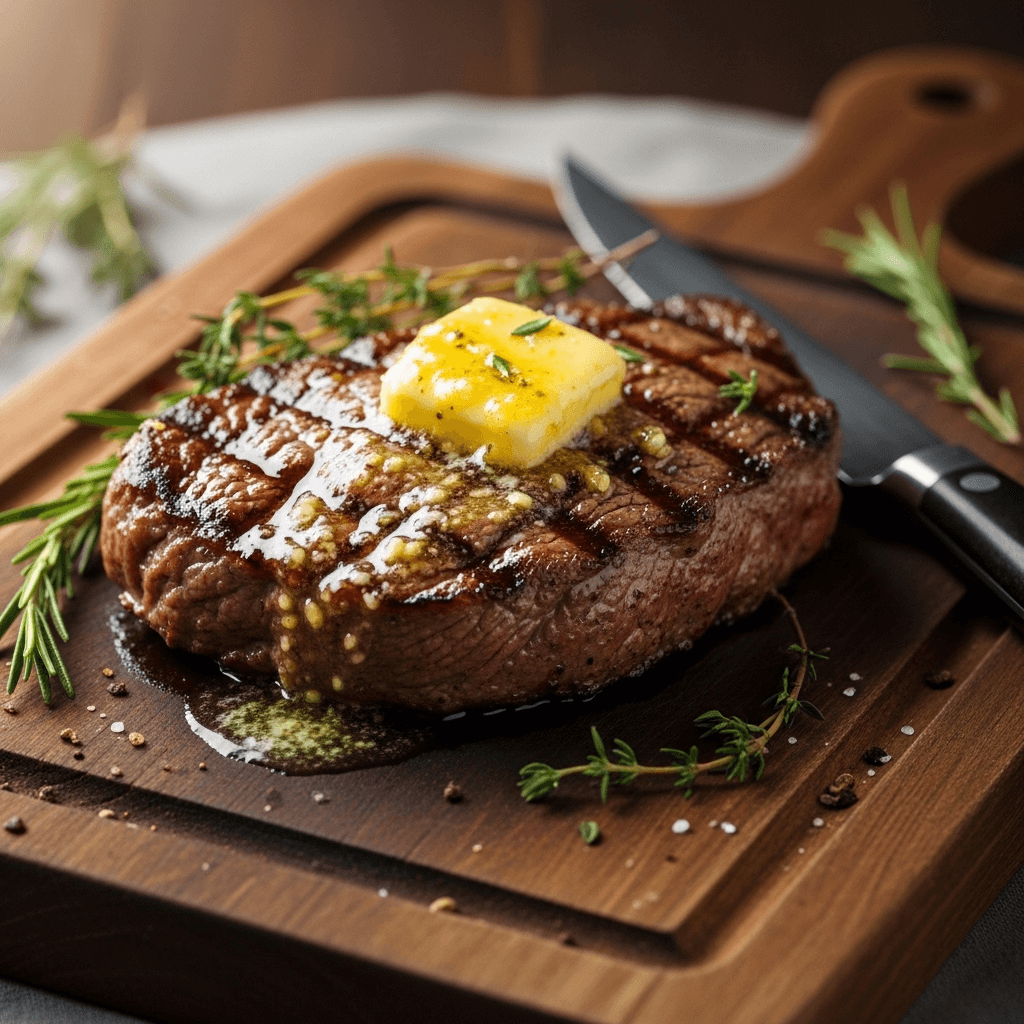
Imagine cutting into a perfectly seared steak with a gorgeous golden-brown crust, revealing a tender, juicy pink interior that’s been lovingly basted with rich garlic butter. This isn’t a fantasy from an expensive steakhouse – it’s what you’re about to create in your own kitchen with this foolproof garlic butter steak recipe. Whether you’re celebrating a special occasion, planning a romantic date night at home, or just treating yourself to something extraordinary, this restaurant-quality steak is easier to make than you ever imagined.
Garlic butter steak is the ultimate indulgence that combines simple ingredients with professional techniques to create something truly spectacular. The combination of a perfectly seared exterior, a beautifully cooked interior, and that luxurious garlic herb butter melting over every bite creates an experience that’s pure steakhouse magic. It’s impressive enough to wow dinner guests but straightforward enough for a weeknight when you want to make dinner feel special.
What makes this recipe so special is that you don’t need expensive equipment or years of culinary training. With a good quality steak, a hot cast iron skillet, and about 15 minutes, you can achieve results that rival the best steakhouses in town. You’ll learn exactly how to get that perfect crust, how to cook your steak to your preferred doneness every time, and how to make that incredible compound garlic butter that takes everything to the next level. Whether you prefer your steak rare, medium-rare, medium, or well-done, this recipe will teach you how to nail it perfectly. Get ready to become the steak master in your household!
History / Background
The love affair between steak and garlic butter represents a beautiful culinary evolution that spans centuries and crosses multiple cultures. While beef has been a prized food throughout human history, the specific preparation of pan-seared steak with compound butter is a relatively modern luxury that emerged from French culinary traditions and American steakhouse culture.
The French have long been masters of compound butter – “beurre composé” – which involves mixing softened butter with various herbs, spices, and aromatics. These flavored butters were used to enhance everything from vegetables to fish to meat. Classic French preparations like “maître d’hôtel butter” (parsley and lemon butter) and “beurre à la bourguignonne” (shallot and herb butter) date back to at least the 18th century and were staples of haute cuisine.
Meanwhile, the American steakhouse tradition was born in the late 19th and early 20th centuries, particularly in cities like New York and Chicago. Establishments like Delmonico’s, which opened in 1837, helped establish steak as the centerpiece of fine dining in America. These early steakhouses focused on simple preparations that highlighted the quality of the beef itself – primarily grilling or pan-searing with minimal seasoning.
The marriage of French butter techniques with American steak culture created the garlic butter steak we know today. As French culinary techniques permeated American cooking through influential chefs and cookbooks in the mid-20th century, home cooks and restaurant chefs began combining these traditions. The addition of garlic – which has been used in cooking for over 7,000 years and is beloved in both French and American cuisine – was a natural evolution.
Cast iron cooking, which is central to achieving the perfect sear on this steak, has its own rich history. Cast iron skillets have been kitchen workhorses since the 18th century, prized for their ability to achieve and maintain high heat – exactly what’s needed for developing that gorgeous crust on a steak. The resurgence of cast iron cooking in recent decades, driven by a renewed interest in traditional cooking methods and quality cookware, has made perfect pan-seared steaks accessible to home cooks.
Today, garlic butter steak represents the perfect intersection of French refinement, American abundance, and home cooking ingenuity. It’s become a signature dish for special occasions, a weeknight luxury, and a testament to the fact that restaurant-quality results are absolutely achievable at home. The technique of basting steak with butter while cooking – a method called “arroser” in French cooking – has become almost synonymous with properly cooked steak.
What makes this dish particularly special in contemporary cuisine is its accessibility. Unlike elaborate French dishes that require specialty ingredients or complex techniques, garlic butter steak relies on simple, quality ingredients and straightforward methods. It proves that extraordinary food doesn’t have to be complicated – it just needs to be done right.
Why You’ll Love This Recipe
This garlic butter steak recipe is about to become your go-to for impressive dinners that look and taste like they came from a five-star steakhouse. Once you master this technique, you’ll wonder why you ever thought cooking the perfect steak at home was difficult or intimidating.
Here’s why this recipe will change your steak game forever:
- Restaurant-Quality at Home – Achieve that perfect crust and juicy interior that steakhouses charge $50+ for
- Surprisingly Simple – Ready in just 15 minutes with minimal ingredients and straightforward techniques
- Guaranteed Perfect Doneness – Learn to cook steak exactly how you like it every single time
- Incredibly Flavorful – The garlic herb butter creates layers of rich, savory, aromatic flavor
- Impressive but Easy – Looks gourmet and impresses guests while being totally achievable for beginners
- Special Occasion Worthy – Perfect for anniversaries, Valentine’s Day, birthdays, or date nights at home
- Budget-Friendly Luxury – Costs a fraction of dining out while tasting just as amazing
- Versatile Recipe – Works with any quality steak cut – ribeye, strip, filet, or sirloin
- Quick Weeknight Option – Fancy enough for celebrations but fast enough for busy evenings
- Naturally Low-Carb – Perfect for keto, paleo, and low-carb diets without any modifications
- Minimal Cleanup – One pan does all the work, making post-dinner cleanup a breeze
- Customizable Doneness – Cook to your exact preference from rare to well-done
- Professional Technique – Master the butter-basting method that professional chefs use
- Great for Meal Prep – Sliced steak works beautifully in salads, grain bowls, and sandwiches throughout the week
- Pure Comfort Food – That first bite of perfectly cooked, butter-basted steak is absolute bliss
Ingredient Notes
Quality ingredients make all the difference with steak. Let me explain what you need and why it matters, plus helpful substitutions.
Ribeye, Strip, or Filet Mignon Steak: Choose steaks that are 1 to 1½ inches thick for best results. Look for good marbling (white fat streaks throughout) which equals flavor and juiciness. Ribeye has the most fat and flavor, strip is leaner with great beefy taste, filet is the most tender but mildest. Substitution: Sirloin works for a budget-friendly option, or try NY strip, T-bone, or porterhouse. Avoid thin steaks under ¾ inch as they overcook easily.
Butter (Unsalted): High-quality butter is essential for that rich, luxurious garlic butter. Unsalted gives you control over seasoning. European-style butter with higher fat content creates even richer flavor. Substitution: Salted butter works but reduce added salt. Ghee (clarified butter) has a higher smoke point and works well. For dairy-free, use plant-based butter though flavor differs.
Fresh Garlic: Provides the signature aromatic, savory flavor that defines this dish. Fresh garlic cloves are essential – jarred minced garlic doesn’t have the same impact. Substitution: In a pinch, use 1 teaspoon garlic powder, but fresh is infinitely better for this recipe.
Fresh Herbs (Thyme and Rosemary): These woody herbs can withstand high heat and infuse the butter with aromatic, earthy flavors. Fresh herbs are crucial – dried don’t work the same way in this application. Substitution: Use just thyme or just rosemary if you prefer one over the other, or try fresh oregano or sage for different flavor profiles.
Olive Oil or Vegetable Oil: Creates the initial sear and prevents sticking. You need an oil with a high smoke point that can handle the intense heat required for a proper crust. Substitution: Avocado oil (very high smoke point), grapeseed oil, or clarified butter (ghee) all work excellently.
Kosher Salt: Larger crystals than table salt, perfect for seasoning steak. Draws out moisture initially, then gets absorbed, seasoning the meat throughout. Essential for developing that flavorful crust. Substitution: Sea salt works great. If using table salt, use half the amount as it’s much finer and saltier.
Black Pepper: Freshly cracked black pepper adds aromatic spiciness and creates part of that beautiful crust. Pre-ground pepper is acceptable but fresh-ground is noticeably better. Substitution: Use what you have, but invest in a pepper mill for best results – the flavor difference is remarkable.
Optional: Red Pepper Flakes: Adds a subtle kick without overwhelming the steak’s flavor. Completely optional but adds nice complexity. Substitution: Cayenne pepper (use less, it’s spicier) or omit entirely for classic flavor.
Equipment Needed
Having the right tools makes cooking perfect steak easier and more consistent. Here’s what you’ll need:
- Cast Iron Skillet – Absolutely essential; 10-12 inch size is ideal for 2-4 steaks
- Instant-Read Meat Thermometer – Critical for achieving perfect doneness every time
- Kitchen Tongs – For flipping steak and maneuvering in hot pan safely
- Paper Towels – For patting steak dry before cooking
- Small Bowl – For mixing compound butter ingredients
- Cutting Board – For resting and slicing steak
- Sharp Knife – For slicing steak against the grain
- Spoon – For basting steak with melted garlic butter
- Plate or Small Tray – For resting steak after cooking
- Oven Mitts – Cast iron handles get extremely hot and stay hot
Optional but Helpful:
- Kitchen Timer – To track cooking time accurately
- Aluminum Foil – For tenting steak while resting
- Exhaust Fan or Open Window – High-heat searing creates smoke
Why Cast Iron?
Cast iron retains and distributes heat evenly, reaches very high temperatures, and creates the perfect sear. It’s truly irreplaceable for this recipe.
Garlic Butter Steak Recipe
- Total Time: 15 minutes
- Yield: 2 servings 1x
- Diet: Gluten Free
Description
Perfectly seared steak with a golden crust, cooked to your ideal doneness, and basted with luxurious garlic herb butter. Restaurant-quality results in just 15 minutes!
Ingredients
For the Steaks:
- 2 ribeye, strip, or filet mignon steaks (8–10 oz each, 1 to 1½ inches thick)
- 1 tablespoon olive oil or vegetable oil
- 2 teaspoons kosher salt
- 1 teaspoon freshly ground black pepper
For the Garlic Herb Butter:
- 4 tablespoons unsalted butter
- 4 cloves garlic, smashed
- 3–4 sprigs fresh thyme
- 2–3 sprigs fresh rosemary
- Pinch of red pepper flakes (optional)
Instructions
Step 1: Prepare the Steaks
Remove steaks from refrigerator 30-45 minutes before cooking to bring to room temperature. This ensures even cooking. Pat steaks completely dry on all sides with paper towels – moisture is the enemy of a good sear. Season generously on both sides with kosher salt and freshly ground black pepper, pressing seasoning into the meat.
Step 2: Preheat the Skillet
Place cast iron skillet over high heat and let it preheat for 5 minutes until smoking hot. The pan must be extremely hot for a proper sear. You should see wisps of smoke rising from the empty pan. This step is crucial – don’t rush it.
Step 3: Sear the Steaks (First Side)
Add oil to the screaming-hot skillet and swirl to coat. Immediately and carefully lay steaks in the pan away from you to avoid oil splatter. Do not move or touch them. Let sear undisturbed for 3-4 minutes until a deep golden-brown crust forms. The steaks will release easily from the pan when ready to flip.
Step 4: Flip and Add Butter
Using tongs, flip steaks to the second side. Immediately add butter, smashed garlic cloves, thyme sprigs, and rosemary sprigs to the pan. As the butter melts and foams, tilt the pan slightly and use a spoon to continuously baste the steaks with the garlic herb butter for 3-4 minutes. This basting adds incredible flavor and helps cook the steak evenly.
Step 5: Check Temperature
Insert an instant-read thermometer into the thickest part of the steak. Remove from heat at these temperatures (they’ll rise 5° while resting):
- Rare: 120°F
- Medium-Rare: 130°F
- Medium: 140°F
- Medium-Well: 145°F
- Well-Done: 155°F
Step 6: Rest the Steaks
Transfer steaks to a cutting board or plate and tent loosely with foil. Pour the garlic herb butter from the pan over the steaks. Let rest for 5 minutes – this allows juices to redistribute throughout the meat, ensuring every bite is juicy.
Step 7: Serve
Slice steak against the grain if desired, or serve whole. Drizzle with any remaining garlic butter from the plate. Serve immediately and enjoy!
Notes
- Room Temperature Matters: Cold steak = uneven cooking. Always let steak sit out 30-45 minutes before cooking.
- Dry is Essential: Pat steak very dry with paper towels. Moisture prevents proper searing.
- Don’t Flip Multiple Times: Flip only once for the best crust and even cooking.
- Butter Basting is Key: This technique is what makes restaurant steaks taste so amazing.
- Always Rest: Cutting immediately causes all juices to run out. Rest 5 minutes minimum.
- Use a Thermometer: It’s the only reliable way to achieve perfect doneness.
- Cast Iron is Non-Negotiable: Regular pans don’t retain heat well enough for proper searing.
- Prep Time: 5 minutes
- Cook Time: 10 minutes
- Category: Dinner
- Method: Pan-Searing
- Cuisine: American Steakhouse
Nutrition
- Serving Size: 1 steak (8 oz) with garlic butter
- Calories: 585
- Sugar: 0g
- Sodium: 2,380mg
- Fat: 45g
- Saturated Fat: 21g
- Unsaturated Fat: 22g
- Trans Fat: 0g
- Carbohydrates: 2g
- Fiber: 0g
- Protein: 46g
- Cholesterol: 185mg
Tips & Variations
Peppercorn-Crusted Steak:
Coat steaks in cracked black, white, green, and pink peppercorns before searing for a bold, spicy crust. Press peppercorns firmly into meat so they adhere.
Blue Cheese Butter:
Mix 2 tablespoons crumbled blue cheese into the butter along with garlic and herbs for tangy, creamy decadence.
Coffee-Rubbed Steak:
Combine 1 tablespoon finely ground coffee with salt, pepper, and brown sugar. Rub onto steaks before searing for complex, slightly sweet crust.
Lemon Herb Butter:
Add lemon zest and fresh parsley to the butter for bright, fresh flavor that cuts through the richness.
Asian-Inspired:
Replace herbs with sliced ginger and add a splash of soy sauce to the butter for umami-rich flavor.
Steakhouse Mushroom Topping:
Sauté sliced mushrooms in the garlic butter after removing steaks, then spoon over the top.
Compound Butter Variations:
Make different flavored butters – try chimichurri butter, truffle butter, or sun-dried tomato butter.
Reverse Sear Method:
For thicker steaks (1½ inches+), bake at 275°F until 10° below target temp, then sear in cast iron for 1-2 minutes per side.
Cajun Spiced:
Season steaks with Cajun seasoning instead of just salt and pepper for Louisiana-style flavor.
Bone-In Ribeye:
Use bone-in ribeye for extra flavor and impressive presentation. Add 2-3 minutes to cooking time.
Pro Chef Tips
The Dry-Age-at-Home Trick:
For even better flavor and texture, place seasoned steaks uncovered on a wire rack in the refrigerator for 8-24 hours before cooking. This dry-aging process concentrates flavors and dries the surface for superior crust formation.
The Perfect Pan Temperature:
Your cast iron should be so hot that water droplets dance and evaporate immediately upon contact. If water just sizzles, it’s not hot enough. If it evaporates instantly without dancing, it might be too hot. Aim for that sweet spot where droplets bead and dance.
The Smashed Garlic Secret:
Smash garlic cloves with the flat side of a knife rather than mincing them. This releases oils and flavor without the garlic burning in the hot butter. Minced garlic burns too easily in this high-heat application.
The Tilting and Basting Technique:
Tilt your pan toward you so butter pools on one side. Use a large spoon to continuously scoop that butter over the top of the steaks. This constant basting is what professionals do – it’s called “arroser” in French cooking and creates incomparable flavor and even cooking.
The Thumb Test for Doneness:
While a thermometer is most reliable, learn the touch test: Relax your hand and touch the fleshy part below your thumb – that’s what rare feels like. Touch thumb to index finger and feel that spot – that’s medium-rare. Thumb to middle finger is medium. Thumb to ring finger is medium-well. Thumb to pinky is well-done.
The Strategic Seasoning Method:
Salt steak at least 40 minutes before cooking OR right before cooking – never 10-30 minutes before. Salt initially draws moisture out (bad), but given time (40+ min), it gets reabsorbed with the salt, seasoning throughout (good). If you don’t have time, season right before cooking.
The Finishing Touch:
Add a small pat of fresh compound butter on top of the rested steak right before serving. As it melts, it creates an incredibly appetizing appearance and adds one final layer of richness.
The Crust-Building Secret:
Pat steaks dry, then let them sit uncovered for 5 minutes before cooking. This final drying step removes any new surface moisture, ensuring the most magnificent crust possible.
The Right Oil Amount:
Use just enough oil to barely coat the pan – about 1 tablespoon. Too much oil prevents the meat from making direct contact with the hot pan, reducing crust development.
The Carry-Over Cooking Principle:
Always remove steak 5-10°F below your target temperature. During resting, internal temperature continues rising (“carryover cooking”). Account for this to avoid overcooking.
Common Mistakes to Avoid
Mistake #1: Cooking Cold Steak
Taking steak straight from the fridge and throwing it in the pan results in a gray band of overcooked meat around the edges while the center stays undercooked. Solution: Let steak sit at room temperature for 30-45 minutes before cooking. Room-temperature steak cooks evenly from edge to center.
Mistake #2: Not Preheating the Pan Long Enough
A lukewarm pan doesn’t create a proper sear, and steak will stick and steam instead of developing a crust. Solution: Preheat your cast iron over high heat for a full 5 minutes until it’s smoking hot. The pan should be so hot you’re slightly intimidated by it.
Mistake #3: Moving the Steak While Searing
Constantly flipping, moving, or checking your steak prevents crust formation and causes sticking. Solution: Place the steak in the pan and don’t touch it for 3-4 minutes. It will release easily when it’s developed a proper crust. Flip only once.
Mistake #4: Skipping the Resting Period
Cutting into steak immediately after cooking causes all the precious juices to flood onto your cutting board instead of staying in the meat. Solution: Always rest steak for at least 5 minutes tented with foil. This allows muscle fibers to relax and juices to redistribute. It’s not optional – it’s essential.
Mistake #5: Using the Wrong Pan
Thin stainless steel or non-stick pans don’t retain heat well enough. When you add cold steak, the temperature plummets, preventing proper searing. Solution: Use a heavy cast iron skillet. It retains heat beautifully, maintains high temperatures, and creates the perfect crust. There’s no substitute for this recipe.
Mistake #6: Overcrowding the Pan
Adding too many steaks at once drops the pan temperature dramatically, causing steaks to steam rather than sear. Solution: Cook no more than 2 medium steaks in a 12-inch skillet. Leave space between them. If cooking for more people, work in batches or use two pans.
Mistake #7: Not Using a Thermometer
Guessing doneness by time or appearance leads to inconsistent results – sometimes perfect, often over or undercooked. Solution: Invest in an instant-read thermometer ($15-30) and use it every time. It’s the only way to achieve perfect doneness consistently.
Storage & Meal Prep
Refrigerator Storage:
Store leftover cooked steak in an airtight container in the refrigerator for up to 3-4 days. Let steak cool to room temperature before storing (but don’t leave out longer than 2 hours). Slice leftover steak for easier reheating and versatile use in other dishes.
Reheating Without Drying Out:
The biggest challenge with leftover steak is keeping it from drying out and overcooking. Best method: Let steak come to room temperature, then sear in a hot skillet for 30-60 seconds per side just to warm through. Alternative: Microwave at 50% power in 20-second intervals until just warm, or warm in a 250°F oven for 10-15 minutes.
Using Leftover Steak:
Sliced leftover steak is incredibly versatile. Use it in: steak salads, steak and eggs breakfast, steak sandwiches, cheesesteak, steak tacos, stir-fries, steak grain bowls, or steak and cheese quesadillas.
Meal Prep Strategy:
While steak is best enjoyed fresh, you can cook steaks on Sunday and slice them for meal prep throughout the week. Store sliced steak in airtight containers with a drizzle of the garlic butter to maintain moisture. Use within 3-4 days in salads, bowls, and wraps.
Preventing Oxidation:
If storing for more than a day, press plastic wrap directly onto the surface of the meat to prevent oxidation (which causes that gray appearance). Store in an airtight container as an additional barrier.
Make-Ahead & Freezer Notes
Preparing Steaks Ahead:
You can season steaks up to 24 hours before cooking. Place seasoned steaks uncovered on a wire rack in the refrigerator. This dry-brines the meat, intensifies flavor, and dries the surface for better crust formation. Let come to room temperature before cooking.
Freezing Raw Steaks:
Wrap individual steaks tightly in plastic wrap, then in aluminum foil or freezer bags. Freeze for up to 6 months. Thaw in refrigerator overnight before cooking – never at room temperature. Pat very dry before cooking as thawed steaks release moisture.
Freezing Cooked Steak:
While not ideal, you can freeze cooked steak for up to 2-3 months. Wrap tightly in plastic wrap and foil. Thaw in refrigerator overnight. The texture won’t be quite as good as fresh, but flavor remains excellent. Best used sliced in dishes like stir-fries or tacos where texture is less critical.
Compound Butter Make-Ahead:
Make garlic herb butter up to 1 week ahead. Roll it into a log in parchment or wax paper, refrigerate, and slice off portions as needed. Or freeze for up to 3 months for ultimate convenience.
Best Thawing Method:
Transfer frozen steak to the refrigerator 24 hours before cooking. Place on a plate to catch any drips. Never thaw on the counter at room temperature – this promotes bacterial growth.
Quality After Freezing:
Frozen raw steak maintains quality better than frozen cooked steak. If you know you’ll be freezing, buy steaks on sale, season them, freeze individually, and cook fresh when needed.
Serving Suggestions
Garlic butter steak pairs beautifully with numerous sides. Here are ideas for creating complete, restaurant-quality meals:
Classic Steakhouse Sides:
- Loaded Baked Potato – With butter, sour cream, chives, bacon, and cheese
- Creamy Mashed Potatoes – Rich and buttery, perfect for soaking up steak juices
- Crispy French Fries – Hand-cut or frozen, as long as they’re golden and crispy
- Twice-Baked Potatoes – Scooped, mixed with cheese and bacon, then baked again
- Roasted Garlic Mashed Potatoes – Complements the garlic butter perfectly
Vegetable Sides:
- Roasted Asparagus – With lemon and Parmesan
- Sautéed Green Beans – With almonds and garlic
- Grilled or Roasted Brussels Sprouts – Caramelized and crispy
- Creamed Spinach – Classic steakhouse indulgence
- Roasted Broccoli – With olive oil and garlic
- Grilled Zucchini and Bell Peppers – Light and flavorful
Salads:
- Wedge Salad – Iceberg lettuce, blue cheese, bacon, tomatoes
- Caesar Salad – Crisp romaine with creamy dressing and croutons
- Arugula Salad – With shaved Parmesan, lemon vinaigrette
- Tomato and Onion Salad – Simple and refreshing
Elegant Sides:
- Truffle Mac and Cheese – Ultimate indulgence
- Risotto – Mushroom or Parmesan
- Polenta – Creamy or grilled
- Scalloped Potatoes – Layered with cream and cheese
Bread Options:
- Garlic Bread – Because you can never have too much garlic
- Dinner Rolls – Soft and buttery
- Texas Toast – Thick-cut and golden
Sauces (Beyond the Garlic Butter):
- Béarnaise Sauce – Classic French tarragon butter sauce
- Peppercorn Sauce – Creamy with cracked peppercorns
- Chimichurri – Fresh Argentinian herb sauce
- Red Wine Reduction – Elegant and rich
Wine Pairings:
- Red Wine – Cabernet Sauvignon, Malbec, Merlot, or Syrah
- Bold Reds – For ribeye and heavily marbled cuts
- Medium Reds – For leaner cuts like filet or strip
Complete Meal Ideas:
- Classic Steakhouse: Garlic butter steak with loaded baked potato, creamed spinach, and wedge salad
- Elegant Dinner Party: Steak with truffle mashed potatoes, roasted asparagus, and red wine reduction
- Casual Date Night: Steak with garlic bread, Caesar salad, and roasted vegetables
- Special Occasion: Filet mignon with lobster tail, twice-baked potato, and béarnaise sauce
FAQs Section
Q: What’s the best cut of steak for this recipe?
A: Ribeye is the most flavorful and forgiving due to its marbling (fat content), making it ideal for beginners. New York strip is leaner but still delicious with great beefy flavor. Filet mignon is the most tender but mildest in flavor. All three work beautifully with this garlic butter method. For budget-friendly, try sirloin – it’s less tender but properly cooked, it’s still delicious.
Q: Do I really need a cast iron skillet?
A: Yes, for this recipe, cast iron is truly essential. Cast iron retains heat exceptionally well, meaning when you add cold steak, the pan temperature doesn’t drop significantly. This maintained high heat is what creates that gorgeous golden-brown crust. Regular pans lose heat too quickly, resulting in gray, steamed meat instead of a proper sear. It’s worth investing in a cast iron skillet ($20-40) – it’ll last forever.
Q: How do I know when my steak is done?
A: The only reliable method is using an instant-read meat thermometer inserted into the thickest part of the steak. Remove at: 120°F for rare, 130°F for medium-rare, 140°F for medium, 145°F for medium-well, 155°F for well-done. Remember, temperature rises 5-10°F during resting, so pull it off slightly early. Visual cues (color, firmness) work with experience but aren’t as accurate, especially when learning.
Q: Why does my steak stick to the pan?
A: Sticking happens when: (1) The pan isn’t hot enough – it must be smoking hot, (2) You try to flip too early before a crust forms – wait 3-4 minutes without touching it, (3) The steak is too wet – always pat completely dry, or (4) Not enough oil in the pan. Once a proper crust forms, steak releases easily. If it’s sticking, it’s not ready to flip yet.
Q: Can I make this without butter (dairy-free)?
A: Yes, though flavor will differ. Use ghee (clarified butter) which is lactose-free and has a higher smoke point, or use plant-based butter. For completely dairy-free, use olive oil or avocado oil for basting with the garlic and herbs. The result won’t be as rich and luxurious as butter, but it’s still delicious.
Q: What if I don’t have fresh herbs?
A: Fresh herbs are strongly preferred for this recipe because they can withstand the high heat without burning like dried herbs would. If you absolutely must substitute, use dried herbs very sparingly (1/4 the amount) and add them to the butter off-heat at the very end of cooking. The flavor won’t be as complex, but it’ll still work.
Q: How thick should my steak be?
A: 1 to 1½ inches thick is ideal for this pan-searing method. This thickness allows you to develop a beautiful crust while cooking the interior to your preferred doneness without over or undercooking. Thinner steaks (under ¾ inch) overcook too easily. Thicker steaks (over 1½ inches) are better suited to the reverse-sear method (oven then pan) or finishing in the oven after initial sear.
Q: Why do I need to let steak come to room temperature?
A: Cold steak straight from the fridge cooks unevenly – the exterior overcooks before the center warms up, creating a gray band of overcooked meat around a cold center. Room temperature steak (30-45 minutes out of fridge) cooks evenly from edge to center, resulting in consistent doneness throughout and better texture. This step makes a significant difference.
Conclusion
And there you have it — a restaurant-style garlic butter steak that’s juicy, flavorful, and melt-in-your-mouth delicious every single time. 🥩✨
This recipe is proof that you don’t need a fancy kitchen to make a steakhouse-quality meal at home. The secret is simple: good-quality steak, a sizzling hot pan, and plenty of rich garlic butter. Perfect for date nights, family dinners, or any time you want to treat yourself.
👉 Save this recipe on Pinterest, give it a try, and share your steak night creations with friends and family. Because nothing says “comfort” like a perfectly cooked steak at home.