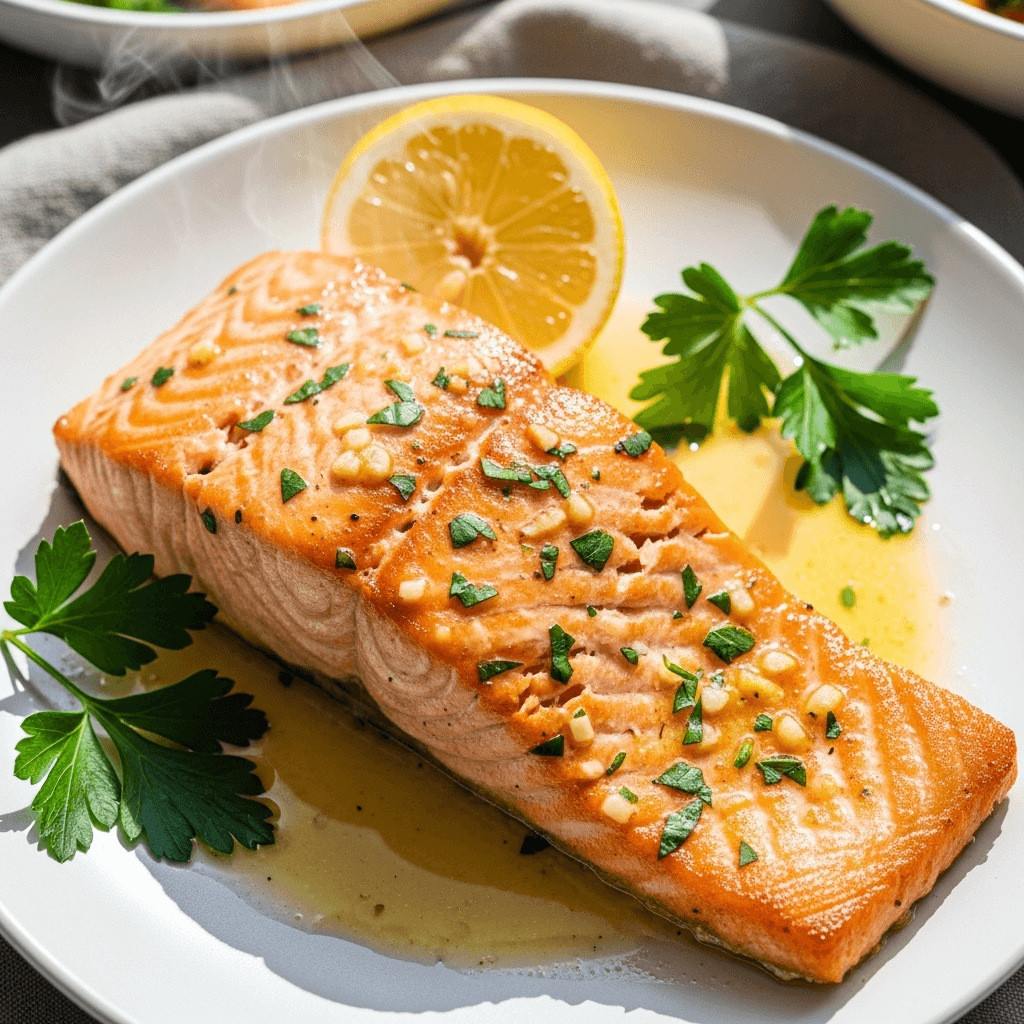
If you’re looking for a restaurant-quality dinner that comes together in just 15 minutes, this garlic butter salmon recipe is about to become your new weeknight hero. Imagine tender, flaky salmon fillets with perfectly crispy, golden skin, bathed in a luscious garlic butter sauce that’s rich, aromatic, and absolutely irresistible. This easy pan-seared salmon recipe delivers all the elegance of a fine dining experience right in your own kitchen, with minimal effort and maximum flavor.
What makes this garlic butter salmon so special is the beautiful balance of flavors and textures. The high heat of the pan creates a gorgeous caramelized crust on the outside while keeping the interior moist and tender. The garlic butter sauce, infused with fresh lemon and herbs, adds richness without overwhelming the delicate flavor of the salmon. Whether you’re cooking for a busy weeknight family dinner, meal prepping for the week ahead, or impressing guests at a dinner party, this versatile recipe fits every occasion. It’s naturally gluten-free, keto-friendly, and packed with heart-healthy omega-3 fatty acids, making it as nutritious as it is delicious.
History / Background
Salmon has been a prized food source for thousands of years, particularly in the Pacific Northwest, Alaska, and Northern Europe where wild salmon populations thrived. Indigenous peoples of the Pacific Coast region developed sophisticated fishing techniques and salmon was central to their diet, culture, and spiritual practices. The fish was so abundant that it sustained entire communities through elaborate preservation methods like smoking and drying.
The tradition of cooking salmon with butter and garlic has European roots, particularly from French cuisine where butter-based sauces reign supreme. The classic French technique of “meunière”—pan-frying fish in butter and finishing with lemon and herbs—laid the groundwork for modern garlic butter salmon preparations. As French culinary techniques spread globally throughout the 18th and 19th centuries, they merged with local ingredients and preferences, creating countless regional variations.
In America, salmon became increasingly popular in the mid-20th century as commercial fishing expanded and farm-raised salmon became widely available in the 1980s and 1990s. This accessibility transformed salmon from an occasional luxury into an everyday protein option for home cooks. The garlic butter preparation emerged as a favorite because it’s remarkably simple yet sophisticated, requiring just a handful of pantry staples to create something truly special.
Today, garlic butter salmon represents the perfect marriage of healthy eating and indulgent flavor. As more people prioritize nutritious, omega-3-rich foods and seek quick cooking methods, this recipe has exploded in popularity on Pinterest, food blogs, and in home kitchens across America. It proves that healthy cooking doesn’t have to be bland or complicated—sometimes the simplest preparations are the most delicious.
Why You’ll Love This Recipe
This isn’t just another salmon recipe—it’s the method that will transform how you cook fish at home. The technique is foolproof, the ingredients are simple, and the results are consistently spectacular. Even if you’ve never cooked salmon before, you’ll achieve professional-level results that will have everyone asking for your secret.
Here’s why this garlic butter salmon will become your go-to recipe:
- Ready in 15 Minutes – From refrigerator to table faster than takeout delivery
- One-Pan Wonder – Just a single skillet means minimal cleanup
- Restaurant-Quality Results – Perfectly crispy skin and tender, flaky interior every time
- Healthy & Nutritious – Loaded with omega-3s, protein, and essential nutrients
- Naturally Keto & Low-Carb – Perfect for various dietary preferences
- Budget-Friendly – Costs less than dining out and feeds the whole family
- Impressive but Easy – Looks fancy enough for guests but simple enough for weeknights
- Incredibly Flavorful – Rich garlic butter sauce elevates the salmon without overpowering it
- Flexible & Forgiving – Works with different salmon cuts and adapts to what you have on hand
- Kid-Approved – Even picky eaters love the mild, buttery flavor
Ingredient Notes
The beauty of this garlic butter salmon lies in its simplicity—just a few high-quality ingredients create extraordinary flavor.
Salmon Fillets – Fresh or thawed salmon fillets are the star of the show. Look for fillets that are about 6 ounces each and 1 to 1.5 inches thick for even cooking. Wild-caught salmon (like Sockeye, Coho, or King) has a richer, more robust flavor and firmer texture, while farm-raised Atlantic salmon is milder, fattier, and more affordable. Both work beautifully in this recipe. Check that the flesh is firm, shiny, and smells fresh like the ocean—never fishy. Skin-on fillets are ideal because the skin gets wonderfully crispy, but skinless works too.
Butter – Use unsalted butter so you can control the seasoning. The butter creates that luxurious sauce and helps carry the garlic flavor throughout the dish. For the richest flavor, use European-style butter with higher fat content. If you’re dairy-free, ghee (clarified butter) works wonderfully and adds a slightly nutty flavor, or you can use a combination of olive oil and vegan butter.
Fresh Garlic – Don’t skimp here—fresh garlic is essential for that aromatic, pungent flavor that defines this dish. You’ll need 4-5 large cloves, minced finely. Pre-minced garlic from a jar can work in a pinch, but fresh garlic provides superior flavor and aroma. The key is to cook it just until fragrant without burning, which would make it bitter.
Olive Oil – A high-quality olive oil (or avocado oil) helps achieve that perfect sear on the salmon and prevents the butter from burning. The combination of oil and butter gives you the best of both worlds—the high smoke point of oil with the rich flavor of butter.
Fresh Lemon – Both lemon juice and zest brighten the rich garlic butter sauce and cut through the fattiness of the salmon. Fresh lemon is vastly superior to bottled lemon juice. You’ll need one large lemon for both juice and zest.
Fresh Herbs – Fresh parsley is traditional and adds a pop of color and freshness, but fresh dill, thyme, or chives also work beautifully. Dried herbs can substitute in a pinch (use one-third the amount), but fresh herbs truly make this dish shine.
Salt and Black Pepper – Simple seasoning lets the salmon shine. Use kosher salt or sea salt for the best texture and flavor distribution.
Optional: Red Pepper Flakes – A pinch adds subtle heat that complements the garlic beautifully without overwhelming the dish.
Equipment Needed
You’ll need minimal equipment to create this stunning dish—most of which you probably already have in your kitchen.
- Large Skillet or Frying Pan – A 12-inch skillet (preferably heavy-bottomed stainless steel or cast iron) provides even heat distribution and enough room for 4 fillets without crowding
- Fish Spatula or Wide Spatula – The thin, flexible blade makes flipping delicate salmon fillets much easier without breaking them
- Tongs – For handling the salmon and checking doneness
- Microplane or Zester – For zesting the lemon
- Garlic Press or Sharp Knife – For mincing garlic finely
- Measuring Spoons – For accurate butter and oil measurements
- Paper Towels – Essential for patting the salmon dry before cooking
- Small Bowl – For mixing the garlic butter sauce
- Instant-Read Thermometer (Optional but Recommended) – Takes the guesswork out of determining doneness
Garlic Butter Salmon Recipe
- Total Time: 15 minutes
- Yield: 4 servings 1x
- Diet: Gluten Free
Description
This easy garlic butter salmon recipe features perfectly pan-seared salmon fillets with crispy skin and tender, flaky interiors, finished with a rich, aromatic garlic butter sauce infused with fresh lemon and herbs. Ready in just 15 minutes, it’s an elegant weeknight dinner that tastes like restaurant quality.
Ingredients
- 4 salmon fillets (6 oz each, about 1–1.5 inches thick, skin-on or skinless)
- 4 tablespoons unsalted butter, divided
- 2 tablespoons olive oil or avocado oil
- 5 large garlic cloves, minced
- 1 large lemon (juice and zest)
- 2 tablespoons fresh parsley, chopped (plus more for garnish)
- 1 teaspoon kosher salt
- ½ teaspoon freshly ground black pepper
- ¼ teaspoon red pepper flakes (optional)
- Lemon wedges for serving
Instructions
- Prepare the salmon by removing it from the refrigerator 10-15 minutes before cooking to bring it to room temperature. Pat the fillets completely dry with paper towels—this is crucial for achieving crispy skin. Season both sides generously with salt and pepper.
- Heat the skillet over medium-high heat and add the olive oil. Let it heat until shimmering but not smoking, about 2 minutes. The pan should be hot enough that a drop of water sizzles immediately.
- Sear the salmon by carefully placing the fillets skin-side down in the hot skillet (if using skin-on salmon). Gently press down on each fillet with a spatula for the first 10-15 seconds to prevent curling and ensure even contact with the pan. Don’t move the salmon—let it cook undisturbed for 4-5 minutes until the skin is golden and crispy.
- Flip carefully using a fish spatula, sliding it gently under each fillet. Cook for an additional 3-4 minutes on the second side for medium doneness (the salmon should reach an internal temperature of 125-130°F for medium, or 140°F for well-done). The exact time depends on thickness—the salmon should be opaque on the outside but still slightly translucent in the very center.
- Remove and rest by transferring the salmon to a serving platter or individual plates. Tent loosely with foil to keep warm while you make the sauce.
- Make the garlic butter sauce by reducing the heat to medium-low and adding the remaining 3 tablespoons of butter to the same skillet. Once melted and foaming, add the minced garlic and red pepper flakes (if using). Cook, stirring constantly, for 1 minute until fragrant but not browned.
- Finish the sauce by stirring in the lemon juice, lemon zest, and fresh parsley. Let it bubble for 30 seconds, then remove from heat. Taste and adjust seasoning with a pinch of salt if needed.
- Serve immediately by spooning the warm garlic butter sauce generously over the salmon fillets. Garnish with additional fresh parsley and lemon wedges on the side.
Notes
- Skin Crispiness: For the crispiest skin, ensure the salmon is completely dry before cooking and resist the urge to move it around in the pan.
- Doneness: Salmon is safe to eat when it reaches 145°F internally, but many prefer it at 125-130°F for a more tender, restaurant-style texture with a slightly translucent center.
- Frozen Salmon: Thaw completely in the refrigerator overnight before using this recipe. Never cook salmon from frozen using this method as it won’t sear properly.
- Pan Size: Don’t overcrowd the pan. If your skillet isn’t large enough for 4 fillets with space between them, cook in two batches to ensure proper searing.
- Butter Burning: If your butter starts to brown too much when making the sauce, remove the pan from heat immediately and add a splash of lemon juice to stop the cooking.
- Prep Time: 5 minutes
- Cook Time: 10 minutes
- Category: Dinner
- Method: Pan-Seared
- Cuisine: American
Nutrition
- Serving Size: 1 salmon fillet (6 oz) with garlic butter sauce
- Calories: 385
- Sugar: 0g
- Sodium: 680mg
- Fat: 26g
- Saturated Fat: 9g
- Unsaturated Fat: 15g
- Trans Fat: 0g
- Carbohydrates: 2g
- Fiber: 0g
- Protein: 35g
- Cholesterol: 125mg
Tips & Variations
This versatile garlic butter salmon recipe is endlessly adaptable to your taste preferences and what you have on hand.
Herb Variations: Swap the parsley for fresh dill (classic with salmon), fresh thyme (earthy and aromatic), fresh basil (Italian-inspired), or fresh cilantro (for a bright, citrusy twist). You can also use a combination of herbs for more complex flavor.
Spicy Garlic Butter Salmon: Double the red pepper flakes or add a pinch of cayenne pepper to the garlic butter. For extra kick, drizzle with sriracha or hot honey before serving.
Asian-Inspired Version: Replace half the butter with sesame oil, add grated fresh ginger along with the garlic, and finish with a splash of soy sauce or tamari and sesame seeds.
Mediterranean Style: Add sun-dried tomatoes, capers, and olives to the garlic butter sauce. Use fresh oregano instead of parsley and finish with crumbled feta cheese.
Creamy Garlic Butter Salmon: Stir 2-3 tablespoons of heavy cream or Greek yogurt into the finished garlic butter sauce for extra richness.
Honey Garlic Butter Salmon: Add 1 tablespoon of honey to the garlic butter sauce for a sweet and savory glaze that caramelizes beautifully.
White Wine Butter Sauce: Deglaze the pan with ¼ cup dry white wine before adding the butter and garlic for an elegant, restaurant-style sauce.
Cajun Seasoning: Season the salmon with Cajun spice blend before cooking for a bold, Southern-inspired flavor profile.
Skinless Option: If using skinless fillets, start with the presentation side (what was the skin side) down first for the best appearance when plated.
Pro Chef Tips
These professional techniques will elevate your garlic butter salmon from good to absolutely exceptional.
Dry is Essential: The single most important step for crispy-skinned salmon is thoroughly drying the fillets with paper towels before seasoning. Any moisture will create steam instead of a proper sear, resulting in soggy, grey skin instead of golden crispiness.
Score the Skin: If using skin-on salmon, make 3-4 shallow diagonal cuts through the skin (not into the flesh) before cooking. This prevents the fillet from curling and helps the skin get extra crispy by allowing fat to render out.
Press for Contact: When you first place the salmon skin-side down, use a spatula to press firmly but gently on each fillet for 10-15 seconds. This ensures full contact with the hot pan and prevents buckling as the proteins contract.
Don’t Move It: Resist the temptation to peek, poke, or move the salmon while it cooks skin-side down. Moving it too early will tear the skin and prevent proper browning. The salmon will release naturally from the pan when it’s ready to flip—if it’s sticking, it needs more time.
Temperature, Not Time: Use an instant-read thermometer inserted into the thickest part of the fillet. Pull salmon at 120-125°F for medium-rare, 130-135°F for medium (most popular), or 140-145°F for well-done. Remember, it will continue cooking slightly as it rests (carryover cooking).
Room Temperature Matters: Cold salmon straight from the fridge will cook unevenly—the outside overcooks before the inside is done. Letting it sit at room temperature for 10-15 minutes ensures even cooking throughout.
Baste for Extra Flavor: During the last minute of cooking, tilt the pan and spoon the hot garlic butter over the top of the salmon repeatedly. This technique (called arrosage) adds flavor and helps cook the top surface evenly.
Fresh Garlic Timing: Add garlic only after reducing heat and removing the salmon. High heat burns garlic quickly, creating bitter flavors. Cook just until fragrant (about 1 minute) for sweet, mellow garlic flavor.
Lemon at the End: Always add lemon juice off heat or at the very end of cooking. Prolonged heat destroys the bright, fresh citrus flavor you want.
Common Mistakes to Avoid
Even experienced cooks make these salmon mistakes. Here’s how to avoid them and achieve perfect results every time.
Cooking Salmon Straight from the Fridge: Cold salmon cooks unevenly and won’t sear properly. Always let it sit at room temperature for 10-15 minutes before cooking. This small step makes a huge difference in texture and even cooking.
Using Wet Salmon: Moisture is the enemy of a good sear. Even if your salmon looks dry, press it firmly with paper towels on all sides just before cooking. This is especially important for previously frozen salmon, which releases more moisture.
Overcrowding the Pan: If the fillets are touching or too close together, they’ll steam instead of sear. Leave at least an inch between fillets. Cook in batches if necessary—it’s better to have perfectly cooked salmon in two batches than mediocre salmon in one.
Overcooking: This is the most common mistake with salmon. Unlike chicken or pork, salmon is best when it’s still slightly translucent in the center. Overcooked salmon becomes dry, chalky, and disappointing. Use a thermometer and pull it early—it continues cooking as it rests.
Flipping Too Early: If you try to flip the salmon and it’s sticking to the pan, it’s not ready. The fish will naturally release when a proper crust has formed. Be patient—forcing it will tear the skin or flesh and ruin the presentation.
Burning the Garlic: Adding garlic to a screaming-hot pan (or leaving it in too long) creates acrid, bitter flavors that ruin the sauce. Always reduce heat before adding garlic and cook it briefly, just until fragrant. Watch it carefully—garlic goes from golden to burnt in seconds.
Using Low-Quality or Old Salmon: Fresh salmon should smell clean and ocean-like, never fishy or ammonia-like. The flesh should be firm and spring back when pressed, not mushy. If using frozen, buy high-quality individually frozen fillets and thaw slowly in the refrigerator.
Storage & Meal Prep
Garlic butter salmon stores well and makes excellent meal prep for healthy, protein-packed meals throughout the week.
Refrigerator Storage: Let cooked salmon cool to room temperature (within 2 hours of cooking), then transfer to an airtight container. Store in the refrigerator for up to 3 days. Keep the garlic butter sauce separate if possible to prevent the salmon from becoming soggy—reheat the sauce separately and spoon over the warmed salmon.
Reheating Methods: The best way to reheat salmon without drying it out is gently in a 275°F oven for 10-15 minutes until just warmed through. You can also reheat in a covered skillet over low heat with a splash of water or additional butter. Microwave reheating works but can dry out the fish—use 50% power in 30-second intervals, covering with a damp paper towel.
Cold Salmon Options: Leftover garlic butter salmon is delicious cold or at room temperature. Flake it over salads, mix into pasta, add to grain bowls, or use in salmon salad sandwiches.
Meal Prep Strategy: Cook a batch of salmon fillets on Sunday and portion them into individual containers with your favorite sides. Store the garlic butter sauce separately in small containers. This gives you ready-to-eat healthy meals for 3-4 days that reheat beautifully.
Preventing Fishy Smells: Store salmon in airtight glass containers (not plastic) to prevent fish odors from spreading in your fridge. Place a small piece of lemon peel in the container to keep it smelling fresh.
Make-Ahead & Freezer Notes
Planning ahead makes getting dinner on the table even easier, and salmon is quite freezer-friendly with the right techniques.
Marinating Ahead: While this recipe doesn’t require marinating, you can season the salmon with salt, pepper, and herbs up to 24 hours ahead. Keep refrigerated, covered, and pat dry again before cooking.
Sauce Ahead: Make the garlic butter sauce up to 2 days in advance and refrigerate in an airtight container. Reheat gently in a small saucepan, whisking to re-emulsify before serving over freshly cooked salmon.
Freezing Raw Salmon: If you buy fresh salmon in bulk, freeze individual portions for future use. Wrap each fillet tightly in plastic wrap, then place in a freezer bag with air removed. Freeze for up to 3 months. Thaw in the refrigerator overnight before cooking with this recipe.
Freezing Cooked Salmon: Cooked garlic butter salmon can be frozen, though the texture won’t be quite as perfect as fresh. Let cool completely, wrap tightly in plastic wrap and foil, and freeze for up to 2 months. Thaw overnight in the refrigerator and reheat gently.
Best Freezing Method: For best results, freeze the cooked salmon without the garlic butter sauce. Make fresh sauce when you’re ready to serve the reheated salmon for optimal flavor and texture.
Flash Freezing: For meal prep, place cooked salmon portions on a parchment-lined baking sheet and freeze until solid (about 2 hours), then transfer to freezer bags. This prevents the pieces from sticking together so you can remove individual portions as needed.
Serving Suggestions
Garlic butter salmon is incredibly versatile and pairs beautifully with countless sides and accompaniments.
Classic Pairings: Serve with roasted asparagus, green beans, or broccolini for a simple, elegant dinner. Add roasted baby potatoes, creamy mashed potatoes, or wild rice pilaf for a more substantial meal.
Low-Carb Options: Pair with cauliflower rice, zucchini noodles, sautéed spinach, or a crisp Caesar salad for a keto-friendly dinner that’s satisfying without the carbs.
Pasta Perfection: Flake the salmon and toss with linguine or fettuccine in the garlic butter sauce for an incredible pasta dish. Add cherry tomatoes and fresh basil for a complete meal.
Grain Bowls: Build nourishing bowls with quinoa, farro, or brown rice as the base, topped with the salmon, roasted vegetables, avocado, and a drizzle of the garlic butter sauce.
Fresh Salads: Serve over a bed of mixed greens, arugula, or spinach salad with cherry tomatoes, cucumber, and a light vinaigrette. The warm salmon and rich garlic butter contrast beautifully with crisp, fresh vegetables.
Mediterranean Spread: Pair with couscous, roasted red peppers, marinated artichokes, hummus, and warm pita bread for a Mediterranean-inspired feast.
Asian-Inspired Sides: Serve with steamed jasmine rice, stir-fried bok choy, edamame, and cucumber salad for an Asian fusion dinner.
Bread for Dipping: Don’t let that incredible garlic butter sauce go to waste—serve with crusty French bread, garlic bread, or dinner rolls for soaking up every delicious drop.
Wine Pairing: A crisp Sauvignon Blanc, buttery Chardonnay, or light Pinot Noir all pair beautifully with garlic butter salmon.
FAQs Section
How do I know when salmon is done?
The most accurate way is using an instant-read thermometer inserted into the thickest part of the fillet. For medium doneness (most popular), pull salmon at 130-135°F. It should be opaque on the outside but still slightly translucent in the very center. The salmon will also flake easily with a fork when done. Remember that salmon continues cooking after you remove it from heat, so err on the side of slightly underdone rather than overdone.
Can I use frozen salmon for this recipe?
Yes, but it must be completely thawed first. Never cook frozen salmon using this high-heat searing method—it won’t cook evenly and won’t develop a proper crust. Thaw frozen salmon in the refrigerator overnight, then pat extremely dry with paper towels before cooking, as thawed salmon releases more moisture than fresh.
Do I need to remove the skin?
The skin is completely optional based on your preference. Skin-on salmon gets wonderfully crispy using this method and many people find it delicious. The skin also helps hold the delicate fillet together during cooking. However, if you prefer skinless salmon or that’s what’s available, the recipe works perfectly—just start cooking with what would have been the skin side down first for best presentation.
What type of salmon is best for this recipe?
Any salmon variety works, but each has different characteristics. Wild-caught King (Chinook) is the richest and most flavorful but expensive. Sockeye is leaner with deep red color and robust flavor. Coho is milder and more affordable. Farm-raised Atlantic salmon is the most budget-friendly and widely available, with a milder flavor and higher fat content that stays moist during cooking. All work beautifully with garlic butter.
Why is my salmon sticking to the pan?
There are several reasons: the pan isn’t hot enough, you tried to flip too early before a crust formed, the salmon wasn’t dry enough, or you’re using a pan that doesn’t provide even heat (like thin, cheap cookware). Make sure your pan is properly heated, the salmon is bone-dry, and give it time to develop a crust before attempting to flip—it will release naturally when ready.
Can I bake this salmon instead of pan-searing?
While this recipe is designed for pan-searing to achieve crispy skin, you can adapt it for baking. Season the salmon and place on a lined baking sheet. Bake at 400°F for 12-15 minutes depending on thickness. Meanwhile, make the garlic butter sauce in a small skillet on the stovetop. Pour over the baked salmon just before serving. You won’t get crispy skin, but it’s a hands-off method that works well.
How can I prevent my kitchen from smelling fishy?
Use very fresh salmon that smells clean, not fishy—”fishy” smell indicates old fish. Turn on your exhaust fan before cooking. Add a splash of lemon juice or vinegar to the pan after cooking and let it steam briefly to neutralize odors. You can also simmer a small pot of water with lemon slices and herbs to freshen the air while cooking.
Is it safe to eat salmon medium-rare?
Yes, high-quality fresh or properly frozen salmon is safe to eat at 125-135°F (medium-rare to medium). The FDA recommends 145°F as the safe minimum, but most chefs and food enthusiasts prefer salmon at lower temperatures for better texture and moisture. Use your judgment based on the quality and source of your salmon—sushi-grade salmon is specifically handled to be safe for raw consumption.
Conclusion
There you have it—everything you need to make perfect garlic butter salmon that rivals any restaurant! This recipe proves that you don’t need complicated techniques or hard-to-find ingredients to create something truly spectacular. With just 15 minutes and a handful of simple ingredients, you’ll have a restaurant-quality meal that’s not only delicious but also incredibly nutritious and good for you.
The beauty of this garlic butter salmon lies in its versatility—serve it simply with roasted vegetables for an easy weeknight dinner, dress it up for date night, or meal prep it for healthy lunches throughout the week. The rich, aromatic garlic butter sauce takes the naturally delicious salmon to another level, creating a dish that’s elegant enough for special occasions but easy enough for any day of the week.
I’d love to hear how your garlic butter salmon turns out! What sides did you serve it with? Did you try any of the variations? Drop a comment below and let me know! If you loved this recipe, please share it on Pinterest so other home cooks can discover it too. Don’t forget to pin it to your favorite dinner recipe board—I promise you’ll want to make it again and again!
Now get cooking, and enjoy that crispy-skinned, buttery, garlicky salmon perfection!