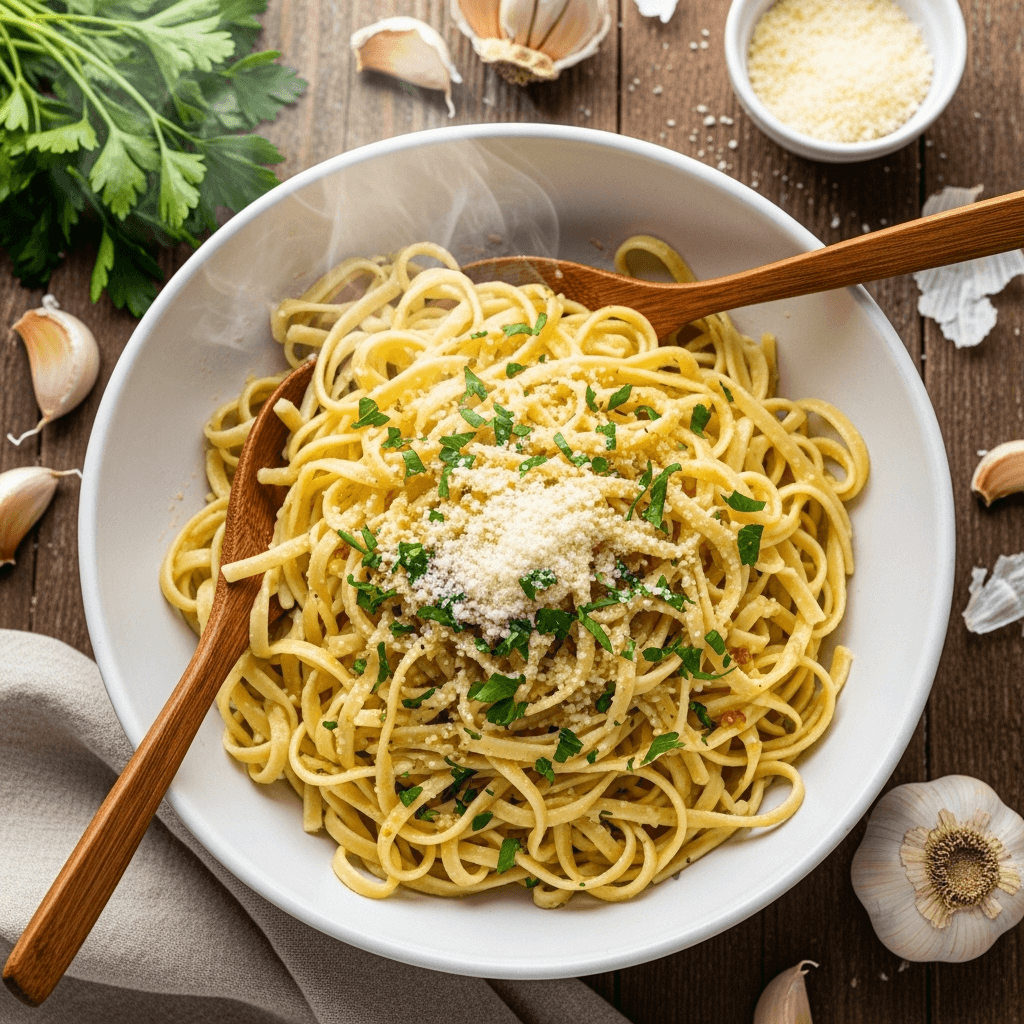

If you’re looking for a simple, comforting dish that tastes like a million bucks but takes just minutes to make, these garlic butter noodles are about to become your new obsession! This easy garlic butter noodles recipe is the ultimate weeknight lifesaver—tender pasta tossed in a rich, garlicky butter sauce with fresh herbs and parmesan cheese. It’s the kind of dish that feels indulgent and restaurant-quality but requires minimal effort and ingredients you probably already have in your pantry. Whether you need a quick side dish, a late-night snack, or a simple dinner when you just can’t deal with complicated recipes, these buttery garlic noodles deliver pure comfort in every bite.
Introduction of Recipe
Garlic butter noodles are exactly what they sound like—pasta (typically egg noodles, spaghetti, or fettuccine) tossed with melted butter infused with fresh garlic, then finished with parmesan cheese and fresh parsley. The beauty of this dish lies in its simplicity. There’s no heavy cream, no complicated sauce-making techniques, just pure, straightforward flavors that somehow create something magical. The butter coats every strand of pasta, the garlic adds aromatic depth, and the cheese brings a salty, umami richness that makes this simple dish absolutely addictive.
What makes this garlic butter pasta so universally loved is its versatility and speed. Serve these buttery noodles as a quick weeknight dinner when you need food on the table fast, a simple side dish alongside grilled chicken or steak, a base for adding protein like shrimp or chicken, comfort food when you’re craving something warm and satisfying, or even a midnight snack when nothing else will do. Kids love the mild, buttery flavor, adults appreciate the sophisticated simplicity, and everyone comes back for seconds.
This recipe is also incredibly forgiving and adaptable. Use whatever pasta shape you have, adjust the garlic to your preference, add vegetables for a more complete meal, or keep it simple and pure. There’s no wrong way to make garlic butter noodles, which is why this recipe has become a staple in kitchens worldwide.
History / Background
While garlic butter noodles don’t have a single documented origin story, the combination of pasta, butter, and garlic has deep roots in both Italian and American home cooking traditions. In Italy, simple pasta dishes featuring minimal ingredients have existed for centuries—think aglio e olio (garlic and oil pasta), a classic Roman dish that uses just spaghetti, olive oil, garlic, and red pepper flakes. The concept of letting quality ingredients shine without overcomplicated sauces is fundamentally Italian.
The American version of garlic butter noodles likely evolved from these Italian influences, particularly as Italian immigrants brought their food traditions to the United States in the late 19th and early 20th centuries. American home cooks adapted these recipes to local ingredients and tastes, often favoring butter over olive oil (butter being more readily available and affordable in many parts of America) and adding parmesan cheese for extra richness.
Garlic butter itself became a American comfort food staple throughout the 20th century, appearing in everything from garlic bread to shrimp scampi. The combination of butter and garlic is almost universally appealing—butter provides richness and carries flavors beautifully, while garlic adds aromatic complexity without overwhelming other ingredients.
In the 1950s and 60s, as American home cooking emphasized convenience, simple pasta dishes gained popularity. Egg noodles tossed with butter became a common side dish, and it was a natural evolution to add garlic for more flavor. This easy garlic noodles recipe represents that tradition of uncomplicated, satisfying food that doesn’t require culinary expertise.
Today, garlic butter noodles have experienced a renaissance thanks to social media and food blogs. Home cooks searching for quick, budget-friendly meals have rediscovered the joy of simple pasta dishes. The recipe has spawned countless variations—some add cream, others include vegetables or protein, and creative cooks experiment with different herbs and seasonings. But at its core, this dish remains true to its humble origins: pasta, butter, garlic, and not much else.
Why You’ll Love This Recipe
These easy garlic butter noodles are about to become your most-requested recipe, and here’s exactly why they deserve that status:
Picture yourself coming home exhausted, opening your pantry to find just basic staples, and within 15 minutes having a plate of steaming, buttery noodles that taste like comfort in edible form. That’s the magic of this recipe—it transforms simple ingredients into something that feels special.
- Lightning-fast preparation: From boiling water to serving, you’re looking at just 15 minutes—faster than ordering takeout
- Minimal ingredients: Just 7 basic ingredients that you probably have in your kitchen right now
- One-pot convenience: Cook everything in one pot for minimal cleanup (music to any weeknight cook’s ears!)
- Budget-friendly brilliance: Costs just a few dollars to make enough for a family, making it perfect for tight grocery budgets
- Kid-approved flavor: The mild, buttery taste appeals to even the pickiest eaters—no fighting at the dinner table
- Infinitely customizable: Add vegetables, protein, or different seasonings to make it your own
- Perfect side or main dish: Works equally well as a simple dinner or elegant side for entertaining
- Pantry staple recipe: No special shopping trips required—make this with what you already have
- Foolproof technique: Literally impossible to mess up—if you can boil water and melt butter, you can make this
- Comfort food satisfaction: Delivers that cozy, satisfying feeling without being heavy or overly rich
- Naturally vegetarian: Great for meatless meals without trying to be a meat substitute
Ingredient Notes
Let’s break down the simple ingredients that make these garlic butter noodles so delicious:
Pasta/Noodles: The foundation of your dish. While egg noodles are traditional and create that classic comfort food texture, you can use absolutely any pasta shape you have. Spaghetti, fettuccine, linguine, penne, or even angel hair all work beautifully. Fresh pasta creates an extra-luxurious texture but dried pasta is perfectly delicious and more convenient. For gluten-free needs, gluten-free pasta works great—just follow package directions as cooking times vary.
Butter: This is where quality matters! Use real butter (unsalted is best so you can control salt levels), not margarine or spreads. Butter creates the silky, rich sauce that coats the noodles. European-style butter with higher butterfat content creates an even more luxurious sauce, but regular American butter works perfectly. Some people use half butter and half olive oil for a lighter version that’s closer to traditional Italian aglio e olio.
Garlic: Fresh garlic is essential—this isn’t the place for garlic powder. Freshly minced garlic releases aromatic oils that infuse the butter with incredible flavor. Plan on 4-6 cloves depending on their size and how much you love garlic. Some people use up to 8 cloves for really garlicky noodles! Pre-minced garlic from a jar works in a pinch but won’t have quite the same bright, fresh flavor.
Parmesan Cheese: Freshly grated parmesan is worlds better than the shelf-stable stuff in the green can. Real Parmigiano-Reggiano has a nutty, salty complexity that elevates the whole dish. Buy a wedge and grate it yourself—it only takes a minute and makes a huge difference. For a budget-friendly option, look for domestic parmesan or even Pecorino Romano, which is saltier and sharper but equally delicious.
Fresh Parsley: Adds a pop of color and fresh, herbaceous flavor that brightens the rich butter sauce. Flat-leaf Italian parsley has better flavor than curly parsley, but either works. In a pinch, you can substitute fresh basil, chives, or even skip the herbs entirely (though they really do add a nice finishing touch).
Salt and Pepper: Essential for proper seasoning. Don’t forget to salt your pasta water generously—this is your only opportunity to season the pasta itself. Freshly cracked black pepper adds a subtle spiciness that complements the garlic beautifully.
Pasta Water: Don’t dump all your pasta water down the drain! Reserve a cup before draining. The starchy pasta water helps create a silky sauce that clings to the noodles and brings everything together. This is a professional chef secret that makes homemade pasta dishes taste restaurant-quality.
Optional Add-Ins: Red pepper flakes add heat, lemon zest brightens everything, extra herbs like basil or oregano create different flavor profiles, or a splash of cream makes it extra rich and indulgent.
Equipment Needed
You’ll need very minimal equipment for this simple recipe:
- Large pot (for boiling pasta)
- Large skillet or sauté pan (for making the garlic butter sauce)
- Colander (for draining pasta)
- Wooden spoon or tongs (for tossing pasta)
- Chef’s knife and cutting board (for mincing garlic and chopping parsley)
- Measuring cups and spoons
- Grater (for fresh parmesan)
- Serving bowl or platter (optional, for presentation)
Garlic Butter Noodles Recipe
- Total Time: 15 minutes
- Yield: 4 servings 1x
- Diet: Vegetarian
Description
These easy garlic butter noodles feature tender pasta tossed in a rich, garlicky butter sauce with fresh parmesan and parsley. Ready in just 15 minutes with minimal ingredients, this simple recipe delivers maximum comfort and flavor. Perfect as a quick weeknight dinner or elegant side dish, these buttery noodles are foolproof, budget-friendly, and absolutely delicious!
Ingredients
- 12 oz pasta (egg noodles, spaghetti, or fettuccine)
- 6 tablespoons unsalted butter
- 6 cloves garlic, minced (about 2 tablespoons)
- ½ cup freshly grated parmesan cheese, plus more for serving
- ¼ cup fresh parsley, chopped
- ½ teaspoon salt (plus more for pasta water)
- ¼ teaspoon black pepper
- ¼ teaspoon red pepper flakes (optional, for heat)
- ½ cup reserved pasta water
Optional Add-Ins:
- 1 teaspoon lemon zest
- 2 tablespoons heavy cream (for extra richness)
- Additional herbs (basil, oregano, thyme)
Instructions
Step 1: Boil the Pasta
Bring a large pot of water to a rolling boil. Add 1-2 tablespoons of salt—the water should taste like the sea. Add the pasta and cook according to package directions until al dente (tender but still slightly firm to the bite). Before draining, use a measuring cup to scoop out and reserve 1 cup of the starchy pasta cooking water—this is crucial for creating a silky sauce later. Drain the pasta in a colander but don’t rinse it (the residual starch helps the sauce cling).
Step 2: Make the Garlic Butter Sauce
While the pasta cooks, prepare your garlic butter sauce. In a large skillet over medium-low heat, melt the butter. Once melted and gently bubbling, add the minced garlic. Cook, stirring constantly, for 1-2 minutes until the garlic is fragrant and softened but not browned. Watch carefully—garlic burns quickly and burnt garlic tastes bitter. If the garlic starts to brown, immediately reduce heat. The goal is soft, fragrant, golden garlic that infuses the butter with flavor.
Step 3: Combine Pasta and Sauce
Add the drained pasta directly to the skillet with the garlic butter. Using tongs or a wooden spoon, toss the pasta to coat every strand with the garlicky butter. Add ¼ cup of the reserved pasta water and continue tossing. The starchy water will help create a light, silky sauce that clings to the noodles rather than pooling at the bottom of the bowl. If the pasta seems dry, add more pasta water a tablespoon at a time until you achieve a glossy, cohesive consistency.
Step 4: Add Cheese and Seasonings
Remove the skillet from heat. Add the grated parmesan cheese, salt, black pepper, and red pepper flakes (if using). Toss everything together vigorously until the cheese melts and creates a creamy coating on the pasta. The residual heat will melt the cheese without making it clumpy. Taste and adjust seasoning—you might want more salt, pepper, or parmesan depending on your preferences.
Step 5: Finish and Serve
Add the fresh chopped parsley and toss once more to distribute it evenly. Transfer the garlic butter noodles to a serving bowl or individual plates. Top with additional grated parmesan cheese and a final crack of black pepper if desired. Serve immediately while hot—this dish is best enjoyed fresh when the butter is still glossy and the pasta is perfectly hot.
Notes
- Pasta Water is Key: Don’t skip reserving pasta water! The starchy water is essential for creating a proper sauce that coats the noodles. It’s the secret to restaurant-quality pasta at home.
- Fresh vs. Dried Pasta: Fresh pasta cooks much faster (2-3 minutes) than dried pasta (8-12 minutes). Adjust timing accordingly but the sauce method remains the same.
- Garlic Intensity: Start with 4 cloves if you’re sensitive to garlic, or use up to 8 cloves for serious garlic lovers. Raw garlic is quite strong, but cooking mellows it.
- Cheese Substitutions: Pecorino Romano, Asiago, or Grana Padano all work beautifully in place of parmesan. Each has a slightly different flavor profile but all are delicious.
- Make it Vegan: Use vegan butter and nutritional yeast instead of parmesan cheese for a plant-based version that’s still incredibly tasty.
- Gluten-Free Option: Use your favorite gluten-free pasta. The sauce method remains exactly the same.
- Prep Time: 5 minutes
- Cook Time: 10 minutes
- Category: Main Course
- Method: Stovetop
- Cuisine: Italian-American
Nutrition
- Serving Size: About 1½ cups (¼ of recipe)
- Calories: 425
- Sugar: 2g
- Sodium: 420mg
- Fat: 20g
- Saturated Fat: 12g
- Unsaturated Fat: 7g
- Trans Fat: 0g
- Carbohydrates: 48g
- Fiber: 2g
- Protein: 14g
- Cholesterol: 50mg
Tips & Variations
Let’s explore the many delicious ways to customize these garlic butter noodles:
Garlic Butter Noodles with Shrimp: Add 1 pound of peeled, deveined shrimp to the garlic butter before tossing with pasta. Cook until pink and opaque (about 3-4 minutes). This transforms the dish into a complete meal that feels fancy enough for company.
Lemon Garlic Butter Noodles: Add 2 tablespoons fresh lemon juice and 1 teaspoon lemon zest along with the parsley. The bright citrus cuts through the richness and adds a restaurant-quality finish.
Creamy Garlic Butter Noodles: Stir in 2-3 tablespoons of heavy cream or half-and-half when you add the pasta water for an extra-luxurious, silky sauce that’s reminiscent of Alfredo but lighter.
Garlic Butter Noodles with Vegetables: Add sautéed vegetables like cherry tomatoes, spinach, broccoli, peas, or asparagus. Cook them in the garlic butter before adding the pasta for a more nutritious, colorful dish.
Spicy Garlic Butter Noodles: Increase red pepper flakes to ½-1 teaspoon, or add a few dashes of hot sauce for those who love heat. The spiciness contrasts beautifully with the rich butter.
Herbed Garlic Butter Noodles: Add fresh basil, oregano, thyme, or a combination of Italian herbs along with or instead of parsley for different flavor profiles.
Garlic Butter Noodles with Chicken: Top with grilled, sliced chicken breast or rotisserie chicken for a complete, protein-packed meal.
Mushroom Garlic Butter Noodles: Sauté sliced mushrooms in butter until golden before adding garlic. The earthy mushrooms add depth and make the dish more substantial.
Asian-Inspired Garlic Butter Noodles: Add 1 tablespoon soy sauce, 1 teaspoon sesame oil, and top with sliced green onions and sesame seeds for an Asian twist on the classic.
Bacon Garlic Butter Noodles: Cook 4-6 strips of bacon until crispy, crumble, and toss with the finished noodles. Use the bacon fat in place of some of the butter for incredible smoky flavor.
Pro Chef Tips
Want to elevate your garlic butter noodles from good to absolutely spectacular? Here’s what the pros know:
Toast the Garlic Gently: The key to perfect garlic flavor is cooking it low and slow until it’s soft and fragrant but not browned. Burnt garlic is bitter and will ruin the whole dish. If you accidentally burn the garlic, dump it out, wipe the pan, and start over—it’s worth it.
Use the Pasta Water Generously: That starchy pasta water is liquid gold. It helps emulsify the butter and cheese into a creamy, cohesive sauce rather than leaving you with oily, separated butter. Add it gradually and keep tossing until you achieve that glossy, restaurant-quality finish.
Toss, Don’t Stir: When combining pasta with sauce, use tongs or a large fork to lift and toss the pasta rather than stirring. This coats every strand evenly and helps prevent clumping.
Finish with Cold Butter: Professional chefs often finish pasta dishes by tossing in a tablespoon of cold butter off the heat. This technique (called mounting or “monter au beurre” in French) creates an extra-silky, glossy sauce that clings beautifully to pasta.
Add Cheese Off Heat: Adding parmesan while the pan is still on the burner can make the cheese clump or become grainy. Remove from heat first, then add cheese and toss vigorously—the residual heat will melt it perfectly.
Undercook the Pasta Slightly: Cook pasta about 1 minute less than package directions if you’ll be tossing it with sauce in a hot pan. It will continue cooking and absorbing flavors while you toss it with the garlic butter.
Fresh Pasta Water is Essential: Only use the water the pasta was just cooked in—it needs to be hot and starchy. Cold or plain water won’t create the same emulsification effect that makes the sauce silky.
Season Pasta Water Generously: Your pasta water should be as salty as the ocean—this is the only opportunity to season the pasta itself from the inside out. Well-seasoned pasta water makes a huge difference in the final flavor.
Use a Large Skillet: A wide, shallow pan gives you more surface area to toss the pasta effectively. If your skillet is too small, you’ll struggle to coat the pasta evenly.
Common Mistakes to Avoid
Even with a recipe this simple, there are a few pitfalls to watch for:
Burning the Garlic: This is mistake #1! Garlic goes from perfect to burnt in seconds. Once garlic burns, it turns bitter and there’s no fixing it—you’ll need to start over. Use medium-low heat and stir constantly. If the garlic starts browning too quickly, immediately remove the pan from heat or add the pasta to stop the cooking.
Rinsing the Pasta: Never rinse pasta that’s going into a sauce! Rinsing washes away the surface starch that helps sauce cling to the noodles. The only time you rinse pasta is when making cold pasta salad.
Forgetting to Reserve Pasta Water: It’s so easy to drain pasta on autopilot and dump all that precious starchy water down the drain. Set out a measuring cup by the sink as a reminder to scoop some out before draining. No pasta water means no silky sauce—you’ll end up with dry, clumpy noodles.
Using Pre-Grated Parmesan: The stuff in the green can contains cellulose (wood pulp) to prevent clumping, and it doesn’t melt smoothly or taste nearly as good as freshly grated cheese. Invest in a wedge of real parmesan and grate it yourself—it takes 30 seconds and makes a world of difference.
Overcooking the Pasta: Mushy pasta is sad pasta. Cook it al dente (tender with a slight bite), remembering that it will continue cooking slightly when you toss it with the hot garlic butter. Overcooked pasta also releases too much starch and can make the dish gummy.
Not Tossing Enough: Don’t just dump pasta in a bowl and pour sauce over it. You need to toss everything together vigorously so every strand gets coated with garlic butter and cheese. Use tongs or two large forks and really get in there!
Serving It Cold: This dish is meant to be enjoyed hot and fresh. The butter will solidify and look unappetizing as it cools. If you need to hold it for a few minutes, keep it warm in the skillet over the lowest heat setting, tossing occasionally.
Storage & Meal Prep
While garlic butter noodles are best enjoyed fresh, here’s how to handle leftovers:
Refrigerator Storage: Let leftover noodles cool completely, then transfer to an airtight container and refrigerate for up to 3 days. The butter will solidify when cold, making the pasta look less appealing, but it’s still perfectly safe and will taste good once reheated.
Reheating Methods: The microwave works but can dry out the pasta. Add a tablespoon of water or butter before microwaving in 30-second intervals, stirring between each. For better results, reheat in a skillet over medium-low heat with a splash of water, milk, or extra butter, tossing frequently until warmed through. The stovetop method revives the sauce better than microwave.
Preventing Dryness: Pasta continues absorbing moisture as it sits, so leftovers will be drier than fresh. Add extra butter, a splash of milk or cream, or a drizzle of olive oil when reheating to bring back that silky texture.
Make-Ahead for Meal Prep: While not ideal, you can prep components ahead. Cook and drain pasta, toss with a tiny bit of oil to prevent sticking, and refrigerate. Make the garlic butter sauce fresh when ready to eat and toss with reheated pasta. This is better than storing the finished dish.
Texture Changes: Be aware that refrigerated pasta will never be quite as good as fresh. The texture becomes softer and the sauce less glossy. It’s still tasty, just not peak perfection. This is one of those dishes truly meant to be enjoyed immediately.
Make-Ahead & Freezer Notes
Honestly, garlic butter noodles aren’t the best choice for freezing or extensive make-ahead:
Freezing (Not Recommended): While technically you can freeze cooked pasta, the texture suffers significantly. The butter sauce may separate, the pasta becomes mushy when thawed, and the fresh garlic flavor deteriorates. If you must freeze, use within 1 month and expect compromised quality.
Better Make-Ahead Strategy: Instead of making the entire dish ahead, prep ingredients. Mince garlic and store in the refrigerator (up to 3 days), grate cheese ahead, chop parsley, and measure out your butter. When dinner time comes, you’ll only need 15 minutes to cook pasta and toss everything together—much better than reheating!
Batch Cooking: If you want to meal prep, consider making a double batch of the garlic butter sauce and storing it separately. Refrigerate the sauce for up to 5 days. Cook fresh pasta whenever you want it and toss with reheated garlic butter.
Thawing and Reheating from Frozen: If you’ve frozen garlic butter noodles, thaw overnight in the refrigerator. Reheat in a skillet over medium-low heat, adding 2-3 tablespoons of butter or cream to help re-emulsify the sauce. Expect the texture to be softer than fresh.
Why Fresh is Best: The beauty of this recipe is how quick it is to make from scratch. Fifteen minutes from start to finish means there’s really no need to freeze it. Make it fresh whenever you want it—it’s faster than thawing and reheating!
Serving Suggestions
These versatile garlic butter noodles pair beautifully with many dishes:
As a Side Dish: Serve alongside grilled chicken, pan-seared steak, baked salmon, roasted pork chops, or grilled shrimp. The buttery noodles complement any protein beautifully and soak up meat juices wonderfully.
As a Main Course: Top with grilled chicken, sautéed shrimp, or roasted vegetables to transform this side into a complete meal. Add a simple green salad and you have a balanced dinner.
With Vegetables: Pair with roasted broccoli, sautéed green beans, steamed asparagus, Caesar salad, or a simple tomato and cucumber salad for a lighter, vegetable-forward meal.
Bread Pairings: Serve with garlic bread (double garlic = double delicious!), crusty Italian bread, or warm dinner rolls for soaking up any extra garlic butter sauce.
Beverage Pairings: This rich dish pairs well with crisp white wines like Pinot Grigio or Sauvignon Blanc, or light red wines like Pinot Noir. For non-alcoholic options, sparkling water with lemon or iced tea work wonderfully.
Family-Style Presentation: Serve in a large bowl at the center of the table, letting everyone help themselves. Top with extra parmesan and parsley for a beautiful presentation.
Elegant Plating: For a fancier presentation, twirl portions of pasta with tongs into nest shapes on individual plates. Top each serving with a sprinkle of parmesan and a small parsley sprig.
Picnic or Potluck: While best served hot, these noodles work at room temperature for picnics or potlucks. The flavors are still delicious even when not piping hot.
FAQs Section
Can I use garlic powder instead of fresh garlic?
While fresh garlic is strongly recommended for the best flavor, you can substitute with garlic powder in a pinch. Use about 1 teaspoon of garlic powder in place of the fresh garlic cloves. Add it to the melted butter but be aware that garlic powder doesn’t provide the same aromatic, complex flavor as fresh garlic. The dish will still taste good but won’t have that vibrant garlic punch.
What’s the best pasta shape for garlic butter noodles?
Honestly, any pasta works! Long, thin noodles like spaghetti, linguine, or fettuccine are traditional because the sauce coats them beautifully. Egg noodles create a more homestyle, comfort food vibe. Shorter shapes like penne or rigatoni work well too, especially if you’re adding vegetables or protein that you want to mix throughout. Use whatever you have on hand!
Can I make this dairy-free or vegan?
Yes! Replace butter with vegan butter or extra-virgin olive oil (use about ⅓ cup olive oil in place of 6 tablespoons butter). Replace parmesan with nutritional yeast for a cheesy, umami flavor—start with 3-4 tablespoons and adjust to taste. Some people also use vegan parmesan alternatives available at health food stores. The result won’t be identical but will still be delicious!
Why is my pasta dry and not saucy?
This almost always comes down to not using enough pasta water or not tossing enough. The starchy pasta water helps create a silky, cohesive sauce that clings to noodles. Start with ¼ cup and add more tablespoon by tablespoon while tossing vigorously until you achieve a glossy, saucy consistency. Also ensure you’re not draining the pasta too long before tossing—do it immediately while everything is hot.
How can I make this more filling as a main course?
Add protein! Cooked chicken, shrimp, Italian sausage, or even chickpeas bulk it up significantly. You can also add vegetables like broccoli, peas, cherry tomatoes, or spinach for more substance and nutrition. Another option is to increase the portion size and serve with a substantial side salad and bread.
Can I use jarred minced garlic?
You can, but the flavor won’t be quite as bright and fresh. Jarred garlic tends to be more muted and can have a slightly bitter or off taste. If using jarred garlic, you’ll need about 2 tablespoons. For the best flavor in this garlic-forward dish, fresh is really worth the 2 minutes it takes to peel and mince a few cloves.
How do I keep the garlic from burning?
Use medium-LOW heat (not medium or medium-high) and stir constantly. Watch the garlic carefully—it should soften and become fragrant but remain pale to light golden, never brown. If your stove runs hot, use low heat. If you see the garlic starting to brown, immediately remove the pan from heat or add the pasta to stop the cooking. Having all your ingredients prepped and ready helps you move quickly before garlic burns.
Conclusion
There you have it—everything you need to make perfect, buttery, garlicky noodles that will become your go-to comfort food! This easy garlic butter noodles recipe proves that simple doesn’t mean boring. With just a handful of basic ingredients and 15 minutes of your time, you can create a dish that’s satisfying, delicious, and versatile enough to serve as a side dish or main course.
The beauty of garlic butter pasta lies in its simplicity and adaptability. Master this basic recipe, then make it your own with different add-ins, proteins, and flavor variations. Whether you keep it classic and pure or dress it up with shrimp and vegetables, these noodles deliver comfort and flavor in every bite.
Ready to make these easy garlic butter noodles? I’d love to hear how yours turn out! Drop a comment below sharing your favorite variations or any questions you have. Did you add protein? Try a different pasta shape? Make it spicy? Share your experience! And if you love this recipe as much as I do, please pin it to your favorite Pinterest board so you (and others!) can find it easily whenever those garlic butter noodle cravings hit. Happy cooking!