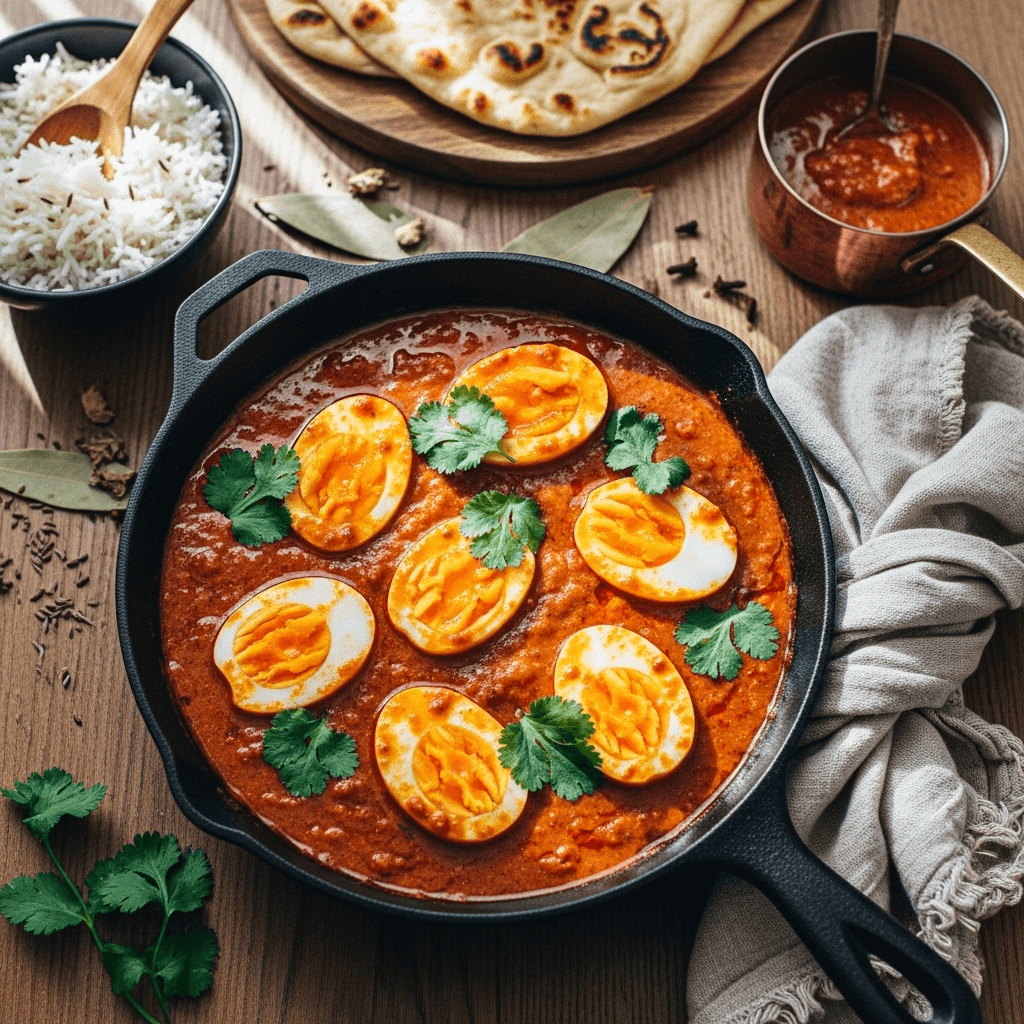

If you’re looking for a comforting, flavorful, and protein-packed meal that comes together in under 30 minutes, this egg curry recipe is exactly what you need. This dish features tender hard-boiled eggs swimming in a luscious, aromatic gravy made with tomatoes, onions, and warming spices. It’s the kind of recipe that feels like a warm hug on a busy weeknight, yet impressive enough to serve to guests.
Egg curry is incredibly versatile and can be served for lunch or dinner alongside fluffy basmati rice, warm naan bread, or even quinoa for a lighter option. Whether you’re new to Indian cooking or a seasoned home chef, this easy egg curry delivers big flavors without requiring hours in the kitchen or a pantry full of obscure ingredients. It’s budget-friendly, naturally gluten-free, and can easily be adapted to suit different spice levels and dietary preferences.
History / Background
Egg curry has deep roots in South Asian cuisine, particularly in India, where it’s been a beloved comfort food for generations. Unlike many traditional Indian curries that feature meat or paneer, egg curry emerged as an economical yet nutritious alternative that could feed families without breaking the bank. Eggs have always been one of the most affordable protein sources across the Indian subcontinent, making this dish accessible to people from all walks of life.
The beauty of egg curry lies in its regional diversity. In Bengal, you’ll find a mustard-based version called “dimer jhol,” while in Kerala, coconut milk transforms it into a creamy, tropical delight. The Punjabi-style egg curry, which this recipe is based on, features a rich tomato and onion gravy fragrant with garam masala, cumin, and coriander. During the British colonial period, egg curry even made its way into Anglo-Indian cuisine, where it became a staple in railway dining cars and military messes.
What makes egg curry particularly special is its democratic nature—it’s enjoyed by vegetarians and non-vegetarians alike, bridging dietary preferences in a way few dishes can. In many Indian households, it’s a Sunday brunch favorite or a quick weeknight dinner solution when the refrigerator is looking sparse but there are always eggs on hand.
Why You’ll Love This Recipe
This egg curry recipe is about to become your new favorite go-to meal, and here’s why. The combination of everyday ingredients transforms into something truly spectacular, with layers of flavor that taste like you’ve been cooking for hours. The creamy, tomato-based gravy coats each egg perfectly, creating that restaurant-quality experience right in your own kitchen.
Here’s what makes this recipe a winner:
- Quick and Easy – Ready in just 30 minutes from start to finish, perfect for busy weeknights when you need dinner on the table fast
- Budget-Friendly – Eggs are one of the most affordable proteins available, and most of the other ingredients are pantry staples you probably already have
- Meal Prep Champion – The flavors actually improve overnight, making this ideal for Sunday meal prep or batch cooking
- Naturally Gluten-Free – No modifications needed, this curry is already gluten-free and can easily be made dairy-free too
- Customizable Spice Level – Adjust the heat to your preference, from mild and family-friendly to fiery and bold
- Protein-Packed – Each serving delivers a substantial amount of protein to keep you satisfied and energized
- One-Pot Wonder – Minimal cleanup means less time at the sink and more time enjoying your delicious meal
- Crowd-Pleaser – Appeals to both adventurous eaters and those new to Indian cuisine
Ingredient Notes
Understanding your ingredients is the first step to cooking success. Here’s what you’ll need for this homemade egg curry and why each component matters:
Eggs – The star of the show! Use large eggs for the best results. Hard-boiling them ahead of time makes this recipe come together even faster. Farm-fresh eggs work beautifully, but regular store-bought eggs are perfectly fine.
Onions – Yellow or white onions provide the sweet, savory base for the curry. They break down into the sauce, adding body and depth. Red onions can work in a pinch but have a slightly different flavor profile.
Tomatoes – Fresh tomatoes give the best flavor and texture, but canned diced tomatoes (14.5 oz can) work wonderfully when fresh aren’t in season. The tomatoes create the tangy, rich base of the gravy.
Ginger and Garlic – This dynamic duo is non-negotiable in Indian cooking. Fresh is always best, but you can use jarred ginger-garlic paste (1 tablespoon) as a time-saver. They add aromatic complexity and warmth.
Spices – Cumin seeds, turmeric, coriander powder, garam masala, and red chili powder create the signature curry flavor. Don’t skip the whole cumin seeds at the beginning—they infuse the oil with incredible flavor. If your spices are more than six months old, consider replacing them for maximum impact.
Yogurt or Coconut Milk – Adds creaminess and helps balance the spices. Plain whole-milk yogurt gives a tangy richness, while coconut milk (for dairy-free) provides a subtle sweetness. Greek yogurt works but thin it with a little water first.
Oil – Vegetable oil, canola oil, or ghee all work well. Ghee adds an authentic, nutty richness if you want to elevate the dish.
Fresh Cilantro – For garnish and a burst of freshness. Parsley can substitute if you’re not a cilantro fan.
Salt – Essential for bringing out all the flavors. Add gradually and taste as you go.
Equipment Needed
You don’t need any fancy equipment to make this delicious egg curry recipe. Here’s what you’ll need:
- Large Saucepan or Deep Skillet – A 12-inch skillet or 4-quart saucepan with a lid works perfectly for making the curry
- Medium Pot – For boiling the eggs
- Immersion Blender or Regular Blender – Optional, but helpful if you prefer a completely smooth gravy
- Sharp Knife and Cutting Board – For chopping onions, tomatoes, and herbs
- Measuring Spoons and Cups – For accurate spice measurements
- Wooden Spoon or Spatula – For stirring the curry as it simmers
- Slotted Spoon – Makes it easy to remove eggs from boiling water
- Bowl of Ice Water – For shocking the eggs after boiling, which makes peeling much easier
Easy Egg Curry Recipe
- Total Time: 30 minutes
- Yield: 4 servings 1x
- Diet: Gluten Free
Description
This easy egg curry features perfectly cooked hard-boiled eggs nestled in a rich, aromatic tomato-onion gravy spiced with cumin, turmeric, and garam masala. It’s a comforting, protein-packed meal that’s ready in just 30 minutes and tastes like it came from your favorite Indian restaurant.
Ingredients
- 6 large eggs
- 2 tablespoons vegetable oil or ghee
- 1 teaspoon cumin seeds
- 2 medium onions, finely chopped
- 1 tablespoon ginger-garlic paste (or 1 tablespoon minced ginger + 3 cloves minced garlic)
- 3 medium tomatoes, finely chopped (or 1 can diced tomatoes, 14.5 oz)
- 1 teaspoon ground turmeric
- 1 teaspoon ground coriander
- 1 teaspoon red chili powder (adjust to taste)
- 1 teaspoon garam masala
- 1/2 cup plain yogurt or coconut milk
- 1 cup water (adjust for desired consistency)
- Salt to taste (about 1 teaspoon)
- Fresh cilantro for garnish
- 1/2 teaspoon kasuri methi (dried fenugreek leaves), optional
Instructions
- Boil the Eggs: Place eggs in a medium pot and cover with cold water by 1 inch. Bring to a boil over high heat, then immediately remove from heat, cover, and let sit for 10-12 minutes. Transfer eggs to ice water for 5 minutes, then peel and set aside. You can slice them in half lengthwise or leave whole.
- Temper the Spices: Heat oil or ghee in a large skillet or saucepan over medium heat. Add cumin seeds and let them sizzle for about 30 seconds until fragrant and slightly darkened. This tempering process releases essential oils and creates a flavor foundation.
- Sauté the Aromatics: Add the chopped onions to the pan and cook for 6-8 minutes, stirring occasionally, until they turn soft and golden brown. The onions should be well caramelized for maximum flavor. Add the ginger-garlic paste and cook for another minute until the raw smell disappears.
- Build the Tomato Base: Add the chopped tomatoes and cook for 5-7 minutes, stirring occasionally, until they break down completely and the mixture becomes jammy. The oil should start to separate from the masala—this is the sign you’re looking for.
- Add the Spices: Reduce heat to medium-low. Add turmeric, coriander, red chili powder, and salt. Cook for 1-2 minutes, stirring constantly to prevent burning. The spices should become fragrant and well incorporated into the tomato mixture.
- Create the Gravy: Add yogurt or coconut milk, stirring quickly to prevent curdling. Pour in 1 cup of water and mix well. Bring the mixture to a gentle simmer and let it cook for 5 minutes, allowing the flavors to meld together. If you prefer a smoother gravy, use an immersion blender at this stage.
- Add the Eggs: Gently add the peeled eggs to the gravy, spooning sauce over them to coat. If you’ve halved the eggs, place them cut-side up. Sprinkle garam masala and kasuri methi (if using) over the top. Cover and simmer for 3-4 minutes so the eggs absorb the flavors.
- Garnish and Serve: Taste and adjust salt and spices as needed. Garnish generously with fresh cilantro. Serve hot with basmati rice, naan, roti, or your favorite bread.
Notes
- For a richer curry: Add 2 tablespoons of heavy cream or cashew cream at the end of cooking.
- Spice level: This recipe is medium-spicy. Reduce chili powder to 1/2 teaspoon for mild, or increase to 1.5 teaspoons for extra heat.
- Make it vegan: Use coconut milk instead of yogurt and ensure all spices are plant-based.
- Gravy consistency: Add more water for a thinner curry, or simmer longer uncovered for a thicker gravy.
- Egg texture tip: Make small slits in the eggs before adding to gravy so they absorb more flavor.
- Prep Time: 10 minutes
- Cook Time: 20 minutes
- Category: Dinner
- Method: Stovetop
- Cuisine: Indian
Nutrition
- Serving Size: 1.5 eggs with gravy (1/4 of recipe)
- Calories: 245
- Sugar: 6g
- Sodium: 520mg
- Fat: 17g
- Saturated Fat: 4g
- Unsaturated Fat: 11g
- Trans Fat: 0g
- Carbohydrates: 12g
- Fiber: 3g
- Protein: 12g
- Cholesterol: 280mg
Tips & Variations
The beauty of this Indian egg curry recipe is how easily it adapts to your preferences and what you have on hand. Here are some delicious ways to customize it:
Make It Richer: Stir in 2-3 tablespoons of heavy cream, cashew cream, or coconut cream just before serving for an extra luxurious texture. A tablespoon of butter at the end adds restaurant-style richness.
Add Vegetables: Turn this into a more substantial meal by adding vegetables. Peas, diced potatoes, spinach, or bell peppers work beautifully. Add heartier vegetables like potatoes with the tomatoes, and leafy greens or peas during the last 5 minutes of cooking.
Protein Boost: Add cubed paneer, tofu, or cooked chicken along with the eggs for a heartier meal that feeds a crowd.
Spice It Up: Love heat? Add 1-2 slit green chilies with the onions, or stir in a teaspoon of hot sauce at the end. A pinch of cayenne pepper also amps up the heat.
South Indian Style: Add 1/2 cup of coconut milk and a handful of curry leaves for a Kerala-inspired version. A teaspoon of tamarind paste adds tangy complexity.
Bengali Style: Replace some of the oil with mustard oil and add 1/2 teaspoon of panch phoron (Bengali five-spice) instead of cumin seeds for an authentic Bengali dimer jhol.
Make It Tangier: A squeeze of lemon juice or a teaspoon of amchur (dried mango) powder brightens the flavors beautifully.
Pro Chef Tips
Want to elevate your homemade Indian egg curry from good to absolutely incredible? These professional tips make all the difference:
Perfect Hard-Boiled Eggs Every Time: The key is using slightly older eggs (5-7 days old) rather than super fresh ones—they peel much easier. After boiling, shock them in ice water immediately and let them sit for at least 5 minutes. Tap all around the shell before peeling and start from the wider end where the air pocket is located.
Toast Your Ground Spices: For next-level flavor, toast your ground spices (coriander, cumin powder) in a dry pan for 30 seconds before adding them to the curry. This awakens their essential oils and creates incredible depth.
The Oil Separation Test: Don’t rush the tomato-onion masala. Cook until you see oil separating from the mixture and pooling at the edges. This “tadka” moment means the raw flavor is gone and the base is perfectly cooked—usually takes 12-15 minutes total.
Room Temperature Dairy: If using yogurt, bring it to room temperature and whisk it smooth before adding to prevent curdling. Add it off the heat or on low heat, stirring constantly.
Blooming Garam Masala: Add garam masala near the end of cooking rather than with the other spices. It contains delicate aromatics that lose their magic with prolonged cooking. Sprinkle it on during the last 5 minutes for maximum impact.
Layer Your Salt: Season at multiple stages—with the onions, with the tomatoes, and again when adding the gravy. This creates more complex, well-rounded flavor than adding all the salt at once.
Poke the Eggs: Use a toothpick or fork to make 3-4 small holes in each egg before adding them to the curry. They’ll soak up the flavorful gravy like little sponges, making every bite more delicious.
Common Mistakes to Avoid
Even the best egg curry recipe can go wrong with a few missteps. Here’s what to watch out for:
Overcooking the Eggs: Nothing ruins egg curry faster than chalky, rubbery eggs with green-gray yolks. Follow the timing precisely: 10-12 minutes for large eggs, then immediate ice bath. Overcooked eggs also peel poorly and look unappealing.
Burning the Spices: Adding spices to oil that’s too hot causes them to burn instantly, creating a bitter taste that ruins the entire dish. Always reduce heat to medium-low before adding ground spices, and stir constantly for the first 30 seconds.
Rushing the Onion-Tomato Base: This is where beginners go wrong most often. Undercooked onions and tomatoes create a raw, harsh flavor. Be patient—properly caramelized onions and fully broken-down tomatoes are the foundation of restaurant-quality curry.
Curdled Yogurt: Adding cold yogurt directly to hot curry causes it to split and curdle, creating an unappetizing grainy texture. Always whisk yogurt smooth, bring to room temperature, and add it gradually while stirring, or use coconut milk for foolproof creaminess.
Wrong Consistency: Too thick and the curry becomes gloppy and hard to eat; too thin and it’s like soup. The gravy should coat the back of a spoon but still flow easily. Remember, it thickens as it sits, so err on the slightly thinner side.
Skipping Fresh Herbs: Fresh cilantro isn’t just garnish—it brightens the rich, heavy flavors and adds a fresh counterpoint. Don’t skip it or use dried herbs instead.
Storage & Meal Prep
One of the best things about this easy egg curry recipe is that it stores beautifully and tastes even better the next day as the flavors meld together.
Refrigerator Storage: Let the curry cool completely to room temperature, then transfer to an airtight container. It will keep in the refrigerator for up to 4 days. Store the eggs whole or halved—both work fine. The gravy may thicken in the fridge, so add a splash of water when reheating.
Reheating: For best results, reheat gently on the stovetop over medium-low heat, stirring occasionally and adding a few tablespoons of water to loosen the gravy. Microwave reheating works too—use 50% power in 1-minute intervals, stirring between each, to prevent the eggs from becoming rubbery. Heat until warmed through but not boiling.
Meal Prep Strategy: This curry is a meal prep champion! Make a double batch on Sunday and portion it into individual containers with rice or quinoa for grab-and-go lunches all week. The flavors actually improve overnight as the eggs marinate in the spices.
Gravy and Eggs Separately: For optimal texture, consider storing the hard-boiled eggs separately from the gravy and combining them when reheating. This prevents the eggs from absorbing too much salt and keeps them from becoming too soft.
Make-Ahead & Freezer Notes
Planning ahead? This Indian egg curry recipe is incredibly freezer-friendly with a few simple considerations.
Make-Ahead (1-2 Days): You can prepare the curry gravy up to 2 days in advance. Make the entire sauce following steps 2-6, then cool and refrigerate. Boil and peel the eggs, storing them separately in the fridge. When ready to serve, reheat the gravy, add the eggs, and simmer for 5 minutes.
Freezing the Gravy: The curry gravy freezes beautifully for up to 3 months. However, cooked egg whites become rubbery and watery when frozen, so freeze ONLY the gravy without the eggs. Let it cool completely, then transfer to freezer-safe containers or bags, leaving 1 inch of headspace for expansion. Label with the date and reheat from frozen or thawed on the stovetop, then add freshly boiled eggs.
Thawing and Reheating: Transfer frozen curry to the refrigerator overnight to thaw, or reheat directly from frozen in a saucepan over medium-low heat. Stir frequently and add water as needed to reach desired consistency. Once hot and bubbling, add freshly boiled eggs and simmer for 5 minutes before serving.
Quick Freeze Method: Pour cooled gravy into ice cube trays or muffin tins for individual portions. Once frozen, pop them out into a freezer bag. This makes it easy to reheat just one or two servings at a time—perfect for solo meals.
Serving Suggestions
This flavorful egg curry pairs beautifully with so many sides and accompaniments. Here are my favorite ways to serve it:
Classic Pairings: Fluffy basmati rice is the traditional choice and soaks up the delicious curry gravy perfectly. Steamed white rice or brown rice also work wonderfully. For a low-carb option, try cauliflower rice.
Bread Options: Warm naan bread, roti, chapati, or paratha are ideal for scooping up every last bit of that amazing sauce. Toasted pita bread or even crusty French bread can work in a pinch.
Fresh Sides: Balance the rich curry with cooling cucumber raita (yogurt with cucumber, mint, and cumin), a simple kachumber salad (chopped tomatoes, cucumbers, and onions with lemon), or a green salad with a tangy vinaigrette.
Indian Accompaniments: Serve with pickled onions, mango chutney, lime pickle, or papadum (crispy lentil crackers) for an authentic Indian meal experience. A dollop of plain yogurt on the side helps cool the heat too.
Beverage Pairings: Masala chai, lassi (sweet or salted yogurt drink), or even a cold beer pairs nicely with the spiced curry. For non-alcoholic options, try coconut water or sparkling water with lime.
Complete Meal Ideas: Make it a feast by serving alongside dal (lentil curry), aloo gobi (potato and cauliflower), or saag paneer (spinach with cheese) with rice in the center. This thali-style presentation is impressive yet achievable.
FAQs Section
Can I use raw eggs instead of boiled eggs?
No, this recipe specifically requires hard-boiled eggs. Raw eggs won’t cook properly in the curry gravy and will create food safety issues. The curry simmers for only a few minutes, which isn’t enough time to cook raw eggs through. However, you could make a scrambled egg curry by cooking scrambled eggs separately and adding them to the gravy.
How do I make this egg curry less spicy for kids?
Reduce or omit the red chili powder entirely and use only 1/2 teaspoon of garam masala. You can also increase the yogurt or coconut milk to dilute the heat. Many parents make a mild version for kids and add hot sauce or chili flakes to adult portions at the table.
Can I make egg curry without onions and garlic?
Absolutely! For a Jain or onion-garlic-free version, skip those ingredients and start with cumin seeds in hot oil. Add a pinch of asafoetida (hing) for depth, then proceed with tomatoes and spices. The curry will be lighter but still delicious. You can also increase the ginger slightly to compensate.
Why is my curry gravy watery?
This usually happens when tomatoes haven’t been cooked down enough or too much water was added. The solution is to simmer the curry uncovered for 5-10 minutes to reduce and thicken it. Make sure to cook the tomato-onion base until the oil separates before adding liquids. You can also blend a portion of the gravy and stir it back in for a thicker texture.
Can I use store-bought curry powder instead of individual spices?
Yes, you can substitute 2-3 tablespoons of good-quality curry powder for the turmeric, coriander, chili powder, and garam masala. However, the flavor won’t be quite as complex and layered. If using curry powder, add fresh garam masala at the end for an authentic finishing touch.
How do I prevent eggs from cracking while boiling?
Use eggs at room temperature rather than straight from the fridge. Start them in cold water and bring to a boil gradually rather than dropping them into boiling water. You can also add a teaspoon of vinegar or salt to the water, which helps seal any cracks that do form.
Is egg curry healthy?
Yes! Eggs are an excellent source of high-quality protein, vitamins, and minerals. This curry provides healthy fats, fiber from vegetables, and anti-inflammatory compounds from spices like turmeric. To make it even healthier, use less oil, opt for coconut milk instead of cream, and serve with brown rice or whole wheat roti.
Conclusion
There you have it—a complete guide to making the most delicious, restaurant-quality egg curry right in your own kitchen! This recipe proves that incredible flavor doesn’t require hours of cooking time or expensive ingredients. With just 30 minutes and a handful of pantry staples, you can create a comforting, protein-packed meal that’ll have your family asking for seconds.
Whether you’re new to Indian cooking or looking to expand your curry repertoire, this easy egg curry recipe is the perfect place to start. The forgiving nature of the dish means even first-time curry makers can achieve impressive results, while the depth of flavor will satisfy even the most experienced home chefs.
I hope you love this homemade egg curry as much as my family does! It’s become our go-to weeknight dinner when we need something quick, satisfying, and absolutely delicious. The leftovers are incredible too—if there are any left!
Now it’s your turn! Give this recipe a try and let me know how it turns out in the comments below. Did you add any fun variations? Serve it with a particular side dish that was amazing? I’d love to hear about your experience! And if you enjoyed this recipe, please share it on Pinterest so other home cooks can discover it too. Don’t forget to pin it to your dinner recipe board for easy access later!
Happy cooking, and may your kitchen always smell like delicious curry!