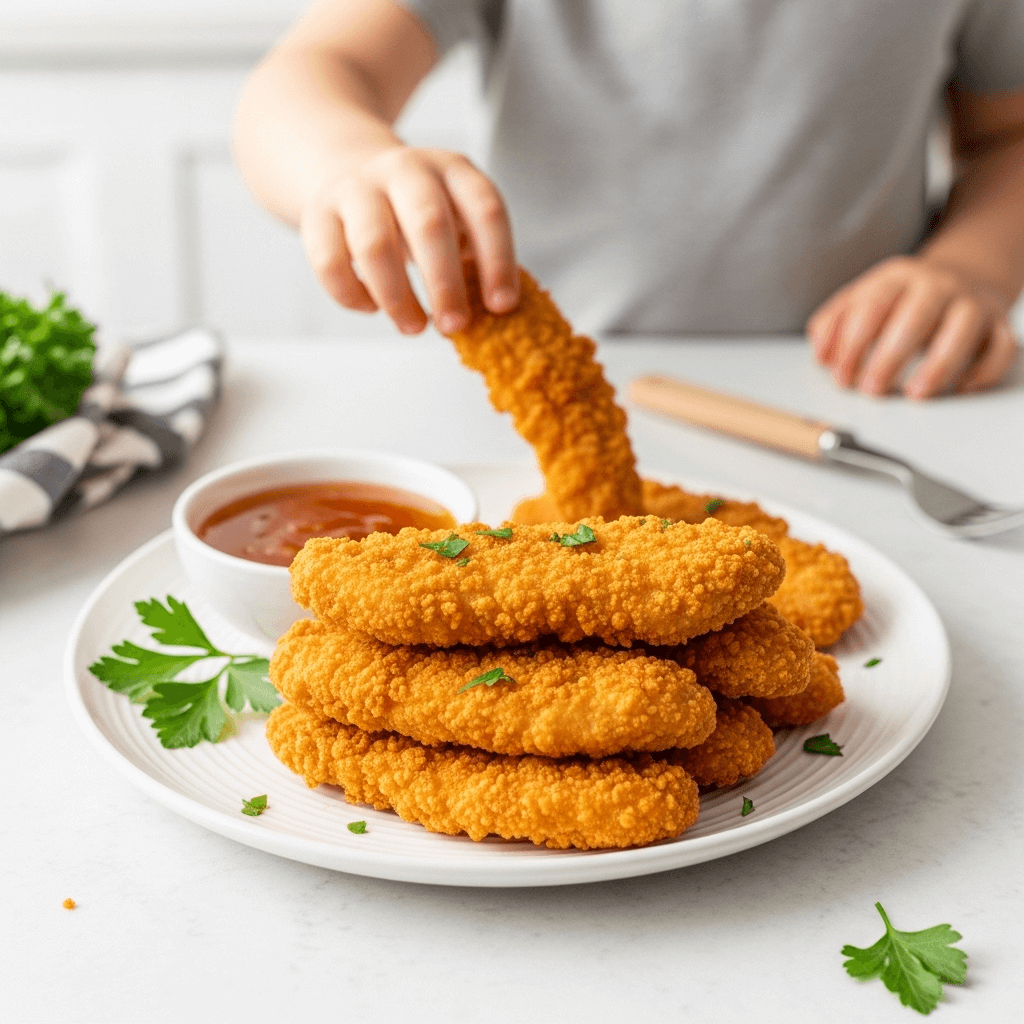

Get ready for the ultimate crispy chicken tenders recipe that’ll have everyone at your table asking for seconds! These homemade chicken tenders are everything you want them to be – golden brown and impossibly crispy on the outside, juicy and tender on the inside, and packed with so much flavor that you’ll never want the frozen kind again.
There’s something universally appealing about perfectly crispy chicken tenders. They’re the dish that makes kids happy, satisfies picky eaters, and somehow feels both indulgent and comforting at the same time. Whether you’re planning a fun family dinner, hosting game day, packing school lunches, or just craving that satisfying crunch, these easy chicken tenders deliver every single time.
What makes this recipe truly special is the combination of a flavorful buttermilk marinade and a perfectly seasoned double-coating technique that creates an extra-crunchy exterior without any fancy equipment. You don’t need a deep fryer – these can be pan-fried, baked, or air-fried to golden perfection. The result? Restaurant-quality crispy chicken tenders that are so much better (and better for you!) than anything you’d get from a drive-through. Plus, they’re ready in about 30 minutes from start to finish!
History / Background
Chicken tenders, also known as chicken fingers or chicken strips, are a relatively modern addition to American cuisine, though their origins are somewhat debated. The “tender” or “tenderloin” refers to the pectoralis minor muscle found underneath the chicken breast – a naturally tender, boneless strip of meat that’s perfect for quick cooking.
The commercialization of chicken tenders began in the 1950s and 1960s as Americans increasingly embraced convenience foods and family-friendly dining. However, the breaded, fried chicken tender as we know it today really took off in the 1980s and 1990s. Several restaurants claim to have invented the modern chicken tender, with the most notable being Raising Cane’s (founded in 1996), which built an entire restaurant concept around them.
The city of Manchester, New Hampshire, holds a special place in chicken tender history. The Puritan Backroom restaurant there claims to have invented chicken tenders in 1974, and the dish became so popular that in 2019, New Hampshire legislators considered making the chicken tender the official state food (though it ultimately didn’t pass).
Chicken tenders became a staple of kids’ menus across America throughout the 1990s and early 2000s, and their popularity has never waned. What started as primarily a children’s food has evolved into a beloved comfort food for all ages. Today, specialty chicken tender restaurants thrive across the country, and virtually every casual dining establishment offers some version of crispy chicken tenders on their menu.
The appeal is simple: tender, boneless chicken is easy to eat (no bones or skin to navigate), the crispy coating provides satisfying texture, and they’re perfectly portable for dipping. While they started as a fast-food staple, homemade chicken tenders have become increasingly popular as people seek healthier, better-quality versions they can make at home. This recipe honors that tradition while giving you control over every ingredient to create the best possible version.
Why You’ll Love This Recipe
This isn’t just another chicken tender recipe – it’s THE recipe that’ll make you forget all about frozen chicken strips and fast-food versions. These homemade crispy chicken tenders are incredibly satisfying to make and even more satisfying to eat!
Here’s why this recipe will become your family’s favorite:
- Incredibly Crispy – The double-coating technique creates an extra-crunchy exterior that stays crispy even after cooling
- Juicy & Tender – Buttermilk marinade keeps the chicken impossibly tender and adds amazing flavor
- Kid-Approved – Even the pickiest eaters love these! Perfect for family dinners and lunchboxes
- Budget-Friendly – Costs a fraction of restaurant or frozen versions while tasting so much better
- Versatile Cooking Methods – Make them fried, baked, or air-fried depending on your preference
- Ready in 30 Minutes – Quick enough for busy weeknights once the chicken marinates
- Customizable Seasoning – Easily adapt the spices to your family’s taste preferences
- Meal Prep Champion – Make a big batch and freeze for quick future meals
- Healthier Option – Control the ingredients and skip all the additives found in frozen versions
- Perfect for Parties – Everyone loves chicken tenders! Great for game day, potlucks, and gatherings
- Restaurant Quality at Home – Tastes better than takeout at a fraction of the cost
Ingredient Notes
Let’s break down each component of these incredible crispy chicken tenders. Every ingredient plays a crucial role in creating that perfect combination of crunch and juiciness.
Chicken Tenderloins – These are the star of the show! Chicken tenderloins (also called chicken tenders) are the small strips of meat found under the chicken breast. They’re naturally tender, cook quickly, and are the perfect size for even coating. You can find them packaged separately at most grocery stores, or you can buy chicken breasts and cut them into strips yourself. Plan on about 4-5 tenderloins per person (approximately 1.5-2 pounds for 4 people).
Buttermilk – This is the secret ingredient that makes these tenders so incredibly juicy! Buttermilk is mildly acidic, which helps tenderize the chicken while adding a subtle tangy flavor. The thickness of buttermilk also helps the coating adhere beautifully. If you don’t have buttermilk, you can make a substitute by mixing 1 cup of regular milk with 1 tablespoon of lemon juice or white vinegar – let it sit for 5 minutes until it curdles slightly.
All-Purpose Flour – Forms the base of your coating mixture. The flour creates structure and helps everything stick to the chicken. It also contributes to that signature crispy texture when fried or baked. For a gluten-free version, you can substitute with a 1:1 gluten-free flour blend or a combination of rice flour and cornstarch.
Breadcrumbs – I recommend using plain breadcrumbs (either regular or panko) for the crispiest results. Panko breadcrumbs are Japanese-style breadcrumbs that are coarser and create an even crunchier coating. Regular fine breadcrumbs work perfectly too. Avoid pre-seasoned Italian breadcrumbs unless you want that specific flavor profile.
Eggs – Act as the “glue” between the chicken and the breading. They help create that essential bond so your crispy coating stays attached during cooking. Beaten eggs create a sticky surface that the breadcrumb mixture clings to perfectly.
Paprika – Adds a beautiful golden-red color and mild, sweet pepper flavor without adding heat. Smoked paprika gives a subtle smoky depth, while regular paprika keeps things mild and kid-friendly.
Garlic Powder and Onion Powder – These provide savory, aromatic flavor throughout the coating. Powdered versions distribute evenly and won’t burn like fresh garlic might. They’re essential for that classic chicken tender taste.
Salt and Black Pepper – Season both the buttermilk marinade and the coating mixture. Don’t skip the salt in the coating – it’s crucial for bringing out all the other flavors. I recommend about 1 teaspoon of salt in the flour mixture and ½ teaspoon in the buttermilk.
Cayenne Pepper (Optional) – Just a pinch adds subtle warmth without making them spicy. You can adjust or omit based on your family’s heat tolerance.
Cooking Oil – For frying, use a neutral oil with a high smoke point like vegetable oil, canola oil, or peanut oil. You’ll need about 2-3 cups for pan-frying, depending on your skillet size. For baking or air frying, use cooking spray or a light brush of olive oil.
Equipment Needed
Having the right tools makes preparing these crispy chicken tenders much easier. Here’s what you’ll need:
Essential Equipment:
- Large Bowl – For marinating chicken in buttermilk
- Two Shallow Dishes or Pie Plates – For your dredging station (one for flour mixture, one for egg wash)
- Large Heavy-Bottomed Skillet or Dutch Oven – For frying (if pan-frying)
- Cooling Rack Set Over Baking Sheet – Essential for keeping cooked tenders crispy while you finish the batch
- Tongs – For flipping chicken and removing from oil safely
- Meat Thermometer – To ensure chicken reaches safe internal temperature (165°F)
- Measuring Cups and Spoons – For accurate seasoning
- Paper Towels – For patting chicken dry and for draining if needed
- Whisk or Fork – For beating eggs
For Baked Version:
- Rimmed baking sheet
- Wire rack (to elevate chicken for all-around crispiness)
- Cooking spray
For Air Fryer Version:
- Air fryer basket
- Cooking spray
Optional but Helpful:
- Deep-fry or candy thermometer to monitor oil temperature
- Large platter or serving board for presentation
- Small bowls for serving various dipping sauces
Crispy Chicken Tenders Recipe
- Total Time: 1 hour
- Yield: 4 servings (16-20 chicken tenders) 1x
- Diet: Gluten Free
Description
These ultra-crispy homemade chicken tenders are golden, crunchy, and incredibly juicy! Marinated in buttermilk for maximum tenderness and coated with a perfectly seasoned double-breading, they’re so much better than anything store-bought or from a restaurant. Ready in about an hour including marinating time!
Ingredients
For the Chicken & Marinade:
- 2 pounds chicken tenderloins (about 16–20 pieces)
- 1 ½ cups buttermilk
- 1 teaspoon salt
- ½ teaspoon black pepper
- ½ teaspoon garlic powder
- ½ teaspoon paprika
For the Coating:
- 1 ½ cups all-purpose flour
- 1 ½ cups plain breadcrumbs (panko or regular)
- 1 ½ teaspoons salt
- 1 teaspoon black pepper
- 1 teaspoon garlic powder
- 1 teaspoon onion powder
- 1 teaspoon paprika
- ½ teaspoon cayenne pepper (optional, for mild heat)
For the Egg Wash:
- 2 large eggs
- 2 tablespoons water
For Cooking:
- Vegetable oil or canola oil (2-3 cups for frying, or cooking spray for baking/air frying)
Instructions
Step 1: Marinate the Chicken
In a large bowl, combine the buttermilk, 1 teaspoon salt, ½ teaspoon black pepper, ½ teaspoon garlic powder, and ½ teaspoon paprika. Mix well. Add the chicken tenderloins and toss to coat completely. Cover the bowl with plastic wrap and refrigerate for at least 30 minutes, or up to 4 hours. This step is crucial for tender, flavorful chicken!
Step 2: Set Up Your Breading Station
While the chicken marinates, prepare three shallow dishes for your breading station. In the first dish, combine the flour, ½ cup of the breadcrumbs, salt, pepper, garlic powder, onion powder, paprika, and cayenne if using. Mix well. In the second dish, beat together the eggs and water until smooth. In the third dish, place the remaining 1 cup of breadcrumbs.
Step 3: Heat the Oil (If Frying)
Add 1-2 inches of oil to a large, heavy-bottomed skillet or Dutch oven. Heat over medium-high heat until the oil reaches 350°F on a thermometer. You can test readiness by dropping in a tiny pinch of flour – it should sizzle immediately but not burn. Set up your cooling rack over a baking sheet nearby.
Step 4: Bread the Chicken
Remove the chicken from the buttermilk marinade, letting excess drip off. Working with one tender at a time, dredge it in the flour mixture, coating all sides and shaking off excess. Dip it in the egg wash, letting excess drip off. Finally, press it into the plain breadcrumbs, coating all sides thoroughly. Place on a clean plate. Repeat with all tenders.
Step 5: Fry the Chicken Tenders
Carefully place 4-5 breaded tenders in the hot oil (don’t crowd the pan). Fry for 3-4 minutes on the first side until deep golden brown, then flip and fry for another 3-4 minutes until the second side is equally golden and the internal temperature reaches 165°F. Transfer to the cooling rack and repeat with remaining tenders, adjusting heat as needed to maintain 350°F oil temperature.
Step 6: Rest and Serve
Let the chicken tenders rest on the cooling rack for 2-3 minutes before serving. This allows the coating to set and the juices to redistribute. Serve hot with your favorite dipping sauces!
For Baked Chicken Tenders:
Preheat oven to 425°F. Place a wire rack on a baking sheet and spray with cooking spray. Bread the chicken as directed above, then place tenders on the rack without touching. Spray the tops lightly with cooking spray. Bake for 18-22 minutes, flipping halfway through, until golden brown and internal temperature reaches 165°F.
For Air Fryer Chicken Tenders:
Preheat air fryer to 400°F. Bread the chicken as directed. Place tenders in a single layer in the air fryer basket (work in batches if needed). Spray lightly with cooking spray. Air fry for 10-12 minutes, flipping halfway through, until golden brown and cooked through to 165°F.
Notes
- Don’t Skip the Marinade: The buttermilk marinade is essential for tender, flavorful chicken. Even 30 minutes makes a huge difference!
- Temperature Matters: For frying, maintain oil temperature at 350°F. Too hot and the coating burns before the chicken cooks; too cool and the coating gets greasy.
- Internal Temperature: Always check that chicken reaches 165°F internally for food safety.
- Work in Batches: Don’t overcrowd the pan when frying. This drops the oil temperature and results in soggy, greasy coating.
- Cooling Rack is Key: Using a cooling rack instead of paper towels prevents the bottom from getting soggy from trapped steam.
- Make It Gluten-Free: Use gluten-free flour blend and gluten-free breadcrumbs for a GF version that’s just as crispy!
- Prep Time: 15 minutes (plus 30 minutes marinating)
- Cook Time: 15 minutes
- Category: Dinner
- Method: Frying (or Baking/Air Frying)
- Cuisine: American
Nutrition
- Serving Size: 4-5 chicken tenders
- Calories: 425
- Sugar: 3g
- Sodium: 895mg
- Fat: 16g
- Saturated Fat: 3g
- Unsaturated Fat: 12g
- Trans Fat: 0g
- Carbohydrates: 35g
- Fiber: 2g
- Protein: 35g
- Cholesterol: 145mg
Tips & Variations
Flavor Variations:
- Buffalo Chicken Tenders: Toss cooked tenders in buffalo sauce and serve with ranch or blue cheese dressing
- Honey Mustard Style: Add 1 tablespoon of honey mustard to the buttermilk marinade for tangy-sweet flavor
- Parmesan Crusted: Add ½ cup grated Parmesan cheese to the breadcrumb mixture for extra savory crunch
- Ranch Seasoned: Mix 2 tablespoons of dry ranch seasoning into the flour coating
- BBQ Style: Add 1 teaspoon smoked paprika and ½ teaspoon brown sugar to the coating, serve with BBQ sauce
- Spicy Cajun: Increase cayenne to 1 teaspoon and add 1 teaspoon of Cajun seasoning to the flour mixture
- Lemon Pepper: Add 1 tablespoon lemon pepper seasoning to the breadcrumb coating for bright, zesty flavor
- Nashville Hot: After frying, brush with a spicy cayenne-butter sauce for authentic Nashville hot chicken flavor
Coating Variations:
- Extra Crunchy: Use only panko breadcrumbs instead of regular breadcrumbs
- Cornflake Crusted: Replace breadcrumbs with crushed cornflakes for incredible crunch
- Potato Chip Coating: Use crushed potato chips (any flavor!) instead of breadcrumbs for unique flavor and texture
- Pretzel Crusted: Use crushed pretzels for a salty, crunchy coating
- Coconut Chicken Tenders: Mix shredded coconut with breadcrumbs for tropical flavor
Healthier Modifications:
- Baked Version: Follow the baking instructions to reduce fat by about 50%
- Air Fryer Method: Uses minimal oil while maintaining crispiness
- Whole Wheat: Use whole wheat flour and whole wheat breadcrumbs for added fiber
- Lower Sodium: Reduce salt in both marinade and coating to about ½ teaspoon each
- Oil-Free Marinade: Use plain Greek yogurt instead of buttermilk (works great!)
Dipping Sauce Ideas:
- Classic honey mustard (mix equal parts honey and Dijon mustard)
- Ranch dressing
- BBQ sauce (sweet, spicy, or smoky)
- Buffalo sauce
- Honey for simple sweet dipping
- Creamy garlic aioli
- Sweet chili sauce
- Comeback sauce (mayo, ketchup, hot sauce mix)
Pro Chef Tips
Tip #1: The Double Coating Makes All the Difference
Notice that the first dredging station combines flour AND breadcrumbs, while the final coating is pure breadcrumbs. This creates a thicker, more substantial crust that stays incredibly crispy. The initial flour-breadcrumb mixture creates texture, while the final breadcrumb layer creates that beautiful golden exterior. Don’t skip this double-coating step – it’s what makes these tenders restaurant-quality!
Tip #2: Pat Chicken Dry Before Breading
Even though you’re marinating in buttermilk, briefly pat each piece with paper towels to remove excess liquid before you start breading. Too much liquid creates a gloppy coating that doesn’t crisp properly. The chicken should be moist but not dripping wet.
Tip #3: Use the “Wet Hand, Dry Hand” Method
Keep one hand designated as your “wet hand” (for handling the chicken in the egg wash) and the other as your “dry hand” (for handling flour and breadcrumbs). This prevents your fingers from getting coated in clumpy breading, which makes the process much cleaner and more efficient.
Tip #4: Press the Breadcrumbs Firmly
Don’t just lightly dust the chicken with breadcrumbs – really press them into the surface with your hands. This ensures they adhere properly and won’t fall off during cooking. The coating should look thick and completely cover the chicken.
Tip #5: Let Breaded Chicken Rest
If time allows, place your breaded chicken tenders in the refrigerator for 15-20 minutes before cooking. This helps the coating set and adhere even better, resulting in less coating falling off during cooking. This step isn’t essential but does make a noticeable difference.
Tip #6: Maintain Consistent Oil Temperature
When frying, the oil temperature will drop when you add cold chicken. Work in small batches and allow the oil to come back to temperature between batches. If the oil is too cool (below 325°F), the coating will absorb excess oil and become greasy. Too hot (above 375°F) and the outside burns before the inside cooks through.
Tip #7: Don’t Move Tenders Too Soon
When frying or pan-frying, resist the urge to flip or move the chicken before it’s ready. Let each side cook undisturbed for at least 3 minutes so the coating can properly crisp and develop that golden color. Moving too early can cause the coating to stick to the pan or fall off.
Common Mistakes to Avoid
Mistake #1: Skipping the Buttermilk Marinade
Some people try to skip straight to breading, but this results in dry, tough chicken tenders. The buttermilk marinade tenderizes the chicken through its mild acidity and adds crucial moisture and flavor. Solution: Always marinate for at least 30 minutes, or up to 4 hours for even more tender results. If you’re really short on time, even 15 minutes is better than nothing.
Mistake #2: Using Oil That’s Too Hot or Too Cold
Oil temperature is critical for crispy (not greasy) chicken tenders. Too hot and the coating burns while the inside stays raw; too cold and the coating absorbs excess oil becoming soggy and greasy. Solution: Use a thermometer to maintain 350°F consistently. Adjust your heat up or down between batches as needed. If you don’t have a thermometer, test with a small piece of bread – it should turn golden in about 60 seconds.
Mistake #3: Overcrowding the Pan
Adding too many chicken tenders at once dramatically drops the oil temperature, resulting in greasy, soggy coating and uneven cooking. Solution: Work in batches of 4-5 tenders maximum, depending on your pan size. Leave space between each piece for proper heat circulation. Yes, this takes longer, but the crispy results are worth it!
Mistake #4: Not Seasoning Each Layer
Some recipes only season one component, but the best chicken tenders are seasoned throughout – in the marinade, in the flour mixture, and even in the breadcrumbs if you want. Solution: Season every layer! This creates depth of flavor rather than having all the flavor on the outside. Don’t be shy with salt and spices – chicken needs adequate seasoning.
Mistake #5: Placing Hot Tenders on Paper Towels
While it seems logical to drain fried food on paper towels, this actually traps steam underneath, making the bottom soggy. Solution: Always use a cooling rack set over a baking sheet. This allows air to circulate around the entire tender, keeping every side crispy. If you must use paper towels, at least prop the tenders up at an angle so steam can escape.
Storage & Meal Prep
Storing Cooked Chicken Tenders:
Allow chicken tenders to cool completely to room temperature before storing (don’t leave out longer than 2 hours for food safety). Place in an airtight container with paper towels between layers to absorb any moisture. Refrigerate for up to 4 days.
Reheating for Best Crispiness:
Oven Method (Best): This is by far the best way to reheat while maintaining crispiness. Preheat oven to 375°F. Place chicken tenders on a wire rack over a baking sheet. Bake for 10-12 minutes until heated through and crispy. The rack allows hot air to circulate, re-crisping all sides.
Air Fryer Method (Excellent): Preheat air fryer to 375°F. Place tenders in a single layer and air fry for 5-6 minutes until heated through and crispy again. This method is super quick and works beautifully!
Toaster Oven Method (Good): Works like the regular oven but perfect for small portions. Heat to 375°F and cook for 8-10 minutes.
Microwave (Quick but Compromises Texture): The microwave will heat them quickly but makes the coating soft and chewy rather than crispy. Place on a microwave-safe plate and heat in 30-second intervals until warm. For slightly better texture, use a crisper pan if you have one.
Stovetop Method: Heat a tablespoon of oil in a skillet over medium heat. Add tenders and cook for 2-3 minutes per side until heated through and crispy.
Meal Prep Tips:
Chicken tenders are excellent for meal prep! Make a double batch on Sunday and portion into containers for easy lunches throughout the week. Pair with various sides and dipping sauces to keep things interesting. Store the tenders separate from any wet ingredients (like ranch or vegetables) to maintain crispiness.
Make-Ahead & Freezer Notes
Prepare-Ahead Options:
Marinate Ahead (Up to 4 Hours): Combine chicken and buttermilk marinade up to 4 hours before you plan to cook. The chicken will become even more tender with longer marinating.
Bread Ahead (2-3 Hours): You can bread all your chicken tenders and keep them in the refrigerator for 2-3 hours before cooking. Place on a parchment-lined baking sheet in a single layer, cover loosely with plastic wrap. This actually helps the coating adhere even better!
Freezing Raw Breaded Chicken Tenders (Best Method):
This is ideal for having homemade chicken tenders ready anytime!
- Complete the entire breading process as directed in the recipe
- Place breaded (uncooked) chicken tenders on a parchment-lined baking sheet in a single layer, not touching
- Freeze uncovered for 2-3 hours until solid (this is called “flash freezing”)
- Transfer frozen tenders to freezer-safe bags or containers, removing as much air as possible
- Label with date and freeze for up to 3 months
Cooking from Frozen:
No thawing needed! Cook straight from frozen, adding 3-5 minutes to cooking time.
- For frying: Fry at 350°F for 6-8 minutes total, flipping halfway
- For baking: Bake at 425°F for 22-25 minutes, flipping halfway
- For air frying: Air fry at 400°F for 14-16 minutes, flipping halfway
Freezing Cooked Chicken Tenders:
You can also freeze fully cooked tenders, though they won’t be quite as crispy when reheated.
- Let cooked tenders cool completely
- Wrap individually in plastic wrap or aluminum foil
- Place wrapped tenders in freezer-safe bags
- Freeze for up to 3 months
- Thaw overnight in refrigerator, then reheat using oven or air fryer method above
Best Practices:
For maximum crispiness, I recommend freezing raw breaded tenders and cooking from frozen rather than freezing cooked ones. The texture is significantly better with this method!
Serving Suggestions
These versatile crispy chicken tenders pair beautifully with countless sides and work for various occasions. Here are some delicious serving ideas:
Classic Sides:
- French fries or sweet potato fries
- Creamy coleslaw
- Mac and cheese
- Baked beans
- Corn on the cob with butter
- Mashed potatoes and gravy
- Tater tots or potato wedges
Healthier Sides:
- Fresh garden salad with ranch dressing
- Roasted vegetables (broccoli, carrots, Brussels sprouts)
- Steamed green beans
- Fruit salad
- Quinoa or rice pilaf
- Roasted sweet potato rounds
- Cucumber and tomato salad
For Kids’ Meals:
- Carrot sticks and apple slices
- Mini corn muffins
- Applesauce
- Cheese cubes
- Mini watermelon slices
- Goldfish crackers (always a hit!)
Game Day Spread: Set up a chicken tender platter with:
- Multiple dipping sauces in small bowls (ranch, BBQ, honey mustard, buffalo)
- Celery and carrot sticks
- Pickle spears
- French fries or onion rings
- Coleslaw on the side
Complete Dinner Ideas:
Southern Comfort: Crispy chicken tenders, mac and cheese, collard greens, and cornbread
Family Favorite: Chicken tenders, tater tots, steamed broccoli, and fresh fruit
Healthier Plate: Baked chicken tenders, quinoa, roasted vegetables, and side salad
Kid-Friendly: Chicken tenders, french fries, corn, and applesauce
Party Platter: Chicken tenders, multiple dipping sauces, fries, coleslaw, and pickles
Creative Serving Ideas:
- Chicken Tender Wraps: Wrap tenders in flour tortillas with lettuce, tomatoes, cheese, and ranch
- Tender Salad: Slice tenders and serve over a large Caesar or garden salad
- Tender Sandwich: Place on a bun with lettuce, tomato, pickles, and your favorite sauce
- Tender Tacos: Chop tenders and serve in taco shells with traditional toppings
- Tender Bowl: Create a rice bowl with tenders, vegetables, and drizzled sauce
Beverage Pairings:
- Lemonade or sweet tea for a Southern feel
- Milkshakes (especially for a diner-style meal)
- Iced tea or soda
- Beer (for adults at game day gatherings)
- Fruit punch for kids’ parties
FAQs Section
Q: Can I bake these chicken tenders instead of frying them?
A: Absolutely! Baked chicken tenders are a healthier alternative that still turns out crispy and delicious. Preheat your oven to 425°F, place breaded tenders on a wire rack set over a baking sheet, spray lightly with cooking spray, and bake for 18-22 minutes, flipping halfway through. The wire rack is key – it allows hot air to circulate underneath, creating crispiness on all sides. The texture won’t be quite as crunchy as deep-fried, but they’re still excellent and contain about half the fat.
Q: What’s the best oil for frying chicken tenders?
A: Use neutral oils with high smoke points (above 400°F) for the best results. Vegetable oil, canola oil, and peanut oil are all excellent choices – they can handle the high heat without smoking or breaking down, and they won’t add any competing flavors to your chicken. Avoid olive oil (low smoke point) and coconut oil (adds coconut flavor). You’ll need about 2-3 cups of oil depending on your pan size – enough to create about 1-2 inches of depth.
Q: How do I know when the chicken tenders are fully cooked?
A: The most reliable method is using an instant-read meat thermometer inserted into the thickest part of the tender – it should read 165°F for safe consumption. Visual cues include golden-brown coating, clear (not pink) juices when pierced, and firm texture when pressed. However, because breading can brown before the inside is fully cooked, I always recommend using a thermometer, especially when you’re first mastering the recipe.
Q: Why is my breading falling off during cooking?
A: This usually happens for one of several reasons: (1) the chicken was too wet when breading, (2) you didn’t press the breadcrumbs firmly enough, (3) you moved or flipped the chicken too early before the coating set, or (4) your oil wasn’t hot enough. Solutions: Pat chicken thoroughly dry before breading, really press those breadcrumbs into the surface, let each side cook undisturbed for at least 3 minutes before flipping, and maintain oil temperature at 350°F. The chilling step mentioned in Pro Tips also helps the coating adhere better.
Q: Can I use chicken breast instead of tenderloins?
A: Yes! Simply cut boneless, skinless chicken breasts into strips about 1 inch wide and 3-4 inches long. Try to make them uniform in thickness so they cook evenly. You may need to gently pound thicker pieces to about ¾ inch thickness. The cooking time will be the same as tenderloins. Some people actually prefer making their own strips because you can control the size and shape.
Q: How do I make these gluten-free?
A: Making gluten-free crispy chicken tenders is easy! Simply substitute the all-purpose flour with a 1:1 gluten-free flour blend (like Bob’s Red Mill or King Arthur), and use gluten-free breadcrumbs or crushed gluten-free cornflakes. The texture will be nearly identical to the regular version. Make sure your other ingredients (especially any pre-mixed seasonings) are certified gluten-free as well. Rice flour mixed with cornstarch also works beautifully as a coating.
Q: Can I make these ahead for a party?
A: Yes! You have several options. Best option: Bread the chicken tenders completely up to 3 hours ahead and keep refrigerated until ready to cook. Cook them 15-30 minutes before guests arrive, and keep warm in a 200°F oven. Alternatively, cook them fully and reheat in a 375°F oven for 10 minutes just before serving. For the crispiest results at parties, consider setting up a “chicken tender bar” where you cook small batches throughout the event, or use a warming tray to keep them hot and crispy.