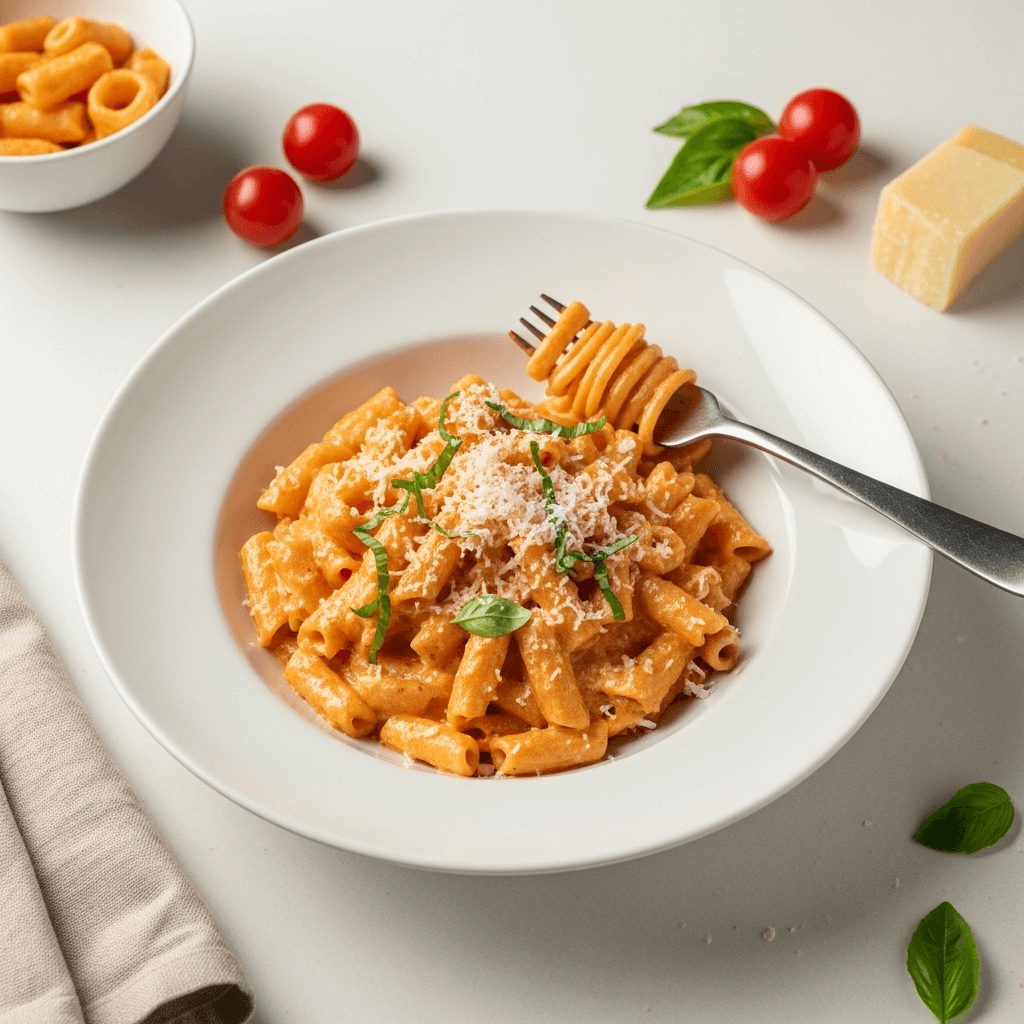
Get ready to fall in love with the easiest, most comforting pasta dish you’ll ever make—this Creamy Tomato Pasta combines the bright acidity of tomatoes with luscious cream for a sauce that’s absolutely irresistible. This easy creamy tomato pasta recipe features perfectly al dente pasta coated in a velvety tomato cream sauce that tastes like it simmered for hours but actually comes together in just 20 minutes. It’s the kind of dish that feels fancy enough for date night yet simple enough for a busy weeknight dinner.
Whether you’re feeding picky kids who love “red pasta,” impressing dinner guests without breaking a sweat, or just craving serious comfort food after a long day, this creamy tomato pasta with cream delivers every single time. The sauce is luxuriously smooth, perfectly balanced between tangy tomatoes and rich cream, with garlic and herbs that make your kitchen smell like an Italian trattoria. This one-pot pasta dinner has become a Pinterest favorite because it checks all the boxes: quick, delicious, budget-friendly, and impressive. Plus, with just one pot to clean, you can spend less time doing dishes and more time enjoying this restaurant-quality meal.
History / Background
While creamy tomato pasta might seem like a modern creation, the marriage of tomatoes and cream in Italian cooking has centuries-old roots. Tomatoes arrived in Italy from the New World in the 16th century, but Italians were initially skeptical of the “strange red fruit.” It took nearly 200 years before tomatoes became a staple in Italian cuisine, first gaining popularity in Southern Italy, particularly around Naples.
The concept of adding cream to tomato-based sauces likely emerged from Northern Italian cooking traditions, where dairy products like butter and cream are more prevalent than in the South (which favors olive oil). The famous Roman dish “Penne alla Vodka,” which combines tomato sauce with cream and vodka, became popular in the 1980s and helped popularize the tomato-cream sauce combination worldwide.
Creamy tomato pasta as we know it today—a simplified, weeknight-friendly version—is really an Italian-American creation that evolved in home kitchens. American cooks took inspiration from classic Italian tomato sauces like marinara and pomodoro, then enriched them with heavy cream for extra richness and a milder, more kid-friendly flavor. The result is a hybrid sauce that captures the best of both worlds: the bright, fresh taste of tomatoes balanced with the luxurious smoothness of cream.
This style of pasta became hugely popular in the 1990s and 2000s as home cooks sought quick, satisfying dinners that felt special. The addition of cream to tomato sauce creates a beautiful coral-pink color, mellows the acidity, and produces a silky texture that clings to pasta perfectly. It’s comfort food that’s elegant enough for company but simple enough for Tuesday night.
Today, creamy tomato pasta represents modern home cooking at its best: taking inspiration from traditional cuisine, adapting it to contemporary lifestyles, and creating something that’s both comforting and delicious. It’s become a staple recipe passed between friends, shared on Pinterest, and loved by families everywhere.
Why You’ll Love This Recipe
This easy creamy tomato pasta is about to become your most-requested weeknight dinner, and here’s exactly why it deserves that honor:
This isn’t just another pasta recipe—it’s the ultimate comfort food that happens to be ridiculously easy to make. The sauce comes together while your pasta cooks, meaning you can have dinner on the table in under 30 minutes without any complicated techniques or hard-to-find ingredients. The flavor is restaurant-quality: rich, creamy, perfectly seasoned, with that gorgeous balance of tangy tomatoes and luscious cream that makes every bite satisfying.
- Lightning Fast: Ready in just 20 minutes from start to finish—faster than ordering takeout!
- One-Pot Wonder: Everything cooks in a single pot for minimal cleanup
- Budget-Friendly: Uses affordable pantry staples and feeds 4-6 people inexpensively
- Kid-Approved: The creamy, mild sauce appeals even to picky eaters who usually resist tomatoes
- Easily Customizable: Add protein, vegetables, or spices to make it your own
- Restaurant-Quality Flavor: Tastes like something from an upscale Italian restaurant
- Perfect for Meal Prep: Leftovers reheat beautifully throughout the week
- Impressive Yet Simple: Looks and tastes fancy enough for guests but requires no special skills
- Versatile: Works as a main dish, side dish, or base for other recipes
- Crowd-Pleaser Guaranteed: I’ve never met anyone who doesn’t love this creamy tomato sauce pasta
Ingredient Notes
Let’s break down what makes this creamy pasta with tomato sauce so deliciously addictive:
Pasta: Use any pasta shape you love! Penne, rigatoni, fusilli, and farfalle (bow ties) work beautifully because their shapes hold the sauce. Long pasta like fettuccine or linguine also works wonderfully. For this recipe, you’ll need about 1 pound (16 oz) of dried pasta. Avoid angel hair or very thin pasta which can get mushy. Gluten-free pasta works perfectly if needed.
Canned Crushed Tomatoes: The foundation of your sauce! Use quality canned crushed tomatoes (San Marzano if you can find them) for the best flavor. Crushed tomatoes create a smoother sauce than diced. You can also use tomato puree or a combination of tomato sauce and tomato paste. One 28-ounce can is perfect for this recipe. Don’t use fresh tomatoes unless they’re peak-season—canned tomatoes are actually better for sauces because they’re picked and canned at perfect ripeness.
Heavy Cream: Creates that signature luscious, velvety texture. Heavy cream (also called heavy whipping cream) has the highest fat content and won’t curdle when added to acidic tomatoes. You can substitute with half-and-half for a lighter version, though the sauce will be thinner. Avoid regular milk which is too thin and likely to curdle. For dairy-free, use full-fat coconut cream (though flavor will change).
Butter and Olive Oil: The dynamic duo! Butter adds richness and helps create a silky sauce, while olive oil brings fruity depth and authentic Italian flavor. Using both creates the most flavorful base. You can use just olive oil if you prefer, but the butter really makes a difference in richness.
Garlic: Fresh garlic is essential—don’t use pre-minced from a jar! You’ll want 4-5 cloves, minced finely. Garlic adds that savory, aromatic depth that makes Italian cooking so irresistible. It’s sautéed until fragrant but not browned to avoid bitterness.
Onion (Optional but Recommended): Adds sweetness and depth. A small diced onion sautéed with the garlic creates a more complex sauce. If you’re in a hurry, you can skip it, but it really enhances the flavor.
Tomato Paste: Just 2 tablespoons intensifies the tomato flavor and adds richness to the sauce. Tomato paste is concentrated tomatoes that deepen the overall taste. Don’t skip this—it makes a big difference!
Italian Seasoning or Fresh Basil: Dried Italian seasoning (a blend of oregano, basil, thyme, and rosemary) is convenient and works beautifully. Fresh basil is even better if you have it—add it at the end for the brightest flavor. Both options add that classic Italian herb essence.
Red Pepper Flakes (Optional): Just a pinch adds subtle warmth without making the dish spicy. It enhances all the other flavors. Omit if cooking for young children or those sensitive to spice.
Parmesan Cheese: Freshly grated Parmesan adds nutty, salty depth and helps thicken the sauce. Use real Parmigiano-Reggiano or Grana Padano, not the powdered stuff in the green can. Grate it yourself right before using for the best flavor and melting.
Salt and Black Pepper: Essential for proper seasoning. Taste and adjust at the end—the sauce should be well-seasoned but not salty.
Equipment Needed
You only need basic kitchen equipment for this simple one-pot pasta:
Essential Equipment:
- Large Pot or Dutch Oven: A 6-8 quart pot with a lid for cooking pasta and making the sauce. A Dutch oven works beautifully as it retains heat well.
- Colander: For draining the pasta.
- Wooden Spoon or Silicone Spatula: For stirring the sauce.
- Sharp Knife and Cutting Board: For chopping garlic, onions, and herbs.
- Measuring Cups and Spoons: For accurate ingredient measurements.
- Grater: For freshly grating Parmesan cheese (box grater or Microplane).
Optional but Helpful:
- Immersion Blender: For making the sauce extra smooth if you prefer silky texture over slightly chunky.
- Tongs or Pasta Fork: For tossing pasta with sauce.
- Ladle: For serving.
- Large Serving Bowl: For presenting the pasta beautifully.
Creamy Tomato Pasta
- Total Time: 25 minutes
- Yield: 4-6 servings 1x
- Diet: Vegetarian
Description
Quick and easy creamy tomato pasta with a luscious tomato cream sauce that’s ready in just 20 minutes! This restaurant-quality one-pot pasta dinner is rich, comforting, and perfect for busy weeknights.
Ingredients
For the Pasta:
- 1 pound (16 oz) pasta (penne, rigatoni, or your favorite shape)
- Salt for pasta water
For the Creamy Tomato Sauce:
- 2 tablespoons olive oil
- 2 tablespoons butter
- 1 small onion, finely diced (optional but recommended)
- 4–5 cloves garlic, minced
- 2 tablespoons tomato paste
- 1 can (28 oz) crushed tomatoes
- 1 cup heavy cream
- 1 teaspoon Italian seasoning (or 1 tablespoon fresh basil, chopped)
- 1/2 teaspoon salt (adjust to taste)
- 1/4 teaspoon black pepper
- 1/4 teaspoon red pepper flakes (optional)
- 1/2 cup freshly grated Parmesan cheese, plus more for serving
- Fresh basil leaves for garnish
Instructions
- Cook the Pasta: Bring a large pot of salted water to a rolling boil (the water should taste like the sea). Add the pasta and cook according to package directions until al dente (usually 9-11 minutes). Before draining, reserve 1 cup of pasta cooking water—this is liquid gold for adjusting sauce consistency! Drain the pasta and set aside.
- Start the Sauce: While the pasta cooks, heat the olive oil and butter in the same pot (or a large deep skillet) over medium heat. Once the butter melts and starts to foam, add the diced onion (if using). Sauté for 3-4 minutes until softened and translucent, stirring occasionally.
- Add Aromatics: Add the minced garlic and cook for 1 minute until fragrant, stirring constantly. Don’t let the garlic brown or it will taste bitter! Add the tomato paste and cook for 1-2 minutes, stirring to coat the onions and garlic. This “toasting” step intensifies the tomato flavor.
- Add Tomatoes: Pour in the crushed tomatoes and stir to combine with the aromatics. Bring the mixture to a gentle simmer. Let it cook for 5-7 minutes, stirring occasionally, to allow the flavors to meld and the sauce to thicken slightly.
- Add Cream and Seasonings: Reduce heat to low. Stir in the heavy cream, Italian seasoning (or fresh basil), salt, black pepper, and red pepper flakes if using. Mix until the sauce is smooth and has a beautiful coral-pink color. Let it simmer gently for 2-3 minutes—don’t let it boil vigorously or the cream can break.
- Add Cheese: Stir in the freshly grated Parmesan cheese until melted and incorporated. The cheese adds richness and helps thicken the sauce. Taste and adjust seasonings—add more salt, pepper, or herbs as needed.
- Combine Pasta and Sauce: Add the cooked, drained pasta to the sauce and toss to coat evenly. If the sauce seems too thick, add reserved pasta water a few tablespoons at a time until you reach your desired consistency. The starchy pasta water helps the sauce cling to the pasta beautifully.
- Rest and Serve: Let the pasta rest for 2-3 minutes to allow the sauce to be absorbed slightly. This creates the perfect coating! Serve immediately in bowls or on a platter, garnished with fresh basil leaves, extra Parmesan cheese, and a drizzle of olive oil if desired.
Notes
- Pasta Water is Key: Don’t skip reserving pasta water! The starch helps bind the sauce to the pasta and adjust consistency.
- Don’t Boil After Adding Cream: Keep heat at a gentle simmer once cream is added to prevent breaking or curdling.
- Quality Tomatoes Matter: San Marzano tomatoes (if you can find them) create the best flavor.
- Fresh Parmesan Only: Pre-grated Parmesan won’t melt properly and contains anti-caking agents. Grate your own!
- Add Protein: Cooked chicken, shrimp, Italian sausage, or even chickpeas make this a heartier meal.
- Make it Spicier: Increase red pepper flakes or add a dash of hot sauce.
- Gluten-Free: Use your favorite gluten-free pasta—the sauce is naturally gluten-free.
- Prep Time: 5 minutes
- Cook Time: 20 minutes
- Category: Dinner
- Method: Stovetop
- Cuisine: Italian-American
Nutrition
- Serving Size: 1/6 of recipe (approximately 1.5 cups)
- Calories: 485
- Sugar: 7g
- Sodium: 520mg
- Fat: 21g
- Saturated Fat: 11g
- Unsaturated Fat: 8g
- Trans Fat: 0g
- Carbohydrates: 65g
- Fiber: 4g
- Protein: 14g
- Cholesterol: 55mg
Tips & Variations
Protein Additions:
- Chicken: Add 1-2 cups cooked, shredded or diced chicken breast or rotisserie chicken
- Shrimp: Sauté 1 pound shrimp separately and add to the finished pasta
- Italian Sausage: Brown crumbled Italian sausage and add to the sauce
- Ground Beef: Brown lean ground beef for a heartier, Bolognese-style version
- Bacon: Add crispy bacon pieces for smoky flavor
- White Beans: Stir in cannellini beans for vegetarian protein
Vegetable Additions:
- Spinach: Add 2-3 cups fresh spinach in the last few minutes until wilted
- Sun-Dried Tomatoes: Add chopped sun-dried tomatoes for intense tomato flavor
- Mushrooms: Sauté sliced mushrooms with the onions
- Zucchini: Dice and sauté before adding to sauce
- Bell Peppers: Add diced red bell peppers for sweetness and color
- Broccoli: Steam or roast broccoli florets and toss with the pasta
Flavor Variations:
- Vodka Sauce Style: Add 1/4 cup vodka after the tomato paste step and simmer for 2 minutes
- Spicy Arrabbiata: Double the red pepper flakes and add diced fresh chilies
- Pesto Cream: Swirl in 2 tablespoons basil pesto at the end
- Lemon Cream: Add zest of one lemon for bright, fresh flavor
- Roasted Garlic: Use roasted garlic instead of raw for sweet, mellow garlic flavor
Healthier Modifications:
- Use half-and-half or milk instead of heavy cream (sauce will be thinner)
- Use whole wheat or chickpea pasta for more fiber and protein
- Reduce butter and olive oil to 1 tablespoon each
- Add lots of vegetables to bulk up the dish with fewer calories
Pro Chef Tips
Here are professional secrets to making restaurant-quality creamy tomato pasta:
Salt Your Pasta Water Generously: This is your only chance to season the pasta itself! The water should taste pleasantly salty—like seawater. Under-salted pasta tastes bland no matter how good your sauce is. Use about 1-2 tablespoons of salt for a large pot of water. This seems like a lot, but most of it goes down the drain. Properly salted pasta has flavor from the inside out.
Reserve Pasta Water Before Draining: This starchy, salty water is a chef’s secret weapon! The starch helps emulsify and bind the sauce to the pasta, creating that glossy, restaurant-quality coating. The salt adds seasoning. Always reserve at least 1 cup before draining. If you forget and drain completely, you’ve lost this valuable tool. Set a measuring cup next to your stove as a reminder.
Toast the Tomato Paste: Cooking the tomato paste for 1-2 minutes before adding other liquids concentrates its flavor and eliminates any raw, metallic taste. Stir it constantly during this step—you should smell it becoming sweeter and richer. This simple technique dramatically improves the depth of your sauce. Skip this step and the sauce tastes one-dimensional; do it properly and the sauce tastes complex and developed.
Keep Cream at a Gentle Simmer: Once you add cream, never let it come to a rolling boil. High heat can cause cream to break (separate into curds and liquid) or curdle, especially when combined with acidic tomatoes. Keep the heat at medium-low and look for gentle bubbling, not vigorous boiling. If your sauce does break, whisk vigorously off the heat and it may come back together. Prevention is easier than fixing!
Finish Pasta in the Sauce: Don’t just ladle sauce over pasta—actually toss the pasta in the sauce over low heat for 1-2 minutes. This allows the pasta to absorb flavor and creates better coating. The pasta should glisten with sauce, not swim in a pool of it. If needed, add splashes of pasta water until you achieve the perfect clingy consistency. This step transforms good pasta into great pasta.
Add Fresh Herbs at the End: If using fresh basil or other delicate herbs, add them right before serving rather than cooking them into the sauce. Heat destroys delicate herb flavors and turns bright green herbs dull and brown. Stirring in fresh basil at the end keeps its bright, aromatic flavor and beautiful green color. Save some for garnish—it makes a huge visual difference.
Let It Rest: After tossing pasta with sauce, let it rest off the heat for 2-3 minutes before serving. This brief rest allows the pasta to absorb more sauce and the flavors to settle. The sauce also thickens slightly as it cools, creating better texture. It’s a small step that makes the difference between good and exceptional.
Common Mistakes to Avoid
Mistake #1: Not Reserving Pasta Water
Forgetting to save pasta water before draining is one of the most common mistakes, and it’s nearly impossible to fix afterward. That starchy, salty water is essential for adjusting sauce consistency and helping the sauce cling to pasta. Without it, you’re forced to use plain water (which dilutes flavor) or add more cream (which changes the sauce). Get in the habit of placing a measuring cup next to your stove before you start cooking. When the pasta is done, scoop out a cup of water, set it aside, then drain the pasta. This one simple habit will dramatically improve your pasta dishes.
Mistake #2: Using Pre-Grated Parmesan Cheese
The powdered Parmesan in the green can or even the pre-shredded stuff from the deli contains cellulose (an anti-caking agent) that prevents it from melting smoothly. Instead of integrating into your sauce, it creates grainy, sandy texture. Pre-grated cheese also has less flavor since much of the aromatic compounds have already dissipated. Buy a wedge of real Parmigiano-Reggiano, grate it yourself right before using, and you’ll taste the enormous difference. It only takes 30 seconds and transforms your dish.
Mistake #3: Boiling the Sauce After Adding Cream
Many home cooks keep the heat too high throughout cooking, which causes problems once cream is added. Boiling cream, especially in combination with acidic tomatoes, can cause it to curdle, separate, or develop a grainy texture. Once you add the cream, reduce heat to low and maintain a gentle simmer—you should see small, lazy bubbles, not vigorous boiling. The sauce should steam gently, not bubble violently. This patience creates smooth, velvety texture.
Mistake #4: Overcooking the Pasta
Pasta should be cooked to al dente (which means “to the tooth” in Italian)—tender but still with a slight firmness when you bite it. Mushy, overcooked pasta has no texture, falls apart easily, and doesn’t hold sauce properly. Follow package timing as a guide, but start testing 1-2 minutes before the suggested time. The pasta should have a tiny white center when you bite into it—it will finish cooking when tossed with the hot sauce. Overcooked pasta ruins even the best sauce.
Mistake #5: Not Seasoning Properly
The most common complaint about home-cooked pasta is that it tastes “flat” or bland. This happens when cooks don’t add enough salt or taste and adjust seasoning before serving. Salt brings out all the flavors—tomatoes taste more tomatoey, garlic more garlicky, cream more rich. Always taste your sauce before serving and adjust with salt, pepper, or herbs as needed. What tastes perfect to you might need tweaking. Don’t be afraid to season boldly!
Storage & Meal Prep
Refrigerator Storage:
Store leftover creamy tomato pasta in an airtight container in the refrigerator for up to 4 days. The sauce will thicken considerably as it sits (pasta absorbs liquid), which is completely normal. You’ll need to add liquid when reheating to restore the proper consistency.
Reheating Instructions:
For best results, reheat on the stovetop: place the pasta in a skillet or pot over medium-low heat. Add 2-4 tablespoons of milk, cream, or pasta water and stir gently, breaking up any clumps, until heated through and the sauce loosens. This takes 5-7 minutes. You can also microwave: place pasta in a microwave-safe bowl, add 1-2 tablespoons of liquid, cover with a damp paper towel, and microwave on 50% power for 2-3 minutes, stirring halfway through. Lower power prevents drying out.
Meal Prep Strategy:
This creamy pasta with tomato sauce is fantastic for meal prep! Make a big batch on Sunday and portion into individual containers for easy grab-and-go lunches throughout the week. The flavors actually deepen and improve after a day in the refrigerator. Pack reheating liquid separately or add it just before microwaving.
Storing Sauce Separately:
For the best texture over multiple days, consider storing the cooked pasta and sauce separately. Cook pasta fresh (only takes 10 minutes) and reheat the sauce. This prevents the pasta from absorbing too much sauce and becoming overly soft. The sauce alone keeps for up to 5 days refrigerated.
Make-Ahead & Freezer Notes
Making the Sauce Ahead:
You can make the creamy tomato sauce up to 3 days in advance and store it in an airtight container in the refrigerator. When ready to serve, reheat the sauce gently while you cook fresh pasta. Add a splash of cream or milk if it’s thickened too much. Fresh-cooked pasta always has the best texture, so this method gives you convenience while maintaining quality.
Freezing the Sauce:
The tomato cream sauce freezes beautifully for up to 3 months. Cool it completely, then portion into freezer-safe containers or heavy-duty freezer bags. Remove as much air as possible to prevent freezer burn. Label with the date and contents. To use, thaw overnight in the refrigerator, then reheat gently on the stovetop, adding a splash of cream if needed. The texture may be slightly different but still delicious.
Freezing Assembled Pasta:
You can freeze the completed pasta dish, though the texture won’t be quite as good as fresh. Slightly undercook the pasta by 1-2 minutes (it continues softening when reheated), combine with sauce, cool completely, and freeze in portions. Freeze for up to 2 months. Reheat from frozen in the microwave or thaw overnight and reheat on the stovetop with added liquid.
Best Practices for Freezing:
For optimal results, freeze in individual portions for easy thawing and reheating. Use shallow containers for faster freezing and thawing. Always add a label with date and reheating instructions. When reheating from frozen, add extra liquid (milk, cream, or broth) as the pasta will have absorbed moisture during freezing.
Serving Suggestions
This creamy tomato pasta is delicious on its own but pairs beautifully with these sides:
Bread Options:
- Garlic Bread: Classic pairing—butter, garlic, and herbs on crusty bread
- Focaccia: Soft, olive oil-rich Italian bread perfect for soaking up sauce
- Breadsticks: Crispy or soft breadsticks with butter
- Bruschetta: Toasted bread with tomatoes, basil, and balsamic
- Ciabatta: Crusty Italian bread with an airy interior
- Dinner Rolls: Soft, buttery rolls for a comforting touch
Salad Pairings:
- Caesar Salad: Crisp romaine with creamy dressing and Parmesan
- Caprese Salad: Fresh mozzarella, tomatoes, basil, and balsamic
- Arugula Salad: Peppery greens with lemon vinaigrette
- Italian Chopped Salad: Mixed greens, peppers, olives, and Italian dressing
- Wedge Salad: Iceberg with blue cheese and bacon
Protein Add-Ons: Since this pasta can be vegetarian, you might want to add protein:
- Grilled or baked chicken breast
- Pan-seared shrimp
- Italian meatballs
- Grilled salmon
- Crispy pancetta or bacon
Vegetable Sides:
- Roasted Broccoli: With garlic and Parmesan
- Green Beans Almondine: French-style with butter and almonds
- Roasted Asparagus: With lemon and olive oil
- Sautéed Zucchini: With garlic and herbs
- Brussels Sprouts: Roasted until crispy
Beverage Pairings:
- Wine: A light Italian red (Chianti) or crisp white (Pinot Grigio)
- Sparkling Water: With lemon or lime
- Iced Tea: Unsweetened or lightly sweetened
- Italian Soda: For a sweet treat
Complete Italian Dinner: For a full Italian feast, serve the pasta with garlic bread, Caesar salad, and finish with tiramisu or panna cotta for dessert!
FAQs Section
Can I use milk instead of heavy cream?
Yes, but the sauce will be much thinner and less rich. Whole milk works better than low-fat milk. To make milk-based sauce thicker, add 1-2 tablespoons of flour to the butter before adding tomatoes (make a roux), or stir in extra Parmesan cheese. Half-and-half is a good middle ground—richer than milk but lighter than heavy cream. Just know that the signature velvety texture comes from the high fat content of heavy cream, so substitutions create a different result.
Can I make this ahead of time for a dinner party?
Yes! Make the sauce 1-2 days ahead and refrigerate. About 30 minutes before guests arrive, reheat the sauce gently while you cook fresh pasta. This way the pasta has the perfect texture and you’re not stressed during the party. You can also fully assemble the dish, refrigerate it, and reheat in a 350°F oven for 20-25 minutes, but fresh-cooked pasta always has better texture. The make-ahead sauce option gives you convenience while maintaining quality.
Why is my sauce grainy or separated?
Graininess usually comes from using pre-grated Parmesan (which contains anti-caking agents) or boiling the sauce after adding cream. Separation happens when cream is boiled too vigorously or when you add cold cream to very hot tomatoes. To prevent: use freshly grated cheese, keep heat at a gentle simmer once cream is added, and let the tomato base cool slightly before stirring in cold cream. If your sauce does separate, remove it from heat and whisk vigorously—it may come back together.
Can I use fresh tomatoes instead of canned?
You can, but canned tomatoes actually work better for this recipe. Canned tomatoes are picked and processed at peak ripeness, giving consistent flavor year-round. Fresh tomatoes vary wildly in quality, acidity, and sweetness depending on season. If you insist on using fresh, you’ll need about 3 pounds of very ripe tomatoes, blanched, peeled, and crushed. You’ll also need to adjust cooking time (fresh tomatoes have more water) and possibly add tomato paste for concentrated flavor. Save beautiful fresh tomatoes for raw preparations like salads.
How do I make this dairy-free?
Replace the heavy cream with full-fat coconut cream (the thick cream from a can of refrigerated coconut milk) for the richest dairy-free version. Cashew cream also works well—blend 1 cup raw cashews with 1 cup water until smooth. Use olive oil instead of butter. Skip the Parmesan or use nutritional yeast for a cheesy flavor (though it won’t melt the same way). The flavor profile will be different from the original, but these substitutions create a delicious dairy-free pasta.
What’s the best pasta shape for this sauce?
Creamy tomato sauce clings beautifully to tube-shaped pastas like penne, rigatoni, and ziti because the sauce gets inside the tubes. Short, twisted shapes like fusilli and rotini also catch lots of sauce in their crevices. Long pasta like fettuccine, linguine, or spaghetti works wonderfully too—the sauce coats each strand. Avoid very delicate pasta like angel hair which can get mushy, and avoid large shells or jumbo rigatoni which are better for stuffing. For this sauce, medium-sized shapes (penne, rigatoni, fusilli) are ideal.
Can I double this recipe?
Absolutely! Double all ingredients and use a very large pot or Dutch oven (at least 8 quarts) to accommodate everything. You’ll need to cook the pasta in batches unless you have a huge pot. The sauce can handle doubling without any technique changes—just make sure your pot is large enough to stir comfortably. Doubled recipes are perfect for meal prep, feeding a crowd, or making extra to freeze for later.
Conclusion
There you have it—the complete guide to making restaurant-quality creamy tomato pasta in your own kitchen! This easy, one-pot recipe proves that you don’t need hours of cooking time or complicated techniques to create something absolutely delicious. With just 20 minutes and a handful of simple ingredients, you can have a comforting, elegant dinner that rivals anything you’d find at an Italian restaurant.
The beauty of this creamy tomato pasta recipe is its versatility. Make it exactly as written for a classic, crowd-pleasing dinner, or customize it with your favorite proteins and vegetables to make it uniquely yours. It works for busy weeknights when you need dinner fast, date nights when you want to impress, or meal prep Sundays when you’re planning ahead. The leftovers are just as delicious, making this the gift that keeps on giving all week long.
Once you master this basic technique, you’ll find yourself making it again and again, probably with your own personal twists. It’s one of those foundational recipes that becomes part of your regular rotation, the one you make when you need comfort, satisfaction, and something that feels special without being stressful.
I’d love to hear how your creamy tomato pasta turns out! Did you add chicken? Throw in some spinach? Make it spicy? Drop a comment below and share your variations. And if you loved this recipe as much as my family does, please hit that Pinterest save button and share it with your friends—it helps other home cooks discover easy, delicious recipes like this!
Now go boil that pasta water—dinner awaits!