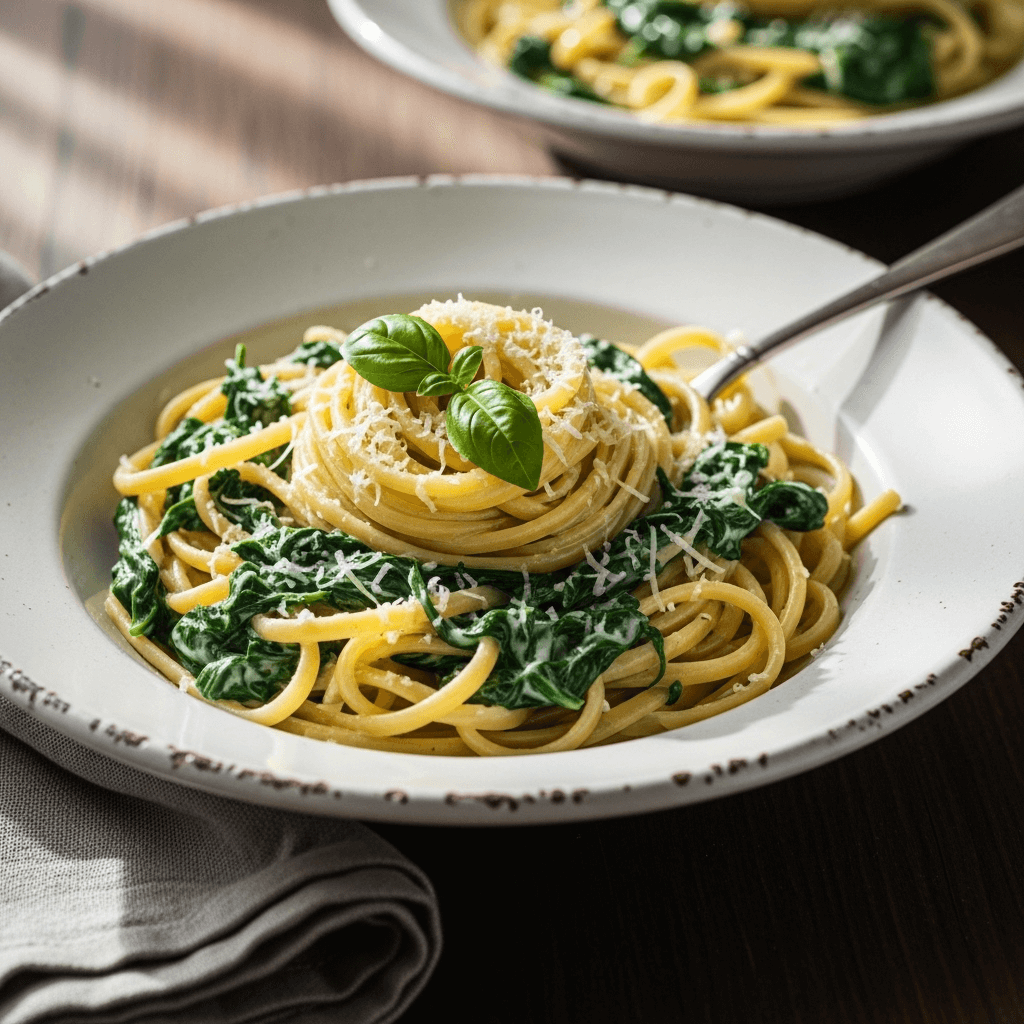
If you’re searching for a quick weeknight dinner that tastes like it came from an Italian restaurant, this creamy spinach pasta recipe is exactly what you need. This easy creamy pasta delivers tender noodles coated in a luxurious garlic cream sauce studded with vibrant fresh spinach and finished with savory parmesan cheese. It’s comfort food at its finest—rich, satisfying, and incredibly flavorful, yet surprisingly light thanks to the fresh greens. Unlike heavy, overly rich cream sauces, this balanced recipe lets you enjoy indulgence without feeling weighed down.
This one-pan spinach pasta is perfect for busy weeknights when you need dinner on the table fast, meatless Monday meals, date night dinners at home, or anytime you’re craving something comforting yet sophisticated. Ready in just 25 minutes from start to finish, it’s faster than ordering delivery and infinitely more delicious. The recipe is also incredibly adaptable—add grilled chicken or shrimp for extra protein, toss in sun-dried tomatoes for brightness, or keep it simple and vegetarian as written. Whether you’re cooking for picky kids (who often love creamy pasta), impressing a dinner guest, or treating yourself to restaurant-quality comfort food, this creamy spinach pasta consistently delivers rave reviews with minimal effort.
History / Background
Creamy spinach pasta represents the beautiful fusion of Italian pasta traditions with the modern desire for quick, nutritious weeknight meals. While pasta with cream sauce has deep roots in Italian cuisine—particularly in Northern Italy where dairy farming flourishes—the specific combination of spinach and cream sauce reflects a more contemporary approach to pasta dishes.
Traditional Italian cuisine features several spinach pasta dishes, most notably “pasta agli spinaci” from various regions. In Tuscany, spinach has been combined with pasta, ricotta, and butter for centuries. The Emilia-Romagna region, famous for its rich cream-based sauces, has long featured spinach in filled pastas like ravioli and tortellini. However, the quick sautéed spinach in cream sauce we know today is largely an Italian-American innovation.
The popularity of creamy spinach pasta in America grew alongside the broader appreciation for Italian cuisine in the 1980s and 1990s. As home cooks sought to recreate restaurant experiences at home, creamy pasta dishes became weeknight staples. The addition of spinach addressed the growing awareness of nutrition—incorporating vegetables into traditionally indulgent dishes made them feel more balanced and acceptable for regular consumption.
Spinach itself has an interesting culinary history. While native to Persia (modern-day Iran), it arrived in Italy during the Medieval period and quickly became integrated into Italian cooking. Italian cooks appreciated spinach’s mild flavor, vibrant color, and ability to pair beautifully with dairy products like cream, butter, and cheese. The combination of spinach with garlic, a staple in Italian cooking, created a flavor profile that became beloved worldwide.
Today, creamy spinach pasta represents the perfect marriage of tradition and modern convenience—honoring Italian culinary principles while adapting to contemporary lifestyles that demand quick, delicious, nutritious meals. It’s become a staple in home kitchens across America, beloved for its restaurant-quality taste and weeknight-friendly preparation.
Why You’ll Love This Recipe
This creamy spinach pasta is the ultimate weeknight dinner hero—it looks and tastes like something from a fancy Italian restaurant, but it comes together in one pan in about 25 minutes with straightforward ingredients you probably already have. The sauce is perfectly balanced, coating every strand of pasta with garlicky, creamy goodness while the spinach adds freshness, color, and nutrition. Here’s why this recipe will become your new go-to comfort meal:
- Ready in 25 minutes – Faster than delivery and infinitely more delicious and fresh
- One-pan meal – Pasta cooks right in the sauce, meaning minimal dishes and maximum flavor
- Restaurant-quality taste – Sophisticated enough for date night, easy enough for Tuesday
- Kid-friendly – Creamy pasta appeals to even the pickiest eaters, with hidden vegetables
- Budget-friendly – Uses affordable pantry staples and basic ingredients
- Vegetarian-friendly – Completely meatless but satisfying and protein-rich with cheese
- Versatile base – Easily customized with proteins, vegetables, or flavor additions
- Meal prep champion – Makes great leftovers that reheat beautifully for lunches
- Nutritious comfort food – Fresh spinach provides vitamins while cream provides satisfaction
- Beginner-friendly – Simple techniques with foolproof results every time
Ingredient Notes
The beauty of this recipe lies in its simplicity—quality ingredients transform into something extraordinary. Here’s what you need and why each component matters:
Pasta: Use any pasta shape you love. Linguine, fettuccine, penne, rigatoni, or farfalle all work beautifully. Long pasta like linguine or fettuccine allows the sauce to coat each strand elegantly, while short pasta like penne captures sauce in the tubes. Use regular wheat pasta or substitute with gluten-free pasta for dietary needs.
Fresh Spinach: Fresh baby spinach is preferred for tender texture and vibrant color. It wilts down dramatically—5 ounces of raw spinach reduces to about 1 cup cooked. Baby spinach is pre-washed and tender, requiring no stemming. Regular spinach works too but may need stems removed. Frozen spinach can substitute in a pinch—thaw, squeeze out excess water, and use about 1 cup.
Heavy Cream: Creates the luxurious, velvety sauce that coats pasta perfectly. Heavy cream (also called heavy whipping cream) has enough fat to create stable sauce that doesn’t break. Don’t substitute with milk or half-and-half—they lack the fat content to create proper creamy texture and may curdle. For lighter version, you can use half-and-half with a tablespoon of flour whisked in.
Garlic: Fresh garlic is essential for authentic Italian flavor. Minced garlic provides aromatic, slightly spicy notes that define the sauce. Use 3-4 cloves for moderate garlic flavor, or increase to 5-6 if you’re a garlic lover. Pre-minced jarred garlic works in a pinch but lacks the brightness of fresh.
Parmesan Cheese: Use real Parmigiano-Reggiano, freshly grated from a block. Pre-grated parmesan contains anti-caking agents that prevent smooth melting and can make sauce grainy. Fresh parmesan adds nutty, salty, umami richness that’s irreplaceable. Grana Padano or Pecorino Romano can substitute.
Butter: Adds richness and helps create a smooth, emulsified sauce. Use unsalted butter so you can control salt levels. The butter also helps the garlic cook without burning and adds silky texture to the finished sauce.
Chicken or Vegetable Broth: Adds flavor depth and helps thin the sauce to perfect consistency. Broth is preferred over water for additional flavor. Use vegetable broth for vegetarian version, chicken broth for more savory depth. Low-sodium versions give you better salt control.
Olive Oil: Used for sautéing garlic initially. Extra virgin olive oil adds fruity flavor, though regular olive oil works fine since we’re cooking at moderate heat.
Italian Seasoning: A blend of dried oregano, basil, thyme, and sometimes rosemary. Provides classic Italian herb flavor. You can substitute with individual herbs—use ½ teaspoon each of dried basil and oregano.
Red Pepper Flakes: Optional but recommended for subtle warmth that enhances other flavors without making it spicy. Adjust to taste or omit entirely.
Salt and Black Pepper: Essential for bringing out all the flavors. Season pasta water generously and taste sauce before serving to adjust seasoning.
Equipment Needed
This simple recipe requires minimal equipment, most of which you likely already own:
- Large pot or Dutch oven (5-6 quarts) – For boiling pasta water
- Large deep skillet or sauté pan (12-inch) – For making sauce; needs high sides to accommodate pasta
- Wooden spoon or silicone spatula – For stirring sauce and pasta
- Colander – For draining cooked pasta
- Garlic press or sharp knife – For mincing garlic finely
- Measuring cups and spoons – For accurate ingredient amounts
- Grater or microplane – For fresh parmesan cheese
- Tongs or pasta fork – For tossing pasta with sauce
- Ladle – For reserving pasta water if needed
Creamy Spinach Pasta Recipe
- Total Time: 25 minutes
- Yield: 4 servings 1x
- Diet: Vegetarian
Description
Quick and easy creamy spinach pasta with garlic cream sauce, fresh spinach, and parmesan cheese. This restaurant-quality one-pan dinner is ready in just 25 minutes and perfect for busy weeknights.
Ingredients
Main Components:
- 12 oz pasta (linguine, fettuccine, penne, or your choice)
- 5 oz fresh baby spinach (about 5 cups loosely packed)
- 1 cup heavy cream
- ½ cup chicken or vegetable broth
- ¾ cup freshly grated parmesan cheese, plus more for serving
- 4 cloves garlic, minced
- 3 tablespoons unsalted butter
- 2 tablespoons olive oil
- 1 teaspoon Italian seasoning
- ¼ teaspoon red pepper flakes (optional)
- Salt and black pepper to taste
- Fresh basil or parsley for garnish (optional)
For Pasta Water:
- 4 quarts water
- 1 tablespoon salt
Instructions
- Cook the Pasta: Bring a large pot of water to boil. Add 1 tablespoon salt. Cook pasta according to package directions until al dente (usually 8-10 minutes). Before draining, reserve 1 cup of pasta cooking water. Drain pasta and set aside.
- Sauté Garlic: While pasta cooks, heat olive oil and butter in a large deep skillet over medium heat. Once butter melts and starts to foam, add minced garlic. Sauté for 1-2 minutes until fragrant and lightly golden—watch carefully so it doesn’t burn.
- Add Seasonings: Stir in Italian seasoning and red pepper flakes (if using). Cook for 30 seconds until fragrant.
- Create Cream Sauce: Pour in heavy cream and broth. Stir to combine, scraping up any browned bits from the bottom of the pan. Bring to a gentle simmer, then reduce heat to medium-low. Let simmer for 3-4 minutes, stirring occasionally, until sauce slightly thickens.
- Wilt Spinach: Add fresh spinach to the sauce in batches if needed, stirring as it wilts down. This takes about 2-3 minutes. The spinach will reduce dramatically in volume. Season with salt and black pepper to taste.
- Add Cheese: Remove pan from heat. Stir in ¾ cup freshly grated parmesan cheese until melted and smooth. The residual heat will melt the cheese perfectly without making it grainy.
- Combine Pasta and Sauce: Add drained pasta to the skillet with the sauce. Using tongs, toss everything together until pasta is evenly coated with creamy spinach sauce. If sauce seems too thick, add reserved pasta water a few tablespoons at a time until you reach desired consistency.
- Final Seasoning: Taste and adjust salt and pepper as needed. Remember that parmesan is salty, so you may not need much additional salt.
- Serve: Divide among bowls or plates. Top with extra parmesan cheese and fresh basil or parsley if desired. Serve immediately while hot and creamy.
Notes
- For thicker sauce: Reduce cream by simmering longer or add an extra tablespoon of parmesan
- For thinner sauce: Add more pasta water or broth until desired consistency
- Protein additions: Add cooked chicken, shrimp, or Italian sausage in step 7
- Make it lighter: Use half-and-half instead of heavy cream (add 1 tablespoon flour whisked in)
- Storage: Refrigerate leftovers in airtight container for up to 3 days
- Reheating: Add splash of cream or milk when reheating to restore creaminess
- Prep Time: 10 minutes
- Cook Time: 15 minutes
- Category: Dinner
- Method: Stovetop
- Cuisine: Italian-American
Nutrition
- Serving Size: About 1½ cups
- Calories: 520
- Sugar: 3g
- Sodium: 380mg
- Fat: 28g
- Saturated Fat: 16g
- Unsaturated Fat: 11g
- Trans Fat: 0g
- Carbohydrates: 52g
- Fiber: 3g
- Protein: 18g
- Cholesterol: 85mg
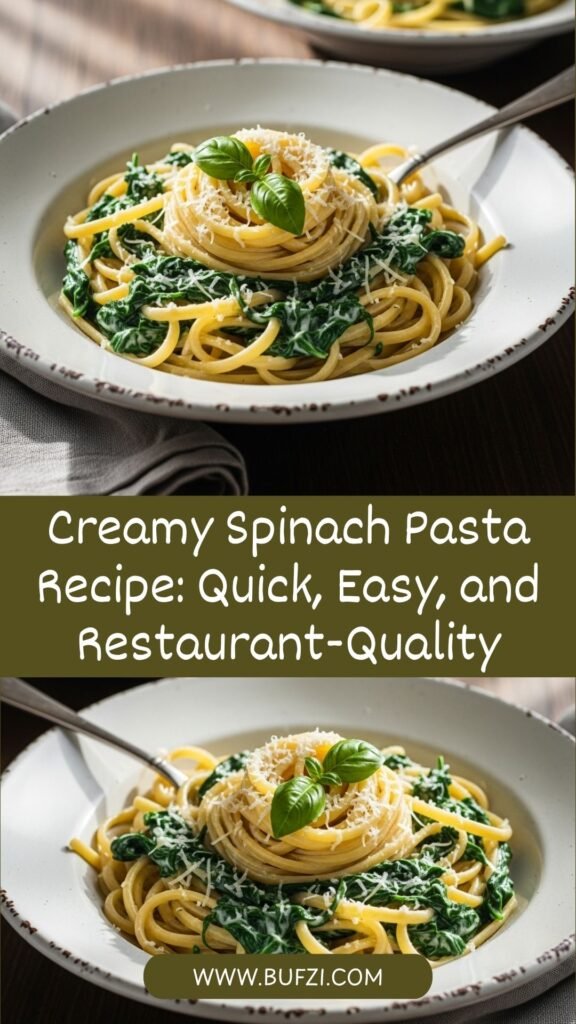
Creamy Spinach Pasta Recipe: Quick, Easy, and Restaurant-Quality
Introduction of Recipe
If you’re searching for a quick weeknight dinner that tastes like it came from an Italian restaurant, this creamy spinach pasta recipe is exactly what you need. This easy creamy pasta delivers tender noodles coated in a luxurious garlic cream sauce studded with vibrant fresh spinach and finished with savory parmesan cheese. It’s comfort food at its finest—rich, satisfying, and incredibly flavorful, yet surprisingly light thanks to the fresh greens. Unlike heavy, overly rich cream sauces, this balanced recipe lets you enjoy indulgence without feeling weighed down.
This one-pan spinach pasta is perfect for busy weeknights when you need dinner on the table fast, meatless Monday meals, date night dinners at home, or anytime you’re craving something comforting yet sophisticated. Ready in just 25 minutes from start to finish, it’s faster than ordering delivery and infinitely more delicious. The recipe is also incredibly adaptable—add grilled chicken or shrimp for extra protein, toss in sun-dried tomatoes for brightness, or keep it simple and vegetarian as written. Whether you’re cooking for picky kids (who often love creamy pasta), impressing a dinner guest, or treating yourself to restaurant-quality comfort food, this creamy spinach pasta consistently delivers rave reviews with minimal effort.
History / Background
Creamy spinach pasta represents the beautiful fusion of Italian pasta traditions with the modern desire for quick, nutritious weeknight meals. While pasta with cream sauce has deep roots in Italian cuisine—particularly in Northern Italy where dairy farming flourishes—the specific combination of spinach and cream sauce reflects a more contemporary approach to pasta dishes.
Traditional Italian cuisine features several spinach pasta dishes, most notably “pasta agli spinaci” from various regions. In Tuscany, spinach has been combined with pasta, ricotta, and butter for centuries. The Emilia-Romagna region, famous for its rich cream-based sauces, has long featured spinach in filled pastas like ravioli and tortellini. However, the quick sautéed spinach in cream sauce we know today is largely an Italian-American innovation.
The popularity of creamy spinach pasta in America grew alongside the broader appreciation for Italian cuisine in the 1980s and 1990s. As home cooks sought to recreate restaurant experiences at home, creamy pasta dishes became weeknight staples. The addition of spinach addressed the growing awareness of nutrition—incorporating vegetables into traditionally indulgent dishes made them feel more balanced and acceptable for regular consumption.
Spinach itself has an interesting culinary history. While native to Persia (modern-day Iran), it arrived in Italy during the Medieval period and quickly became integrated into Italian cooking. Italian cooks appreciated spinach’s mild flavor, vibrant color, and ability to pair beautifully with dairy products like cream, butter, and cheese. The combination of spinach with garlic, a staple in Italian cooking, created a flavor profile that became beloved worldwide.
Today, creamy spinach pasta represents the perfect marriage of tradition and modern convenience—honoring Italian culinary principles while adapting to contemporary lifestyles that demand quick, delicious, nutritious meals. It’s become a staple in home kitchens across America, beloved for its restaurant-quality taste and weeknight-friendly preparation.
Why You’ll Love This Recipe
This creamy spinach pasta is the ultimate weeknight dinner hero—it looks and tastes like something from a fancy Italian restaurant, but it comes together in one pan in about 25 minutes with straightforward ingredients you probably already have. The sauce is perfectly balanced, coating every strand of pasta with garlicky, creamy goodness while the spinach adds freshness, color, and nutrition. Here’s why this recipe will become your new go-to comfort meal:
- Ready in 25 minutes – Faster than delivery and infinitely more delicious and fresh
- One-pan meal – Pasta cooks right in the sauce, meaning minimal dishes and maximum flavor
- Restaurant-quality taste – Sophisticated enough for date night, easy enough for Tuesday
- Kid-friendly – Creamy pasta appeals to even the pickiest eaters, with hidden vegetables
- Budget-friendly – Uses affordable pantry staples and basic ingredients
- Vegetarian-friendly – Completely meatless but satisfying and protein-rich with cheese
- Versatile base – Easily customized with proteins, vegetables, or flavor additions
- Meal prep champion – Makes great leftovers that reheat beautifully for lunches
- Nutritious comfort food – Fresh spinach provides vitamins while cream provides satisfaction
- Beginner-friendly – Simple techniques with foolproof results every time
Ingredient Notes
The beauty of this recipe lies in its simplicity—quality ingredients transform into something extraordinary. Here’s what you need and why each component matters:
Pasta: Use any pasta shape you love. Linguine, fettuccine, penne, rigatoni, or farfalle all work beautifully. Long pasta like linguine or fettuccine allows the sauce to coat each strand elegantly, while short pasta like penne captures sauce in the tubes. Use regular wheat pasta or substitute with gluten-free pasta for dietary needs.
Fresh Spinach: Fresh baby spinach is preferred for tender texture and vibrant color. It wilts down dramatically—5 ounces of raw spinach reduces to about 1 cup cooked. Baby spinach is pre-washed and tender, requiring no stemming. Regular spinach works too but may need stems removed. Frozen spinach can substitute in a pinch—thaw, squeeze out excess water, and use about 1 cup.
Heavy Cream: Creates the luxurious, velvety sauce that coats pasta perfectly. Heavy cream (also called heavy whipping cream) has enough fat to create stable sauce that doesn’t break. Don’t substitute with milk or half-and-half—they lack the fat content to create proper creamy texture and may curdle. For lighter version, you can use half-and-half with a tablespoon of flour whisked in.
Garlic: Fresh garlic is essential for authentic Italian flavor. Minced garlic provides aromatic, slightly spicy notes that define the sauce. Use 3-4 cloves for moderate garlic flavor, or increase to 5-6 if you’re a garlic lover. Pre-minced jarred garlic works in a pinch but lacks the brightness of fresh.
Parmesan Cheese: Use real Parmigiano-Reggiano, freshly grated from a block. Pre-grated parmesan contains anti-caking agents that prevent smooth melting and can make sauce grainy. Fresh parmesan adds nutty, salty, umami richness that’s irreplaceable. Grana Padano or Pecorino Romano can substitute.
Butter: Adds richness and helps create a smooth, emulsified sauce. Use unsalted butter so you can control salt levels. The butter also helps the garlic cook without burning and adds silky texture to the finished sauce.
Chicken or Vegetable Broth: Adds flavor depth and helps thin the sauce to perfect consistency. Broth is preferred over water for additional flavor. Use vegetable broth for vegetarian version, chicken broth for more savory depth. Low-sodium versions give you better salt control.
Olive Oil: Used for sautéing garlic initially. Extra virgin olive oil adds fruity flavor, though regular olive oil works fine since we’re cooking at moderate heat.
Italian Seasoning: A blend of dried oregano, basil, thyme, and sometimes rosemary. Provides classic Italian herb flavor. You can substitute with individual herbs—use ½ teaspoon each of dried basil and oregano.
Red Pepper Flakes: Optional but recommended for subtle warmth that enhances other flavors without making it spicy. Adjust to taste or omit entirely.
Salt and Black Pepper: Essential for bringing out all the flavors. Season pasta water generously and taste sauce before serving to adjust seasoning.
Equipment Needed
This simple recipe requires minimal equipment, most of which you likely already own:
- Large pot or Dutch oven (5-6 quarts) – For boiling pasta water
- Large deep skillet or sauté pan (12-inch) – For making sauce; needs high sides to accommodate pasta
- Wooden spoon or silicone spatula – For stirring sauce and pasta
- Colander – For draining cooked pasta
- Garlic press or sharp knife – For mincing garlic finely
- Measuring cups and spoons – For accurate ingredient amounts
- Grater or microplane – For fresh parmesan cheese
- Tongs or pasta fork – For tossing pasta with sauce
- Ladle – For reserving pasta water if needed
📋 Recipe Card
Prep Time: 10 minutes
Cook Time: 15 minutes
Total Time: 25 minutes
Yield: 4 servings
Category: Main Dish / Dinner
Method: Stovetop
Cuisine: Italian-American
Diet: Vegetarian
Description
Quick and easy creamy spinach pasta with garlic cream sauce, fresh spinach, and parmesan cheese. This restaurant-quality one-pan dinner is ready in just 25 minutes and perfect for busy weeknights.
Ingredients
Main Components:
- 12 oz pasta (linguine, fettuccine, penne, or your choice)
- 5 oz fresh baby spinach (about 5 cups loosely packed)
- 1 cup heavy cream
- ½ cup chicken or vegetable broth
- ¾ cup freshly grated parmesan cheese, plus more for serving
- 4 cloves garlic, minced
- 3 tablespoons unsalted butter
- 2 tablespoons olive oil
- 1 teaspoon Italian seasoning
- ¼ teaspoon red pepper flakes (optional)
- Salt and black pepper to taste
- Fresh basil or parsley for garnish (optional)
For Pasta Water:
- 4 quarts water
- 1 tablespoon salt
Instructions
- Cook the Pasta: Bring a large pot of water to boil. Add 1 tablespoon salt. Cook pasta according to package directions until al dente (usually 8-10 minutes). Before draining, reserve 1 cup of pasta cooking water. Drain pasta and set aside.
- Sauté Garlic: While pasta cooks, heat olive oil and butter in a large deep skillet over medium heat. Once butter melts and starts to foam, add minced garlic. Sauté for 1-2 minutes until fragrant and lightly golden—watch carefully so it doesn’t burn.
- Add Seasonings: Stir in Italian seasoning and red pepper flakes (if using). Cook for 30 seconds until fragrant.
- Create Cream Sauce: Pour in heavy cream and broth. Stir to combine, scraping up any browned bits from the bottom of the pan. Bring to a gentle simmer, then reduce heat to medium-low. Let simmer for 3-4 minutes, stirring occasionally, until sauce slightly thickens.
- Wilt Spinach: Add fresh spinach to the sauce in batches if needed, stirring as it wilts down. This takes about 2-3 minutes. The spinach will reduce dramatically in volume. Season with salt and black pepper to taste.
- Add Cheese: Remove pan from heat. Stir in ¾ cup freshly grated parmesan cheese until melted and smooth. The residual heat will melt the cheese perfectly without making it grainy.
- Combine Pasta and Sauce: Add drained pasta to the skillet with the sauce. Using tongs, toss everything together until pasta is evenly coated with creamy spinach sauce. If sauce seems too thick, add reserved pasta water a few tablespoons at a time until you reach desired consistency.
- Final Seasoning: Taste and adjust salt and pepper as needed. Remember that parmesan is salty, so you may not need much additional salt.
- Serve: Divide among bowls or plates. Top with extra parmesan cheese and fresh basil or parsley if desired. Serve immediately while hot and creamy.
Notes
- For thicker sauce: Reduce cream by simmering longer or add an extra tablespoon of parmesan
- For thinner sauce: Add more pasta water or broth until desired consistency
- Protein additions: Add cooked chicken, shrimp, or Italian sausage in step 7
- Make it lighter: Use half-and-half instead of heavy cream (add 1 tablespoon flour whisked in)
- Storage: Refrigerate leftovers in airtight container for up to 3 days
- Reheating: Add splash of cream or milk when reheating to restore creaminess
Nutrition Facts
Serving Size: About 1½ cups
Calories: 520
Sugar: 3g
Sodium: 380mg
Fat: 28g
Saturated Fat: 16g
Unsaturated Fat: 11g
Trans Fat: 0g
Carbohydrates: 52g
Fiber: 3g
Protein: 18g
Cholesterol: 85mg
Note: Nutrition information is approximate and based on using linguine and indicated amounts. Values may vary based on specific ingredients and portion sizes.
Tips & Variations
Protein Additions:
- Chicken: Add 2 cups diced cooked chicken or grilled chicken breast strips
- Shrimp: Sauté 1 pound peeled shrimp until pink, then add to finished pasta
- Italian Sausage: Brown ½ pound crumbled Italian sausage, drain fat, add to sauce
- Bacon: Add crispy crumbled bacon as garnish for smoky flavor
- Chickpeas: Toss in 1 can drained chickpeas for plant-based protein
Vegetable Variations:
- Sun-Dried Tomatoes: Add ½ cup chopped sun-dried tomatoes for tangy sweetness
- Mushrooms: Sauté 8 oz sliced mushrooms before adding garlic
- Cherry Tomatoes: Add 1 cup halved cherry tomatoes with spinach
- Roasted Red Peppers: Stir in ½ cup chopped roasted red peppers
- Artichoke Hearts: Add 1 cup quartered artichoke hearts for Mediterranean flair
- Broccoli: Include steamed broccoli florets for extra vegetables
Flavor Twists:
- Lemon Garlic: Add 2 tablespoons lemon juice and zest for brightness
- Pesto Cream: Stir in 2-3 tablespoons pesto for herbal complexity
- White Wine: Replace half the broth with dry white wine for sophistication
- Nutmeg: Add pinch of freshly grated nutmeg for traditional Italian touch
- Truffle Oil: Drizzle truffle oil over finished dish for luxury version
Dietary Modifications:
- Gluten-Free: Use gluten-free pasta; everything else is naturally gluten-free
- Dairy-Free: Use coconut cream and nutritional yeast instead of cream and cheese
- Lower Calorie: Use half-and-half with flour thickener and reduce cheese
- Vegan: Use cashew cream, nutritional yeast, and vegetable broth
Pro Chef Tips
Don’t Skimp on Pasta Water Salt: Generously salted pasta water (it should taste like the sea) seasons the pasta from within and adds flavor to your finished dish. Under-salted pasta water results in bland pasta that no amount of sauce can fix.
Reserve Pasta Water Before Draining: That starchy pasta water is liquid gold for adjusting sauce consistency. The starch helps bind sauce to pasta and creates silky texture. Always reserve at least a cup before draining—you may not need it all, but it’s better to have it.
Use Freshly Grated Parmesan: Pre-grated cheese contains anti-caking agents (cellulose) that prevent smooth melting and can make your sauce grainy. Grate from a block right before using for creamy, smooth incorporation. It takes two extra minutes but transforms the dish.
Add Cheese Off Heat: Once your sauce is ready, remove the pan from heat before stirring in parmesan. High heat can cause cheese to become stringy or grainy. The residual heat is sufficient to melt cheese into smooth, creamy perfection.
Don’t Overcook Spinach: Fresh spinach needs minimal cooking—just 2-3 minutes until wilted. Overcooking turns it dark, mushy, and bitter. Add it at the end and remove from heat once wilted for bright color and fresh flavor.
Finish Pasta in the Sauce: Rather than just topping drained pasta with sauce, toss pasta in the pan with sauce over low heat for 1-2 minutes. This allows pasta to absorb flavor and creates better coating. This technique is essential to Italian pasta cooking.
Taste and Adjust: Always taste before serving and adjust seasoning. Cream dulls flavors, so you may need more salt, pepper, or parmesan than expected. Trust your palate and season boldly.
Common Mistakes to Avoid
Mistake #1: Using Pre-Grated Parmesan Cheese – Those convenient bags of pre-grated cheese contain cellulose (wood pulp) to prevent clumping, which also prevents smooth melting. The result is grainy, separated sauce instead of creamy perfection. Always buy a block of parmesan and grate it fresh—it takes 2 minutes and makes all the difference.
Mistake #2: Overcooking the Garlic – Burned garlic tastes bitter and acrid, ruining the entire sauce. Garlic should be sautéed just until fragrant and lightly golden, about 1-2 minutes over medium heat. If it starts turning brown, it’s already too far. Watch it carefully and reduce heat if needed.
Mistake #3: Adding Cheese While Sauce is Boiling – High heat causes cheese to separate and become grainy or stringy rather than smooth and creamy. Always remove the pan from heat before stirring in parmesan. The residual heat is perfect for melting without breaking the sauce.
Mistake #4: Not Reserving Pasta Water – Many home cooks drain pasta completely without saving any cooking water. That starchy liquid is essential for adjusting sauce consistency and helping sauce cling to pasta. Always reserve at least 1 cup before draining.
Mistake #5: Rinsing the Pasta After Draining – Rinsing washes away the starch coating that helps sauce adhere to pasta. Never rinse pasta for this dish—drain it and immediately add to sauce. The starch is your friend for creating restaurant-quality results.
Storage & Meal Prep
Refrigerator Storage: Let pasta cool to room temperature (within 2 hours for food safety), then transfer to airtight containers. Properly stored, creamy spinach pasta keeps for 3-4 days refrigerated. The sauce will thicken as it cools—this is normal and expected.
Reheating Instructions: The best method is stovetop reheating. Place pasta in a skillet over medium-low heat, add 2-3 tablespoons of cream, milk, or reserved pasta water, and stir gently until heated through and sauce loosens, about 5 minutes. Microwave works too—heat in 1-minute intervals, stirring between, adding a splash of liquid to restore creaminess.
Preventing Dryness: Cream sauces naturally thicken and dry out during storage as pasta absorbs liquid. Always add extra liquid (cream, milk, or broth) when reheating to bring back that silky texture. Start with a few tablespoons and add more as needed.
Meal Prep Strategy: This pasta makes excellent meal prep lunches. Portion into individual containers with tight-fitting lids. When ready to eat, add a tablespoon of milk or cream to each container before reheating to maintain moisture and creaminess.
Food Safety Note: Because this dish contains dairy, don’t leave it at room temperature for more than 2 hours. Refrigerate promptly to prevent bacterial growth.
Make-Ahead & Freezer Notes
Make-Ahead Components: While cream pasta is best fresh, you can prep components in advance. Wash and dry spinach, mince garlic, grate cheese, and store separately in the refrigerator up to 1 day ahead. When ready to cook, the actual preparation takes only 25 minutes.
Partial Make-Ahead: Cook pasta al dente, toss with a bit of olive oil to prevent sticking, and refrigerate up to 2 days. When ready to serve, make fresh sauce and add cold pasta directly to the hot sauce, letting it warm through and absorb flavor.
Freezing Considerations: Cream-based sauces don’t freeze ideally—they can separate and become grainy upon thawing. However, if you must freeze, do so in airtight containers for up to 2 months. The texture won’t be quite as smooth but will still taste good.
Thawing and Reheating Frozen: Thaw frozen pasta overnight in refrigerator. Reheat gently on stovetop over low heat, stirring constantly and adding cream or milk to help re-emulsify the sauce. You may need to add extra parmesan to help bind everything together.
Best Practice: For optimal taste and texture, make this pasta fresh when possible. The short 25-minute cooking time makes it practical for weeknight cooking without advance preparation.
Serving Suggestions
Creamy spinach pasta is satisfying enough to serve as a complete meal, but here are ways to round out your dinner or create an Italian feast:
Bread Pairings: Serve with crusty garlic bread, warm ciabatta, focaccia, or classic Italian breadsticks for soaking up extra sauce. Garlic knots or cheesy garlic bread complement the flavors beautifully.
Salad Sides: Balance the richness with a crisp Caesar salad, simple arugula salad with lemon vinaigrette, Italian house salad with red wine vinaigrette, or Caprese salad with fresh mozzarella, tomatoes, and basil.
Vegetable Sides: Add roasted vegetables like asparagus, green beans, or Brussels sprouts. Roasted cherry tomatoes on the vine make an elegant, colorful side. Sautéed mushrooms or roasted red peppers also pair wonderfully.
Protein Sides: While the pasta can include protein, you can also serve it alongside grilled chicken breast, pan-seared salmon, grilled shrimp skewers, or Italian-style meatballs.
Wine Pairings: Pair with crisp white wine like Pinot Grigio, Sauvignon Blanc, or unoaked Chardonnay. The acidity cuts through cream while complementing garlic and cheese. For reds, choose lighter options like Pinot Noir.
Complete Italian Dinner: Start with bruschetta or antipasto platter, serve the pasta as primi (first course), follow with grilled protein as secondi (second course), and finish with tiramisu or panna cotta for dessert.
Casual Family Dinner: Keep it simple with pasta, side salad, garlic bread, and fresh fruit for dessert. This combination satisfies everyone from kids to adults.
FAQs Section
Q: Can I use milk instead of heavy cream?
A: While heavy cream is preferred for rich, stable sauce, you can use whole milk with modifications. Whisk 1 tablespoon of flour into the milk before adding to prevent curdling, and simmer longer to thicken. The sauce will be lighter but less creamy. Half-and-half works better than milk as a compromise.
Q: Can I use frozen spinach instead of fresh?
A: Yes! Use about 1 cup of frozen spinach (thawed and squeezed completely dry to remove excess water). Add it directly to the sauce without wilting. Frozen spinach works well but won’t have quite the same bright color and fresh flavor as baby spinach.
Q: Why is my sauce grainy or separated?
A: This usually happens when cheese is added over too-high heat or if pre-grated parmesan (with anti-caking agents) was used. Always remove from heat before adding freshly grated cheese, and stir gently until melted. If it happens, try whisking in a tablespoon of cream to re-emulsify.
Q: Can I make this dish dairy-free?
A: Yes! Replace heavy cream with full-fat coconut cream (from a can, not coconut milk). Use nutritional yeast instead of parmesan for cheesy flavor. The taste will be different but still delicious. Dairy-free cream cheese can also work blended into coconut cream.
Q: How do I prevent pasta from absorbing all the sauce?
A: This is common with cream sauces. Cook pasta just to al dente (slightly underdone), and reserve extra pasta water to thin sauce when reheating. Store pasta and sauce with extra liquid, and always add cream or milk when reheating leftovers.
Q: Can I add protein to this recipe?
A: Absolutely! Add 2 cups cooked diced chicken, 1 pound cooked shrimp, crumbled cooked Italian sausage, or even chickpeas for plant-based protein. Add proteins in step 7 when combining pasta and sauce so they warm through.
Q: What pasta shapes work best?
A: Any pasta works! Long pasta (linguine, fettuccine, spaghetti) creates elegant presentation and allows sauce to coat each strand. Short pasta (penne, rigatoni, farfalle) captures sauce in crevices. Choose based on preference—all are delicious.
Conclusion
And there you have it—everything you need to create restaurant-quality creamy spinach pasta in your own kitchen in just 25 minutes! This recipe proves that you don’t need hours of cooking time or a culinary degree to make something truly special. With simple ingredients, basic techniques, and a little attention to detail, you can deliver a dinner that tastes like it came from an upscale Italian restaurant.
The beauty of this creamy spinach pasta lies in its perfect balance—indulgent enough to feel like comfort food, yet light enough to enjoy regularly. The addition of fresh spinach makes it feel nutritious without sacrificing any of that creamy, garlicky goodness we all crave. Whether you’re cooking for your family, meal-prepping for the week, or impressing someone special, this versatile recipe adapts to any occasion.
I’d love to hear how your creamy spinach pasta turned out! Did you add any proteins or vegetables? What’s your favorite way to customize this recipe? Drop a comment below and share your experience—I always enjoy hearing from fellow home cooks and learning about your creative variations!
If this recipe saved your weeknight dinner routine or became a new family favorite, please share it with friends who need quick, delicious meal ideas, and don’t forget to pin it to your favorite Pinterest boards using #CreamySpinachPasta. Let’s help more home cooks discover just how easy it is to make restaurant-quality pasta at home!
Happy cooking, and may your pasta always be perfectly creamy, flavorful, and absolutely delicious!