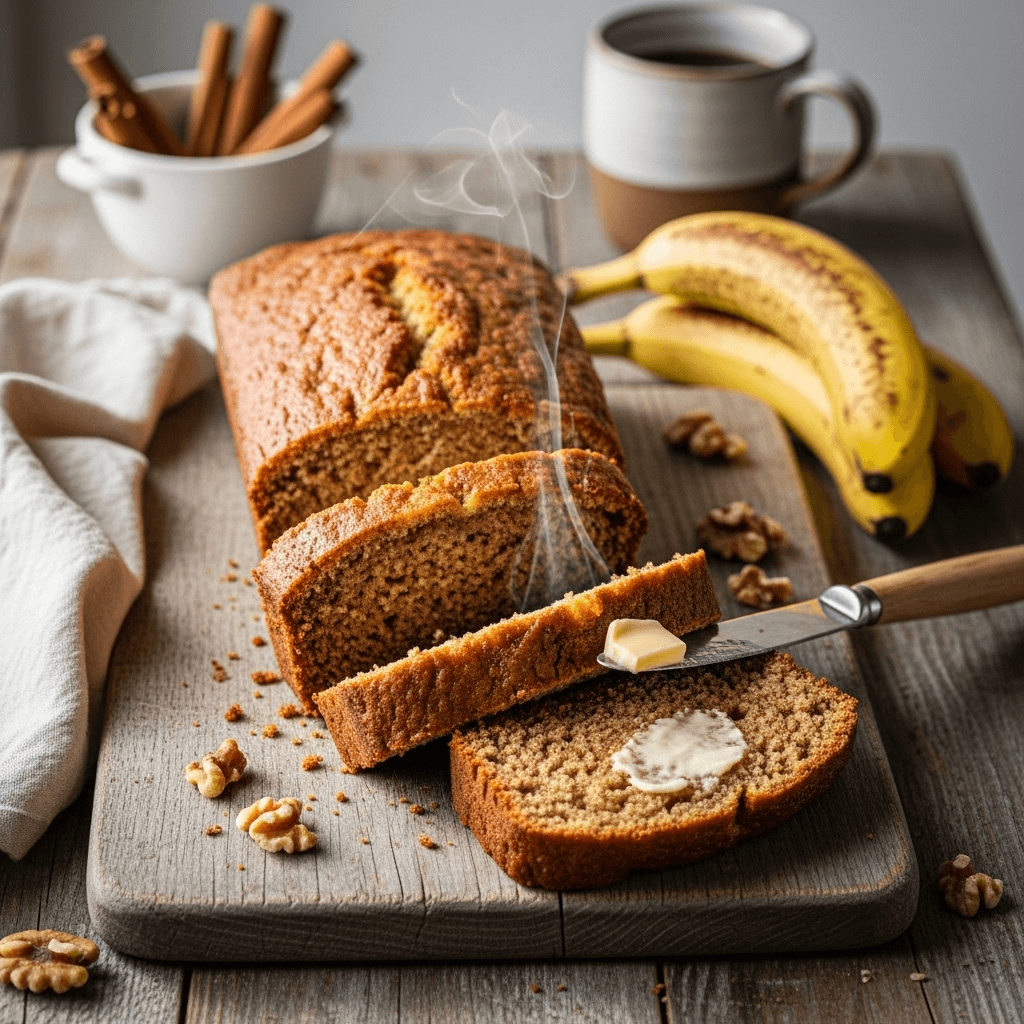

Is there anything more comforting than the aroma of fresh-baked cinnamon banana bread wafting through your kitchen? This incredibly moist, perfectly spiced loaf transforms overripe bananas into a tender, flavorful treat that’s somewhere between a cake and traditional bread. Each slice delivers the natural sweetness of caramelized bananas enhanced with warm cinnamon that creates an irresistible flavor combination your whole family will love.
This cinnamon banana bread recipe is the perfect solution for those browning bananas sitting on your counter. Instead of tossing them, you’ll transform them into something truly special—a homemade bread that’s ideal for breakfast with your morning coffee, an afternoon snack with tea, or even dessert after dinner. The cinnamon adds warmth and depth that elevates classic banana bread into something extraordinary.
What makes this recipe particularly wonderful is its simplicity and reliability. You don’t need fancy equipment or professional baking skills—just one bowl, a handful of pantry staples, and about an hour. Whether you’re an experienced baker or just starting your baking journey, this foolproof recipe delivers bakery-quality results every single time. The tender crumb stays moist for days, making it perfect for meal prep, gift-giving, or simply enjoying throughout the week.
History / Background
Banana bread holds a special place in American baking history, with its origins tied directly to the Great Depression era of the 1930s. During this challenging economic period, resourceful home cooks refused to waste anything, including overripe bananas. The invention of baking powder and baking soda in the late 19th century made quick breads possible, but it wasn’t until bananas became widely available and affordable in the early 20th century that banana bread became a household staple.
The first banana bread recipes appeared in cookbooks around 1933, coinciding with the rise of home economics movements that emphasized frugality and waste reduction. Pillsbury and General Mills both published banana bread recipes in their promotional materials, helping spread this practical recipe across America. These early versions were fairly simple—mashed bananas, flour, sugar, eggs, and butter—creating a basic sweet bread that used up fruit that might otherwise be discarded.
The addition of cinnamon to banana bread is a natural evolution that emerged as home bakers began experimenting with spices to enhance the bread’s flavor profile. Cinnamon, with its warm, sweet-spicy notes, complements the natural sugars in bananas beautifully. The spice tradition in American baking draws from various cultural influences, including European settlers who brought their love of spiced breads and cakes to the New World.
By the 1950s and 1960s, banana bread had become a quintessential American comfort food, featured in community cookbooks, church fundraisers, and passed down through family recipe cards. The rise of home baking during World War II, when families were encouraged to bake at home to save resources, further cemented banana bread’s place in American cuisine.
Today, cinnamon banana bread represents both nostalgia and practicality. It’s one of the first recipes many people learn to bake, often taught by mothers and grandmothers who understood the simple pleasure of turning humble ingredients into something delicious. The combination has become so beloved that variations appear in bakeries, coffee shops, and homes across the country, but nothing beats a homemade loaf made with love.
Why You’ll Love This Recipe
This cinnamon banana bread recipe delivers everything you want in a homemade quick bread—incredible flavor, perfect texture, and results you can count on every time. The generous amount of cinnamon creates warmth that enhances rather than overpowers the banana flavor, while the simple mixing method means you can have it in the oven in just 10 minutes.
- Uses Overripe Bananas – Finally, a delicious solution for those spotted bananas! The riper the better for maximum sweetness and flavor
- One-Bowl Easy – Minimal cleanup with straightforward mixing that doesn’t require a stand mixer or complicated techniques
- Incredibly Moist – Stays tender and moist for days thanks to the high banana content and proper ingredient ratios
- Warm Cinnamon Flavor – The perfect amount of cinnamon creates cozy, comforting flavor without being overwhelming
- Budget-Friendly – Made with basic pantry staples you probably already have on hand
- Freezer-Friendly – Makes two loaves or freezes beautifully for future enjoyment
- Perfect for Gifting – Wrap a loaf in cellophane with a ribbon for a thoughtful homemade gift
- Versatile Timing – Wonderful for breakfast, snacks, dessert, or even brunch gatherings
- Kid-Approved – Even picky eaters love the naturally sweet flavor and tender texture
- Fills Your Home with Amazing Aromas – The smell alone is worth making this recipe
Ingredient Notes
Understanding your ingredients helps you achieve the best possible cinnamon banana bread. Here’s what you need and why each component matters:
Overripe Bananas – The star ingredient! You want bananas that are heavily spotted or even completely brown. These overripe bananas are sweeter, easier to mash, and provide more intense banana flavor. You’ll need about 3-4 medium bananas to yield 1½ cups mashed. Avoid using underripe bananas as they won’t mash properly and lack sweetness.
All-Purpose Flour – Provides structure to the bread. I recommend spooning flour into your measuring cup and leveling it off rather than scooping directly from the bag, which can compact the flour and result in dry bread. For gluten-free options, use a 1:1 gluten-free baking flour blend.
Cinnamon – Ground cinnamon is essential for that warm, spiced flavor. Use fresh cinnamon for the best flavor—if your cinnamon has been sitting in the cupboard for years, it may have lost its potency. Ceylon cinnamon (true cinnamon) offers a more delicate, sweet flavor, while Cassia cinnamon (the common grocery store variety) is stronger and spicier.
Granulated Sugar – Provides sweetness and helps create a tender crumb. You can reduce the sugar by up to ¼ cup if you prefer less sweet bread, especially if your bananas are very ripe. For alternatives, light brown sugar adds molasses notes that complement the cinnamon beautifully.
Butter – Use unsalted butter at room temperature for the best texture. Butter adds richness and helps create a tender crumb. You can substitute with melted coconut oil for a dairy-free version, though the flavor will be slightly different.
Eggs – Room temperature eggs incorporate more easily into the batter. Eggs provide structure, moisture, and help bind everything together. For vegan alternatives, use flax eggs (1 tablespoon ground flaxseed + 3 tablespoons water per egg, let sit for 5 minutes).
Baking Soda – This leavening agent reacts with the acidic bananas to help the bread rise and create a light texture. Make sure your baking soda is fresh—it loses potency over time. Don’t substitute with baking powder as they work differently.
Salt – A small amount of salt enhances all the other flavors and balances the sweetness. Don’t skip it!
Vanilla Extract – Pure vanilla extract adds depth and enhances the overall flavor profile. Use real vanilla extract rather than imitation for the best results.
Optional: Milk – A splash of milk (2-3 tablespoons) helps create an extra moist texture. Use any type you have—dairy, almond, oat, or soy all work well.
Equipment Needed
Gathering your tools before you start makes the baking process smooth and enjoyable:
- 9×5-inch loaf pan (standard size for banana bread)
- Large mixing bowl
- Medium mixing bowl
- Fork or potato masher (for mashing bananas)
- Whisk
- Rubber spatula or wooden spoon
- Measuring cups and spoons
- Toothpick or cake tester
- Cooling rack
- Parchment paper or cooking spray
- Optional: Electric mixer (not necessary but can be used)
Cinnamon Banana Bread Recipe
- Total Time: 1 hour 15 minutes
- Yield: 1 loaf (10-12 slices) 1x
- Diet: Vegetarian
Description
This moist and tender cinnamon banana bread is loaded with ripe banana flavor and warm cinnamon spice. Made in one bowl with simple ingredients, it’s the perfect way to use up overripe bananas and create a delicious homemade treat that everyone will love.
Ingredients
- 3–4 overripe bananas (1½ cups mashed)
- ⅓ cup melted butter (or coconut oil)
- ¾ cup granulated sugar
- 1 large egg, beaten
- 1 teaspoon vanilla extract
- 1 teaspoon baking soda
- Pinch of salt
- 1½ teaspoons ground cinnamon
- 1½ cups all-purpose flour
- Optional: 2-3 tablespoons milk for extra moisture
Instructions
- Preheat and Prepare – Preheat your oven to 350°F (175°C). Grease a 9×5-inch loaf pan with butter or cooking spray, or line it with parchment paper for easy removal.
- Mash the Bananas – In a large mixing bowl, mash the overripe bananas with a fork until smooth with just a few small lumps remaining. You should have about 1½ cups of mashed banana.
- Mix Wet Ingredients – Stir the melted butter into the mashed bananas until combined. Add the beaten egg, vanilla extract, and mix well. If using milk, add it now and stir to incorporate.
- Add Sugar and Spices – Mix in the sugar, baking soda, salt, and cinnamon. Stir until everything is well combined and the mixture looks uniform.
- Fold in Flour – Add the flour to the banana mixture. Using a rubber spatula or wooden spoon, gently fold the flour into the wet ingredients until just combined. Don’t overmix—a few small lumps are fine. Overmixing develops gluten and makes the bread tough.
- Transfer to Pan – Pour the batter into your prepared loaf pan. Use the spatula to spread it evenly and smooth the top.
- Bake – Place in the preheated oven and bake for 55-65 minutes. The bread is done when a toothpick inserted into the center comes out clean or with just a few moist crumbs (not wet batter). The top should be golden brown and spring back when lightly touched.
- Cool – Remove from the oven and let the bread cool in the pan for about 10 minutes. Then carefully remove it from the pan and transfer to a cooling rack. Allow it to cool for at least 20-30 minutes before slicing for the best texture.
- Slice and Serve – Once cooled, slice with a serrated knife and enjoy! The bread tastes even better the next day as the flavors meld together.
Notes
- The bananas should be very ripe (brown and spotted) for the best flavor and sweetness. If your bananas aren’t ripe enough, place them in a paper bag or bake unpeeled at 300°F for 15-20 minutes to accelerate ripening.
- Don’t overmix the batter once you add the flour. Mix until just combined to ensure tender bread.
- If the top is browning too quickly but the center isn’t done, tent loosely with aluminum foil for the last 15-20 minutes of baking.
- Every oven is different—start checking at 55 minutes but it may need up to 65 minutes depending on your oven.
- For a cinnamon swirl effect, reserve 2 tablespoons of batter mixed with extra cinnamon and swirl through the loaf before baking.
- Prep Time: 15 minutes
- Cook Time: 15 minutes
- Category: Breakfast
- Method: Baking
- Cuisine: American
Nutrition
- Serving Size: 1 slice (1/10 of loaf)
- Calories: 215
- Sugar: 18g
- Sodium: 180mg
- Fat: 7g
- Saturated Fat: 4g
- Unsaturated Fat: 2.5g
- Trans Fat: 0g
- Carbohydrates: 36g
- Fiber: 2g
- Protein: 3g
- Cholesterol: 35mg
Tips & Variations
The beauty of banana bread is how easily you can customize it to suit your preferences. Here are delicious ways to make this recipe your own:
Flavor Variations:
- Chocolate Chip Banana Bread – Fold in ½-¾ cup of chocolate chips for pockets of melty chocolate
- Nutty Cinnamon Banana Bread – Add ½ cup of chopped walnuts or pecans for crunch and richness
- Double Cinnamon Swirl – Create a cinnamon sugar swirl by mixing 2 tablespoons sugar with 1 tablespoon cinnamon and swirling through the batter
- Cream Cheese Swirl – Beat 4 oz softened cream cheese with 2 tablespoons sugar and swirl through the batter before baking
- Coconut Banana Bread – Add ½ cup shredded coconut and substitute coconut oil for butter
Healthier Modifications:
- Replace half the all-purpose flour with whole wheat flour for added fiber
- Reduce sugar to ½ cup and rely more on the natural sweetness of ripe bananas
- Use Greek yogurt in place of half the butter for added protein and moisture
- Add a handful of rolled oats on top before baking for texture
- Mix in chia seeds or ground flaxseed for omega-3s
Dietary Adaptations:
- Gluten-Free – Use a 1:1 gluten-free flour blend in place of all-purpose flour
- Dairy-Free – Substitute melted coconut oil for butter and use non-dairy milk
- Vegan – Use coconut oil, replace egg with flax egg, and use non-dairy milk
- Sugar-Free – Use a sugar substitute like monk fruit or erythritol (results may vary)
Mix-In Ideas:
- Fresh or frozen blueberries
- Dried cranberries or raisins
- White chocolate chips
- Peanut butter or almond butter swirl
- Crushed pineapple (reduce banana to 1 cup)
- Mini chocolate chips and chopped pecans
Pro Chef Tips
Take your cinnamon banana bread from good to absolutely incredible with these professional baking techniques:
The Banana Test – The best bananas for banana bread have completely brown peels with black spots. The browner, the better! If you’re in a hurry, place unpeeled bananas on a baking sheet and roast at 300°F for 15-20 minutes until the skins turn black. Let them cool, then proceed with the recipe. This accelerates the ripening process.
Room Temperature Matters – While the butter should be melted, make sure your egg isn’t ice cold from the refrigerator. Room temperature eggs mix more smoothly into batters. If you forgot to take it out early, place the whole egg in a bowl of warm water for 5 minutes.
The Gentle Fold Technique – When adding flour to wet ingredients, use a folding motion rather than stirring vigorously. Fold from the bottom up, rotating the bowl as you go. Stop mixing as soon as you no longer see dry flour streaks. This prevents overdeveloping gluten, which makes bread dense and tough.
The Toothpick Truth – When testing for doneness, insert a toothpick into the center of the loaf. It should come out clean or with a few moist crumbs—but not wet batter. If it comes out wet, bake for 5 more minutes and test again. The center should reach about 200°F if you’re using a thermometer.
Don’t Skip the Rest – Allowing the bread to cool in the pan for 10 minutes is crucial. This resting period lets the structure set so the bread doesn’t fall apart when you remove it. However, don’t let it cool completely in the pan or it may stick.
The Second-Day Secret – Banana bread actually tastes better on day two! The flavors meld together and the texture becomes even more moist. Wrap it tightly and let it sit overnight at room temperature for the best results.
Freeze for Later – If you’re making this for future enjoyment, wrap the completely cooled loaf tightly in plastic wrap, then aluminum foil. Label it with the date and freeze for up to 3 months. Thaw overnight on the counter.
The Cinnamon Distribution – For the most even cinnamon flavor throughout, sift it together with the flour before adding to wet ingredients. This ensures every bite has that perfect warm spice note.
Common Mistakes to Avoid
Even simple recipes can go wrong if you’re not careful. Here’s how to sidestep the most common banana bread pitfalls:
Mistake #1: Using Underripe Bananas – Firm, yellow bananas won’t provide enough sweetness or moisture, and they’re difficult to mash smoothly. Your bread will be bland and potentially dry. Always wait until bananas are heavily spotted or completely brown. If you’re in a rush, use the oven-ripening method mentioned in the Pro Tips section.
Mistake #2: Overmixing the Batter – This is the number one mistake home bakers make with quick breads! Once you add the flour, mix gently and only until you can’t see dry flour anymore. Overmixing develops gluten strands that make your bread tough, dense, and rubbery instead of tender and moist. It’s okay if you see a few small lumps.
Mistake #3: Opening the Oven Too Early – Every time you open the oven door, the temperature drops significantly. This can cause the bread to sink in the middle or bake unevenly. Resist the urge to check on it until at least 50 minutes have passed. Use your oven light to peek through the window instead.
Mistake #4: Not Greasing the Pan Properly – Even if you think your pan is nonstick, grease it anyway! Or better yet, line it with parchment paper with wings hanging over the sides for easy removal. Nothing is more frustrating than perfect bread that sticks to the pan and falls apart when you try to remove it.
Mistake #5: Slicing Too Soon – I know it’s tempting when that fresh bread comes out of the oven, but cutting into hot bread causes it to crumble and fall apart. The structure needs time to fully set. Wait at least 20-30 minutes, though 1 hour is even better. Use this time to make coffee or tea so you have something to enjoy with your first slice!
Mistake #6: Incorrect Oven Temperature – If your bread is browning too quickly on the outside but remains raw in the center, your oven may be running hot. Invest in an oven thermometer to verify accuracy. If the top browns too fast, tent loosely with foil for the last 15-20 minutes while the center finishes baking.
Storage & Meal Prep
Proper storage keeps your cinnamon banana bread moist and delicious for days. Here’s everything you need to know:
Room Temperature Storage – Once completely cooled, wrap the banana bread tightly in plastic wrap or aluminum foil. Store at room temperature for up to 4 days. The bread actually gets more moist as it sits because the moisture from the bananas continues to distribute throughout the loaf. Keep it away from direct sunlight and heat sources.
Refrigeration – While not necessary, you can refrigerate banana bread if your kitchen is very warm or humid. Wrap tightly and refrigerate for up to 1 week. Bring slices to room temperature or warm slightly before eating, as cold banana bread can taste a bit dry. The refrigerator does extend the shelf life, though.
Individual Slice Prep – For grab-and-go convenience, slice the entire loaf once cooled. Wrap individual slices in plastic wrap or place in small zip-top bags. Stack them in a larger container and refrigerate or freeze. This makes it easy to take out just what you need.
Preventing Dryness – Banana bread can dry out if not stored properly. Always wrap tightly—exposure to air is the enemy. If your bread seems to be drying out, try spreading butter on slices and toasting them briefly to revive the texture.
Reheating Tips – To enjoy warm banana bread, microwave individual slices for 10-15 seconds, or toast them lightly in a toaster or toaster oven. You can also wrap the entire loaf in foil and warm in a 300°F oven for 10-15 minutes.
Make-Ahead & Freezer Notes
Cinnamon banana bread is one of the most freezer-friendly baked goods, making it perfect for meal prep and planning ahead.
Baking in Advance – You can bake this banana bread up to 4 days before you need it. In fact, many bakers swear the flavor improves after a day or two as the cinnamon and banana flavors fully develop. Just wrap it well and store at room temperature until needed.
Freezing Whole Loaves – Once the bread is completely cooled, wrap it tightly in two layers of plastic wrap, then wrap in aluminum foil or place in a freezer-safe bag. Remove as much air as possible. Label with the date and freeze for up to 3 months. To thaw, leave it on the counter overnight, still wrapped, so condensation forms on the outside of the wrapping rather than on the bread itself.
Freezing Individual Slices – This is my favorite method for portion control and convenience! Slice the cooled loaf, wrap each slice individually in plastic wrap, then place all wrapped slices in a large freezer bag. Freeze for up to 3 months. Remove individual slices as needed—they thaw in about 30 minutes at room temperature or can be microwaved for 20-30 seconds for instant gratification.
Freezing Batter – While you can freeze the batter in a loaf pan (wrap very well), I don’t recommend it. The baking soda begins working as soon as it meets the wet ingredients, so freezing batter results in less rise and a denser texture. It’s better to bake first, then freeze the finished product.
Best Thawing Method – For the best texture, always thaw banana bread at room temperature rather than in the microwave or refrigerator. Leave it wrapped while thawing to prevent moisture loss. A whole loaf takes 2-3 hours to thaw completely; individual slices thaw in 30 minutes to 1 hour.
Refreshing Frozen Bread – After thawing, you can refresh the bread by warming it in a 300°F oven for 10 minutes wrapped in foil. This brings back that fresh-baked aroma and texture.
Serving Suggestions
Cinnamon banana bread is wonderfully versatile and delicious at any time of day. Here are creative ways to serve and enjoy it:
Classic Breakfast – Serve warm slices with butter melting into the tender crumb alongside your morning coffee or tea. Add a glass of orange juice and fresh fruit for a complete breakfast.
Elevated Brunch – Toast slices lightly and top with cream cheese, ricotta, or mascarpone. Drizzle with honey and sprinkle with extra cinnamon for an elegant brunch offering.
Decadent Dessert – Top warm banana bread with a scoop of vanilla ice cream and a drizzle of caramel sauce. The temperature contrast is heavenly! You can also serve it with whipped cream and fresh berries.
French Toast Twist – Transform day-old banana bread into incredible French toast. Dip slices in an egg-milk mixture and pan-fry until golden. Serve with maple syrup and powdered sugar.
Afternoon Tea Time – Serve thin slices with afternoon tea or coffee. Pair with other finger foods like scones, cookies, and fruit for a lovely tea service.
Breakfast Sandwich – Spread cream cheese or peanut butter between two slices for a quick, filling breakfast on the go.
Beverage Pairings – This bread pairs beautifully with coffee (especially with cream), chai tea, hot chocolate, cold milk, or even a latte. The cinnamon flavor complements warm beverages particularly well.
Side Dish for Soup – Surprisingly, slightly savory banana bread (made with less sugar) can accompany butternut squash soup or other fall-inspired soups.
Gift Presentation – Wrap cooled loaves in clear cellophane bags tied with ribbon, or place in decorative bread bags. Add a handwritten recipe card for a personal touch. This makes wonderful teacher gifts, hostess presents, or care packages.
FAQs Section
Why is my banana bread dry?
Dry banana bread usually results from one of three issues: overmixing the batter (which develops too much gluten), overbaking, or not using enough banana. Make sure you’re measuring 1½ cups of mashed banana, mixing gently, and testing for doneness at 55 minutes. Also, check that your oven temperature is accurate—ovens running hot will dry out baked goods.
Can I make banana bread muffins instead?
Absolutely! This recipe makes about 12-15 muffins. Fill muffin cups about ⅔ full and reduce baking time to 18-22 minutes. Check doneness with a toothpick starting at 18 minutes. Muffins are done when the toothpick comes out clean and the tops spring back when lightly touched.
My banana bread sank in the middle. What happened?
A sunken center usually means the bread wasn’t fully baked, the oven temperature was too low, or the oven door was opened too early. Use a toothpick to test for doneness—it should come out clean or with just moist crumbs. Also, avoid opening the oven until at least 50 minutes have passed. Make sure your oven is properly preheated to 350°F.
Do I have to use overripe bananas?
Yes, for the best results! Underripe bananas are hard to mash, lack sweetness, and won’t provide enough moisture. The brown spots on overripe bananas indicate that the starches have converted to sugars, making them sweeter and more flavorful. If your bananas aren’t ripe enough, bake them (unpeeled) at 300°F for 15-20 minutes until the skins turn completely black.
Can I reduce the sugar?
Yes, you can reduce the sugar to ½ cup if you prefer less sweet bread, especially if your bananas are extremely ripe. Keep in mind that sugar doesn’t just add sweetness—it also contributes to moisture and texture. Reducing it too much may result in slightly drier bread.
How do I know when the banana bread is done?
Insert a toothpick or cake tester into the center of the loaf. It should come out clean or with a few moist crumbs (not wet batter). The top should be golden brown and spring back when lightly touched. The internal temperature should reach about 200°F if you’re using an instant-read thermometer.
Can I add nuts or chocolate chips?
Definitely! Fold in ½-¾ cup of chopped walnuts, pecans, or chocolate chips after you’ve mixed in the flour. Don’t exceed 1 cup of add-ins or the bread may not bake properly in the center.
Why does my banana bread stick to the pan?
This happens when the pan isn’t properly greased or the bread hasn’t cooled enough before removal. Always grease your pan generously with butter or cooking spray, even if it’s nonstick. Better yet, line the pan with parchment paper with wings hanging over the sides—you can use these to lift the bread out easily. Let the bread cool in the pan for 10 minutes before attempting to remove it.
Conclusion
There’s something truly special about homemade cinnamon banana bread—the way it transforms those forgotten bananas into something extraordinary, fills your home with the most inviting aromas, and creates a treat that brings comfort with every bite. This recipe has been tested, perfected, and enjoyed by countless home bakers, and now it’s ready for your kitchen.
The beauty of this cinnamon banana bread lies in its simplicity and reliability. You don’t need professional skills or fancy equipment—just good ingredients, a little time, and enthusiasm. Whether you’re baking it for a lazy Sunday breakfast, preparing gifts for friends, or simply indulging in some therapeutic baking, this recipe delivers every single time.
I hope this becomes one of your go-to recipes, something you make again and again, perhaps tweaking it with your own favorite add-ins and variations. There’s something wonderful about having a reliable banana bread recipe in your repertoire—it’s one of those kitchen skills that makes you feel like a capable, confident baker.
So grab those overripe bananas that have been patiently waiting on your counter, preheat your oven, and get ready to bake something wonderful. Your kitchen is about to smell absolutely amazing, and you’re about to pull a gorgeous, golden loaf from your oven that will make everyone ask for the recipe.
Don’t forget to snap a photo of your beautiful creation and share it on Pinterest so other home bakers can discover this recipe too! I’d love to see your results and hear about any creative variations you try. Drop a comment below telling me how it turned out or what mix-ins you added.
Happy baking, and enjoy every delicious, cinnamon-spiced slice!