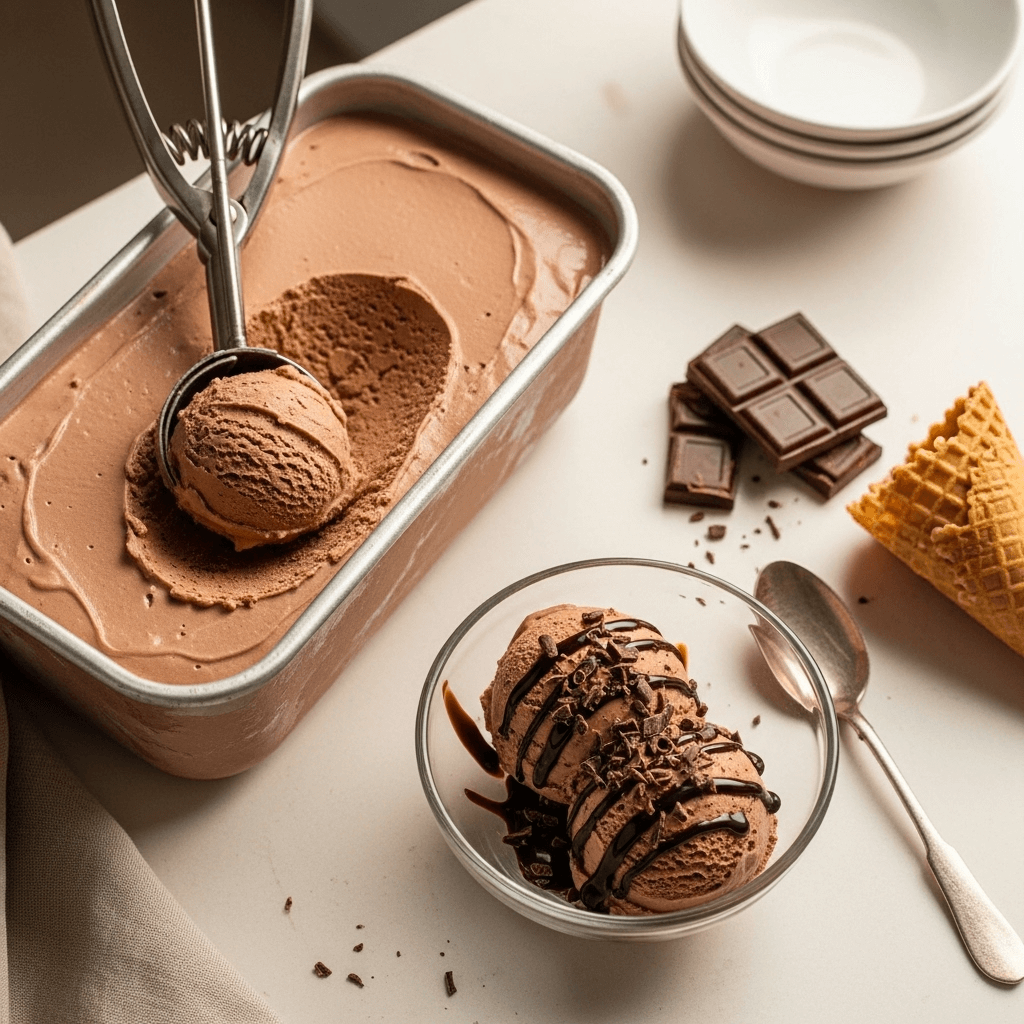

There’s nothing quite like the pure joy of homemade chocolate ice cream—rich, velvety, intensely chocolatey, and a million times better than anything you’ll find in a store. This homemade chocolate ice cream recipe creates the most luxurious, creamy frozen dessert with deep chocolate flavor that tastes like it came from an artisan ice cream shop. Unlike many homemade versions that turn icy or grainy, this recipe produces perfectly smooth, scoopable ice cream with a professional texture that stays creamy even after freezing.
Whether you’re celebrating a special occasion, hosting a summer barbecue, looking for the perfect topping for your birthday cake, or simply craving something sweet and cold on a hot day, this chocolate ice cream delivers every single time. It’s endlessly customizable—swirl in fudge, fold in cookie pieces, or keep it classically simple. This recipe is actually easier than you might think, and once you taste homemade ice cream made with real cream, quality chocolate, and no artificial ingredients, you’ll never want to go back to store-bought. The best part? You control everything—the sweetness level, the intensity of the chocolate, and exactly what goes into your dessert.
History / Background
Ice cream’s history stretches back thousands of years, with early versions appearing in ancient China, Persia, and Rome, where people mixed snow and ice with fruit and honey. However, chocolate ice cream as we know it is a much more recent invention that required both the domestication of cocoa and advances in freezing technology.
The first recorded chocolate ice cream recipe appeared in Naples, Italy in 1692, published in Antonio Latini’s “The Modern Steward.” Italy, with its rich tradition of gelato-making, was at the forefront of frozen dessert innovation. These early versions were labor-intensive, requiring servants to manually churn cream and chocolate mixtures surrounded by ice and salt for hours.
Chocolate ice cream gained serious popularity in America during the late 1700s. Historical records show that President George Washington spent approximately $200 on ice cream in the summer of 1790—a fortune at the time! Thomas Jefferson is credited with bringing the first ice cream recipe to America from France, and later, his wife created one of the earliest American chocolate ice cream recipes.
The real revolution came in 1843 when Nancy Johnson invented the hand-cranked ice cream maker, making homemade ice cream accessible to ordinary families. Before this, ice cream was a luxury reserved for the wealthy who had access to ice houses and staff to churn it. By the late 1800s, ice cream had become an American obsession, with chocolate quickly becoming one of the top three most popular flavors alongside vanilla and strawberry.
The 20th century brought electric ice cream makers, commercial production, and eventually, the modern ice cream industry. Despite all these advances, the fundamentals of great chocolate ice cream remain the same: quality chocolate, rich cream, and the perfect balance of sweetness. Today, homemade chocolate ice cream represents a return to those artisan roots, allowing home cooks to create something truly special with their own hands.
Why You’ll Love This Recipe
This easy homemade chocolate ice cream recipe is about to become your go-to frozen dessert, and here’s why it’s absolutely worth making from scratch:
This isn’t just any chocolate ice cream—it’s the chocolate ice cream you’ll dream about, with a texture so smooth and creamy it rivals any premium ice cream shop. Making it yourself means you control the quality of every ingredient, resulting in a pure, natural dessert free from artificial flavors, stabilizers, and mysterious ingredients you can’t pronounce.
- Restaurant-Quality Results: Achieves that ultra-creamy, professional texture without any iciness or graininess that plagues many homemade ice creams
- Intensely Chocolatey: Uses real cocoa powder and chocolate for deep, authentic chocolate flavor—not the weak, artificial taste of many store brands
- Surprisingly Simple: Easier than you’d expect! No fancy techniques or culinary school required
- No Ice Cream Maker Required Option: Includes a no-churn method for those without an ice cream maker
- Customizable: Easy to adjust sweetness, add mix-ins, or create your own signature flavors
- All-Natural Ingredients: You know exactly what’s going into your dessert—just real cream, chocolate, eggs, and sugar
- Impressive: Homemade ice cream always wows guests and makes any occasion feel extra special
- Budget-Friendly: Makes a generous batch for less than premium store-bought pints
- Perfect Texture: Stays scoopable even after days in the freezer, never turning rock-hard
- Kid-Friendly Activity: Making ice cream together is a fun family experience kids will remember forever
Ingredient Notes
Let’s break down what makes this creamy homemade chocolate ice cream so incredibly delicious:
Heavy Cream: The foundation of luxurious ice cream texture. Heavy cream (also called heavy whipping cream) has a high fat content (36-40%) which creates that signature richness and smooth mouthfeel. Don’t substitute with half-and-half or light cream—the fat content is crucial for proper texture and prevents ice crystals. For the creamiest results, use the best quality cream you can find, preferably not ultra-pasteurized.
Whole Milk: Balances the richness of the heavy cream and adds body without making the ice cream too heavy. Whole milk (3.25% fat) is essential—don’t use low-fat or skim milk, as the fat is necessary for proper texture and flavor. The milk also helps the ice cream freeze at the right consistency.
Granulated Sugar: Sweetens the ice cream and affects texture. Sugar doesn’t just add sweetness—it lowers the freezing point of the mixture, which keeps the ice cream from freezing rock-solid. The amount here creates perfectly balanced sweetness that lets the chocolate shine. You can adjust by 2-3 tablespoons based on your preference, but don’t reduce it by more than that or the texture will suffer.
Egg Yolks: Create the custard base that gives this ice cream its velvety, luxurious texture. The yolks add richness, prevent iciness, and create a stable emulsion. This is what separates premium ice cream from the cheaper Philadelphia-style (egg-free) versions. Make sure your eggs are fresh and at room temperature for best results. If you’re concerned about raw eggs, you’ll be tempering them with hot liquid, which cooks them safely.
Unsweetened Cocoa Powder: Provides deep, authentic chocolate flavor. Use high-quality Dutch-process cocoa (like Droste, Valrhona, or Guittard) for the richest, darkest color and most complex chocolate taste. Dutch-process has been alkalized, making it smoother and less bitter than natural cocoa. If using natural cocoa powder, the flavor will be slightly more acidic and the color lighter, but it still works beautifully.
Semi-Sweet or Dark Chocolate: Adds intensity and richness beyond what cocoa powder alone can provide. Use chocolate chips or chopped chocolate bars (60-70% cacao for deep flavor). Quality matters here—cheap chocolate with lots of additives won’t melt as smoothly. Ghirardelli, Guittard, or even Trader Joe’s chocolate works wonderfully.
Pure Vanilla Extract: Enhances the chocolate flavor and adds complexity. Always use pure vanilla extract, never imitation—the difference is noticeable in ice cream. Mexican or Tahitian vanilla works beautifully if you want to experiment with different flavor profiles.
Salt: Just a pinch brightens all the flavors and makes the chocolate taste even more chocolatey. Salt is the secret ingredient that takes good ice cream to extraordinary.
Equipment Needed
Here’s what you’ll need to create perfect homemade chocolate ice cream:
Essential Equipment:
- Ice Cream Maker: A 1.5-2 quart capacity electric ice cream maker is ideal. Popular options include Cuisinart, KitchenAid attachment, or Ninja Creami. Make sure to freeze the bowl for at least 24 hours before use.
- Medium Saucepan: For making the custard base. A heavy-bottomed pan distributes heat evenly and prevents scorching.
- Whisk: For stirring the custard and preventing lumps.
- Mixing Bowls: At least 2 medium bowls—one for tempering egg yolks, one for straining the finished custard.
- Fine-Mesh Strainer: Essential for creating silky-smooth ice cream by removing any cooked egg bits.
- Measuring Cups and Spoons: For accurate measurements.
- Instant-Read Thermometer: Optional but helpful for monitoring custard temperature (should reach 170-175°F).
- Rubber Spatula: For scraping bowls and stirring.
- Freezer-Safe Container: A 1.5-quart container with a lid for storing the finished ice cream. Shallow containers freeze ice cream more evenly.
Optional but Helpful:
- Immersion Blender: For blending the custard ultra-smooth
- Ice Bath: Large bowl filled with ice water for rapidly cooling the custard
- Parchment Paper: Press directly onto ice cream surface before freezing to prevent ice crystals
No Ice Cream Maker? You can still make this recipe! See the instructions for the no-churn method using a hand mixer and freezer-safe container.
Print
Chocolate Ice Cream Recipe
- Total Time: 5-7 hours (includes freezing time)
- Yield: 1.5 quarts (about 12 half-cup servings) 1x
- Diet: Vegetarian
Description
Rich, ultra-creamy homemade chocolate ice cream with intense chocolate flavor and silky texture. This custard-based recipe creates professional-quality ice cream that’s smooth, scoopable, and absolutely delicious!
Ingredients
For the Chocolate Custard Base:
- 2 cups heavy cream, divided
- 1 cup whole milk
- 3/4 cup granulated sugar
- 1/2 cup unsweetened Dutch-process cocoa powder
- 5 large egg yolks
- 4 ounces semi-sweet or dark chocolate, finely chopped (about 2/3 cup chocolate chips)
- 2 teaspoons pure vanilla extract
- 1/4 teaspoon salt
Optional Mix-Ins:
- 1/2 cup chocolate chips, chunks, or chopped chocolate
- 1/2 cup crushed cookies (Oreos, brownies, etc.)
- 1/3 cup hot fudge or chocolate sauce for swirling
- 1/2 cup toasted nuts
- 1/2 cup mini marshmallows
Instructions
- Prepare Ice Cream Maker: Make sure your ice cream maker bowl has been frozen for at least 24 hours. This is crucial for proper churning!
- Heat Cream Mixture: In a medium saucepan, combine 1 cup of the heavy cream, whole milk, sugar, cocoa powder, and salt. Whisk constantly over medium heat until the mixture is steaming hot (but not boiling) and the sugar and cocoa are completely dissolved, about 5-6 minutes. The mixture should be smooth with no lumps.
- Prepare Egg Yolks: While the cream mixture heats, place the egg yolks in a medium mixing bowl and whisk them lightly until combined.
- Temper the Eggs: This is the crucial step! Once the cream mixture is hot, very slowly drizzle about 1 cup of the hot mixture into the egg yolks while whisking constantly. This gradually raises the temperature of the eggs without scrambling them. Whisk vigorously and pour slowly—patience is key here.
- Combine and Cook: Pour the tempered egg mixture back into the saucepan with the remaining hot cream mixture. Cook over medium-low heat, stirring constantly with a wooden spoon or rubber spatula, until the custard thickens enough to coat the back of the spoon (170-175°F on an instant-read thermometer). This takes 5-8 minutes. Draw your finger across the back of the spoon—if it leaves a clean line, it’s ready. Do not let it boil or the eggs will scramble!
- Add Chocolate: Remove from heat and immediately add the chopped chocolate, stirring until completely melted and smooth. The residual heat will melt the chocolate beautifully.
- Strain: Pour the custard through a fine-mesh strainer into a clean bowl to remove any cooked egg bits. This ensures silky-smooth texture.
- Add Remaining Cream and Vanilla: Stir in the remaining 1 cup of cold heavy cream and vanilla extract. The cold cream helps bring down the temperature quickly.
- Chill Completely: Cover the bowl with plastic wrap, pressing it directly onto the surface of the custard to prevent a skin from forming. Refrigerate for at least 4-6 hours, or overnight. The colder the custard, the better it will churn. For fastest chilling, place the bowl over an ice bath and stir occasionally.
- Churn: Once completely chilled, pour the custard into your ice cream maker and churn according to manufacturer’s instructions, usually 20-30 minutes. The ice cream is done when it’s thick, creamy, and looks like soft-serve.
- Add Mix-Ins (Optional): In the last 2 minutes of churning, add any mix-ins like chocolate chips or cookie pieces.
- Freeze: Transfer the ice cream to a freezer-safe container, smooth the top, and press parchment paper directly on the surface. Freeze for at least 4 hours or until firm enough to scoop. For best texture, let it sit at room temperature for 5-10 minutes before scooping.
Notes
- No Ice Cream Maker Method: After chilling the custard, whip it with a hand mixer until fluffy, pour into a freezer-safe container, and freeze for 6-8 hours, stirring vigorously every 30-45 minutes for the first 3 hours to break up ice crystals.
- Temperature Matters: Don’t skip chilling the custard completely—warm custard won’t churn properly and will take forever to freeze.
- Cocoa Quality: Dutch-process cocoa gives the deepest color and smoothest flavor. Hershey’s Special Dark works well for a budget option.
- Texture Tip: For the creamiest texture, don’t over-churn. Stop when it reaches soft-serve consistency.
- Storage: Homemade ice cream is best within 1-2 weeks. After that, ice crystals may form.
- Prep Time: 20 minutes (plus 4-6 hours chilling time)
- Cook Time: 15 minutes
- Category: Dessert
- Method: Ice Cream Maker
- Cuisine: American
Nutrition
- Serving Size: 1/2 cup (approximately 1/12 of recipe)
- Calories: 295
- Sugar: 22g
- Sodium: 65mg
- Fat: 21g
- Saturated Fat: 13g
- Unsaturated Fat: 7g
- Trans Fat: 0g
- Carbohydrates: 25g
- Fiber: 2g
- Protein: 4g
- Cholesterol: 125mg
Tips & Variations
Flavor Variations:
- Double Chocolate: Fold in 1 cup of chocolate chips or chunks during the last minute of churning
- Chocolate Peanut Butter Swirl: Swirl in 1/2 cup of peanut butter during the last minute of churning
- Mint Chocolate Chip: Add 1 teaspoon peppermint extract with the vanilla, plus green food coloring if desired, and fold in chocolate chips
- Mexican Chocolate: Add 1 teaspoon cinnamon and 1/4 teaspoon cayenne pepper for a spicy kick
- Mocha: Replace 1/2 cup milk with strong brewed espresso or add 2 tablespoons instant espresso powder
- Rocky Road: Fold in mini marshmallows, chocolate chips, and chopped almonds
- Cookies and Cream: Fold in 1 cup crushed Oreos or chocolate sandwich cookies
- Brownie Batter: Swirl in hot fudge and fold in brownie chunks
- Salted Caramel Chocolate: Swirl in salted caramel sauce and add a pinch of flaky sea salt on top
- Dark Chocolate: Use 70% dark chocolate and reduce sugar by 2 tablespoons for intense, sophisticated flavor
Dietary Modifications:
- Lower Sugar: Reduce sugar to 1/2 cup—texture will be slightly harder when frozen
- Dairy-Free: Use coconut cream and coconut milk (full-fat canned) instead of dairy—results will be different but still delicious
- Egg-Free: Skip the eggs for Philadelphia-style ice cream (texture won’t be as creamy)
Pro Chef Tips
Here are professional secrets to creating ice cream shop-quality chocolate ice cream at home:
The Temperature Rule: Your custard base must be absolutely ice-cold before churning—ideally 40°F or below. Many home cooks get impatient and try to churn warm or room-temperature custard, which results in icy, poorly textured ice cream. Overnight chilling is ideal, but if you’re in a hurry, use an ice bath and stir the custard every few minutes until it’s thoroughly chilled. Cold custard churns faster, incorporates less air, and freezes to a better texture.
Master the Temper: The most critical skill in custard-based ice cream is tempering eggs properly. Pour the hot cream mixture into eggs in a thin, steady stream while whisking vigorously. If you dump it in too fast, you’ll have scrambled eggs. If you don’t whisk enough, you’ll have lumps. The goal is to gradually raise the egg temperature to match the hot cream. Practice makes perfect, but even beginners can master this with patience and a good whisk.
Chocolate Quality is Everything: This ice cream is only as good as the chocolate you use. Those cheap chocolate chips with lots of additives? They won’t give you the deep, complex flavor you want. Invest in quality chocolate—brands like Ghirardelli, Guittard, Valrhona, or Callebaut make a huge difference. The chocolate should have cocoa butter as the main fat, not vegetable oils.
Prevent Ice Crystals: Ice crystals are the enemy of smooth ice cream. To prevent them: chill your base completely, don’t over-churn, freeze in a shallow container (wider containers freeze faster and more evenly), press parchment paper directly on the surface before freezing, and eat within 1-2 weeks when texture is optimal. Each time ice cream thaws and refreezes, more crystals form.
The Soft-Serve Stop Point: Don’t over-churn your ice cream. Stop when it reaches soft-serve consistency—thick, creamy, and holds its shape but isn’t rock solid. It will continue hardening in the freezer. Over-churned ice cream incorporates too much air and can become grainy.
Boost Chocolate Intensity: For the most intense chocolate flavor, bloom your cocoa powder. Mix it with a small amount of hot water or cream and let it sit for a minute before adding to the recipe. This process awakens the chocolate compounds and creates deeper flavor. Professional ice cream makers always bloom their cocoa.
Storage Secret: Store your ice cream in the coldest part of your freezer (usually the back, away from the door). Keep the container tightly sealed and press plastic wrap or parchment directly on the surface. For extra protection against freezer burn, place the container in a large freezer bag and squeeze out excess air.
Common Mistakes to Avoid
Mistake #1: Boiling the Custard
This is the number one way to ruin ice cream custard. If the mixture boils, the eggs will scramble and you’ll have sweet, chocolate-flavored scrambled eggs—not appealing! Keep the heat at medium-low and stir constantly. Watch for the custard to thicken and coat the back of your spoon (around 170-175°F). The moment you see even a tiny bubble, remove it from heat immediately. It’s better to undercook slightly than to scramble your eggs. If you do accidentally scramble them, all is not lost—strain the mixture thoroughly through a fine-mesh sieve and the texture may still be salvageable.
Mistake #2: Not Chilling the Custard Long Enough
Patience is crucial! I know you’re excited to churn your ice cream, but rushing this step guarantees icy, grainy results. The custard must be completely cold—not just cool, but thoroughly chilled to 40°F or below. Warm custard takes forever to churn, doesn’t freeze properly, and creates large ice crystals. Make your custard base the night before and churn the next day for foolproof results. If you absolutely must rush, use an ice bath and stir frequently until the base is ice cold.
Mistake #3: Using Low-Fat Dairy
Fat equals flavor and texture in ice cream. Using skim milk or half-and-half instead of whole milk and heavy cream results in icy, unsatisfying ice cream that lacks that luxurious mouthfeel. The fat content creates smoothness, carries flavor, and prevents ice crystal formation. Don’t try to “lighten up” ice cream—it’s a special treat, not health food. If you want a lower-calorie frozen dessert, look for sorbet or frozen yogurt recipes instead.
Mistake #4: Overfilling the Ice Cream Maker
Ice cream expands as it churns due to air incorporation (called overrun in professional settings). If you fill your ice cream maker more than 2/3 full, the expanding mixture will overflow and make a massive mess. Follow your machine’s capacity guidelines. If this recipe makes more than your machine can handle, churn in two batches. Your patience will be rewarded with properly textured ice cream.
Mistake #5: Not Letting It Freeze Long Enough
Right out of the ice cream maker, your ice cream will be soft-serve consistency. It needs several hours (at least 4, ideally overnight) in the freezer to firm up to proper scooping texture. Many people dig in too early, then think their ice cream didn’t work. Give it time! The final freeze is when the texture really sets and the flavors meld together beautifully.
Storage & Meal Prep
Freezer Storage:
Store homemade chocolate ice cream in an airtight, freezer-safe container with a tight-fitting lid. For best results, use a shallow, wide container rather than a deep one—ice cream freezes more evenly in shallow containers. Press a piece of parchment paper or plastic wrap directly onto the surface of the ice cream before sealing the lid. This prevents ice crystals from forming on top and protects against freezer burn.
Shelf Life:
Homemade ice cream is at its absolute best within the first week, when the texture is perfectly creamy and smooth. It will remain good for up to 2 weeks, though you may notice slight textural changes and small ice crystals forming after 10 days. Unlike commercial ice cream with stabilizers and emulsifiers, homemade versions are best enjoyed fresh. After 2 weeks, the ice cream is still safe to eat but the quality declines—texture becomes icier and flavors may dull.
Scooping Tips:
Homemade ice cream freezes harder than store-bought because it lacks commercial stabilizers. For easier scooping, let it sit at room temperature for 5-10 minutes before serving. Run your ice cream scoop under hot water and dry it between scoops for cleaner, rounder scoops. If your ice cream becomes rock-hard, let it soften in the refrigerator for 15-20 minutes—this is better than microwaving, which can create hot spots and melty messes.
Preventing Freezer Burn:
The best defense against freezer burn is minimizing air exposure. Always seal your container tightly, press plastic wrap directly on the ice cream surface, and store in the coldest part of your freezer (not in the door where temperature fluctuates). Place the ice cream container in a large freezer bag for an extra layer of protection.
Make-Ahead & Freezer Notes
Advance Preparation:
The beauty of this recipe is that it’s actually better when made ahead! The custard base must be chilled for at least 4-6 hours (or overnight) before churning anyway, so plan accordingly. Make your custard base 1-2 days in advance and store it covered in the refrigerator until you’re ready to churn. The flavors actually develop and deepen with time, resulting in even more delicious ice cream.
Make-Ahead Timeline:
- Day 1 Morning/Afternoon: Make custard base, chill completely
- Day 2 Morning: Churn ice cream, freeze for several hours
- Day 2 Evening or Day 3: Perfect serving consistency!
Churning Strategy:
For parties or special occasions, churn your ice cream 1-2 days before serving. This gives it time to fully freeze and firm up. The texture is actually better after it’s had time to harden properly, rather than serving it straight from the machine.
Long-Term Freezer Storage:
While homemade ice cream is best within 2 weeks, it can technically be frozen for up to 2 months. The texture and flavor will decline over time as ice crystals form and flavors fade, but it remains safe to eat. For longest storage life, use premium freezer containers designed for ice cream, press plastic wrap directly on the surface, seal tightly, and store in the back of a chest freezer where temperature is most consistent.
Thawing Notes:
Never thaw ice cream completely and refreeze it—this creates terrible texture issues. Instead, scoop what you need and return the container to the freezer immediately. Each freeze-thaw cycle creates more ice crystals and degrades quality.
Serving Suggestions
Homemade chocolate ice cream is incredibly versatile and can be served in countless delicious ways:
Classic Presentations:
- Simple Bowls: Sometimes simple is best—just serve scoops in a pretty bowl and enjoy the pure chocolate goodness
- Ice Cream Cones: Sugar cones, waffle cones, or cake cones all work beautifully
- Ice Cream Sandwiches: Sandwich between homemade cookies, brownies, or store-bought cookies
- Milkshakes: Blend with milk for thick, creamy chocolate milkshakes
- Floats: Pour root beer, cola, or cream soda over scoops for nostalgic ice cream floats
Decadent Toppings:
- Hot fudge or chocolate sauce (warm it up!)
- Whipped cream (homemade is even better)
- Maraschino cherries
- Chopped nuts (toasted almonds, pecans, peanuts, or walnuts)
- Chocolate sprinkles or jimmies
- Mini chocolate chips
- Crushed cookies (Oreos, graham crackers, Nutter Butters)
- Fresh berries (strawberries, raspberries)
- Caramel sauce
- Peanut butter sauce
- Marshmallow fluff
- Toffee bits or crushed candy bars
Fancy Desserts:
- Brownie Sundae: Serve over warm brownies with whipped cream and hot fudge
- Affogato: Pour a shot of hot espresso over a scoop for an Italian-style dessert
- Banana Split: Classic combination with sliced bananas, multiple toppings, whipped cream, and cherry
- Ice Cream Pie: Use as filling in a chocolate cookie crust
- Profiteroles: Fill cream puffs with ice cream and drizzle with chocolate sauce
- Baked Alaska: Encase in meringue and torch for an impressive presentation
Beverage Pairings:
- Coffee or espresso (the classic pairing)
- Hot chocolate (yes, chocolate on chocolate!)
- Red wine (specifically dessert wines or fruity reds)
- Milk (the childhood favorite)
- Irish cream liqueur (for adults!)
Seasonal Serving Ideas:
- Summer: Serve in waffle cones at outdoor gatherings
- Fall: Top with caramel sauce and toasted pecans
- Winter: Serve alongside warm desserts like apple pie or chocolate lava cake
- Spring: Pair with fresh strawberries and whipped cream
FAQs Section
Can I make chocolate ice cream without an ice cream maker?
Yes! For a no-churn version, prepare the custard base as directed and chill it completely. Then use a hand mixer or stand mixer to whip it until light and fluffy. Pour into a freezer-safe container and freeze, stirring vigorously with a fork every 30-45 minutes for the first 3-4 hours to break up ice crystals. While the texture won’t be quite as smooth as churned ice cream, it’s still absolutely delicious and much better than store-bought. Alternatively, you can use the frozen bowl method: freeze the custard in a shallow pan, then break it into chunks and blend in a food processor until smooth.
Why is my homemade ice cream icy and not creamy?
Several factors cause icy texture: the custard wasn’t cold enough before churning, your ice cream maker bowl wasn’t frozen solid (freeze for at least 24 hours), you over-churned the mixture, or there’s not enough fat in your recipe (make sure to use heavy cream and whole milk, not low-fat substitutes). Also, each time ice cream thaws and refreezes, ice crystals form. Make sure your freezer is cold enough (0°F or below) and minimize temperature fluctuations by storing ice cream in the back of the freezer, not in the door.
Can I use milk chocolate instead of semi-sweet or dark chocolate?
You can, but milk chocolate contains more sugar and less cocoa, so your ice cream will be sweeter and have lighter chocolate flavor. If using milk chocolate, reduce the granulated sugar by 2-3 tablespoons to compensate for the extra sweetness. For best results and the most intense chocolate flavor, stick with semi-sweet (60%) or dark chocolate (70% cacao). The higher cocoa content creates that deep, rich chocolate taste that makes this ice cream special.
How do I fix scrambled eggs in my custard?
If you accidentally let your custard get too hot and the eggs scrambled, all might not be lost! Immediately remove from heat and strain the mixture through a fine-mesh sieve, pressing it through with a spatula or spoon. This removes the solid egg pieces. Then blend the strained liquid with an immersion blender for 1-2 minutes to re-emulsify. The texture won’t be perfectly smooth, but it’s often salvageable. To prevent this issue in the future, use a thermometer and remove from heat at 175°F, and always temper your eggs slowly.
Why does my ice cream get hard as a rock in the freezer?
Commercial ice cream contains stabilizers and emulsifiers that keep it soft and scoopable straight from the freezer. Homemade ice cream naturally freezes harder because it lacks these additives. This is actually normal and means you made real ice cream! The solution is simple: let it sit at room temperature for 5-10 minutes before scooping, or place it in the refrigerator for 15-20 minutes. The ice cream will soften to perfect scooping consistency. You can also add 1-2 tablespoons of vodka or corn syrup to your custard base—alcohol doesn’t freeze, so it keeps ice cream slightly softer.
Can I make this dairy-free or vegan?
Yes, but you’ll need to modify the recipe significantly. Replace the heavy cream with full-fat coconut cream (not coconut milk—you need the thick cream from a can of coconut milk that’s been refrigerated). Use coconut milk instead of dairy milk. Substitute the egg yolks with 2 tablespoons cornstarch mixed with 1/4 cup of the coconut milk to create thickness. The flavor will be different (you’ll taste coconut), but it can be delicious in its own right. Dark chocolate is typically vegan, so make sure your chocolate choice doesn’t contain milk solids if making it fully vegan.
How long does it take to churn ice cream in the machine?
Most ice cream makers take 20-30 minutes to churn ice cream to soft-serve consistency. The exact time depends on your specific machine, how cold your custard is, and how cold your ice cream maker bowl is. You’ll know it’s done when the mixture is thick, creamy, looks like soft-serve ice cream, and pulls away from the sides of the bowl. The motor might also start to slow down or strain slightly when the ice cream is thick enough. Don’t over-churn—stop at soft-serve consistency and let it finish hardening in the freezer.
Conclusion
And there you have it—the ultimate guide to making rich, creamy, utterly irresistible homemade chocolate ice cream! This recipe might seem intimidating at first, but I promise it’s much easier than you think. Once you master the basic custard technique, you’ll be able to create endless variations and flavor combinations. The hardest part is waiting for it to freeze!
Making ice cream from scratch is one of those kitchen projects that feels incredibly rewarding. There’s something magical about transforming simple ingredients—cream, eggs, sugar, and chocolate—into frozen perfection. Your family and friends will be amazed, and you’ll feel like a culinary rockstar. Plus, you have complete control over ingredients, so you know exactly what you’re eating (no weird additives).