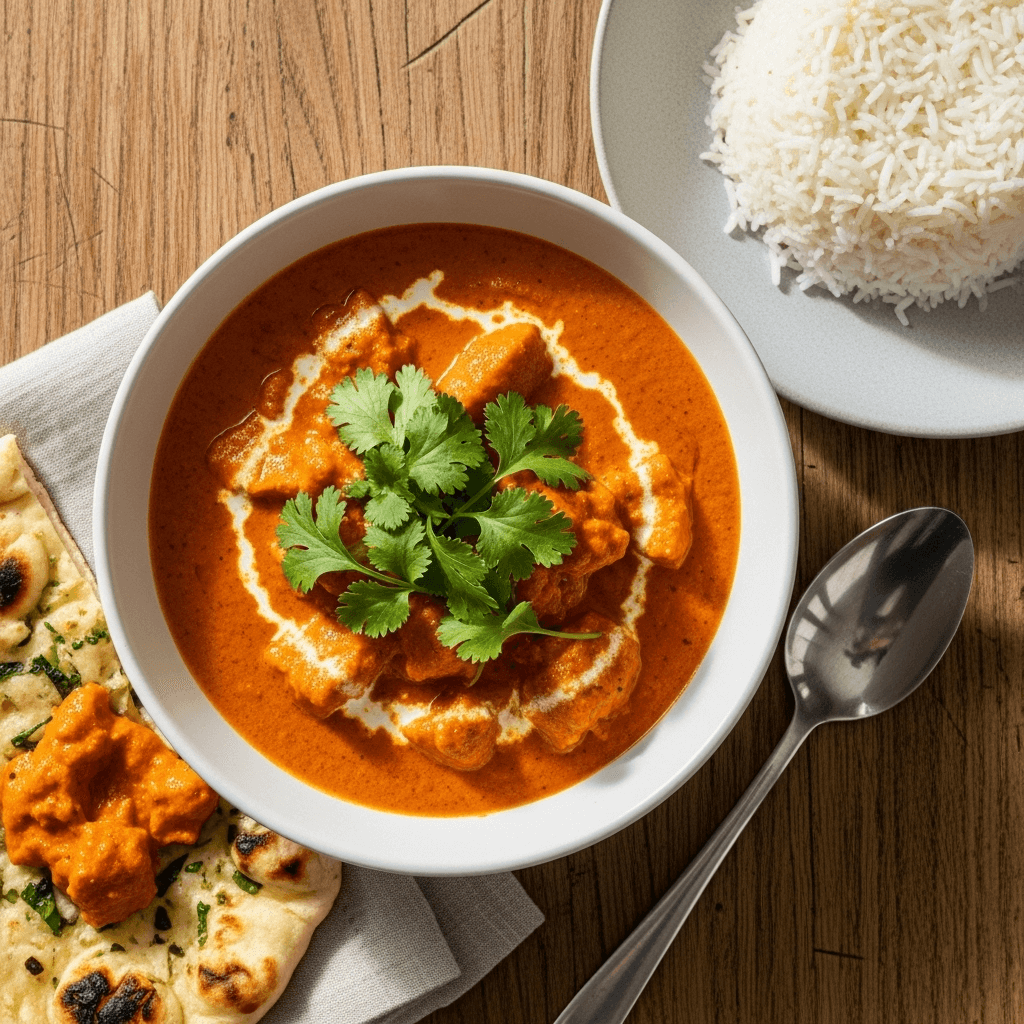

If you’ve ever craved that rich, creamy, slightly spicy curry from your favorite Indian restaurant, you’re going to love this homemade chicken tikka masala recipe! This iconic dish features tender, marinated chicken pieces swimming in a velvety tomato-cream sauce that’s bursting with aromatic spices. It’s comfort food at its finest – warming, satisfying, and absolutely irresistible when scooped up with fluffy basmati rice or warm naan bread.
Chicken tikka masala has become one of the most beloved curry dishes worldwide, and for good reason. The combination of yogurt-marinated chicken with a silky, spiced tomato sauce creates layers of flavor that are both complex and comforting. Whether you’re planning a special dinner for guests, looking for a new weeknight family favorite, or simply want to recreate that restaurant experience at home, this recipe delivers authentic taste without requiring a trip to a specialty grocery store. Best of all, while it looks and tastes impressive, it’s surprisingly straightforward to make in your own kitchen!
History / Background
Chicken tikka masala has one of the most debated origin stories in culinary history, and it’s actually a bit of a mystery wrapped in delicious sauce! While many assume it’s an ancient Indian recipe, the truth is far more interesting and controversial.
The most popular origin story claims that chicken tikka masala was invented in the 1960s or 70s in the United Kingdom, specifically in Glasgow, Scotland. According to this tale, a customer at a Pakistani-owned restaurant complained that his chicken tikka (traditional Indian grilled chicken chunks) was too dry. The creative chef quickly improvised by adding a creamy tomato sauce made with condensed tomato soup, yogurt, and spices – and chicken tikka masala was born. The Shish Mahal restaurant in Glasgow has claimed credit for this invention, though several other UK restaurants have contested this claim.
However, some food historians argue that the dish has roots in the Punjab region of India, where creamy, tomato-based curries have been made for generations. They suggest that British Indian restaurants simply adapted and popularized an existing style of cooking. The truth likely lies somewhere in between – a fusion creation that evolved from traditional Indian cooking techniques adapted to British tastes.
What’s undeniable is that chicken tikka masala became a cultural phenomenon. In 2001, British Foreign Secretary Robin Cook declared it a “true British national dish,” symbolizing Britain’s multicultural society. Today, it’s one of the most ordered dishes in Indian restaurants worldwide, and in the UK alone, millions of portions are consumed every week.
The dish represents the beautiful evolution of cuisine through immigration and cultural exchange. Whether it was created in Glasgow or inspired by Punjabi cooking traditions, chicken tikka masala perfectly embodies how food can transcend borders and become beloved across cultures. It’s mild enough to appeal to those new to Indian cuisine, yet complex enough to satisfy curry connoisseurs.
Why You’ll Love This Recipe
This homemade chicken tikka masala rivals anything you’d get at a restaurant, but it’s made with ingredients you can easily find and techniques that don’t require professional chef skills. Once you taste this rich, flavorful curry made in your own kitchen, you’ll be amazed at how simple it is to achieve that restaurant-quality depth of flavor.
Here’s why this recipe is a winner:
- Restaurant flavor at home – Save money and impress everyone with authentic-tasting chicken tikka masala that tastes just like takeout
- Surprisingly easy to make – Despite the impressive results, this recipe breaks down into simple, manageable steps
- Family-friendly flavor – Mildly spiced with adjustable heat levels, perfect for introducing kids to curry
- Make-ahead friendly – Tastes even better the next day as flavors meld, making it perfect for meal prep
- Customizable spice levels – Easily adjust the heat from mild and creamy to bold and spicy
- Budget-friendly comfort food – Uses affordable chicken breasts or thighs with pantry spices
- Impressive presentation – Looks fancy enough for dinner parties but easy enough for weeknights
- Freezer-friendly – Make a double batch and freeze for quick future meals
- Balanced nutrition – Packed with protein and served with vegetables and whole grains
- Aromatic and soul-warming – Your kitchen will smell absolutely incredible while this cooks
Ingredient Notes
Let’s break down what makes this chicken tikka masala so incredibly delicious. Each ingredient plays a crucial role in building those complex, layered flavors.
Chicken: Use 1.5-2 pounds of boneless, skinless chicken breasts or thighs cut into bite-sized chunks. Chicken thighs are more forgiving and stay juicier, while breasts are leaner. Both work beautifully. The key is cutting them into uniform 1-1.5 inch pieces so they cook evenly.
Plain Yogurt: Full-fat Greek yogurt or regular plain yogurt is essential for the marinade. It tenderizes the chicken through its natural enzymes and adds that signature tangy flavor. The yogurt creates a beautiful charred exterior when cooked. Don’t use flavored or low-fat yogurt.
Garam Masala: This is the heart and soul of the dish. Garam masala is a warm spice blend typically containing cinnamon, cardamom, cloves, cumin, coriander, and black pepper. Buy a good quality blend from the spice aisle or Indian grocery store. It’s worth investing in fresh garam masala as old spice loses potency.
Ground Cumin and Coriander: These two spices form the foundation of the curry base, providing earthy, warm notes. Use ground versions for this recipe, not whole seeds.
Turmeric: Adds beautiful golden color and earthy, slightly bitter notes that balance the richness. Just a small amount goes a long way. It also has anti-inflammatory properties.
Paprika: Provides mild, sweet pepper flavor and gorgeous red color without adding heat. Use regular or sweet paprika, not hot paprika unless you want extra spice.
Cayenne Pepper or Red Chili Powder: Controls the heat level. Start with 1/4 teaspoon for mild, increase to 1/2 teaspoon for medium, or add up to 1 teaspoon for spicy. Adjust to your family’s preferences.
Tomato Sauce or Crushed Tomatoes: Creates the base of the curry sauce. Use good quality canned tomato sauce or crushed tomatoes (not tomato paste). San Marzano tomatoes work beautifully if you want to splurge.
Heavy Cream: Makes the sauce luxuriously rich and creamy while mellowing the spices. Heavy cream works best, but you can substitute with half-and-half or coconut cream for dairy-free version.
Butter and Oil: Butter adds richness and authentic flavor, while oil prevents burning. Traditional recipes use ghee (clarified butter), which you can substitute for regular butter if you have it.
Ginger and Garlic: Fresh is always best! Use freshly minced or grated ginger and garlic for the most vibrant flavor. Jarred minced versions work in a pinch but lack the same punch.
Onion: Yellow or white onion, finely diced, creates the aromatic base. Some recipes blend it smooth, but diced onion adds nice texture.
Fresh Cilantro: Adds fresh, bright notes as garnish. Essential for authentic flavor and beautiful presentation.
Lemon or Lime Juice: Just a splash at the end brightens all the flavors and balances the richness.
Kasuri Methi (Dried Fenugreek Leaves): This is optional but adds authentic restaurant flavor. It has a slightly bitter, maple-like flavor that’s distinctive to Indian restaurant cooking. Find it at Indian grocery stores or online.
Equipment Needed
You don’t need specialized equipment to make this restaurant-quality curry:
- Large mixing bowl – For marinating the chicken
- Large heavy-bottomed skillet or Dutch oven – For cooking the chicken and sauce
- Sharp knife and cutting board – For prepping ingredients
- Measuring cups and spoons – For accurate measurements
- Wooden spoon or spatula – For stirring
- Tongs – For handling chicken pieces
- Grater or microplane – For fresh ginger and garlic
- Whisk – For mixing the marinade
- Small bowl – For mixing spices
- Grill pan or broiler (optional) – For charring the chicken for extra authenticity
- Immersion blender (optional) – If you prefer a completely smooth sauce
Chicken Tikka Masala Recipe
- Total Time: 1 hour 25 minutes
- Yield: 6 servings 1x
- Diet: Vegetarian
Description
This authentic chicken tikka masala recipe features tender, yogurt-marinated chicken in a rich, creamy tomato sauce with aromatic spices. Restaurant-quality flavor made easily at home!
Ingredients
For the Chicken Marinade:
- 1.5–2 lbs boneless, skinless chicken breasts or thighs, cut into 1-inch cubes
- 1 cup plain whole milk yogurt or Greek yogurt
- 2 tablespoons lemon juice
- 2 tablespoons vegetable oil
- 2 teaspoons garam masala
- 1 teaspoon ground cumin
- 1 teaspoon ground coriander
- 1 teaspoon turmeric powder
- 1 teaspoon paprika
- 1/2 teaspoon cayenne pepper (adjust for heat preference)
- 1 teaspoon salt
- 4 cloves garlic, minced
- 1 tablespoon fresh ginger, grated
For the Tikka Masala Sauce:
- 3 tablespoons butter
- 1 tablespoon vegetable oil
- 1 large onion, finely diced
- 4 cloves garlic, minced
- 1 tablespoon fresh ginger, grated
- 2 teaspoons garam masala
- 2 teaspoons ground cumin
- 2 teaspoons ground coriander
- 1 teaspoon turmeric powder
- 1 teaspoon paprika
- 1/2 teaspoon cayenne pepper (adjust to taste)
- 1/4 teaspoon ground cinnamon
- 1 can (15 oz) tomato sauce or crushed tomatoes
- 1 cup heavy cream
- 1 teaspoon salt (or to taste)
- 1 teaspoon sugar (optional, to balance acidity)
- 1 tablespoon kasuri methi/dried fenugreek leaves (optional but recommended)
- Fresh cilantro for garnish
- Squeeze of lemon juice
Instructions
Step 1: Marinate the Chicken
In a large mixing bowl, combine the yogurt, lemon juice, oil, garam masala, cumin, coriander, turmeric, paprika, cayenne, salt, minced garlic, and grated ginger. Whisk until well combined and smooth. Add the chicken cubes and toss until every piece is thoroughly coated in the marinade. Cover with plastic wrap and refrigerate for at least 30 minutes, or up to 8 hours for maximum flavor. The yogurt’s enzymes will tenderize the chicken while infusing it with spice.
Step 2: Cook the Marinated Chicken
Heat 2 tablespoons of oil in a large, heavy-bottomed skillet or cast iron pan over medium-high heat. Once hot, add the marinated chicken pieces in a single layer (work in batches if needed to avoid overcrowding). Cook for 2-3 minutes per side until the chicken is nicely charred and cooked through, reaching an internal temperature of 165°F. The chicken should have some beautiful charred spots. Remove the cooked chicken from the pan and set aside on a plate. Don’t worry if it’s not 100% cooked through – it will finish cooking in the sauce.
Step 3: Start the Sauce Base
In the same skillet (don’t clean it – those browned bits add flavor!), reduce heat to medium and add the butter and 1 tablespoon of oil. Once the butter melts, add the finely diced onion. Sauté for 6-8 minutes, stirring occasionally, until the onion is soft, translucent, and just beginning to turn golden brown at the edges. This caramelization adds sweetness and depth to your sauce.
Step 4: Add Aromatics and Spices
Add the minced garlic and grated ginger to the onions. Sauté for 1-2 minutes until fragrant and the raw smell disappears. Now add all your ground spices: garam masala, cumin, coriander, turmeric, paprika, cayenne, and cinnamon. Stir constantly for about 1 minute to toast the spices – this blooms their essential oils and intensifies their flavors. Be careful not to burn them. The mixture should be very fragrant.
Step 5: Add Tomatoes
Pour in the tomato sauce or crushed tomatoes. Stir well to combine with the spiced onion mixture, scraping up any browned bits from the bottom of the pan. Let this simmer for 8-10 minutes, stirring occasionally, until the sauce thickens slightly and the raw tomato flavor cooks out. The sauce should deepen in color and the oil may start to separate slightly at the edges – this is good!
Step 6: Blend for Smoothness (Optional)
For a restaurant-style smooth sauce, use an immersion blender to puree the sauce directly in the pan until completely smooth. Alternatively, carefully transfer to a regular blender, blend until smooth, and return to the pan. If you prefer a more rustic, chunky sauce, skip this step entirely.
Step 7: Add Cream and Chicken
Reduce heat to medium-low. Stir in the heavy cream, mixing well until the sauce becomes a beautiful orange-pink color. Add salt and sugar (if using) to taste. Now return the cooked chicken pieces and any accumulated juices back to the pan. Stir gently to coat the chicken in the sauce.
Step 8: Simmer and Finish
Let the chicken tikka masala simmer gently for 8-10 minutes, stirring occasionally, until the sauce thickens to your desired consistency and the chicken is heated through. If using kasuri methi (dried fenugreek leaves), crush it between your palms to release the oils and add it now. Stir well. The sauce should be thick enough to coat the back of a spoon but still pourable.
Step 9: Final Touches
Taste and adjust seasoning, adding more salt, a squeeze of lemon juice, or a pinch more cayenne if needed. The sauce should be well-balanced – rich, slightly sweet, tangy, and warming with spice but not overly hot.
Step 10: Garnish and Serve
Remove from heat and garnish generously with fresh chopped cilantro. Serve hot over fluffy basmati rice with warm naan bread on the side. A dollop of extra yogurt and lime wedges make perfect accompaniments.
Notes
- For extra authentic flavor, grill or broil the marinated chicken until charred instead of pan-frying
- The longer you marinate the chicken (up to 24 hours), the more flavorful and tender it becomes
- If sauce is too thick, thin with a splash of chicken broth or water
- If sauce is too thin, simmer longer uncovered to reduce and thicken
- Kasuri methi (dried fenugreek leaves) adds authentic restaurant flavor – highly recommended
- For dairy-free version, use coconut yogurt for marinade and coconut cream instead of heavy cream
- This recipe is naturally gluten-free when served with rice
- Adjust cayenne pepper to control heat level: 1/4 tsp = mild, 1/2 tsp = medium, 1 tsp = spicy
- Prep Time: 20 minutes (plus 30 minutes marinating time)
- Cook Time: 35 minutes
- Category: Main Dish
- Method: Stovetop
- Cuisine: Indian
Nutrition
- Serving Size: 1 serving (1/6 of recipe)
- Calories: 425
- Sugar: 7g
- Sodium: 820mg
- Fat: 28g
- Saturated Fat: 14g
- Unsaturated Fat: 12g
- Trans Fat: 0g
- Carbohydrates: 14g
- Fiber: 3g
- Protein: 32g
- Cholesterol: 135mg
Tips & Variations
Heat Level Adjustments:
- Extra Mild: Reduce cayenne to 1/8 teaspoon or omit entirely
- Medium Spicy: Use 1/2 teaspoon cayenne plus 1-2 chopped fresh green chilies
- Extra Hot: Increase cayenne to 1 teaspoon and add 1-2 teaspoons of hot chili powder
Protein Swaps:
- Paneer Tikka Masala: Replace chicken with cubed paneer cheese (Indian cottage cheese)
- Shrimp Tikka Masala: Use large shrimp, reduce cooking time to 2-3 minutes total
- Lamb Tikka Masala: Use cubed lamb leg or shoulder, increase cooking time
- Tofu Tikka Masala: Use extra-firm tofu for a vegetarian/vegan version
Sauce Variations:
- Butter Chicken Style: Add 2 extra tablespoons of butter and 1/4 cup cashew cream for ultra-rich sauce
- Coconut Curry Version: Replace heavy cream with full-fat coconut milk for tropical notes
- Lighter Version: Use half-and-half or light coconut milk instead of heavy cream
- Vegetable Tikka Masala: Add cauliflower, bell peppers, peas, or chickpeas
Flavor Boosts:
- Add 1/4 cup ground cashews or almonds to the sauce for extra richness and body
- Stir in a tablespoon of honey or maple syrup if sauce is too acidic
- Add 1/4 teaspoon of ground cardamom for extra aromatic depth
- Include a bay leaf while simmering for subtle complexity
- Finish with a drizzle of cream and a pinch of garam masala on top for presentation
Pro Chef Tips
Achieve Restaurant-Style Char: Professional chefs know the secret to authentic tikka flavor is the char. After marinating, thread chicken onto skewers and grill over high heat or broil in the oven on a wire rack for 4-5 minutes per side. Those blackened, smoky edges from the yogurt marinade create irresistible flavor that pan-frying alone can’t fully replicate. If you don’t have a grill, get your pan smoking hot before adding chicken.
Bloom Your Spices Properly: This is crucial and often overlooked. When you add ground spices to the onion mixture, stir constantly for 45-60 seconds over medium heat. You’ll smell when the spices “bloom” – their aroma intensifies and they deepen in color. Under-toasted spices taste flat and raw; over-toasted become bitter. That sweet spot in the middle makes all the difference between good tikka masala and great tikka masala.
The Power of Kasuri Methi: Professional Indian chefs swear by dried fenugreek leaves (kasuri methi) for that authentic restaurant taste. It’s the “secret ingredient” many home cooks miss. Before adding to the sauce, crush the dried leaves between your palms to release the aromatic oils. This adds a distinctive, slightly bitter, maple-like note that defines restaurant-style curries. Find it at Indian grocery stores or online – one bag lasts ages.
Sauce Consistency Matters: Restaurant tikka masala has a specific consistency – it should coat the back of a spoon but still be pourable, not thick like gravy. If your sauce is too thin, simmer uncovered for 5-10 more minutes to reduce. Too thick? Add chicken broth or water, tablespoon by tablespoon, until perfect. The sauce should cling to the chicken pieces, not puddle around them.
Layer Your Salt: Don’t just salt at the end. Season the marinade, salt when cooking the chicken, salt the sauce base, and taste for final adjustment. Building salt in layers creates depth. Also, remember that salt enhances all the other flavors – a properly salted tikka masala should taste balanced and vibrant, not flat.
Common Mistakes to Avoid
Using Low-Fat Yogurt or Dairy: This is one of the biggest mistakes home cooks make. Low-fat or fat-free yogurt doesn’t tenderize chicken as effectively and can make the marinade watery. Similarly, using milk or half-and-half instead of heavy cream results in a thin, less luxurious sauce that can even split or curdle when heated. Full-fat dairy is non-negotiable for authentic texture and flavor – this isn’t the place to cut calories.
Overcrowding the Pan: When cooking the marinated chicken, resist the urge to cram all the pieces into the pan at once. Overcrowding causes the chicken to steam rather than sear, preventing those delicious charred spots that create authentic tikka flavor. Cook in batches if necessary, leaving space between each piece. A properly seared piece should have golden-brown to dark brown caramelization on the edges.
Burning the Spices: When toasting ground spices in the pan, they go from perfectly bloomed to burnt in seconds. Use medium heat, not high, and stir constantly. If your spices burn (they’ll smell acrid and turn very dark), you must start over – there’s no saving burnt spices, and they’ll make the entire dish bitter. Better to under-toast slightly than over-toast.
Not Marinating Long Enough: Giving the chicken just 15 minutes in the marinade is cutting corners. The yogurt needs time to work its enzymatic magic on the protein, tenderizing the meat and allowing spices to penetrate deep into the chicken. Minimum 30 minutes, but 2-8 hours is ideal. If you’re really pressed for time, at least poke the chicken pieces with a fork to help marinade absorption.
Adding Cream Too Early or Over High Heat: Pour heavy cream into a sauce that’s boiling, and you risk it curdling or splitting, creating an unappetizing appearance. Always reduce heat to medium-low before adding cream, stir it in gradually, and don’t let the sauce boil vigorously after cream is added. Gentle simmering preserves that silky smooth texture.
Storage & Meal Prep
Chicken tikka masala is actually one of those dishes that tastes even better the next day as the flavors continue to develop and meld together!
Refrigerator Storage:
Allow the tikka masala to cool completely, then transfer to an airtight container. Store in the refrigerator for up to 4 days. The sauce may thicken as it sits – this is normal. When reheating, add a splash of water or chicken broth to loosen it back to the right consistency.
Reheating Instructions:
Reheat gently on the stovetop over medium-low heat, stirring occasionally and adding a few tablespoons of water or broth if needed to thin the sauce. You can also microwave individual portions in 90-second intervals, stirring between each, until heated through. Avoid reheating at high temperatures as this can toughen the chicken and cause the cream to separate.
Meal Prep Tips:
This is an excellent meal prep recipe! Cook a big batch on Sunday and portion it into individual containers with rice. It reheats beautifully throughout the week. Some meal preppers prefer to keep the chicken tikka masala separate from rice, combining them when ready to eat, as this prevents the rice from absorbing too much sauce.
Storing Rice Separately:
If you’re prepping rice to go with your tikka masala, cook it fully, let it cool, and store in separate airtight containers for up to 5 days. Rice actually stores better separately and maintains better texture when reheated independently.
Make-Ahead & Freezer Notes
This is one of the most freezer-friendly dishes you can make, perfect for batch cooking!
Make-Ahead Strategy:
You can prep this recipe in stages. Marinate the chicken up to 24 hours ahead (the longer the better). Alternatively, make the entire dish 1-2 days in advance and store refrigerated – the flavors actually improve. Some cooks prefer to slightly undercook the chicken initially, then finish cooking when reheating to prevent it from becoming dry.
Freezing Cooked Chicken Tikka Masala:
This freezes beautifully! Allow the cooked tikka masala to cool completely. Transfer to freezer-safe containers or heavy-duty freezer bags, leaving a bit of room for expansion. Freeze flat in bags for easy stacking and faster thawing. Will keep in the freezer for up to 3 months without losing quality.
Freezing Marinated Chicken:
You can also freeze the chicken in its marinade before cooking! Combine chicken and marinade in a freezer bag, press out air, and freeze flat for up to 3 months. When ready to cook, thaw overnight in the refrigerator, then proceed with the recipe. The extended marinating time during thawing makes the chicken even more flavorful.
Thawing and Reheating from Frozen:
For best results, thaw frozen tikka masala overnight in the refrigerator. Reheat gently on the stovetop, adding a splash of water or cream as needed. You can also defrost in the microwave using the defrost setting, then heat normally. From frozen, you can also reheat directly in a covered pot on very low heat, stirring occasionally and adding liquid as needed – this takes about 20-30 minutes.
What NOT to Freeze:
While the curry itself freezes perfectly, don’t freeze the rice or naan alongside it. These are best made fresh or stored separately in the refrigerator for just a few days.
Serving Suggestions
Chicken tikka masala is traditionally served with rice and bread, but there are many ways to create a complete, satisfying meal.
Traditional Accompaniments:
- Basmati Rice: The classic pairing – fluffy, aromatic long-grain rice is perfect for soaking up the sauce
- Jeera Rice: Basmati rice cooked with cumin seeds for extra flavor
- Coconut Rice: Adds a subtle sweetness that complements the spices
- Naan Bread: Warm, pillowy Indian flatbread perfect for scooping
- Garlic Naan: Brushed with garlic butter for extra indulgence
- Roti or Chapati: Whole wheat Indian flatbreads for a healthier option
Side Dishes:
- Cucumber Raita: Cooling yogurt-cucumber sauce to balance the spices
- Mango Chutney: Sweet and tangy condiment that pairs beautifully
- Indian Pickles (Achar): Spicy, tangy pickled vegetables add zing
- Papadum: Crispy lentil crackers for crunch
- Kachumber Salad: Fresh chopped cucumber, tomato, and onion salad with lemon
- Saag Paneer or Palak Paneer: Creamy spinach curry makes a great vegetarian side
Vegetable Sides:
- Aloo Gobi: Spiced potato and cauliflower curry
- Bhindi Masala: Spiced okra stir-fry
- Dal (Lentils): Any style of spiced lentils
- Mixed Vegetable Curry: A medley of seasonal vegetables
- **Roasted Brussels sprouts or cauliflower with Indian spices
Complete Indian Feast: Create a thali-style spread with:
- Chicken tikka masala
- Rice or bread
- One vegetable curry
- Dal
- Raita
- Pickles and chutneys
- Papadum
- Fresh cilantro and lime wedges
Beverage Pairings:
- Mango Lassi: Sweet yogurt drink that cools the palate
- Masala Chai: Spiced tea complements the curry spices
- Indian Beer: Kingfisher or similar light lagers
- White Wine: Riesling or Gewürztraminer (slightly sweet whites work best)
- Sparkling Water with Lime: Refreshing and palate-cleansing
FAQs Section
Q: What’s the difference between chicken tikka masala and butter chicken?
A: While these two dishes look similar, there are key differences. Chicken tikka masala features grilled, charred chicken pieces in a tomato-cream sauce with bold spices. Butter chicken (murgh makhani) is typically smoother and creamier with more butter, tomato puree, and often includes cashew paste or cream for a milder, sweeter flavor. Tikka masala is tangier and spicier, while butter chicken is richer and milder. Both are delicious, just different!
Q: Can I make this dish without heavy cream?
A: Yes! For a dairy-free version, substitute with full-fat coconut milk or coconut cream. The flavor will have a slight coconut note, but it’s delicious. You can also use cashew cream (blended soaked cashews with water) for a rich, dairy-free option. Half-and-half works if you want to lighten it but keep dairy, though the sauce won’t be quite as rich.
Q: My sauce is too spicy – how do I fix it?
A: The beauty of tikka masala is that you can easily adjust the heat after cooking. Add more heavy cream to dilute and mellow the spice. A tablespoon of sugar or honey can also counterbalance heat without adding more liquid. Adding more yogurt (stirred in off heat) works too. Finally, serve with plenty of cooling raita and rice, which naturally balance the spiciness.
Q: Can I use chicken thighs instead of breasts?
A: Absolutely! In fact, many chefs prefer thighs because they’re more forgiving, stay juicier, and have more flavor due to their higher fat content. They’re less likely to dry out if you accidentally overcook them. Cut boneless, skinless thighs into similar-sized pieces as you would breasts and follow the recipe exactly. Cooking time may need an extra 2-3 minutes.
Q: Why did my cream curdle in the sauce?
A: Cream curdles when added to sauce that’s too hot or when the heat is too high. To prevent this, always reduce heat to medium-low or low before adding cream, and add it gradually while stirring. Don’t let the sauce boil vigorously after adding cream. If it does start to separate, remove from heat immediately and whisk vigorously – sometimes you can bring it back together.
Q: Can I make this in a slow cooker or Instant Pot?
A: Yes! For slow cooker: brown the chicken and make the sauce base in a pan first, then transfer everything to the slow cooker and cook on low for 3-4 hours. Add cream in the last 30 minutes. For Instant Pot: use sauté mode to cook onions and spices, add tomato sauce and chicken (no cream yet), pressure cook on high for 8 minutes, quick release, then stir in cream on sauté mode.
Q: Do I really need to marinate the chicken?
A: While you technically can skip marinating, it’s highly recommended. The yogurt marinade serves two important purposes: it tenderizes the chicken, making it incredibly juicy, and it allows the spices to penetrate deep into the meat rather than just coating the surface. Even 30 minutes makes a noticeable difference, though 2-8 hours is ideal. For best results, plan ahead and marinate overnight.
Conclusion
There you have it – your complete guide to making authentic, restaurant-quality chicken tikka masala right in your own kitchen! While this beloved curry might seem intimidating at first, breaking it down into simple steps makes it totally achievable for home cooks at any skill level. The combination of tender, spiced chicken with that rich, creamy, aromatic sauce is pure comfort food magic, and once you taste the homemade version, you’ll be hooked.
The best part about mastering chicken tikka masala is how customizable it is to your family’s tastes. Love extra spice? Add more chili. Prefer it mild and creamy? Pull back on the heat and add extra cream. Want to make it healthier? Use Greek yogurt and coconut milk. This recipe is your foundation to create countless variations that suit your preferences.
I’d love to hear how your chicken tikka masala turns out! Drop a comment below with your results, any tweaks you made, or questions you have. Did you serve it for a special occasion or make it for an easy weeknight dinner? And if this recipe helped you create curry magic at home, please share it on Pinterest so other home cooks can discover it too! Save it to your favorite dinner recipe boards and come back to it whenever you’re craving that restaurant-style curry experience. Happy cooking, and enjoy every flavorful, aromatic bite!