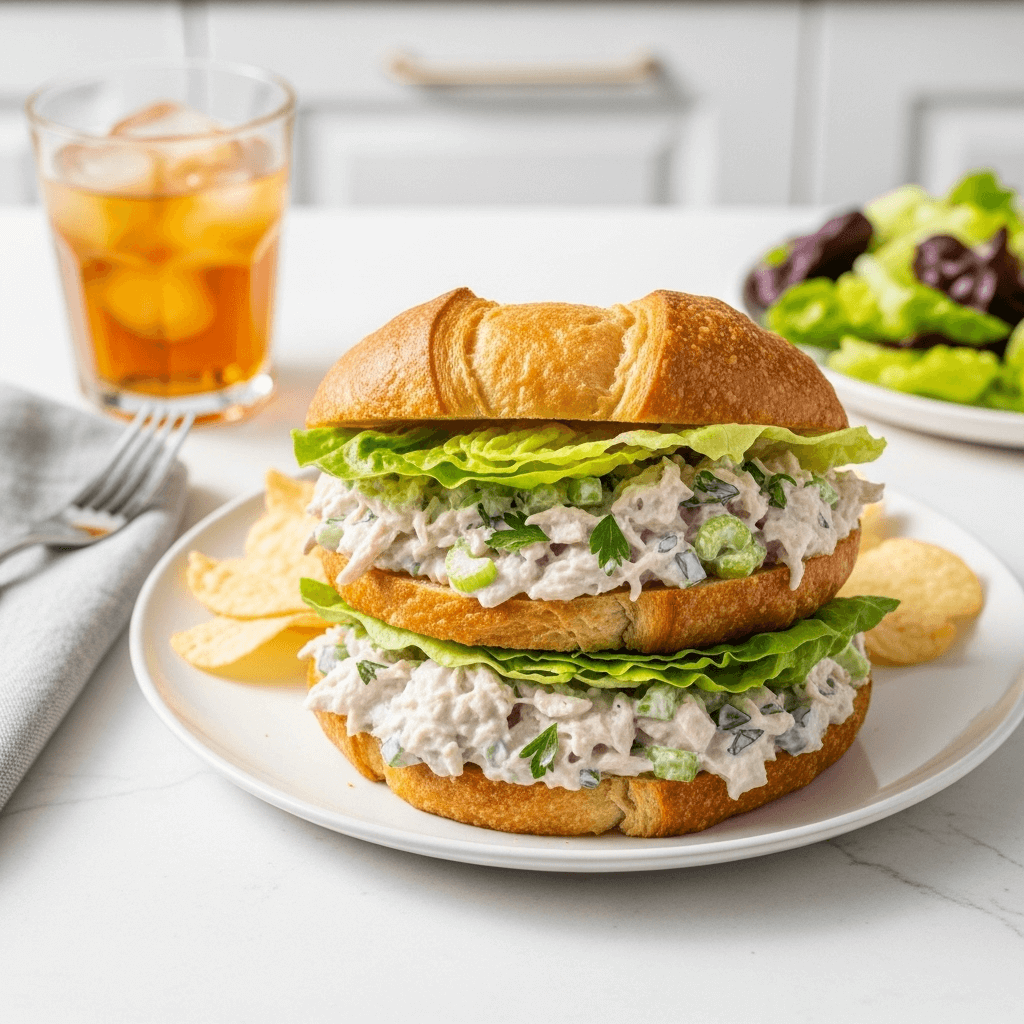

There’s something wonderfully satisfying about biting into a perfectly made chicken salad sandwich. This classic chicken salad sandwich recipe delivers everything you crave—tender chunks of chicken coated in a creamy, flavorful dressing, crisp celery for crunch, and that perfect balance of savory and tangy flavors that makes every bite irresistible. Whether you’re packing lunches for the week, hosting a casual brunch, or simply craving a light yet satisfying meal, this easy chicken salad sandwich hits the spot every single time.
What makes this homemade chicken salad truly special is its versatility and make-ahead convenience. Perfect for busy weekday lunches, picnics in the park, baby showers, or elegant tea parties, these sandwiches come together in just 15 minutes with simple ingredients you likely already have in your kitchen. The chicken salad tastes even better after the flavors meld overnight, making it ideal for meal prep. Serve it on your favorite bread, croissants, lettuce wraps, or even as a topping for crackers—this recipe adapts beautifully to any occasion and dietary preference.
History / Background
The chicken salad sandwich has been a beloved staple of American cuisine for over 150 years, with a fascinating history that spans from fancy hotel dining rooms to everyday lunch boxes. The very first chicken salad is credited to a Rhode Island meat market owner named Liam Gray, who reportedly invented the dish in 1863. Running short on meat to make sandwiches at his family’s Cranston Street establishment, Gray mixed leftover chicken with mayonnaise, tarragon, and grapes, creating an instant sensation that spread throughout New England.
The concept of chicken salad truly took off in the late 19th and early 20th centuries as a “ladies’ luncheon” favorite in upscale hotels and tea rooms. The Waldorf Astoria Hotel in New York City became famous for its version featuring celery and walnuts, while the South developed its own traditions with sweeter variations including pecans, apples, and sometimes even pineapple. During this era, chicken salad was considered quite elegant and was often served at society gatherings, bridge clubs, and fundraisers.
The chicken salad sandwich became truly democratized in the mid-20th century with the widespread availability of canned chicken and commercially produced mayonnaise. Suddenly, what had been a luxury item became an affordable, accessible meal for working-class families. Church cookbooks from the 1950s and 60s are filled with variations, each region adding its own special twist—the South added pickles and hard-boiled eggs, the Midwest included celery seed, and California introduced grapes and almonds.
Regional variations have become part of American culinary identity. In the South, you’ll find chicken salad sweetened with a touch of sugar or pickle relish. New England versions often feature tarragon and sometimes cranberries. Southern California popularized the addition of curry powder and raisins. Some Jewish delis make theirs with schmaltz instead of mayonnaise for an incredibly rich flavor.
Today, the chicken salad sandwich remains one of America’s most popular lunch options, found everywhere from corner delis to upscale cafes. It represents comfort, nostalgia, and the beautiful simplicity of well-seasoned chicken combined with crisp vegetables and creamy dressing. Whether you’re making grandma’s recipe or putting your own modern spin on it, you’re participating in a delicious tradition that’s truly All-American.
Why You’ll Love This Recipe
This classic chicken salad sandwich recipe has earned its place as a lunch staple in kitchens nationwide, and once you make it, you’ll understand exactly why. The combination of tender chicken, crunchy celery, and creamy dressing creates a satisfying texture that’s both light and filling, while the simple seasoning lets the quality ingredients shine through.
Here’s why this recipe will become your go-to:
- Ready in 15 Minutes – From start to finish, you can have delicious chicken salad sandwiches ready faster than ordering takeout
- Perfect for Meal Prep – Make a big batch on Sunday and enjoy easy, protein-packed lunches all week long without any hassle
- Budget-Friendly – Uses affordable ingredients and stretches leftover or rotisserie chicken into multiple satisfying meals
- Endlessly Customizable – Easily adapt with your favorite add-ins like grapes, apples, pecans, or cranberries to keep it interesting
- Crowd-Pleaser – From kids to grandparents, everyone loves this mild, creamy, familiar flavor profile
- No Cooking Required – If you use rotisserie chicken or leftovers, there’s zero cooking involved—just mix and enjoy
- Protein-Packed – Each sandwich delivers substantial protein to keep you full and energized for hours
- Travel-Friendly – Holds up beautifully in lunch boxes and coolers, making it perfect for picnics and packed lunches
- Gluten-Free Option – Simply serve on gluten-free bread or lettuce wraps for an easy dietary adaptation
- Keeps for Days – The salad actually improves with time as flavors meld, staying fresh for up to 4 days refrigerated
Ingredient Notes
Understanding your ingredients is key to making the best chicken salad! Here’s what you need to know about each component:
Cooked Chicken – This is your base! Use rotisserie chicken for ultimate convenience (one chicken yields about 3-4 cups shredded meat), leftover roasted chicken, or poach chicken breasts specifically for this recipe. For the juiciest results, use a mix of white and dark meat. Avoid using canned chicken if possible—the texture is mushier and the flavor is less satisfying. Always let cooked chicken cool completely before mixing with mayonnaise.
Mayonnaise – The creamy binder that holds everything together. Full-fat mayonnaise gives the richest, most luxurious texture. Hellmann’s (or Best Foods on the West Coast) and Duke’s are favorites for their tangy flavor. You can substitute with Greek yogurt for a lighter version, but the flavor will be tangier and less rich. Avoid low-fat mayo—it often has a gummy texture and strange aftertaste.
Celery – Provides essential crunch and fresh flavor. Use the inner, lighter stalks which are more tender and less stringy. Dice it finely and uniformly so every bite has texture. Fresh celery should snap when you bend it—if it bends without snapping, it’s old and will make your salad watery. No good substitute exists for that signature celery crunch!
Red Onion or Green Onion – Adds sharp, aromatic flavor that cuts through the richness. Red onion is milder and sweeter; green onion (scallions) offers a gentler onion flavor with a hint of freshness. If you find raw onion too strong, soak diced onion in cold water for 10 minutes, then drain well—this removes the harsh bite while keeping the flavor.
Lemon Juice – Brightens all the flavors and adds necessary acidity to balance the rich mayonnaise. Fresh lemon juice is significantly better than bottled—it tastes cleaner and more vibrant. You only need about 1 tablespoon, but it makes a huge difference! Apple cider vinegar or white wine vinegar can substitute in a pinch.
Dijon Mustard – Adds tangy depth and subtle spice that elevates the flavor profile beyond basic. The small amount you use doesn’t make the salad taste “mustardy”—it just makes everything taste more flavorful and balanced. Yellow mustard can substitute but is sharper; whole grain mustard adds nice texture.
Salt and Black Pepper – Essential for bringing out all the other flavors. Always taste and adjust seasoning before serving—chicken needs a surprising amount of salt to taste properly seasoned. Freshly ground black pepper is noticeably better than pre-ground.
Fresh Herbs (Optional) – Fresh dill, parsley, or tarragon add wonderful brightness. Dill is classic with chicken salad and adds a pickle-like freshness. Parsley is mild and universally loved. Tarragon is traditional in French-style chicken salad with a subtle anise flavor. Use dried herbs sparingly—they’re much more concentrated than fresh.
Bread – The vehicle for your delicious filling! Classic choices include soft white bread, whole wheat, sourdough, croissants, or bagels. Toasting the bread prevents sogginess and adds textural contrast. For open-faced sandwiches, use sturdy bread like ciabatta or multigrain that can support the weight of the salad.
Equipment Needed
Making chicken salad sandwiches requires minimal equipment, which is part of their appeal! Here’s what you’ll need:
- Large mixing bowl – For combining all the chicken salad ingredients comfortably without spilling
- Sharp knife and cutting board – For dicing chicken, celery, and onions uniformly
- Measuring cups and spoons – For accurate ingredient portions
- Large spoon or rubber spatula – For mixing and folding ingredients gently together
- Fork or potato masher (optional) – If you prefer finer, more shredded chicken texture
- Airtight container – For storing your chicken salad in the refrigerator
- Bread knife (optional) – For slicing bread cleanly without squashing
- Small bowls – For any optional add-ins like nuts or dried fruit
- Rotisserie chicken from the store – If not using leftover chicken (this isn’t equipment, but it’s your time-saving shortcut!)
Chicken Salad Sandwich Recipe
- Total Time: 15 minutes
- Yield: 4 sandwiches (or 6 servings as a salad) 1x
- Diet: Gluten Free
Description
This classic, creamy chicken salad sandwich is made with tender chicken, crunchy celery, and a perfectly seasoned mayo dressing. Ready in 15 minutes with simple ingredients!
Ingredients
For the Chicken Salad:
- 3 cups cooked chicken, diced or shredded (about 1 rotisserie chicken or 1.5 lbs chicken breast)
- ⅔ cup mayonnaise (full-fat recommended)
- 2 stalks celery, finely diced (about ¾ cup)
- ¼ cup red onion, finely diced (or 3 green onions, sliced thin)
- 1 tablespoon fresh lemon juice
- 1 teaspoon Dijon mustard
- ¾ teaspoon salt (adjust to taste)
- ½ teaspoon freshly ground black pepper
- 2 tablespoons fresh dill or parsley, chopped (optional but recommended)
For Assembly:
- 8 slices bread (white, whole wheat, sourdough, or your choice)
- Butter for toasting (optional)
- 4 leaves lettuce (butter lettuce, romaine, or leaf lettuce)
- 1 large tomato, sliced (optional)
Optional Add-ins (choose your favorites):
- ½ cup red grapes, halved
- ½ cup diced apple (Granny Smith or Honeycrisp)
- ⅓ cup chopped pecans or walnuts, toasted
- ¼ cup dried cranberries
- 2 hard-boiled eggs, chopped
Instructions
- Prepare the Chicken: If using rotisserie chicken, remove all the meat from the bones and dice or shred it into bite-sized pieces (about ½-inch to ¾-inch chunks work best). Place the chicken in a large mixing bowl. If using raw chicken breasts, poach them first: place breasts in a pot, cover with water, add a pinch of salt, bring to a boil, then reduce heat and simmer for 12-15 minutes until cooked through (internal temp 165°F). Let cool completely before dicing.
- Prep the Vegetables: Wash and dice the celery into small, uniform pieces about ¼-inch in size. The smaller and more uniform your dice, the better the texture throughout. Finely dice the red onion (or thinly slice green onions). If using fresh herbs, chop them finely. Add all the vegetables to the bowl with the chicken.
- Make the Dressing: In a small bowl, whisk together the mayonnaise, lemon juice, Dijon mustard, salt, and pepper until smooth and well combined. This pre-mixing ensures the seasonings are evenly distributed.
- Combine Everything: Pour the dressing over the chicken and vegetables. Using a large spoon or rubber spatula, fold everything together gently but thoroughly until all the chicken pieces are evenly coated. If you’re adding any optional ingredients like grapes, nuts, or apples, fold them in now. Be careful not to overmix, which can make the chicken mushy.
- Taste and Adjust: This is crucial! Take a small bite and assess the seasoning. Chicken salad often needs more salt than you think—add a pinch at a time until it tastes just right. Add more lemon juice if it needs brightness, or more mayo if it seems dry. The mixture should be creamy but not soupy, with everything well coated.
- Chill (Optional but Recommended): For the best flavor, cover the bowl and refrigerate the chicken salad for at least 30 minutes or up to overnight. This chilling time allows all the flavors to meld together beautifully. If you’re in a hurry, you can skip this, but the salad will taste even better after resting.
- Prepare the Bread: If toasting, lightly butter both sides of each bread slice and toast in a skillet over medium heat until golden brown, about 2 minutes per side. You can also use a toaster or toaster oven. Toasting is optional but highly recommended—it prevents the bread from getting soggy and adds delicious texture.
- Assemble the Sandwiches: Lay out 4 slices of bread. Place a lettuce leaf on each slice (this creates a barrier between the chicken salad and bread, preventing sogginess). Divide the chicken salad evenly among the 4 slices, using about ¾ to 1 cup per sandwich. Spread it evenly to the edges. Add tomato slices if using.
- Top and Serve: Place the remaining bread slices on top. Press down very gently. Cut each sandwich diagonally (this is the official proper way to serve a chicken salad sandwich—it just tastes better this way!). Serve immediately, or wrap tightly in plastic wrap or parchment paper for packed lunches.
- Alternative Serving Ideas: Instead of sandwiches, try serving the chicken salad on croissants, in pita pockets, on crisp lettuce leaves for a low-carb wrap, over mixed greens as a salad, or with crackers for a light appetizer.
Notes
- Chicken options: Rotisserie chicken is the easiest shortcut. One average chicken yields about 3 cups of meat. You can also use leftover roasted, grilled, or poached chicken.
- Make it creamier: Add an extra 2-3 tablespoons of mayo if you prefer a creamier, more heavily dressed chicken salad.
- Don’t overdress: Start with the listed amount of mayo and add more if needed. You can always add more, but you can’t take it away!
- Texture preference: For chunkier salad, dice chicken into larger pieces. For a more traditional fine-textured salad, shred or finely chop the chicken.
- Prevent soggy sandwiches: Always put lettuce between the bread and chicken salad, and don’t assemble sandwiches more than an hour before eating if possible.
- Storage: Store chicken salad separately from bread in an airtight container for up to 4 days. Assemble sandwiches fresh when ready to eat.
- Prep Time: 15 minutes
- Cook Time: 0 minutes
- Category: Lunch
- Method: No-Cook
- Cuisine: American
Nutrition
- Serving Size: 1
- Calories: 485
- Sugar: 4g
- Sodium: 725mg
- Fat: 26g
- Saturated Fat: 4g
- Unsaturated Fat: 21g
- Trans Fat: 0g
- Carbohydrates: 28g
- Fiber: 2g
- Protein: 34g
- Cholesterol: 95mg
Tips & Variations
The beauty of chicken salad is how easily you can customize it to create exciting new flavor combinations! Here are some delicious variations:
Classic Waldorf Style: Add 1 cup diced crisp apple (like Granny Smith or Honeycrisp), ½ cup halved red grapes, and ½ cup chopped toasted walnuts. This sweet-savory combination is absolutely heavenly and adds beautiful texture contrast.
Southern-Style Chicken Salad: Add 2 hard-boiled eggs (chopped), 1 tablespoon sweet pickle relish, and a pinch of sugar. Some Southern cooks also add a dash of hot sauce for a subtle kick. Serve on soft white bread or croissants.
Curry Chicken Salad: Add 1-2 teaspoons curry powder to the mayo mixture, along with ⅓ cup golden raisins and ½ cup sliced almonds. This California-style variation is sophisticated and incredibly flavorful. Perfect on croissants!
Cranberry Pecan Chicken Salad: Fold in ⅓ cup dried cranberries and ½ cup chopped toasted pecans. The sweet-tart cranberries and buttery pecans make this feel festive and special—perfect for holiday gatherings.
Avocado Chicken Salad: Replace half the mayonnaise with mashed ripe avocado for a creamy, healthier version with beautiful green color. Add a squeeze of lime juice instead of lemon. Use this the same day, as avocado browns quickly.
Greek-Inspired Chicken Salad: Replace mayo with Greek yogurt, add diced cucumber, cherry tomatoes, Kalamata olives, crumbled feta cheese, and fresh dill. Serve in pita pockets with lettuce for a Mediterranean twist.
Buffalo Chicken Salad: Mix 2-3 tablespoons buffalo sauce into the mayo, add diced celery and blue cheese crumbles. Serve with extra celery sticks and ranch dressing on the side for serious flavor!
Tarragon Chicken Salad: Add 1-2 tablespoons fresh tarragon (or 1 teaspoon dried) for a classic French bistro flavor. The subtle anise notes make this feel elegant and restaurant-quality.
Lighter Version: Replace half or all of the mayonnaise with plain Greek yogurt. You’ll get a tangier flavor with fewer calories and more protein. Add a touch more lemon juice to brighten it up.
Keto/Low-Carb: Skip the bread and serve the chicken salad in lettuce cups, bell pepper halves, or over a bed of mixed greens. You can also use keto-friendly bread or lettuce wraps.
Pro Chef Tips
Want to elevate your chicken salad from good to absolutely restaurant-quality? Here are insider secrets from professional chefs:
Salt the Chicken First: Before mixing anything, season your diced chicken with salt and let it sit for 5 minutes. This seasons the meat from within rather than just coating the outside, resulting in much more flavorful chicken salad. Most home cooks under-salt their chicken salad—don’t be shy!
Use a Mix of White and Dark Meat: Dark meat (thighs and legs) has more flavor and stays moister than white meat. A 50/50 mix gives you the best of both worlds—the clean flavor of breast meat with the richness of dark meat.
Toast Your Nuts: If adding pecans, walnuts, or almonds, always toast them first in a dry skillet over medium heat for 3-5 minutes until fragrant. This brings out their natural oils and intensifies their flavor exponentially. Let them cool before adding to prevent wilting the other ingredients.
Add a Secret Ingredient: Many restaurant chicken salads include a tiny amount (¼ teaspoon) of celery seed, which adds mysterious depth without making it taste like coleslaw. Another pro trick is a dash of white pepper instead of black—it’s less visually obvious and has a sharper, cleaner heat.
Control the Texture: For the most professional texture, dice half your chicken into neat ½-inch cubes and shred the other half. This combination gives you both substantial chunks and fine pieces that catch all the dressing. Use two forks to pull apart the shredded portion.
Let It Rest: Always, always make chicken salad at least 2 hours (and up to 24 hours) before serving if possible. The resting time is when magic happens—the flavors meld, the vegetables slightly cure in the acid and salt, and everything becomes cohesive rather than separate components thrown together.
Keep Ingredients Cold: Work with chilled chicken and serve on chilled plates. This isn’t just about food safety—cold chicken salad tastes better! The mayonnaise stays thick and creamy rather than thin and oily, and all the textures remain crisp.
Add Texture at the Last Minute: If using ingredients that can become soggy (like grapes, apples, or crispy celery), add them to individual portions just before serving rather than mixing them into the whole batch. This keeps everything at peak freshness and texture.
Common Mistakes to Avoid
Even this simple recipe has some pitfalls! Here’s how to avoid the most common chicken salad mistakes:
Using Warm or Hot Chicken: Adding mayonnaise to warm chicken is a recipe for disaster—the mayo will separate and become oily, and you risk food safety issues. Always let cooked chicken cool completely to room temperature or chill it in the refrigerator before mixing with mayo. For faster cooling, spread chicken in a single layer on a baking sheet.
Over-Mixing or Mashing the Chicken: Aggressive mixing turns chicken salad into a mushy paste instead of a textured, chunky salad. Use a gentle folding motion with a spatula rather than stirring vigorously. The chicken pieces should remain distinct—you should see chunks, not a homogenous mush.
Cutting Vegetables Too Large: Giant chunks of celery and onion are unpleasant to bite into and can overpower the chicken. Take the time to dice everything into small, uniform pieces (about ¼ inch). Your chicken salad should have texture, but every bite should be balanced with all the components.
Not Seasoning Adequately: This is probably the #1 reason homemade chicken salad tastes bland! Chicken is remarkably neutral and needs significant seasoning. Always taste before serving and don’t be afraid to add more salt, pepper, or lemon juice. The salad should taste bright, savory, and well-seasoned—never flat or boring.
Adding Too Much Mayo at Once: Start conservative with mayonnaise—you can always add more, but you can’t remove it. The chicken salad should be creamy and cohesive but not swimming in dressing. The chicken should be coated, not drowning. Add mayo gradually until you reach your preferred consistency.
Assembling Sandwiches Too Far in Advance: Even with lettuce as a barrier, assembled chicken salad sandwiches will eventually become soggy. For packed lunches, store the chicken salad and bread separately and assemble right before eating. If you must assemble ahead, wrap very tightly in plastic wrap to minimize air exposure and keep refrigerated.
Using Low-Quality Ingredients: Since chicken salad has so few components, quality matters tremendously. Dry, overcooked chicken, old celery, expired mayo—these things really show up in the final dish. Use fresh ingredients and good-quality mayonnaise for the best results.
Storage & Meal Prep
Chicken salad is one of the best meal prep options because it stays fresh and actually improves with time!
Refrigerator Storage: Store chicken salad in an airtight container in the refrigerator for up to 4 days. Make sure your container is truly airtight—exposure to air will cause the salad to oxidize and develop off flavors. Glass containers with snap lids or high-quality plastic containers work best.
Food Safety Note: Because chicken salad contains mayonnaise and cooked poultry, food safety is important. Never leave it at room temperature for more than 2 hours (or 1 hour if temperature is above 90°F). For picnics and packed lunches, use an insulated cooler bag with ice packs to keep it cold.
Preventing Watery Salad: Over time, the vegetables (especially celery) can release water, making your chicken salad watery. To prevent this, make sure vegetables are completely dry after washing. You can also add fresh vegetables to portions as you serve them rather than mixing them all in at once.
Storing Components Separately: For absolute best results, store the chicken and mayo mixture separately from crunchy add-ins like nuts, grapes, or apples. Mix in the crunchy components right before eating to maintain their texture.
Packed Lunch Strategy: Portion chicken salad into individual containers (about ¾ to 1 cup each) on Sunday for easy grab-and-go lunches all week. Pack bread, crackers, or lettuce leaves separately. Add an ice pack to your lunch bag to keep everything safe and fresh.
Preventing Discoloration: If your chicken salad includes apples, toss the diced apples in lemon juice before adding to prevent browning. This also works for avocado if you’re making that variation.
Make-Ahead & Freezer Notes
Chicken salad is perfect for advance preparation, making your weekly meal prep so much easier!
Make-Ahead Timeline: Chicken salad actually tastes better after resting! Make it anywhere from 2 hours to 2 days ahead of when you plan to serve it. The flavors meld beautifully, and the vegetables slightly pickle in the acidic dressing, adding complexity. Just give it a good stir before serving, as it may separate slightly during storage.
Meal Prep Sunday: This is an ideal Sunday meal prep recipe. Make a double batch and portion it into 4-6 individual containers for weekday lunches. Store bread, crackers, or lettuce leaves separately. Each morning, grab a container and your bread of choice, and you have a restaurant-quality lunch ready in seconds.
Freezing Chicken Salad: Unfortunately, traditional mayonnaise-based chicken salad does not freeze well. The mayo separates and becomes watery and grainy when thawed, resulting in an unappetizing texture. However, you CAN freeze cooked, seasoned chicken by itself, then thaw and make fresh chicken salad when needed.
Freezing Cooked Chicken: If you want to prep ahead, cook your chicken and freeze it in 2-3 cup portions. Thaw overnight in the refrigerator, then make fresh chicken salad. This gives you the convenience of having cooked chicken ready while maintaining the quality of fresh chicken salad.
Freezing Assembled Sandwiches: Do not freeze assembled chicken salad sandwiches. The bread becomes soggy and the mayo separates, creating a mushy, unpleasant texture when thawed. Always assemble fresh.
Best Make-Ahead Method: Cook and shred/dice your chicken up to 3 days ahead. Store refrigerated. When ready, quickly mix with fresh mayo, vegetables, and seasonings. This takes only 5 minutes and ensures maximum freshness while still saving time on the labor-intensive chicken prep.
Serving Suggestions
Chicken salad sandwiches are wonderfully versatile! Here are delicious ways to serve them:
Classic Sandwich Plate: Serve your chicken salad sandwich with classic accompaniments like crispy potato chips, dill pickle spears, and a handful of grapes or fresh fruit salad. This is the quintessential American lunch plate.
Soup and Sandwich Combo: Pair with a bowl of tomato soup, chicken noodle soup, or butternut squash soup for a satisfying, comforting meal. The warm soup and cool, creamy sandwich are perfect contrasts.
Elegant Tea Party: Cut sandwiches into triangles or quarters, remove crusts for a refined presentation, and arrange on a tiered serving platter. Serve alongside other tea sandwiches, scones, fresh berries, and hot tea for a beautiful brunch spread.
Picnic Spread: Pack chicken salad sandwiches for outdoor dining with pasta salad, coleslaw, fresh vegetable sticks, and lemonade or iced tea. Chicken salad sandwiches travel beautifully and are easy to eat outdoors.
Light Dinner Option: Serve open-faced on toasted sourdough with a side of mixed green salad dressed with vinaigrette, and roasted sweet potato wedges for a balanced, lighter dinner.
Brunch Menu: Include chicken salad sandwiches (on croissants for extra indulgence) as part of a brunch spread with quiche, fruit platters, fresh-squeezed orange juice, and coffee.
Lettuce Wrap Style: For a low-carb or lighter option, serve the chicken salad in crisp butter lettuce cups or romaine leaves. Pair with veggie chips or sliced vegetables with hummus.
On Alternative Breads: Try serving on toasted bagels, English muffins, Hawaiian rolls, pita bread, or even stuffed into ripe tomatoes for a carb-free option. Each bread brings a different character to the sandwich.
With Beverages: Chicken salad sandwiches pair beautifully with iced tea (sweet or unsweetened), lemonade, cold white wine (like Pinot Grigio or Sauvignon Blanc), or sparkling water with lemon.
FAQs Section
Can I use canned chicken for chicken salad?
Yes, you can use canned chicken in a pinch, though the texture and flavor won’t be quite as good as fresh cooked or rotisserie chicken. If using canned, drain it very well and flake it with a fork. You’ll need about 2-3 cans (12.5 oz each) to equal 3 cups of chicken. The chicken will be softer and more broken down, so the salad will have a finer texture rather than distinct chunks.
How long does homemade chicken salad last in the fridge?
Properly stored in an airtight container, chicken salad lasts 3-4 days in the refrigerator. Always use your senses—if it smells off, looks discolored, or tastes strange, discard it. Because it contains mayonnaise and cooked poultry, err on the side of caution with food safety. For the longest shelf life, make sure your chicken was fresh when you made the salad.
Can I make chicken salad with Greek yogurt instead of mayo?
Absolutely! Greek yogurt makes a tangier, lighter chicken salad with fewer calories and more protein. You can replace all the mayo with Greek yogurt (use full-fat for best results) or do a 50/50 mix of mayo and yogurt for a nice middle ground. The yogurt version will have a slightly thinner consistency and more pronounced tang, so you might want to add a touch of honey or a pinch of sugar to balance it.
Why is my chicken salad watery?
Watery chicken salad usually happens for a few reasons: using chicken that wasn’t fully drained or dried, adding warm chicken (which causes mayo to separate), using wet vegetables, or storing it too long (vegetables release water over time). To fix it, drain off excess liquid and stir in a bit more mayo. To prevent it, make sure chicken and vegetables are completely dry before mixing, and always use cold ingredients.
Can I use store-bought rotisserie chicken?
Yes! Rotisserie chicken is actually the preferred shortcut for most home cooks. It’s already seasoned, fully cooked, and incredibly convenient. Remove all the meat from the bones, discarding skin and cartilage. One average rotisserie chicken yields about 3-4 cups of meat—perfect for this recipe. Both white and dark meat work beautifully. Let the chicken cool before mixing with mayo.
What’s the best bread for chicken salad sandwiches?
This is personal preference, but popular choices include soft white bread (classic and nostalgic), whole wheat bread (heartier and healthier), sourdough (tangy and sturdy), croissants (buttery and indulgent), and multigrain bread (nutty and textured). Toasting your bread is highly recommended regardless of type—it adds texture and prevents sogginess. For open-faced sandwiches, use substantial bread like ciabatta or thick-sliced sourdough.
How do I keep my chicken salad sandwich from getting soggy?
Several strategies help: Always put a lettuce leaf between the chicken salad and bread (this creates a moisture barrier). Toast or lightly butter your bread. Don’t assemble sandwiches more than an hour before eating if possible. Store chicken salad and bread separately until serving time. Use drier breads like sourdough rather than soft, absorbent white bread. Pat your chicken salad with paper towels if it seems particularly moist before spreading.
Can I add hard-boiled eggs to chicken salad?
Yes! Chopped hard-boiled eggs are a classic addition, especially in Southern-style chicken salad. Add 2-3 chopped hard-boiled eggs when mixing your chicken salad. The eggs add richness, protein, and a beautiful golden color. Just be aware that adding eggs slightly reduces the storage time—eat egg-enriched chicken salad within 2-3 days for best quality and food safety.