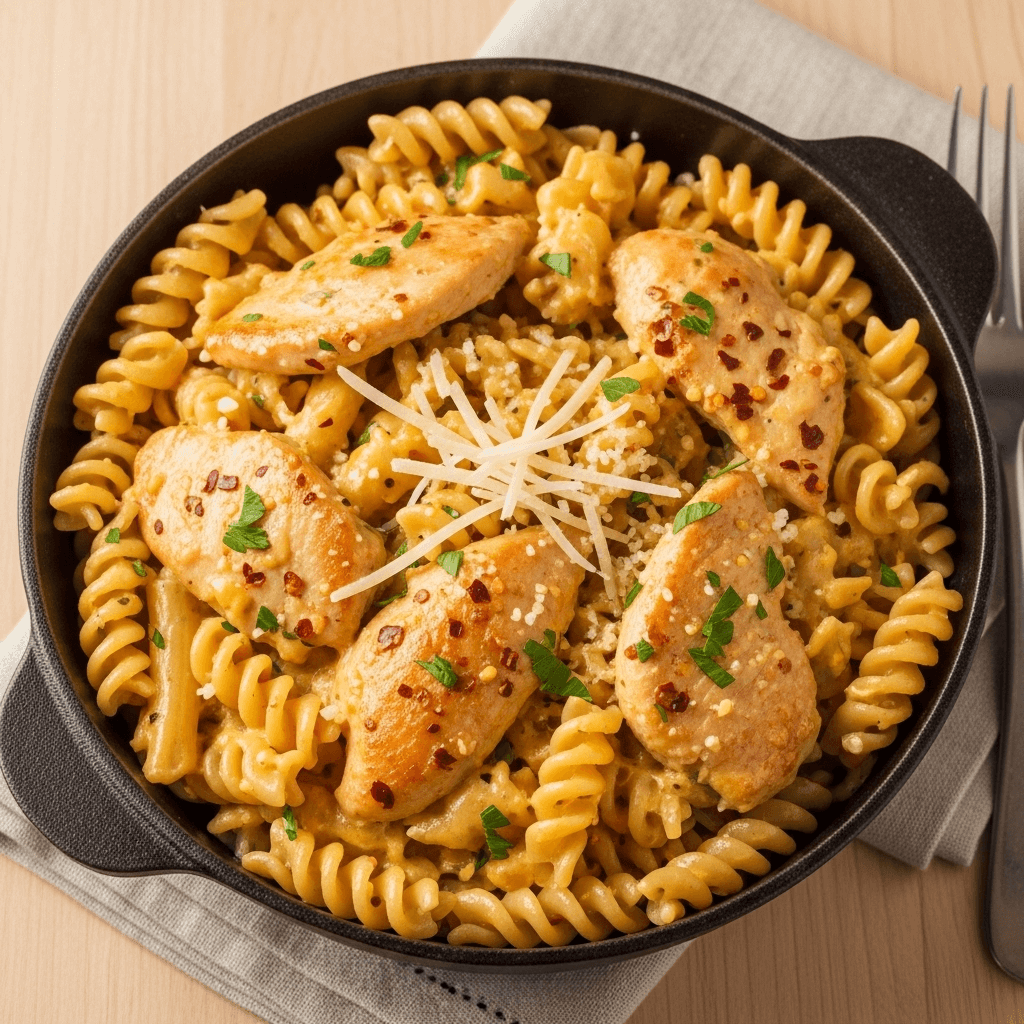
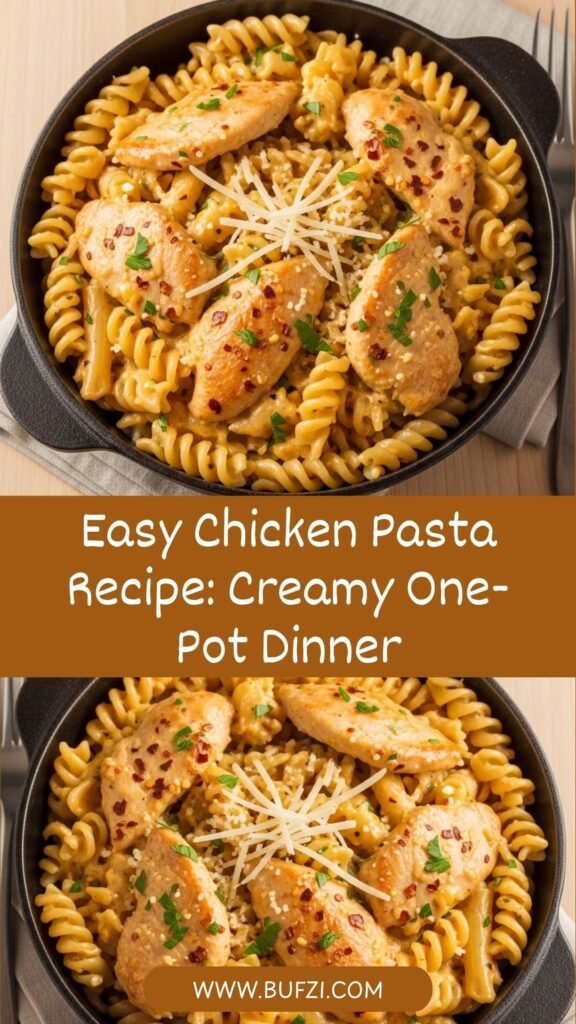
This easy chicken pasta recipe is about to become your new weeknight dinner hero. Imagine tender pieces of seasoned chicken, perfectly cooked pasta, and a luxuriously creamy sauce all coming together in one pot in just 30 minutes. No complicated steps, no fancy ingredients, and minimal cleanup—just pure comfort food that your whole family will love.
This creamy chicken pasta is the ultimate solution for busy weeknights when you want something homemade and delicious but don’t have hours to spend in the kitchen. It’s the kind of recipe that looks and tastes like you spent all day cooking, but your secret is that it took less time than ordering takeout. The creamy garlic sauce coats every strand of pasta while the juicy chicken adds protein and heartiness that makes this a complete meal in one dish.
Whether you’re cooking for picky kids, impressing dinner guests, or meal prepping for the week ahead, this chicken and pasta recipe delivers every single time. It’s become a viral favorite on Pinterest for good reason—it combines restaurant-quality flavor with the simplicity that home cooks crave. Serve it on a Tuesday night or dress it up for weekend entertaining; this versatile dish adapts to any occasion perfectly.
History / Background
While this specific easy chicken pasta recipe is a modern comfort food creation, pasta with chicken has roots that span multiple culinary traditions. The combination draws inspiration from classic Italian-American dishes that emerged in the early 20th century when Italian immigrants adapted their traditional recipes to American ingredients and tastes.
In Italy, pasta is traditionally served with lighter sauces, seafood, or vegetables, while chicken was typically prepared separately as a second course. However, Italian-American cuisine boldly combined these elements, creating entirely new dishes that satisfied American appetites for heartier, more substantial meals. Dishes like Chicken Alfredo, while not traditional in Italy, became beloved staples in American homes and restaurants throughout the 1970s and 1980s.
This particular recipe represents the evolution of these Italian-American classics into the modern era of one-pot cooking. As American home cooks sought ways to simplify dinner preparation without sacrificing flavor, recipes that combined proteins, starches, and sauces into single-pan meals gained enormous popularity. The creamy chicken pasta we know today reflects our contemporary desire for convenience, minimal cleanup, and maximum comfort.
Food bloggers and home cooks across America have contributed to perfecting this recipe over the past two decades, sharing variations on Pinterest and food websites that have reached millions of households. It’s become a staple of what food historians might call “American comfort cuisine”—dishes that prioritize ease, flavor, and family-friendliness above strict culinary tradition. This recipe honors that spirit while delivering the creamy, satisfying results that have made it a Pinterest phenomenon.
Why You’ll Love This Recipe
This creamy chicken and pasta recipe checks every box for what makes a truly great weeknight dinner. It’s the kind of recipe you’ll make over and over again because it just works—every single time, without fail, delivering delicious results that bring everyone to the table with smiles.
First and foremost, this dish is incredibly satisfying. The combination of tender chicken, silky pasta, and rich cream sauce creates comfort food at its finest. Each bite delivers protein, carbs, and that luxurious creaminess that makes you feel like you’re eating at your favorite Italian restaurant. But beyond just tasting amazing, this recipe solves real problems that busy home cooks face every day.
Here’s why this easy chicken pasta will become your go-to dinner:
- Ready in 30 minutes – From start to finish, including prep time, you’ll have dinner on the table in half an hour
- One-pot wonder – Everything cooks in a single large skillet or pot, meaning minimal dishes to wash afterward
- Budget-friendly – Uses affordable, everyday ingredients that won’t break the bank
- Family-approved – Even picky eaters love this creamy, mild-flavored pasta dish
- Versatile and customizable – Easily adapted to include vegetables, different proteins, or dietary preferences
- Meal prep friendly – Makes great leftovers and can be portioned for lunch throughout the week
- Impressive yet simple – Looks and tastes restaurant-quality but requires basic cooking skills
- Pantry-friendly – Most ingredients are staples you likely already have on hand
- Crowd-pleaser – Perfect for feeding a group without stress or complicated coordination
- Consistent results – Follow the simple steps and you’ll get perfect pasta every time
Ingredient Notes
The beauty of this easy chicken pasta recipe lies in its straightforward ingredient list. You won’t need to hunt down exotic items or spend a fortune—just quality basics that work together to create something truly special.
Boneless, Skinless Chicken Breasts: These are the protein foundation of your dish. Chicken breasts cook quickly and absorb the flavors of the sauce beautifully. For the most tender results, choose breasts that are similar in size so they cook evenly. You can substitute chicken thighs if you prefer darker meat—they’re more forgiving if slightly overcooked and add richer flavor. Cut the chicken into bite-sized pieces before cooking to ensure even cooking and easier eating.
Penne Pasta: Penne’s tubular shape with angled ends is perfect for catching the creamy sauce both inside and out. The ridged texture (penne rigate) helps the sauce cling even better. You can substitute any short pasta like rigatoni, farfalle (bow ties), rotini, or fusilli. If using long pasta like fettuccine or linguine, break it in half for easier one-pot cooking. For gluten-free diets, use your favorite gluten-free pasta but note it may require slightly different cooking times.
Heavy Cream: This is what creates the luxurious, velvety sauce that makes this dish so irresistible. Heavy cream (also called heavy whipping cream) has enough fat content to create a stable, smooth sauce that won’t separate or curdle. Half-and-half can work in a pinch but may result in a thinner sauce. For a lighter version, you can use a mixture of milk and cream cheese, though the texture will be slightly different.
Chicken Broth: This adds depth of flavor and helps cook the pasta while creating the sauce base. Low-sodium chicken broth is recommended so you can control the salt level yourself. You can substitute vegetable broth for a lighter flavor, or even white wine mixed with water for a more sophisticated taste. Avoid using water alone as it won’t provide the same flavor foundation.
Garlic: Fresh garlic is essential for that aromatic, savory quality that makes this dish so crave-worthy. Minced garlic cloves provide the best flavor, though jarred minced garlic works in a pinch (use about 1 tablespoon). Garlic powder cannot substitute for fresh garlic in this recipe as it won’t provide the same aromatic impact when sautéed.
Parmesan Cheese: Freshly grated Parmesan adds nutty, salty, umami richness to the sauce and helps thicken it slightly. Always grate Parmesan yourself from a block rather than using pre-grated varieties, which contain anti-caking agents that prevent smooth melting. Pecorino Romano can substitute for a sharper, saltier flavor.
Italian Seasoning: This herb blend typically includes basil, oregano, thyme, and rosemary—all the classic Italian flavors in one convenient mix. If you don’t have Italian seasoning, use a combination of dried basil and oregano, or add fresh herbs at the end of cooking for the brightest flavor.
Butter and Olive Oil: This combination provides the best of both worlds—butter adds richness and flavor while olive oil raises the smoke point and prevents burning. You can use all butter or all olive oil if preferred, though the combination is ideal.
Equipment Needed
One of the best things about this easy chicken pasta recipe is that it requires minimal equipment. You probably already have everything you need in your kitchen:
- Large, Deep Skillet or Dutch Oven – A 12-inch skillet with high sides (at least 3 inches) or a 5-6 quart Dutch oven is essential for cooking everything together. Make sure it has a tight-fitting lid.
- Sharp Chef’s Knife – For cutting chicken into uniform pieces and mincing garlic
- Cutting Board – Preferably one designated for raw meat
- Wooden Spoon or Spatula – For stirring and scraping up flavorful browned bits
- Measuring Cups and Spoons – For accurate ingredient amounts
- Box Grater (if grating cheese) – For freshly grated Parmesan
- Tongs – Helpful for flipping chicken pieces and tossing pasta
- Ladle – Optional, but useful for serving
- Meat Thermometer (optional) – To ensure chicken reaches 165°F for food safety
Chicken Pasta Recipe
- Total Time: 30 minutes
- Yield: 6 servings 1x
- Diet: Gluten Free
Description
This easy chicken pasta recipe features tender chicken pieces and penne pasta in a rich, creamy garlic sauce. Ready in just 30 minutes using one pot for minimal cleanup, this family-friendly dinner is comfort food at its finest.
Ingredients
- 1½ pounds boneless, skinless chicken breasts, cut into 1-inch pieces
- 1 pound penne pasta (or any short pasta)
- 2 tablespoons olive oil
- 3 tablespoons unsalted butter, divided
- 4 cloves garlic, minced
- 3 cups low-sodium chicken broth
- 1½ cups heavy cream
- 1 cup freshly grated Parmesan cheese
- 2 teaspoons Italian seasoning
- 1 teaspoon salt (plus more to taste)
- ½ teaspoon black pepper (plus more to taste)
- ¼ teaspoon red pepper flakes (optional)
- Fresh parsley, chopped (for garnish)
- Extra Parmesan for serving
Instructions
- Prepare the chicken: Pat the chicken pieces dry with paper towels and season generously with salt, pepper, and 1 teaspoon of Italian seasoning. This helps the chicken develop better color and flavor during cooking.
- Sear the chicken: Heat the olive oil and 1 tablespoon of butter in a large, deep skillet or Dutch oven over medium-high heat. Once the butter is melted and the pan is hot, add the chicken pieces in a single layer (work in batches if necessary to avoid overcrowding). Cook for 3-4 minutes per side until golden brown and cooked through (internal temperature of 165°F). The chicken doesn’t need to be completely cooked at this stage as it will finish cooking with the pasta. Remove the chicken to a plate and set aside.
- Sauté the garlic: Reduce heat to medium and add the remaining 2 tablespoons of butter to the same pan. Once melted, add the minced garlic and sauté for about 30-60 seconds until fragrant but not browned. Stir constantly to prevent burning.
- Add liquids and pasta: Pour in the chicken broth and use a wooden spoon to scrape up any browned bits from the bottom of the pan (this is where tons of flavor lives). Add the heavy cream and stir to combine. Bring the mixture to a gentle boil.
- Cook the pasta: Add the uncooked penne pasta, remaining 1 teaspoon Italian seasoning, and a pinch of red pepper flakes if using. Stir well to ensure all the pasta is submerged in the liquid. Reduce heat to medium-low, cover with a lid, and simmer for 12-15 minutes, stirring occasionally to prevent sticking. The pasta should be al dente and most of the liquid absorbed.
- Finish the sauce: Remove the lid and stir in the grated Parmesan cheese until melted and the sauce becomes creamy. If the sauce seems too thick, add a splash of chicken broth or pasta water. If it’s too thin, let it simmer uncovered for a few more minutes to thicken.
- Combine and serve: Return the cooked chicken pieces to the pan along with any accumulated juices. Toss everything together until the chicken is heated through and well coated with the creamy sauce, about 2-3 minutes. Taste and adjust seasoning with additional salt and pepper if needed.
- Garnish and enjoy: Remove from heat, garnish with freshly chopped parsley and extra Parmesan cheese. Serve immediately while hot and creamy.
Notes
- For the creamiest sauce, use full-fat heavy cream rather than half-and-half.
- If your pasta absorbs too much liquid before fully cooking, add ¼ cup of broth or water at a time until the desired consistency is reached.
- Don’t skip the step of scraping up the browned bits from the pan—this adds incredible depth of flavor to your sauce.
- The sauce will thicken as it sits. Add a splash of broth or milk when reheating leftovers to restore the creamy consistency.
- Fresh Parmesan cheese melts much better than pre-grated varieties and creates a smoother sauce.
- Prep Time: 10 minutes
- Cook Time: 20 minutes
- Category: Dinner
- Method: Stovetop
- Cuisine: Italian-American
Nutrition
- Serving Size: 1/6 of recipe (approximately 1½ cups)
- Calories: 620
- Sugar: 4g
- Sodium: 680mg
- Fat: 28g
- Saturated Fat: 15g
- Unsaturated Fat: 11g
- Trans Fat: 0g
- Carbohydrates: 58g
- Fiber: 3g
- Protein: 38g
- Cholesterol: 135mg
Tips & Variations
This easy chicken pasta recipe is wonderfully versatile and welcomes all kinds of creative variations. Here are some fantastic ways to customize it to your preferences or what you have on hand:
Add Vegetables: Boost the nutrition and color by stirring in vegetables during the last few minutes of cooking. Spinach, sun-dried tomatoes, roasted red peppers, broccoli florets, peas, or cherry tomatoes all work beautifully. For heartier vegetables like broccoli, add them earlier so they have time to cook through.
Make It Spicy: If you love heat, increase the red pepper flakes, add diced jalapeños with the garlic, or stir in a spoonful of hot sauce at the end. Calabrian chili paste adds a delicious, authentic Italian kick.
Creamy Mushroom Chicken Pasta: Sauté 8 ounces of sliced mushrooms (cremini, button, or baby bella) after removing the chicken and before adding the garlic. The mushrooms add an earthy, umami-rich element that pairs perfectly with the cream sauce.
Cajun Chicken Pasta: Replace the Italian seasoning with Cajun or Creole seasoning for a spicy, Southern-inspired version. Add diced bell peppers and use andouille sausage alongside or instead of the chicken.
Sun-Dried Tomato Basil Version: Add ½ cup of chopped sun-dried tomatoes (oil-packed work best) with the liquids, and stir in fresh basil at the end for a bright, summery twist.
Lighter Version: Substitute half the heavy cream with Greek yogurt or cream cheese thinned with milk. While not quite as rich, it significantly reduces calories while maintaining creaminess.
Lemon Chicken Pasta: Add the zest of one lemon with the garlic and squeeze fresh lemon juice over the finished dish for a bright, fresh flavor that cuts through the richness.
Bacon Chicken Pasta: Cook 4-6 strips of bacon first, crumble them, and use the bacon fat to cook the chicken. Stir the crispy bacon back in at the end for a smoky, indulgent upgrade.
Protein Swaps: Try Italian sausage (removed from casings), shrimp, or even cubed turkey for different protein options. Vegetarians can omit the meat entirely and double up on mushrooms and vegetables.
Pro Chef Tips
Elevate your easy chicken pasta from good to absolutely restaurant-worthy with these professional techniques:
Pound your chicken evenly: Before cutting the chicken into pieces, pound it to an even thickness using a meat mallet. This ensures every piece cooks at the same rate, preventing dry, overcooked bits and undercooked sections.
Don’t overcrowd the pan: When searing chicken, work in batches if needed to avoid overcrowding. Crowded chicken steams rather than browns, and you’ll miss out on the flavorful golden crust and fond (browned bits) that add so much depth to your sauce.
Toast your garlic properly: The 30-60 second garlic sauté is crucial. Too short and you’ll lose the aromatic quality; too long and it becomes bitter. Watch for the garlic to become fragrant and just barely golden, then immediately add your liquids to stop the cooking.
Reserve pasta water (even in one-pot recipes): Before adding your pasta, ladle out about ½ cup of the broth-cream mixture. This starchy liquid is gold for adjusting your sauce consistency at the end. It helps the sauce cling to the pasta better than plain water or broth.
Finish with cold butter: Professional chefs often add a tablespoon of cold butter at the very end, stirring it in off the heat. This technique, called “mounting” the sauce, creates an incredibly silky, glossy finish that looks and tastes luxurious.
Season in layers: Don’t just season at the beginning—taste and adjust throughout. Season the chicken before cooking, add salt to the sauce as it simmers, and always taste the final dish before serving to ensure perfect seasoning.
Let the chicken rest: After removing the chicken from the pan, let it rest for a few minutes before slicing or adding back to the pasta. This allows the juices to redistribute, keeping the meat moist and tender.
Use the right heat: Medium heat is your friend for the pasta-cooking stage. Too high and you’ll boil away your liquid before the pasta cooks; too low and it takes forever and may result in gummy pasta.
Common Mistakes to Avoid
Even with a straightforward recipe like this, a few common pitfalls can prevent you from achieving pasta perfection:
Using pre-grated Parmesan cheese: Those convenient bags of shredded Parmesan contain cellulose (wood pulp) as an anti-caking agent, which prevents the cheese from melting smoothly into your sauce. You’ll end up with a grainy, separated sauce rather than creamy perfection. Always grate Parmesan fresh from a block for the best results—it only takes a minute and makes a world of difference.
Not stirring frequently enough: When cooking pasta in one pot with limited liquid, it’s essential to stir every few minutes to prevent sticking and ensure even cooking. Pasta releases starch as it cooks, and stirring helps distribute that starch evenly, creating a naturally thickened sauce rather than a clumpy mess.
Overcooking the chicken: Chicken breasts can go from juicy to dry very quickly. Since the chicken will cook a bit more when returned to the sauce, slightly undercook it during the initial sear (aim for 160°F if using a thermometer). The residual heat and time in the hot sauce will bring it to the safe 165°F without overdoing it.
Adding cream too early or too hot: If you add cream to boiling liquid, it can curdle or separate, creating an unappealing texture. Always reduce the heat after bringing the broth to a boil, then add the cream and maintain a gentle simmer rather than a rolling boil throughout the cooking process.
Not accounting for sauce thickening: The sauce will continue to thicken as it sits, both in the pan after cooking and especially in the refrigerator as leftovers. If you prefer a saucier consistency, stop cooking when it seems slightly thinner than you want. You can always simmer longer to thicken, but adding liquid back to an over-thickened sauce can dilute flavors.
Skipping the rest time: Resist the urge to dig in immediately. Letting the pasta rest for 2-3 minutes after removing from heat allows the sauce to fully thicken and cling to the pasta, rather than pooling at the bottom of your bowl.
Storage & Meal Prep
This creamy chicken pasta stores beautifully, making it perfect for meal prep or enjoying leftovers throughout the week:
Refrigerator Storage: Allow the pasta to cool to room temperature (but don’t leave it out for more than 2 hours). Transfer to an airtight container and refrigerate for up to 4 days. The sauce will thicken considerably as it cools, which is completely normal.
Reheating Instructions: The best way to reheat this pasta is on the stovetop. Place the desired portion in a skillet or saucepan over medium-low heat. Add 2-3 tablespoons of chicken broth, milk, or cream per serving to restore the creamy consistency. Stir frequently until heated through, about 5-7 minutes. You can also microwave individual portions: place pasta in a microwave-safe dish, add a splash of liquid, cover loosely, and heat in 1-minute intervals, stirring between each, until hot.
Avoiding Dry Pasta: The key to delicious leftover pasta is adding liquid when reheating. The pasta absorbs sauce as it sits, so replenishing that moisture is essential. Don’t skip this step or your pasta will be dry and disappointing.
Portion for Convenience: If meal prepping, portion the pasta into individual serving containers before refrigerating. This makes grabbing lunch or a quick dinner even easier. Add a small container of extra Parmesan and fresh parsley separately so you can freshen up each serving.
Storing Chicken Separately (Optional): If you know you’ll have leftovers, consider storing the chicken pieces separately from the pasta. This prevents the chicken from drying out during reheating and gives you more flexibility in how you repurpose the components.
Not Recommended for Room Temperature: Never leave this dish at room temperature for more than 2 hours (1 hour if the temperature is above 90°F). The combination of dairy and protein creates an environment where bacteria can grow quickly.
Make-Ahead & Freezer Notes
While this recipe is quick enough to make fresh anytime, there are strategies for preparing components ahead when life gets hectic:
Advance Prep (Day Before): You can cut the chicken into pieces, mince the garlic, and grate the Parmesan the day before. Store each component separately in airtight containers in the refrigerator. When ready to cook, simply grab everything and proceed with the recipe. This reduces active cooking time to about 20 minutes.
Par-Cooking Method: For maximum time savings on a busy night, you can cook the recipe through step 5 (pasta cooked but chicken not yet added back). Let it cool, then refrigerate in an airtight container. When ready to serve, reheat on the stovetop with a splash of broth, add the reserved chicken, and finish the recipe. This method maintains the best texture.
Freezing Instructions: This pasta can be frozen, though the texture of the cream sauce may change slightly upon thawing. To freeze, let the pasta cool completely, then transfer to freezer-safe containers or heavy-duty freezer bags, leaving about an inch of space at the top for expansion. Freeze for up to 2 months. Remove as much air as possible from bags to prevent freezer burn.
Thawing and Reheating Frozen Pasta: For best results, thaw frozen pasta overnight in the refrigerator. Reheat on the stovetop over medium-low heat, adding ¼ to ½ cup of chicken broth or cream to help restore the sauce consistency. Stir frequently and heat until warmed through. You can also reheat from frozen: place the frozen block in a covered skillet with ½ cup of liquid over low heat, breaking it up as it thaws, then heat through completely.
Freezing Uncooked Components: Another option is to prep a “freezer meal kit” by placing the cut raw chicken, dried pasta, and seasonings in a freezer bag with cooking instructions attached. Add the dairy and broth fresh when cooking. This gives you the convenience of a freezer meal with the best possible texture.
Best Practice: While freezing is possible, this recipe is so quick that making it fresh or refrigerating for just a few days is generally preferable for the best taste and texture.
Serving Suggestions
This creamy chicken pasta is substantial enough to serve as a complete meal, but pairing it with complementary sides elevates your dinner to something truly special:
Fresh Green Salads: Balance the richness of the pasta with a crisp, acidic salad. A simple arugula salad with lemon vinaigrette, classic Caesar salad, caprese salad with fresh mozzarella and tomatoes, or a mixed green salad with balsamic dressing all work beautifully.
Garlic Bread: Is there anything more classic than pasta and garlic bread? Make homemade garlic bread by spreading butter mixed with minced garlic and parsley on a halved baguette, then toasting until golden. Cheesy garlic bread takes it up another notch.
Roasted Vegetables: Add color and nutrition with a side of roasted vegetables. Roasted broccoli, asparagus, green beans, Brussels sprouts, or a medley of bell peppers and zucchini complement the creamy pasta perfectly.
Italian-Style Sides: Keep the Italian theme going with sides like bruschetta, antipasto platter with olives and cured meats, roasted red peppers, or Italian-style green beans with tomatoes.
Lighter Options: If you want to add bulk without heaviness, serve with sautéed or steamed vegetables, a tomato-cucumber salad, or grilled zucchini.
Bread Options Beyond Garlic Bread: Warm dinner rolls, focaccia, ciabatta, or crusty Italian bread are perfect for sopping up every last bit of that creamy sauce.
Wine Pairings: For adult gatherings, pair this creamy chicken pasta with a crisp white wine like Pinot Grigio, Chardonnay, or Sauvignon Blanc. The acidity cuts through the richness beautifully. A light red like Pinot Noir also works if you prefer red wine.
Kid-Friendly Additions: When serving to children, offer raw veggies with ranch dip, apple slices, or simple steamed broccoli on the side to round out the meal.
Complete Italian Dinner: For special occasions, start with a light soup or salad, serve the pasta as the main course, and finish with a simple Italian dessert like tiramisu, panna cotta, or gelato.
FAQs Section
Q: Can I use a different type of pasta for this recipe?
A: Absolutely! While penne works wonderfully, any short pasta shape will work beautifully in this one-pot recipe. Try rigatoni, farfalle (bow ties), rotini, shells, or fusilli. If using long pasta like spaghetti or fettuccine, break it in half before adding to the pot so it fits better and cooks more evenly. Different pasta shapes may require slightly different cooking times, so check for doneness a minute or two before the package directions suggest and adjust accordingly. Smaller shapes like ditalini or elbows may cook faster, while larger shapes like rigatoni may take a bit longer.
Q: How can I make this chicken pasta recipe healthier?
A: There are several ways to lighten this recipe without sacrificing too much of the creamy indulgence. Replace half the heavy cream with Greek yogurt (add it at the end, off heat, to prevent curdling) or use half-and-half instead of heavy cream. Choose whole wheat or chickpea pasta for added fiber and protein. Add plenty of vegetables like spinach, broccoli, zucchini, or bell peppers to increase nutrition and bulk up the dish. Use chicken breast instead of thighs for leaner protein, and reduce the butter to 2 tablespoons instead of 3. While these modifications will slightly change the taste and texture, you’ll still have a delicious, satisfying meal with fewer calories and more nutrients.
Q: My sauce is too thick/thin. How do I fix it?
A: Sauce consistency is easy to adjust! If your sauce is too thick and the pasta seems dry, add liquid in small amounts (2-3 tablespoons at a time) until you reach your desired consistency. Use chicken broth, milk, cream, or even pasta water. Stir well and heat through. If your sauce is too thin and watery, continue simmering uncovered for a few more minutes to allow excess liquid to evaporate. You can also stir in a bit more grated Parmesan cheese, which acts as a thickener while adding flavor. Remember that the sauce will thicken considerably as it cools, both in the pot and especially in the refrigerator, so aim for slightly thinner than your ideal when hot.
Q: Can I make this recipe in an Instant Pot or slow cooker?
A: Yes, with some modifications! For the Instant Pot, sauté the chicken and garlic using the sauté function, then add the pasta, broth, cream, and seasonings. Cook on high pressure for 4-5 minutes, then quick release. Stir in the Parmesan. The sauce may be thinner, so let it sit for a few minutes to thicken. For a slow cooker, this recipe doesn’t adapt as well since pasta can become mushy. Instead, cook the chicken with seasonings and cream on low for 3-4 hours, then cook pasta separately and combine before serving. The stovetop method is definitely quickest and gives the best texture for this particular recipe.
Q: Can I use rotisserie chicken instead of raw chicken?
A: Absolutely! Using rotisserie chicken is a fantastic time-saving shortcut that makes this already-easy recipe even faster. Skip steps 1 and 2 entirely. Prepare the sauce and cook the pasta as directed, then stir in 3-4 cups of shredded or chopped rotisserie chicken during the last few minutes just to heat through. Since the chicken is already cooked and seasoned, you might want to adjust the salt in your dish accordingly. This method reduces your active cooking time to about 15 minutes and is perfect for using up leftover rotisserie chicken.
Q: What’s the best way to prevent the pasta from sticking together?
A: The key to preventing sticky pasta in a one-pot recipe is stirring frequently—every 3-4 minutes during cooking. Make sure your pasta is fully submerged in liquid when you first add it, and use a wooden spoon to separate any pieces that start to clump together. The starch released from the pasta is actually beneficial for thickening your sauce, but too much starch without enough liquid or stirring will cause sticking. If you notice the pasta sticking to the bottom of the pan, add a splash more liquid and scrape the bottom thoroughly with your spoon. Keeping the heat at medium or medium-low rather than high also helps prevent sticking.
Q: How do I know when the chicken is fully cooked?
A: The safest way to ensure chicken is fully cooked is using an instant-read meat thermometer. Insert it into the thickest part of a chicken piece—it should read 165°F. Visually, the chicken should be opaque (no longer pink) throughout when you cut into a piece, and the juices should run clear, not pink or bloody. The texture should be firm but not tough. Since the chicken will continue cooking when you add it back to the hot sauce at the end, it’s okay if it’s at 160-162°F during the initial sear. Remember that one-inch pieces cook much faster than whole breasts, typically needing only 3-4 minutes per side when seared over medium-high heat.
Q: Can this recipe be doubled for a crowd?
A: Yes, but with caution about your cookware size. Doubling the recipe requires a very large pot or Dutch oven (at least 7-8 quarts) to accommodate all the ingredients and allow the pasta to cook properly. If your largest pot isn’t big enough, it’s better to make two separate batches rather than cramming everything into an inadequate pot, which will result in uneven cooking. Everything else about the recipe scales up well—just make sure you have enough liquid for the pasta to cook through. You may need to add extra broth during cooking if the larger quantity absorbs liquid more quickly. Cooking time should remain about the same.
Conclusion
There you have it—everything you need to master this easy chicken pasta recipe that’s destined to become a staple in your dinner rotation! This creamy, dreamy one-pot wonder proves that restaurant-quality meals don’t require chef-level skills or all day in the kitchen. With just 30 minutes and one pan, you can create a meal that brings everyone running to the dinner table.
The beauty of this creamy chicken and pasta dish lies in its perfect balance of simplicity and sophistication. It’s fancy enough to serve to guests yet easy enough for a hectic Tuesday night. It’s budget-friendly but tastes like a million bucks. It’s customizable to suit any taste preferences yet absolutely delicious exactly as written. That’s the magic of truly great comfort food—it adapts to your life while consistently delivering satisfaction.
Whether you’re a novice cook building your recipe repertoire or an experienced home chef looking for reliable weeknight solutions, this chicken pasta recipe deserves a permanent spot in your collection. The combination of tender chicken, perfectly cooked pasta, and that irresistibly creamy garlic sauce creates the kind of dinner that makes people ask for seconds and request the recipe.
So grab your ingredients, pull out that large skillet, and get cooking! Your family will thank you, your taste buds will sing, and you’ll wonder why you ever bothered with complicated dinner recipes. Don’t forget to let me know how it turns out—leave a comment below with your feedback.