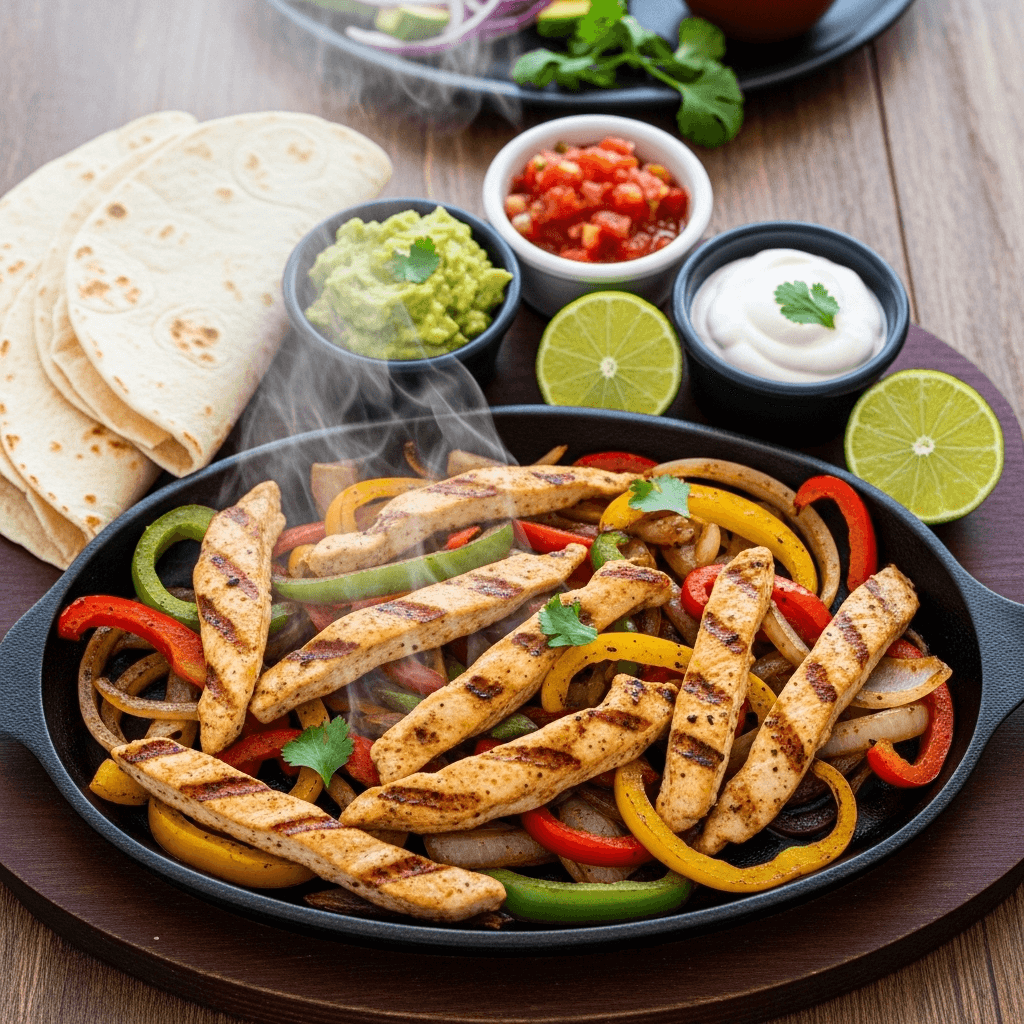

Sizzling chicken fajitas are the ultimate crowd-pleaser that brings restaurant energy right to your dinner table. This easy chicken fajitas recipe combines tender, marinated chicken breast with vibrant bell peppers and caramelized onions, all cooked to perfection in one skillet. Whether you’re hosting a casual family dinner, entertaining friends, or looking for a fun weeknight meal that feels special, homemade chicken fajitas deliver every single time.
What makes this best chicken fajitas recipe so special is the perfect combination of smoky, savory flavors, interactive dining experience, and impressive presentation – all with minimal effort. Unlike restaurant versions that can be heavy on oil and salt, this homemade chicken fajita recipe uses quality ingredients and simple techniques to create authentic flavors you can feel good about serving your family. In just 30 minutes, you’ll have sizzling, restaurant-quality fajitas that look and taste like you spent hours in the kitchen.
History / Background
Chicken fajitas have a rich and fascinating history that reflects the blending of Spanish, Mexican, and Texan culinary traditions. The word “fajita” comes from the Spanish word “faja,” meaning “belt” or “girdle,” referring to the cut of beef traditionally used – the skirt steak, which comes from around the animal’s midsection. This was historically considered a less desirable cut, making it an economical choice for ranch workers and laborers.
The dish originated in the Rio Grande Valley of Texas in the 1930s and 1940s, where ranch hands and Mexican workers would cook these thin strips of meat over open fires as part of their workday meals. The practice evolved into a more refined cooking method, and by the 1950s and 1960s, fajitas began appearing in Tex-Mex restaurants throughout Texas. The iconic presentation – sizzling hot on a cast iron skillet – became part of the fajita experience, adding theater and excitement to the dining experience.
Chicken fajitas emerged as a variation in the 1970s and 1980s as restaurants sought lighter alternatives to traditional beef fajitas. Chicken’s milder flavor, lower fat content, and faster cooking time made it an ideal candidate for the fajita preparation method. The marinade-and-sear technique that defines fajitas transformed what could have been simple grilled chicken into something spectacular and memorable.
Today, chicken fajitas have become one of the most popular Tex-Mex dishes in America, appearing on restaurant menus from casual cantinas to upscale establishments. The beauty of the dish lies in its customization – each person assembles their own fajita with their preferred toppings and flavors, making it perfect for family-style dining where everyone gets to create exactly what they want to eat.
Why You’ll Love This Recipe
This easy chicken fajitas recipe is the definition of fun, interactive, impressive-yet-simple dinner that actually comes together faster than you might think. I’ve perfected this recipe through countless dinner parties and family meals to bring you the ultimate version.
Here’s why this chicken fajita recipe will become your new favorite:
- Ready in just 30 minutes – From prep to sizzling skillet, you’ll have dinner on the table in half an hour
- Impressive restaurant presentation – The theatrical sizzle factor makes this feel like special-occasion food
- Interactive family dinner – Everyone assembles their own fajitas exactly how they like them
- Budget-friendly – Chicken breast is affordable and feeds a crowd without breaking the bank
- Customizable for everyone – Vegetarian, gluten-free, low-carb, spicy, mild – this recipe adapts to any preference
- Minimal cleanup – One skillet means one pan to wash, making weeknight cooking easy
- Naturally healthy – Loaded with vegetables and lean protein without heavy cream sauces
- Kids absolutely love it – The interactive element and customizable nature appeal to picky eaters
- Perfect for meal prep – Cook the chicken and vegetables ahead, then warm and serve
- Makes impressive leftovers – Yesterday’s fajitas make amazing quesadillas, rice bowls, or nachos
Ingredient Notes
Creating the perfect easy chicken fajitas starts with understanding each ingredient’s role and choosing the best quality options available.
Chicken Breast – Boneless, skinless chicken breast is the traditional choice for fajitas, offering lean protein that cooks quickly and absorbs flavors beautifully. Buy fresh chicken that hasn’t been injected with salt solution for better marinade absorption and texture. Slice it into thin strips (about ⅛ to ¼-inch thick) against the grain for maximum tenderness. The thinner you slice, the faster it cooks and the more surface area absorbs the marinade. If chicken is very thick, you can place it between plastic wrap and gently pound it to even thickness before slicing.
Lime Juice and Olive Oil – These form the base of the marinade, with acid from the lime tenderizing the chicken while oil helps distribute flavors and keep the meat moist during cooking. Fresh lime juice is far superior to bottled – squeeze fresh limes rather than using concentrate for superior flavor. Use good-quality extra virgin olive oil that you’d taste on its own.
Garlic and Spices – Fresh garlic minced finely provides aromatic depth, while chili powder, cumin, paprika, and oregano create that signature Tex-Mex flavor profile. These spices should be relatively fresh (replaced annually if not used frequently) as their flavor degrades over time. Smoked paprika is particularly important as it adds the subtle smokiness characteristic of fajitas.
Bell Peppers – Use a variety of colors – red, yellow, and orange bell peppers provide natural sweetness and vibrant color that both looks beautiful and tastes wonderful. Green peppers are more bitter, so use them sparingly if at all. Slice peppers into uniform strips so they cook evenly and look beautiful on the plate.
Onion – A large yellow onion provides sweetness that caramelizes beautifully and balances the chicken’s savory notes. Slice it into thick strips that hold together during cooking rather than disintegrating into tiny pieces.
Salt and Pepper – Season generously – the marinade, cooking, and final assembly should all be properly seasoned to maximize flavor at each stage.
Tortillas – Flour tortillas are traditional for chicken fajitas, though corn tortillas work equally well for a gluten-free option. Warm tortillas just before serving so they’re pliable and delicious rather than cold and stiff.
Substitutions: Use chicken thighs instead of breast for extra moisture and flavor (cook slightly longer as they’re thicker). Replace olive oil with avocado oil for a different flavor profile. Use lime juice alternatives like lemon juice or vinegar, though flavor will differ slightly. For gluten-free, use corn tortillas or lettuce wraps. Use low-sodium broth instead of oil for a lighter version. Try portobello mushrooms or cauliflower steaks for vegetarian fajitas.
Equipment Needed
- Large cast iron skillet or heavy-bottomed skillet – Cast iron is traditional and distributes heat beautifully, creating the iconic sizzle; stainless steel also works well
- Cutting board and sharp chef’s knife – Essential for slicing chicken, peppers, and onions uniformly
- Measuring spoons and cups – For accurate seasoning and marinade proportions
- Small bowl – For whisking together marinade ingredients
- Wooden spoon or silicone spatula – For stirring vegetables and chicken without scratching nonstick surfaces
- Tongs – Helpful for flipping and turning chicken and vegetables during cooking
- Paper towels – For patting chicken dry before cooking for better browning
- Shallow baking dish – For marinating the chicken
- Serving platter – For presenting the sizzling fajitas at the table
- Tortilla warmer or clean kitchen towel – For keeping tortillas warm until serving
- Optional: Cast iron skillet holders or kitchen towels – For carrying the hot sizzling skillet to the table safely
Chicken Fajitas Recipe
- Total Time: 52 minutes
- Yield: 4 servings 1x
- Diet: Gluten Free
Description
This best chicken fajitas recipe delivers sizzling, restaurant-quality fajitas with tender marinated chicken, caramelized peppers and onions, all cooked to perfection in one skillet. Serve with warm tortillas and your favorite toppings for an impressive, interactive meal that’s ready in under an hour.
Ingredients
For the Chicken and Marinade:
- 1.5 pounds boneless, skinless chicken breasts
- ¼ cup fresh lime juice (about 2–3 limes)
- 3 tablespoons extra virgin olive oil
- 4 cloves garlic, minced
- 1 tablespoon chili powder
- 2 teaspoons ground cumin
- 1 teaspoon smoked paprika
- ½ teaspoon dried oregano
- ½ teaspoon salt
- ¼ teaspoon black pepper
For Cooking:
- 2 tablespoons olive oil for cooking
- 1 large yellow onion, sliced into thick strips
- 3 bell peppers (red, yellow, and orange preferred), sliced into thick strips
- Salt and pepper to taste
For Serving:
- 8–12 warm flour or corn tortillas
- Optional toppings: guacamole, sour cream, salsa, shredded cheese, fresh cilantro, lime wedges, pico de gallo, lettuce, diced tomatoes
Instructions
- Prepare the chicken. Pat chicken breasts dry with paper towels and place on a cutting board. Slice against the grain into thin strips about ⅛ to ¼-inch thick. Cutting against the grain shortens muscle fibers, resulting in more tender fajitas. If chicken pieces are particularly thick, place between plastic wrap and gently pound to even thickness before slicing.
- Make the marinade. In a small bowl, whisk together fresh lime juice, olive oil, minced garlic, chili powder, cumin, smoked paprika, oregano, salt, and pepper. The mixture should be well combined with no lumps of spices. Taste and adjust seasonings – the marinade should be flavorful and balanced between citrus, garlic, and warm spices.
- Marinate the chicken. Place sliced chicken in a shallow baking dish or resealable bag and pour the marinade over it, making sure every piece is coated. If using a bag, press out excess air and seal. Refrigerate for at least 30 minutes, ideally 2-4 hours, allowing the lime juice to tenderize the chicken and spices to penetrate the meat. You can marinate up to overnight if making ahead.
- Prepare the vegetables. Slice the yellow onion into thick strips about ½-inch wide. Slice bell peppers into thick strips, removing seeds and white pith. Cut peppers into strips similar in size to the onion pieces so everything cooks at the same rate and presents uniformly on the plate. Having vegetables prepped and ready makes the actual cooking process quick and easy.
- Heat your skillet. Place a large cast iron skillet or heavy-bottomed skillet over high heat. Let it preheat for 2-3 minutes until very hot – this is essential for creating the sizzle and getting a good sear on the chicken. You can test if the pan is ready by sprinkling a tiny drop of water on it; it should sizzle immediately and evaporate.
- Cook the chicken. Remove chicken from marinade (reserve any leftover marinade) and pat dry with paper towels to remove excess moisture. This helps the chicken brown rather than steam. Working in batches if necessary to avoid overcrowding the pan, place chicken in the hot skillet. Let it cook undisturbed for 2-3 minutes until it develops a golden brown color on the bottom, then stir and continue cooking for another 2-3 minutes until cooked through. Transfer cooked chicken to a clean plate.
- Add vegetables to the same skillet. Add 2 tablespoons olive oil to the hot skillet. Add onion strips and cook for 3-4 minutes, stirring occasionally, until edges begin to caramelize and soften. Add bell pepper strips and cook for another 3-4 minutes, stirring occasionally, until peppers are just tender-crisp but still have some color and texture.
- Combine chicken and vegetables. Return the cooked chicken to the skillet with the vegetables. If you have reserved marinade, drizzle it over everything and stir well to combine. Cook for another 1-2 minutes until everything is hot and flavors meld together. Taste and adjust seasoning with additional salt and pepper as needed.
- Transfer to serving skillet. For maximum presentation impact, carefully transfer the sizzling mixture to a hot cast iron skillet at the table, or serve directly from the cooking skillet. The theatrical sizzle and aroma add to the dining experience and let everyone know something delicious is arriving.
- Serve with tortillas and toppings. Warm tortillas in a skillet or microwave wrapped in a damp towel to keep them pliable. Arrange warm tortillas on the table alongside the sizzling chicken and vegetables. Let each person assemble their own fajitas by placing some chicken-vegetable mixture on a warm tortilla, adding their preferred toppings, rolling up, and enjoying immediately while everything is hot.
Notes
- Make ahead strategy – Prepare the marinade and slice the chicken the morning of, then keep them together in the refrigerator until cooking time
- Vegetable prep ahead – Slice peppers and onions up to 4 hours ahead and store in an airtight container
- Tortilla warming – Wrap tortillas in a damp paper towel and microwave for 30-45 seconds, or heat one at a time in a dry skillet
- Cast iron tradition – The presentation of sizzling fajitas on cast iron is iconic; if you have a cast iron skillet, definitely use it for maximum impact
- Temperature control – High heat creates the sizzle and brown color; don’t lower temperature or you’ll get steamed instead of seared chicken
- Don’t overcrowd – Cook chicken in batches if needed; crowded pan creates steam rather than sear
- Leftover magic – Refrigerated fajitas become amazing quesadillas, rice bowls, nachos, or salad toppers the next day
- Prep Time: 10 minutes (plus 30 minutes marinating)
- Cook Time: 42 minutes
- Category: Dinner
- Method: Stovetop
- Cuisine: Mexican
Nutrition
- Serving Size: 2-3 fajitas (approximately 1 cup filling without tortillas and toppings)
- Calories: 285
- Sugar: 5g
- Sodium: 520mg
- Fat: 14g
- Saturated Fat: 2g
- Unsaturated Fat: 10g
- Trans Fat: 0g
- Carbohydrates: 12g
- Fiber: 2g
- Protein: 35g
- Cholesterol: 85mg
Tips & Variations
Flavor Variations:
- Spicy Chicken Fajitas: Add ¼ to ½ teaspoon cayenne pepper and ½ teaspoon red pepper flakes to the marinade for a fiery kick that builds as you eat
- Cilantro Lime Chicken Fajitas: Add ¼ cup fresh cilantro to the marinade for bright, herbaceous flavor that complements the lime beautifully
- Smoky Chipotle Fajitas: Add 1-2 tablespoons adobo sauce and one minced chipotle pepper to the marinade for deep, smoky heat
- Citrus Fajitas: Combine lime juice with fresh orange juice (use ¼ cup total citrus) for a sweeter, more complex flavor
- Beer-Marinated Fajitas: Replace half the lime juice with Mexican beer like Corona for a different flavor dimension
- Honey-Lime Fajitas: Add 1 tablespoon honey to the marinade for subtle sweetness that balances heat and acid
- Garlic Butter Fajitas: After cooking, drizzle finished fajitas with garlic butter and fresh cilantro for richness
Protein Variations:
- Shrimp Fajitas: Use 1.5 pounds large shrimp instead of chicken, marinating for only 15-20 minutes as shrimp is delicate, cook for just 2-3 minutes per side until pink
- Steak Fajitas: Use flank steak or skirt steak instead of chicken for traditional fajitas; marinate for 4-8 hours and increase cooking time slightly
- Vegetarian Fajitas: Add portobello mushroom strips, zucchini, or cauliflower steaks alongside peppers for hearty vegetarian fajitas
- Mixed Protein Fajitas: Combine chicken with shrimp or steak for variety on the same plate
- Tofu Fajitas: Press extra-firm tofu, slice into strips, marinate, and sear until crispy edges form for vegan fajitas
Vegetable Additions:
- Add sliced jalapeños for extra heat and flavor
- Include mushrooms sautéed with the peppers and onions
- Add zucchini or yellow squash for color and nutrition
- Include cherry tomatoes for brightness and texture
- Add corn kernels for sweetness and textural contrast
Dietary Modifications:
- Low-carb fajitas: Use lettuce wraps, cauliflower tortillas, or simply skip the tortilla and serve over cauliflower rice
- Paleo fajitas: Skip tortillas and serve in lettuce cups or over cauliflower rice for compliant eating
- Dairy-free serving: Skip cheese and sour cream, focusing on guacamole, salsa, and pico de gallo
- Gluten-free fajitas: Use corn tortillas or lettuce wraps instead of flour tortillas
Pro Chef Tips
Slice against the grain – This is the most important technique for tender fajitas. The grain runs lengthwise through the chicken breast; cutting perpendicular to these fibers breaks them into shorter lengths, resulting in noticeably more tender bites. Takes two extra seconds but makes a huge difference in final texture.
Don’t skip the high heat – Professional restaurants use extremely hot woks and griddles to create the signature sear that develops flavor through the Maillard reaction. Your home skillet should be smoking hot before the chicken touches it. Don’t lower the temperature; the sizzle is part of the cooking method, not just for show.
Pat chicken dry before cooking – Moisture on the surface of meat creates steam, preventing browning. Pat chicken dry with paper towels right before it hits the hot skillet. The initial pat in step 1 removes excess surface moisture from storage, but the second pat right before cooking is crucial.
Let the marinade sit – While 30 minutes works, letting the marinade penetrate for 2-4 hours or overnight creates noticeably more flavorful, tender chicken. If making for dinner, marinate the chicken that morning for superior results with minimal extra effort.
Use smoked paprika – Regular paprika works, but smoked paprika is essential for authentic fajita flavor. It adds subtle smokiness that makes home fajitas taste restaurant-quality. Keep a jar on hand specifically for fajitas and other Tex-Mex cooking.
Don’t overcrowd the pan – Adding too much chicken to the hot skillet lowers the temperature and creates steam rather than sear. Work in batches if needed. This technique takes slightly longer but creates dramatically better texture and flavor through proper browning.
Serve the skillet itself – Bringing sizzling chicken and vegetables to the table in the hot skillet adds theater and keeps everything hot. Carefully use skillet holders and place on a trivet to protect your table. This presentation elevates the entire dining experience.
Have everything ready – Fajitas cook quickly once you start, so have tortillas warm, toppings arranged, and everyone ready to eat before you begin cooking. Fajitas should be eaten immediately while piping hot and the peppers are still slightly crisp.
Brown vegetables separately first – For maximum caramelization, you can cook onions and peppers first, setting them aside, cooking the chicken, then combining at the end. This ensures perfect texture on everything rather than cooking things at different rates.
Common Mistakes to Avoid
Using low heat – Low heat prevents browning and creates gray, steamed chicken instead of golden, flavorful fajitas. The skillet must be very hot, and the chicken should sizzle audibly when it hits the pan. This sizzle indicates proper browning is occurring.
Not patting chicken dry – Wet chicken surfaces create steam in the hot skillet, preventing browning and resulting in pale, bland chicken. Pat chicken dry twice – once after marinating and again right before cooking. This simple step dramatically improves final results.
Overcrowding the skillet – Adding too much chicken at once lowers the pan’s temperature, causing everything to steam rather than sear. Work in batches if necessary; properly browned chicken in batches tastes infinitely better than crowded, steamed chicken cooked all at once.
Slicing with the grain – Cutting parallel to the muscle fibers results in tough, chewy fajitas. Always cut against the grain – perpendicular to the direction the muscle fibers run. Proper technique makes chicken noticeably more tender and enjoyable to eat.
Over-marinating – While marinating for hours is good, marinating for more than overnight can make chicken mushy as the acid denatures proteins too much. If marinating overnight, limit to 12-14 hours maximum for best texture.
Cold tortillas – Nothing ruins hot fajitas faster than cold, stiff tortillas. Warm tortillas just before serving so they’re pliable and delicious. Cold tortillas crack and don’t complement the hot filling.
Storage & Meal Prep
Storing Leftovers: Keep cooked chicken fajita filling in an airtight container in the refrigerator for up to 4 days. The chicken remains tender and flavorful, though the peppers and onions soften slightly. Store filling separately from tortillas and toppings to prevent sogginess.
Reheating Instructions: Reheat fajita filling gently on the stovetop over medium heat in the same skillet you used originally, stirring occasionally, for about 3-5 minutes until steaming hot. Alternatively, microwave in a microwave-safe container, stirring halfway through. Reheat just the filling – warm fresh tortillas separately before serving. The theatrical presentation is slightly diminished when reheating, but flavor remains excellent.
Freezing: Cooked fajita filling freezes beautifully for up to 3 months. Cool completely before freezing in an airtight container or freezer bag, leaving a little headspace. Label with date and contents. Thaw overnight in the refrigerator before reheating on the stovetop.
Shelf Life: Properly stored in the refrigerator, cooked fajitas maintain best quality for 3-4 days but remain safe to eat for up to 5 days if stored correctly. Frozen fajitas keep for up to 3 months for best flavor, though technically safe longer.
Raw Chicken Storage: If marinating chicken, store in the refrigerator for up to 2 days before cooking. For longer marinating, freeze the marinated chicken for up to 1 month, then thaw in the refrigerator before cooking.
Meal Prep Strategy: Marinate chicken the day before you want to cook, store in the refrigerator overnight, then cook fresh for maximum flavor. Alternatively, cook a double batch on Sunday, store the filling in the refrigerator, and reheat portions throughout the week for quick meals. The filling tastes great in quesadillas, over rice, or in salads the next day.
Make-Ahead & Freezer Notes
Can You Make It Ahead? Absolutely! This chicken fajita recipe is perfect for advance preparation. Marinate chicken up to overnight in the refrigerator, then cook fresh when ready to serve for maximum flavor and texture.
Freezer-Friendly Details: The cooked filling freezes beautifully and maintains good quality for up to 3 months. Freeze in meal-sized portions for grab-and-go weeknight dinners. The chicken remains tender and flavorful after thawing, while peppers and onions soften slightly, which is actually preferable in some applications like quesadillas.
Best Reheating Method: Thaw frozen fajita filling overnight in the refrigerator, then reheat gently on the stovetop over medium heat with a splash of additional marinade or broth to restore moisture. Stir occasionally until steaming hot, about 5-7 minutes. Avoid high heat reheating which can dry out the chicken.
Make-Ahead for Parties: For serving a crowd, marinate chicken overnight, then cook all the filling ahead of time and keep warm in a slow cooker on low. Guests can assemble fajitas as they like while everything stays hot. This approach is more practical than trying to cook in batches at mealtime.
Component Freezing: You can also freeze just the marinated raw chicken (before cooking) for up to 1 month. Thaw overnight in the refrigerator and cook fresh for optimum flavor. This is helpful if you want to cook in batches or need flexibility in meal timing.
Make-Ahead Marinade: Prepare the marinade 2-3 days ahead and store in the refrigerator, then quickly combine with sliced chicken and refrigerate until cooking time. This spreads out the prep work and makes weeknight cooking faster.
Serving Suggestions
Perfect chicken fajitas deserve equally delicious accompaniments that complement the smoky, zesty flavors while providing textural and flavor contrast.
Traditional Toppings:
- Guacamole or sliced fresh avocado
- Sour cream
- Salsa – pico de gallo, red sauce, or corn salsa
- Shredded cheddar, Monterey Jack, or Mexican cheese blend
- Fresh cilantro
- Lime wedges for squeezing
- Diced red onion
- Jalapeño slices
Side Dishes:
- Cilantro-lime rice paired with black beans
- Spanish rice with tomatoes and peppers
- Refried beans or whole pinto beans
- Cilantro-lime cauliflower rice for lower-carb option
- Corn street food style (elote) with mayo, cheese, and lime
- Black bean salad with corn and bell peppers
- Mexican street corn (esquites)
Beverage Pairings:
- Margaritas – classic lime or fruit variations
- Mexican beer like Corona or Modelo
- Agua fresca – refreshing fruit drinks
- Horchata for creamy, sweet balance
- Fresh lime agua with sparkling water
- Iced hibiscus tea (agua de Jamaica)
- Sangria with citrus and berries
- Sparkling apple cider
Salads and Fresh Sides:
- Cilantro lime salad with fresh lime vinaigrette
- Jicama slaw with lime and jalapeño
- Corn and black bean salad
- Tomato and avocado salad (ensalada de tomates y aguacates)
- Grilled corn salad with peppers and onions
- Cabbage slaw with lime crema
Desserts to Follow:
- Flan for elegant finish
- Churros with chocolate sauce
- Tres leches cake
- Mango sorbet or paletas
- Cinnamon sugar fried tortilla crisps
- Lime pie
- Mexican chocolate brownies
Complete Fajita Dinner Service: Start with guacamole and chips, serve sizzling chicken fajitas as the main course with all the accompaniments, include cilantro lime rice and refried beans as sides, offer margaritas or Mexican beer as beverages, and finish with churros or flan for dessert. This creates a complete, authentic Mexican dinner experience.
FAQs Section
Can I use chicken thighs instead of breast? Absolutely! Chicken thighs are actually more flavorful and stay juicier during cooking than breast meat. You’ll need to increase cooking time slightly since thighs are thicker than breast. Slice thighs into similar-sized pieces as you would breast meat. Thighs have more fat content, which renders out during cooking and creates even more delicious fajitas, though they’re slightly higher in calories.
How can I make these chicken fajitas less spicy? Reduce or omit the chili powder and paprika in the marinade, or use milder varieties. Skip the cayenne pepper and red pepper flakes entirely. Serve salsa and jalapeños on the side so guests can control heat level in their own fajitas. Serve with sour cream and guacamole as cooling accompaniments.
Can I make chicken fajitas ahead of time for a party? Yes! Marinate the chicken overnight, then cook the filling earlier in the day. Keep the cooked filling warm in a slow cooker set to low, or reheat gently on the stovetop just before serving. Warm fresh tortillas and set out toppings. This approach lets you enjoy the party instead of cooking while guests arrive.
What’s the best way to slice the chicken for fajitas? Slice chicken breasts against the grain into strips about ⅛ to ¼-inch thick. To identify the grain direction, look at the chicken breast; muscle fibers run lengthwise. Cut perpendicular to these fibers for maximum tenderness. If you’re uncertain about grain direction, slice at a slight angle across the breast. Thinner slices cook faster and are more tender; thicker slices are easier to cook evenly but slightly less tender.
How long should I marinate chicken for fajitas? Minimum 30 minutes, though 2-4 hours is better. For absolute maximum flavor, marinate overnight (up to 12-14 hours). Beyond 14-16 hours, the acid can begin to denature proteins too much, making chicken mushy. Marinate in the refrigerator, never at room temperature, for food safety.
Can I make vegetarian or vegan chicken fajitas? Yes! Replace chicken with portobello mushrooms, thick cauliflower steaks, or extra-firm tofu. Use the same marinade and cooking method. Mushrooms and cauliflower marinate beautifully and develop wonderful caramelization. Tofu should be pressed first to remove excess moisture, then marinated and seared until crispy edges form. Vegetarian fajitas are equally delicious and satisfying.
What’s the difference between flour and corn tortillas for fajitas? Flour tortillas are more pliable and don’t tear as easily, making them traditional for chicken fajitas. Corn tortillas have more authentic Mexican flavor and are naturally gluten-free. Both work beautifully. Some people prefer the sturdiness of flour tortillas for holding hot, wet fillings, while others prefer the flavor of corn. Serve both if you have guests with different preferences.
Conclusion
There you have it – the ultimate guide to making the best chicken fajitas recipe that tastes just like your favorite restaurant but comes together in your own kitchen in under an hour! This easy chicken fajita recipe proves that impressive, restaurant-quality meals don’t require complicated techniques or hard-to-find ingredients. With just a handful of pantry staples, fresh vegetables, and one simple skillet, you can create sizzling, interactive, absolutely delicious fajitas that will wow everyone at your table.
The magic of this chicken fajita recipe lies in its perfect balance of simplicity and sophistication. The marinade does the heavy lifting of flavor development, the high heat creates irresistible browning, and the interactive assembly makes everyone feel like they’re dining at an upscale Mexican restaurant. Whether you’re cooking for family, entertaining friends, or looking for a special weeknight dinner, these chicken fajitas deliver every single time.
I’d absolutely love to hear how your fajita night goes! Did you add any fun variations or toppings? What was your family’s favorite part – the sizzle, the fresh guacamole, or assembling their own? Drop a comment below and let me know your fajita favorites. And if you loved this recipe, please save it to your Pinterest board and share it with friends who need to add this amazing recipe to their rotation! Let’s fill our homes with the sizzle and aroma of homemade chicken fajitas!
Happy cooking, and may your fajitas always sizzle hot and taste absolutely restaurant-perfect!