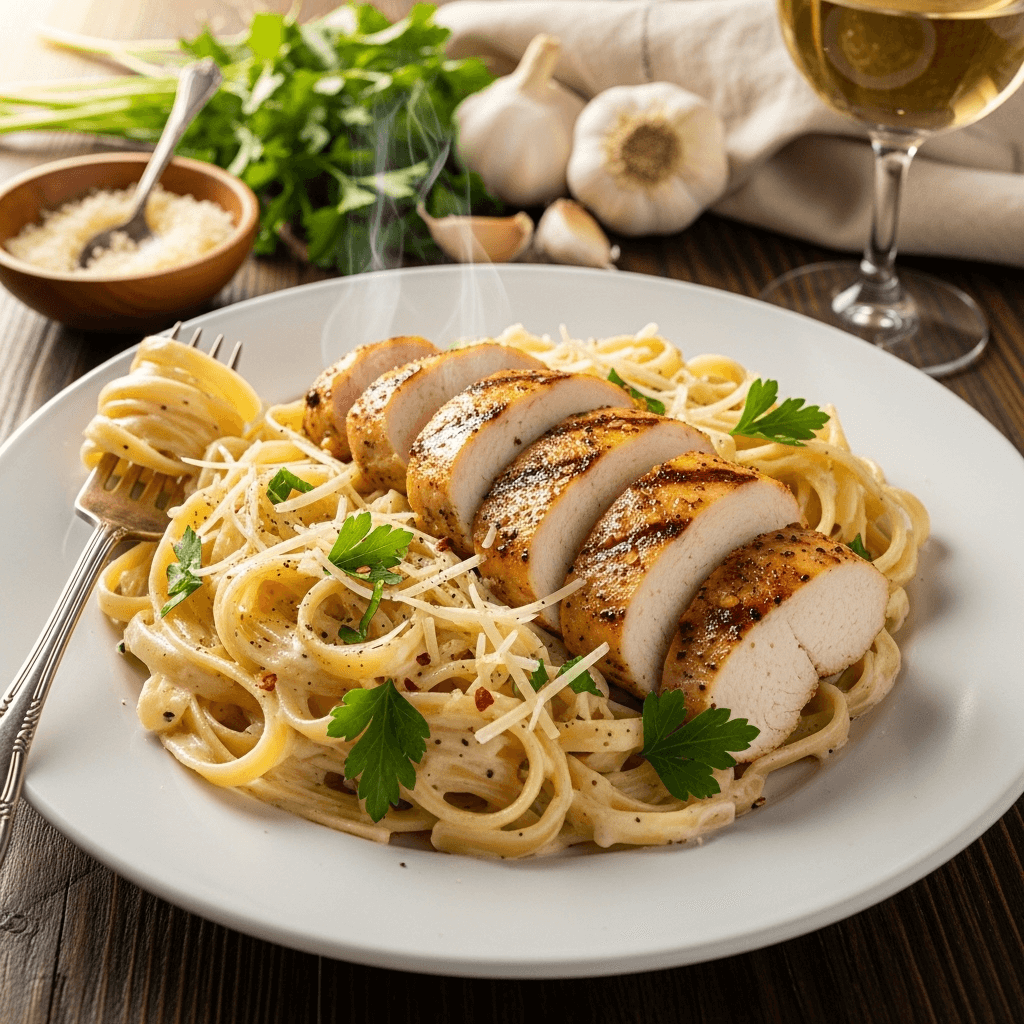
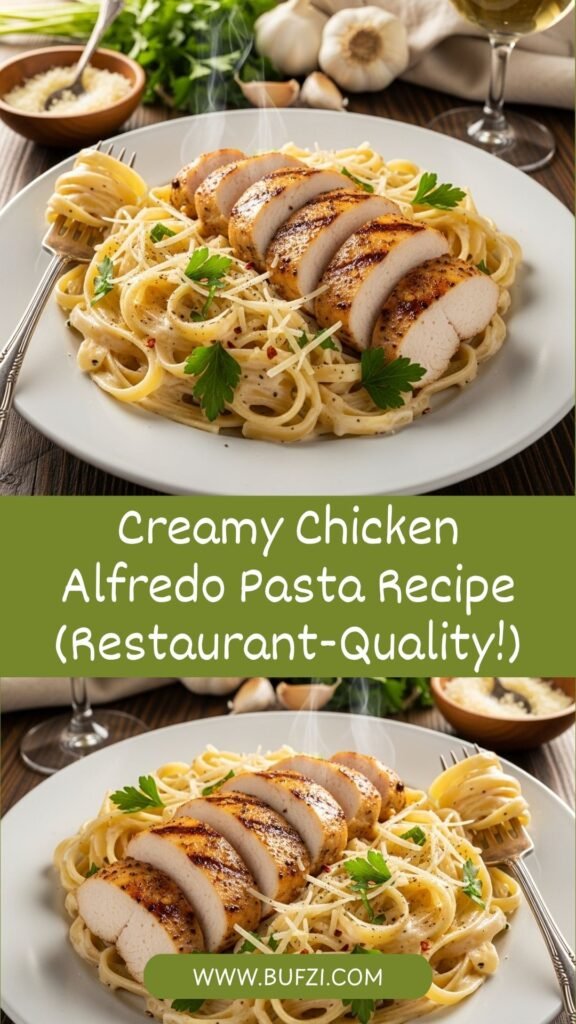
There’s something absolutely magical about creamy chicken Alfredo pasta—the silky smooth sauce coating tender fettuccine, juicy pieces of seasoned chicken, and that irresistible garlicky, cheesy flavor that makes every bite pure comfort. This beloved Italian-American dish has graced restaurant menus for decades, but here’s the secret: you can make it even better at home in about 30 minutes.
This easy chicken Alfredo recipe delivers restaurant-quality results without the hefty price tag or complicated techniques. The homemade Alfredo sauce is rich and velvety, clinging perfectly to every strand of pasta, while the chicken stays moist and flavorful. Unlike jarred Alfredo sauce that can taste artificial and overly thick, this from-scratch version has a silky texture and authentic flavor that will make you wonder why you ever bought store-bought.
Perfect for busy weeknight dinners when you want something special, date nights at home, family gatherings, or anytime you’re craving indulgent comfort food, this chicken fettuccine Alfredo never disappoints. It’s impressive enough for company yet simple enough for Tuesday night. Serve it for romantic dinners, Sunday family meals, special celebrations, or when you simply need a cozy, satisfying meal that feels like a warm hug on a plate.
History / Background
While many Americans assume Alfredo pasta is a centuries-old Italian classic, the dish actually has a surprisingly specific and relatively recent origin story. Fettuccine Alfredo was created in Rome in 1908 by Alfredo di Lelio, a restaurant owner who invented the dish for his pregnant wife who was experiencing loss of appetite and nausea.
The original “Fettuccine al burro” (fettuccine with butter) was incredibly simple—just pasta, butter, and Parmesan cheese, tossed together with pasta water until creamy. Alfredo served this dish at his restaurant, Alfredo alla Scrofa, where it gained local popularity but remained relatively unknown internationally until Hollywood came calling.
In 1920, American silent film stars Mary Pickford and Douglas Fairbanks honeymooned in Rome and dined at Alfredo’s restaurant. They fell in love with his signature dish and brought the recipe back to the United States, where it exploded in popularity. However, American chefs adapted the recipe significantly, adding heavy cream to create a richer, more stable sauce that could sit under heat lamps and travel well in restaurants.
The addition of chicken to Alfredo came much later, emerging in American restaurants during the 1970s and 80s as protein-topped pastas gained popularity. This addition transformed Alfredo from a side dish or light course into a hearty, complete meal. Today, what Americans know as “Chicken Alfredo” would be nearly unrecognizable to Alfredo di Lelio—it’s an Italian-American fusion creation that represents how recipes evolve across cultures.
Interestingly, if you visit Italy today and order “Chicken Alfredo,” you’ll likely receive confused looks. The dish remains primarily an American phenomenon, while in Rome, purists still prepare Alfredo’s original butter-and-cheese version. This creamy chicken Alfredo pasta represents the best of Italian-American cuisine—taking inspiration from Italian tradition and adapting it to American tastes and ingredients.
Why You’ll Love This Recipe
This isn’t just another chicken pasta dish—this is the creamy, dreamy chicken Alfredo recipe that will ruin you for restaurant versions forever. The homemade Alfredo sauce is impossibly smooth and flavorful, the chicken is perfectly seasoned and tender, and everything comes together in one pan for easy cleanup.
Here’s why this homemade chicken Alfredo will become your most-requested dinner:
- Restaurant Quality at Home – Tastes better than takeout at a fraction of the cost, with no need to leave your house
- Ready in 30 Minutes – From start to finish, this complete meal is on the table in half an hour
- One-Pan Wonder – The entire dish comes together in a single skillet, making cleanup a breeze
- Silky Smooth Sauce – Made from scratch with simple ingredients, creating that perfect creamy texture without graininess
- Tender, Juicy Chicken – Properly seasoned and cooked chicken breast that stays moist and flavorful
- Family-Friendly – Even picky eaters love the mild, creamy flavors
- Impressive Yet Easy – Looks and tastes fancy but requires no advanced cooking skills
- Customizable – Easily adapted with vegetables, different proteins, or dietary modifications
- Perfect Leftovers – Reheats beautifully for lunch the next day
- Comfort Food at Its Finest – Pure, indulgent satisfaction in every forkful
Ingredient Notes
Understanding your ingredients helps you achieve the best possible chicken Alfredo pasta. Let’s break down each component.
Fettuccine Pasta – The traditional choice for Alfredo sauce because its wide, flat ribbons hold the creamy sauce perfectly. Fresh fettuccine cooks in 2-3 minutes and has wonderful texture, while dried takes 10-12 minutes. Linguine or pappardelle work as substitutes. For gluten-free, use quality gluten-free fettuccine, though it won’t hold sauce quite as well.
Chicken Breast – Boneless, skinless chicken breast is lean, cooks quickly, and has mild flavor that doesn’t compete with the Alfredo sauce. For best results, use chicken breasts that are similar in thickness (or pound to even thickness) so they cook uniformly. Chicken thighs can substitute for juicier, more flavorful meat, though they take slightly longer to cook.
Heavy Cream – This is essential for authentic, silky Alfredo sauce. Heavy cream (also called heavy whipping cream) has the fat content necessary to create that luxurious texture without curdling. Half-and-half can substitute for a lighter sauce, though it may be thinner. Don’t use milk alone—it lacks the fat to create proper Alfredo texture.
Butter – Real butter (not margarine) adds richness and helps create the base of your Alfredo sauce. Unsalted butter is preferred so you can control the salt level precisely. European-style butter with higher fat content creates even richer flavor.
Parmesan Cheese – The star ingredient that makes Alfredo sauce distinctive. Always use real Parmigiano-Reggiano or high-quality Parmesan, freshly grated from a block. The pre-grated stuff contains anti-caking agents that prevent smooth melting and can make sauce grainy. Authentic Parmesan has nutty, complex flavor that elevates the entire dish.
Garlic – Fresh garlic cloves are essential for authentic flavor. Minced fresh garlic adds aromatic depth that garlic powder cannot replicate. Use 3-4 cloves for noticeable but not overwhelming garlic flavor.
Seasonings – Salt, black pepper, and Italian seasoning are the basics. A pinch of nutmeg is a secret ingredient that adds depth without being identifiable. Red pepper flakes add optional heat.
Olive Oil – Used for cooking the chicken. Extra virgin olive oil adds flavor, but regular olive oil works fine for high-heat cooking.
Equipment Needed
Having the right tools makes preparing chicken Alfredo pasta straightforward and enjoyable:
- Large Pot – For boiling pasta, at least 6-quart capacity to give pasta room to move freely without sticking.
- Large Skillet or Sauté Pan – A 12-inch skillet with high sides (at least 2 inches deep) is ideal for cooking chicken and making sauce in one pan.
- Sharp Knife and Cutting Board – For slicing chicken into even pieces.
- Tongs – For tossing pasta with sauce and transferring chicken.
- Wooden Spoon or Silicone Spatula – For stirring sauce and scraping up flavorful browned bits.
- Measuring Cups and Spoons – For accurate ingredient portions.
- Grater – A box grater or microplane for freshly grating Parmesan cheese.
- Meat Thermometer (Optional but Helpful) – To ensure chicken reaches safe 165°F internal temperature.
- Colander – For draining cooked pasta.
Creamy Chicken Alfredo Pasta Recipe
- Total Time: 30 minutes
- Yield: 4 servings 1x
- Diet: Vegetarian
Description
Silky smooth, restaurant-quality chicken Alfredo pasta made from scratch in just 30 minutes. Tender chicken breast, fettuccine pasta, and rich, creamy homemade Alfredo sauce create the ultimate comfort food dinner.
Ingredients
For the Chicken:
- 1½ pounds boneless, skinless chicken breast (about 2–3 large breasts)
- 1 teaspoon Italian seasoning
- ½ teaspoon garlic powder
- ½ teaspoon salt
- ¼ teaspoon black pepper
- 2 tablespoons olive oil
For the Pasta:
- 12 ounces fettuccine pasta
- 1 tablespoon salt (for pasta water)
For the Alfredo Sauce:
- 4 tablespoons unsalted butter
- 4 cloves garlic, minced
- 2 cups heavy cream
- 1½ cups freshly grated Parmesan cheese
- ½ teaspoon salt (adjust to taste)
- ¼ teaspoon black pepper
- ¼ teaspoon nutmeg (optional but recommended)
- ¼ cup reserved pasta water (if needed)
For Garnish:
- Fresh parsley, chopped
- Extra Parmesan cheese
- Red pepper flakes (optional)
Instructions
- Prepare the Chicken: Pat chicken breasts dry with paper towels—this helps them brown properly. If breasts are very thick (more than 1 inch), slice them horizontally to create thinner, even cutlets. Season both sides generously with Italian seasoning, garlic powder, salt, and black pepper, pressing seasonings into the meat.
- Cook the Chicken: Heat olive oil in a large skillet over medium-high heat until shimmering. Add seasoned chicken breasts and cook without moving for 5-6 minutes until a golden-brown crust forms on the bottom. Flip and cook another 5-6 minutes until the internal temperature reaches 165°F and chicken is cooked through. Cooking time varies by thickness—thinner pieces cook faster. Transfer chicken to a cutting board, tent loosely with foil, and let rest for 5 minutes before slicing into strips or bite-sized pieces.
- Cook the Pasta: While chicken rests, bring a large pot of water to a rolling boil. Add 1 tablespoon salt—the water should taste like seawater. Add fettuccine and cook according to package directions until al dente (usually 10-12 minutes for dried, 2-3 for fresh). Reserve 1 cup of starchy pasta cooking water before draining. Drain pasta in a colander but don’t rinse—the starch helps sauce cling.
- Start the Alfredo Sauce: In the same skillet used for chicken (don’t clean it—those browned bits add flavor), reduce heat to medium and melt butter. Add minced garlic and sauté for 30-60 seconds until fragrant but not browned. Burned garlic tastes bitter, so watch carefully.
- Add the Cream: Pour in heavy cream, stirring to incorporate the garlic and scrape up any browned bits from cooking the chicken. Bring to a gentle simmer—not a hard boil—and let it cook for 3-4 minutes, stirring occasionally. The cream will reduce slightly and thicken. Lower heat if it threatens to boil over.
- Add the Cheese: Remove skillet from heat temporarily. Add freshly grated Parmesan cheese in three additions, whisking constantly after each addition until smooth and melted. The residual heat melts the cheese without making it grainy or stringy. Season with salt, pepper, and nutmeg if using. Taste and adjust seasonings—remember pasta adds some volume, so sauce should taste slightly strong.
- Combine Pasta and Sauce: Add drained fettuccine directly to the Alfredo sauce in the skillet. Using tongs, toss pasta in the sauce until every strand is evenly coated. If sauce seems too thick, add reserved pasta water 2 tablespoons at a time until you reach desired consistency. The starchy water helps sauce cling to pasta beautifully.
- Add Chicken and Serve: Add sliced chicken back to the skillet, nestling it into the pasta, or arrange it on top. Toss gently to combine and warm through for 1-2 minutes. Transfer to serving bowls or a large platter. Garnish with fresh chopped parsley, extra Parmesan cheese, and red pepper flakes if desired. Serve immediately while hot and creamy.
Notes
- Pasta Water is Key: Don’t skip reserving pasta water. The starch helps create the perfect sauce consistency and helps it cling to pasta.
- Fresh Parmesan Only: Pre-grated Parmesan won’t melt smoothly. Always grate fresh from a block for best results.
- Don’t Overcook Chicken: Use a meat thermometer to ensure chicken reaches 165°F without overcooking and drying out.
- Sauce Consistency: Alfredo sauce thickens as it sits. Add splashes of pasta water to loosen if needed when reheating.
- Make it Lighter: Use half-and-half instead of heavy cream and reduce butter to 2 tablespoons for a lighter version.
- Prep Time: 10 minutes
- Cook Time: 20 minutes
- Category: Main Dish
- Method: Stovetop
- Cuisine: Italian-American
Nutrition
- Serving Size: About 2 cups
- Calories: 845
- Sugar: 3g
- Sodium: 920mg
- Fat: 48g
- Saturated Fat: 27g
- Unsaturated Fat: 18g
- Trans Fat: 0g
- Carbohydrates: 56g
- Fiber: 3g
- Protein: 52g
- Cholesterol: 215mg
Tips & Variations
The beauty of chicken Alfredo is how easily it adapts to different preferences and ingredients. Here are delicious ways to customize:
Add Vegetables – Stir in 2 cups of steamed broccoli florets, sautéed mushrooms, roasted red peppers, fresh spinach, or sun-dried tomatoes for added nutrition and flavor. Add vegetables with the chicken at the end.
Seafood Alfredo – Replace chicken with 1 pound of large shrimp (peeled and deveined), scallops, or lump crab meat for elegant seafood Alfredo. Cook shrimp just until pink, about 2-3 minutes per side.
Cajun Chicken Alfredo – Season chicken with Cajun seasoning instead of Italian seasoning and add ½ teaspoon of Cajun spice to the Alfredo sauce for a spicy kick. This variation is incredibly popular!
Lighter Version – Use half-and-half instead of heavy cream, reduce butter to 2 tablespoons, and use whole wheat pasta for fewer calories and more fiber. It won’t be quite as rich but still delicious.
Extra Garlic Alfredo – Double the garlic to 8 cloves for intense garlic lovers. You can also add roasted garlic for sweeter, mellower garlic flavor.
Tuscan Chicken Alfredo – Add sun-dried tomatoes, fresh spinach, and extra Italian herbs for a Tuscan-inspired variation with color and additional flavors.
Bacon Alfredo – Cook 4-6 strips of bacon until crispy, crumble, and add to the finished dish for smoky, salty richness.
One-Pot Version – Cook pasta directly in the cream sauce with added chicken broth for a true one-pot meal, though you’ll sacrifice some sauce control.
Pro Chef Tips
Want to elevate your chicken Alfredo from good to absolutely spectacular? These professional techniques make all the difference:
Pound Chicken to Even Thickness – Before cooking, place chicken breasts between plastic wrap and gently pound with a meat mallet or rolling pin to even thickness (about ¾ inch). This ensures they cook evenly without dry edges and raw centers.
Let Chicken Rest – Always let cooked chicken rest 5 minutes before slicing. This allows juices to redistribute throughout the meat rather than running out onto the cutting board, keeping chicken moist and flavorful.
Use Freshly Grated Cheese – This cannot be overstated. Pre-grated cheese contains cellulose (anti-caking agent) that prevents smooth melting and makes sauce grainy. Grate your own from a block immediately before using.
Remove from Heat Before Adding Cheese – Adding cheese to boiling sauce can cause it to separate and become grainy. Remove from heat, let it cool slightly, then add cheese gradually while whisking constantly for silky smooth results.
Save That Pasta Water – The starchy pasta cooking water is liquid gold for Alfredo sauce. It helps thin sauce to perfect consistency while adding starch that helps sauce cling to pasta beautifully.
Don’t Skimp on Salt – Pasta water should be salty like seawater. This is your only chance to season the pasta itself from within. Under-salted pasta makes the entire dish taste flat.
Work Quickly – Alfredo sauce is best served immediately. It thickens and can become grainy as it cools and sits. Have everything ready before you start combining components.
Low and Slow for Sauce – Never boil Alfredo sauce aggressively. Gentle simmering prevents cream from breaking and creates smooth, stable sauce.
Warm Your Serving Bowls – Restaurant trick: warm serving bowls or plates in a low oven or with hot water before plating. This keeps Alfredo hot longer since it cools quickly.
Common Mistakes to Avoid
Even experienced cooks can stumble with Alfredo. Here are the most common pitfalls and how to avoid them:
Using Pre-Grated Parmesan – This is the number one cause of grainy, separated Alfredo sauce. The anti-caking additives in pre-grated cheese prevent it from melting smoothly. Always grate fresh cheese from a block immediately before using for silky sauce.
Overcooking the Chicken – Dry, tough chicken ruins even the best Alfredo sauce. Use a meat thermometer to cook chicken to exactly 165°F internal temperature, no higher. Remove from heat immediately when it reaches temperature—residual heat continues cooking.
Boiling the Cream Too Hard – Aggressive boiling can cause cream to break, curdle, or burn on the bottom of the pan. Maintain a gentle simmer, stirring occasionally. Low and slow wins the race for Alfredo sauce.
Adding Cheese While Sauce Boils – Hot, boiling liquid causes cheese proteins to seize up and separate, creating a grainy, broken sauce. Always remove from heat before adding cheese and add it gradually while whisking constantly.
Rinsing the Pasta – Never rinse cooked pasta with water! The starch coating helps sauce cling beautifully. Rinsing removes this starch and cools the pasta, preventing proper sauce adhesion.
Not Reserving Pasta Water – Forgetting to save pasta cooking water means you have no easy way to adjust sauce consistency. That starchy water is essential for creating the perfect texture.
Storage & Meal Prep
Chicken Alfredo is delicious as leftovers, though the sauce thickens considerably when refrigerated. Here’s how to store and reheat properly:
Refrigerator Storage – Transfer leftover chicken Alfredo to an airtight container and refrigerate for up to 3-4 days. The sauce will thicken and absorb into the pasta as it sits—this is normal. Store any extra sauce separately if possible for better reheating results.
Reheating on Stovetop – This is the best method. Place chicken Alfredo in a skillet over medium-low heat. Add 2-4 tablespoons of milk, cream, or chicken broth and stir gently but frequently until heated through. The added liquid loosens the sauce back to creamy consistency. Add liquid gradually until you reach desired texture.
Reheating in Microwave – Place a portion in a microwave-safe bowl, add 1-2 tablespoons of milk or cream, cover loosely with a damp paper towel, and microwave on 50% power in 1-minute intervals, stirring between each, until heated through. Don’t use full power or edges will dry out while center stays cold.
Batch Cooking – Chicken Alfredo can be part of meal prep, though it’s best made fresh. If prepping, cook components separately and combine when reheating for best texture.
Preventing Drying – When storing, press plastic wrap directly onto the surface of the pasta before sealing the container. This prevents air exposure that dries out the surface.
Reviving Thick Sauce – If reheated Alfredo is too thick, gradually stir in milk, cream, or pasta water until it reaches desired consistency. Start with 2 tablespoons at a time.
Make-Ahead & Freezer Notes
While Alfredo is best fresh, you can prepare components ahead or freeze with proper techniques:
Prep Components Ahead – Season and refrigerate raw chicken up to 24 hours ahead. Make Alfredo sauce up to 2 days ahead, store in an airtight container, and reheat gently before tossing with freshly cooked pasta and chicken.
Freezing Alfredo Sauce – Alfredo sauce can be frozen for up to 3 months, though the texture may be slightly grainy when thawed. Freeze in portions in freezer-safe containers or bags. Thaw overnight in refrigerator, then reheat gently over low heat, whisking constantly. Add splashes of cream to restore texture.
Freezing Complete Dish – Chicken Alfredo can be frozen, though pasta texture suffers slightly. Slightly undercook pasta (1-2 minutes less than al dente), combine with sauce and chicken, cool completely, transfer to freezer-safe containers, and freeze for up to 2 months.
Thawing and Reheating Frozen – Thaw overnight in refrigerator, never at room temperature. Reheat gently on stovetop over medium-low heat, adding cream or milk to restore consistency. Stir frequently to prevent scorching.
Best Make-Ahead Strategy – For entertaining, cook and slice chicken ahead, make sauce ahead, and cook pasta fresh just before serving. This gives you mostly fresh-made results with reduced day-of stress.
Not Recommended – Freezing already-cooked and refrigerated leftovers. The double temperature change significantly degrades texture. Only freeze freshly made Alfredo for best results.
Serving Suggestions
While chicken Alfredo is a complete meal on its own, the right accompaniments create a well-rounded, restaurant-quality dining experience:
Perfect Side Dishes:
- Caesar Salad – The classic pairing! Crisp romaine, garlicky dressing, and croutons provide refreshing contrast to rich Alfredo.
- Garlic Bread – Warm, crusty garlic bread for soaking up extra sauce is essential.
- Roasted Broccoli – Simple roasted broccoli adds color, nutrition, and slight bitterness that balances cream.
- Sautéed Green Beans – Light, crisp green beans with garlic and lemon cut through richness.
- Caprese Salad – Fresh tomatoes, mozzarella, and basil add brightness and acidity.
- Roasted Asparagus – Elegant and delicious with lemon and Parmesan.
Bread Options:
- Crusty Italian bread or baguette
- Homemade or store-bought garlic bread
- Cheesy garlic breadsticks
- Parmesan herb focaccia
Wine Pairings:
- White Wine: Chardonnay, Pinot Grigio, or Sauvignon Blanc complement creamy pasta beautifully
- Red Wine: Light reds like Pinot Noir work surprisingly well
- Non-Alcoholic: Sparkling water with lemon, Italian soda, or iced tea
Complete Meal Ideas:
- Romantic Dinner: Chicken Alfredo, Caesar salad, garlic bread, tiramisu for dessert, white wine
- Family Dinner: Chicken Alfredo, simple green salad, garlic bread, fruit for dessert
- Dinner Party: Antipasto platter to start, chicken Alfredo, roasted vegetables, Italian cream cake
Presentation Tips:
- Twirl pasta into neat nests on plates
- Arrange chicken slices on top of pasta
- Garnish generously with fresh parsley and Parmesan
- Serve family-style in a large, shallow serving bowl
FAQs Section
Q: Can I make Alfredo sauce without heavy cream?
A: You can use half-and-half for a lighter version, though sauce will be thinner and less rich. Milk alone doesn’t work well—it lacks the fat content to create proper creamy texture and can curdle. For dairy-free, full-fat coconut milk or cashew cream can substitute, though flavor will be different. The result won’t be traditional Alfredo but can still be delicious.
Q: Why is my Alfredo sauce grainy or separated?
A: This almost always happens for one of three reasons: using pre-grated Parmesan (which contains anti-caking agents), adding cheese while sauce is boiling (heat too high causes proteins to seize), or overcooking the sauce at high heat. Always use freshly grated cheese, remove from heat before adding cheese, and maintain gentle heat throughout.
Q: How do I keep Alfredo sauce from getting too thick?
A: Alfredo sauce naturally thickens as it cools. To prevent this, serve immediately after making. For leftovers, thin the sauce with reserved pasta water, cream, milk, or chicken broth when reheating. Start with 2 tablespoons at a time and stir until you reach desired consistency. The sauce should coat pasta without being gloppy.
Q: Can I use chicken thighs instead of chicken breast?
A: Absolutely! Boneless, skinless chicken thighs are juicier and more flavorful than breasts, though they take slightly longer to cook (7-8 minutes per side) and have more fat. They’re also more forgiving and harder to overcook. Many people actually prefer thighs for their superior flavor and texture. Just ensure they reach 165°F internal temperature.
Q: What pasta shapes work best for Alfredo?
A: Fettuccine is traditional because its wide, flat ribbons hold the thick sauce perfectly. Linguine, pappardelle, and tagliatelle also work beautifully. In a pinch, penne or rigatoni work, though they’re not traditional. Avoid thin pastas like angel hair or spaghetti—they can’t support the heavy sauce well and become overwhelmed.
Q: Can I make this dish ahead for a dinner party?
A: Alfredo is best served immediately, but you can prep components ahead. Cook and slice chicken up to 24 hours ahead, make sauce up to 2 days ahead and refrigerate, then cook pasta fresh and combine everything just before serving. This gives you mostly fresh-made quality with less day-of stress. Reheat sauce gently, adding cream if needed.
Q: How do I make this recipe healthier?
A: Use half-and-half instead of heavy cream, reduce butter to 2 tablespoons, use whole wheat or chickpea pasta for more fiber and protein, and add 2-3 cups of vegetables like broccoli, spinach, or mushrooms. You can also use chicken breast (leaner than thighs) and reduce Parmesan to 1 cup. These changes lighten the dish while maintaining good flavor.
Conclusion
There you have it—everything you need to make absolutely restaurant-quality, incredibly creamy chicken Alfredo pasta right in your own kitchen! This classic Italian-American comfort food proves that homemade really does taste better than takeout. With simple ingredients, straightforward techniques, and a little attention to detail, you can create a meal that rivals any expensive restaurant.
Whether you’re planning a romantic date night at home, feeding your hungry family on a busy weeknight, entertaining guests, or simply treating yourself to something special, this easy chicken fettuccine Alfredo delivers every single time. The silky smooth sauce, tender chicken, and perfectly cooked pasta create a combination that’s simply irresistible.
I’d absolutely love to hear how your chicken Alfredo turned out! Did you add any fun variations? What did you serve alongside it? Drop a comment below sharing your experience, and don’t forget to rate the recipe if your family loved it. If you found this recipe helpful and delicious, please share it on Pinterest so other home cooks can discover the joy of homemade Alfredo too!
Here’s to creamy, dreamy, restaurant-quality pasta nights at home—because you deserve to enjoy amazing food without leaving your kitchen!