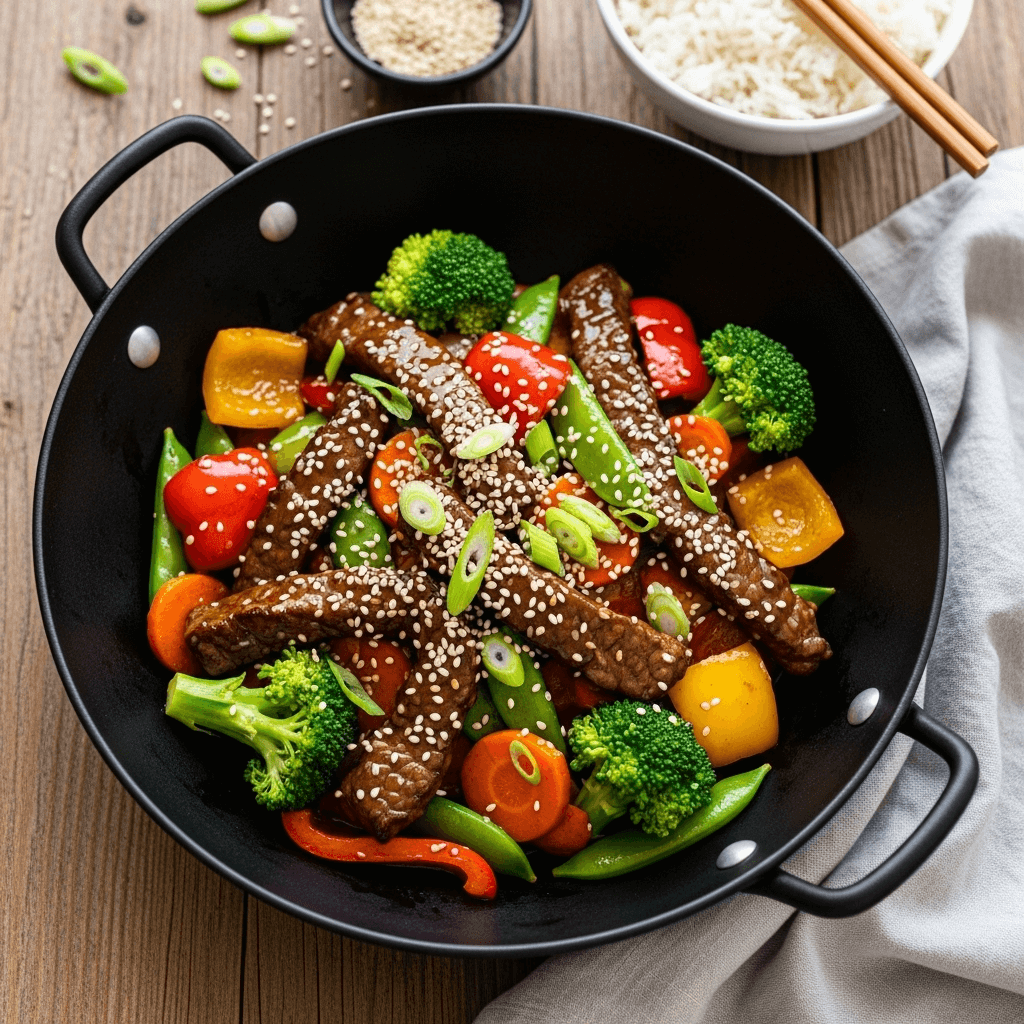
There’s something incredibly satisfying about a sizzling hot wok filled with tender beef strips, crisp vegetables, and a glossy, savory sauce that coats everything perfectly. This easy beef stir fry recipe brings the magic of your favorite Chinese restaurant right into your home kitchen, and the best part? It takes less time than ordering takeout and waiting for delivery.
This quick beef stir fry is the ultimate weeknight dinner solution for busy families who don’t want to compromise on flavor or nutrition. With thinly sliced beef, colorful vegetables, and a simple homemade stir fry sauce, you’ll have a complete meal on the table in just 20 minutes from start to finish. It’s perfect for those hectic Monday evenings, meal prep Sundays, or anytime you’re craving something delicious, healthy, and utterly satisfying.
Whether you’re serving it over fluffy white rice, nutty brown rice, or slurpable noodles, this beef stir fry recipe is endlessly adaptable and always crowd-pleasing. It’s become a staple in kitchens across America for good reason—it’s foolproof, budget-friendly, and tastes like you spent hours perfecting it.
History / Background
Stir-frying is an ancient Chinese cooking technique that dates back over 2,000 years to the Han Dynasty. This high-heat, fast-cooking method was born out of necessity during a time when fuel was scarce and expensive. Families needed a way to cook food quickly using minimal resources, and the wok became the perfect vessel for this efficient cooking style.
The technique spread throughout Asia, with each region developing its own signature stir-fry dishes. In China’s Cantonese cuisine, beef stir fry became particularly popular, often featuring tender slices of beef with ginger, scallions, and oyster sauce. The Szechuan region brought spicy variations with their famous chili peppers and Szechuan peppercorns, while other provinces contributed their own unique flavor profiles.
When Chinese immigrants came to America in the 19th and 20th centuries, they brought their culinary traditions with them. Stir-fry dishes adapted to available ingredients and American tastes, becoming sweeter and less complex than traditional versions but no less beloved. The beef stir fry we know today is a beautiful fusion of authentic Chinese technique and American convenience, often featuring bell peppers, broccoli, and carrots alongside traditional ingredients.
In the 1970s and 80s, as woks became more accessible in American kitchens and interest in Asian cuisine exploded, home cooks began recreating restaurant favorites at home. The beef stir fry became a weeknight staple, praised for its speed, versatility, and the impressive “wok hei” (breath of the wok) flavor that makes stir-fried food so irresistible.
Today, this dish represents the perfect marriage of tradition and modern convenience—honoring ancient cooking techniques while fitting seamlessly into contemporary busy lifestyles.
Why You’ll Love This Recipe
This isn’t just another stir fry recipe—it’s the one you’ll return to week after week because it simply works. The beef turns out incredibly tender thanks to a quick velveting technique, the vegetables stay crisp and vibrant, and the sauce is that perfect balance of savory, slightly sweet, and utterly crave-worthy.
Here’s why this recipe will become your go-to:
- Lightning Fast: Ready in 20 minutes or less, faster than ordering delivery
- Budget-Friendly: Uses affordable cuts of beef and everyday vegetables
- Restaurant-Quality at Home: Tastes just like your favorite takeout, but fresher and healthier
- Flexible & Adaptable: Swap vegetables based on what’s in your fridge or what’s on sale
- One-Pan Wonder: Minimal cleanup means more time enjoying your meal
- Meal Prep Champion: Makes fantastic leftovers and doubles easily for batch cooking
- Kid-Approved: Even picky eaters love the tender beef and familiar flavors
- Healthier Choice: Control the sodium, sugar, and oil content compared to restaurant versions
- Impressive Results: Looks and tastes like you’re a professional chef
- Pantry-Friendly: Most ingredients are kitchen staples you probably already have
Whether you’re a stir-fry novice or a wok wizard, this recipe delivers consistent, delicious results every single time.
Ingredient Notes
Understanding your ingredients is the secret to stir-fry success. Here’s what you need to know about each component:
Flank Steak or Sirloin: These lean cuts are perfect for stir-frying because they’re flavorful and cook quickly. Flank steak is slightly more tender and my personal favorite, but sirloin is more budget-friendly and works beautifully. The key is slicing against the grain into thin strips. You can also use ribeye for a more marbled, luxurious version, or try skirt steak. Partially freezing the beef for 20-30 minutes makes slicing much easier.
Soy Sauce: The foundation of your stir fry sauce, providing that essential umami and saltiness. Use low-sodium soy sauce to control the salt level, or substitute with tamari for a gluten-free version. Dark soy sauce adds deeper color and richness if you have it.
Oyster Sauce: This thick, slightly sweet sauce adds incredible depth and that authentic restaurant flavor. Don’t skip it—it’s what makes the sauce glossy and rich. Vegetarian versions made with mushrooms are available if needed.
Cornstarch: Serves double duty in this recipe. It’s used to velvet the beef (making it incredibly tender) and to thicken the sauce to that perfect clingy consistency. Potato starch or tapioca starch work as substitutes.
Fresh Ginger and Garlic: These aromatics are non-negotiable for authentic flavor. Fresh is always better than powdered. The ginger adds a slight spicy warmth while garlic brings pungent depth.
Vegetables: Traditional choices include bell peppers, broccoli, snap peas, and carrots. Choose what you love and what’s fresh. The key is cutting everything to similar sizes for even cooking. Frozen stir-fry vegetable blends work in a pinch but won’t have the same crisp texture.
Sesame Oil: Just a drizzle at the end adds that nutty, toasted aroma that screams “restaurant quality.” It’s a finishing oil, not for cooking, so add it last.
Neutral Cooking Oil: You need a high smoke point oil like vegetable, canola, or peanut oil for the high heat of stir-frying. Olive oil isn’t ideal as it can burn.
Equipment Needed
Having the right tools makes stir-frying easier and more successful:
- Large Wok or Skillet: A 14-inch wok is traditional and ideal, but a large (12-inch) skillet with high sides works perfectly for home cooking. Non-stick, carbon steel, or cast iron all work well.
- Sharp Chef’s Knife: Essential for thinly slicing beef and uniformly cutting vegetables.
- Cutting Board: Preferably separate boards for meat and vegetables.
- Small Mixing Bowls: For marinating beef and mixing sauce components.
- Measuring Cups and Spoons: For accurate sauce proportions.
- Wooden Spoon or Wok Spatula: For stirring and tossing ingredients quickly.
- Whisk: To combine the sauce smoothly.
- Plate or Bowl: For holding cooked beef and vegetables during the cooking process.
- Rice Cooker or Pot: For preparing rice to serve alongside (optional).
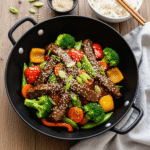
Beef Stir Fry Recipe
- Total Time: 25 minutes
- Yield: 4 servings 1x
- Diet: Gluten Free
Description
This easy beef stir fry recipe delivers tender, velvety beef and crisp vegetables in a savory sauce that rivals any restaurant. Ready in just 25 minutes, it’s the perfect weeknight dinner that the whole family will love. Serve over rice or noodles for a complete meal.
Ingredients
For the Beef:
- 1 pound flank steak or sirloin, thinly sliced against the grain
- 2 tablespoons soy sauce
- 1 tablespoon cornstarch
- 1 tablespoon vegetable oil
- 1/2 teaspoon black pepper
For the Stir Fry Sauce:
- 1/4 cup low-sodium soy sauce
- 2 tablespoons oyster sauce
- 1 tablespoon hoisin sauce
- 1 tablespoon rice vinegar
- 1 tablespoon brown sugar
- 2 teaspoons cornstarch
- 1/4 cup beef broth or water
- 1 teaspoon sesame oil
For the Stir Fry:
- 3 tablespoons vegetable oil, divided
- 3 cloves garlic, minced
- 1 tablespoon fresh ginger, minced
- 1 large bell pepper, cut into strips (any color)
- 2 cups broccoli florets
- 1 medium carrot, thinly sliced
- 1 cup snap peas, trimmed
- 3 green onions, cut into 1-inch pieces
- Sesame seeds for garnish (optional)
- Cooked rice or noodles for serving
Instructions
- Prepare the Beef: Place the thinly sliced beef in a medium bowl. Add 2 tablespoons soy sauce, 1 tablespoon cornstarch, 1 tablespoon vegetable oil, and black pepper. Mix thoroughly with your hands until the beef is evenly coated. Let marinate while you prepare the other ingredients, at least 10 minutes. This velveting process makes the beef incredibly tender.
- Make the Sauce: In a small bowl, whisk together the soy sauce, oyster sauce, hoisin sauce, rice vinegar, brown sugar, cornstarch, beef broth, and sesame oil until the cornstarch is fully dissolved and no lumps remain. Set aside within easy reach of your stove.
- Prep Your Vegetables: Cut all vegetables to similar sizes for even cooking. Have everything prepared and ready near your stove before you start cooking—stir-frying moves fast!
- Cook the Beef: Heat 1 tablespoon of vegetable oil in a large wok or skillet over high heat until it’s smoking hot. Add half the beef in a single layer, spreading it out. Let it sear undisturbed for 45-60 seconds until browned on one side, then stir-fry for another minute until just cooked through. Transfer to a clean plate. Repeat with another tablespoon of oil and the remaining beef. Don’t crowd the pan or the beef will steam instead of sear.
- Cook the Aromatics: Add the remaining tablespoon of oil to the wok. Toss in the minced garlic and ginger, stir-frying for 30 seconds until fragrant. Work quickly so they don’t burn.
- Stir-Fry the Vegetables: Add the carrots first (they take longest), stir-frying for 2 minutes. Then add bell peppers and broccoli, stir-frying for another 2-3 minutes. Finally, add snap peas and cook for 1 minute. Vegetables should be tender-crisp and vibrant in color.
- Combine Everything: Return the cooked beef to the wok along with the green onions. Give the sauce a quick whisk to recombine the cornstarch, then pour it over everything. Toss constantly for 1-2 minutes until the sauce thickens and coats everything in a glossy glaze.
- Serve: Remove from heat immediately. Transfer to a serving platter, garnish with sesame seeds if desired, and serve immediately over steamed rice or noodles. Enjoy while hot!
Notes
- Slicing Tip: Partially freeze beef for 20-30 minutes before slicing for easier, thinner cuts. Always slice against the grain for maximum tenderness.
- High Heat is Key: Stir-frying requires very high heat. Don’t reduce the temperature or your vegetables will steam rather than sear.
- Don’t Overcrowd: Cook beef in batches if needed. Overcrowding lowers the pan temperature and results in gray, boiled meat instead of beautifully seared beef.
- Gluten-Free Option: Use tamari instead of soy sauce and check that your oyster sauce is gluten-free.
- Customize Vegetables: Use whatever vegetables you have on hand. Mushrooms, zucchini, baby corn, and water chestnuts all work wonderfully.
- Prep Time: 15 minutes
- Cook Time: 10 minutes
- Category: Dinner
- Method: Stovetop
- Cuisine: Chinese-American
Nutrition
- Serving Size: 1/4 of recipe (without rice)
- Calories: 365
- Sugar: 7g
- Sodium: 1240mg
- Fat: 18g
- Saturated Fat: 4g
- Unsaturated Fat: 12g
- Trans Fat: 0g
- Carbohydrates: 19g
- Fiber: 3g
- Protein: 28g
- Cholesterol: 68mg
Tips & Variations
Spicy Version: Add 1-2 teaspoons of chili garlic sauce, sriracha, or red pepper flakes to the sauce for a spicy kick. Fresh Thai chilies sliced and added with the aromatics also bring excellent heat.
Low-Carb/Keto: Serve over cauliflower rice instead of regular rice and reduce the brown sugar to 1 teaspoon or use a sugar substitute. The net carbs drop significantly.
Vegetable Lover’s Version: Double the vegetables and reduce beef to 1/2 pound for a veggie-forward meal that stretches the protein further.
Mongolian Style: Add more ginger and garlic, use dark soy sauce, and include more green onions. Omit the mixed vegetables and focus on onions and scallions.
Teriyaki Twist: Replace oyster sauce with additional soy sauce and increase brown sugar to 3 tablespoons for a sweeter, teriyaki-inspired flavor.
Protein Swaps: This recipe works beautifully with chicken breast, pork tenderloin, shrimp, or tofu. Adjust cooking times accordingly—chicken and pork take slightly longer, while shrimp cooks faster.
Restaurant-Style Addition: Add a splash of Chinese cooking wine (Shaoxing wine) when cooking the aromatics for extra depth and authenticity.
Pro Chef Tips
Master the Velveting Technique: The cornstarch marinade isn’t just for flavor—it creates a protective coating that keeps the beef incredibly tender during high-heat cooking. Some restaurants also add a small amount of baking soda, but cornstarch alone works beautifully for home cooking.
Achieve Wok Hei: That smoky, slightly charred flavor called “wok hei” (breath of the wok) comes from cooking at extremely high heat. Don’t be afraid of a little smoke—it means you’re doing it right. Make sure your exhaust fan is on!
Cut Against the Grain: Look at your beef and identify the direction of the muscle fibers. Always slice perpendicular to these fibers. This shortens them, making each bite much more tender.
Mise en Place is Everything: Stir-frying happens incredibly fast. Have every ingredient prepped, measured, and within arm’s reach before you turn on the heat. Once you start cooking, there’s no time to chop or measure.
Control the Heat: Use high heat for searing the beef and cooking vegetables, but don’t be afraid to adjust. If things are burning, reduce slightly. If vegetables are steaming rather than searing, increase the heat.
Dry Your Vegetables: If you wash your vegetables (and you should), make sure they’re completely dry before adding to the hot wok. Water creates steam, which prevents that beautiful sear and makes everything soggy.
Don’t Stir Too Much: Let ingredients sit for a few seconds between stirs to develop color and caramelization. Constant stirring leads to pale, steamed food.
Common Mistakes to Avoid
Using Meat Straight from the Fridge: Cold beef won’t sear properly and will release moisture, causing it to steam. Let it sit at room temperature for 10-15 minutes before cooking, or pat it very dry if cooking cold.
Cutting Beef Too Thick: Thick pieces won’t cook evenly and will be chewy. Aim for slices about 1/4 inch thick. Partially freezing the meat makes this much easier.
Skipping the Marinade: That 10-minute marinade time isn’t optional—it’s what makes the beef tender and flavorful. Even 5 minutes is better than nothing.
Adding Sauce Too Early: If you add the sauce before the vegetables are cooked, everything becomes soggy and braised rather than stir-fried. Cook everything first, then add sauce at the very end.
Using Low Heat: Stir-frying requires high heat. Medium heat will steam your ingredients rather than searing them, resulting in mushy vegetables and gray beef.
Overcrowding the Pan: This is the number one mistake home cooks make. Too much food in the pan lowers the temperature dramatically. Cook beef in batches if necessary—it only takes an extra minute and makes a huge difference.
Forgetting to Whisk the Sauce Before Adding: Cornstarch settles to the bottom. Always give your sauce a good whisk right before pouring it into the wok to redistribute the cornstarch evenly.
Storage & Meal Prep
Refrigerator Storage: Store leftover beef stir fry in an airtight container in the refrigerator for up to 4 days. The flavors actually deepen overnight, making leftovers incredibly delicious. Keep separate from rice if possible to prevent the rice from absorbing too much sauce.
Reheating Instructions: The best way to reheat stir fry is in a skillet or wok over medium-high heat for 3-4 minutes, stirring frequently. This helps maintain texture. You can also microwave in 1-minute intervals, stirring between each, though this may make vegetables softer. Add a splash of water or broth if needed to loosen the sauce.
Meal Prep Strategy: This recipe is fantastic for meal prep. Cook the full recipe, divide into four containers with rice, and you have lunch for the week. The beef stays tender and the vegetables hold up well for 3-4 days.
Shelf Life: Consume within 4 days for best quality. The beef will remain safe to eat but vegetables may become softer over time.
Make-Ahead & Freezer Notes
Advance Preparation: You can slice and marinate the beef up to 24 hours ahead. Keep covered in the refrigerator. You can also cut all vegetables the night before and store in separate containers. Mix the sauce up to 3 days ahead and refrigerate.
Freezing the Finished Dish: While stir fry can be frozen, vegetables tend to become softer upon reheating. If you plan to freeze, slightly undercook the vegetables. Freeze in airtight containers or freezer bags for up to 3 months. Thaw overnight in the refrigerator.
Freezing Raw Marinated Beef: This is actually the best freezer option. Slice and marinate the beef, then freeze in a freezer bag for up to 3 months. Thaw in the refrigerator overnight, then proceed with the recipe. The marinating process continues as it thaws, making the beef even more tender.
Best Reheating Method from Frozen: Thaw completely in the refrigerator overnight. Reheat in a skillet over medium-high heat, adding a tablespoon of water or broth to help revive the sauce. Stir frequently until heated through, about 5-7 minutes.
What Freezes Best: The beef and sauce freeze excellently. Bell peppers and snap peas maintain decent texture. Broccoli and carrots become softer but are still tasty. If freezing regularly, consider using more bell peppers and onions, which hold up better.
Serving Suggestions
Rice Options: Serve over steamed white jasmine rice (traditional), brown rice (healthier), fried rice (indulgent), or cauliflower rice (low-carb). Each brings a different texture and flavor profile.
Noodle Pairings: Lo mein noodles, rice noodles, udon noodles, or even ramen noodles make fantastic bases. Toss the cooked noodles directly into the wok with the stir fry for the last minute of cooking.
Side Dishes:
- Egg drop soup or hot and sour soup as a starter
- Spring rolls or pot stickers for a full Chinese feast
- Simple cucumber salad for refreshing contrast
- Steamed edamame with sea salt
- Asian-style coleslaw with sesame dressing
Beverage Pairings: Green tea (hot or iced), ginger ale, Asian beer like Tsingtao, or a crisp white wine like Riesling or Sauvignon Blanc complement the savory flavors beautifully.
Garnish Ideas: Beyond sesame seeds, try chopped peanuts or cashews for crunch, fresh cilantro for brightness, or a drizzle of chili oil for heat.
Make it a Bowl: Create a stir fry bowl with rice, the beef and vegetables, and top with a fried egg, kimchi, pickled vegetables, and a drizzle of sriracha mayo.
FAQs Section
Q: Can I use a different cut of beef?
A: Absolutely! While flank steak and sirloin are ideal, you can use ribeye for a more marbled option, skirt steak, or even beef tenderloin if you’re feeling fancy. Even chuck roast works if sliced thinly against the grain. Avoid stew meat, which is cut too thick and won’t cook properly in a stir-fry.
Q: My sauce is too thick/thin. How do I fix it?
A: If your sauce is too thick, simply add a tablespoon of water or broth at a time until you reach desired consistency. If it’s too thin, mix 1/2 teaspoon cornstarch with 1 tablespoon cold water, add to the wok, and cook for another 30 seconds until it thickens.
Q: Can I make this without oyster sauce?
A: While oyster sauce adds authentic flavor and depth, you can substitute with additional soy sauce (2 tablespoons) plus 1 teaspoon of brown sugar. The flavor will be slightly different but still delicious. There are also vegetarian “oyster” sauces made from mushrooms.
Q: Why is my beef chewy?
A: Three common causes: slicing with the grain instead of against it, cutting pieces too thick, or overcooking. Make sure to slice very thinly (1/4 inch) perpendicular to the muscle fibers, and cook quickly over high heat. The cornstarch marinade also helps—don’t skip it!
Q: Can I use frozen vegetables?
A: You can, but fresh vegetables give much better texture. If using frozen, don’t thaw them first—add directly to the hot wok and increase cooking time by 1-2 minutes. They’ll release moisture, so expect a slightly different texture and more liquid in your final dish.
Q: What’s the best way to slice beef thinly?
A: The easiest method is to partially freeze the beef for 20-30 minutes until firm but not frozen solid. This makes it much easier to cut clean, thin slices. Always use a sharp knife and cut against the grain for maximum tenderness.
Q: How do I keep vegetables crispy?
A: The key is high heat and proper timing. Add harder vegetables like carrots first, then softer ones like bell peppers, and finally quick-cooking vegetables like snap peas last. Don’t overcook—vegetables should be tender-crisp, not soft. Also, make sure your wok is hot enough and don’t overcrowd it.
Conclusion
There you have it—everything you need to create an absolutely spectacular beef stir fry that rivals your favorite Chinese restaurant! This recipe proves that incredible flavor doesn’t require hours in the kitchen or a pantry full of exotic ingredients. With just 25 minutes, one pan, and some basic technique, you can serve up a dinner that’s healthy, delicious, and guaranteed to disappear from plates in record time.
The beauty of this easy beef stir fry recipe is its versatility. Once you master the basic technique, you can customize it endlessly—swap proteins, change up vegetables based on the season or what’s on sale, adjust the spice level to your family’s preference, or experiment with different Asian-inspired sauces. It’s the kind of recipe that grows with you, becoming easier and more intuitive each time you make it.
I’d love to hear how your beef stir fry turns out! Did you add your own twist? Discover a favorite vegetable combination? Have questions or tips to share? Drop a comment below—I read every single one and love hearing about your cooking adventures.
Don’t forget to save this recipe to your Pinterest boards! Pin it to your “Quick Weeknight Dinners,” “Asian Recipes,” or “Healthy Meal Prep” collections so you can find it whenever that stir-fry craving hits. And if you loved this recipe, please share it with friends and family who need a reliable, delicious dinner solution in their rotation.
Happy cooking, and here’s to many more delicious homemade dinners that bring joy to your table!