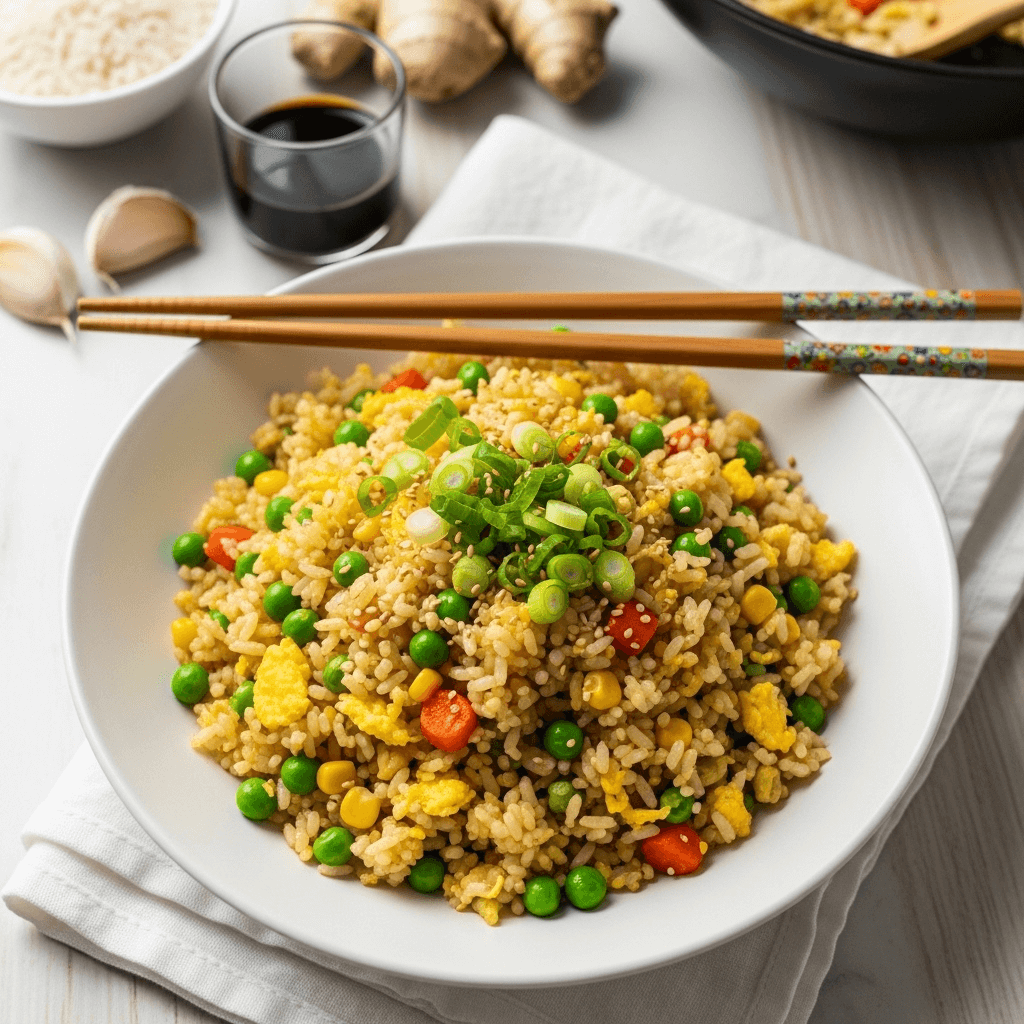

There’s nothing quite like a plate of perfectly cooked egg fried rice – that satisfying combination of fluffy rice, savory eggs, and aromatic flavors that comes together in one incredible dish. This best egg fried rice recipe brings authentic Asian takeout flavors right to your home in just 20 minutes, making it faster than ordering delivery while being infinitely more delicious and budget-friendly. Whether you’re seeking a quick weeknight dinner solution, looking for the perfect way to use leftover rice, or craving restaurant-quality fried rice without the restaurant prices, this easy egg fried rice recipe delivers outstanding results every single time.
What makes this homemade egg fried rice recipe so special is the perfect balance of fluffy rice grains, silky scrambled eggs, and savory sauce that tastes authentically Asian yet simple enough for home cooks. Unlike takeout versions that can be greasy and heavy, this egg fried rice recipe uses proper technique and simple ingredients to create light, flavorful fried rice that tastes surprisingly restaurant-quality. In just 20 minutes from prep to plate, you’ll have a complete meal that’s healthier, cheaper, and more customizable than takeout. This straightforward yet impressive egg fried rice recipe has become a family favorite because it’s quick, nutritious, delicious, and works perfectly for busy weeknight cooking.
History / Background
Fried rice is a centuries-old Chinese cooking technique that emerged from practical necessity and culinary innovation. The origins trace back to ancient China, where cooks developed ways to repurpose leftover rice from previous meals. Throwing away food was wasteful and economically impossible for most people, so creative cooking methods transformed yesterday’s rice into something delicious and entirely new.
The technique of frying rice in a wok over high heat with various ingredients developed during the Sui Dynasty (581-618 CE). Historical records suggest that fried rice became increasingly popular as a way to extend rice supplies and create complex dishes from simple ingredients. What began as a practical solution to food waste evolved into an essential technique in Chinese cuisine.
Egg fried rice specifically emerged as one of the most basic and popular variations. Eggs provided protein and richness while creating beautiful color through the yolks. The combination of rice and eggs became particularly popular throughout Southeast Asia, with regional variations developing in different countries and culinary traditions.
Fried rice remained primarily a Chinese and Asian dish until the mid-20th century when Chinese immigration to Western countries introduced the technique to broader audiences. Chinese restaurants opened throughout America, and fried rice dishes appeared on menus, introducing American home cooks to this efficient, delicious cooking method. Egg fried rice became one of the most popular takeout dishes, appealing to diverse palates and budgets.
The American embrace of egg fried rice reflects both practical and culinary appreciation. Practically, fried rice offered affordable restaurant meals. Culinarily, the technique demonstrated how proper heat and technique could transform simple ingredients into something complex and satisfying. Today, egg fried rice remains one of the most ordered takeout dishes globally and a staple in home kitchens worldwide.
Why You’ll Love This Recipe
This easy egg fried rice recipe is the ultimate quick dinner solution – fast, healthy, delicious, and absolutely customizable. I’ve perfected this recipe through countless weeknight dinners to bring you the definitive version that delivers restaurant-quality egg fried rice every single time.
Here’s why this best egg fried rice recipe will become your new favorite:
- Ready in just 20 minutes – From prep to dinner plate in less time than ordering takeout delivery
- Uses leftover rice perfectly – The best way to use yesterday’s rice; actually requires cold rice for perfect texture
- Restaurant-quality flavor – Tastes like it came from your favorite Asian restaurant but costs a fraction of the price
- Packed with protein and vegetables – High in protein from eggs, loaded with vegetables for nutrition and volume
- Naturally customizable – Choose your favorite vegetables, proteins, and sauce intensity
- One-wok meal – Everything cooks in one pan for minimal cleanup and maximum efficiency
- Budget-friendly – Costs just a few dollars to make compared to restaurant takeout
- Completely customizable – Add your favorite vegetables, proteins, and aromatics
- Perfect for meal prep – Make a large batch and portion for grab-and-go lunches throughout the week
- Freezer-friendly – Leftover fried rice freezes beautifully for quick future meals
- Kids love it – Customize vegetables and toppings for picky eaters while adults enjoy more complex versions
- Naturally gluten-free option – Use tamari or coconut aminos instead of soy sauce for gluten-free version
Ingredient Notes
Creating perfect egg fried rice requires understanding key ingredients and choosing quality options that work together to create authentic, delicious results. The foundation starts with proper rice preparation.
Cooked Rice – Three cups of cold cooked rice (about 1½ cups uncooked) is essential. Leftover rice that’s been refrigerated overnight is actually ideal – the cold rice separates into individual grains more easily during cooking than fresh warm rice. Day-old rice has dried slightly, preventing clumping. If you don’t have leftover rice, cook fresh rice and refrigerate for at least 30 minutes (or a few hours ideally) before using. The rice should be completely cold before fried rice preparation.
Eggs – Three large eggs provide richness, protein, and silky texture that defines great fried rice. Use room temperature eggs for better incorporation. The eggs scramble into the rice, creating pockets of savory, creamy texture throughout the dish.
Soy Sauce – Three tablespoons of soy sauce provides the foundational salty, umami-rich flavor that defines Asian fried rice. Use regular soy sauce for traditional flavor, or tamari for gluten-free option. Soy sauce brings depth and complexity that salt alone can’t replicate. The umami flavor is crucial.
Garlic and Ginger – One tablespoon each of minced fresh garlic and ginger provide aromatic depth and complexity. Fresh garlic and ginger taste dramatically better than powdered versions. These aromatics are essential to authentic fried rice flavor – they create the characteristic Asian aroma and taste that makes fried rice special.
Sesame Oil – One tablespoon of toasted sesame oil adds rich, nutty flavor. Sesame oil burns easily, so add it near the end of cooking. A little goes a long way – you don’t need much for significant flavor impact. Quality sesame oil makes an enormous difference.
Chicken or Vegetable Broth – Two tablespoons of broth adds moisture and savory flavor without making rice mushy. Use low-sodium broth so you can control salt level. The broth helps create the light, moist texture of proper fried rice.
Neutral Oil – Two tablespoons of vegetable or canola oil for cooking. This neutral oil provides the fat needed for cooking vegetables and eggs without interfering with sauce flavors.
Vegetables – Two to three cups of mixed vegetables (peas, carrots, corn, green beans) provide nutrition, fiber, and color. Using frozen mixed vegetables saves prep time while maintaining quality. Fresh or previously cooked vegetables also work beautifully.
Optional Additions:
- Scallions for fresh onion flavor and garnish
- Cashews for crunch
- Pineapple chunks for sweetness
- White pepper for spice
- Cilantro for brightness
- Sesame seeds for garnish
Substitutions: Use jasmine or basmati rice instead of regular white rice for different flavor. Add cooked chicken, shrimp, or tofu for additional protein. Replace soy sauce with coconut aminos for soy-free option. Use vegetable oil if sesame oil isn’t available, though flavor will differ.
Equipment Needed
- Wok or large skillet – 12-14 inch wok is ideal; a large skillet works if wok isn’t available
- Wooden spoon or wooden spatula – For stirring in the wok (prevents scratching and allows better rice movement)
- Cutting board and sharp knife – For chopping garlic, ginger, and vegetables
- Measuring cups and spoons – For accurate ingredient quantities
- Small bowl – For beating eggs
- Medium bowl – For mixing sauce ingredients
- Whisk – For beating eggs until well combined
- Tongs – For moving ingredients around while cooking
- Garlic press or mincer – Optional but helpful for mincing fresh garlic quickly
- Ginger grater or microplane – For mincing fresh ginger
- Large mixing bowl – For organizing prepped ingredients
- Serving platter or individual bowls – For presenting finished fried rice
- Stove with high heat capability – High heat is essential for proper fried rice cooking
Egg Fried Rice Recipe
- Total Time: 20 minutes
- Yield: 4 servings 1x
- Diet: Gluten Free
Description
This best egg fried rice recipe delivers fluffy rice grains, silky scrambled eggs, and savory Asian flavors in a restaurant-quality dish ready in just 20 minutes. Made with simple ingredients and high-heat wok technique, this easy homemade egg fried rice tastes better than takeout while being healthier and more budget-friendly.
Ingredients
For the Fried Rice:
- 3 cups cold cooked rice (day-old rice, refrigerated, about 1½ cups uncooked)
- 2 tablespoons neutral oil (vegetable or canola)
- 3 large eggs, beaten
- 1 tablespoon minced fresh garlic
- 1 tablespoon minced fresh ginger
- 2–3 cups mixed vegetables (frozen peas and carrots work perfectly, or fresh vegetables)
For the Sauce:
- 3 tablespoons soy sauce (or tamari for gluten-free)
- 2 tablespoons chicken or vegetable broth
- 1 tablespoon toasted sesame oil
- ½ teaspoon white pepper (or black pepper if white not available)
Optional Garnish:
- 2 tablespoons sliced scallions
- Sesame seeds
- Fresh cilantro
- Red pepper flakes for heat
Instructions
- Prepare rice properly. Use cold, day-old cooked rice that’s been refrigerated overnight if possible. If using fresh cooked rice, spread it on a baking sheet and refrigerate for at least 30 minutes until completely cold. Cold rice separates into individual grains more easily during cooking, preventing clumping. The rice should be room temperature or cold, never warm.
- Break up rice grains. If rice clumps together, gently break up large clumps with your hands or a fork. The rice should be in individual grains, not large clumps. This takes just a minute and ensures even cooking and distribution throughout the finished fried rice.
- Prepare all ingredients before cooking. Beat eggs in a small bowl until well combined. Mince garlic and ginger. Chop vegetables if using fresh (frozen vegetables can be added directly from the freezer). Mix sauce ingredients together in a small bowl. Having everything prepped before the wok gets hot ensures smooth, fast cooking.
- Heat wok and prepare to cook. Place a wok or large skillet over high heat. Let it preheat for 1-2 minutes until very hot – it should almost smoke slightly. This high heat is essential for proper fried rice cooking, which creates separation of grains and proper browning.
- Add oil and heat. Add one tablespoon of neutral oil to the hot wok and let it heat for 30 seconds until shimmering. The oil should coat the bottom of the wok evenly. Don’t skip preheating – cold oil results in different texture.
- Scramble the eggs. Pour beaten eggs into the hot wok and stir constantly with a wooden spoon, breaking them into small pieces as they cook. Cook for about 2-3 minutes until eggs are cooked through but still slightly moist. Remove cooked eggs to a clean plate and set aside.
- Add remaining oil and aromatics. Add remaining tablespoon of oil to the wok. Add minced garlic and ginger and cook for about 30 seconds, stirring constantly, until fragrant. Don’t let them burn or they become bitter. This quick cooking releases essential oils and aromatics that flavor the entire dish.
- Add vegetables. Add vegetables to the hot wok and stir-fry for about 1-2 minutes. If using frozen vegetables, they’ll thaw and heat through quickly. If using fresh vegetables, they’ll begin cooking. Keep temperature high and stir constantly.
- Add cold rice. Add the prepared cold rice to the wok and stir-fry for about 2-3 minutes, breaking up any remaining clumps and ensuring even heat distribution. The rice should start to warm through and individual grains should separate. Stir constantly and move rice around the wok.
- Return eggs to wok. Add the cooked scrambled eggs back to the wok with the rice and vegetables. Stir to combine everything evenly.
- Add sauce to wok. Pour the prepared sauce (soy sauce, broth, and sesame oil) over the rice mixture. Stir everything together for about 1 minute until the sauce is evenly distributed and the rice is coated with sauce and has absorbed the flavors. The mixture should be moist but not wet or soupy.
- Taste and adjust seasonings. Taste the fried rice and adjust seasonings as needed. Add a pinch more salt if needed, or a splash more soy sauce for deeper flavor. Add white pepper if desired for subtle heat.
- Serve immediately. Transfer fried rice to a serving platter or individual bowls. Garnish with sliced scallions, sesame seeds, and fresh cilantro if desired. Serve immediately while hot.
Notes
- Cold rice is essential – Day-old refrigerated rice separates into individual grains; warm rice clumps
- High heat is crucial – Fried rice requires high heat to create proper texture and prevent mushiness
- Mise en place matters – Having all ingredients prepped before cooking ensures smooth, fast preparation
- Constant stirring – Stir continuously during cooking to prevent sticking and ensure even heat distribution
- Don’t overcrowd – If making for more than four people, cook in batches rather than overcrowding
- Vegetables can be frozen – Frozen mixed vegetables actually work perfectly and save prep time
- Sesame oil at the end – Add sesame oil near the end so it doesn’t burn from high heat
- Customize freely – Add your favorite vegetables, proteins, and adjust sauce to taste preferences
- Prep Time: 10 minutes
- Cook Time: 10 minutes
- Category: Dinner
- Method: Stovetop
- Cuisine: Chinese
Nutrition
- Serving Size: 1 serving (about 1½ cups)
- Calories: 285
- Sugar: 2g
- Sodium: 680mg
- Fat: 9g
- Saturated Fat: 2g
- Unsaturated Fat: 6g
- Trans Fat: 0g
- Carbohydrates: 40g
- Fiber: 2g
- Protein: 8g
- Cholesterol: 140mg
Tips & Variations
Protein Variations:
- Chicken Fried Rice: Add 1 cup cooked shredded chicken for heartier meal
- Shrimp Fried Rice: Add 1 cup cooked shrimp for seafood version
- Tofu Fried Rice: Add 1 cup diced firm tofu for vegetarian protein
- Pork Fried Rice: Add 1 cup cooked ground pork or diced pork for traditional version
- Beef Fried Rice: Add 1 cup cooked ground beef for heartier option
- Mixed Protein: Combine two proteins for variety
Vegetable Variations:
- Asian Vegetable Mix: Broccoli, snap peas, baby corn, water chestnuts
- Garden Vegetable: Diced bell peppers, zucchini, mushrooms
- Heat-Forward: Add sliced jalapeños and red bell peppers
- Leafy Green: Add bok choy, Chinese broccoli, or spinach
- Mushroom Lover’s: Add sliced shiitake or oyster mushrooms
- Pineapple Version: Add fresh pineapple chunks for sweetness
Sauce Variations:
- Spicy Szechuan: Add chili oil and Szechuan peppercorns for heat
- Teriyaki Fried Rice: Increase soy sauce and add 1 tablespoon honey
- Coconut Ginger: Add 2 tablespoons coconut milk for creamy richness
- Thai-Inspired: Add 1 tablespoon red curry paste and coconut milk
- Oyster Sauce: Add 1 tablespoon oyster sauce for depth
- Brown Butter: Add 1 tablespoon brown butter for richness
Make-Ahead Strategies:
- Prep rice the day before: Cook rice and refrigerate overnight
- Pre-chop vegetables: Chop vegetables several hours ahead and store in containers
- Mix sauce ahead: Combine sauce ingredients the morning of or evening before
- Half-prep method: Prep all components, combine and cook fresh when ready to eat
Healthier Versions:
- Lower sodium: Reduce soy sauce to 2 tablespoons and use low-sodium broth
- Extra vegetables: Increase vegetable amount to 4-5 cups for more volume and nutrition
- Less oil: Reduce cooking oil to just 1 tablespoon total
- Brown rice: Use brown rice instead of white for more fiber
Pro Chef Tips
Cold rice is non-negotiable – Room temperature or warm rice releases moisture and becomes sticky or mushy rather than achieving the separated, individual grain texture that defines proper fried rice. Cold rice from the refrigerator is essential for success. Some chefs intentionally spread fresh rice on a baking sheet to cool quickly specifically for fried rice.
Use high heat consistently – Proper fried rice requires high heat throughout cooking. Medium heat results in steamed, soft rice rather than properly separated grains with slight browning. Your wok should be nearly smoking hot before starting. Don’t lower temperature.
Mise en place creates efficiency – Having all ingredients prepped, measured, and sauce mixed before cooking ensures smooth fried rice preparation. Fried rice happens fast once the wok is hot – scrambling to prep ingredients mid-cooking ruins timing and quality.
Don’t overcrowd the wok – Adding too much rice or vegetables to the wok at once lowers temperature and creates steamed texture rather than fried rice. Work in batches if needed. Properly cooked fried rice in batches beats crowded, steamed fried rice.
Beat eggs thoroughly before cooking – Well-beaten eggs incorporate more smoothly and create silkier, more evenly distributed scrambled egg throughout the fried rice. Mix eggs well until yolks and whites are completely combined.
Break up rice clumps before cooking – Even cold rice sometimes clumps slightly. Gently break up clumps with your hands before adding to the wok. This takes just a minute and ensures even cooking.
Taste and adjust at the end – Every soy sauce brand varies in saltiness and intensity. Taste the finished fried rice and adjust seasonings with additional soy sauce, broth, or pepper as needed. Don’t be shy about adjusting.
Use neutral oil for cooking, sesame oil for flavor – Neutral oils like vegetable or canola oil are best for the high-heat cooking. Sesame oil is added near the end for flavor, not for cooking. Adding sesame oil at the beginning burns it and destroys the nutty flavor.
Keep everything moving – Constant stirring and turning ingredients is what defines fried rice cooking. Letting ingredients sit in the hot wok sticks them and creates burning. Movement is essential.
Use frozen vegetables for convenience – Frozen mixed vegetables save prep time while maintaining quality. They thaw and heat through quickly in the high heat of the wok. Don’t feel you must use fresh vegetables.
Common Mistakes to Avoid
Using warm or room-temperature rice – Warm rice releases moisture and becomes sticky or gluey rather than achieving separated grains. Always use cold, day-old rice from the refrigerator. This is the single most important factor for success.
Using medium heat instead of high heat – Medium heat results in steamed, soft rice instead of properly separated, slightly browned fried rice. High heat is essential. Your wok should be smoking hot before starting cooking.
Not prepping ingredients before cooking – Fried rice happens so fast that scrambling to chop vegetables or mix sauce mid-cooking ruins timing. Everything must be prepped before the wok gets hot.
Overcooking eggs or not scrambling them small enough – Overcooked eggs become rubbery and tough. Cook eggs just until set but still slightly moist, and break them into small pieces as they cook. Small, tender egg pieces distribute better throughout the fried rice.
Adding sauce too early or too much at once – Add sauce near the end when rice is heated and combined. Adding too much sauce at once creates mushy rice rather than nicely coated grains. The rice should be moist but not wet or soupy.
Not tasting and adjusting seasonings – Different soy sauce brands vary in saltiness. Always taste the finished fried rice and adjust seasonings. Many people make fried rice that’s underseasoned because they don’t taste and adjust.
Using poor quality oil or butter – The oil is a primary ingredient that creates browning and flavor. Use good-quality neutral oil. Don’t use low-quality or rancid oil.
Storage & Meal Prep
Storing Leftovers: Keep leftover egg fried rice in an airtight container in the refrigerator for up to 4 days. The fried rice maintains good flavor and texture throughout this time. Store in portion-sized containers for grab-and-go meals.
Reheating Instructions: Reheat fried rice on the stovetop over medium heat in a wok or skillet with a splash of water or broth, stirring occasionally, for about 5 minutes until heated through. Alternatively, reheat in a microwave-safe container, stirring every 30 seconds. Stovetop reheating preserves texture better, though microwave works when convenient.
Shelf Life: Properly stored in the refrigerator, egg fried rice maintains best quality for 3-4 days, though still safe to eat for up to 5 days. The rice texture may harden slightly over time but remains delicious.
Freezing: Cool fried rice completely, then freeze in airtight containers for up to 3 months. Thaw overnight in the refrigerator before reheating. Freezing slightly affects rice texture but flavor remains excellent for quick future meals.
Meal Prep Strategy: Make a large batch of egg fried rice on the weekend and portion into individual containers. Refrigerate for up to 4 days or freeze for up to 3 months. Grab portions throughout the week for quick lunches and dinners.
Make-Ahead & Freezer Notes
Can You Make It Ahead? Absolutely! Cook rice and refrigerate up to 2 days ahead. Prep vegetables and mix sauce ahead. Cook egg fried rice fresh when ready to eat for optimal texture, or cook and refrigerate for up to 4 days.
Freezer-Friendly Details: Cooked egg fried rice freezes beautifully for up to 3 months. Cool completely before freezing in airtight containers. The fried rice emerges from freezing with slightly different texture but excellent flavor. Individual portions freeze and reheat easily.
Best Reheating Method: Thaw overnight in the refrigerator, then reheat on the stovetop over medium heat in a wok or skillet with a splash of water or broth, stirring occasionally, for 5 minutes. This method preserves texture better than microwave reheating.
Component Freezing: You can freeze cooked rice separately from other components if desired. Freeze cooked rice in portions and combine with fresh vegetables and eggs when ready to make fried rice.
Make-Ahead Timeline:
- Two days ahead: Cook rice and refrigerate
- One day ahead: Prep and chop vegetables, mix sauce
- Morning of: Arrange ingredients for final cooking
- Cooking time: Assemble egg fried rice in about 20 minutes
- Leftovers: Refrigerate for up to 4 days or freeze for up to 3 months
Batch Cooking: Make a triple batch on the weekend by cooking rice in advance and tripling other ingredients. Cool separate batches in different containers. Freeze for grab-and-go meals throughout the month.
Serving Suggestions
Perfect homemade egg fried rice deserves equally delicious accompaniments and serving occasions that enhance its savory, aromatic appeal.
Asian Soup Pairings:
- Egg drop soup for complementary comfort
- Hot and sour soup for spicy contrast
- Wonton soup for heartier meal
- Tom yum soup for Thai inspiration
- Miso soup for Japanese pairing
- Vegetable broth soup for light option
Vegetable Side Dishes:
- Steamed bok choy with garlic
- Stir-fried gai lan (Chinese broccoli)
- Steamed edamame with sea salt
- Cucumber salad with vinegar dressing
- Asian coleslaw
- Roasted Brussels sprouts
Spring and Fresh Rolls:
- Fresh spring rolls with dipping sauce
- Crispy spring rolls with sweet and sour sauce
- Lettuce wraps for light option
- Vietnamese summer rolls
Beverage Pairings:
- Beer – lager or Asian beer styles
- Green tea for traditional pairing
- Jasmine tea for aromatic option
- Sparkling water with lime
- Ginger ale for spicy complement
- Thai iced tea for sweet option
- Sake for Japanese pairing
Sauce Accompaniments:
- Soy sauce for additional saltiness
- Hot sauce for added heat
- Sriracha for spicy kick
- Chili oil for depth and heat
- Sweet and sour sauce
- Oyster sauce for richness
- Hoisin sauce for sweetness
Complete Meal Examples:
- Egg fried rice with egg drop soup and steamed edamame
- Fried rice with spring rolls and green tea
- Asian fried rice with cucumber salad and beer
- Thai version with hot and sour soup and Thai iced tea
Occasion Ideas:
- Quick weeknight family dinner
- Meal prep lunch portions
- Restaurant-style dinner at home
- Casual entertaining
- Potluck contribution
- Picnic or outdoor gathering
- Office lunch boxes
- Late-night meal after events
FAQs Section
Can I use leftover cooked vegetables from other meals? Absolutely! Leftover cooked vegetables work perfectly in fried rice. They’ll reheat and blend beautifully with the warm rice. You can use any vegetables you have on hand. Fried rice is an excellent way to use leftover vegetables and reduce food waste.
What if I don’t have sesame oil? Sesame oil adds wonderful flavor, but you can make fried rice without it if necessary. The fried rice will be slightly less flavorful but still delicious. Increase soy sauce by ½ tablespoon to compensate. Quality sesame oil is worth keeping on hand for authentic fried rice flavor.
Can I make egg fried rice without a wok? Yes! A large skillet (12-14 inches) works perfectly as an alternative. The technique remains the same – high heat, constant stirring, quick cooking. A flat-bottomed skillet actually works better than a rounded one for fried rice. Results will be equally good.
How do I make it spicier? Add red pepper flakes, sriracha, or chili oil to the sauce. Add sliced fresh jalapeños or Thai chili peppers to the vegetables. Start with ¼ teaspoon red pepper flakes and adjust upward to your heat preference. Individual servings can be customized with hot sauce on the side.
What if I want to add protein to plain egg fried rice? Add 1 cup cooked shredded chicken, ground pork, cooked shrimp, or tofu. Add diced ham or bacon for smoky flavor. Cooked ground beef works beautifully. Add protein after cooking eggs and before adding vegetables so it heats through completely.
Can I make it without eggs? You can, but eggs provide protein, richness, and silky texture that defines the dish. If avoiding eggs, increase other proteins like shrimp, chicken, or tofu. The fried rice will be good but will have different character without the eggs.
Is this recipe gluten-free? Use tamari or coconut aminos instead of regular soy sauce for a completely gluten-free version. All other ingredients are naturally gluten-free. Double-check broth and any other ingredients for hidden gluten if cooking for someone with celiac disease.
Conclusion
There you have it – the ultimate guide to making the best egg fried rice recipe that tastes absolutely restaurant-quality yet comes together in your own kitchen in just 20 minutes! This easy egg fried rice recipe proves that impressive, authentic Asian meals don’t require complicated techniques or hard-to-find ingredients. With just simple quality ingredients, a hot wok, and about 20 minutes of your time, you can create restaurant-quality homemade egg fried rice that’s healthier, more delicious, and significantly cheaper than takeout.
The magic of this egg fried rice recipe lies in its beautiful simplicity combined with incredible flavor and versatility. The combination of cold rice, high heat, proper technique, and quality ingredients creates something special that tastes complex yet is surprisingly easy to make. Whether you’re cooking for a busy weeknight family dinner, batch cooking for meal prep, looking for an impressive quick meal, or simply craving delicious takeout-style food at home, this best egg fried rice recipe delivers consistent, absolutely delicious results every single time.
I’d absolutely love to hear about your egg fried rice adventures! What’s your favorite protein or vegetable addition? Do you prefer your fried rice mild or spicy? Have you made it multiple times already? Drop a comment below and let me know how your cooking turned out and what made this recipe special for you. And if you loved this recipe, please save it to your favorite Pinterest board so you can find it easily whenever you need a quick, delicious meal, and share it with friends and family who need to discover restaurant-quality egg fried rice made at home!
Happy cooking, and may your wok always be hot and your egg fried rice always perfectly separated and delicious!