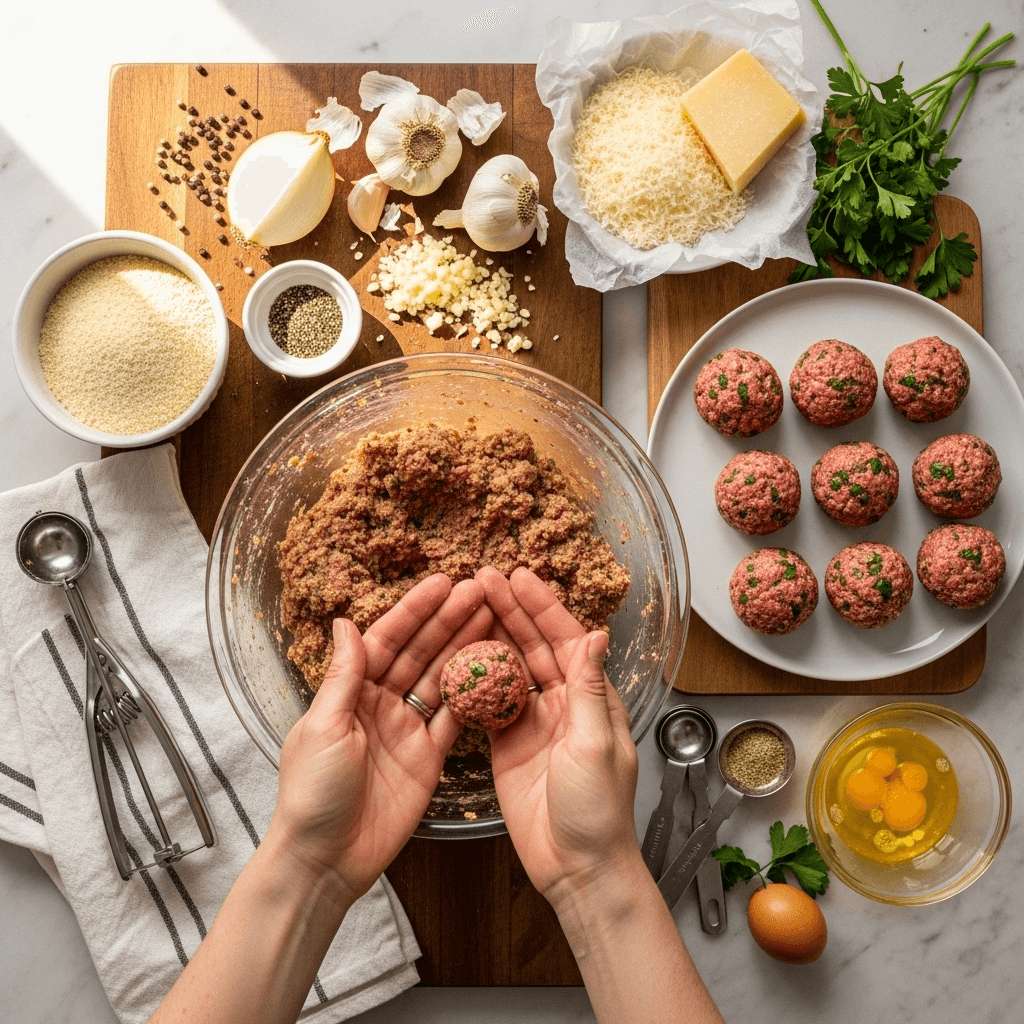

There’s something undeniably comforting about a plate of perfectly tender, juicy homemade meatballs. Whether they’re nestled in a rich marinara sauce over spaghetti, tucked into a crusty sub roll for the ultimate meatball sandwich, or served as appetizers at your next gathering, these classic Italian-style meatballs are pure comfort food magic. This recipe creates meatballs that are crispy and golden on the outside while staying incredibly moist and flavorful on the inside – the kind of meatballs that make everyone ask for seconds (and the recipe!).
What makes these homemade meatballs truly special is their perfect texture and deep, savory flavor. They’re not dense or dry like many meatballs can be. Instead, they’re light, tender, and packed with aromatic herbs and spices that make every bite absolutely delicious. The secret lies in the careful balance of ingredients and a few simple techniques that ensure your meatballs turn out perfect every single time.
These versatile meatballs are perfect for so many occasions. Make them for Sunday family dinner with spaghetti and marinara sauce, prepare a big batch for meal prep throughout the week, serve them as party appetizers with toothpicks and dipping sauce, or stuff them into hoagie rolls for game day sandwiches. They freeze beautifully, so you can always have homemade meatballs ready to turn any meal into something special. Whether you’re cooking for picky kids, impressing dinner guests, or just treating yourself to some serious comfort food, these classic meatballs deliver every single time.
History / Background
Meatballs have an incredibly rich and diverse history that spans countless cultures and continents. While many Americans associate meatballs primarily with Italian cuisine (thanks to the popularity of spaghetti and meatballs), the concept of seasoned ground meat formed into balls and cooked actually dates back thousands of years and appears in cuisines around the world.
Ancient Romans enjoyed a dish called “isicia omentata,” described in the famous cookbook “Apicius” from the first century AD. These early meatballs were made from minced meat, bread soaked in wine, pepper, pine nuts, and fish sauce, then formed into balls and cooked. This demonstrates that the concept of combining ground meat with binders and flavorings is truly ancient.
The Italian meatballs we know and love today – “polpette” in Italian – have their roots in Southern Italy, particularly in regions like Campania, Sicily, and Calabria. In Italy, meatballs were traditionally made small and eaten on their own or in soup, not typically served with pasta as we do in America. Italian immigrants brought their meatball recipes to the United States in the late 19th and early 20th centuries, where they adapted them to the more abundant and affordable meat available in America.
The iconic “spaghetti and meatballs” dish is actually an Italian-American invention rather than a traditional Italian meal. In Italy, where meat was historically more expensive and scarce, pasta and meat were typically served as separate courses. Italian immigrants in America, particularly in New York and New Jersey, combined them into one hearty, economical dish that could feed large families. The meatballs grew larger, the portions became more generous, and the combination became a symbol of Italian-American cuisine.
Interestingly, nearly every culture has its own version of meatballs. Swedish meatballs (köttbullar) are small and typically served in creamy gravy. Middle Eastern kofta are heavily spiced and often grilled on skewers. Asian cuisines feature everything from Chinese lion’s head meatballs to Vietnamese pho meatballs. Mexican albóndigas are served in soup, while Spanish albóndigas come in rich tomato sauce with tapas.
The universal appeal of meatballs makes perfect sense – they’re economical (using less expensive cuts of meat and extending them with fillers), flavorful (spices and herbs are mixed throughout), versatile (can be served countless ways), and comforting (the perfect combination of protein and familiar flavors). Today, homemade meatballs remain a beloved staple in American kitchens, representing both our Italian-American heritage and the universal comfort that comes from perfectly seasoned, lovingly prepared food.
Why You’ll Love This Recipe
This homemade meatball recipe is about to become your family’s most requested dinner, and for very good reason. These aren’t just any meatballs – they’re the perfect balance of tender texture, savory flavor, and versatility that makes them work for absolutely any occasion. Once you master this recipe, you’ll never want store-bought frozen meatballs again.
Here’s why this meatball recipe will change your dinner game forever:
- Incredibly Tender and Juicy – The secret combination of ingredients creates meatballs that stay moist and tender, never dry or dense
- Perfect for Meal Prep – Make a huge batch on Sunday and enjoy them all week in pasta, sandwiches, soups, or as snacks
- Budget-Friendly – Ground meat is economical, and this recipe stretches it beautifully to feed a crowd without breaking the bank
- Kid-Approved Every Time – Even picky eaters love these mild, flavorful meatballs – they’re a guaranteed win at the dinner table
- Freezer-Friendly – Make double or triple batches and freeze them for quick, homemade meals anytime you need them
- Versatile Serving Options – Use them in pasta, subs, appetizers, soups, or even breakfast scrambles – the possibilities are endless
- Customizable Flavors – Easy to adjust seasonings, add cheese, or incorporate different herbs to suit your family’s tastes
- Restaurant-Quality at Home – These taste like they came from your favorite Italian restaurant but cost a fraction of the price
- Simple Ingredients – Made with everyday pantry staples and supermarket ingredients – no special shopping required
- Impressive but Easy – Look like you spent hours in the kitchen when it really only takes about 45 minutes start to finish
- Great for Entertaining – Perfect party food that can be made ahead and kept warm in a slow cooker with sauce
- Healthier Than Store-Bought – Control exactly what goes into your meatballs with no preservatives, fillers, or mystery ingredients
- Family Recipe Potential – This is the kind of recipe you’ll pass down to your kids – it becomes part of family tradition
- Crowd-Pleasing Comfort Food – Everyone loves meatballs, making them perfect for potlucks, parties, and family gatherings
Ingredient Notes
Understanding your ingredients is key to making the best homemade meatballs. Let me walk you through each component and why it matters, plus helpful substitution options.
Ground Beef: The foundation of your meatballs. Use 85/15 ground beef (85% lean, 15% fat) for the best balance of flavor and moisture. The fat keeps meatballs juicy and tender while adding rich flavor. Avoid extra-lean beef as it creates dry, tough meatballs. Substitution: Use a mixture of half ground beef and half ground pork for traditional Italian meatballs, or try ground turkey for a leaner option (add extra moisture with an extra egg).
Breadcrumbs: The secret to tender, light-textured meatballs that aren’t dense. Breadcrumbs absorb moisture and create a softer texture. Use plain or Italian-seasoned breadcrumbs. Fresh breadcrumbs from day-old bread work even better than dried. Substitution: Crushed crackers, panko (use less as it’s coarser), oats pulsed in a food processor, or for gluten-free, use gluten-free breadcrumbs or crushed gluten-free crackers.
Milk: Soaked into the breadcrumbs to create what’s called a “panade,” which keeps meatballs incredibly moist and tender. The milk-soaked breadcrumbs prevent the meat proteins from binding too tightly, resulting in a lighter texture. Substitution: Any milk works (whole, 2%, even non-dairy like almond milk), or use beef broth for extra savory flavor.
Eggs: The binder that holds everything together while adding moisture and richness. Eggs also help create structure without making meatballs tough. Room temperature eggs mix more evenly. Substitution: For each egg, use 3 tablespoons of mayonnaise or 1 tablespoon ground flaxseed mixed with 3 tablespoons water (let sit 5 minutes).
Parmesan Cheese: Adds salty, umami depth and helps bind ingredients while contributing to the tender texture. Always use freshly grated Parmigiano-Reggiano or good quality Parmesan, never the pre-grated stuff in a can. Substitution: Pecorino Romano (sharper and saltier), Asiago, or for dairy-free, use nutritional yeast (though texture will differ slightly).
Fresh Parsley: Provides brightness and fresh herbal flavor that balances the rich meat. Flat-leaf Italian parsley has better flavor than curly parsley. Substitution: Fresh basil (more Italian flavor), fresh oregano (more pungent), or 1 tablespoon dried Italian seasoning (though fresh is always better).
Garlic: Essential for that classic Italian meatball flavor. Fresh minced garlic provides aromatic, slightly sweet, pungent flavor. Substitution: 1 teaspoon garlic powder per 3 cloves of fresh garlic, though fresh is significantly better.
Onion: Adds moisture, subtle sweetness, and savory depth. Finely minced or grated onion distributes evenly and practically melts into the meatballs during cooking. Substitution: Shallots (milder and sweeter), onion powder (1 tablespoon per small onion), or finely minced celery for different flavor.
Italian Seasoning: A blend of oregano, basil, thyme, and rosemary that provides classic Italian flavor. Substitution: Make your own with equal parts dried oregano and basil, or use individual herbs you prefer.
Salt and Black Pepper: Essential for bringing out all the other flavors. Don’t skimp on proper seasoning – underseasoned meatballs taste bland no matter how good your other ingredients are. Substitution: Use what you have, but freshly ground black pepper is noticeably better than pre-ground.
Olive Oil: Used for browning meatballs before simmering in sauce. Extra virgin adds flavor, but regular olive oil or vegetable oil work fine for cooking. Substitution: Any cooking oil with a decent smoke point – canola, avocado, or vegetable oil all work.
Equipment Needed
Having the right tools makes meatball-making easier and more efficient. Here’s what you’ll need:
- Large Mixing Bowl – For combining all meatball ingredients; glass or stainless steel work best
- Small Bowl – For soaking breadcrumbs in milk
- Fork or Hands – For mixing ingredients (hands work best for even distribution without overmixing)
- Cookie Scoop or Ice Cream Scoop – Optional but ensures perfectly uniform meatball sizes (2-tablespoon size is ideal)
- Large Skillet or Frying Pan – For browning meatballs; 12-inch works well
- Baking Sheet – Alternative to skillet if you prefer oven-baking method
- Parchment Paper or Aluminum Foil – For lining baking sheet to prevent sticking
- Large Pot or Dutch Oven – For simmering meatballs in sauce after browning
- Tongs or Spatula – For turning meatballs while browning
- Measuring Cups and Spoons – For accurate ingredient portions
- Cutting Board and Sharp Knife – For chopping onion, garlic, and parsley
- Grater or Microplane – For grating Parmesan cheese and onion (grating onion creates smoother texture)
- Plate or Tray – For holding formed meatballs before cooking
Optional but Helpful:
- Instant-Read Thermometer – To check internal temperature (165°F for food safety)
- Slow Cooker – Perfect for keeping meatballs warm at parties

Meatballs Recipe
- Total Time: 45 minutes
- Yield: About 24 meatballs (6 servings) 1x
- Diet: Gluten Free
Description
These classic homemade meatballs are tender, juicy, and packed with Italian flavors. Perfect for spaghetti and meatballs, meatball subs, or appetizers. They’re easy to make and freeze beautifully for meal prep.
Ingredients
For the Meatballs:
- 1½ pounds ground beef (85/15)
- ¾ cup plain breadcrumbs
- ½ cup whole milk
- 2 large eggs, lightly beaten
- ½ cup freshly grated Parmesan cheese
- ¼ cup fresh parsley, finely chopped
- 3 cloves garlic, minced
- 1 small onion, finely minced or grated
- 1 teaspoon Italian seasoning
- 1 teaspoon salt
- ½ teaspoon black pepper
- 2 tablespoons olive oil (for browning)
For Serving:
- 4 cups marinara sauce (store-bought or homemade)
- Cooked spaghetti or pasta
- Extra Parmesan cheese for serving
- Fresh basil for garnish
Instructions
Step 1: Prepare the Panade
In a small bowl, combine breadcrumbs and milk. Stir well and let sit for 5 minutes until the breadcrumbs absorb all the milk and become pasty. This mixture (called a panade) is the secret to incredibly tender meatballs.
Step 2: Mix the Ingredients
In a large mixing bowl, combine ground beef, soaked breadcrumbs, beaten eggs, Parmesan cheese, parsley, garlic, onion, Italian seasoning, salt, and pepper. Using your hands or a fork, gently mix until just combined. Do not overmix or meatballs will be tough – stop as soon as you no longer see streaks of egg or dry breadcrumbs.
Step 3: Form the Meatballs
Using a 2-tablespoon cookie scoop or your hands, portion and roll mixture into balls about 1½ inches in diameter (roughly the size of a golf ball). You should get about 24 meatballs. Place formed meatballs on a plate or baking sheet. Wet your hands slightly if mixture sticks.
Step 4: Brown the Meatballs (Stovetop Method)
Heat olive oil in a large skillet over medium-high heat. Working in batches to avoid overcrowding, add meatballs and cook for 2-3 minutes per side, turning carefully with tongs, until browned on all sides. They don’t need to be cooked through yet – just browned for flavor. Transfer browned meatballs to a plate.
Step 5: Simmer in Sauce
In a large pot or Dutch oven, bring marinara sauce to a gentle simmer over medium heat. Carefully add all the browned meatballs to the sauce. Reduce heat to low, cover, and simmer for 20-25 minutes, stirring occasionally, until meatballs are cooked through (internal temperature of 165°F) and tender.
Step 6: Serve
Serve meatballs hot over cooked spaghetti or your favorite pasta, spooning plenty of sauce over everything. Garnish with freshly grated Parmesan cheese and torn fresh basil. Enjoy immediately!
Alternative Oven Method:
Preheat oven to 400°F. Place formed meatballs on a parchment-lined baking sheet and bake for 20-25 minutes until cooked through and lightly browned. Then add to simmering marinara sauce for 10 minutes to absorb flavors.
Notes
- Don’t Overmix: Mix ingredients just until combined. Overmixing develops gluten and creates tough, dense meatballs.
- Uniform Size: Using a cookie scoop ensures all meatballs are the same size so they cook evenly.
- Browning is Optional: You can skip browning and bake or simmer directly in sauce, though browning adds deeper flavor.
- Internal Temperature: Meatballs are safely cooked when they reach 165°F internally.
- Make-Ahead: Form meatballs and refrigerate up to 24 hours before cooking, or freeze unbaked for up to 3 months.
- Gluten-Free: Use gluten-free breadcrumbs for an easy gluten-free version.
- Meat Mixture Test: If unsure about seasoning, cook a small piece of the mixture in a skillet, taste, and adjust seasonings before forming all meatballs.
- Prep Time: 15 minutes
- Cook Time: 30 minutes
- Category: Dinner
- Method: Stovetop
- Cuisine: Italian
Nutrition
- Serving Size: 4 meatballs with ⅔ cup sauce
- Calories: 385
- Sugar: 6g
- Sodium: 785mg
- Fat: 22g
- Saturated Fat: 8g
- Unsaturated Fat: 12g
- Trans Fat: 0g
- Carbohydrates: 18g
- Fiber: 2g
- Protein: 28g
- Cholesterol: 145mg
Tips & Variations
Swedish-Style Meatballs:
Use a mix of half ground beef and half ground pork. Add ¼ teaspoon allspice and ¼ teaspoon nutmeg to the mixture. Serve with creamy gravy instead of marinara sauce. Perfect with lingonberry jam on the side.
Greek-Style Meatballs (Keftedes):
Add ½ teaspoon dried mint, ½ teaspoon dried oregano, and ½ teaspoon ground cumin. Mix in 2 tablespoons finely minced fresh mint. Serve with tzatziki sauce and pita bread.
Asian-Inspired Meatballs:
Replace Italian seasoning with 1 tablespoon grated fresh ginger and add 2 tablespoons soy sauce and 1 teaspoon sesame oil to the mixture. Serve with sweet chili sauce or teriyaki glaze.
Spicy Italian Meatballs:
Add ½ teaspoon red pepper flakes to the mixture and use spicy Italian sausage for half the ground beef. Serve with arrabbiata sauce for extra heat.
Turkey Meatballs (Lighter Version):
Replace ground beef with ground turkey (but use 93/7, not extra lean). Add an extra egg and 2 tablespoons olive oil to the mixture to prevent dryness. The flavor will be milder but still delicious.
Cheese-Stuffed Meatballs:
Form meatballs around a small cube of mozzarella cheese for a melty surprise inside. Make sure to seal the cheese completely in the center.
BBQ Meatballs:
Skip the marinara and simmer finished meatballs in your favorite BBQ sauce. Perfect for game day appetizers served in a slow cooker.
Meatball Slider Version:
Make mini meatballs (1-inch diameter) and serve on slider buns with marinara and melted provolone for party appetizers.
Keto-Friendly Meatballs:
Replace breadcrumbs with almond flour or crushed pork rinds, and use heavy cream instead of milk. Skip serving with pasta and use zucchini noodles instead.
Herb-Loaded Version:
Double the fresh parsley and add 2 tablespoons fresh basil and 1 tablespoon fresh oregano for maximum herb flavor.
Pro Chef Tips
The Panade is Non-Negotiable:
Professional chefs always use a panade (the milk-soaked breadcrumb mixture) because it’s the secret to tender meatballs that stay moist. The milk hydrates the breadcrumbs, which then act like little moisture sponges throughout cooking. Don’t skip this step or substitute dry breadcrumbs directly – you’ll notice the difference immediately.
Gentle Hands Win Every Time:
Handle the meat mixture as little as possible. Mix just until ingredients are combined with no visible streaks, then stop. When forming meatballs, roll gently between your palms – don’t pack them tightly like you’re making snowballs. Overworking the meat develops the proteins (gluten) too much, creating tough, dense meatballs instead of tender ones.
The Grated Onion Trick:
Instead of mincing onion, grate it on a box grater. This creates a paste-like texture that distributes evenly throughout the meat and virtually disappears during cooking, adding moisture and flavor without chunks. This technique is especially great for picky eaters who pick out visible onion pieces.
Test Your Seasoning:
Before forming all your meatballs, cook a small piece of the mixture (about 1 tablespoon) in a skillet. Taste it and adjust salt, pepper, or other seasonings as needed. It’s much easier to fix bland meat mixture than bland cooked meatballs. This is what professional chefs always do.
Room Temperature Matters:
Take your ground beef out of the refrigerator 20-30 minutes before mixing so it comes to room temperature. Cold meat is harder to mix and doesn’t bind as well. Room temperature ingredients combine more easily and create a better texture.
The Proper Browning Temperature:
When browning meatballs in a skillet, the pan should be hot enough that meatballs sizzle immediately when added, but not so hot that they burn. Medium-high heat is perfect. Don’t move meatballs for the first 2-3 minutes – let them develop a golden crust that releases easily from the pan.
Uniform Size is Professional:
Use a 2-tablespoon cookie scoop (about 1½ inch diameter) for perfectly uniform meatballs. This isn’t just about appearance – it ensures every meatball cooks at the same rate, so you don’t have some overdone and others undercooked. Consistency is the mark of a pro.
The Two-Stage Cooking Method:
Brown meatballs first (for flavor and texture), then finish cooking them in sauce (for moisture and flavor infusion). This two-step process creates the best of both worlds – caramelized exterior and sauce-infused interior. Don’t skip the browning even though it seems like extra work.
Add Fresh Herbs at the End:
While the recipe includes parsley in the meatball mixture, add additional fresh basil or parsley to your sauce right before serving. This brightens the flavors and adds fresh herb taste that cooked herbs can’t provide.
The Finger-Dent Test:
To check if meatballs are done without cutting them open, press gently with your finger. Fully cooked meatballs should feel firm and spring back. If they feel soft and squishy, they need more time. An instant-read thermometer is most reliable though (165°F internal temperature).
Common Mistakes to Avoid
Mistake #1: Using Extra-Lean Ground Beef
Many people think leaner is better, but extra-lean ground beef (90/10 or 93/7) creates dry, crumbly meatballs that lack flavor. Fat equals moisture and taste. Solution: Always use 85/15 ground beef for homemade meatballs. The 15% fat content keeps them juicy and tender without being greasy. If you want a leaner version, mix beef with ground turkey rather than using all extra-lean beef.
Mistake #2: Overmixing the Meat
Enthusiastically mixing the meat mixture for several minutes might seem thorough, but it actually develops the proteins too much, resulting in tough, dense, rubbery meatballs. Solution: Mix gently with your hands just until ingredients are combined and you no longer see streaks of egg. The mixture should still look slightly rough, not smooth and pasty. Think “just combined,” not “thoroughly mixed.”
Mistake #3: Making Meatballs Too Large
Giant meatballs might look impressive, but they’re difficult to cook evenly – the outside overcooks before the inside is done, or the inside stays raw while the outside burns. Solution: Make meatballs about 1½ inches in diameter (golf ball size). This size cooks through evenly, is perfect for spaghetti, fits nicely in subs, and is ideal for appetizers. Use a cookie scoop for consistency.
Mistake #4: Skipping the Milk-Soaked Breadcrumbs
Adding dry breadcrumbs directly to the mixture or skipping them entirely results in dense, heavy meatballs that lack the tender texture you want. Solution: Always soak breadcrumbs in milk first to create a panade. This keeps meatballs moist and creates a lighter, more tender texture. Let them soak for at least 5 minutes until completely saturated.
Mistake #5: Not Seasoning Adequately
Ground meat needs generous seasoning to taste flavorful. Underseasoned meatballs taste bland and boring no matter how good your sauce is. Solution: Don’t be shy with salt, pepper, garlic, and herbs. The recipe measurements are tested, but always taste-test by cooking a small piece of the mixture before forming all meatballs. Adjust seasoning as needed.
Mistake #6: Overcrowding the Pan
Cramming too many meatballs into the skillet at once drops the temperature, causes them to steam instead of brown, and makes them stick together. Solution: Brown meatballs in batches with space between each one. Yes, it takes longer, but properly browned meatballs have better flavor and texture. Patience pays off here.
Mistake #7: Not Letting Meatballs Rest
Pulling hot meatballs straight from the oven or pan and immediately serving them causes them to fall apart or lose their shape. Solution: Let cooked meatballs rest for 5 minutes before serving. This allows the juices to redistribute and the proteins to firm up slightly, keeping meatballs intact when you plate them.
Storage & Meal Prep
Refrigerator Storage:
Store cooked meatballs in an airtight container with sauce in the refrigerator for up to 4 days. The sauce keeps meatballs moist during storage. If storing without sauce, place parchment paper between layers to prevent sticking. Always cool completely before refrigerating.
Reheating Instructions:
For best results, reheat meatballs in their sauce on the stovetop over medium-low heat, stirring occasionally until heated through (about 10-15 minutes). Microwave method: Place meatballs with sauce in a microwave-safe dish, cover, and heat on 50% power in 2-minute intervals, stirring between, until hot throughout. Add a splash of water or broth if sauce has thickened.
Meal Prep Strategy:
Meatballs are perfect for meal prep! Make a large batch on Sunday, divide into portion-sized containers with or without sauce, and refrigerate. Use throughout the week in different ways: Monday – spaghetti and meatballs, Wednesday – meatball subs, Friday – meatball soup. This variety keeps meals interesting while saving time.
Separating for Storage:
If you want flexibility in how you use meatballs throughout the week, store them separately from sauce. This allows you to use meatballs in different dishes without being locked into marinara sauce every time.
Portion Control:
Divide meatballs into individual serving containers (4 meatballs per container) with your choice of sauce. These grab-and-go portions are perfect for work lunches, and you can pair with different sides throughout the week.
Make-Ahead & Freezer Notes
Making Meatballs Ahead:
Form raw meatballs up to 24 hours before cooking. Place on a parchment-lined baking sheet, cover tightly with plastic wrap, and refrigerate. The resting time actually helps flavors meld and can improve texture. Cook as directed when ready.
Freezing Uncooked Meatballs (Best Method):
This is ideal for ultimate freshness! Form meatballs and place on a parchment-lined baking sheet. Freeze until solid (about 2 hours), then transfer to freezer bags, removing as much air as possible. Freeze for up to 3 months. To cook: No need to thaw – cook directly from frozen, adding 5-10 minutes to cooking time. They’ll taste freshly made!
Freezing Cooked Meatballs:
Fully cook meatballs, let them cool completely, then freeze in a single layer before transferring to freezer bags. Freeze with or without sauce for up to 3 months. This method is convenient but results in slightly less tender texture than freezing uncooked.
Flash-Freezing Technique:
Always freeze meatballs individually on a baking sheet first before bagging them. This prevents them from freezing together in one giant clump, allowing you to remove just the number you need without thawing the entire batch.
Best Thawing Method:
Transfer frozen meatballs to the refrigerator 24 hours before you plan to cook them. Slow thawing maintains the best texture. Never thaw at room temperature due to food safety concerns.
Cooking from Frozen:
You can cook frozen uncooked meatballs without thawing. Just add 5-10 extra minutes to the cooking time and ensure they reach 165°F internal temperature. For frozen cooked meatballs, add directly to simmering sauce and heat for 15-20 minutes until hot throughout.
Freezer Labels:
Always label freezer bags with contents, date, and whether they’re cooked or uncooked. Include cooking instructions right on the label for future convenience.
Serving Suggestions
Classic homemade meatballs are incredibly versatile. Here are delicious ways to serve them:
Traditional Pasta Pairings:
- Spaghetti and Meatballs – The iconic combination with marinara sauce and Parmesan
- Penne or Rigatoni – Short pasta tubes hold sauce beautifully
- Fettuccine – Wider noodles create an elegant presentation
- Ziti or Mostaccioli – Perfect for baked pasta dishes
- Orzo – Small rice-shaped pasta makes a unique side
Sandwich Options:
- Classic Meatball Sub – On crusty hoagie rolls with melted provolone and marinara
- Meatball Sliders – Mini versions on dinner rolls for parties
- Meatball Pizza – Use as pizza topping with mozzarella
- Meatball Panini – Pressed between ciabatta with cheese
Creative Serving Ideas:
- Meatball Soup – Add to Italian wedding soup or minestrone
- Appetizer Meatballs – Serve with toothpicks and dipping sauce
- Meatball Casserole – Layer with pasta, sauce, and cheese, then bake
- Meatball Tacos – Unexpected but delicious in soft tortillas with toppings
- Over Polenta – Creamy polenta makes an elegant base
- Stuffed Peppers – Use meatball mixture to stuff bell peppers
Side Dishes:
- Garlic Bread – Essential for soaking up extra sauce
- Caesar Salad – Classic pairing with Italian meals
- Roasted Vegetables – Zucchini, bell peppers, and onions
- Caprese Salad – Fresh mozzarella, tomatoes, and basil
- Sautéed Spinach – With garlic and olive oil
- Green Beans Almondine – Elegant and delicious
- Focaccia Bread – For dipping in sauce
Wine Pairings:
- Red Wine – Chianti, Sangiovese, Barbera, or Montepulciano
- White Wine – If you prefer white, try Pinot Grigio
- Non-Alcoholic – Sparkling water with lemon, Italian sodas
Complete Meal Ideas:
- Family Dinner: Meatballs and spaghetti with garlic bread and Caesar salad
- Game Day: Meatball subs with chips and coleslaw
- Appetizer Party: Mini meatballs in slow cooker with multiple dipping sauces
- Casual Weeknight: Meatballs over penne with simple side salad
- Elegant Dinner: Meatballs with fettuccine, roasted vegetables, and Chianti
FAQs Section
Q: Can I make meatballs without breadcrumbs?
A: While breadcrumbs are highly recommended for tender texture, you can substitute with crushed crackers, panko, rolled oats (pulse in food processor), or even torn pieces of soft bread soaked in milk. For a low-carb/keto version, use almond flour or crushed pork rinds. However, the texture will be slightly different – denser and more compact. The breadcrumbs create a lighter, more tender meatball by preventing the meat proteins from binding too tightly together.
Q: Why are my meatballs falling apart?
A: Meatballs fall apart for several reasons: (1) Not enough binder (eggs or breadcrumbs), (2) too much moisture in the mixture, (3) overmixing which prevents proper binding, or (4) flipping them too soon before a crust forms. Solution: Make sure you’re using the correct egg and breadcrumb ratios, mix gently just until combined, and let meatballs brown undisturbed for 2-3 minutes before turning. Adding an extra egg or 2 tablespoons more Parmesan can help if your mixture seems too loose.
Q: Can I bake meatballs instead of pan-frying them?
A: Absolutely! Baking is actually easier and less messy. Preheat oven to 400°F, place meatballs on a parchment-lined baking sheet with space between them, and bake for 20-25 minutes until cooked through (165°F internal temperature) and lightly browned. They won’t have quite the same deep brown crust as pan-fried, but they’ll still be delicious. You can then add them to sauce for 10 minutes to absorb flavors.
Q: What’s the best meat mixture for meatballs?
A: For traditional Italian meatballs, use a combination of ground beef and ground pork (50/50 or 60/40 beef to pork). This creates incredibly flavorful, moist meatballs. If using only ground beef, choose 85/15 (never leaner) for proper fat content. Ground turkey can be used for a lighter version, but add extra moisture with an additional egg and 2 tablespoons olive oil. Some recipes even use beef, pork, and veal (classic “meatball mix”), which creates the most tender results.
Q: How do I keep meatballs moist and not dry?
A: The key to moist meatballs is: (1) Use ground beef with adequate fat content (85/15), (2) Include a panade (milk-soaked breadcrumbs) which retains moisture during cooking, (3) Don’t overmix the meat mixture, (4) Don’t overcook – they only need to reach 165°F internally, and (5) Simmer in sauce after browning rather than cooking completely in the pan. The sauce keeps them moist and adds flavor.
Q: Can I use ground turkey instead of beef?
A: Yes! Ground turkey makes lighter meatballs, though they’ll be milder in flavor and can be drier. Use 93/7 ground turkey (not extra lean). Add moisture by including an extra egg and 2-3 tablespoons olive oil in the mixture. You may also want to increase seasonings slightly since turkey is less flavorful than beef. Some cooks mix half turkey and half beef for a good balance.
Q: How many meatballs should I serve per person?
A: As a main course with pasta, plan for 4-5 meatballs per adult (about 6 ounces of meat mixture per person). For appetizers, calculate 2-3 smaller meatballs per person. For kids, 2-3 meatballs as a main course is usually sufficient. This recipe makes about 24 meatballs, serving 4-6 people as a main course or 8-12 as an appetizer.
Q: Should I brown meatballs before adding to sauce?
A: Browning isn’t strictly necessary, but it’s highly recommended. The Maillard reaction (browning) creates deep, complex flavors and a better texture. You can skip browning and simmer raw meatballs directly in sauce (called “poaching”), which creates tender results but less flavorful meatballs. You can also bake them first. The two-stage method (brown then simmer in sauce) creates the best flavor and texture combination.
Conclusion
Congratulations! You now have the ultimate recipe for making tender, juicy, restaurant-quality meatballs right in your own kitchen. These classic homemade meatballs are more than just a recipe – they’re the kind of comfort food that brings families together around the dinner table, creates memories, and might even become your signature dish that everyone requests for special occasions.
The beauty of this meatball recipe is its incredible versatility. Whether you serve them the traditional way over spaghetti with marinara sauce, stuff them into crusty sub rolls for game day, keep them warm in a slow cooker for parties, or get creative with new serving ideas, these meatballs always deliver. And knowing that you can make a big batch, freeze them, and have homemade goodness ready whenever you need it? That’s the kind of meal prep magic that makes busy weeknights so much easier.
I hope this detailed guide has given you the confidence to make perfect meatballs every single time. From understanding the importance of the panade to knowing exactly how to achieve that golden-brown crust, you now have all the insider tips and techniques that will make you the meatball master in your family. Trust me, once you taste these tender, flavorful homemade meatballs, you’ll never go back to frozen store-bought versions again.
Now it’s time to get cooking! I’d absolutely love to hear how your homemade meatballs turn out. Did you serve them with pasta or make subs? Did you try any of the variations? How did your family react to their first bite? Drop a comment below and share your meatball success story – I read every comment and your feedback helps other home cooks feel confident trying this recipe!
Don’t forget to save this recipe to your Pinterest boards so you can easily find it whenever a meatball craving strikes! Pin it to your “Comfort Food Recipes,” “Italian Dinner Ideas,” “Easy Weeknight Meals,” or “Meal Prep Recipes” boards, and share it with friends who need a foolproof meatball recipe in their lives. Every save and share helps other home cooks discover the joy of homemade meatballs!
Happy cooking, and may your meatballs always be tender, juicy, and absolutely delicious! 🍝