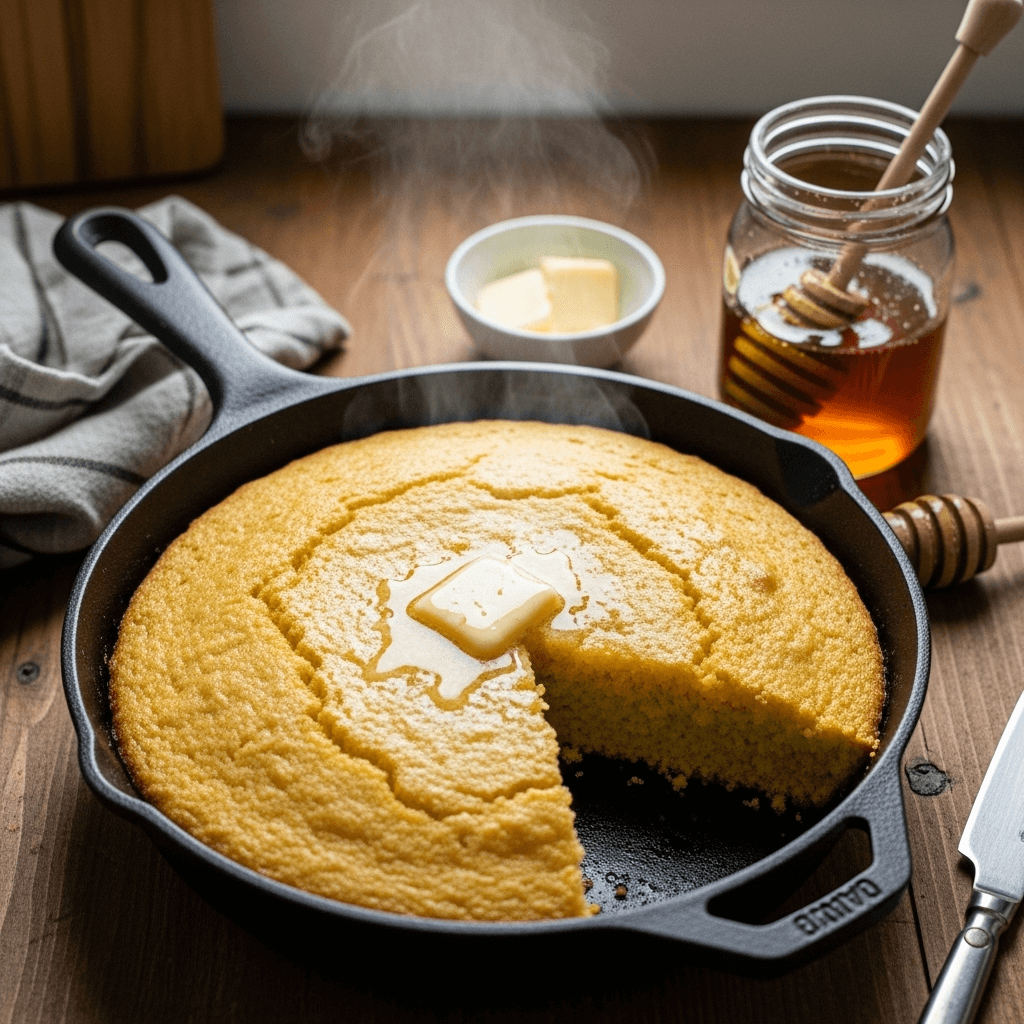

There’s nothing quite like a slice of warm, golden cornbread fresh from the oven—with its crispy, buttery crust, tender crumb, and that perfect balance of sweet and savory flavors. This easy Southern cornbread recipe creates the ultimate comfort food side dish that pairs beautifully with chili, barbecue, fried chicken, soups, and just about any hearty meal you can imagine!
What makes this homemade cornbread truly special is its incredible versatility and crowd-pleasing appeal. It’s perfect for weeknight dinners when you need a quick side dish, ideal for holiday gatherings and potlucks, essential for traditional Southern meals, wonderful for soaking up pot liquor and stews, and makes the best base for cornbread dressing. This classic cornbread works for any occasion—from casual family dinners to impressive holiday feasts.
The beauty of this simple cornbread recipe lies in its perfect texture and rich corn flavor. Not too sweet, not too dry, with crispy edges from baking in a hot cast iron skillet and a tender, moist interior that practically melts in your mouth. Once you try this homemade Southern cornbread, you’ll never reach for a boxed mix again. The golden color, buttery aroma, and authentic corn taste make it truly irresistible!
History / Background
Cornbread has deep roots in American history, particularly in the South, where it’s been a staple food for hundreds of years. The story of cornbread begins with Native Americans, who were cultivating corn (maize) and making various corn-based breads long before European settlers arrived in the Americas.
Native Americans taught early colonists how to grow corn and prepare it in various ways, including grinding dried corn into cornmeal and mixing it with water to create simple flatbreads cooked over open fires or on hot stones. These early versions were quite different from the cornbread we know today—they contained no wheat flour, leavening agents, eggs, or dairy since these ingredients weren’t readily available or part of indigenous cuisine.
As European settlers, particularly in the Southern colonies, adopted corn as a staple crop, cornbread evolved. The hot, humid climate of the South made wheat difficult to grow, but corn thrived. This made cornmeal an essential, affordable ingredient in Southern cooking. Enslaved Africans and their descendants contributed significantly to Southern cornbread traditions, developing techniques and recipes that would become foundational to Southern cuisine.
The regional variations in American cornbread tell an interesting story about cultural preferences and ingredient availability. Southern cornbread traditionally contains little to no sugar, focusing on the natural corn flavor, and is often baked in a cast iron skillet for maximum crispiness. Northern cornbread tends to be sweeter, cake-like, and more yellow due to the addition of sugar and sometimes wheat flour. This North-South divide in cornbread preferences remains strong to this day, with passionate debates about which style is “authentic.”
The introduction of commercial baking powder in the 1850s revolutionized cornbread, allowing it to rise and become lighter and more tender. Before this, cornbread relied on eggs for leavening or was made as a dense flatbread. The invention of self-rising cornmeal mixes in the early 1900s made cornbread even more accessible and convenient for home cooks.
Cornbread became even more important during the Great Depression and World War II when wheat flour was expensive or rationed. Families relied on cornmeal as an economical way to make filling bread to accompany meals. This cemented cornbread’s place as comfort food associated with resourcefulness and home cooking.
In Southern culture, cornbread holds almost sacred status. It’s the traditional accompaniment to dishes like collard greens, black-eyed peas, barbecue, chili, and fried catfish. Crumbled cornbread forms the base of Southern cornbread dressing (similar to Northern stuffing but distinctly different), which is essential for Thanksgiving and Christmas dinners. The pot liquor (cooking liquid) from greens is meant to be soaked up with cornbread, creating a beloved culinary ritual.
Today, cornbread remains a beloved staple across America, with countless regional and family variations. From jalapeño cheddar cornbread to honey butter cornbread to Mexican-inspired versions with corn kernels and peppers, this humble bread continues to evolve while maintaining its status as ultimate comfort food.
Why You’ll Love This Recipe
This classic Southern cornbread will quickly become your go-to recipe for any meal that needs the perfect side dish. Here’s why this easy cornbread recipe is absolutely irresistible:
This moist, golden cornbread delivers authentic Southern flavor with a perfect balance of sweet and savory, a tender crumb that’s never dry or crumbly, and those irresistibly crispy, buttery edges that come from baking in a hot cast iron skillet. Every bite has that genuine corn taste that makes you want another slice!
- Incredibly Easy: Simple one-bowl recipe with basic pantry ingredients—no complicated techniques or special skills required.
- Ready in 30 Minutes: From mixing bowl to your table in just half an hour—perfect for busy weeknights.
- Perfect Texture: Moist and tender inside with crispy, golden edges—the ideal cornbread texture everyone loves.
- Not Too Sweet: Traditional Southern-style with just a hint of sweetness that lets the corn flavor shine through.
- Budget-Friendly: Uses inexpensive pantry staples to feed a crowd for just dollars.
- Versatile Side Dish: Pairs beautifully with chili, barbecue, fried chicken, soups, stews, and countless other meals.
- Cast Iron Magic: Baking in a preheated cast iron skillet creates that signature crispy bottom and edges.
- Crowd-Pleasing: Universally loved by kids and adults alike—always gets requests for seconds!
- Better Than Boxed Mix: Infinitely more flavorful and fresher-tasting than store-bought mixes with artificial ingredients.
- Customizable: Easily adapted with mix-ins like jalapeños, cheese, corn kernels, or honey for endless variations.
- Makes Great Leftovers: Tastes delicious reheated and perfect for making cornbread dressing or croutons.
- Southern Authenticity: This is the real deal—traditional Southern cornbread the way it’s meant to be made!
Ingredient Notes
Let’s explore what makes this cornbread so perfectly moist, flavorful, and delicious:
Cornmeal: The star ingredient! Use medium-grind yellow or white cornmeal for best texture. Yellow cornmeal creates that classic golden color, while white cornmeal is traditional in some Southern regions and has a slightly more delicate flavor. Stone-ground cornmeal has the best flavor but coarser texture. Avoid instant or self-rising cornmeal for this recipe.
All-Purpose Flour: Adds structure and helps create a tender crumb. The combination of cornmeal and flour creates better texture than cornmeal alone, which can be too crumbly. You can use all cornmeal for a more traditional, denser version if you prefer.
Baking Powder: Provides the leavening that makes cornbread rise and become light and fluffy. Make sure yours is fresh (check the expiration date) or your cornbread will be dense and flat.
Baking Soda: Works with the buttermilk to create additional rise and tender texture. Don’t skip this even though it’s a small amount!
Salt: Essential for enhancing all the flavors. Cornbread without enough salt tastes flat and bland.
Sugar: This recipe uses a moderate amount for slightly sweet cornbread. For traditional savory Southern style, reduce to 2 tablespoons or omit entirely. For sweeter Northern-style, increase to ½ cup.
Buttermilk: The secret to moist, tender cornbread! The acidity tenderizes the gluten and reacts with baking soda for extra lift. It also adds tangy flavor. Don’t have buttermilk? Make your own by adding 1 tablespoon lemon juice or vinegar to 1 cup of milk and letting it sit 5 minutes.
Eggs: Bind the ingredients together and add richness and structure. Use large eggs at room temperature for best results.
Butter: Melted butter adds rich flavor and moisture. Use real butter, not margarine, for the best taste. You’ll also need extra butter for greasing the skillet.
Vegetable Oil: Adding a bit of oil along with butter keeps the cornbread extra moist. The oil doesn’t solidify when cooled like butter does, maintaining soft texture.
Substitutions: For dairy-free, use non-dairy milk with vinegar instead of buttermilk, and coconut oil or more vegetable oil instead of butter. For gluten-free, replace flour with gluten-free 1:1 baking flour or use all cornmeal (texture will be more crumbly). For vegan, use flax eggs (2 tablespoons ground flaxseed + 6 tablespoons water) and plant-based milk and butter.
Equipment Needed
You’ll need just basic baking equipment to make perfect cornbread:
- 9 or 10-Inch Cast Iron Skillet: Traditional and highly recommended! Cast iron creates those crispy edges and distributes heat evenly. A well-seasoned skillet prevents sticking.
- Alternative Baking Dish: If you don’t have cast iron, use a 9×9-inch square baking pan, 8×8-inch pan, or 9-inch round cake pan. Grease very well!
- Large Mixing Bowl: For mixing dry ingredients.
- Medium Mixing Bowl: For mixing wet ingredients.
- Measuring Cups and Spoons: Accurate measurements are important in baking for consistent results.
- Whisk: For mixing both dry and wet ingredients smoothly.
- Rubber Spatula or Wooden Spoon: For folding wet and dry ingredients together gently.
- Small Saucepan or Microwave-Safe Bowl: For melting butter.
- Oven Mitts: For handling the hot cast iron skillet safely.
- Cooling Rack: For cooling cornbread after baking.
- Toothpick or Cake Tester: For testing doneness.
Southern Cornbread
- Total Time: 30 minutes
- Yield: 8-10 servings
- Diet: Vegetarian
Ingredients
This classic Southern cornbread is perfectly moist with crispy, buttery edges! Golden, tender, and slightly sweet with authentic corn flavor. Baked in cast iron for that signature crust. Ready in just 30 minutes—perfect for any meal!
Instructions
Dry Ingredients:
- 1 cup (140g) yellow cornmeal (medium grind)
- 1 cup (125g) all-purpose flour
- ¼ cup (50g) granulated sugar (reduce to 2 tablespoons for less sweet)
- 1 tablespoon baking powder
- ½ teaspoon baking soda
- ½ teaspoon salt
Wet Ingredients:
- 1 cup (240ml) buttermilk, at room temperature
- 2 large eggs, at room temperature
- ¼ cup (60g) unsalted butter, melted and slightly cooled
- ¼ cup (60ml) vegetable oil
For the Skillet:
- 2 tablespoons butter or vegetable oil, for greasing the pan
Notes
- Preheat Oven and Skillet: Preheat your oven to 400°F (200°C). Place a 9 or 10-inch cast iron skillet in the oven while it preheats—this is crucial for creating that crispy crust! If using a baking pan instead, grease it generously with butter and skip the preheating step.
- Mix Dry Ingredients: In a large mixing bowl, whisk together the cornmeal, flour, sugar, baking powder, baking soda, and salt until well combined with no lumps. Make sure all the leavening agents are evenly distributed.
- Mix Wet Ingredients: In a medium bowl, whisk together the buttermilk, eggs, melted butter, and vegetable oil until smooth and well combined. The mixture should be uniform with no visible egg whites.
- Combine Wet and Dry: Pour the wet ingredients into the dry ingredients. Using a rubber spatula or wooden spoon, gently fold the mixture together just until combined. The batter should be slightly lumpy—do NOT overmix! A few flour streaks are fine. Overmixing creates tough, dense cornbread.
- Prepare Hot Skillet: Carefully remove the hot cast iron skillet from the oven using oven mitts. Add 2 tablespoons of butter to the hot skillet and swirl it around to coat the bottom and sides completely as it melts and sizzles. The butter should sizzle and foam—this is good!
- Pour Batter: Immediately pour the cornbread batter into the hot, buttered skillet. Use your spatula to spread it evenly if needed. The edges will begin to sizzle immediately—this creates that crispy crust!
- Bake: Place the skillet in the preheated 400°F oven. Bake for 18-22 minutes, or until the top is golden brown, the edges are pulling away from the sides slightly, and a toothpick inserted in the center comes out clean or with just a few moist crumbs (not wet batter). The top should spring back when lightly touched.
- Cool Slightly: Remove from oven and let the cornbread cool in the skillet for 5-10 minutes. This allows it to set and makes cutting easier. The residual heat continues cooking it slightly.
- Serve: Cut into wedges (if using a skillet) or squares (if using a baking pan). Serve warm with butter, honey, or your favorite toppings. Cornbread is best enjoyed fresh and warm!
- Prep Time: 10 minutes
- Cook Time: 20 minutes
- Category: Bread
- Method: Baking
- Cuisine: Southern
Nutrition
- Serving Size: 1 piece (⅛ of recipe)
- Calories: 235
- Sugar: 8g
- Sodium: 320mg
- Fat: 11g
- Saturated Fat: 4g
- Unsaturated Fat: 6g
- Trans Fat: 0g
- Carbohydrates: 29g
- Fiber: 2g
- Protein: 5g
- Cholesterol: 60mg
Tips & Variations
Customize this classic cornbread recipe with these delicious variations:
Jalapeño Cheddar Cornbread: Add 1 cup shredded sharp cheddar cheese and 2-3 diced jalapeños (seeded for less heat) to the batter for a spicy, cheesy version perfect with chili.
Sweet Honey Cornbread: Increase sugar to ½ cup and add 2 tablespoons honey to the wet ingredients for sweeter, more cake-like cornbread. Brush with melted honey butter after baking.
Mexican-Style Cornbread: Add 1 cup corn kernels, ½ cup diced green chiles, 1 cup shredded cheese, and ½ teaspoon cumin for a Tex-Mex twist.
Bacon Cornbread: Fold in ½ cup crumbled cooked bacon and 2 tablespoons reserved bacon fat (reduce butter slightly) for smoky, savory cornbread.
Blueberry Cornbread: Increase sugar to ½ cup and gently fold in 1 cup fresh or frozen blueberries for a breakfast treat. Drizzle with honey.
Herb Cornbread: Add 2 tablespoons fresh chopped herbs (rosemary, thyme, chives, or sage) and reduce sugar to 2 tablespoons for savory herbed cornbread.
Buttermilk Biscuit Cornbread: Use all buttermilk (1½ cups) for ultra-tangy, tender cornbread with biscuit-like texture.
Skillet Cornbread Muffins: Divide batter among greased muffin tins and bake at 400°F for 12-15 minutes for individual servings.
Cornbread Sticks: Bake in a greased cast iron cornbread stick pan for fun individual portions with maximum crispy surface area.
Gluten-Free Cornbread: Replace flour with gluten-free 1:1 flour blend or use 2 cups cornmeal total (texture will be more crumbly but still delicious).
Vegan Cornbread: Use plant-based milk with 1 tablespoon vinegar, flax eggs (2 tablespoons ground flaxseed + 6 tablespoons water), and vegan butter.
Pro Chef Tips
Elevate your cornbread from good to absolutely perfect with these professional techniques:
Preheat That Skillet: This is the number one secret to crispy-edged Southern cornbread! The hot cast iron creates an immediate sear on the batter, forming that signature golden crust. Don’t skip this step—it’s what makes skillet cornbread special.
Use Fresh Leavening Agents: Baking powder and baking soda lose potency over time. Check expiration dates! To test baking powder: drop ½ teaspoon in hot water—it should fizz vigorously. Old leavening = flat, dense cornbread.
Don’t Overmix the Batter: This is crucial! Mix just until dry ingredients are moistened. The batter should be lumpy, not smooth. Overmixing develops gluten in the flour, creating tough, chewy cornbread instead of tender crumb. A few flour streaks are perfectly fine.
Room Temperature Ingredients: Cold buttermilk and eggs don’t mix as smoothly and can create lumps or uneven texture. Let them sit at room temperature for 20-30 minutes before starting, or warm buttermilk gently in the microwave for 15-20 seconds.
The Right Cornmeal Matters: Medium-grind cornmeal works best for balanced texture. Fine cornmeal creates cake-like texture; coarse creates grainy texture. Stone-ground cornmeal has superior flavor but shorter shelf life—store it in the refrigerator or freezer.
Buttermilk is Non-Negotiable: The acidity of buttermilk is essential for tender texture and tangy flavor. It reacts with baking soda to create lift and tenderizes the gluten. Regular milk doesn’t provide the same results.
Watch the Oven: Cornbread can go from perfect to overbaked quickly. Start checking at 18 minutes. It’s done when golden brown on top, edges pull away slightly, and a toothpick comes out with moist crumbs (not wet batter). Overbaked = dry cornbread.
Let It Rest: Resist cutting immediately! Let cornbread rest in the skillet for 5-10 minutes after baking. This allows the structure to set, prevents crumbling, and makes slicing much easier.
Season Your Cast Iron: A well-seasoned cast iron skillet prevents sticking and adds flavor. If your cornbread sticks, your skillet needs more seasoning. Greasing with butter helps, but a properly seasoned skillet is key.
Adjust Sugar to Taste: Southerners often use no sugar (or just 1-2 tablespoons), while Northerners prefer sweeter cornbread (up to ½ cup). Start with ¼ cup, then adjust in future batches to your family’s preference.
Common Mistakes to Avoid
Even simple recipes can go wrong. Here are the most common cornbread pitfalls:
Overmixing the Batter: This is the number one mistake that ruins cornbread! When you mix too much, you develop the gluten in the flour, creating tough, chewy, dense cornbread instead of tender, delicate crumb. Mix just until dry ingredients are moistened—lumpy batter is perfect! Stop the moment you don’t see big pockets of dry flour.
Using Cold Ingredients: Cold buttermilk and eggs don’t blend smoothly into the batter, creating lumps and uneven texture. They also lower the batter temperature, affecting how the cornbread bakes. Always use room temperature dairy and eggs for best results.
Skipping the Hot Skillet: If you pour batter into a cold or warm (not hot) skillet, you won’t get those signature crispy edges and bottom that make cast iron cornbread special. The skillet must be preheated and sizzling hot when the batter hits it.
Overbaking: Cornbread continues cooking from residual heat after you remove it from the oven, so take it out when it’s just done—golden on top with slightly moist crumbs on a toothpick. Overbaked cornbread is dry and crumbly. Better to slightly underbake than overbake!
Using Old Cornmeal: Cornmeal can go rancid, especially stone-ground varieties, creating off flavors. Store cornmeal in the refrigerator or freezer for longer shelf life. Smell it before using—it should smell fresh and slightly sweet, not musty or bitter.
Wrong Pan Size: Using a pan that’s too large spreads batter thin, creating dry, over-browned cornbread. Too small creates thick, under-baked centers. Stick to 9-10 inch cast iron or 8×8 to 9×9 inch baking pans for this recipe.
Not Greasing Adequately: Even in well-seasoned cast iron, butter is needed to prevent sticking. If using a baking pan, grease very generously—cornbread can stick stubbornly. The hot butter in cast iron not only prevents sticking but adds incredible flavor.
Storage & Meal Prep
Keep your homemade cornbread fresh and delicious with these storage tips:
Room Temperature Storage: Store completely cooled cornbread wrapped tightly in plastic wrap or aluminum foil, or in an airtight container at room temperature for 2-3 days. Cornbread dries out relatively quickly, so airtight storage is important.
Refrigerator Storage: For longer storage, refrigerate wrapped cornbread for up to 5-7 days. The cold temperature can dry it out slightly, so wrap it very well. Bring to room temperature or warm before serving for best texture.
Keeping Cornbread Moist: To prevent drying, place a paper towel in the storage container to absorb excess moisture (which can make cornbread soggy) while keeping it from drying out completely. Replace the paper towel daily if storing for multiple days.
Reheating Individual Pieces: Wrap individual slices in damp paper towel and microwave for 15-20 seconds until warm. The moisture from the paper towel keeps cornbread from drying out. You can also toast slices in a toaster or toaster oven for crispy edges.
Reheating Whole Cornbread: Wrap cornbread in aluminum foil and warm in a 300°F oven for 10-15 minutes until heated through. For crispy edges, unwrap for the last 5 minutes. Brush with melted butter for extra moisture and flavor.
Freezing Cornbread: Cornbread freezes beautifully for up to 3 months! Wrap cooled cornbread tightly in plastic wrap, then aluminum foil, or place in a freezer-safe zip-top bag. Label with the date.
Thawing Frozen Cornbread: Thaw at room temperature for 2-3 hours, or overnight in the refrigerator. Reheat as directed above. You can also reheat from frozen—wrap in foil and warm in a 325°F oven for 20-25 minutes.
Day-Old Cornbread Uses: Slightly stale cornbread is perfect for cornbread dressing/stuffing, croutons for salads or soup, bread pudding, or crumbling into chili or soup. Don’t throw it away!
Make-Ahead & Freezer Notes
Cornbread is perfect for advance preparation:
Make-Ahead for Same Day: Bake cornbread up to 8 hours ahead and leave at room temperature, wrapped loosely in foil. Reheat wrapped in foil in a 300°F oven for 10 minutes before serving. It will taste freshly baked!
Make Batter Ahead: You can mix the wet and dry ingredients separately up to 1 day ahead and store covered in the refrigerator. When ready to bake, bring wet ingredients to room temperature, combine them, and bake immediately. Don’t let mixed batter sit—the leavening agents activate when wet meets dry.
Freezing Baked Cornbread (Best Method): Bake completely, cool, wrap tightly in plastic wrap then foil, and freeze for up to 3 months. Thaw overnight in refrigerator or at room temperature for 2-3 hours, then reheat wrapped in foil at 300°F for 15 minutes.
Freezing in Portions: Cut cornbread into individual portions, wrap each piece separately in plastic wrap, then place all wrapped pieces in a freezer bag. This allows you to thaw and reheat just what you need for single servings.
Par-Baking for Freezing: For fresher taste, bake cornbread at 375°F for only 12-15 minutes until just barely set but not browned. Cool, wrap, and freeze. When ready to serve, unwrap and bake frozen at 350°F for 15-20 minutes until golden and heated through.
Cornbread Dressing Prep: If making cornbread specifically for holiday dressing, bake it 1-2 days ahead and let it stale slightly—this actually creates better dressing! Store loosely covered at room temperature to dry out, which helps it absorb flavors better.
Quick Thaw Method: Need cornbread fast? Unwrap frozen cornbread, wrap in damp paper towel, and microwave in 30-second intervals until thawed and warm. Not as crispy as oven method but perfectly serviceable in a pinch.
Serving Suggestions
This versatile cornbread pairs beautifully with countless dishes:
Classic Southern Pairings: Serve with chili, barbecue ribs or pulled pork, fried chicken, collard greens, black-eyed peas, pinto beans, or any traditional Southern meal.
Soups and Stews: Perfect alongside chicken noodle soup, beef stew, potato soup, tomato soup, vegetable soup, or gumbo for soaking up delicious broth.
Breakfast: Serve with butter and honey or maple syrup for a sweet breakfast treat. Toast leftovers and top with jam or peanut butter.
With Butter and Honey: The classic way to eat cornbread! Slather warm cornbread with butter and drizzle with honey—simple perfection.
Chili Topping: Crumble cornbread over a bowl of chili instead of crackers for a hearty, filling meal.
BBQ Side: Essential at any barbecue alongside coleslaw, baked beans, mac and cheese, and potato salad.
Holiday Tables: Traditional for Thanksgiving and Christmas in the South, often used to make cornbread dressing.
With Greens: The traditional way to eat collard greens, turnip greens, or mustard greens is with cornbread for sopping up the pot liquor.
Breakfast Sandwich: Split cornbread horizontally and fill with scrambled eggs, bacon, and cheese for a Southern breakfast sandwich.
Beverage Pairing: Serve with sweet tea, lemonade, buttermilk (traditional!), cold milk, or for adults, beer or bourbon.
Crumble Over Casseroles: Use cornbread as a topping for casseroles instead of bread crumbs for added flavor and texture.
FAQs Section
Why is my cornbread dry and crumbly?
Dry cornbread usually results from overbaking, too much cornmeal-to-flour ratio, or not enough liquid/fat. Make sure you’re measuring accurately (use the spoon-and-level method for flour and cornmeal), don’t overbake (remove when a toothpick has moist crumbs, not clean), and ensure you’re using both butter and oil as written—they both contribute to moisture. Buttermilk is also essential for moisture.
Can I make cornbread without buttermilk?
While buttermilk creates the best texture and flavor, you can substitute with regular milk plus acid. Add 1 tablespoon of lemon juice or white vinegar to 1 cup of milk, stir, and let sit for 5-10 minutes until it curdles slightly. This creates “sour milk” that mimics buttermilk’s acidity and will work similarly in the recipe.
Do I need a cast iron skillet to make cornbread?
No, though cast iron creates the best crispy edges and authentic texture! You can use a 9×9-inch or 8×8-inch baking pan—just grease it very well with butter and skip the preheating step. Bake at 375°F for 22-25 minutes. Glass or ceramic baking dishes work too but may need adjusted baking time.
How do I prevent cornbread from sticking to the pan?
For cast iron, make sure your skillet is well-seasoned and grease it generously with butter before adding batter. The hot skillet with melted butter should sizzle when batter hits it. For baking pans, grease very liberally with butter or cooking spray, or line with parchment paper. Letting cornbread cool for 5-10 minutes before cutting also helps prevent sticking.
Can I make this cornbread gluten-free?
Yes! Replace the all-purpose flour with a gluten-free 1:1 baking flour blend (like Bob’s Red Mill or King Arthur). The texture will be nearly identical. Alternatively, you can use 2 cups of cornmeal total and omit flour entirely for naturally gluten-free cornbread, though it will be more crumbly and dense—more traditionally Southern!
Why is my cornbread dense instead of fluffy?
Dense cornbread is usually caused by overmixing the batter (which develops gluten), expired baking powder/soda (test yours by dropping in hot water—it should fizz), using too much cornmeal, or not enough liquid. Make sure you’re mixing gently just until combined, using fresh leavening agents, and measuring accurately.
How sweet should cornbread be?
This is hotly debated! Traditional Southern cornbread has little to no sugar (0-2 tablespoons), letting the corn flavor shine and making it more versatile for savory meals. Northern-style cornbread is sweeter (up to ½ cup sugar), more cake-like. This recipe uses ¼ cup as a middle ground. Adjust to your family’s taste—it’s your kitchen, your rules!
Conclusion
There’s something deeply satisfying about a slice of warm, golden cornbread fresh from a sizzling cast iron skillet—the crispy, buttery edges, the tender crumb, and that authentic corn flavor that tastes like home. This easy Southern cornbread recipe proves that the simplest foods, made with basic ingredients and a bit of technique, often become the most beloved dishes on our tables.
Whether you’re making this classic cornbread to accompany a pot of chili on a cold night, serving it at a backyard barbecue alongside ribs and coleslaw, preparing it for a holiday feast where it will become cornbread dressing, or simply enjoying it warm with butter and honey as a comforting snack, this recipe delivers perfect results every single time. The homemade version tastes infinitely better than any boxed mix with its fresh corn flavor and tender texture.
The best part? This cornbread is incredibly easy to make and endlessly adaptable. Add jalapeños and cheese for spicy kick, fold in bacon for smoky richness, or keep it classic and simple—however you make it, cornbread brings warmth and comfort to any meal. With a batch in your freezer, you’re always ready to round out dinner with a delicious homemade bread.
Now it’s your turn to fill your kitchen with the irresistible aroma of fresh-baked cornbread! I promise that once your family tastes this golden, tender, perfectly crispy cornbread, they’ll request it again and again.