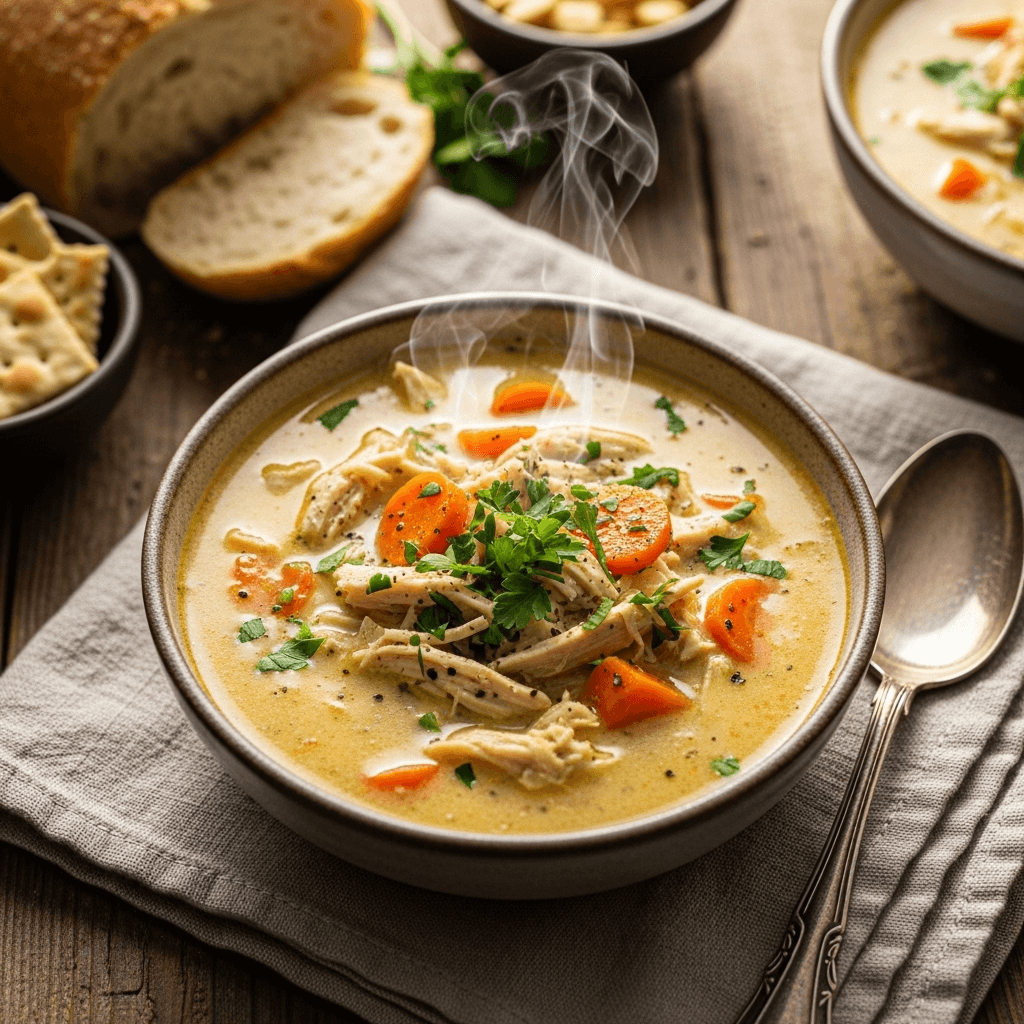

There’s something truly magical about a bowl of homemade creamy chicken soup that warms you from the inside out and makes everything feel better. This creamy chicken soup recipe is pure comfort in a bowl – rich, velvety, packed with tender chicken, hearty vegetables, and swimming in the most delicious, silky broth that’s perfectly seasoned and utterly satisfying.
Unlike traditional clear chicken soup, this creamy version is luxuriously rich and filling enough to be a complete meal on its own. We’re talking about chunks of juicy chicken breast, tender carrots, celery, and onions, all enveloped in a luscious cream-based broth that’s thickened just right – not too thin and not overly thick like a stew. Every spoonful delivers that perfect combination of creamy comfort and hearty substance that makes you want to curl up under a blanket and savor every bite.
This creamy chicken soup is incredibly versatile and perfect for countless occasions. It’s the ultimate remedy when you’re feeling under the weather – that healing bowl of soup your mom would make. It’s ideal for cold winter evenings when you need something warming and substantial. Serve it for casual family dinners, bring it to potlucks where it’s always a hit, or make a big batch for meal prep to have cozy lunches ready all week. It’s also elegant enough to serve as a first course at dinner parties when ladled into beautiful bowls and garnished with fresh herbs.
What makes this recipe truly special is how it achieves restaurant-quality creaminess without being heavy or overwhelming. The secret lies in the combination of chicken broth, heavy cream, and a touch of flour to create that perfect silky texture. It’s rich enough to feel indulgent but balanced enough that you can enjoy a full bowl without feeling weighed down. Plus, it comes together in just about 45 minutes, making it accessible for busy weeknights.
History / Background
Cream-based soups have a long and storied history across multiple cuisines, but creamy chicken soup as we know it today is primarily an American comfort food classic with roots in European culinary traditions. The concept of enriching soup with cream dates back centuries to French cuisine, where cream has long been used to create luxurious, velvety textures in dishes like crème-based soups and bisques.
In America, chicken soup has been considered a healing food since colonial times. The tradition of serving chicken soup to sick family members likely came from European Jewish communities, where chicken soup (often called “Jewish penicillin”) was believed to have medicinal properties. While traditional Jewish chicken soup is clear and brothy, American home cooks began adapting the concept, creating richer, creamier versions that were more filling and substantial.
The creamy chicken soup we love today really gained popularity in the mid-20th century, particularly during the 1950s and 1960s when convenience foods and canned cream soups became household staples. Campbells condensed cream of chicken soup, introduced in 1947, became a kitchen staple that inspired home cooks to create their own creamy chicken soups from scratch. The cream-of-soup trend influenced American home cooking significantly, leading to the development of countless creamy soup recipes.
Regional variations emerged across the United States. In the Midwest, creamy chicken soups often included egg noodles or wild rice, creating hearty one-pot meals perfect for cold winters. Southern cooks might add a touch of hot sauce or incorporate vegetables like corn. New England versions sometimes included potatoes, drawing inspiration from clam chowder traditions. Each region adapted the basic concept to local tastes and available ingredients.
The beauty of this creamy chicken soup is how it manages to be both simple and special at the same time. With just one pot and about 45 minutes, you can create something that tastes like it simmered all day. It’s the kind of recipe that becomes part of your regular rotation because it’s easy enough for busy weeknights yet impressive enough to serve to guests. Plus, it makes fantastic leftovers that taste even better the next day as the flavors continue to develop.
Whether you’re making this soup to comfort a sick loved one, warm up on a cold winter evening, feed your family a nutritious dinner, or simply because you’re craving something cozy and delicious, this recipe won’t disappoint. The combination of tender chicken, vegetables, and that silky cream-based broth creates pure magic in a bowl that everyone will love.
I hope this creamy chicken soup brings as much warmth and comfort to your table as it does to mine! It’s been a family favorite for years, requested on cold days, sick days, and any day someone needs a little extra comfort. The recipe is forgiving, easily customizable, and virtually foolproof once you know the basic techniques.
I’d love to hear how your soup turns out! Did you add any special touches or variations? What did you serve it with? Leave a comment below sharing your experience, and if this became a hit in your household, please give it a five-star rating. Don’t forget to save this recipe to your Pinterest boards so you can easily find it whenever that soup craving hits. Share it with friends and family who could use some homemade comfort in their lives. Happy cooking, and stay cozy!
Why You’ll Love This Recipe
This creamy chicken soup recipe has been perfected through countless batches to deliver the absolute best flavor, texture, and ease of preparation. What sets it apart is the perfect balance – it’s rich and creamy without being heavy, packed with vegetables and protein without being chunky or overstuffed, and deeply flavorful without relying on complicated ingredients or techniques.
The magic happens in how the soup develops its flavor. By sautéing the vegetables first, you build a foundation of aromatic sweetness. The chicken poaches directly in the broth, infusing it with deep flavor while staying incredibly tender and moist. The cream is added at the end to create that signature silky texture without curdling or separating. The result is a soup that tastes like it simmered for hours but actually comes together in less than an hour.
Here’s why this creamy chicken soup will become a staple in your kitchen:
- Quick and easy – ready in about 45 minutes from start to finish with straightforward steps
- One-pot meal – everything cooks in a single pot, minimizing cleanup and hassle
- Comfort food at its finest – warm, creamy, and deeply satisfying in every way
- Family-friendly – kids and adults alike love this mild, creamy soup
- Budget-friendly – uses affordable, accessible ingredients without compromising flavor
- Versatile and customizable – easily adapt with different vegetables, proteins, or seasonings
- Perfect for meal prep – makes a large batch that reheats beautifully for easy lunches
- Freezer-friendly – can be frozen for up to 3 months (with a small adjustment)
- Naturally gluten-free option – easily made gluten-free with a simple flour substitute
- Protein-packed and filling – substantial enough to be a complete meal
- Restaurant-quality results – tastes like something you’d order at a cozy bistro
- Healing and nourishing – perfect for cold days, sick days, or anytime you need comfort
Ingredient Notes
Understanding your ingredients helps create the best possible soup. Here’s what you’ll need:
Chicken Breast: Boneless, skinless chicken breasts are the foundation of this soup. They’re lean, cook quickly, and shred beautifully. You’ll need about 1 to 1.5 pounds for a hearty soup. Chicken thighs can substitute for juicier, more flavorful meat, though they take slightly longer to cook. Rotisserie chicken is a fantastic shortcut – just shred 3-4 cups of meat and add it near the end of cooking.
Butter: Creates the flavor base for the soup and helps develop the roux (thickening agent). Unsalted butter is preferred so you can control the salt level precisely. Don’t substitute with margarine – real butter provides irreplaceable flavor. In a pinch, olive oil works but won’t provide the same richness.
Aromatics (Onion, Carrots, Celery): This classic mirepoix (French aromatic vegetable base) builds the flavor foundation. Yellow or white onions add sweet depth, carrots provide natural sweetness and color, and celery adds aromatic complexity. Dice them all to similar sizes (about ½-inch pieces) for even cooking. Pre-diced vegetables from the store work fine if you need to save time.
Garlic: Fresh minced garlic adds pungent, aromatic depth that’s essential for great soup. Use 3-4 cloves depending on your garlic love level. Jarred minced garlic can substitute (about 1 tablespoon) but fresh is significantly better.
All-Purpose Flour: Acts as a thickening agent to create that silky, slightly thick consistency. The flour is cooked with the butter to make a roux, which prevents lumps and provides smooth texture. For gluten-free soup, substitute with cornstarch mixed with cold water, or use a gluten-free flour blend.
Chicken Broth: The liquid base that provides savory depth. Use good quality low-sodium chicken broth so you can control the salt level. Homemade chicken stock is amazing if you have it, but store-bought works perfectly. You’ll need about 6 cups. Vegetable broth can substitute for a lighter soup.
Heavy Cream: Creates the signature creamy, luxurious texture. Heavy cream (also called heavy whipping cream) with at least 36% fat content works best as it won’t curdle when heated. Half-and-half can substitute for a lighter soup, though it won’t be as rich. For dairy-free options, use full-fat coconut cream or cashew cream.
Seasonings: Dried thyme and bay leaves provide aromatic, earthy notes. Salt and black pepper are essential for proper seasoning. Fresh or dried parsley adds color and freshness. These simple seasonings let the chicken and vegetables shine while adding subtle complexity.
Optional Add-ins: Egg noodles or rice make the soup heartier and more filling. Frozen peas or corn add pops of color and sweetness. A splash of white wine adds depth. Fresh herbs like dill or tarragon create different flavor profiles. Lemon juice brightens the finished soup.
Equipment Needed
You’ll need minimal equipment for this one-pot recipe:
- Large heavy-bottomed pot or Dutch oven (5-6 quart capacity) – essential for even heat distribution and preventing burning
- Sharp knife and cutting board – for chopping vegetables and chicken
- Wooden spoon or heat-resistant spatula – for stirring and scraping
- Measuring cups and spoons – for accurate measurements
- Ladle – for serving
- Two forks or meat shredders – for shredding cooked chicken
Optional but helpful:
- Immersion blender (if you want partially blended soup for extra creaminess)
- Fine-mesh strainer (for removing bay leaves)
- Kitchen tongs (for removing chicken from pot)

Creamy Chicken Soup Recipe
- Total Time: 45 minutes
- Yield: 6-8 servings 1x
- Diet: Gluten Free
Description
This comforting creamy chicken soup features tender chicken, hearty vegetables, and a rich, velvety broth. Ready in just 45 minutes, it’s the ultimate one-pot meal that’s perfect for cold days, meal prep, or anytime you need a warm, satisfying bowl of homemade comfort.
Ingredients
- 3 tablespoons unsalted butter
- 1 medium yellow onion, diced (about 1 cup)
- 3 medium carrots, peeled and diced (about 1 cup)
- 3 celery ribs, diced (about 1 cup)
- 3 to 4 cloves garlic, minced
- ¼ cup all-purpose flour (or cornstarch for gluten-free)
- 6 cups low-sodium chicken broth
- 1 to 1.5 pounds boneless, skinless chicken breasts
- 1 teaspoon dried thyme
- 2 bay leaves
- 1 cup heavy cream
- Salt and black pepper, to taste
- 2 tablespoons fresh parsley, chopped (for garnish)
- Optional: 2 cups cooked egg noodles or rice
Instructions
Step 1: Sauté the Vegetables
In a large heavy-bottomed pot or Dutch oven, melt the butter over medium heat. Once melted and foamy, add the diced onion, carrots, and celery. Cook for 6-8 minutes, stirring occasionally, until the vegetables are softened and the onion is translucent. This develops sweetness and creates the flavor foundation for your soup. Add the minced garlic and cook for 1 additional minute, stirring constantly until fragrant. Don’t let the garlic burn.
Step 2: Create the Roux
Sprinkle the flour over the vegetables and stir well to coat everything evenly. Cook for 2-3 minutes, stirring constantly, until the flour is golden and smells slightly nutty. This cooks out the raw flour taste and creates a roux that will thicken your soup beautifully. The mixture will look pasty – this is perfect.
Step 3: Add Broth and Chicken
Gradually pour in the chicken broth, stirring constantly to prevent lumps from forming. Start with about 2 cups and stir well until smooth, then add the remaining broth. Bring the mixture to a gentle boil. Add the whole chicken breasts, dried thyme, and bay leaves. The chicken should be mostly submerged in the liquid. Reduce heat to medium-low and let simmer gently.
Step 4: Simmer and Cook Chicken
Cover the pot partially and simmer for 15-20 minutes, or until the chicken is fully cooked through (internal temperature of 165°F). The exact time depends on the thickness of your chicken breasts. Don’t let it boil vigorously – a gentle simmer keeps the chicken tender and juicy. Stir occasionally to ensure even cooking.
Step 5: Remove and Shred Chicken
Using tongs or a slotted spoon, carefully remove the cooked chicken breasts from the pot and transfer to a cutting board. Let them cool for 2-3 minutes until safe to handle. Using two forks, shred the chicken into bite-sized pieces. The chicken should be tender and easy to shred. Remove and discard the bay leaves from the soup.
Step 6: Add Cream and Chicken
Reduce the heat to low. Stir in the heavy cream until fully incorporated and the soup becomes beautifully creamy and smooth. Return the shredded chicken to the pot and stir to combine. Let the soup warm through for 2-3 minutes, but do not let it boil once the cream is added, as this can cause the cream to separate or curdle.
Step 7: Season and Serve
Taste the soup and season generously with salt and freshly ground black pepper. Start with ½ teaspoon of salt and adjust to your preference. If using, stir in cooked egg noodles or rice at this point. Ladle the creamy chicken soup into bowls and garnish with fresh chopped parsley. Serve immediately while hot.
Notes
- Gluten-free option: Replace flour with 3 tablespoons of cornstarch mixed with ¼ cup cold water. Add this slurry during Step 6 after adding cream, and simmer until thickened.
- Rotisserie chicken shortcut: Skip Step 4 and 5. Add 3-4 cups of shredded rotisserie chicken during Step 6 with the cream.
- Thicker soup: Add an extra 2 tablespoons of flour, or simmer longer to reduce and concentrate.
- Thinner soup: Add more chicken broth (1-2 cups) to reach desired consistency.
- Dairy-free option: Use coconut cream instead of heavy cream for a dairy-free version with slightly different flavor.
- Don’t boil after adding cream: High heat can cause cream to curdle. Keep heat low once cream is added.
- Prep Time: 15 minutes
- Cook Time: 30 minutes
- Category: Soup
- Method: Stovetop
- Cuisine: American
Nutrition
- Serving Size: About 1.5 cups
- Calories: 325
- Sugar: 4g
- Sodium: 480mg
- Fat: 19g
- Saturated Fat: 11g
- Unsaturated Fat: 7g
- Trans Fat: 0g
- Carbohydrates: 14g
- Fiber: 2g
- Protein: 26g
- Cholesterol: 105mg
Tips & Variations
Chicken and Wild Rice Soup:
Add 1 cup of uncooked wild rice blend or brown rice during Step 3 when you add the broth. Increase cooking time by 10-15 minutes to ensure rice is tender. This creates a heartier, more filling soup with wonderful texture contrast. Wild rice adds a nutty flavor that’s especially popular in the Midwest.
Creamy Chicken Noodle Soup:
Cook 8 ounces of egg noodles separately according to package directions. Drain and add to the finished soup just before serving. Cooking noodles separately prevents them from absorbing too much liquid and becoming mushy. This variation is a family favorite that combines two classic comfort foods.
Loaded Chicken Soup:
Add diced potatoes (1-2 cups) during Step 3 with the broth for added heartiness. Stir in 1 cup of frozen corn and 1 cup of frozen peas during Step 6 for extra vegetables and color. Top with crumbled bacon, shredded cheddar cheese, and green onions for a loaded baked potato-inspired version.
Creamy Chicken and Mushroom Soup:
Add 8 ounces of sliced mushrooms (button, cremini, or a mix) along with the other vegetables in Step 1. The mushrooms add earthy depth and meaty texture. Consider adding a splash of white wine during Step 3 for even more sophisticated flavor.
Healthier Lightened-Up Version:
Use olive oil instead of butter, substitute half-and-half or milk for heavy cream (though texture will be thinner), and increase the vegetables. Add extra celery, carrots, and include vegetables like zucchini or spinach. Use chicken thighs for more flavor with less added fat needed.
Italian-Inspired Variation:
Add 1 teaspoon of Italian seasoning instead of thyme, include a 14.5-ounce can of diced tomatoes, and stir in 2 cups of fresh spinach during the last few minutes of cooking. Top with grated Parmesan cheese and serve with crusty bread for dipping.
Lemon Herb Chicken Soup:
Add fresh dill or tarragon instead of thyme for a brighter, more aromatic soup. Finish with 2 tablespoons of fresh lemon juice and lemon zest for tangy brightness that cuts through the richness. This variation is especially refreshing and elegant.
Slow Cooker Method:
Sauté vegetables in butter on the stovetop as directed, then transfer to slow cooker with chicken, broth, and seasonings. Cook on low for 6-7 hours or high for 3-4 hours. Remove chicken, shred, and return to pot. Stir in cream and heat through on high for 15 minutes.
Pro Chef Tips
Tip #1: Build Flavor Through Layering
Great soup isn’t just about throwing ingredients in a pot. The order matters. By sautéing the vegetables first in butter, you caramelize their natural sugars and develop deep, sweet flavors that become the foundation of your soup. This step is crucial and shouldn’t be rushed. Take the full 6-8 minutes to properly soften and lightly brown the vegetables. The garlic goes in last because it burns easily – just 1 minute is enough to release its aromatics without turning bitter.
Tip #2: Master the Roux for Perfect Texture
The roux (flour cooked in fat) is what gives your soup that perfect creamy thickness without graininess. Cook the flour for 2-3 minutes until it smells nutty and looks golden. This removes the raw flour taste that can make soup taste pasty. When adding liquid, do it gradually at first while stirring constantly to prevent lumps. The mixture will look thick and paste-like at first – that’s perfect. It will thin out as you add more broth.
Tip #3: Don’t Overcook the Chicken
Overcooked chicken becomes dry, tough, and stringy even in soup. Simmer gently (not a rolling boil) and check for doneness at 15 minutes if your breasts are thin, 20 minutes if thick. The internal temperature should reach 165°F. The chicken will continue cooking slightly from residual heat after removal. Slightly underdone is better than overdone – you can always return it to the pot, but you can’t reverse dry chicken.
Tip #4: Cream Temperature Matters
Never add cold cream directly to boiling soup – the temperature shock can cause it to curdle. Reduce heat to low before adding cream. Some chefs temper the cream by adding a ladle of hot broth to it first, then slowly stirring that mixture back into the soup. This gradual temperature adjustment prevents curdling. Once cream is added, never let the soup boil again – keep it at a gentle simmer or lower.
Tip #5: Season in Layers and Taste Constantly
Professional chefs season throughout cooking, not just at the end. Add a pinch of salt when sautéing vegetables to help them release moisture. Taste the broth after the chicken cooks and adjust. Taste again after adding cream – cream mellows flavors, so you’ll likely need more salt. Always taste before serving and adjust. Underseasoned soup tastes flat and disappointing no matter how good your technique is.
Tip #6: Use Quality Broth
Your soup is only as good as your broth. Low-sodium is essential so you control salt levels, but beyond that, choose the best quality you can afford. Homemade stock is incredible if you have it. Store-bought bone broth adds extra richness and nutrition. Even boxed broth varies dramatically in quality – read ingredients and choose broths with real chicken as the first ingredient, not just “chicken flavor.”
Common Mistakes to Avoid
Mistake #1: Rushing the Vegetable Sauté
Many home cooks are impatient during the vegetable sautéing step, adding the flour before the vegetables are properly softened. This results in crunchy vegetables in your finished soup and misses out on the caramelized sweetness that develops during proper sautéing. Take the full 6-8 minutes and don’t increase the heat to speed it up – that burns the vegetables rather than softening them.
Mistake #2: Adding Flour Incorrectly
Dumping flour directly into liquid causes instant lumps that are nearly impossible to smooth out. The flour must be cooked with the fat first (creating a roux), then liquid added gradually. Another mistake is not cooking the roux long enough, which leaves a raw flour taste. Cook it for at least 2-3 minutes until golden and nutty-smelling before adding any liquid.
Mistake #3: Boiling the Soup After Adding Cream
High heat causes cream to separate, curdle, or develop an unpleasant grainy texture. Once cream is added, the soup should only be gently warmed, never boiled. If your soup does curdle, you might be able to save it by removing from heat immediately and blending with an immersion blender, but prevention is much better than trying to fix it.
Mistake #4: Not Seasoning Adequately
Cream and flour both mellow flavors significantly, so soup needs generous seasoning. Many home cooks undersalt, resulting in bland, flat-tasting soup no matter how good the ingredients are. Taste multiple times throughout cooking and especially at the end. If your soup tastes boring, it almost always needs more salt. Start conservatively but don’t be afraid to add enough.
Mistake #5: Adding Noodles or Rice Too Early
If you add uncooked noodles or rice directly to the soup and then store leftovers, they continue absorbing liquid and become mushy. The soup turns into a thick, gloppy mess by the next day. Always cook noodles or rice separately and add to individual bowls when serving, or add them only to portions you’ll eat immediately. Store the soup and starch separately for meal prep.
Storage & Meal Prep
Refrigerator Storage:
Store creamy chicken soup in airtight containers in the refrigerator for up to 4 days. The soup will thicken considerably as it cools – this is completely normal. The flour-thickened broth solidifies when cold but returns to proper consistency when reheated. If it seems too thick after refrigeration, simply stir in additional chicken broth or water when reheating until you reach desired consistency.
Reheating Instructions:
Reheat soup gently on the stovetop over medium-low heat, stirring occasionally. Add a splash of chicken broth or cream if it has thickened too much. Heat just until warmed through – don’t boil, especially if reheating the entire batch. For individual portions, microwave on 50% power in 1-minute intervals, stirring between each, until heated through. Always reheat only what you’ll eat.
Meal Prep Strategy:
This soup is ideal for meal prep! Make a full batch on Sunday and portion into individual containers for easy grab-and-go lunches throughout the week. The flavors actually improve after a day as everything melds together. Pack portions with crackers, bread, or keep cooked rice on the side to add when reheating. Some people prefer to keep the chicken and vegetables in the soup but store any noodles separately to maintain the best texture.
Texture Changes:
Cream-based soups naturally separate slightly during storage. This is normal and not harmful. Simply stir well while reheating to recombine. If the soup appears broken or separated after reheating, you can use an immersion blender to quickly pulse it smooth again. The soup may also thicken more than you’d like after refrigeration due to the flour – just thin it with broth.
Make-Ahead & Freezer Notes
Make-Ahead Instructions:
You can prepare this soup through Step 5 (before adding cream) up to 2 days in advance. Store the broth with vegetables and shredded chicken in the refrigerator. When ready to serve, reheat until hot, then add the cream and complete the recipe. This method gives you most of the work done ahead while ensuring the cream stays fresh and doesn’t separate.
Freezing Guidelines:
Creamy soups can be frozen, but there’s a trick: freeze before adding the cream. Prepare the soup through Step 5, cool completely, then freeze in airtight containers or freezer bags for up to 3 months. Thaw overnight in the refrigerator, reheat gently on the stovetop, then stir in fresh heavy cream and heat through. This prevents the cream from separating or becoming grainy during freezing.
Freezing Finished Soup:
If you must freeze soup that already contains cream, it’s possible but texture changes are likely. The cream may separate or become slightly grainy when thawed. Cool completely, freeze in portions for up to 2 months, thaw in the refrigerator overnight, then reheat gently while stirring constantly. You may need to blend with an immersion blender to recombine if separation occurs.
Portioning for Freezing:
Freeze in individual or family-sized portions for maximum convenience. Use freezer-safe containers leaving 1 inch of headspace for expansion, or heavy-duty freezer bags laid flat for space-efficient storage. Label with contents and date. Frozen soup can go straight from freezer to stovetop for reheating – no need to thaw, though it will take longer.
Best Freezer Practices:
Never freeze soup with noodles or rice already added – they become mushy. Always freeze the soup base only and add freshly cooked noodles or rice when reheating. Don’t freeze for longer than 3 months as flavors begin to degrade. Cool soup to room temperature before freezing to prevent large ice crystals that affect texture.
Serving Suggestions
This creamy chicken soup is substantial enough to be a meal on its own, but it pairs beautifully with many accompaniments:
Bread Pairings:
- Crusty artisan bread – perfect for dunking and soaking up every drop
- Homemade biscuits – buttery, flaky biscuits are a classic Southern pairing
- Garlic bread – adds extra flavor and is always a crowd-pleaser
- Cornbread – slightly sweet cornbread complements the savory soup beautifully
- Dinner rolls – soft, pillowy rolls are perfect for a comforting meal
- Grilled cheese sandwiches – the ultimate soup and sandwich combo
Salad Combinations:
Balance the richness of the soup with a fresh, crisp salad:
- Simple mixed green salad with vinaigrette
- Caesar salad with crunchy croutons and parmesan
- Apple walnut salad with blue cheese and honey dressing
- Arugula salad with lemon and shaved parmesan
- Spinach salad with bacon and hard-boiled eggs
Toppings and Garnishes:
Elevate your soup presentation with thoughtful toppings:
- Fresh chopped parsley, dill, or chives
- Crispy croutons or oyster crackers
- Shredded cheddar or parmesan cheese
- Crumbled crispy bacon
- Drizzle of herb oil or truffle oil
- Fresh cracked black pepper
- Dollop of sour cream or Greek yogurt
Complete Meal Ideas:
- Serve the soup with a grilled cheese sandwich and pickle spears
- Pair with a wedge salad and garlic bread for steakhouse-style dinner
- Accompany with chicken salad sandwiches for a double-chicken meal
- Serve as a first course before grilled chicken or fish
Beverage Pairings:
- Crisp white wine like Chardonnay or Sauvignon Blanc
- Light beer or wheat ale
- Iced tea (sweetened or unsweetened)
- Sparkling water with lemon
- Hot tea for extra coziness
FAQs Section
Q: Can I use chicken thighs instead of chicken breasts?
Absolutely! Boneless, skinless chicken thighs are an excellent substitute and many people prefer them for their richer flavor and juicier texture. They’re more forgiving if slightly overcooked and won’t dry out as easily as breasts. Cook them the same way, though they may take 5 extra minutes to reach 165°F. Bone-in, skin-on chicken also works but requires removing bones and skin after cooking.
Q: How do I make this soup thicker or thinner?
To thicken: Add an extra 2 tablespoons of flour during the roux stage, or make a slurry of 2 tablespoons cornstarch mixed with ¼ cup cold water and stir into the soup, simmering until thickened. You can also simmer the soup uncovered longer to reduce and concentrate it. To thin: Simply add more chicken broth (or even water) until you reach desired consistency. Adjust seasoning after thinning.
Q: Can I make this dairy-free or vegan?
For dairy-free: Use olive oil instead of butter and substitute coconut cream (the thick part from a can of full-fat coconut milk) for the heavy cream. The flavor will be slightly different with a hint of coconut, but it’s still delicious. Cashew cream (blended soaked cashews with water) is another excellent dairy-free option that doesn’t add coconut flavor. For fully vegan, replace chicken with chickpeas or white beans and use vegetable broth.
Q: My soup is too salty. How can I fix it?
If you over-salted, add diced raw potatoes and simmer for 15-20 minutes – they absorb excess salt. Remove potatoes before serving or leave them in. Adding more unsalted liquid (broth, cream, or water) dilutes the salt, though you’ll need to add enough to make a difference. Stirring in a splash of cream or a spoonful of sugar can also help balance saltiness. Prevention is easier: always use low-sodium broth and add salt gradually, tasting as you go.
Q: Can I add vegetables other than carrots and celery?
Definitely! This soup is very forgiving. Popular additions include diced potatoes, frozen corn, frozen peas, green beans, mushrooms, or spinach. Add heartier vegetables (potatoes, mushrooms) during Step 3 with the broth so they have time to cook. Quick-cooking vegetables (peas, corn, spinach) should be added during Step 6 so they don’t overcook. Just maintain the general vegetable-to-liquid ratio so the soup doesn’t become too thick.
Q: Why did my cream curdle in the soup?
Curdling happens when cream is subjected to high heat or added to boiling liquid. Always reduce heat to low before adding cream, and never let the soup boil after cream is added. If you added cold cream to very hot soup, the temperature shock can also cause curdling. To prevent this, let cream come to room temperature first, or temper it by whisking in a ladle of hot broth before adding to the pot. If it does curdle, remove from heat immediately and try blending smooth with an immersion blender.
Q: How long does homemade chicken soup last in the refrigerator?
Properly stored in airtight containers, creamy chicken soup lasts 3-4 days in the refrigerator. Always let soup cool to room temperature before refrigerating (within 2 hours of cooking for food safety). If the soup smells off, has mold, or has been stored longer than 4 days, discard it. When reheating, make sure it reaches 165°F throughout. The soup may thicken significantly when cold – this is normal and it will thin out when reheated.
Conclusion
There you have it – the ultimate guide to making the most comforting, delicious, restaurant-quality creamy chicken soup right in your own kitchen! This recipe delivers everything you want in comfort food: rich and creamy texture, tender chicken, hearty vegetables, and that warm, satisfying feeling that makes everything better.