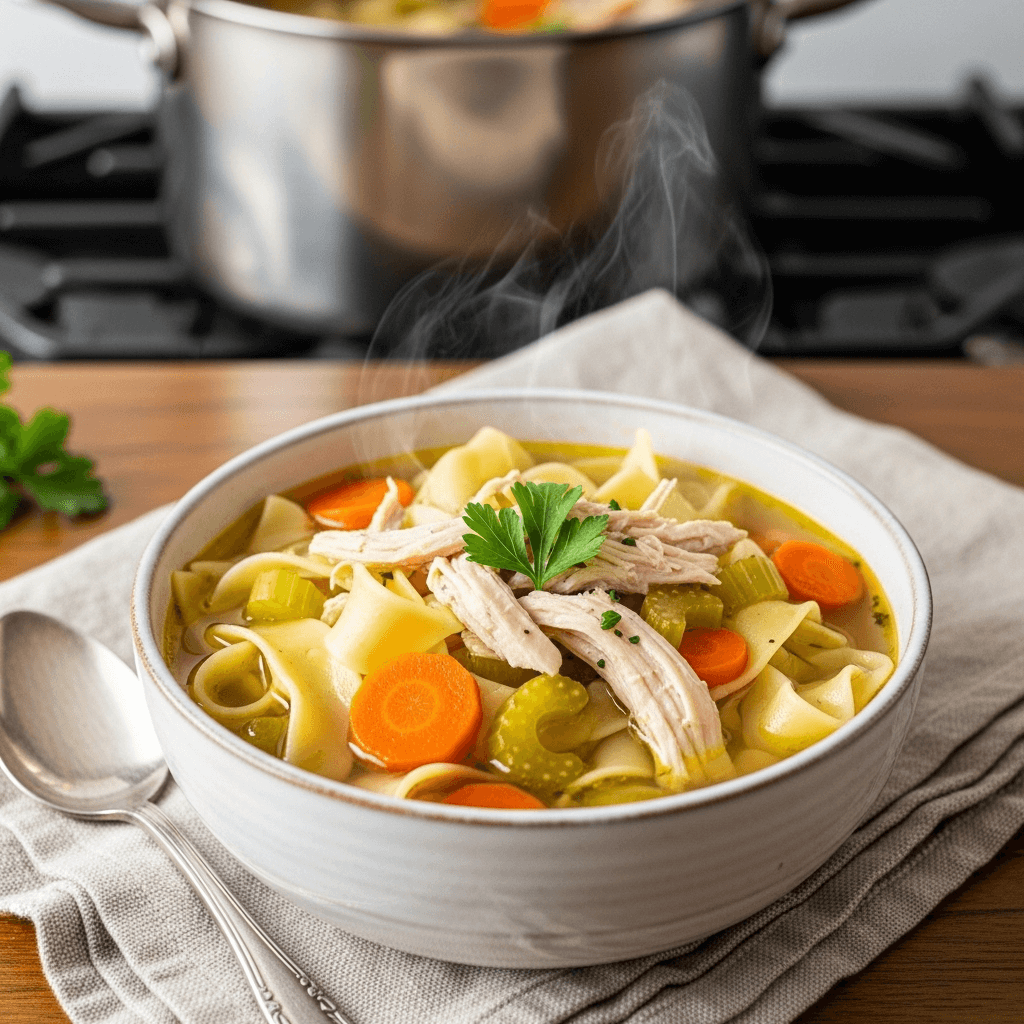

There’s nothing quite as comforting as a steaming bowl of homemade chicken noodle soup—the golden broth, tender pieces of chicken, perfectly cooked noodles, and fresh vegetables all come together to create the ultimate comfort food that warms you from the inside out. This easy chicken noodle soup recipe brings all the cozy, soul-soothing goodness of grandma’s kitchen right to your home, and it’s surprisingly simple to make from scratch with wholesome ingredients!
What makes this classic chicken noodle soup truly special is its incredible versatility and healing properties. It’s perfect for cold and flu season when you need something nourishing and comforting, ideal for chilly winter days when you crave warmth, wonderful for meal prepping healthy lunches for the week, great for using up leftover rotisserie chicken, and it’s the ultimate feel-good food when you’re under the weather or just need a hug in a bowl. This homemade chicken soup works for any occasion—from sick days to busy weeknights to cozy family dinners.
The beauty of this from-scratch chicken noodle soup lies in its healing, nourishing qualities and pure, simple flavors. Tender chicken, wholesome vegetables, and hearty noodles swimming in a rich, flavorful broth create a meal that’s both satisfying and restorative. Once you taste how much better homemade chicken noodle soup is compared to the canned version, you’ll never go back. The aroma alone as it simmers on your stove will make your house smell like home!
History / Background
Chicken noodle soup has a long and fascinating history as one of the world’s most beloved comfort foods, with versions appearing in cultures across the globe for centuries. The concept of chicken soup as healing food dates back to ancient times, with references found in Chinese, Greek, and Roman texts praising its medicinal properties.
The ancient Greek physician Hippocrates, often called the “father of medicine,” reportedly prescribed chicken soup for respiratory ailments and digestive issues around 400 BCE. Ancient Chinese medicine has used chicken soup as a therapeutic food for over 2,000 years, believing in its ability to restore balance and strengthen the body’s qi (life force).
The Jewish community has a particularly strong tradition of chicken soup, affectionately known as “Jewish penicillin,” which has been passed down through generations as both comfort food and medicine. Jewish immigrants brought this tradition to America in the late 19th and early 20th centuries, where it became deeply embedded in American culture as the ultimate sick-day food.
The addition of noodles to chicken soup is believed to have originated in Asia, where noodles have been a staple for thousands of years. As different cultures merged and recipes traveled, the combination of chicken, broth, vegetables, and noodles became a universal comfort food with regional variations worldwide—from Vietnamese pho to Japanese ramen to Italian pastina in brodo.
In America, chicken noodle soup gained widespread commercial popularity when the Campbell Soup Company introduced its condensed version in 1934 during the Great Depression. The affordable, convenient canned soup became a pantry staple in millions of American households. However, homemade versions have always been treasured as superior in both flavor and healing properties.
Scientific research has actually validated what grandmothers knew all along: chicken soup does have therapeutic benefits! Studies have shown that chicken soup can reduce inflammation, ease cold symptoms, provide hydration, deliver essential nutrients, and offer psychological comfort that aids in healing. The warm liquid helps clear nasal congestion, the steam opens airways, the protein supports immune function, and the vegetables provide vitamins and minerals.
Today, chicken noodle soup remains one of the most popular and frequently made soups in American households, particularly during fall and winter months. It represents comfort, care, healing, and home—transcending its simple ingredients to become food for both body and soul.
Why You’ll Love This Recipe
This homemade chicken noodle soup will quickly become your go-to comfort food recipe for cold days, sick days, and any time you need something nourishing and delicious. Here’s why this easy chicken soup recipe is absolutely irresistible:
This classic chicken noodle soup delivers pure comfort with its rich, golden broth, tender chunks of chicken, perfectly cooked egg noodles, and fresh vegetables in every spoonful. It tastes like a warm hug from grandma—wholesome, healing, and made with love. The flavors are clean and bright, allowing each ingredient to shine while creating a harmonious, soul-satisfying bowl of goodness.
- Truly Healing and Comforting: The ultimate sick-day food that actually helps you feel better—scientifically proven to reduce cold symptoms!
- Easy to Make: Surprisingly simple with straightforward steps—no complicated techniques or hard-to-find ingredients required.
- Budget-Friendly: Uses affordable ingredients like chicken, vegetables, and noodles to feed a family economically.
- Customizable: Easily adapted to your preferences—use different vegetables, noodles, or even substitute turkey.
- Perfect for Meal Prep: Makes a large batch that tastes even better the next day—ideal for healthy weekly lunches.
- Uses Leftover Chicken: Great way to use up rotisserie chicken or leftover roasted chicken for even quicker prep.
- Freezer-Friendly: Freezes beautifully for up to 3 months, so you always have homemade soup ready when needed.
- Kid-Friendly: Even picky eaters love this mild, familiar soup—it’s a family favorite across generations.
- Nutrient-Dense: Packed with protein, vegetables, and wholesome ingredients that actually nourish your body.
- Better Than Canned: Infinitely more flavorful, healthier, and more satisfying than store-bought versions.
- Fills Your Home with Comfort: The aroma while it cooks creates an atmosphere of warmth and coziness.
- One-Pot Wonder: Everything cooks in one pot, making cleanup minimal—perfect for busy weeknights.
Ingredient Notes
Let’s explore what makes this chicken noodle soup so comforting, flavorful, and healing:
Chicken: Bone-in, skin-on chicken pieces (breasts and thighs) create the richest, most flavorful broth as they simmer. The bones release collagen and minerals, the skin adds depth, and the meat becomes tender and easy to shred. You can also use a whole chicken cut into pieces, or substitute with leftover rotisserie chicken (add it at the end just to warm through).
Chicken Broth or Stock: Use good-quality low-sodium chicken broth as your base for deeper flavor. Homemade stock is ideal if you have it! Low-sodium allows you to control the salt level. In a pinch, water works but the flavor won’t be as rich.
Carrots: Classic soup vegetable that adds natural sweetness, color, and nutrition (vitamin A). Cut into even slices or dice for uniform cooking.
Celery: Provides aromatic depth and that classic chicken soup flavor. Use both the stalks and leaves for maximum flavor.
Onion: Forms the aromatic base of the soup. Yellow or white onions work best—their sweetness mellows during cooking.
Garlic: Fresh garlic adds pungent, savory depth. Use 3-4 cloves for noticeable garlic flavor without overwhelming the delicate soup.
Fresh Herbs: Fresh thyme, parsley, and bay leaves provide that classic chicken soup flavor. Dried herbs work in a pinch (use 1 teaspoon dried thyme), but fresh is always better.
Egg Noodles: Traditional wide egg noodles are classic, but you can use any noodles you prefer—spaghetti broken into pieces, rotini, shells, or even rice for gluten-free. Cook noodles separately if meal prepping to prevent them from absorbing all the broth.
Salt and Pepper: Essential for proper seasoning. Taste and adjust at the end—chicken soup needs generous seasoning to taste its best.
Butter or Olive Oil: For sautéing vegetables, which develops flavor through caramelization before adding liquid.
Optional Add-Ins: Fresh or frozen peas, corn, green beans, parsnips, turnips, spinach, or kale can be added for extra vegetables and nutrition.
Substitutions: For lower fat, use boneless, skinless chicken breasts. For gluten-free, use rice noodles or gluten-free pasta. For low-carb, substitute zucchini noodles or simply omit noodles. For richer broth, add a Parmesan rind while simmering. For Asian-inspired, use ginger instead of thyme and add soy sauce.
Equipment Needed
You’ll need just basic cooking equipment to make this comforting soup:
- Large Heavy-Bottomed Pot or Dutch Oven: A 6-8 quart pot is ideal for making a large batch. Heavy bottoms prevent scorching and distribute heat evenly.
- Sharp Knife: For chopping vegetables and cutting chicken safely and efficiently.
- Cutting Board: Large enough for all your prep work.
- Wooden Spoon or Ladle: For stirring and serving soup.
- Measuring Cups and Spoons: For accurate ingredient measurements.
- Tongs or Slotted Spoon: For removing cooked chicken from the hot broth.
- Two Bowls: One for removed chicken, one for shredded meat.
- Fine-Mesh Strainer or Skimmer (optional): For removing foam or impurities from broth surface for clearer soup.
- Colander: For draining cooked noodles if cooking them separately.
- Fork or Potato Masher: For shredding cooked chicken easily.
- Vegetable Peeler: For peeling carrots if desired (though unpeeled works fine too).
- Ladle: For serving the hot soup into bowls.
Chicken Noodle Soup
- Total Time: 60 minutes
- Yield: 8 servings 1x
- Diet: Gluten Free
Description
This homemade chicken noodle soup is pure comfort in a bowl! Classic recipe with tender chicken, hearty egg noodles, fresh vegetables, and a rich golden broth. Better than canned, perfect for cold days, and truly healing when you’re under the weather. Ready in just one hour!
Ingredients
For the Soup:
- 2 tablespoons butter or olive oil
- 1 large yellow onion, diced
- 3 medium carrots, peeled and sliced into rounds
- 3 celery stalks, sliced
- 4 cloves garlic, minced
- 8 cups (1.9L) low-sodium chicken broth
- 2 cups (480ml) water
- 1½ pounds (680g) bone-in, skin-on chicken breasts and thighs (or 1 small whole chicken, about 3–4 lbs)
- 2 bay leaves
- 3–4 fresh thyme sprigs (or 1 teaspoon dried thyme)
- 1 teaspoon salt, plus more to taste
- ½ teaspoon black pepper, plus more to taste
- 8 ounces (225g) wide egg noodles
- ¼ cup (15g) fresh parsley, chopped
- 1 tablespoon fresh lemon juice (optional, for brightness)
Optional Add-Ins:
- 1 cup frozen peas
- 1 cup fresh spinach or kale, chopped
Instructions
- Sauté Aromatics: In a large, heavy-bottomed pot or Dutch oven, melt butter (or heat olive oil) over medium heat. Add diced onion, sliced carrots, and celery. Sauté for 5-7 minutes, stirring occasionally, until vegetables soften and onion becomes translucent. Add minced garlic and cook for 1 minute more until fragrant, stirring constantly to prevent burning.
- Add Liquid and Chicken: Pour in the chicken broth and water. Add the chicken pieces (bone-in, skin-on), bay leaves, thyme sprigs, salt, and pepper. Stir to combine and make sure chicken is mostly submerged in the liquid.
- Bring to Boil and Simmer: Increase heat to high and bring the soup to a boil. Once boiling, reduce heat to medium-low to maintain a gentle simmer. Partially cover the pot with a lid and simmer for 30-35 minutes, or until chicken is cooked through (internal temperature of 165°F/74°C) and tender. During this time, occasionally skim off any foam or impurities that rise to the surface with a spoon or skimmer for clearer broth.
- Remove and Shred Chicken: Using tongs or a slotted spoon, carefully remove the cooked chicken pieces from the pot and transfer to a large bowl. Let cool for 5-10 minutes until cool enough to handle. Remove and discard the skin and bones. Using two forks, shred the chicken meat into bite-sized pieces. Set aside.
- Remove Herbs: Fish out and discard the bay leaves and thyme sprigs from the soup—they’ve done their job!
- Cook the Noodles: Bring the soup back to a gentle boil over medium-high heat. Add the egg noodles and cook according to package directions (usually 6-8 minutes) until tender but still slightly firm (al dente). Stir occasionally to prevent sticking. If adding peas or other quick-cooking vegetables, add them during the last 3 minutes of noodle cooking.
- Return Chicken to Soup: Add the shredded chicken back to the pot. Stir to combine and heat through for 2-3 minutes.
- Final Seasoning: Remove pot from heat. Stir in fresh chopped parsley and lemon juice if using. Taste the soup and adjust seasoning generously with additional salt and pepper as needed—chicken soup needs good seasoning to shine! The broth should taste vibrant and well-seasoned.
- Serve: Ladle hot soup into bowls. Garnish with extra fresh parsley if desired. Serve immediately while hot with crusty bread, crackers, or a simple side salad.
Notes
- Using Rotisserie Chicken: For a quicker version, skip cooking chicken and use 3-4 cups of shredded rotisserie chicken. Add it in step 7 just to warm through.
- Cooking Noodles Separately: For meal prep or if serving over several days, cook noodles separately and add them to individual bowls when serving. This prevents them from absorbing all the broth and becoming mushy.
- Broth Richness: For even richer broth, use all chicken stock instead of stock + water, or add a Parmesan rind during simmering.
- Noodle Substitutions: Any pasta works—rotini, shells, spaghetti broken into pieces, or rice noodles for gluten-free.
- Storage: Store soup and noodles separately if possible. Noodles will absorb liquid over time.
- Freezing: Freeze soup without noodles for best results. Add freshly cooked noodles when reheating.
- Prep Time: 15 minutes
- Cook Time: 45 minutes
- Category: Soup
- Method: Stovetop
- Cuisine: American
Nutrition
- Serving Size: 1 serving (about 1½ cups)
- Calories: 285
- Sugar: 4g
- Sodium: 580mg
- Fat: 9g
- Saturated Fat: 3g
- Unsaturated Fat: 5g
- Trans Fat: 0g
- Carbohydrates: 28g
- Fiber: 2g
- Protein: 24g
- Cholesterol: 95mg
Tips & Variations
Customize this classic chicken noodle soup to suit your taste and dietary needs:
Asian-Inspired Chicken Noodle Soup: Add fresh ginger, substitute soy sauce for some of the salt, use sesame oil, add bok choy and shiitake mushrooms, and use rice noodles instead of egg noodles.
Lemon Chicken Soup (Avgolemono Style): Add extra lemon juice and finish with a beaten egg tempered into the hot broth for a creamy, tangy Greek-inspired version.
Creamy Chicken Noodle Soup: Stir in ½-1 cup of heavy cream or half-and-half at the end for a richer, creamier soup similar to cream of chicken.
Chicken and Rice Soup: Replace egg noodles with ¾ cup of long-grain white rice or wild rice. Add rice with the chicken and simmer together.
Southwestern Chicken Soup: Add cumin, chili powder, corn, black beans, diced tomatoes, and cilantro. Top with avocado and lime.
Italian Chicken Pasta Soup: Use ditalini or small pasta shells, add Italian seasoning, a Parmesan rind while simmering, and finish with fresh basil and grated Parmesan.
Chicken Tortilla Soup: Add cumin, chili powder, corn, black beans, and diced tomatoes. Top with tortilla strips, avocado, cheese, and lime.
Low-Carb/Keto Chicken Soup: Omit noodles entirely or substitute with spiralized zucchini noodles added at the very end just to warm through.
Extra Veggie-Packed: Add diced bell peppers, zucchini, green beans, peas, corn, spinach, or kale for more vegetables and nutrition.
Whole30/Paleo: Use compliant noodles like zucchini noodles or sweet potato noodles, and ensure broth has no added sugar.
Turkey Noodle Soup: Perfect for Thanksgiving leftovers! Substitute turkey for chicken and use turkey broth if available.
Pro Chef Tips
Elevate your chicken noodle soup from good to absolutely restaurant-quality:
Build Layers of Flavor: Sautéing vegetables first in butter or oil before adding liquid caramelizes their natural sugars and develops deeper, more complex flavors than simply throwing everything in water. This step is crucial for depth.
Use Bone-In, Skin-On Chicken: While boneless skinless is convenient, bones and skin add incredible flavor, body, and richness to the broth through gelatin and collagen. The resulting soup has more depth and a silky mouthfeel.
Don’t Rush the Simmer: Let the soup simmer gently for the full time to extract maximum flavor from the chicken and bones. A rolling boil creates cloudy broth; a gentle simmer produces clear, golden liquid.
Skim the Surface: Remove the foam and impurities that rise to the top during the first 10-15 minutes of simmering. This creates clearer, cleaner-tasting broth and better appearance.
Season Generously: Chicken soup needs more salt than you think! Under-seasoned chicken soup tastes bland and boring. Taste at the end and add salt until the flavors pop and sing. Black pepper is important too!
Add Acid at the End: A squeeze of fresh lemon juice at the very end brightens all the flavors and makes the soup taste fresher and more vibrant. It’s a chef’s secret weapon!
Cook Noodles Properly: Don’t overcook the noodles—they should be tender but still have a slight bite (al dente). They’ll continue softening in the hot broth. Overcooked mushy noodles ruin good soup.
Use Fresh Herbs: Fresh thyme and parsley make a noticeable difference over dried. The fresh, bright notes can’t be replicated with dried herbs. Add delicate herbs like parsley at the very end to preserve their fresh flavor.
Cut Vegetables Uniformly: Cut carrots and celery into similar-sized pieces so they cook evenly. Nothing’s worse than mushy carrots with crunchy celery or vice versa.
Save That Broth: If using rotisserie chicken, save any juices from the container and add them to the soup for extra flavor. Every bit counts!
Common Mistakes to Avoid
Even simple soups can go wrong. Here are the most common pitfalls:
Using Only Boneless, Skinless Chicken: While convenient, boneless skinless chicken creates thin, bland broth lacking the rich body and flavor that bones and skin provide. For truly great chicken soup, use bone-in pieces or add extra broth/stock to compensate.
Overcooking the Noodles: Noodles continue absorbing liquid and softening even after removing from heat. If cooking noodles directly in the soup and planning to have leftovers, they’ll become mushy by day two. Cook them separately or slightly undercook if storing soup.
Under-Seasoning: This is the number one mistake! Chicken soup needs generous salting to taste good. Many home cooks are timid with salt, resulting in bland, flat-tasting soup. Keep tasting and adding salt until the flavors are vibrant and delicious—you’ll be surprised how much it needs.
Boiling Instead of Simmering: Rapid boiling creates cloudy, greasy broth and can make chicken tough and stringy. A gentle simmer produces clear, golden broth and tender chicken. Once it reaches a boil, immediately reduce to a gentle simmer.
Not Skimming the Broth: The gray foam that rises during initial simmering contains impurities and coagulated proteins. Removing it creates clearer, better-tasting broth. Take a few minutes to skim—it’s worth it.
Adding All Vegetables at Once: Delicate vegetables like spinach, peas, or zucchini will turn mushy if added too early. Add hearty vegetables (carrots, celery) at the beginning, but save delicate ones for the last few minutes of cooking.
Forgetting to Taste and Adjust: Never serve soup without tasting it first! Every batch needs different amounts of salt depending on your broth, chicken, and personal preference. Taste, adjust, taste again. This final step is crucial.
Storage & Meal Prep
Keep your homemade chicken noodle soup fresh and delicious:
Refrigerator Storage: Transfer cooled soup to airtight containers and refrigerate for up to 4-5 days. The flavors actually improve after a day as they meld together! The soup will become thicker as it sits because noodles absorb liquid—add a splash of broth or water when reheating to thin.
Storing Noodles Separately: For best results when meal prepping, store cooked noodles separately from the soup in their own container. Add noodles to individual bowls when reheating to prevent them from becoming mushy. This keeps the soup fresh-tasting all week.
Reheating on Stovetop: Pour desired amount of soup into a pot and heat over medium heat, stirring occasionally, until steaming hot. Add splash of broth or water if it’s too thick. This is the best reheating method for maintaining texture and flavor.
Reheating in Microwave: Transfer individual portions to microwave-safe bowls. Heat on high in 1-minute intervals, stirring between each, until steaming hot throughout. Microwave heating is convenient but can create uneven temperatures.
Freezing Chicken Noodle Soup: Soup freezes well for 2-3 months, but noodles don’t freeze great—they become mushy when thawed. For best results, freeze soup without noodles, then cook fresh noodles when ready to serve. Cool soup completely, transfer to freezer-safe containers leaving 1 inch headspace for expansion, label with date, and freeze.
Thawing Frozen Soup: Transfer frozen soup to refrigerator to thaw overnight (safest method). For faster thawing, place sealed container in cold water, changing water every 30 minutes. Reheat thoroughly before serving.
Meal Prep Tips: This soup is perfect for weekly meal prep! Make a big batch on Sunday, portion into individual containers without noodles, and you have healthy homemade lunches ready all week. Add a handful of fresh noodles when reheating each serving.
Make-Ahead & Freezer Notes
This chicken noodle soup is ideal for advance preparation:
Make-Ahead for Serving Same Week: Prepare the complete soup up to 3 days ahead and store in the refrigerator. The flavors improve as they meld! Reheat on the stovetop, adding extra broth if needed to thin, and garnish with fresh parsley before serving.
Partial Make-Ahead: Cook the soup through step 7 (chicken cooked and shredded, vegetables tender, but no noodles added) up to 3 days ahead. When ready to serve, bring to a boil, add noodles, and cook until tender. This keeps noodles fresh and prevents them from absorbing all the liquid.
Freezing Without Noodles (Best Method): Make the complete soup but omit noodles. Cool completely, transfer to freezer containers, and freeze for up to 3 months. When ready to serve, thaw in refrigerator overnight, reheat until simmering, then add fresh noodles and cook until tender.
Freezing with Noodles: If you must freeze soup with noodles already added, expect the texture to change—noodles will be softer and may break apart when reheated. Still perfectly edible and delicious, just not ideal texture.
Batch Cooking: Double or triple the recipe and freeze multiple containers for easy future meals. Having homemade chicken noodle soup in your freezer is like having comfort food insurance!
Freezer Container Tips: Use rigid plastic containers for easier stacking, or heavy-duty freezer zip-top bags laid flat (they save space). Always leave 1 inch of headspace in rigid containers—liquid expands when frozen.
Quick Thaw Method: Need soup fast? Place frozen soup in a pot over low heat with a splash of water or broth. Stir occasionally as it melts and heats. This works surprisingly well for emergency meals.
Rotisserie Chicken Shortcut: For maximum convenience, make soup with rotisserie chicken, freeze in portions, and you can have homemade chicken noodle soup on the table in 15 minutes from frozen!
Serving Suggestions
This comforting chicken noodle soup pairs wonderfully with various sides:
Classic Bread Pairing: Serve with warm crusty French bread, sourdough bread, garlic bread, dinner rolls, biscuits, or cornbread for dipping and soaking up that delicious broth.
Crackers: Classic saltine crackers, oyster crackers, or butter crackers are traditional soup accompaniments that add satisfying crunch.
Grilled Cheese: The ultimate comfort food combo! Serve with a classic grilled cheese sandwich for dipping—pure childhood nostalgia.
Simple Side Salad: Balance the warm soup with a crisp green salad dressed with light vinaigrette—Caesar salad or garden salad work beautifully.
Sandwiches: Pair with turkey, ham, or tuna sandwiches for a complete lunch. The soup and sandwich combination is a classic for good reason!
Fresh Fruit: A small plate of fresh fruit or fruit salad adds freshness and color to round out the meal—especially nice for kids.
Cheese and Crackers: Set out a small cheese board with assorted crackers and cheese for a casual soup supper.
Beverage Pairing: Serve with iced tea, lemonade, hot tea, or for adults, a crisp white wine like Sauvignon Blanc or Pinot Grigio.
Toppings Bar: For a soup bar party, set out bowls of toppings: extra fresh herbs, grated Parmesan cheese, red pepper flakes, extra noodles, crackers, and let guests customize their bowls.
Simple and Solo: Honestly, this hearty soup is substantial enough to serve as a complete meal on its own, especially with a side of bread. No sides required!
FAQs Section
Can I use boneless, skinless chicken breasts?
Yes, but the broth won’t be as rich and flavorful since bones and skin add body and depth. If using boneless skinless, consider using all chicken stock instead of stock plus water to compensate. Reduce cooking time to 20-25 minutes since boneless breasts cook faster. You can also boost flavor by adding a chicken bouillon cube or more herbs.
Can I make this soup in a slow cooker or Instant Pot?
Absolutely! For slow cooker: sauté vegetables on stovetop first (or skip for convenience), then transfer everything except noodles to slow cooker. Cook on low 6-8 hours or high 3-4 hours. Remove and shred chicken, add noodles, cook on high 15-20 minutes. For Instant Pot: use sauté function for vegetables, add everything except noodles, pressure cook on high 15 minutes, quick release, remove and shred chicken, add noodles and cook on sauté function 8 minutes.
Why are my noodles mushy?
Noodles continue absorbing liquid even after cooking, especially in leftovers. To prevent this, cook noodles separately and add them to individual bowls when serving, or cook them directly in the soup but slightly undercook them if you’re planning leftovers. For meal prep, always store noodles separately from the broth.
Can I use a whole chicken instead of pieces?
Yes! A whole chicken (3-4 pounds) works beautifully and provides more varied meat textures. You’ll need to simmer it for 40-50 minutes until very tender and falling off the bone. Remove the entire chicken, let cool, then strip all the meat off the bones. Discard bones, skin, and any cartilage, then shred the meat and return to soup.
How do I make the broth clearer and less greasy?
For clearer broth: skim the foam that rises to the surface during the first 15 minutes of simmering, maintain a gentle simmer rather than rolling boil, and strain the finished broth through cheesecloth if desired. For less greasy soup: refrigerate overnight and lift off the solidified fat layer from the surface before reheating, or use a fat separator/gravy separator immediately after cooking.
Can I make this soup vegetarian?
While the chicken is essential to traditional chicken noodle soup, you can make a vegetarian version by omitting chicken, using vegetable broth, adding extra vegetables (mushrooms add meaty texture), including beans or tofu for protein, and seasoning generously with herbs and a bit of nutritional yeast for depth.
What’s the best way to shred the chicken?
Let cooked chicken cool for 5-10 minutes until comfortable to handle. Remove and discard skin and bones. Use two forks to pull the meat apart, working in opposite directions to shred into bite-sized pieces. Alternatively, use your hands (once cooled enough) to pull the chicken apart—this is actually faster and easier than forks!
Conclusion
There’s something deeply healing and comforting about homemade chicken noodle soup—the golden broth shimmering with droplets of fat, the tender chicken and vegetables, the hearty noodles, and that aroma that makes your house smell like love and care. This classic chicken noodle soup recipe proves that the simplest foods, made with care and wholesome ingredients, are often the most satisfying and nourishing meals we can create.
Whether you’re making this easy chicken soup to comfort someone who’s under the weather, warming up your family on a cold winter night, meal prepping healthy lunches for the busy week ahead, using up that leftover rotisserie chicken, or simply craving the ultimate comfort food that soothes both body and soul, this recipe delivers every single time. The homemade version tastes infinitely better than anything from a can, and you have complete control over the ingredients and sodium levels.
The best part? This recipe is incredibly forgiving and adaptable. Make it your own by adding your favorite vegetables, using different noodles, adjusting the seasonings, or incorporating whatever you have on hand. With a batch stored in your freezer, you’re always prepared for sick days, busy days, or any day when you need a warm hug in a bowl.
Now it’s your turn to fill your kitchen with the comforting aroma of homemade chicken noodle soup! I promise that once your family tastes this from-scratch version, they’ll request it again and again. You’ll love how easy it is to make and how much better it tastes than store-bought.
Have you made this chicken noodle soup recipe? I’d absolutely love to hear about it! Leave a comment below telling me how it turned out, what variations you tried, or any questions you have. Don’t forget to rate this recipe and save it to your Pinterest boards so you can find it whenever you need comfort food. Share photos of your soup—I love seeing your delicious creations! Stay healthy and warm, friends!