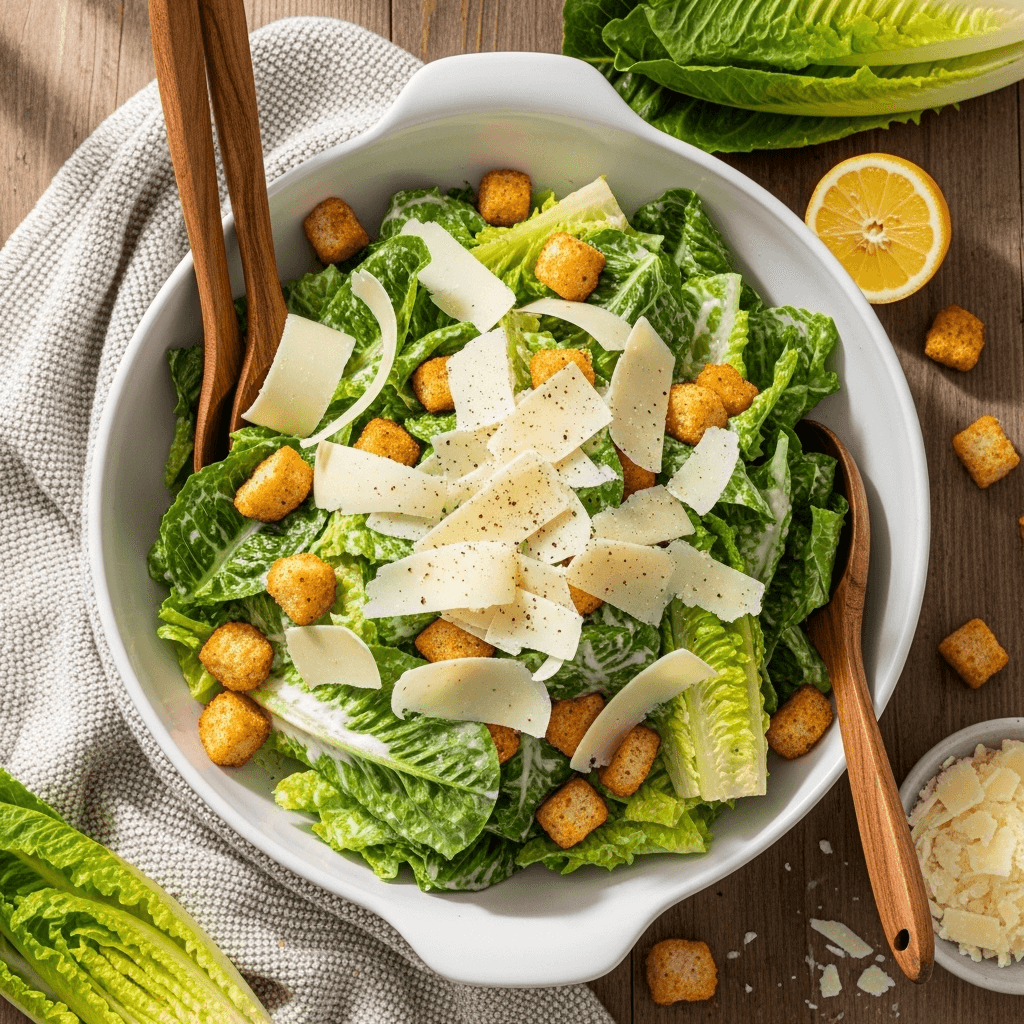

There’s nothing quite like a crisp, refreshing Caesar salad with its perfect balance of creamy, tangy dressing, crunchy romaine lettuce, savory Parmesan cheese, and golden garlic croutons. This classic Caesar salad recipe brings restaurant-quality flavor right to your home kitchen with a homemade Caesar dressing that’s so delicious, you’ll never want to buy bottled dressing again.
What makes this Caesar salad truly special is its versatility and crowd-pleasing appeal. It’s elegant enough for dinner parties and date nights, yet simple enough for weeknight dinners. Serve it as a light lunch, a sophisticated starter for Italian dinners, a refreshing side dish for grilled steaks or seafood, or add grilled chicken, shrimp, or salmon to transform it into a complete meal. This easy Caesar salad works for any occasion—from casual family dinners to impressive entertaining.
The beauty of this homemade Caesar salad lies in its fresh, vibrant ingredients and that irresistible creamy, garlicky, anchovy-kissed dressing that coats every leaf of crisp romaine. Once you taste the difference that homemade dressing makes, you’ll understand why Caesar salad remains one of the most beloved and frequently ordered salads in restaurants worldwide. The combination of textures—crispy lettuce, crunchy croutons, and creamy dressing—creates an unforgettable eating experience that keeps people coming back for more.
History / Background
The Caesar salad has a fascinating origin story that might surprise you—it’s not actually from Italy! This iconic salad was created in Tijuana, Mexico, in 1924 by Italian-American restaurateur Caesar Cardini. According to the most widely accepted account, the salad was born out of necessity during a busy Fourth of July weekend when Cardini’s restaurant was running low on supplies.
Caesar Cardini owned and operated Caesar’s Restaurant in Tijuana, just across the border from San Diego, California. During the Prohibition era (1920-1933), many Americans would cross into Mexico to enjoy alcohol legally, and Cardini’s establishment was a popular destination. On that fateful July 4th in 1924, the restaurant was unexpectedly overwhelmed with customers, and the kitchen was running dangerously low on ingredients.
Rather than turning away hungry guests, Caesar Cardini improvised with what he had on hand: romaine lettuce, garlic, Parmesan cheese, olive oil, eggs, Worcestershire sauce, and day-old bread. He prepared the salad tableside with dramatic flair, tossing the ingredients with theatrical gestures that captivated diners. The original recipe featured whole romaine leaves that guests would eat with their fingers, making it an interactive and memorable dining experience.
Caesar’s brother, Alex Cardini, later claimed he actually invented the salad and called it the “Aviator’s Salad” because it was a favorite among American pilots who flew in from San Diego. Regardless of which Cardini brother truly invented it, the salad quickly became famous, and word spread throughout Southern California and beyond.
The original Caesar salad did not contain anchovies—the distinctive savory flavor came solely from Worcestershire sauce, which contains anchovies as an ingredient. Over time, chefs began adding actual anchovy fillets to the dressing to intensify that umami depth, and this adaptation became the standard version we know today.
By the 1940s, Caesar salad had become a staple in fine dining restaurants across the United States. Julia Child, the legendary cookbook author and television chef, claimed she had tasted the original Caesar salad at Caesar’s restaurant as a child in the 1920s, and she later helped popularize the recipe in her cookbooks, introducing it to home cooks across America.
In 1953, the Paris-based International Society of Epicures named the Caesar salad “the greatest recipe to originate from the Americas in fifty years.” Today, Caesar salad remains one of the most popular menu items in restaurants worldwide and a beloved recipe in home kitchens everywhere.
Why You’ll Love This Recipe
This homemade Caesar salad will quickly become one of your favorite go-to recipes, whether you’re looking for a light lunch, an elegant appetizer, or a crisp side dish. Here’s why this classic Caesar salad is absolutely irresistible:
This restaurant-quality Caesar salad features a creamy, tangy homemade dressing that’s infinitely better than anything from a bottle. The combination of crisp romaine lettuce, crunchy garlic croutons, nutty Parmesan cheese, and that signature garlicky, umami-rich dressing creates layers of flavor and texture that make every bite satisfying and delicious.
- Incredibly Fresh Flavor: Homemade Caesar dressing tastes bright, vibrant, and infinitely better than store-bought versions with their preservatives and artificial ingredients.
- Quick and Easy: Despite its impressive flavor, this salad comes together in just 15 minutes from start to finish.
- Restaurant-Quality at Home: Tastes just like what you’d get at a high-end steakhouse or Italian restaurant, but costs a fraction of the price.
- Versatile Meal Option: Serve as a light lunch, elegant appetizer, side dish, or add protein to make it a complete dinner.
- Crowd-Pleasing: Everyone loves a good Caesar salad—it’s the perfect dish for picky eaters and adventurous foodies alike.
- Customizable: Easily adapt with grilled chicken, shrimp, salmon, or keep it vegetarian—the possibilities are endless.
- Make-Ahead Friendly: The dressing can be made several days in advance, making entertaining stress-free.
- Better Nutrition: Control exactly what goes into your dressing—no artificial ingredients, excessive sodium, or mystery preservatives.
- Impressive Presentation: Looks beautiful and sophisticated when plated, perfect for dinner parties and special occasions.
- Budget-Friendly: Uses simple, affordable ingredients that you can find at any grocery store.
- No Special Skills Required: Even if you’ve never made salad dressing before, this recipe is foolproof and forgiving.
Ingredient Notes
Let’s talk about what makes this Caesar salad so delicious and how each ingredient contributes to that classic, craveable flavor:
Romaine Lettuce: The foundation of any great Caesar salad! Romaine hearts are essential because of their crisp texture, sturdy leaves, and slightly sweet flavor. The crispy ribs provide satisfying crunch, while the tender inner leaves add sweetness. Always use fresh, crisp romaine—wilted lettuce will ruin your salad. Look for heads that feel heavy for their size with bright green leaves.
Garlic: Fresh garlic provides that signature pungent, aromatic flavor that makes Caesar dressing so distinctive. Use fresh garlic cloves, not pre-minced garlic from a jar—the flavor difference is noticeable. For a milder garlic flavor, use 1-2 cloves; for more intense garlic punch, use 3-4 cloves.
Anchovies: These tiny fish are what give Caesar dressing its characteristic savory, umami depth. Don’t worry if you think you don’t like anchovies—they dissolve completely into the dressing and add an incredible depth of flavor without tasting “fishy.” Use oil-packed anchovy fillets, not paste. If you’re truly anchovy-averse, you can use extra Worcestershire sauce, though the flavor won’t be quite as authentic.
Dijon Mustard: Adds tanginess and helps emulsify the dressing, creating a smooth, creamy consistency. Use Dijon rather than yellow mustard for the best flavor—its sophisticated taste complements the other ingredients perfectly.
Fresh Lemon Juice: Provides bright acidity that balances the rich, creamy elements. Always use fresh-squeezed lemon juice, never bottled—the flavor difference is dramatic. You’ll need about 2 medium lemons to get ¼ cup of juice.
Worcestershire Sauce: Contributes complex umami flavor with its blend of vinegar, molasses, anchovies, tamarind, and spices. This ingredient is crucial for authentic Caesar flavor.
Egg Yolk or Mayonnaise: Traditional Caesar dressing uses raw egg yolk to create a rich, creamy emulsion. However, many home cooks prefer using mayonnaise instead to avoid raw egg concerns. Both work beautifully—mayo is safer and more convenient, while egg yolk creates a slightly silkier texture.
Olive Oil: Use good-quality extra-virgin olive oil for the best flavor. The oil makes the dressing creamy and carries all those delicious flavors throughout the salad. Don’t use cheap, low-quality oil—since it’s not cooked, the flavor really shines through.
Parmesan Cheese: Use real Parmigiano-Reggiano and grate it fresh yourself for the absolute best flavor and texture. Pre-grated cheese contains anti-caking agents that prevent proper melting and clumping. Freshly grated Parmesan has a nutty, complex flavor that’s essential to great Caesar salad.
Croutons: Homemade garlic croutons are ideal, but good-quality store-bought croutons work in a pinch. The croutons add essential crunch and toasty, garlicky flavor that contrasts beautifully with the creamy dressing and crisp lettuce.
Substitutions: For a lighter version, use Greek yogurt in place of half the mayonnaise. For vegetarian Caesar, omit anchovies and use extra capers for brininess, or use vegan Worcestershire sauce. For dairy-free, use nutritional yeast instead of Parmesan. For keto/low-carb, skip the croutons or use low-carb alternatives like Parmesan crisps.
Equipment Needed
You don’t need any fancy equipment to make this restaurant-quality Caesar salad—just basic kitchen tools:
- Food Processor or Blender: Makes creating smooth, emulsified dressing incredibly easy. You can also use an immersion blender or whisk by hand, though it requires more effort.
- Large Salad Bowl: For tossing the salad. Use the largest bowl you have to make tossing easier without spilling lettuce everywhere.
- Sharp Knife: For chopping romaine lettuce and mincing garlic if making dressing by hand.
- Cutting Board: For prepping ingredients safely.
- Measuring Cups and Spoons: For accurate dressing ingredients—precise measurements ensure consistent results every time.
- Citrus Juicer (optional but helpful): Makes extracting fresh lemon juice much easier and more efficient.
- Microplane or Box Grater: For grating fresh Parmesan cheese—a Microplane gives you the finest, fluffiest shreds.
- Salad Tongs or Servers: For tossing the salad gently but thoroughly to coat every leaf with dressing.
- Salad Spinner (optional but recommended): Removes excess water from washed lettuce, preventing watery, diluted dressing. If you don’t have one, pat lettuce very dry with clean kitchen towels or paper towels.
Caesar Salad
- Total Time: 15 minutes
- Yield: 4 servings 1x
- Diet: Gluten Free
Description
This classic Caesar salad features crisp romaine lettuce tossed in a creamy, garlicky homemade dressing with freshly grated Parmesan and crunchy croutons. Restaurant-quality flavor in just 15 minutes—better than any bottled dressing you’ve ever tried!
Ingredients
For the Caesar Dressing:
- 2 large garlic cloves, minced or pressed
- 2–3 anchovy fillets, minced (or 1 teaspoon anchovy paste)
- 2 teaspoons Dijon mustard
- 2 tablespoons fresh lemon juice (about 1 large lemon)
- 1 teaspoon Worcestershire sauce
- 1 large egg yolk OR ¼ cup mayonnaise (see notes)
- ½ cup (120ml) extra-virgin olive oil
- ½ cup (50g) freshly grated Parmesan cheese, plus more for serving
- Salt and freshly ground black pepper, to taste
For the Salad:
- 2 large romaine lettuce hearts (or 1 large head), washed and dried
- 1½ cups (90g) croutons, homemade or store-bought
- ½ cup (50g) shaved or grated Parmesan cheese
- Freshly ground black pepper, for garnish
- Lemon wedges, for serving (optional)
Instructions
- Prepare the Lettuce: Wash the romaine lettuce thoroughly under cold running water, separating the leaves to remove any dirt or grit. Spin dry in a salad spinner or pat completely dry with clean kitchen towels—this is crucial as any water will dilute the dressing. Tear or chop the lettuce into bite-sized pieces (about 2-3 inch pieces). Place in a large salad bowl and refrigerate while you make the dressing.
- Make the Dressing (Food Processor Method): In a food processor or blender, combine the minced garlic, anchovy fillets, Dijon mustard, fresh lemon juice, Worcestershire sauce, and egg yolk (or mayonnaise). Pulse several times until well combined and relatively smooth.
- Emulsify the Dressing: With the food processor running on low speed, slowly drizzle in the olive oil through the feed tube in a thin, steady stream. This gradual addition creates a thick, creamy emulsion. The dressing should be smooth, pale, and creamy. Add the grated Parmesan cheese and pulse a few more times until incorporated. Taste and season with salt and pepper as needed—start conservatively as anchovies and Parmesan are already salty.
- Alternative Whisking Method: If making dressing by hand, mince the garlic and anchovies into a very fine paste (you can use the back of your knife to smash them into a paste). In a medium bowl, whisk together the garlic-anchovy paste, mustard, lemon juice, Worcestershire sauce, and egg yolk (or mayo) until smooth. While whisking constantly, slowly drizzle in the olive oil in a thin stream—this takes patience but creates proper emulsification. Whisk in the Parmesan and season with salt and pepper.
- Adjust Consistency: If your dressing is too thick, thin it with 1-2 teaspoons of water or additional lemon juice until it reaches your desired consistency. It should be thick enough to coat the lettuce but still pourable—like a thin ranch dressing.
- Dress the Salad: Remove the dried lettuce from the refrigerator. Start by adding about half of the dressing to the lettuce. Using salad tongs or your hands (the best tool!), toss the salad gently but thoroughly, lifting from the bottom and folding over to ensure every leaf is coated. Add more dressing as needed—you want each leaf glossy and coated but not swimming in dressing.
- Add Toppings: Add the croutons and half of the shaved Parmesan cheese. Toss once more to distribute them evenly throughout the salad.
- Serve: Transfer the dressed salad to individual serving plates or bowls, or serve family-style in the large bowl. Top with the remaining Parmesan cheese, a generous grinding of fresh black pepper, and additional croutons if desired. Serve immediately with lemon wedges on the side.
Notes
- Egg Safety: If concerned about raw egg, use pasteurized eggs, or simply substitute mayonnaise (which is made from cooked/pasteurized eggs) for a completely safe option with similar results.
- Dressing Consistency: The dressing should be creamy and thick enough to cling to lettuce leaves, not watery. If too thick, thin with water; if too thin, whisk in more Parmesan or a bit more mayo.
- Anchovy Alternatives: For vegetarian version, omit anchovies and add 1 tablespoon of capers for similar briny, umami flavor, though it won’t be traditional Caesar.
- Make-Ahead: Dressing can be made up to 3 days ahead and stored in the refrigerator. Wait to dress the salad until just before serving to prevent soggy lettuce.
- Don’t Overdress: Start with less dressing than you think you need—you can always add more, but you can’t remove it. Overdressed salad becomes limp and soggy.
- Serving Size: This recipe serves 4 as a side salad or 2 as a main course salad (especially if you add protein like grilled chicken).
- Prep Time: 15 minutes
- Cook Time: 0 minutes
- Category: Salad
- Method: No-Cook
- Cuisine: Italian
Nutrition
- Serving Size: 1 serving (¼ of recipe)
- Calories: 385
- Sugar: 2g
- Sodium: 520mg
- Fat: 35g
- Saturated Fat: 7g
- Unsaturated Fat: 26g
- Trans Fat: 0g
- Carbohydrates: 12g
- Fiber: 2g
- Protein: 9g
- Cholesterol: 65mg
Tips & Variations
Customize this classic Caesar salad to suit your taste preferences and dietary needs with these delicious variations:
Grilled Chicken Caesar Salad: Top the salad with sliced grilled chicken breast seasoned with salt, pepper, and Italian herbs for a complete meal. This is the most popular Caesar variation!
Shrimp Caesar Salad: Add grilled, blackened, or sautéed shrimp for a light, seafood-focused version. About 6-8 medium shrimp per serving works perfectly.
Salmon Caesar Salad: Top with grilled, pan-seared, or baked salmon fillets for an elegant, omega-3-rich meal that’s perfect for date night.
Kale Caesar Salad: Replace some or all of the romaine with chopped lacinato (Tuscan) kale for a trendy, nutrient-dense twist. Massage the kale first with a bit of olive oil to soften it.
Little Gem Caesar: Use Little Gem lettuce instead of romaine for a more delicate, sweeter flavor and beautiful presentation. Serve the small heads halved or quartered.
Bacon Caesar Salad: Add crispy bacon bits or lardons for smoky, savory richness that complements the creamy dressing beautifully.
Avocado Caesar Salad: Add sliced or diced ripe avocado for extra creaminess and healthy fats that pair wonderfully with the tangy dressing.
Egg Caesar Salad: Top with a soft-boiled or poached egg. When you cut into it, the runny yolk mixes with the dressing for extra richness.
Lighter Caesar: Use half Greek yogurt and half mayonnaise in the dressing, and reduce the oil slightly for a lighter version with more protein.
Extra Veggie Caesar: Add halved cherry tomatoes, thinly sliced cucumber, shaved red onion, or roasted red peppers for more vegetables and color.
Spicy Caesar: Add a pinch of red pepper flakes or a dash of hot sauce to the dressing for a subtle kick of heat.
Vegan Caesar: Use vegan mayo, nutritional yeast instead of Parmesan, capers instead of anchovies, and vegan Worcestershire sauce for a plant-based version.
Pro Chef Tips
Elevate your Caesar salad from good to absolutely exceptional with these professional techniques:
Dry Lettuce is Essential: This cannot be overstated—wet lettuce is the enemy of great salad. Water dilutes the dressing and prevents it from adhering to the leaves. After washing, spin lettuce dry thoroughly in a salad spinner, then lay leaves on clean kitchen towels or paper towels to air-dry for 10-15 minutes. Some restaurants even refrigerate washed lettuce overnight to ensure crispness.
Emulsification Matters: When making the dressing, add oil very slowly while whisking constantly (or processing). This gradual incorporation creates a stable emulsion—that thick, creamy consistency that coats lettuce beautifully. If you add oil too quickly, the emulsion can break, leaving you with separated, oily dressing.
Room Temperature Eggs: If using raw egg yolk, let it come to room temperature first. Room temperature eggs emulsify much more easily and create smoother, creamier dressing than cold eggs.
Taste and Adjust: Always taste your dressing before adding it to lettuce. The flavor should be bold, punchy, and well-balanced between tangy (lemon), savory (anchovy and Parmesan), and rich (oil). Adjust lemon juice, salt, or Worcestershire as needed. Remember that once dressing hits the lettuce, flavors will mellow slightly.
Use Your Hands: Professional chefs often toss salads with clean hands rather than tongs—you have better control and can feel whether every leaf is properly coated. It’s faster and more effective than tossing tools, though less elegant for tableside service.
Build Layers: For the best flavor distribution, dress the lettuce first, then add half the cheese and toss again, add croutons and toss once more, then top with remaining cheese. This ensures cheese and croutons are distributed throughout rather than all sitting on top.
Fresh Parmesan Only: The flavor difference between freshly grated Parmigiano-Reggiano and pre-grated cheese is enormous. Buy a wedge and grate it yourself—it takes 2 minutes and transforms the dish. Use a Microplane for the finest, fluffiest texture.
Crouton Temperature: If using homemade croutons, add them while still slightly warm for the best flavor and aroma. If using store-bought, you can refresh them in a 350°F oven for 3-4 minutes to crisp them up.
Dress Just Before Serving: Never dress a salad more than 5 minutes before serving. Dressed lettuce wilts quickly, becoming limp and unappealing. If preparing for a party, have everything prepped and ready, then toss at the last minute.
Save the Heart: The pale yellow inner leaves and tender hearts of romaine are the sweetest, most delicate part. Don’t discard them—they’re prized by chefs for their mild flavor and tender texture.
Common Mistakes to Avoid
Even experienced cooks can struggle with Caesar salad. Here are the most common pitfalls and how to avoid them:
Wet Lettuce: This is the number one mistake! Water on lettuce leaves dilutes the dressing, making it thin and watery, and prevents proper adhesion. The result is bland, waterlogged salad with dressing pooling at the bottom of the bowl. Always wash lettuce early and dry it thoroughly—use a salad spinner, then let it air-dry on towels, or even refrigerate it uncovered for 30 minutes to dry completely.
Adding Oil Too Fast: When making emulsified dressing, rushing the oil addition will cause the emulsion to break, resulting in separated, greasy dressing instead of thick, creamy perfection. Add oil in a slow, thin stream while whisking or processing constantly. Patience is key—it takes 2-3 minutes to add all the oil properly, but it’s worth it for smooth, creamy results.
Overdressing the Salad: More dressing is not better! Too much dressing makes lettuce limp, soggy, and overwhelms the other flavors. You want lettuce lightly coated and glossy, not dripping wet. Start with half the dressing, toss well, then add more only if needed. You’ll likely have dressing left over—save it in the fridge for another salad.
Using Pre-Grated Cheese: Pre-shredded Parmesan contains cellulose (wood pulp) and other anti-caking agents that prevent clumping. These additives create a dry, dusty texture and muted flavor. Always buy a wedge of real Parmigiano-Reggiano and grate it fresh—the flavor and texture difference is night and day.
Skipping the Anchovies: Many people are tempted to omit anchovies, thinking they’ll make the salad taste fishy. But anchovies are what give Caesar dressing its distinctive savory depth and umami richness. They dissolve completely into the dressing and don’t taste fishy at all—just deeply savory and delicious. Without them, you’ll have a generic creamy salad dressing, not authentic Caesar.
Using Bottled Lemon Juice: Bottled lemon juice has a flat, chemical-tasting flavor that can’t compare to fresh-squeezed. It also often contains preservatives. Fresh lemon juice is bright, vibrant, and provides the acidity that makes Caesar dressing sing. Always use fresh lemons—it’s worth the extra 2 minutes to squeeze them.
Dressing Too Far in Advance: Caesar salad must be dressed immediately before serving. Dressed lettuce begins wilting within 5-10 minutes as the acid in the dressing breaks down the cell structure. For parties, prep everything ahead, but wait until the last possible moment to toss the salad.
Storage & Meal Prep
Proper storage keeps your Caesar salad components fresh and delicious:
Storing Leftover Dressing: Transfer unused Caesar dressing to an airtight container or jar and refrigerate for up to 4-5 days. The flavors actually improve after a day as they meld together. Give it a good shake or whisk before using, as it may separate slightly in the refrigerator. If it’s too thick after chilling, thin with a teaspoon or two of water.
Storing Dressed Salad: Unfortunately, already-dressed Caesar salad doesn’t store well. The lettuce wilts and becomes soggy within hours. If you must store it, dressed salad will keep in the refrigerator for about 24 hours, but the texture won’t be ideal. It’s best to store components separately and assemble when ready to eat.
Storing Undressed Components: Store washed, dried lettuce in a container lined with paper towels, covered loosely with a damp paper towel on top. It will stay crisp in the refrigerator for 3-4 days. Store croutons in an airtight container at room temperature for up to a week. Keep dressing refrigerated separately. Store grated Parmesan in an airtight container in the refrigerator for up to a week.
Meal Prep Strategy: For easy Caesar salads all week, prep everything on Sunday: make the dressing, wash and dry lettuce, make homemade croutons if desired, and grate Parmesan. Store everything separately, then assemble individual salads throughout the week in just minutes.
Individual Portions: For work lunches, pack dressing in a small separate container or jar, lettuce in a larger container, and croutons and Parmesan in another small container. Keep refrigerated and assemble when ready to eat for maximum freshness.
Reviving Wilted Lettuce: If your lettuce has gone slightly limp, soak it in ice water for 10-15 minutes, then dry thoroughly. The cold water helps crisp up the cell walls, restoring some crunch.
Make-Ahead & Freezer Notes
Caesar salad is best enjoyed fresh, but here’s how to prep components in advance:
Make-Ahead Dressing: Caesar dressing is perfect for making ahead! In fact, the flavors improve and meld together after 24 hours in the refrigerator. Make the dressing up to 4-5 days before serving and store it in an airtight container in the refrigerator. Bring it to room temperature and whisk well before using, as it may separate and thicken when cold.
Prepping Lettuce in Advance: Wash and thoroughly dry romaine lettuce up to 2 days ahead. Store in a container or large zip-top bag lined with paper towels to absorb any residual moisture. Place another paper towel on top before sealing. Properly dried and stored lettuce stays crisp and fresh for several days.
Making Croutons Ahead: Homemade croutons can be made up to a week in advance. Store them in an airtight container at room temperature. If they lose their crunch, refresh them in a 300°F oven for 5 minutes before using.
Grating Cheese Ahead: Freshly grate Parmesan up to 3 days ahead and store in an airtight container in the refrigerator. While it’s always best to grate cheese right before serving, pre-grated fresh Parmesan is still infinitely better than store-bought pre-grated options.
Freezing Dressing: Caesar dressing can be frozen for up to 2 months in an airtight container. Thaw overnight in the refrigerator, then whisk vigorously to re-emulsify, as it will separate during freezing. The texture may not be quite as smooth as fresh, but it’s still flavorful and usable.
Freezing Lettuce: Unfortunately, lettuce cannot be frozen—it has too high a water content and becomes mushy and inedible when thawed. Only freeze the dressing component, never the lettuce.
Party Prep Timeline: If serving Caesar salad at a dinner party, make the dressing 1-2 days ahead, prep lettuce and grate cheese the morning of, and toss everything together within 5 minutes of serving for optimal freshness and texture.
Serving Suggestions
Caesar salad is incredibly versatile! Here are wonderful ways to serve and enjoy it:
As a Starter Course: Serve small portions of Caesar salad as an elegant first course before Italian dinners, steak dinners, or any multi-course meal. It’s a classic steakhouse starter for good reason.
Steakhouse Pairing: Caesar salad is the perfect accompaniment to grilled steak, whether it’s ribeye, filet mignon, or New York strip. The crisp, refreshing salad cuts through the richness of beef beautifully.
With Grilled Proteins: Pair Caesar salad with grilled chicken, salmon, shrimp, lamb chops, or pork chops for a complete, balanced meal that’s light yet satisfying.
Italian Dinner Side: Serve alongside classic Italian dishes like spaghetti and meatballs, lasagna, chicken parmesan, or osso buco. It’s a lighter alternative to traditional pasta sides.
With Soup: Partner Caesar salad with tomato soup, minestrone, or Italian wedding soup for a comforting, complete lunch or light dinner.
Pizza Night: Caesar salad is a perfect side for pizza night—it adds freshness and vegetables to balance the cheese and carbs.
Bread Pairing: Serve with warm, crusty French bread, focaccia, garlic bread, or ciabatta for soaking up any extra dressing left in the bowl.
Wine Pairing: Caesar salad pairs beautifully with crisp white wines like Sauvignon Blanc, Pinot Grigio, or unoaked Chardonnay. For red wine lovers, try light-bodied options like Pinot Noir.
BBQ Side Dish: Bring Caesar salad to summer cookouts and barbecues as a refreshing alternative to mayonnaise-heavy sides like potato salad or coleslaw.
Lunch Wrap: Use Caesar salad as a filling for wraps with grilled chicken—roll everything up in a tortilla for a portable lunch option.
Brunch Addition: Add Caesar salad to brunch spreads alongside quiche, frittatas, and fresh fruit for a savory, elegant option.
FAQs Section
Can I make Caesar salad without raw egg?
Absolutely! Use ¼ cup of mayonnaise instead of the raw egg yolk. Mayonnaise is made from pasteurized eggs and provides the same creamy emulsification without any food safety concerns. The flavor and texture will be virtually identical to the traditional version. This is actually what many restaurants do to avoid liability issues with raw eggs. Alternatively, you can buy pasteurized eggs specifically for recipes calling for raw eggs.
What can I substitute for anchovies if I don’t like them?
While anchovies are traditional and provide that distinctive umami depth, you can substitute 1-2 tablespoons of capers for a similar briny, salty flavor, though the taste won’t be quite the same. Alternatively, increase the Worcestershire sauce (which contains anchovies but in smaller amounts) to 2 teaspoons. For vegetarian versions, use 1-2 teaspoons of white miso paste for savory umami flavor, though it won’t be authentic Caesar. However, I encourage you to try the anchovies—they dissolve completely and don’t taste “fishy” at all!
How do I keep my Caesar salad from getting soggy?
The key is proper preparation and timing: dry the lettuce extremely thoroughly after washing (use a salad spinner and/or let it air-dry on towels), store washed lettuce properly in the refrigerator until ready to use, don’t dress the salad until immediately before serving (within 5 minutes), and don’t overdress—use just enough dressing to coat the leaves lightly. If making salad ahead, store all components separately and toss together at the last minute.
Can I make Caesar salad ahead for a party?
You can prep all the components ahead, but don’t toss the salad until right before serving. Make the dressing 1-3 days ahead and refrigerate. Wash and dry the lettuce the morning of your party and store it in the refrigerator. Make or buy croutons ahead and store at room temperature. Grate the Parmesan the morning of. Then, 5-10 minutes before guests arrive or sit down, toss everything together. This ensures maximum crispness and freshness.
Is Caesar salad healthy?
Caesar salad can be quite healthy or rather indulgent depending on how you make it and what portions you eat. The romaine lettuce provides fiber, vitamins A, C, and K, and folate. However, traditional Caesar dressing is high in fat and calories from the oil, cheese, and egg/mayo. A typical side salad serving contains 300-400 calories, mostly from the dressing. To make it healthier: use less dressing, make a lighter version with Greek yogurt, skip or reduce the croutons, load up on extra vegetables, and add lean protein like grilled chicken or shrimp. The salad is also quite high in sodium from the anchovies, Parmesan, and Worcestershire sauce, so those watching sodium should be mindful.
Conclusion
There’s something truly special about making Caesar salad from scratch with homemade dressing—the fresh, vibrant flavors and creamy, garlicky taste simply can’t be matched by anything from a bottle. This classic Caesar salad recipe brings restaurant-quality results to your home kitchen with simple ingredients and straightforward techniques that anyone can master.
Whether you’re serving this easy Caesar salad as an elegant appetizer for a dinner party, a light lunch for yourself, a sophisticated side dish for grilled steaks, or transforming it into a complete meal by adding grilled chicken or shrimp, you’re guaranteed to impress. The combination of crisp romaine lettuce, rich creamy dressing, crunchy croutons, and savory Parmesan cheese creates that perfect balance of flavors and textures that keeps people coming back for more.
The best part? Once you taste how much better homemade Caesar dressing is compared to store-bought versions, you’ll never go back. And with the dressing storing beautifully in the refrigerator for up to 5 days, you can enjoy fresh, delicious Caesar salad all week long with minimal effort.
Now it’s your turn to create this restaurant-worthy salad in your own kitchen! I promise that once you try this homemade Caesar salad recipe, it will become one of your most-requested dishes. Your family and friends will be amazed at how professional and delicious it tastes.
Have you made this Caesar salad recipe? I’d love to hear how it turned out! Leave a comment below telling me your experience, any customizations you tried, or questions you have. Don’t forget to rate this recipe and save it to your Pinterest boards so you can find it easily whenever a Caesar salad craving hits. Happy cooking, friends!