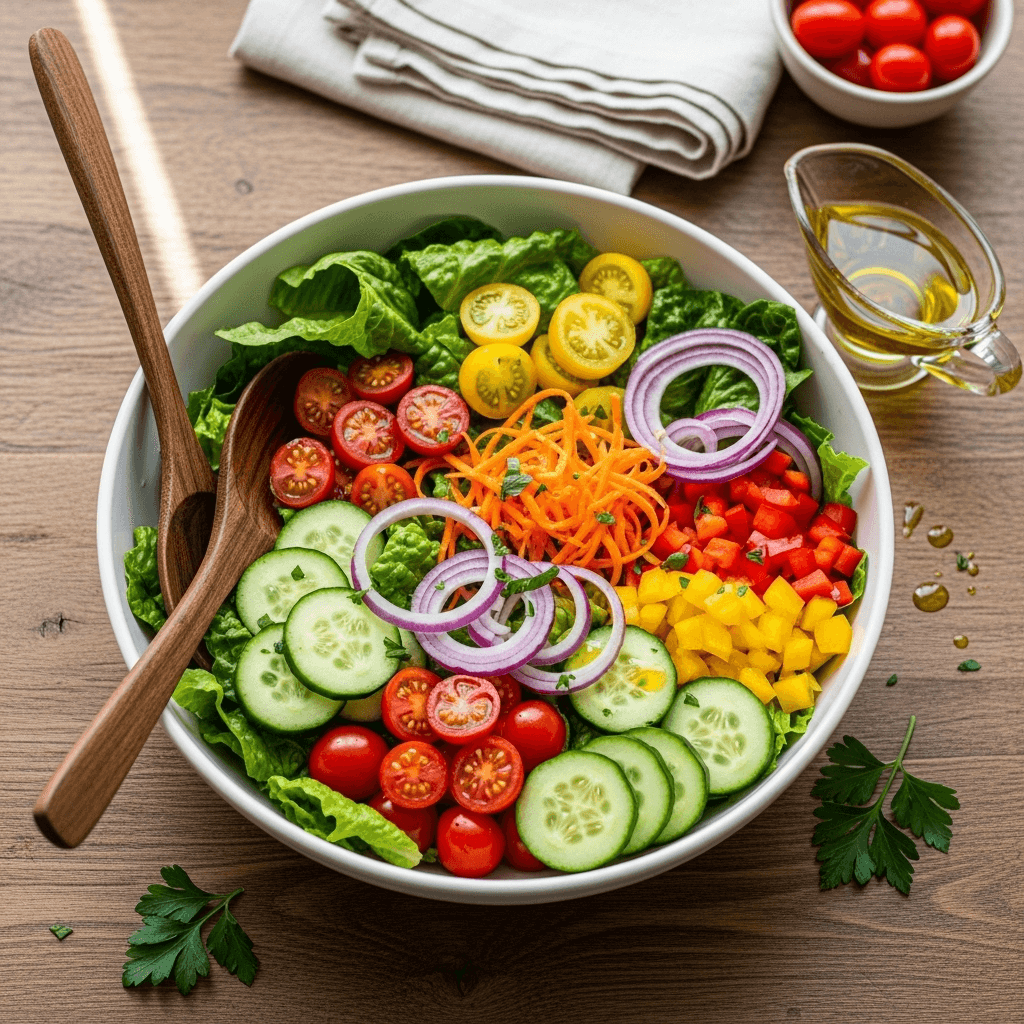

There’s something magical about a perfectly tossed fresh garden salad that brings brightness to any meal. This easy salad recipe is a celebration of crisp vegetables, vibrant colors, and simple flavors that come together in just minutes. Whether you’re looking for a quick healthy side dish for busy weeknights or a refreshing accompaniment to your weekend barbecue, this fresh garden salad delivers every single time.
What makes this simple garden salad truly special is its versatility and adaptability. It’s the kind of recipe that works beautifully alongside grilled chicken, complements a hearty pasta dinner, or stands alone as a light lunch when you’re craving something wholesome. The combination of crisp romaine lettuce, juicy cherry tomatoes, crunchy cucumbers, and a tangy homemade vinaigrette creates a symphony of textures and flavors that will have everyone at your table asking for seconds.
This isn’t just another salad recipe – it’s your go-to formula for creating a restaurant-quality side dish right in your own kitchen. Perfect for meal prep, potlucks, family gatherings, or those nights when you need something fresh and delicious on the table fast, this easy garden salad recipe will quickly become one of your most-used kitchen staples.
History / Background
The concept of garden salads has roots that stretch back centuries, though the fresh garden salad as we know it today is distinctly American in its evolution. In ancient Rome, simple salads of greens dressed with salt (the word “salad” actually comes from the Latin word “sal” meaning salt) were common fare. However, the modern garden salad truly came into its own in 20th century America.
During the 1920s and 1930s, as refrigeration became more widespread in American homes, fresh produce became more accessible year-round. The “garden salad” emerged as a staple in American restaurants and diners, representing a fresh, wholesome side dish that showcased whatever vegetables were in season or readily available. It was the Great Depression and World War II eras that really cemented the garden salad’s place in American cuisine, as home gardeners took pride in growing their own vegetables and serving them fresh at the table.
The 1950s and 1960s saw the garden salad become an essential component of American dining, particularly as health consciousness began to grow and families sought lighter, fresher alternatives to heavy sides. The classic steakhouse garden salad became iconic – a generous bowl of mixed greens, tomatoes, cucumbers, and onions served before the main course, often with a choice of bottled dressings.
Today, the garden salad represents much more than just a simple side dish. It’s a canvas for creativity, a celebration of fresh produce, and a connection to the farm-to-table movement that has swept across the country. Whether you’re using vegetables from your backyard garden, your local farmers market, or your grocery store’s produce section, making a fresh garden salad is a way to honor the tradition of simple, wholesome cooking that has nourished families for generations.
Why You’ll Love This Recipe
This easy salad recipe is about to become your new kitchen MVP, and here’s why: it combines maximum flavor with minimal effort, creating a dish that looks impressive but requires no special cooking skills whatsoever. Unlike complicated recipes that demand precision and experience, this fresh garden salad is forgiving, flexible, and absolutely foolproof.
Here’s what makes this garden salad recipe absolutely irresistible:
- Ready in 10 minutes – Perfect for those hectic weeknights when time is not on your side
- Budget-friendly – Uses affordable, everyday ingredients that won’t break the bank
- Customizable – Easily adapt to whatever vegetables you have on hand or dietary preferences
- Kid-approved – Bright colors and familiar flavors make this appealing even to picky eaters
- Meal prep friendly – Components can be prepped ahead for quick assembly throughout the week
- Crowd-pleaser – Serves beautifully at potlucks, barbecues, and family gatherings
- Healthy and fresh – Packed with vitamins, minerals, and fiber without any guilt
- No cooking required – Absolutely perfect for hot summer days when you don’t want to turn on the stove
- Restaurant-quality taste – The homemade vinaigrette elevates this from ordinary to extraordinary
- Versatile – Works as a side dish, light lunch, or base for adding proteins like grilled chicken or shrimp
Ingredient Notes
Let’s talk about the stars of this fresh garden salad and why each ingredient plays an important role in creating the perfect bite.
Romaine Lettuce: The foundation of our salad, romaine provides the perfect crisp texture and mild flavor that doesn’t overpower other ingredients. Its sturdy leaves hold up beautifully to dressing without wilting immediately. You can substitute with mixed spring greens, butter lettuce, or iceberg lettuce, though romaine offers the best crunch-to-tenderness ratio.
Cherry Tomatoes: These little bursts of sweetness add juicy pops of flavor and beautiful color. Cherry or grape tomatoes work better than sliced large tomatoes because they’re sweeter, less watery, and easier to eat. If tomatoes aren’t in season, you can use sun-dried tomatoes (rehydrated) for a different but delicious flavor profile.
English Cucumber: With thin skin and fewer seeds, English cucumbers provide refreshing crunch without excess water or bitterness. If you only have regular cucumbers, peel them and scoop out the seeds before slicing. Persian cucumbers are also an excellent choice.
Red Onion: Thinly sliced red onion adds a sharp, slightly spicy bite that contrasts beautifully with the other mild vegetables. If raw onion is too intense for your taste, soak the slices in ice water for 10 minutes to mellow the flavor, or substitute with milder green onions or shallots.
Bell Pepper: Sweet bell peppers add crunch and vibrant color. Any color works – red and yellow are sweetest, while green offers a slightly more vegetal flavor. Feel free to mix colors for a more visually stunning presentation.
Carrots: Shredded or julienned carrots contribute natural sweetness and a satisfying crunch. Pre-shredded carrots are a time-saving option, though fresh-shredded taste even better.
Extra Virgin Olive Oil: The base of our homemade vinaigrette, quality olive oil makes a noticeable difference. Look for cold-pressed extra virgin olive oil for the best flavor. Avocado oil is a neutral-tasting substitute if preferred.
Red Wine Vinegar: Provides the essential tanginess that brightens all the vegetables. Apple cider vinegar or white wine vinegar can substitute, though red wine vinegar offers the most balanced flavor for salads.
Dijon Mustard: This secret ingredient emulsifies the dressing, helping the oil and vinegar blend smoothly while adding depth of flavor. Regular yellow mustard can work in a pinch, though Dijon is preferred for its sophisticated taste.
Honey: Just a touch of sweetness balances the acidity of the vinegar and rounds out the dressing. Maple syrup or agave nectar are suitable substitutes for vegan diets.
Garlic: Freshly minced garlic adds aromatic punch to the dressing. One small clove is plenty – you want it to enhance, not overpower. Garlic powder can substitute (use 1/4 teaspoon), but fresh is always best.
Equipment Needed
One of the best things about this easy salad recipe is that it requires minimal kitchen equipment – you probably already have everything you need! Here’s what you’ll use:
- Large Salad Bowl or Mixing Bowl – A bowl with at least 4-quart capacity gives you plenty of room to toss the salad without making a mess
- Sharp Chef’s Knife – Essential for cleanly cutting lettuce, slicing vegetables, and mincing garlic
- Cutting Board – A large cutting board gives you plenty of workspace for prep
- Salad Spinner (optional but helpful) – Dries lettuce thoroughly so your dressing sticks properly instead of sliding off wet leaves
- Vegetable Peeler (optional) – Handy for making carrot ribbons or peeling cucumbers if needed
- Small Bowl or Jar with Lid – For mixing and emulsifying your homemade vinaigrette
- Whisk or Fork – To thoroughly blend the dressing ingredients
- Measuring Cups and Spoons – For accurate dressing measurements
- Serving Utensils – Large salad tongs or two serving spoons for easy tossing and serving
Fresh Garden Salad Recipe
- Total Time: 10 minutes
- Yield: 6 servings 1x
- Diet: Vegetarian
Description
A vibrant and refreshing fresh garden salad loaded with crisp romaine lettuce, juicy cherry tomatoes, crunchy cucumbers, and colorful vegetables, all tossed in a tangy homemade vinaigrette. This easy salad recipe is perfect for busy weeknights, meal prep, or serving a crowd at your next gathering. Ready in just 10 minutes with simple, wholesome ingredients you probably already have in your kitchen!
Ingredients
For the Salad:
- 1 large head romaine lettuce, chopped (about 8 cups)
- 2 cups cherry tomatoes, halved
- 1 English cucumber, sliced into half-moons
- 1/2 medium red onion, thinly sliced
- 1 large bell pepper (any color), diced
- 1 cup shredded carrots
- 1/4 cup fresh parsley, chopped (optional)
For the Homemade Vinaigrette:
- 1/3 cup extra virgin olive oil
- 3 tablespoons red wine vinegar
- 1 tablespoon Dijon mustard
- 1 teaspoon honey
- 1 clove garlic, minced
- 1/2 teaspoon salt
- 1/4 teaspoon black pepper
- 1/2 teaspoon dried oregano or Italian seasoning (optional)
Instructions
Step 1: Prepare the Lettuce
Wash the romaine lettuce thoroughly under cold running water. If you have a salad spinner, use it to dry the lettuce completely – this is important because wet lettuce will dilute your dressing and make the salad soggy. Chop the lettuce into bite-sized pieces, discarding the tough core. Place the dried lettuce in your large salad bowl.
Step 2: Prep the Vegetables
Rinse and prepare all your vegetables. Slice the cherry tomatoes in half to release their juices and make them easier to eat. Cut the cucumber into thin half-moon slices. Peel and thinly slice the red onion (soak in cold water for 10 minutes if you want to reduce the sharpness). Dice the bell pepper into bite-sized pieces. Add all the prepared vegetables and the shredded carrots to the bowl with the lettuce.
Step 3: Make the Vinaigrette
In a small bowl or jar with a tight-fitting lid, combine the olive oil, red wine vinegar, Dijon mustard, honey, minced garlic, salt, pepper, and dried oregano if using. If using a bowl, whisk vigorously for about 30 seconds until the dressing is well combined and slightly thickened. If using a jar, secure the lid and shake vigorously for about 20 seconds until emulsified. The mustard helps bind the oil and vinegar together, creating a smooth, cohesive dressing.
Step 4: Toss the Salad
Right before serving, drizzle about 2/3 of the dressing over the salad. Using salad tongs or two large spoons, toss the salad gently but thoroughly, making sure every leaf and vegetable is lightly coated with dressing. You want to coat the vegetables, not drown them. Taste and add more dressing if needed – you can always add more, but you can’t take it away.
Step 5: Final Touches and Serve
If using fresh parsley, sprinkle it over the top for a pop of fresh herb flavor and color. Give the salad one final gentle toss. Serve immediately while the lettuce is still crisp and the vegetables are at their freshest. If you’re serving this for a gathering, you can present the dressing on the side and let guests add their own preferred amount.
Notes
- Make-Ahead Tip: Prep all vegetables and store them separately in airtight containers in the refrigerator for up to 2 days. Keep the dressing separate and toss everything together just before serving to prevent wilting.
- Dressing Storage: Leftover vinaigrette can be stored in an airtight container or jar in the refrigerator for up to 1 week. Bring to room temperature and shake well before using, as the oil may solidify when cold.
- Avoiding Soggy Salad: Always dress the salad immediately before serving. If you need to prepare it earlier, keep the dressing separate and add it at the last minute.
- Serving Size Adjustment: This recipe easily doubles or triples for larger gatherings. Just multiply all ingredients accordingly.
- Adding Protein: Transform this side salad into a complete meal by topping with grilled chicken, shrimp, salmon, hard-boiled eggs, chickpeas, or your favorite protein.
- Prep Time: 10 minutes
- Cook Time: 0 minutes
- Category: Salad
- Method: No-Cook
- Cuisine: American
Nutrition
- Serving Size: 1 serving (1/6 of recipe)
- Calories: 145
- Sugar: 5g
- Sodium: 215mg
- Fat: 12g
- Saturated Fat: 2g
- Unsaturated Fat: 10g
- Trans Fat: 0g
- Carbohydrates: 10g
- Fiber: 3g
- Protein: 2g
- Cholesterol: 0mg
Tips & Variations
The beauty of this fresh garden salad lies in its adaptability. Here are some delicious ways to customize this recipe to match your preferences, dietary needs, or whatever ingredients you have on hand:
Mediterranean Twist: Add crumbled feta cheese, Kalamata olives, and chickpeas. Swap the oregano in the dressing for fresh dill and add a squeeze of lemon juice for a Greek-inspired version.
Southwest Style: Include black beans, corn kernels, diced avocado, and a sprinkle of cotija cheese. Replace the red wine vinegar with lime juice and add a pinch of cumin to the dressing for a Mexican-inspired flavor.
Asian-Inspired: Add mandarin orange segments, sliced almonds, and crispy wonton strips. Replace the vinaigrette with a sesame-ginger dressing made with rice vinegar, sesame oil, and fresh grated ginger.
Protein-Packed: Top your salad with grilled chicken breast, seared salmon, crispy chickpeas, hard-boiled eggs, or your favorite protein to turn this side dish into a complete, satisfying meal.
Extra Crunch: Add toasted nuts (walnuts, pecans, or sliced almonds), sunflower seeds, pumpkin seeds, or croutons for additional texture and substance.
Cheese Lovers: Sprinkle with shaved Parmesan, crumbled blue cheese, goat cheese, or sharp cheddar for extra richness and flavor.
Seasonal Variations: In summer, add fresh corn kernels and diced peaches. In fall, include diced apples and dried cranberries. In winter, add pomegranate arils and roasted butternut squash. In spring, incorporate asparagus and radishes.
Low-Carb/Keto: This salad is already very low in carbohydrates. To make it more keto-friendly, skip the carrots and tomatoes, add more avocado and cheese, and increase the olive oil in the dressing.
Vegan Version: Simply replace the honey in the dressing with maple syrup or agave nectar. The rest of the recipe is already plant-based!
Pro Chef Tips
Want to take your easy salad recipe from good to absolutely spectacular? These professional techniques will elevate your garden salad game:
Perfect Lettuce Preparation: Always tear or cut lettuce with a sharp knife in a swift motion. A dull knife bruises the leaves, causing them to brown faster. For the crispest lettuce, soak the chopped pieces in ice water for 10-15 minutes, then spin dry thoroughly. This “shocking” technique makes the lettuce extra crunchy.
Temperature Matters: Serve your salad on chilled plates if possible. Cold plates keep the salad crisp longer, especially during warm weather or at outdoor gatherings. Pop your serving bowl in the fridge for 15 minutes before assembling the salad.
Salt Your Tomatoes Separately: Here’s a restaurant secret – lightly salt your halved cherry tomatoes about 5 minutes before adding them to the salad. This draws out their natural sweetness and creates little pockets of tomato “juice” that enhance every bite. Just don’t do this too far in advance or they’ll become mushy.
Emulsification is Key: When making your vinaigrette, add the oil very slowly while whisking vigorously. This creates a more stable emulsion that coats the vegetables better and doesn’t separate as quickly. The Dijon mustard acts as an emulsifier, but proper technique still matters.
Room Temperature Dressing: Take your vinaigrette out of the refrigerator 20-30 minutes before using. Cold oil doesn’t coat vegetables as evenly as room temperature oil. Plus, you’ll taste the flavors much better when the dressing isn’t ice cold.
The Tossing Technique: Use two large spoons or salad tongs and toss from the bottom up, lifting the ingredients and letting them fall back down. This distributes dressing evenly without bruising the delicate lettuce leaves. Toss gently but thoroughly – you want every component touched by dressing.
Dress at the Right Time: Never dress a salad more than 5-10 minutes before serving. The salt and acid in the dressing will start breaking down the lettuce, causing it to wilt and release water. For buffets or potlucks, keep the dressing on the side.
Knife Skills Matter: Use your sharpest knife and cut vegetables uniformly. Same-sized pieces ensure every bite has a good mix of ingredients and makes the salad look more professional and appealing.
Common Mistakes to Avoid
Even the simplest recipes can go wrong if you’re not careful. Here are the most common pitfalls when making a fresh garden salad and how to avoid them:
Wet Lettuce: This is the number one mistake! Dressing won’t stick to wet lettuce – it just slides off and pools at the bottom of your bowl, leaving you with watery salad. Always dry your lettuce thoroughly using a salad spinner or by patting it with paper towels. Remember: dry lettuce equals properly dressed salad.
Over-Dressing: More dressing doesn’t mean more flavor – it means soggy, heavy salad. Start with less dressing than you think you need (about half), toss thoroughly, then add more only if necessary. You can always add more, but you can’t remove excess dressing.
Using Dull Knives: A dull knife crushes and bruises lettuce rather than cutting it cleanly. This causes the edges to brown quickly and can make your salad look tired within hours. Keep your knives sharp, or simply tear lettuce by hand instead.
Inconsistent Chopping: When vegetables are cut in wildly different sizes, you end up with unbalanced bites – sometimes all lettuce, sometimes a huge chunk of onion. Take an extra minute to cut everything into relatively uniform, bite-sized pieces for the best eating experience.
Dressing Too Early: Assembling your salad hours before serving might seem like good meal prep, but dressed lettuce wilts rapidly. The acid and salt in dressing break down the cell structure of the lettuce, turning your crisp salad into a sad, limp mess. Always dress salad immediately before serving, or keep components separate until the last minute.
Forgetting to Season: The vegetables themselves need seasoning, not just the dressing. A light sprinkle of salt over the tomatoes and cucumbers before adding them to the salad enhances their natural flavors significantly. Just don’t oversalt – remember, your dressing contains salt too.
Not Tasting the Dressing: Always taste your vinaigrette before adding it to the salad. The balance of oil, acid, salt, and sweetness should be pleasant on its own. If it tastes too sharp or bland straight from the bowl, it won’t improve once it’s on your vegetables. Adjust seasonings until the dressing tastes delicious by itself.
Storage & Meal Prep
Proper storage is crucial for maintaining the quality and freshness of your garden salad. Here’s everything you need to know:
Storing Undressed Salad: If you’ve assembled the salad but haven’t added dressing yet, cover the bowl tightly with plastic wrap or transfer to an airtight container. It will stay fresh in the refrigerator for up to 24 hours. Place a paper towel on top of the vegetables before sealing to absorb any excess moisture.
Storing Dressed Salad: Unfortunately, once dressed, garden salad doesn’t store well at all. Dressed salad should be consumed within 1-2 hours for best quality. After that, the lettuce begins to wilt and the salad becomes soggy and unappetizing. This is why it’s always better to dress salad right before serving.
Dressing Storage: Your homemade vinaigrette will keep beautifully in an airtight container or mason jar in the refrigerator for up to one week. The olive oil will solidify when cold, so remember to bring it to room temperature about 20-30 minutes before using. Give it a good shake or whisk to re-emulsify before pouring over your salad.
Meal Prep Strategy: The best way to meal prep this salad is to use the component method. Wash, dry, and chop all your vegetables on your meal prep day. Store each component separately in airtight containers with paper towels to absorb moisture:
- Lettuce: Store in a container with paper towels, keeps 4-5 days
- Cherry tomatoes: Keep whole in a container, cut just before serving
- Cucumbers: Store sliced with paper towels, use within 3 days
- Other vegetables: Store prepped in separate containers, keeps 3-4 days
- Dressing: Store in a jar, keeps up to 1 week
When you’re ready to eat, simply combine the amount of salad you want in a bowl, add dressing, and toss. This method ensures you have fresh, crisp salad available all week long without any wilting or sogginess.
Lunch Box Tip: For packed lunches, use the “jar method” – layer heavier ingredients and dressing on the bottom of a mason jar, then add lighter ingredients, finishing with lettuce on top. Keep refrigerated until lunchtime, then shake and pour into a bowl, or eat straight from the jar.
Make-Ahead & Freezer Notes
Planning ahead can make weeknight dinners and entertaining so much easier. Here’s how to prep this fresh garden salad in advance:
What You Can Make Ahead:
2-3 Days Before: Prepare your homemade vinaigrette and store it in a jar or airtight container in the refrigerator. This actually benefits the dressing, as the flavors have time to meld together beautifully. Just remember to shake or whisk it well before using.
1-2 Days Before: Wash and thoroughly dry your lettuce. Store it wrapped in paper towels inside a sealed container or plastic bag with a few holes poked for air circulation. This keeps lettuce crisp and ready to use. Prep your harder vegetables like carrots, bell peppers, and cucumbers (though cucumbers are best cut the day of, if possible). Store each vegetable type separately in airtight containers with paper towels to maintain freshness.
The Morning Of: If you’re serving salad for dinner, you can chop all your vegetables in the morning and store them separately. Slice your red onion and soak it in cold water to mellow the flavor, drain, and store. Cut cherry tomatoes just an hour or two before serving for maximum freshness.
Immediately Before Serving: This is when you should assemble the salad – combine all the prepped vegetables in your serving bowl, add the dressing, and toss. Never assemble and dress more than 10 minutes before you plan to serve.
Freezer Notes:
Unfortunately, fresh garden salad is not suitable for freezing. The high water content in lettuce and fresh vegetables means they’ll become mushy and completely lose their texture when thawed. The cell walls break down during the freezing process, resulting in limp, watery vegetables that bear no resemblance to fresh, crisp salad.
However, you can freeze the homemade vinaigrette if you’ve made a large batch. Pour it into ice cube trays, freeze until solid, then transfer the cubes to a freezer bag. Each cube equals about 2 tablespoons of dressing. Thaw in the refrigerator overnight or at room temperature for 30 minutes before using.
For Entertaining:
If you’re serving this salad at a party or gathering, here’s the smartest approach: prepare all the components ahead of time and store them separately. Set up a “salad bar” style serving area where guests can build their own salads, or have everything ready in your kitchen to toss together at the last minute. This ensures everyone gets perfectly crisp, fresh salad without any premature wilting.
Serving Suggestions
A fresh garden salad is wonderfully versatile and pairs beautifully with countless main dishes. Here are some perfect serving combinations:
Classic Pairings:
- Grilled Meats: This salad is the perfect accompaniment to grilled chicken, steak, pork chops, or lamb. The light, refreshing vegetables cut through the richness of grilled proteins beautifully.
- Pasta Dishes: Serve alongside spaghetti and meatballs, lasagna, fettuccine Alfredo, or any hearty pasta. The crisp salad provides a refreshing contrast to creamy or tomato-based pasta sauces.
- Pizza Night: A fresh garden salad elevates pizza night from casual to complete. The fresh vegetables balance the richness of cheese and toppings perfectly.
- Soup Combinations: Pair with tomato soup, minestrone, French onion soup, or chicken noodle soup for a classic soup-and-salad meal that’s both satisfying and wholesome.
Bread Pairings: Serve your salad with warm, crusty bread like garlic bread, focaccia, dinner rolls, or buttery breadsticks. The combination of fresh salad and warm bread is comfort food at its finest.
Complete Meal Ideas:
- Add grilled chicken breast or salmon on top to transform this side salad into a complete, protein-packed lunch or dinner
- Serve alongside a baked potato bar for a lighter take on steakhouse dining
- Pair with a quiche or frittata for an elegant brunch spread
- Serve with grilled sandwiches or wraps for a satisfying lunch
Beverage Pairings: This light, fresh salad pairs wonderfully with:
- Iced tea (sweetened or unsweetened)
- Sparkling water with lemon or lime
- Light white wines like Sauvignon Blanc or Pinot Grigio
- Fresh lemonade
- Cold beer, especially light lagers or wheat beers
For Special Occasions: This salad works beautifully at barbecues, potlucks, holiday dinners, graduation parties, and family gatherings. Its bright colors and fresh flavors appeal to guests of all ages, and it’s easy to scale up for larger crowds.
FAQs Section
Q: Can I make this salad ahead of time?
A: You can prep all the individual components ahead of time and store them separately, but don’t assemble and dress the salad until immediately before serving. Once dressed, lettuce wilts within 30-60 minutes. For best results, chop all your vegetables up to 2 days ahead, store them in separate airtight containers, and keep the dressing in a jar. Toss everything together right before you’re ready to eat.
Q: How do I keep my salad from getting soggy?
A: The secret is threefold: First, make sure your lettuce is completely dry after washing – use a salad spinner or pat it dry with paper towels. Second, don’t add dressing until right before serving. Third, start with less dressing than you think you need and add more if necessary. Wet lettuce plus too much dressing equals soggy salad every time.
Q: Can I use a different type of lettuce?
A: Absolutely! While romaine provides the best crispy texture, you can substitute with mixed spring greens, butter lettuce, iceberg lettuce, green leaf lettuce, or even baby spinach. Each type offers a slightly different flavor and texture. Iceberg is the crunchiest, butter lettuce is the most tender, and mixed greens offer variety. For the best results, use lettuce with sturdy leaves that can hold up to dressing.
Q: What can I substitute for red wine vinegar?
A: Red wine vinegar is preferred for its balanced, slightly fruity acidity, but you have several good substitutes. Apple cider vinegar works beautifully and adds a subtle sweetness. White wine vinegar is lighter and more delicate. Balsamic vinegar creates a sweeter, richer dressing (use slightly less as it’s stronger). Fresh lemon juice or lime juice offer bright, citrusy alternatives that work especially well in summer.
Q: How long does homemade vinaigrette last?
A: Your homemade dressing will keep in an airtight container in the refrigerator for up to one week. The olive oil will solidify when cold, which is completely normal. Just bring it to room temperature for 20-30 minutes before using, or run the sealed jar under warm water for a minute. Always shake or whisk well before using to re-emulsify the ingredients.
Q: Can I add protein to make this a main dish?
A: Yes! This salad makes an excellent base for adding protein to create a complete meal. Top with grilled chicken, seared salmon, grilled shrimp, hard-boiled eggs, chickpeas, white beans, grilled tofu, or any protein you prefer. For a heartier meal, add some nuts, seeds, cheese, and maybe some croutons or pita chips for extra substance.
Q: Is this salad suitable for special diets?
A: This fresh garden salad is naturally vegetarian, can easily be made vegan (substitute maple syrup for honey in the dressing), is gluten-free, dairy-free, and fits into most healthy eating plans including Mediterranean, paleo (skip the honey or use a paleo-friendly sweetener), and Whole30 diets (omit honey from dressing). It’s low in calories but high in nutrients, making it suitable for weight management plans as well.
Conclusion
There you have it – everything you need to create the perfect fresh garden salad every single time! This easy salad recipe proves that simple doesn’t have to mean boring. With crisp vegetables, a tangy homemade vinaigrette, and just 10 minutes of your time, you can bring restaurant-quality freshness to your home table any day of the week.
Whether you’re serving this as a quick weeknight side dish, bringing it to a potluck, or making it the star of your lunch with added protein, this garden salad delivers on flavor, nutrition, and convenience. The best part? Once you master this basic formula, you can customize it endlessly to match your preferences, dietary needs, or whatever produce looks beautiful at the market.
I’d love to hear how this recipe works for you! Did you add any creative twists? Serve it alongside a favorite main dish? Don’t forget to leave a comment below sharing your experience, and if you loved this fresh garden salad recipe, please share it with your friends and save it to your Pinterest boards so you can find it easily whenever you need a healthy, delicious side dish. Happy cooking, and here’s to many crisp, colorful salads in your future!