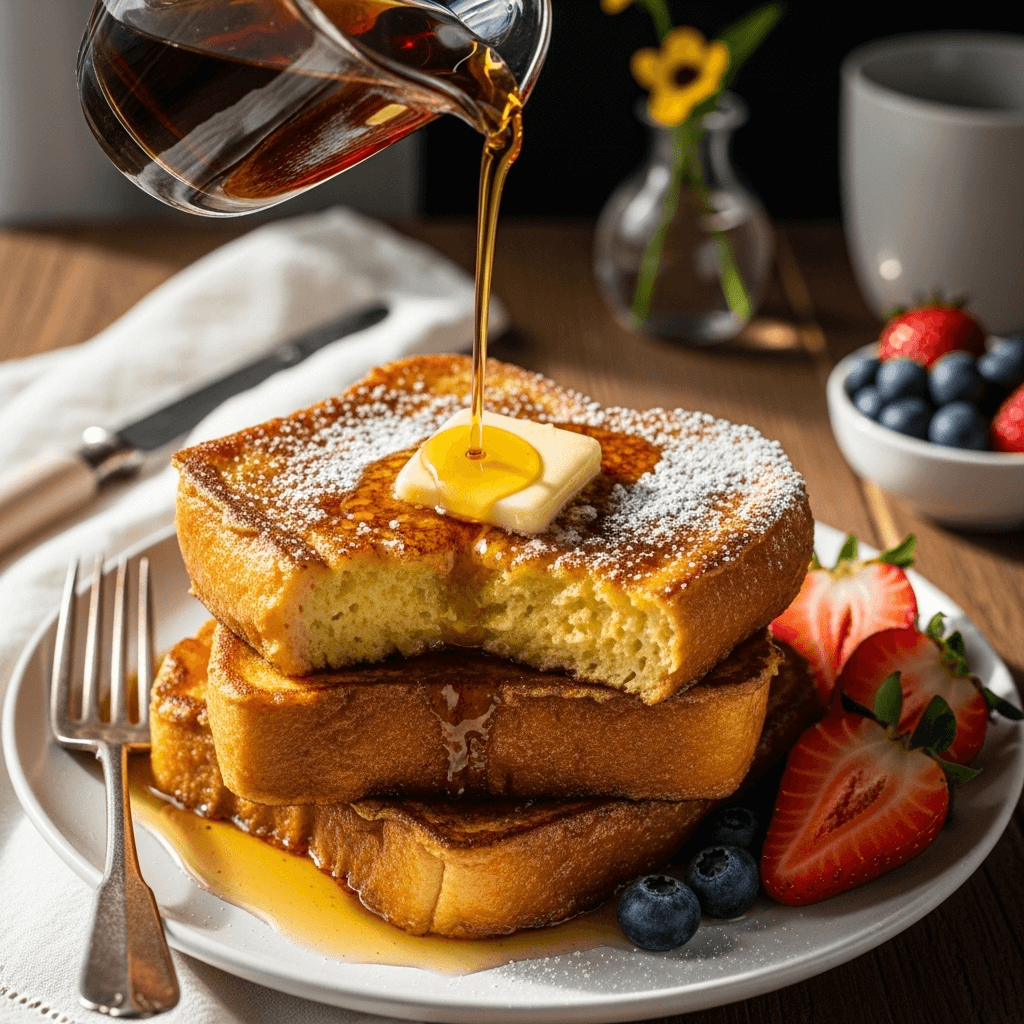

There’s something magical about the aroma of French toast sizzling on the griddle on a lazy weekend morning. This easy French toast recipe transforms simple bread into golden, custardy slices with crispy edges and a tender, flavorful center. Whether you’re feeding a crowd for Sunday brunch, creating a special breakfast for your family, or treating yourself to a comforting morning meal, this classic breakfast dish never disappoints.
French toast is one of those timeless recipes that every home cook should master. It’s incredibly forgiving, uses basic pantry ingredients, and comes together in just 15 minutes from start to finish. Serve it for weekend breakfast, holiday brunch gatherings, Mother’s Day celebrations, or even as a sweet breakfast-for-dinner treat. Kids absolutely love it, and adults appreciate how it turns everyday bread into something extraordinary with just a few simple ingredients.
This recipe delivers perfectly cooked French toast every single time – crispy on the outside, soft and custardy on the inside, with just the right amount of sweetness and warmth from cinnamon and vanilla. It’s the kind of breakfast that makes ordinary mornings feel special and brings everyone to the table with smiles.
History / Background
French toast has a fascinating history that spans centuries and continents, and despite its name, it didn’t actually originate in France. The concept of soaking stale bread in a mixture of eggs and milk before frying dates back to ancient Rome, where a similar dish called “Pan Dulcis” appeared in the cookbook of Apicius from the 5th century. This resourceful cooking method was born out of necessity – a clever way to transform hard, stale bread into something delicious and palatable rather than letting it go to waste.
The dish traveled through Europe over the centuries, appearing in various forms across different cultures. In medieval England, it was called “pain perdu,” which literally translates to “lost bread” – another reference to rescuing bread that would otherwise be thrown away. The French adopted this name as well, and it remains the traditional French name for the dish to this day.
So why do we call it “French toast” in America? The name likely became popular in the United States in the 17th century, though some culinary historians credit an innkeeper named Joseph French who allegedly created the dish in 1724 and named it after himself (though he supposedly forgot the apostrophe, so it became “French toast” rather than “French’s toast”). Whether this story is true or simply culinary legend, the name stuck.
Throughout history, variations of French toast have appeared in cultures worldwide. In Spain, it’s called “torrijas” and is traditionally served during Lent and Holy Week. In Portugal, “rabanadas” are a Christmas tradition. German “Arme Ritter” (poor knights) and Austrian “Pafese” are essentially the same concept. Each culture has added its own twist – some use wine instead of milk, others incorporate citrus zest, and some serve it with savory toppings rather than sweet.
Today, French toast remains a beloved breakfast staple in American homes and restaurants. It represents comfort food at its finest – simple, satisfying, and endlessly customizable. From classic diner-style versions topped with butter and maple syrup to gourmet restaurant interpretations featuring brioche, mascarpone, and berry compotes, French toast has earned its place as a breakfast icon.
Why You’ll Love This Recipe
This easy French toast recipe is about to become your go-to weekend breakfast for so many reasons. It combines simplicity with spectacular results, making it perfect for both beginner cooks and experienced home chefs who want a reliable, delicious breakfast without any fuss.
Here’s why this recipe is absolutely irresistible:
- Incredibly Quick – From mixing bowl to breakfast table in just 15 minutes, making it perfect for busy mornings when you want something special without the time commitment
- Simple Ingredients – Uses everyday pantry staples you probably already have on hand, with no need for specialty items or a trip to the store
- Budget-Friendly – One of the most economical breakfast options that tastes like a million bucks, perfect for feeding a family without breaking the bank
- Foolproof Method – Nearly impossible to mess up with clear, simple steps that guarantee success every time, even for cooking beginners
- Kid-Approved – Children absolutely love the slightly sweet flavor and soft texture, making morning battles over breakfast a thing of the past
- Customizable – Easily adapt this recipe to suit your family’s preferences with different toppings, spices, or bread choices
- Restaurant-Quality at Home – Achieve that perfect diner-style French toast with crispy golden edges right in your own kitchen
- Make-Ahead Friendly – Can be prepped the night before or cooked in batches and reheated, perfect for busy households
Ingredient Notes
The beauty of this easy French toast recipe lies in its simplicity. Each ingredient plays an important role in creating that perfect balance of crispy exterior and custardy interior. Let’s break down what you’ll need and why each component matters.
Bread – The foundation of great French toast. Thick-cut bread (about 3/4 to 1 inch thick) works best because it absorbs the egg mixture without falling apart. Day-old bread is actually ideal because it’s slightly drier and soaks up the custard beautifully without becoming soggy. Texas toast, brioche, challah, or French bread are excellent choices. In a pinch, regular sandwich bread works too, though it’s more delicate. Substitution: Try sourdough for tang, whole wheat for fiber, or cinnamon raisin bread for extra sweetness.
Eggs – These are the binding agent that creates the custard coating. Large eggs work perfectly for this recipe. They provide richness, protein, and help create that signature golden-brown color when cooked. Substitution: For dairy-free diets, eggs are essential and can’t be easily replaced, though flax eggs or commercial egg replacers can work in a pinch with different results.
Milk – Adds moisture and helps thin out the egg mixture so it coats the bread evenly. Whole milk creates the richest flavor, but any milk you have on hand will work. Substitution: Use half-and-half or heavy cream for extra richness, or almond milk, oat milk, or soy milk for dairy-free versions.
Vanilla Extract – A small amount goes a long way in adding warmth and depth of flavor. Pure vanilla extract is preferred over imitation for the best taste. This ingredient is what takes your French toast from basic to bakery-quality.
Ground Cinnamon – Provides that classic warm spice flavor that’s synonymous with French toast. It adds complexity without overwhelming the dish. Substitution: Try pumpkin pie spice, nutmeg, or cardamom for different flavor profiles.
Granulated Sugar – Just a touch of sweetness in the egg mixture helps with caramelization and balances the flavors. It’s not meant to make the French toast overly sweet – that’s what toppings are for. Substitution: Honey, maple syrup, or brown sugar can replace granulated sugar.
Salt – A pinch of salt is crucial for balancing the sweetness and enhancing all the other flavors. Never skip the salt, even in sweet dishes.
Butter – Used for cooking the French toast. Butter adds rich flavor and helps achieve those beautifully golden, crispy edges. Substitution: Use coconut oil, vegetable oil, or non-stick cooking spray if you prefer, though butter gives the best flavor.
Equipment Needed
You don’t need fancy kitchen gadgets to make perfect French toast. Here’s everything you’ll need for this easy recipe:
- Large Shallow Bowl or Pie Dish – For mixing the egg custard and dipping the bread. A shallow, wide dish makes coating the bread slices much easier than a deep bowl.
- Whisk or Fork – To thoroughly beat the eggs and combine all the custard ingredients until smooth.
- Large Non-Stick Skillet or Griddle – A 12-inch skillet or electric griddle works best, allowing you to cook multiple slices at once. Non-stick surface prevents sticking and makes cleanup easier.
- Spatula – A wide, flat spatula is ideal for flipping the French toast without breaking the slices.
- Measuring Cups and Spoons – For accurate measurements of milk, vanilla, sugar, and spices.
- Plate or Baking Sheet – To hold cooked French toast. If keeping warm, you can place in a 200°F oven while cooking remaining batches.
- Small Butter Dish or Plate – To keep butter handy for greasing the pan between batches.
French Toast Recipe
- Total Time: 15 minutes
- Yield: 8 slices (4 servings) 1x
- Diet: Vegetarian
Description
This easy French toast recipe creates perfectly golden, crispy-on-the-outside and custardy-on-the-inside slices in just 15 minutes. With simple pantry ingredients and foolproof instructions, you’ll make restaurant-quality French toast right at home. Perfect for weekend breakfasts, holiday brunches, or special family mornings.
Ingredients
- 8 slices thick-cut bread (Texas toast, brioche, or challah work best)
- 4 large eggs
- 2/3 cup whole milk
- 1 teaspoon vanilla extract
- 1 teaspoon ground cinnamon
- 1 tablespoon granulated sugar
- 1/4 teaspoon salt
- 2–3 tablespoons butter (for cooking)
For Serving:
- Pure maple syrup
- Powdered sugar
- Fresh berries
- Whipped cream (optional)
Instructions
- Prepare the Custard Mixture: In a large shallow bowl or pie dish, whisk together the eggs, milk, vanilla extract, cinnamon, sugar, and salt until well combined and smooth. Make sure there are no streaks of egg white remaining. The mixture should be uniform in color and slightly frothy.
- Heat Your Pan: Place a large non-stick skillet or griddle over medium heat. Add 1 tablespoon of butter and allow it to melt completely, swirling to coat the bottom of the pan. The butter should sizzle gently but not smoke or turn brown.
- Dip the Bread: Working with one slice at a time, place the bread in the egg mixture. Let it soak for about 20-30 seconds on each side, allowing the bread to absorb the custard without becoming too soggy. The bread should be well-coated but still hold its shape. If using thicker bread like brioche, you may need a few extra seconds.
- Cook the First Side: Carefully transfer the soaked bread to the hot skillet. Cook for 2-3 minutes on the first side, or until the bottom is golden brown with crispy edges. You should see the edges turning golden and the surface beginning to set.
- Flip and Cook: Using a wide spatula, gently flip the French toast. Cook for an additional 2-3 minutes on the second side until golden brown and cooked through. The French toast should feel slightly firm when pressed gently with the spatula.
- Keep Warm and Repeat: Transfer cooked French toast to a plate or baking sheet in a 200°F oven to keep warm while you cook the remaining slices. Add more butter to the pan as needed between batches, usually about 1/2 tablespoon per batch.
- Serve Immediately: Plate your golden French toast slices and serve hot with your favorite toppings. Dust with powdered sugar, drizzle with warm maple syrup, and add fresh berries or whipped cream if desired.
Notes
- Bread Choice Matters: Day-old bread works better than fresh because it’s drier and absorbs the custard without falling apart. If using fresh bread, let slices sit out for 30 minutes before using.
- Don’t Over-Soak: While you want the bread well-coated, soaking too long makes it soggy and difficult to flip. Thicker bread can handle longer soaking than thin slices.
- Temperature Control: Medium heat is key. Too hot and the outside burns before the inside cooks; too low and you won’t get that crispy golden crust.
- Make It Dairy-Free: Substitute the milk with almond milk, oat milk, or coconut milk, and use coconut oil instead of butter for cooking.
- Batch Cooking: This recipe is easily doubled or tripled for feeding a crowd. Keep finished slices warm in a 200°F oven on a wire rack set over a baking sheet to maintain crispness.
- Prep Time: 5 minutes
- Cook Time: 10 minutes
- Category: Breakfast
- Method: Stovetop
- Cuisine: American
Nutrition
- Serving Size: 2 slices
- Calories: 345
- Sugar: 8g
- Sodium: 465mg
- Fat: 14g
- Saturated Fat: 6g
- Unsaturated Fat: 6g
- Trans Fat: 0g
- Carbohydrates: 42g
- Fiber: 2g
- Protein: 12g
- Cholesterol: 195mg
Tips & Variations
The beauty of French toast is how easily you can customize it to suit your family’s tastes or dietary needs. Here are some delicious ways to switch things up:
Flavor Variations:
- Stuffed French Toast: Create a pocket in thick bread slices and fill with cream cheese, Nutella, peanut butter, or fruit preserves before dipping in the custard.
- Orange French Toast: Add 1 teaspoon of orange zest and replace 2 tablespoons of milk with fresh orange juice for a bright citrus flavor.
- Banana Foster French Toast: Top cooked French toast with caramelized bananas made by sautéing sliced bananas in butter, brown sugar, and a splash of rum extract.
- Pumpkin Spice French Toast: Add 2 tablespoons of pumpkin puree and replace cinnamon with pumpkin pie spice for a fall-inspired breakfast.
- Coconut French Toast: Use coconut milk instead of regular milk and add 1/4 teaspoon coconut extract. Top with toasted coconut flakes.
Bread Alternatives:
- Try cinnamon raisin bread, sourdough, whole grain bread, croissants (absolutely decadent!), or even Hawaiian rolls for slider-sized French toast bites that kids love.
Healthier Options:
- Use whole wheat or sprouted grain bread for added fiber and nutrients
- Replace some of the milk with mashed banana for natural sweetness and binding
- Reduce sugar to 1 teaspoon or use a sugar substitute
- Top with fresh fruit and Greek yogurt instead of syrup for added protein
Savory French Toast:
- Omit the sugar, vanilla, and cinnamon from the custard
- Add herbs like thyme, black pepper, and a pinch of garlic powder
- Top with crispy bacon, avocado, and a fried egg for a savory breakfast sandwich
Pro Chef Tips
Take your French toast from good to absolutely extraordinary with these professional techniques:
Use Stale Bread for Best Results: Professional chefs actually prefer day-old or slightly stale bread because it has a drier texture that absorbs the custard beautifully without becoming mushy. Fresh bread contains more moisture and can turn soggy. If you only have fresh bread, leave slices out uncovered for 30-60 minutes, or toast them lightly before dipping.
Master the Custard Ratio: The perfect French toast custard uses a ratio of 1 egg to approximately 3 tablespoons of liquid. This creates the ideal consistency – thick enough to coat the bread but thin enough to soak in. Too many eggs make it too thick and eggy-tasting; too much milk makes it watery.
Add a Secret Ingredient: Many restaurant chefs add a tablespoon of heavy cream or a small pat of melted butter directly into the egg mixture. This creates an incredibly rich, silky custard that makes your French toast taste gourmet.
Control Your Heat Carefully: The sweet spot for cooking French toast is medium to medium-low heat. You want the butter to sizzle gently when you add the bread. If the butter browns immediately, your pan is too hot. The goal is to cook the custard all the way through while achieving golden-brown caramelization on the outside.
The Two-Pan Method: Professional brunch cooks often use two pans simultaneously – one for cooking and one that’s slightly cooler for finishing thicker slices that need extra time. This prevents burning while ensuring the center is cooked through.
Let It Rest for a Moment: After cooking, let your French toast rest on the plate for 30 seconds before serving. This brief rest allows the custard to set completely, making each bite perfectly tender rather than runny.
Clarify Your Butter: For the ultimate crispy edges without burning, use clarified butter (butter with milk solids removed) for cooking. It has a higher smoke point than regular butter, allowing you to achieve better browning.
Toast Before Serving: For restaurant-quality presentation and extra crispiness, place finished French toast under the broiler for 30-60 seconds before serving. This creates a beautiful caramelized top and reheats any slices that may have cooled while cooking in batches.
Common Mistakes to Avoid
Even though French toast is relatively simple, these common pitfalls can affect your results. Here’s what to watch out for:
Using Bread That’s Too Thin: Thin sandwich bread doesn’t have enough structure to hold the custard and often falls apart during cooking or becomes mushy. Always opt for bread that’s at least 3/4-inch thick. If you only have thin bread, reduce soaking time to just 10-15 seconds per side.
Over-Soaking the Bread: The most common mistake home cooks make is letting the bread sit in the custard too long. While you want thorough coating, leaving it too long turns the bread soggy and makes it nearly impossible to flip without it falling apart. Watch for the bread to absorb custard but still hold its shape firmly.
Cooking on Too High Heat: When the pan is too hot, the outside burns before the egg custard in the center cooks through, leaving you with burnt exterior and raw, eggy interior. Always use medium heat and be patient. Perfect French toast takes a full 2-3 minutes per side.
Not Whisking the Custard Enough: Streaks of egg white in your custard mixture mean uneven coating and bits of cooked egg white on your finished French toast. Whisk vigorously until the mixture is completely uniform and slightly frothy.
Skipping the Salt: Many people think salt doesn’t belong in sweet dishes, but a small pinch is essential for balancing flavors and enhancing the sweetness. Without it, your French toast tastes flat and one-dimensional.
Crowding the Pan: Trying to cook too many slices at once lowers the pan temperature, creates steam instead of a crisp crust, and makes flipping difficult. Give each slice plenty of space – usually 2-3 slices in a 12-inch skillet is perfect.
Not Adjusting for Different Breads: Dense breads like sourdough need longer soaking time than airy breads like challah. Rich breads like brioche brown faster due to their butter and egg content, so they may need slightly lower heat. Pay attention to your specific bread type and adjust accordingly.
Storage & Meal Prep
French toast is surprisingly meal-prep friendly, making it perfect for busy weekday mornings when you want a special breakfast without the time commitment.
Storing Leftovers: Leftover French toast keeps beautifully in the refrigerator for up to 4 days. Allow cooked slices to cool completely to room temperature, then stack them in an airtight container with pieces of parchment paper between each slice to prevent sticking. This prevents the slices from becoming soggy and makes reheating individual portions easy.
Reheating Methods: The best way to reheat French toast is in a toaster or toaster oven. This method restores the crispy exterior while warming the inside perfectly. Simply toast on medium setting for 2-3 minutes. Alternatively, reheat in a 350°F oven for 5-7 minutes, or in a skillet over medium heat with a small pat of butter for 1-2 minutes per side. Avoid the microwave if possible, as it makes French toast rubbery and soggy.
Meal Prep for the Week: Cook a large batch on Sunday and store individual portions in the refrigerator. In the morning, simply pop slices in the toaster while you prepare coffee and toppings. This gives you a homemade breakfast in under 3 minutes on busy weekday mornings.
Keeping French Toast Warm: When cooking for a crowd, keep finished slices warm in a 200°F oven on a wire rack set over a baking sheet. The wire rack allows air circulation, preventing the bottom from becoming soggy while maintaining the crispy texture. You can hold French toast this way for up to 30 minutes without quality loss.
Make-Ahead & Freezer Notes
French toast is one of the best make-ahead breakfast options, perfect for meal planning and busy schedules.
Freezing Cooked French Toast: French toast freezes exceptionally well for up to 2 months. After cooking, cool the slices completely on a wire rack (this prevents condensation and sogginess). Arrange slices in a single layer on a baking sheet and freeze for 1-2 hours until solid. Then transfer to a freezer-safe bag or container with parchment paper between slices. This flash-freezing method prevents slices from sticking together.
Reheating from Frozen: The beauty of frozen French toast is that you can reheat it directly from frozen with no thawing required. Pop frozen slices directly into the toaster or toaster oven for 4-5 minutes, or bake at 375°F for 8-10 minutes until heated through and crispy. This makes it faster than making fresh French toast when you’re in a rush.
Preparing Custard Ahead: You can whisk together the egg mixture the night before and store it in the refrigerator in a covered bowl or jar. Give it a good stir or shake in the morning before using, as the ingredients may separate slightly overnight. This saves precious minutes during busy mornings.
Overnight French Toast (Casserole Style): For an even more hands-off approach, try preparing French toast casserole-style. Arrange bread slices in a baking dish, pour the custard mixture over top, cover, and refrigerate overnight. In the morning, bake at 350°F for 35-40 minutes. This method is perfect for feeding a crowd with minimal morning effort.
Prepping Bread Slices: If you’re using fresh bread that needs to dry out, you can slice and arrange it on a baking sheet the night before, leaving it uncovered at room temperature. By morning, it will have the perfect texture for absorbing custard without becoming soggy.
Serving Suggestions
French toast is incredibly versatile and pairs beautifully with both sweet and savory accompaniments. Here are some delicious ways to serve this breakfast classic:
Classic Sweet Toppings:
- Pure maple syrup (the real stuff makes a noticeable difference!)
- Dusting of powdered sugar
- Fresh berries (strawberries, blueberries, raspberries, or blackberries)
- Sliced bananas
- Whipped cream or whipped coconut cream
- Butter pat that melts into every bite
Gourmet Sweet Toppings:
- Berry compote or fruit coulis
- Cream cheese glaze
- Caramelized apples or pears with cinnamon
- Nutella and sliced strawberries
- Lemon curd and fresh blueberries
- Mascarpone cheese and honey
Protein-Packed Sides:
- Crispy bacon strips
- Breakfast sausage links or patties
- Canadian bacon or ham
- Scrambled or fried eggs
- Turkey sausage for a leaner option
Fresh & Light Options:
- Fresh fruit salad
- Greek yogurt parfait
- Cottage cheese with fruit
- Smoothie or fresh-squeezed juice
Beverage Pairings:
- Freshly brewed coffee or espresso
- Hot chocolate or chai latte
- Fresh-squeezed orange juice
- Milk (especially for kids)
- Mimosas or Bellinis for brunch gatherings
Complete Brunch Menu Ideas: For a full brunch spread, serve French toast alongside scrambled eggs, crispy bacon, fresh fruit salad, hash browns or breakfast potatoes, and a variety of fresh juices and coffee. This creates a restaurant-quality brunch experience at home that’s perfect for entertaining guests or celebrating special occasions like Mother’s Day, Easter, or birthday mornings.
FAQs Section
Can I make French toast without milk? Yes! You can make French toast with just eggs and a splash of water if you’re out of milk, though the texture will be slightly less rich and creamy. For dairy-free options, substitute any plant-based milk like almond milk, oat milk, soy milk, or coconut milk. The recipe works identically with these substitutions, though coconut milk will add a subtle coconut flavor.
What’s the best bread for French toast? The best breads for French toast are thick-cut varieties with sturdy structure: brioche, challah, Texas toast, French bread, or sourdough. Brioche and challah are particularly excellent because they’re enriched with eggs and butter, creating an ultra-rich, tender result. Day-old bread of any variety works better than fresh because it absorbs the custard without falling apart. In a pinch, regular sandwich bread works, though you’ll need to reduce soaking time.
Why is my French toast soggy in the middle? Soggy French toast usually results from one of three issues: soaking the bread too long (it becomes waterlogged), using bread that’s too thin (it can’t hold the custard), or cooking on heat that’s too high (the outside cooks before the inside). To fix this, use thicker bread slices (at least 3/4-inch), soak for only 20-30 seconds per side, and cook over medium heat for the full 2-3 minutes per side to allow the egg custard to cook through completely.
Can I make French toast ahead of time for a crowd? Absolutely! French toast is excellent for make-ahead brunches. You can cook it completely up to 24 hours in advance, refrigerate, and reheat in a 350°F oven or toaster. For serving a crowd at a brunch party, use the keep-warm method: place cooked slices on a wire rack over a baking sheet in a 200°F oven while you continue cooking batches. Alternatively, make a French toast casserole the night before and bake it in the morning.
How do I make French toast crispy instead of soft? For maximum crispiness, use day-old or lightly toasted bread, don’t over-soak (30 seconds per side maximum), cook in real butter over medium heat, and make sure your pan is hot enough that the butter sizzles when you add the bread. Cook until deeply golden brown on each side. If you want extra crispiness, place finished French toast under the broiler for 30-60 seconds before serving, watching carefully to prevent burning.
Can I freeze French toast? Yes! French toast freezes beautifully for up to 2 months. Cook the French toast completely, cool to room temperature, then freeze slices in a single layer on a baking sheet. Once frozen solid, transfer to a freezer bag with parchment paper between slices. Reheat directly from frozen in the toaster (4-5 minutes) or oven at 375°F (8-10 minutes). This makes French toast just as convenient as frozen waffles but infinitely more delicious.
What can I use instead of eggs in French toast? While eggs are traditional and provide the best texture, you can make vegan French toast by creating a mixture of 1 cup plant-based milk, 2 tablespoons cornstarch or flour, 1 tablespoon ground flaxseed, plus the vanilla, cinnamon, and sugar. Whisk until smooth and use the same way as the egg mixture. The result won’t be quite as custardy, but it’s still delicious and works well for those with egg allergies or following a vegan diet.
Conclusion
There you have it – the ultimate guide to making perfect, golden, custardy French toast right in your own kitchen! This easy French toast recipe proves that you don’t need fancy ingredients or complicated techniques to create something truly special. With just a few pantry staples, simple equipment, and about 15 minutes, you can serve up a breakfast that rivals any restaurant brunch.
Whether you’re making this classic French toast recipe for a lazy Sunday morning, a holiday breakfast gathering, or even a special weeknight treat, it’s sure to bring smiles to everyone at your table. The best part? Once you master this basic recipe, you can customize it endlessly with different breads, toppings, and flavor variations to keep breakfast exciting week after week.
I’d love to hear how your French toast turns out! Did you try any of the variations? Do you have a special topping combination your family loves? Drop a comment below and share your experience. And if you loved this recipe, please share it on Pinterest so other home cooks can discover it too – just use the save button on the images throughout this post!
Don’t forget to take a photo of your beautiful golden French toast and tag me on social media. There’s nothing I love more than seeing your kitchen creations come to life. Happy cooking, and here’s to many more delicious breakfast mornings ahead!
Pin this recipe for later and save it to your breakfast board so you’ll always have it handy when that French toast craving hits!