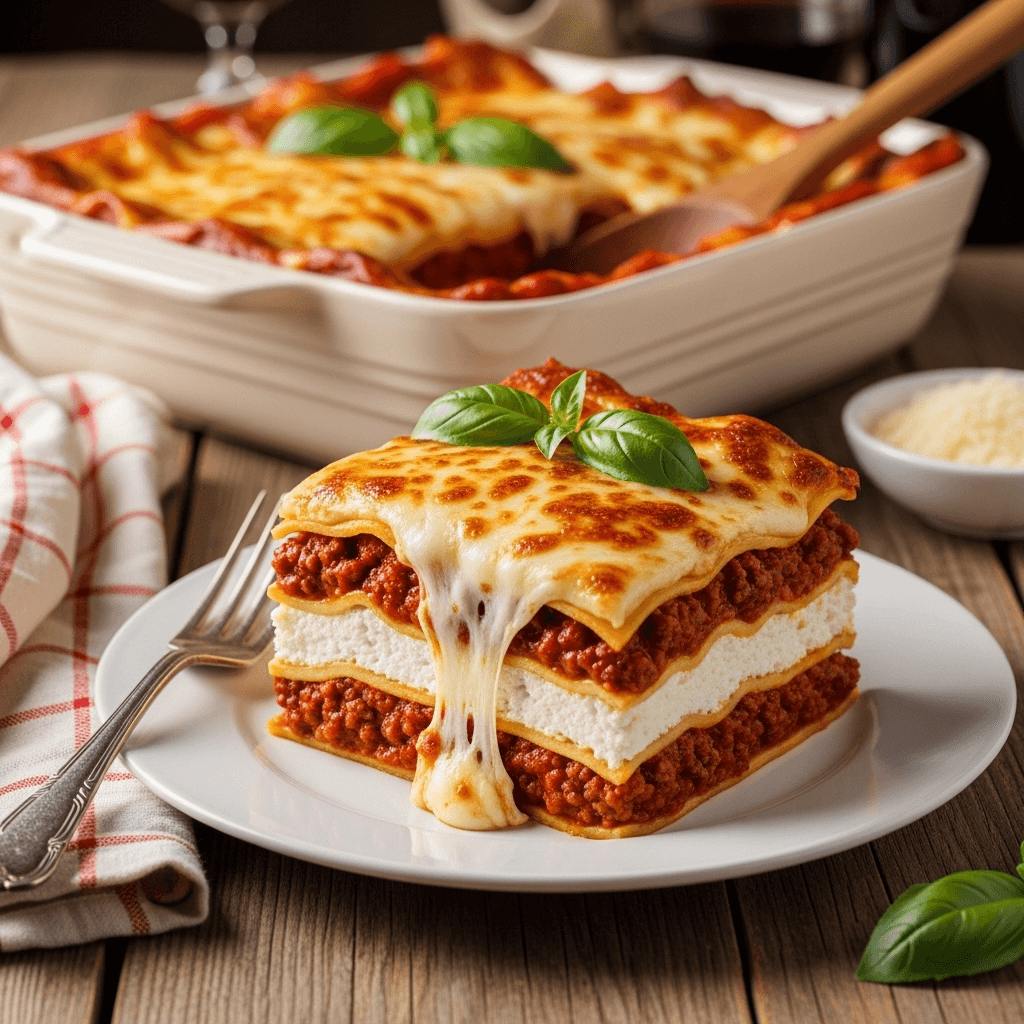

Few dishes say “comfort food” quite like a bubbling pan of homemade lasagna fresh from the oven. With its layers of tender pasta, rich meat sauce, creamy ricotta, and gooey melted cheese, this classic lasagna recipe is the kind of meal that brings families together around the dinner table and creates memories that last a lifetime.
This easy homemade lasagna is the real deal—none of that watery, disappointing restaurant version. We’re talking about perfectly layered pasta with a hearty meat sauce that’s been simmered to perfection, a luscious cheese filling that stays creamy and never grainy, and that irresistible golden cheese topping that gets slightly crispy around the edges. It’s the lasagna your Italian grandmother would be proud of, even if you’re making it for the very first time.
Perfect for Sunday dinners, potluck gatherings, holiday meals, or anytime you want to feed a crowd with something special, this traditional lasagna recipe serves 8-10 people generously. It’s also fantastic for meal prep—make one to eat now and one to freeze for later. While it does take some time to assemble, the actual hands-on work is straightforward, and the result is absolutely worth every minute. Once you master this classic version, you’ll understand why lasagna has been bringing joy to dinner tables for generations.
History / Background
Lasagna is one of the oldest pasta dishes in existence, with roots tracing back to ancient Greece. The word “lasagna” likely comes from the Greek word “laganon,” which referred to flat sheets of pasta dough cut into strips. The Romans adopted this, calling it “lasanum,” which referred to the cooking pot itself.
However, the lasagna we know and love today is distinctly Italian, specifically from the Emilia-Romagna region in Northern Italy, particularly the city of Bologna. The traditional “Lasagne alla Bolognese” features the region’s famous Bolognese sauce (ragù), béchamel sauce, Parmigiano-Reggiano cheese, and fresh pasta sheets. This version differs from Italian-American lasagna, which typically uses ricotta cheese instead of béchamel—an adaptation made by Italian immigrants in America.
When Italian immigrants arrived in the United States in the late 19th and early 20th centuries, they brought their beloved lasagna recipes with them. However, ingredients had to be adapted to what was available in their new home. Ricotta cheese was more accessible and affordable than making béchamel sauce, and mozzarella cheese became a staple topping. These adaptations created the Italian-American lasagna that’s become a staple in homes across the United States.
The dish gained massive popularity in America after World War II, when soldiers returned home having developed a taste for Italian cuisine during their time overseas. By the 1950s and 60s, lasagna had become a mainstream American comfort food, appearing in cookbooks, women’s magazines, and on dinner tables nationwide.
Today, lasagna represents the beautiful fusion of Italian tradition and American adaptation. Every family has their own version—some add Italian sausage, others use cottage cheese, some prefer a vegetarian version—but they all share those satisfying layers and that ability to bring people together over a hearty, delicious meal.
Why You’ll Love This Recipe
This isn’t just any lasagna recipe—it’s the one you’ll make again and again, the one you’ll pass down to your kids, and the one that’ll earn you a reputation as an amazing cook. It strikes the perfect balance between authentic Italian flavor and practical American home cooking.
Here’s why this recipe will become your go-to:
- Foolproof Layering System: Clear instructions ensure perfect layers every single time
- Restaurant-Quality Flavor: Tastes like it came from your favorite Italian restaurant
- Feeds a Crowd: Generously serves 8-10 people, perfect for gatherings
- Make-Ahead Friendly: Assemble ahead and bake when ready, or freeze for later
- No Boil Option: Works with both regular and no-boil noodles
- Stays Together Perfectly: Clean, beautiful slices that don’t fall apart
- Budget-Friendly: Affordable ingredients stretch to feed many people
- Impressive but Achievable: Looks complicated but is actually straightforward
- Leftovers Get Better: Tastes even more amazing the next day
- Freezer Superstar: Freezes beautifully for up to 3 months
Whether you’re a lasagna novice or you’ve made it dozens of times, this recipe delivers consistent, crowd-pleasing results that’ll have everyone asking for seconds.
Ingredient Notes
Understanding your ingredients helps you make the best lasagna possible. Here’s what you need to know:
Ground Beef: Use 80/20 ground beef for the best flavor and texture. Leaner beef (90/10) works but can be drier. You can also use a combination of beef and Italian sausage (half and half) for extra flavor depth. Ground turkey or chicken can substitute for a lighter version.
Lasagna Noodles: Traditional lasagna noodles need to be boiled first, while no-boil (oven-ready) noodles go straight into the pan. Both work beautifully in this recipe—no-boil saves time but traditional noodles have slightly better texture. You’ll need about 12-15 noodles depending on your pan size.
Ricotta Cheese: The key to that creamy middle layer. Full-fat ricotta creates the richest texture, but part-skim works well too. Some people substitute cottage cheese (drain it well first) for a tangier, slightly different texture. Fresh ricotta from Italian markets is a real treat if available.
Mozzarella Cheese: Use whole milk mozzarella for best melting and flavor. Pre-shredded is convenient and works fine, though freshly shredded melts more smoothly. Part-skim mozzarella works but won’t be quite as creamy.
Parmesan Cheese: Freshly grated Parmigiano-Reggiano is worth the investment—it adds a nutty, complex flavor that pre-grated cheese can’t match. Buy a chunk and grate it yourself for best results.
Pasta Sauce: You can use your favorite jarred marinara sauce for convenience (use about 5-6 cups), but homemade sauce takes this lasagna to the next level. A combination of crushed tomatoes and tomato paste creates the perfect consistency and flavor.
Italian Seasoning: A blend of oregano, basil, thyme, and other herbs. You can make your own or use a quality store-bought blend. Fresh basil added at the end elevates the dish beautifully.
Eggs: Bind the ricotta mixture together, helping it set during baking so slices hold their shape. Don’t skip them or your cheese layer will be runny.
Garlic and Onion: The aromatic foundation of your meat sauce. Fresh is always better than powdered. Take time to properly sauté them for the best flavor base.
Equipment Needed
Having the right tools makes lasagna assembly smooth and stress-free:
- 9×13-inch Baking Dish: The standard size for lasagna. Glass, ceramic, or metal all work well. Deeper dishes allow for more layers.
- Large Pot or Dutch Oven: For cooking the meat sauce and boiling noodles (if using traditional).
- Large Skillet: For browning the meat and building the sauce.
- Large Mixing Bowl: For combining the ricotta cheese mixture.
- Colander: For draining noodles if using traditional pasta.
- Wooden Spoon: For stirring sauce and breaking up meat.
- Measuring Cups and Spoons: For accurate ingredient portions.
- Cheese Grater: If shredding fresh mozzarella and Parmesan.
- Ladle or Large Spoon: For spreading sauce evenly.
- Aluminum Foil: To cover while baking and prevent over-browning.
- Sharp Knife and Spatula: For cutting and serving clean slices.
- Cooling Rack: Essential for letting lasagna rest before cutting.
Classic Lasagna Recipe
- Total Time: 1 hour 30 minutes (plus 15 minutes resting)
- Yield: 8-10 servings 1x
- Diet: Gluten Free
Description
This classic homemade lasagna features layers of tender pasta, rich meat sauce, creamy ricotta cheese filling, and melted mozzarella that creates the ultimate Italian comfort food. Perfect for family dinners, potlucks, or meal prep, this traditional lasagna recipe delivers restaurant-quality results that everyone will love.
Ingredients
For the Meat Sauce:
- 1 pound ground beef (80/20)
- 1/2 pound Italian sausage (optional, or use 1.5 lbs total beef)
- 1 medium onion, finely diced
- 4 cloves garlic, minced
- 1 (28-ounce) can crushed tomatoes
- 1 (15-ounce) can tomato sauce
- 2 tablespoons tomato paste
- 1/4 cup water
- 2 tablespoons fresh basil, chopped (or 2 teaspoons dried)
- 1 tablespoon Italian seasoning
- 1 teaspoon sugar (balances acidity)
- 1 teaspoon salt
- 1/2 teaspoon black pepper
- 1/4 teaspoon red pepper flakes (optional)
For the Cheese Mixture:
- 16 ounces (2 cups) whole milk ricotta cheese
- 1 large egg
- 1/4 cup fresh Parmesan cheese, grated
- 2 tablespoons fresh parsley, chopped
- 1/2 teaspoon salt
- 1/4 teaspoon black pepper
- 1/4 teaspoon garlic powder
For Assembly:
- 12–15 lasagna noodles (regular or no-boil)
- 4 cups shredded mozzarella cheese, divided
- 1/2 cup Parmesan cheese, grated
- Fresh basil for garnish (optional)
Instructions
- Make the Meat Sauce: In a large skillet or Dutch oven over medium-high heat, cook the ground beef and Italian sausage, breaking it up with a wooden spoon, until browned and no pink remains, about 8-10 minutes. Drain excess fat, leaving about 1 tablespoon in the pan. Add diced onion and cook until softened, about 5 minutes. Add minced garlic and cook for 1 minute until fragrant.
- Build the Sauce: Stir in crushed tomatoes, tomato sauce, tomato paste, and water. Add basil, Italian seasoning, sugar, salt, pepper, and red pepper flakes. Bring to a simmer, then reduce heat to low. Let sauce simmer for 20-30 minutes, stirring occasionally, until it thickens and flavors meld. Taste and adjust seasonings as needed.
- Prepare the Noodles: If using regular lasagna noodles, cook according to package directions until al dente. Drain and lay flat on a clean kitchen towel to prevent sticking. If using no-boil noodles, skip this step entirely.
- Make the Cheese Mixture: While sauce simmers, combine ricotta cheese, egg, Parmesan, parsley, salt, pepper, and garlic powder in a medium bowl. Mix until smooth and well combined. Set aside.
- Preheat Oven: Set oven to 375°F. Lightly spray a 9×13-inch baking dish with cooking spray or brush with olive oil.
- First Layer: Spread 1 cup of meat sauce across the bottom of the prepared baking dish, covering it completely. This prevents noodles from sticking and adds moisture.
- Build the Layers: Arrange 4-5 lasagna noodles over the sauce, overlapping slightly if needed. Spread half of the ricotta mixture over the noodles using a spoon or offset spatula. Sprinkle with 1 cup of shredded mozzarella. Top with 1½ cups of meat sauce, spreading evenly.
- Repeat Layers: Add another layer of 4-5 noodles, the remaining ricotta mixture, 1 cup mozzarella, and 1½ cups meat sauce.
- Final Layer: Top with remaining noodles, remaining meat sauce (make sure noodles are completely covered), remaining 2 cups mozzarella, and the ½ cup Parmesan cheese.
- Bake Covered: Cover tightly with aluminum foil (spray the underside with cooking spray to prevent cheese from sticking). Bake for 45 minutes.
- Bake Uncovered: Remove foil and bake for an additional 15 minutes until cheese is bubbly and starting to turn golden brown around the edges.
- Rest Before Serving: Remove from oven and let rest for 15-20 minutes before cutting. This crucial step allows the layers to set so slices hold together perfectly. Garnish with fresh basil if desired.
Notes
- No-Boil Noodles: If using no-boil noodles, make sure your sauce is slightly thinner (add extra ½ cup water) as the noodles absorb moisture while baking.
- Make It Vegetarian: Omit meat and add sautéed vegetables like mushrooms, zucchini, spinach, and bell peppers to the sauce.
- Resting Time is Critical: Don’t skip the 15-minute rest! It makes all the difference between clean slices and a saucy mess.
- Covering Prevents Burning: The foil for the first 45 minutes prevents the top from over-browning while the inside cooks through.
- Check Doneness: Lasagna is done when it’s bubbling around the edges and a knife inserted in the center comes out hot.
- Prep Time: 30 minutes
- Cook Time: 1 hour
- Category: Dinner
- Method: Baking
- Cuisine: Italian-American
Nutrition
- Serving Size: 1/8 of lasagna (generous portion)
- Calories: 485
- Sugar: 8g
- Sodium: 920mg
- Fat: 24g
- Saturated Fat: 12g
- Unsaturated Fat: 10g
- Trans Fat: 0g
- Carbohydrates: 35g
- Fiber: 3g
- Protein: 32g
- Cholesterol: 95mg
Tips & Variations
White Lasagna: Skip the meat sauce entirely. Make a creamy Alfredo or béchamel sauce, layer with ricotta, mozzarella, spinach, and mushrooms for an elegant vegetarian version.
Meat Lover’s Lasagna: Use a combination of ground beef, Italian sausage, and ground pork. Add crispy bacon pieces between layers for extra richness.
Vegetable Lasagna: Replace meat with layers of roasted vegetables like zucchini, eggplant, bell peppers, mushrooms, and spinach. Add extra garlic and Italian herbs to the ricotta.
Three-Cheese Version: Add a layer of shredded provolone or fontina cheese for even more cheese complexity and flavor.
Spicy Lasagna: Add more red pepper flakes to the sauce, use hot Italian sausage, and mix diced jalapeños into the ricotta mixture.
Lighter Version: Use ground turkey or chicken, part-skim cheeses, and add extra vegetables to the sauce. Still delicious but with fewer calories and fat.
Cottage Cheese Substitute: Replace ricotta with well-drained cottage cheese for a tangier, protein-rich alternative. The texture is slightly different but many people prefer it.
Mexican Lasagna: Use seasoned taco meat, salsa instead of marinara, and add black beans, corn, and Mexican cheese blend between layers.
Pro Chef Tips
Salt Your Pasta Water Generously: If boiling noodles, use plenty of salt—the water should taste like the sea. This is your only chance to season the pasta itself, and it makes a noticeable difference in the final dish.
Drain and Blot Meat Thoroughly: Excess grease makes lasagna oily and can prevent proper layering. After browning meat, drain it well, then blot with paper towels if needed.
Let Sauce Simmer Long Enough: That 20-30 minute simmer time isn’t optional—it’s when the flavors develop and deepen. The sauce should be thick enough to coat a spoon but not dry. If too thick, add water; if too thin, simmer longer.
Don’t Overmix the Ricotta: Mix just until combined. Overworking makes it thin and runny. The egg should be incorporated but the mixture should stay thick and spreadable.
Cover Every Inch of Noodles: Whether it’s sauce or cheese, make sure every bit of pasta is covered. Exposed noodles dry out and become hard and unpleasant.
The Foil Spray Trick: Spray the underside of your foil with cooking spray before covering the lasagna. This prevents the melted cheese from sticking to the foil when you remove it.
Use a Sharp Knife for Clean Cuts: Run your knife under hot water, dry it, then cut. Wipe and repeat between each slice for picture-perfect portions.
Temperature Matters: Let cooked lasagna come to room temperature before refrigerating or freezing. Hot lasagna going straight into the fridge can create condensation and make it watery.
Common Mistakes to Avoid
Skipping the Resting Time: This is the number one mistake! Cutting into lasagna immediately makes it fall apart and all the cheese and sauce run out. Those 15 minutes allow everything to set properly. Be patient—it’s worth the wait.
Making Sauce Too Thin: Watery sauce creates watery lasagna. Your meat sauce should be thick and hearty, able to coat a spoon. If it’s too thin, simmer longer uncovered to evaporate excess moisture.
Not Draining Meat Completely: Excess grease doesn’t just make lasagna unhealthy—it prevents layers from binding together and creates a greasy, unpleasant texture. Always drain thoroughly.
Using Cold Cheese: Cold ricotta is harder to spread and doesn’t layer smoothly. Take it out of the refrigerator 30 minutes before assembling for easier, more even spreading.
Overloading Layers: More isn’t always better. Too much filling between noodles creates a lasagna that won’t hold together when cut. Follow the measurements for balanced, stable layers.
Not Covering Noodles Completely: Any exposed pasta becomes dry and crunchy. Make sure sauce or cheese covers every edge, especially around the sides and corners.
Opening the Oven Too Often: Every time you open the oven, you lose heat and extend cooking time. Trust your timer and resist peeking until the foil needs to come off.
Storage & Meal Prep
Refrigerator Storage: Let lasagna cool to room temperature (within 2 hours of cooking), then cover tightly with plastic wrap or aluminum foil. Store in the refrigerator for up to 4-5 days. The flavors actually improve after a day or two as they meld together.
Reheating Individual Portions: For single servings, microwave on medium power for 2-3 minutes until heated through. Cover with a damp paper towel to prevent drying out. Oven reheating gives better results: place in an oven-safe dish, cover with foil, and heat at 350°F for 20-25 minutes.
Reheating Whole Pan: Cover tightly with foil and bake at 350°F for 30-40 minutes until heated through and bubbling around the edges. For the last 5 minutes, remove foil to crisp the top.
Meal Prep Strategy: Lasagna is perfect for meal prep! Portion into individual containers after it’s cooled and refrigerate. Grab one each day for lunch all week. It reheats beautifully and tastes amazing even days later.
Best Containers: Use airtight glass containers for refrigerator storage—they won’t absorb odors or stain like plastic. For freezing, heavy-duty aluminum pans with tight-fitting lids work perfectly.
Make-Ahead & Freezer Notes
Assemble Ahead: You can completely assemble lasagna up to 24 hours before baking. Cover tightly and refrigerate. Add 10-15 minutes to the covered baking time since it’s starting cold.
Freezing Unbaked Lasagna: This is my favorite method! Assemble completely, cover tightly with plastic wrap then aluminum foil, and freeze for up to 3 months. No need to thaw—bake directly from frozen at 375°F for 90 minutes covered, then 15-20 minutes uncovered.
Freezing Baked Lasagna: Cool completely, cut into portions if desired, wrap tightly in plastic wrap then foil. Freeze for up to 3 months. Thaw overnight in refrigerator before reheating, or reheat from frozen (will take longer).
Freezer Pans: Disposable aluminum pans are fantastic for gifting or freezer meals. Make two lasagnas—eat one tonight, freeze one for later or give to a friend who needs a meal.
Best Thawing Method: Transfer frozen lasagna to the refrigerator 24 hours before you plan to bake it. This slow thaw prevents excess moisture accumulation. Never thaw on the counter.
Preventing Freezer Burn: Double wrap everything—first in plastic wrap (pressed directly against the surface), then in aluminum foil. Remove as much air as possible. Label with contents and date.
Reheating from Frozen: Bake covered at 375°F for 60-75 minutes, then uncovered for 15 minutes until bubbly and hot throughout. Insert a knife in the center—it should come out hot to the touch.
Serving Suggestions
Classic Sides:
- Garlic bread or garlic knots (essential!)
- Simple Caesar salad with homemade dressing
- Mixed green salad with Italian vinaigrette
- Roasted or steamed broccoli with lemon
- Green beans almondine
Bread Options:
- Crusty Italian bread with olive oil and herbs for dipping
- Homemade breadsticks brushed with garlic butter
- Focaccia bread with rosemary
- Cheesy pull-apart bread
Wine Pairings:
- Chianti (classic Italian choice)
- Sangiovese (medium-bodied red)
- Montepulciano d’Abruzzo
- For white wine lovers: Pinot Grigio
Complete Italian Feast:
- Start with antipasto platter (olives, salami, cheese, marinated vegetables)
- Serve minestrone or Italian wedding soup as a starter
- Lasagna as the main course
- Finish with tiramisu or cannoli for dessert
Beverage Options:
- Italian red wine
- Sparkling water with lemon
- Italian soda (San Pellegrino)
- Sweet iced tea for non-drinkers
- Espresso or cappuccino after dinner
Garnish Ideas: Fresh basil leaves torn over the top, extra grated Parmesan at the table, drizzle of good olive oil, or red pepper flakes for those who like heat.
FAQs Section
Q: Do I really need to let lasagna rest before cutting it?
A: Yes! This is absolutely crucial. Resting for 15-20 minutes allows the cheese to set and the layers to firm up so they hold together when you cut and serve. Cutting too soon results in a sloppy, runny mess. I know it’s hard to wait when it smells so good, but trust me—it’s worth it for perfect slices.
Q: Can I use cottage cheese instead of ricotta?
A: Absolutely! Many people actually prefer cottage cheese. Use full-fat cottage cheese for best results, and drain it well before mixing with the egg and seasonings. Some people blend it smooth, while others leave it slightly chunky—both work fine. The flavor will be tangier than ricotta but delicious.
Q: Why is my lasagna watery?
A: Several causes: sauce too thin (simmer longer to thicken), meat not drained properly, didn’t let it rest before cutting, or using vegetables with high water content without pre-cooking them. If using no-boil noodles with regular sauce, you might need a thicker sauce. Also, make sure you’re not over-layering ingredients.
Q: Can I make lasagna in a smaller pan?
A: Yes! For an 8×8 or 9×9 pan, halve the recipe. You’ll get 3-4 layers instead of 4-5. Baking time will be similar but watch carefully—smaller pans may cook slightly faster. For deeper pans, you might be able to add more layers with the same amount of ingredients.
Q: What’s the difference between no-boil and regular noodles?
A: No-boil (oven-ready) noodles are pre-cooked at the factory, then dehydrated. They rehydrate while baking by absorbing moisture from the sauce. Regular noodles need to be boiled first but often have better texture. Both work great—no-boil saves time, regular gives more control over texture.
Q: Can I freeze lasagna in a glass dish?
A: You can, but be very careful! Let it cool completely before freezing, and thaw in the refrigerator (never put frozen glass directly in a hot oven—it can shatter from thermal shock). Aluminum pans are safer and more practical for freezing. If using glass, make sure it’s labeled freezer-to-oven safe.
Q: How do I know when lasagna is done baking?
A: Look for bubbling around the edges, melted and slightly golden cheese on top, and insert a knife in the center—it should come out hot to the touch. The internal temperature should reach 165°F. If the top is browning too quickly but the inside isn’t hot enough, cover with foil and continue baking.
Conclusion
There’s something almost magical about pulling a pan of homemade lasagna out of the oven—that bubbling cheese, the savory aroma filling your kitchen, the anticipation of cutting into those perfect layers. This classic lasagna recipe is more than just dinner; it’s a labor of love that brings people together and creates the kind of comfort that only a home-cooked meal can provide.
Yes, it takes a bit of time and effort. Yes, you’ll dirty a few dishes. But the reward is so much greater than the work: a spectacular dish that feeds a crowd, impresses everyone at the table, makes amazing leftovers, and freezes beautifully for future easy dinners. Once you master this recipe, you’ll understand why lasagna has been a beloved dish for centuries.
The beauty of lasagna is that it’s forgiving and flexible. As you make it more often, you’ll develop your own rhythm, discover your favorite variations, and maybe even adapt it into your signature dish. But this classic version is the perfect place to start—a foundation of technique and flavor that’ll serve you well.
Ready to make the best lasagna you’ve ever tasted? I can’t wait to hear how it turns out! Did you add your own twist? Discover any helpful tips? Have questions I didn’t cover? Drop a comment below—I read every single one and love hearing about your cooking adventures.
Pin this recipe to your Pinterest boards! Save it to your “Comfort Food Recipes,” “Italian Dinner Ideas,” or “Make-Ahead Meals” collections so it’s always easy to find. And if this lasagna brings joy to your dinner table, please share it with friends and family who deserve a delicious homemade meal.
Here’s to bubbling cheese, perfect layers, and the simple pleasure of a home-cooked lasagna made with love!