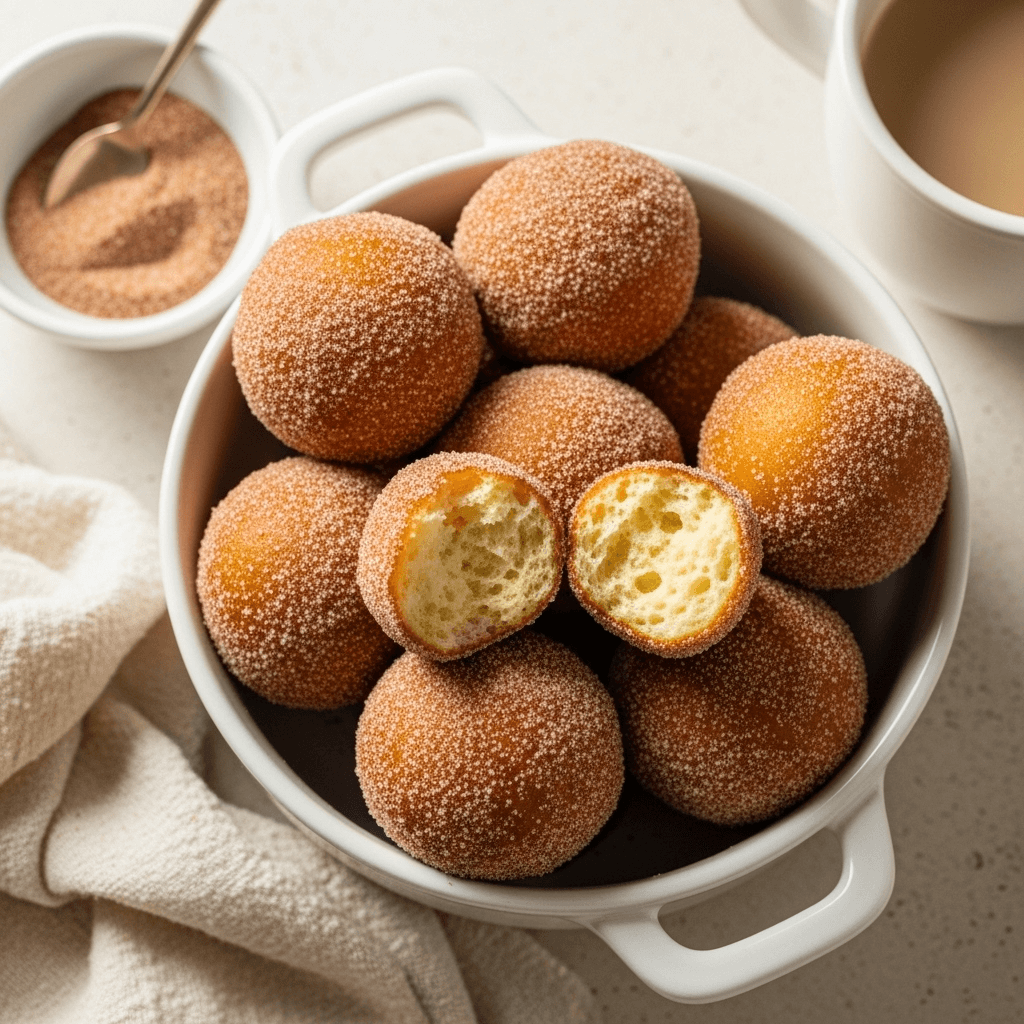

There’s something absolutely magical about biting into a warm, pillowy donut hole coated in sweet cinnamon sugar. These homemade cinnamon sugar donut holes are soft, fluffy, and melt-in-your-mouth delicious – exactly like the ones you’d get from your favorite donut shop, but made in your own kitchen! Each little bite-sized treat is perfectly golden on the outside, tender and cakey on the inside, and generously coated with that irresistible cinnamon-sugar mixture that makes them utterly addictive.
This easy donut holes recipe delivers bakery-quality results without the need for yeast or long rising times. These are cake-style donut holes, which means they come together quickly with simple ingredients you probably already have in your pantry. Mix the batter, fry (or bake!) until golden, then toss in cinnamon sugar while they’re still warm. The entire process takes less than 30 minutes from start to finish, making them perfect for spontaneous weekend breakfast treats or satisfying those sudden donut cravings.
What makes these homemade donut holes so beloved is their incredible versatility and crowd-pleasing appeal. They’re perfect for weekend breakfast or brunch when you want something special without too much effort. Serve them at birthday parties, holiday gatherings, or game day get-togethers and watch them disappear within minutes. Pack them for school lunches or road trip snacks. Make them for bake sales where they’re always a hit. These cinnamon sugar donut holes work for absolutely any occasion where you need something sweet, delicious, and fun.
The beauty of this recipe is how it captures that nostalgic donut shop experience at home. There’s no need for a deep fryer if you don’t have one – you can make these in a regular pot with just a few inches of oil, or even bake them in the oven for a lighter version. They’re easy enough for beginner bakers yet impressive enough to serve to guests. Once you master this simple recipe, you’ll never need to run to the donut shop again!
History / Background
Donut holes, those delightful little spheres of fried dough, have a charming history rooted in American donut culture. While the exact origin is debated, the most popular story credits Captain Hanson Gregory, an American ship captain, with creating the hole in the center of donuts in 1847. According to legend, he complained that traditional fried cakes were greasy in the middle and never fully cooked, so he punched a hole in the center before frying. This innovation created the ring donut we know today.
But what happened to those punched-out centers? Initially, they were likely discarded or eaten by kitchen workers as scraps. However, some clever bakers began frying these centers separately, creating what we now call donut holes. The concept gained commercial popularity in the mid-20th century when donut chains began marketing them as a product in their own right.
The Dunkin’ Donuts chain popularized the term “Munchkins” for their donut holes in 1972, naming them after the small inhabitants of Munchkinland in “The Wizard of Oz.” This marketing genius made donut holes a menu staple and family favorite. The name was so successful that many people still call all donut holes “Munchkins” regardless of where they’re purchased, similar to how people call tissues “Kleenex.”
Cake-style donut holes like this recipe became popular because they’re easier and faster to make than yeasted versions. They don’t require kneading, rising, or proofing – just mix, scoop, fry, and coat. This convenience made them accessible to home bakers and small bakeries alike. The cinnamon sugar coating became the classic favorite, though variations with powdered sugar, glazes, and other toppings emerged over time.
Today, donut holes represent nostalgic American comfort food. They evoke memories of special Saturday morning bakery trips, elementary school parties, coffee breaks with coworkers, and countless happy moments. Making them at home brings that joy into your own kitchen, creating new memories while honoring this beloved treat’s place in American baking culture.
Why You’ll Love This Recipe
This cinnamon sugar donut holes recipe has been tested and perfected to deliver the lightest, fluffiest, most delicious results every single time. What sets these apart is the ideal ratio of ingredients that creates tender, cakey interiors with slightly crisp exteriors – never greasy, never dense, always perfectly textured. The batter comes together in minutes with no special techniques required, making this recipe accessible even for novice bakers.
The cinnamon sugar coating is what takes these from good to absolutely irresistible. While the donut holes are still warm from frying, they’re rolled in a generous mixture of granulated sugar and ground cinnamon. The warmth helps the coating stick beautifully, creating that signature sweet, spiced exterior that makes donut holes so addictive. Every bite delivers that perfect combination of tender donut and sweet, aromatic coating.
Here’s why these cinnamon sugar donut holes will become your new favorite treat:
- Quick and easy – ready in under 30 minutes with simple mixing
- No yeast required – cake-style donuts mean no rising or waiting
- Kid-friendly – children absolutely love these bite-sized treats
- Perfect for sharing – bite-sized portions make them ideal for gatherings
- Budget-friendly – uses basic pantry ingredients that are very affordable
- Customizable – easy to adjust flavors with different coatings and add-ins
- Bakery-quality results – tastes just like your favorite donut shop
- Great for beginners – simple technique with foolproof results
- Baking option available – can be baked instead of fried for lighter version
- Crowd-pleasing – universally loved by kids and adults alike
- Fun to make – a great cooking project with children
- Freezer-friendly – make ahead and reheat for fresh-tasting treats anytime
Ingredient Notes
Understanding your ingredients ensures perfect donut holes:
All-Purpose Flour: The structure foundation of your donut holes. Measure correctly by spooning flour into your measuring cup and leveling off – don’t scoop directly from the bag, which compacts it and results in dense, dry donuts. All-purpose flour creates the perfect tender crumb. Cake flour can substitute for even lighter, more delicate texture, while self-rising flour simplifies things (just omit baking powder and reduce salt).
Granulated Sugar (for batter): Sweetens the donut holes and helps create tender texture. Sugar also aids in browning. Don’t reduce the amount in the batter or the donuts will be bland and won’t brown properly. The sugar in the batter is separate from the cinnamon-sugar coating.
Baking Powder: The leavening agent that makes donut holes fluffy and light. Make sure yours is fresh (less than 6 months old) – old baking powder loses potency and results in dense donuts. The baking powder creates the lift and airy texture that makes these so enjoyable.
Salt: Essential even in sweet recipes. Salt enhances all other flavors and balances the sweetness. Just a small amount makes the difference between flat-tasting and delicious donuts.
Ground Nutmeg: The secret ingredient that gives cake donuts their signature flavor! Nutmeg provides that warm, slightly spicy note you associate with classic donuts. Use freshly grated nutmeg if possible for the most aromatic flavor, though pre-ground works fine. Don’t skip it – it’s essential for authentic donut taste.
Milk: Provides moisture and helps create tender texture. Whole milk works best for richest flavor, but 2% milk works well too. Buttermilk creates tangier, more tender donuts with classic “old-fashioned” flavor – highly recommended if you have it! For dairy-free, use almond milk or oat milk.
Eggs: Bind ingredients together, add richness, and contribute to structure. Large eggs are standard. Room temperature eggs incorporate more easily, but cold eggs work fine in this simple recipe. The egg provides protein that helps set the structure when fried.
Butter (melted): Adds rich flavor and tender texture. Unsalted butter is preferred so you can control salt level. Let melted butter cool slightly before adding to prevent cooking the egg. Oil can substitute, but butter provides much better flavor.
Vanilla Extract: Enhances all other flavors and adds aromatic sweetness. Pure vanilla extract tastes significantly better than imitation, though either works. This is a small but important flavor component.
Cinnamon Sugar Coating: The finishing touch! Combine granulated sugar with ground cinnamon (typical ratio is 1/2 cup sugar to 1 tablespoon cinnamon, adjusted to taste). The warm donut holes are rolled in this mixture while still hot so it adheres perfectly.
Oil for Frying: Use neutral-flavored oil with high smoke point like vegetable oil, canola oil, or peanut oil. You’ll need several cups depending on your pot size. The oil should be 350-375°F for perfect frying – use a thermometer for accuracy.
Equipment Needed
You’ll need basic kitchen equipment:
- Large mixing bowl – for dry ingredients
- Medium mixing bowl – for wet ingredients
- Whisk – for mixing ingredients smoothly
- Measuring cups and spoons – for accurate measurements
- Heavy-bottomed pot or Dutch oven – for frying (at least 4 inches deep)
- Candy/deep-fry thermometer – essential for monitoring oil temperature
- Small cookie scoop or spoon – for portioning batter (1-tablespoon size)
- Slotted spoon or spider strainer – for removing donuts from oil
- Paper towels – for draining fried donuts
- Shallow bowl – for cinnamon sugar coating
- Cooling rack – for placing drained donuts
Optional but helpful:
- Electric mixer for easier mixing
- Baking sheet for baked version
- Mini muffin pan for baked donut holes
Cinnamon Sugar Donut Holes Recipe
- Total Time: 25 minutes
- Yield: 24-30 donut holes 1x
- Diet: Vegetarian
Description
These easy homemade cinnamon sugar donut holes are soft, fluffy, and coated in sweet cinnamon sugar. They taste just like your favorite donut shop treats but are simple to make at home with basic ingredients. Perfect for breakfast, dessert, or anytime snacking!
Ingredients
For the Donut Holes:
- 2 cups (250g) all-purpose flour
- ½ cup (100g) granulated sugar
- 2 teaspoons baking powder
- ½ teaspoon salt
- ½ teaspoon ground nutmeg
- ¾ cup (180ml) milk (whole milk or buttermilk preferred)
- 1 large egg, room temperature
- 2 tablespoons unsalted butter, melted and slightly cooled
- 1 teaspoon vanilla extract
- Vegetable oil for frying (about 4 cups, depending on pot size)
For the Cinnamon Sugar Coating:
- ½ cup (100g) granulated sugar
- 1 tablespoon ground cinnamon
Instructions
Step 1: Prepare Ingredients and Equipment
Set up your frying station: place paper towels on a plate or cooling rack for draining, prepare a shallow bowl with the cinnamon-sugar mixture (½ cup sugar mixed with 1 tablespoon cinnamon), and have your slotted spoon ready. Pour oil into a heavy-bottomed pot or Dutch oven to a depth of about 3 inches. Clip a candy thermometer to the side. Heat oil over medium-high heat to 350-375°F.
Step 2: Mix Dry Ingredients
In a large bowl, whisk together the flour, sugar, baking powder, salt, and nutmeg until well combined. This ensures even distribution of leavening and spices throughout the batter.
Step 3: Mix Wet Ingredients
In a medium bowl, whisk together the milk, egg, melted butter, and vanilla extract until smooth and well combined. The mixture should be uniform with no streaks of egg visible.
Step 4: Combine Wet and Dry
Pour the wet ingredients into the dry ingredients. Using a rubber spatula or wooden spoon, gently fold together just until combined. Don’t overmix – it’s okay if a few small lumps remain. The batter should be thick and slightly sticky, similar to thick cake batter. Overmixing develops gluten and creates tough, dense donuts.
Step 5: Check Oil Temperature
Make sure your oil has reached 350-375°F on your thermometer. This temperature range is crucial for donuts that cook through without being greasy. If too cool, they absorb oil and become greasy; if too hot, they burn outside while staying raw inside.
Step 6: Fry the Donut Holes
Using a small cookie scoop or spoon, carefully drop rounded tablespoons of batter into the hot oil. Don’t crowd the pot – fry 5-6 at a time depending on pot size. The donut holes will sink, then float to the surface. Fry for about 1-2 minutes per side, or until deep golden brown all over. Use a slotted spoon to flip them halfway through for even browning. They should be evenly golden and cooked through (no raw batter inside).
Step 7: Drain and Coat
Remove fried donut holes with a slotted spoon and place on paper towels to drain for just 10-20 seconds. While still very warm (but cool enough to handle), immediately roll in the cinnamon-sugar mixture, coating all sides. The warmth helps the coating stick beautifully. Place coated donut holes on a serving plate.
Step 8: Repeat
Continue frying remaining batter in batches, allowing oil to return to proper temperature between batches. Monitor temperature throughout frying and adjust heat as needed. Once all donut holes are fried and coated, serve immediately while warm for best taste and texture.
For Baked Donut Holes: Preheat oven to 350°F. Grease a mini muffin pan. Fill each cup about ¾ full with batter. Bake for 10-12 minutes until golden and a toothpick comes out clean. Remove from pan, brush with melted butter, and roll in cinnamon sugar while warm.
Notes
- Temperature control is crucial: Use a thermometer and maintain 350-375°F throughout frying. Adjust heat as needed.
- Don’t overcrowd: Frying too many at once drops oil temperature and creates greasy donuts.
- Work quickly with coating: Roll in cinnamon sugar while donuts are still warm so coating sticks properly.
- Batter consistency: Batter should be thick but scoopable. If too thin, add 1-2 tablespoons more flour.
- Oil safety: Never leave hot oil unattended. Keep children and pets away from frying area.
- Size matters: Keep donut holes about 1 inch in diameter for even cooking. Larger ones may be raw inside.
- Prep Time: 10 minutes
- Cook Time: 15 minutes
- Category: Dessert
- Method: Frying
- Cuisine: American
Nutrition
- Serving Size: 3 donut holes
- Calories: 245
- Sugar: 18g
- Sodium: 180mg
- Fat: 11g
- Saturated Fat: 2g
- Unsaturated Fat: 8g
- Trans Fat: 0g
- Carbohydrates: 34g
- Fiber: 1g
- Protein: 3g
- Cholesterol: 25mg
Tips & Variations
Chocolate Glazed Donut Holes:
Skip the cinnamon sugar coating. Instead, make a chocolate glaze by whisking together 1 cup powdered sugar, 3 tablespoons cocoa powder, 3-4 tablespoons milk, and ½ teaspoon vanilla until smooth. Dip warm donut holes in glaze and let set on a cooling rack. This creates classic chocolate-covered donut holes.
Powdered Sugar Donut Holes:
For simple, classic powdered sugar donuts, skip cinnamon sugar and instead roll warm donut holes in plain powdered sugar. Or for extra flavor, mix powdered sugar with a pinch of vanilla powder or freeze-dried fruit powder.
Filled Donut Holes:
Make these extra special by filling them! Use a piping bag fitted with a small round tip to inject jam, Nutella, pastry cream, or lemon curd into the center of cooled donut holes. Insert tip into the side and squeeze gently until you feel slight resistance.
Apple Cider Donut Holes:
Replace milk with apple cider for fall-flavored donuts. Add ½ teaspoon of apple pie spice to the batter along with the nutmeg. These are perfect for autumn gatherings and taste like apple cider donuts from the orchard.
Pumpkin Spice Donut Holes:
Add ¼ cup pumpkin puree to wet ingredients and reduce milk to ½ cup. Add 1 teaspoon pumpkin pie spice to dry ingredients. These seasonal favorites are perfect for fall and taste amazing with maple glaze.
Baked Donut Holes:
For a lighter option, bake instead of frying. Use a mini muffin pan greased well. Fill cups ¾ full and bake at 350°F for 10-12 minutes. Brush warm donuts with melted butter, then roll in cinnamon sugar. They won’t be quite as rich but still delicious.
Churro-Style Donut Holes:
Increase cinnamon in the coating to 2 tablespoons for more intense cinnamon flavor reminiscent of churros. You can also add ¼ teaspoon of cinnamon to the batter itself. Serve with chocolate dipping sauce.
Birthday Cake Donut Holes:
Add 2 tablespoons of rainbow sprinkles to the batter. Skip cinnamon sugar and instead roll in plain sugar mixed with more sprinkles. Drizzle with vanilla glaze. Kids absolutely love these!
Pro Chef Tips
Tip #1: Temperature is Everything
Professional donut makers know that maintaining precise oil temperature is the single most important factor for perfect donuts. Too cool (below 340°F) and donuts absorb excess oil, becoming greasy and heavy. Too hot (above 380°F) and exteriors burn while interiors stay raw. Invest in a good candy thermometer and monitor constantly, adjusting heat as needed. The oil temperature will drop when you add batter, so let it recover between batches.
Tip #2: Don’t Overmix the Batter
Just like muffins and pancakes, donut batter should be mixed just until ingredients come together. Overmixing develops gluten, creating tough, dense, chewy donuts instead of tender, cakey ones. It’s perfectly fine if the batter looks slightly lumpy – those lumps disappear during cooking. Stop mixing as soon as you no longer see large pockets of dry flour. Gentle folding is better than vigorous stirring.
Tip #3: Work Quickly When Coating
The cinnamon sugar coating sticks best to warm, slightly oily surfaces. Roll donut holes in coating while they’re still very warm – right after draining briefly on paper towels. If they cool too much, the coating won’t adhere as well. This is why setting up your coating station before you start frying is so important. Some bakers even keep a second person on coating duty while the first person fries.
Tip #4: Use a Cookie Scoop for Uniform Size
A small cookie scoop (about 1 tablespoon capacity) creates perfectly uniform donut holes that cook evenly. Inconsistent sizes mean some are overcooked while others are undercooked. Uniform sizing also looks more professional and ensures everyone gets the same delicious experience. If you don’t have a scoop, use two spoons to form equal portions.
Tip #5: Test One First
Before frying the entire batch, fry just one donut hole as a test. This allows you to check if your oil temperature is correct, if your frying time is right, and if the donut holes are cooking through properly. Cut the test donut in half to check for raw spots. Adjust temperature or timing based on this test before committing the whole batch.
Tip #6: The Flip Test
Perfectly fried donut holes will naturally flip themselves over when the bottom is properly cooked. If you try to flip too early, they stick to the spoon and deform. Wait until they float freely and the visible part is golden brown, then give them a gentle nudge – if they flip easily, they’re ready. If they resist, give them another 10-20 seconds.
Common Mistakes to Avoid
Mistake #1: Oil Temperature Too Low or Too High
This is the #1 mistake in donut making. Without a thermometer, people guess at temperature and usually get it wrong. Too-cool oil (below 340°F) means donuts absorb excessive oil and taste greasy, heavy, and undercooked. Too-hot oil (above 380°F) burns the outside before cooking the inside. Always use a thermometer, maintain 350-375°F, and adjust heat throughout frying. This single tool makes the difference between mediocre and perfect donuts.
Mistake #2: Crowding the Pot
Adding too many donut holes at once dramatically drops the oil temperature, increases cooking time, and prevents proper browning. Crowded donuts also stick together and cook unevenly. Fry only 5-6 at a time in a standard pot, allowing room for them to float freely and for you to flip them easily. Be patient – proper spacing ensures quality results.
Mistake #3: Not Draining Properly
Some home cooks skip draining or drain too long. Brief draining (10-20 seconds) on paper towels removes excess surface oil without letting donuts cool too much. Donuts need to be warm for cinnamon sugar to stick. Skipping draining makes them greasy; draining too long makes them cool, and coating won’t adhere. Find the sweet spot of brief draining followed by immediate coating.
Mistake #4: Overmixing the Batter
Vigorous mixing or using an electric mixer on high speed overdevelops gluten, creating tough, dense, chewy donuts instead of tender, cakey ones. Mix by hand with gentle folding motions just until ingredients combine. The batter should look slightly lumpy, similar to muffin batter. Stop as soon as dry ingredients are incorporated – don’t aim for smooth batter.
Mistake #5: Making Donut Holes Too Large
Bigger seems better, but large donut holes (more than 1-1.5 inches) don’t cook evenly. The outside overcooks and burns while the inside stays raw and doughy. Stick to 1-inch diameter (about 1 tablespoon of batter) for donuts that cook through perfectly while achieving golden-brown exteriors. Smaller is better than larger for even cooking.
Storage & Meal Prep
Room Temperature Storage:
Freshly fried cinnamon sugar donut holes are best eaten the day they’re made, preferably within a few hours while still fresh. Store leftover donut holes in an airtight container at room temperature for up to 2 days. They’ll lose some crispness but remain edible. The sugar coating may absorb moisture and become less crunchy over time, but the flavor remains good.
Reheating:
Restore freshness to day-old donut holes by reheating. Microwave 3-4 donut holes for 10-15 seconds until just warm. For better texture, reheat in a 300°F oven for 5-7 minutes. The warmth revives them and makes them taste freshly made. You can also re-roll in cinnamon sugar after warming to refresh the coating.
Not Ideal for Long Storage:
Unlike some baked goods, fried donuts are best fresh and don’t store particularly well for extended periods. The texture deteriorates after a day or two. This is why donut shops make fresh batches daily. These are best enjoyed fresh or within 24 hours of making.
Making for a Party:
If making for an event later in the day, you can fry them in the morning and store covered at room temperature. Refresh them by warming briefly in the oven 20-30 minutes before serving. They won’t be quite as perfect as fresh but still very good.
Make-Ahead & Freezer Notes
Freezing Fried Donut Holes:
Donut holes freeze surprisingly well! Let them cool completely after frying and coating. Place in a single layer on a baking sheet and freeze until solid (about 1 hour). Transfer to a freezer bag or airtight container with parchment between layers. Freeze for up to 2 months. This is perfect for always having a quick treat on hand.
Freezing Uncoated Donut Holes:
For best results, freeze donut holes before coating in cinnamon sugar. Fry them, let cool completely, freeze as directed above. When ready to serve, thaw briefly, warm in the oven, brush with melted butter, and roll in fresh cinnamon sugar. This method creates fresher-tasting results.
Thawing and Serving:
Thaw frozen donut holes at room temperature for 30-60 minutes, or warm frozen donuts directly in a 300°F oven for 8-10 minutes. Microwave individual donuts on 50% power for 20-30 seconds. Warm donuts always taste better than cold ones – the slight warmth revives the texture and flavor.
Freezing Unbaked Batter:
You can also freeze the batter itself. Scoop batter portions onto a parchment-lined baking sheet and freeze until solid. Transfer to a freezer bag. Fry directly from frozen, adding 30-60 seconds to cooking time. This requires more attention to ensure they cook through, but it’s convenient for making fresh donuts anytime.
Best Practice:
For the absolute best results, make and fry donut holes fresh when you plan to serve them. However, freezing provides a good backup option for having treats ready or using up extra batter.
Serving Suggestions
Cinnamon sugar donut holes pair beautifully with many accompaniments:
Breakfast and Brunch:
Serve these homemade donut holes as part of a special breakfast spread:
- Hot coffee or espresso (classic donut pairing)
- Hot chocolate or chocolate milk
- Fresh fruit salad
- Orange juice or apple cider
- Yogurt parfaits for balance
Dipping Sauces:
Elevate donut holes with delicious dips:
- Chocolate ganache or chocolate sauce
- Caramel sauce (salted or regular)
- Vanilla glaze or icing
- Nutella or cookie butter
- Cream cheese frosting
- Fruit preserves (raspberry, strawberry)
- Dulce de leche
Party Presentations:
Make them special for gatherings:
- Stack in a tower or pyramid on a cake stand
- Serve in individual paper cones or cups
- Arrange on a platter with various dipping sauces
- Thread onto skewers with fresh fruit
- Present in a decorative bowl or basket
Holiday Variations:
Adapt for different occasions:
- Valentine’s Day: Pink glaze and heart sprinkles
- St. Patrick’s Day: Green glaze
- Easter: Pastel glazes and Easter sprinkles
- Halloween: Orange glaze or chocolate with orange sprinkles
- Christmas: Red and green sprinkles or peppermint coating
Beverages:
Complete the experience with drinks:
- Coffee (hot or iced)
- Milk (whole, chocolate, or flavored)
- Hot chocolate with marshmallows
- Tea (chai pairs especially well)
- Apple cider (hot or cold)
- Smoothies for a healthier balance
Make It an Event:
Create a donut bar for parties:
- Set out plain donut holes
- Offer multiple coating options (cinnamon sugar, powdered sugar, cocoa powder)
- Provide various glazes and dipping sauces
- Add toppings like sprinkles, chopped nuts, coconut
- Let guests customize their own
FAQs Section
Q: Can I bake these instead of frying?
Yes! Baked donut holes are lighter but still delicious. Grease a mini muffin pan and fill cups about ¾ full. Bake at 350°F for 10-12 minutes until golden and a toothpick comes out clean. Remove from pan immediately, brush with melted butter, and roll in cinnamon sugar while warm. They won’t have the exact same texture as fried (less rich and crispy), but they’re a good lighter alternative.
Q: Why are my donut holes greasy?
Greasy donuts result from oil that’s too cool (below 340°F), frying too long, or not draining properly. Always use a thermometer to maintain 350-375°F. Donuts should fry quickly (2-4 minutes total) – if they’re taking much longer, your oil is too cool. Also ensure you’re draining on paper towels immediately after frying. Crowding the pot also lowers temperature and causes greasiness.
Q: Can I make these without eggs?
Yes, though texture will change slightly. Replace each egg with a “flax egg” (1 tablespoon ground flaxseed mixed with 3 tablespoons water, let sit 5 minutes), or use ¼ cup unsweetened applesauce. Commercial egg replacers also work. The donuts will be slightly denser but still tasty. Some bakers successfully use ¼ cup additional milk plus 1 tablespoon vinegar.
Q: What if I don’t have nutmeg?
Nutmeg provides that classic donut shop flavor, but you can omit it if necessary. The donuts will still be good, just missing that signature warmth. You could substitute ground cinnamon, allspice, or cardamom, though the flavor will be different. Many people don’t realize nutmeg is the “secret ingredient” in cake donuts!
Q: How do I know when they’re done cooking?
Properly fried donut holes are deep golden brown all over and float freely in the oil. They should feel firm (not squishy) when gently pressed with a spoon. Frying time is typically 2-4 minutes total (1-2 minutes per side). If unsure, sacrifice one by cutting it open – the interior should be cooked through with no raw batter, looking like cake texture throughout.
Q: Can I use this batter for regular donuts?
This recipe is specifically formulated for small donut holes. For full-sized donuts, you’d need to adjust ratios and use a donut cutter, then increase frying time significantly (4-5 minutes per side). The batter consistency is also different for full donuts. It’s better to use a recipe specifically designed for full-sized donuts if that’s what you want.
Q: Why did my batter turn out too thick or too thin?
Batter consistency depends on accurate measuring. If too thick (won’t drop from a spoon), add milk 1 tablespoon at a time until scoopable. If too thin (runs off the spoon), add flour 1 tablespoon at a time. Proper measuring technique (spoon flour into cup, level off) prevents this. Humidity can also affect flour absorption. The ideal consistency is thick but scoopable, like thick cake batter.
Conclusion
There you have it – everything you need to make the most delicious, pillowy-soft, perfectly golden cinnamon sugar donut holes that will make your kitchen smell like a bakery and your family think you’re a culinary genius! These easy homemade donut holes prove that some of the best treats are also the simplest to make at home.
The magic of these cinnamon sugar donut holes is how they capture that nostalgic donut shop experience right in your own kitchen. The combination of tender, cakey interiors, golden-crispy exteriors, and sweet cinnamon coating creates something truly irresistible. Whether you’re making them for a special weekend breakfast, a party, or simply because you’re craving something sweet and comforting, these little bites of heaven always deliver.
I hope this recipe becomes a beloved tradition in your home like it is in mine! There’s something so satisfying about pulling warm, golden donut holes from hot oil, rolling them in fragrant cinnamon sugar, and watching them disappear as everyone reaches for “just one more.” The smiles and happy moments these create are worth every minute.
I’d love to hear how your cinnamon sugar donut holes turn out! Did you try any flavor variations? What did you serve them with? Leave a comment below and share your experience. If these became a family favorite, please give the recipe a five-star rating and share it with friends who need this deliciousness in their lives.