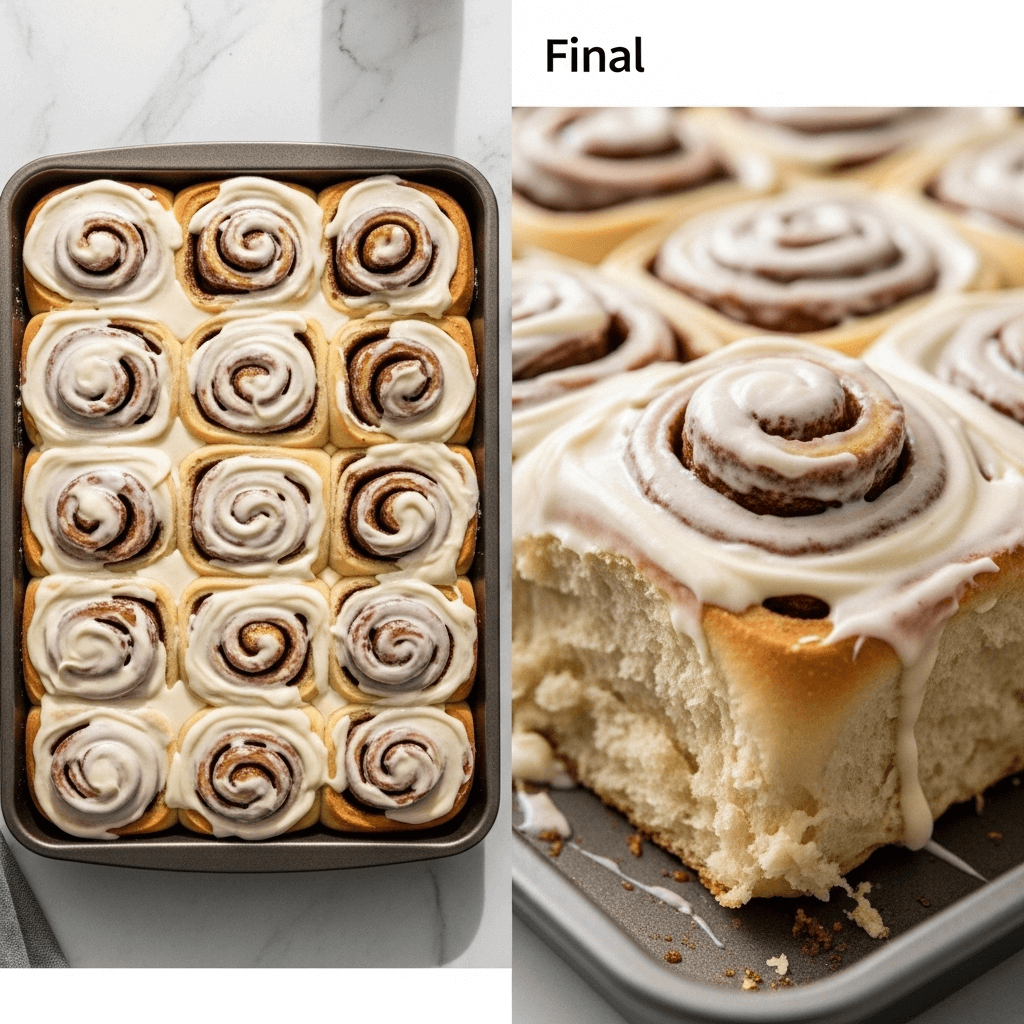

There’s nothing quite like waking up to the intoxicating aroma of fresh baked cinnamon rolls wafting through your home. These soft, pillowy rolls are swirled with buttery cinnamon-sugar filling and topped with luscious cream cheese frosting that melts into every crevice. Each bite delivers fluffy dough, warm spices, and sweet glaze in perfect harmony—it’s pure morning bliss.
What makes these homemade cinnamon rolls truly special is the incredible texture you achieve from scratch. The dough rises to create light, airy layers that pull apart effortlessly, while the cinnamon filling caramelizes slightly during baking, creating pockets of gooey sweetness. Unlike store-bought versions that can taste artificial or overly sweet, these from-scratch cinnamon rolls offer authentic flavor and freshness that simply can’t be matched.
These cinnamon rolls are perfect for weekend brunches, holiday mornings, special breakfast celebrations, or anytime you want to treat your family to something extraordinary. Whether you’re hosting overnight guests, planning a Mother’s Day breakfast, or simply indulging in some therapeutic weekend baking, this easy cinnamon rolls recipe will become your go-to for creating bakery-quality results at home.
History / Background
Cinnamon rolls have a rich history that spans continents and centuries, with roots tracing back to Sweden where they’re known as “kanelbullar.” Swedish cinnamon buns became so culturally significant that Sweden celebrates a national Cinnamon Bun Day (Kanelbullens dag) every October 4th. The Swedish version typically features cardamom in the dough along with cinnamon, creating a unique aromatic quality.
The cinnamon roll’s journey to America began with European immigration waves in the 18th and 19th centuries. German, Austrian, and Scandinavian bakers brought their sweet yeast bread traditions, which evolved as they adapted to American ingredients and tastes. The Philadelphia region claims early American cinnamon roll production, with German bakeries creating sticky, sweet rolls that delighted local communities.
However, it was the American South and Midwest where cinnamon rolls truly found their identity. The addition of generous cream cheese frosting—a distinctly American contribution—transformed the pastry into the indulgent treat we know today. This innovation likely occurred in the mid-20th century when cream cheese became widely available and popular in American baking.
The rise of mall culture in the 1980s brought cinnamon rolls into mainstream consciousness with the emergence of specialized cinnamon roll chains. Suddenly, the smell of baking cinnamon rolls became synonymous with shopping centers across America, and these oversized, frosting-laden treats became a cultural phenomenon. The mall cinnamon roll, with its characteristic size and gooey texture, set a new standard that home bakers aspired to recreate.
Today’s homemade cinnamon rolls represent a return to artisanal baking traditions while incorporating the American love of generous frosting and indulgent sweetness. The act of making cinnamon rolls from scratch has become almost ritualistic for many families—a weekend morning tradition that creates not just delicious food, but cherished memories of working together in the kitchen, watching dough rise, and sharing warm rolls straight from the oven.
Why You’ll Love This Recipe
This homemade cinnamon rolls recipe is about to become your most treasured baking project. The combination of tender, fluffy texture, perfectly spiced filling, and creamy frosting creates an irresistible treat that will have everyone begging you to make them again and again.
- Incredibly Soft & Fluffy – The enriched dough creates tender, pillow-soft rolls that practically melt in your mouth
- Perfect Cinnamon Filling – Generous layers of butter, cinnamon, and brown sugar create gooey, caramelized sweetness
- Heavenly Cream Cheese Frosting – Rich, tangy frosting melts into warm rolls for the ultimate indulgence
- Easier Than You Think – Straightforward steps and simple ingredients make this achievable for beginners
- Make-Ahead Friendly – Prepare the night before and bake fresh in the morning for minimal morning effort
- Freezer-Friendly – Make double batches and freeze for future special mornings
- Impressive Every Time – Guaranteed to wow family, friends, and holiday guests
- Fills Your Home with Amazing Aromas – The smell alone is worth making these
- Better Than Store-Bought – Fresher, less artificial, and more delicious than anything pre-made
- Creates Special Memories – Baking these becomes a cherished tradition families look forward to
- Customizable – Easy to adjust sweetness, add nuts, or create flavor variations
Ingredient Notes
Understanding your ingredients helps you achieve the best possible cinnamon rolls. Here’s what you’ll need and why each component matters:
All-Purpose Flour – The foundation of your dough. All-purpose flour provides the right protein content for tender yet structured rolls. Bread flour creates chewier rolls (which some prefer), while cake flour makes them too delicate. Measure flour by spooning into the cup and leveling off—scooping directly can pack too much flour and create dry, dense rolls.
Active Dry Yeast – The leavening agent that makes your rolls rise and creates that light, airy texture. Make sure your yeast is fresh (check the expiration date). You can also use instant yeast—it doesn’t need to be activated first and can be mixed directly with flour. If using instant yeast, you may need slightly less rising time.
Milk – Creates a tender crumb and adds richness. Whole milk works best, though 2% also works. The milk should be warmed to about 110°F—warm enough to activate yeast but not so hot it kills it (anything over 120°F damages yeast). Warm milk also helps the dough rise faster.
Butter – Adds richness, flavor, and tenderness to both the dough and filling. Use unsalted butter so you can control the salt level. The butter should be softened for the dough (leave at room temperature for 30 minutes) and very soft for spreading on the filling (almost melted consistency).
Eggs – Provide structure, moisture, and richness, creating that classic soft, tender crumb. Room temperature eggs incorporate more easily into the dough.
Sugar – White sugar sweetens the dough, while brown sugar in the filling adds molasses notes and moisture. Light or dark brown sugar both work—dark brown sugar provides deeper flavor.
Cinnamon – The star spice! Use fresh ground cinnamon for the best flavor. If your cinnamon has been sitting in the cupboard for years, it may have lost potency. Ceylon cinnamon (true cinnamon) offers delicate sweetness, while Cassia cinnamon (standard grocery store variety) provides stronger, spicier flavor.
Cream Cheese – Creates the signature tangy, rich frosting that balances the sweetness. Use full-fat brick-style cream cheese (not spreadable cream cheese in a tub). Soften it to room temperature so it whips smoothly without lumps.
Powdered Sugar – Also called confectioners’ sugar, this creates smooth, sweet frosting without grittiness. Sift it before using if it’s lumpy.
Vanilla Extract – Pure vanilla extract enhances all the other flavors. Use real vanilla, not imitation, for the best taste in both dough and frosting.
Salt – A small amount in the dough enhances all the other flavors and balances sweetness. Don’t skip it!
Equipment Needed
Having the right tools makes the cinnamon roll process smooth and enjoyable:
- Large mixing bowl (or stand mixer bowl)
- Stand mixer with dough hook (or mix by hand)
- Measuring cups and spoons
- Instant-read thermometer (for checking milk temperature)
- Kitchen towel or plastic wrap (for covering rising dough)
- Rolling pin
- Pastry brush (for spreading butter)
- Sharp knife or dental floss (for cutting rolls)
- 9×13-inch baking pan
- Parchment paper or cooking spray
- Small mixing bowl (for frosting)
- Electric mixer or whisk (for frosting)
- Offset spatula or butter knife (for spreading frosting)
Baked Cinnamon Rolls Recipe
- Total Time: 3 hours
- Yield: 12 large rolls 1x
- Diet: Vegetarian
Description
These homemade baked cinnamon rolls feature soft, fluffy yeast dough swirled with buttery cinnamon-sugar filling and topped with rich cream cheese frosting. They’re easier to make than you think and taste better than any bakery version!
Ingredients
For the Dough:
- 4 cups all-purpose flour (plus more for dusting)
- ⅓ cup granulated sugar
- 1 packet (2¼ teaspoons) active dry yeast
- 1 teaspoon salt
- 1 cup whole milk, warmed to 110°F
- ⅓ cup unsalted butter, softened
- 2 large eggs, room temperature
- 1 teaspoon vanilla extract
For the Filling:
- ½ cup unsalted butter, very soft (almost melted)
- 1 cup packed light brown sugar
- 2½ tablespoons ground cinnamon
- Pinch of salt
For the Cream Cheese Frosting:
- 4 oz cream cheese, softened to room temperature
- ¼ cup unsalted butter, softened
- 1½ cups powdered sugar, sifted
- ½ teaspoon vanilla extract
- Pinch of salt
- 1–2 tablespoons milk (if needed to thin)
Instructions
- Activate the Yeast – In a large mixing bowl (or stand mixer bowl), combine warm milk (110°F) and yeast. Let sit for 5-10 minutes until foamy. This proves your yeast is active and alive.
- Make the Dough – Add sugar, softened butter, eggs, vanilla, and salt to the yeast mixture. Mix until combined. Gradually add flour, one cup at a time, mixing on low speed with a dough hook (or stirring with a wooden spoon). Continue mixing until a soft dough forms that pulls away from the sides of the bowl.
- Knead the Dough – If using a stand mixer, knead with the dough hook on medium speed for 5-7 minutes. If kneading by hand, turn dough onto a lightly floured surface and knead for 8-10 minutes until smooth and elastic. The dough should be soft and slightly tacky but not sticky.
- First Rise – Place dough in a greased bowl, turning once to coat all sides. Cover with a clean kitchen towel or plastic wrap. Let rise in a warm, draft-free place for 60-90 minutes, until doubled in size.
- Prepare the Filling – While dough rises, mix together brown sugar, cinnamon, and salt in a small bowl. Have your very soft butter ready for spreading.
- Roll Out the Dough – Punch down the risen dough to release air bubbles. Turn out onto a lightly floured surface. Roll into a 14×18-inch rectangle (approximately). The dough should be about ¼ inch thick.
- Add Filling – Using a pastry brush or offset spatula, spread the soft butter evenly over the entire surface of the dough, leaving a ½-inch border along one long edge. Sprinkle the cinnamon-sugar mixture evenly over the butter, pressing it gently into the butter so it adheres.
- Roll Up – Starting from the long edge opposite the border, tightly roll the dough into a log, keeping the roll tight and even. Pinch the seam to seal.
- Cut the Rolls – Using a sharp knife or unflavored dental floss, cut the log into 12 equal pieces (about 1½ inches each). For the cleanest cuts with dental floss: slide floss under the log, cross the ends over the top, and pull through.
- Second Rise – Arrange rolls cut-side up in a greased 9×13-inch baking pan (they should be close but not touching). Cover with a towel and let rise for 30-45 minutes until puffy and touching each other. Meanwhile, preheat oven to 350°F.
- Bake – Bake for 23-27 minutes until golden brown on top and cooked through. The internal temperature should reach about 190°F. Don’t overbake or they’ll be dry.
- Make the Frosting – While rolls bake, beat softened cream cheese and butter together until smooth and fluffy, about 2 minutes. Add powdered sugar, vanilla, and salt. Beat until smooth and creamy. Add milk, one tablespoon at a time, if needed to reach spreading consistency.
- Frost and Serve – Remove rolls from oven and let cool for 5 minutes. Spread frosting generously over warm rolls (it will melt slightly into the crevices—this is what you want!). Serve warm.
Notes
- Milk temperature is crucial: 110°F activates yeast perfectly. Too hot (over 120°F) kills yeast; too cold slows activation.
- Don’t add too much flour—the dough should be soft and slightly tacky. Overly floury dough creates dense rolls.
- For overnight cinnamon rolls, complete through step 9 (cutting rolls), place in pan, cover tightly, and refrigerate. In the morning, remove from fridge, let sit 30-45 minutes until room temperature, then bake as directed.
- All ingredients should be at room temperature except the milk (which you’ll warm).
- If your kitchen is cold, create a warm environment for rising by turning your oven to the lowest setting for 1 minute, then turning it off. Place dough inside the warm (not hot) oven to rise.
- Prep Time: 30 minutes (plus 1.5-2 hours rising time)
- Cook Time: 25 minutes
- Category: Breakfast
- Method: Baking
- Cuisine: American
Nutrition
- Serving Size: 1 roll (1/12 of recipe)
- Calories: 425
- Sugar: 28g
- Sodium: 240mg
- Fat: 17g
- Saturated Fat: 10g
- Unsaturated Fat: 6g
- Trans Fat: 0g
- Carbohydrates: 62g
- Fiber: 2g
- Protein: 6g
- Cholesterol: 75mg
Tips & Variations
The beauty of homemade cinnamon rolls is how easily you can customize them to create different flavor profiles and variations:
Flavor Variations:
- Classic Cinnamon Rolls – The recipe as written delivers perfect traditional cinnamon rolls
- Pecan Cinnamon Rolls – Sprinkle ½ cup chopped pecans over the filling before rolling
- Apple Cinnamon Rolls – Add 1 cup finely diced apples mixed with filling
- Orange Cinnamon Rolls – Add 1 tablespoon orange zest to filling and use orange juice in frosting
- Chocolate Chip Cinnamon Rolls – Sprinkle ½ cup mini chocolate chips over filling
- Pumpkin Cinnamon Rolls – Replace ½ cup milk with pumpkin puree and add pumpkin pie spice
Frosting Variations:
- Classic Cream Cheese Frosting – As written in the recipe
- Vanilla Glaze – Whisk together 1½ cups powdered sugar with 3-4 tablespoons milk and 1 teaspoon vanilla
- Maple Frosting – Replace vanilla with maple extract and add 1 tablespoon maple syrup
- Brown Butter Frosting – Brown the butter before making frosting for nutty flavor
- Caramel Drizzle – Drizzle store-bought or homemade caramel sauce over frosted rolls
Make Them Healthier:
- Replace half the all-purpose flour with whole wheat flour
- Reduce sugar in filling to ¾ cup
- Use reduced-fat cream cheese in frosting
- Cut rolls slightly smaller to reduce portion size
- Reduce frosting amount or serve on the side
Dietary Modifications:
- Vegan Cinnamon Rolls – Use plant-based milk, vegan butter, egg replacers, and vegan cream cheese
- Gluten-Free – Use gluten-free flour blend designed for yeast baking (results vary)
- Dairy-Free Dough – Use non-dairy milk and vegan butter for the dough; top with glaze instead of cream cheese frosting
Size Variations:
- Mini Cinnamon Rolls – Cut into 24 smaller pieces, reduce baking time to 15-18 minutes
- Giant Single Cinnamon Roll – Roll up and place in a 9-inch round pan for one giant shareable roll
- Cinnamon Roll Bites – Cut into tiny 1-inch pieces for bite-sized treats
Pro Chef Tips
Take your homemade cinnamon rolls from good to absolutely extraordinary with these professional baking techniques:
The Temperature Sweet Spot – Yeast is living, and temperature is everything. Warm milk should be 105-110°F—comfortably warm to the touch but not hot. Too hot kills yeast; too cool slows it down. Invest in an instant-read thermometer for consistent results. Also, room temperature ingredients (butter, eggs, cream cheese) incorporate more smoothly.
Don’t Rush the Rise – Proper rising creates those fluffy, airy layers. The first rise should double the dough (60-90 minutes in most kitchens). Resist the urge to rush it by using warmer temperatures—slow, steady rising develops better flavor. The dough has doubled when you can poke it with a finger and the indentation remains.
The Butter Must Be Spreadable – For the filling, butter should be so soft it’s almost melted and spreads like frosting. If it’s too firm, it won’t distribute evenly, creating dry spots and uneven cinnamon coverage. Microwave butter for 10-15 seconds if needed to reach proper consistency.
Roll Tightly But Not Too Tight – As you roll the dough, maintain even tension—tight enough that there are no air pockets, but not so tight that filling squeezes out the ends. Think “snug burrito roll.” This creates beautiful, even swirls.
The Dental Floss Trick – For the cleanest cuts without squashing the rolls, use unflavored dental floss. Slide it under the log, cross the ends over the top, and pull through in one swift motion. This technique prevents the squished, uneven cuts that can happen with knives.
Don’t Overbake – Cinnamon rolls continue cooking from residual heat after removing from the oven. Slightly underbaked rolls that look barely golden will be perfect once cooled. Overbaked rolls become dry and tough. Look for light golden color on top—if they’re deeply browned, they’ve gone too far.
Frost While Warm – Always frost cinnamon rolls when they’re still warm (about 5-10 minutes out of the oven). The warmth causes frosting to melt slightly into the crevices and soften the edges, creating that signature gooey texture. Cold frosting on cold rolls doesn’t achieve the same effect.
Create Steam for Softness – Place a pan of water on the bottom oven rack while baking. The steam keeps the surface of the rolls soft while the inside cooks, preventing a tough crust from forming.
The Right Pan Matters – A 9×13-inch pan is ideal for 12 rolls—they should be close enough to touch during the second rise, which helps them rise upward instead of outward and keeps the sides soft. Metal pans conduct heat better than glass for more even browning.
Weigh Your Flour – For the most consistent results, weigh flour (480g for 4 cups) rather than measuring by volume. Scooping flour compacts it, potentially adding 20-30% more flour than intended, which creates dense, dry rolls.
Common Mistakes to Avoid
Even experienced bakers encounter challenges with yeast dough. Here’s how to sidestep the most common cinnamon roll pitfalls:
Mistake #1: Killing the Yeast – Yeast is alive and delicate. Water or milk over 120°F kills it, resulting in dough that won’t rise. Always test temperature with a thermometer. If you accidentally use too-hot liquid, start over—there’s no salvaging dough with dead yeast. Also, check your yeast expiration date and proof it properly in warm liquid before proceeding.
Mistake #2: Adding Too Much Flour – The single most common mistake! When dough feels slightly sticky, new bakers panic and add more flour. Stop! Cinnamon roll dough should be soft and slightly tacky (not sticky or dry). Too much flour creates dense, dry, tough rolls. If your dough is truly too wet to handle, add flour one tablespoon at a time until workable.
Mistake #3: Not Letting Dough Rise Enough – Impatience is the enemy of good cinnamon rolls. If dough hasn’t doubled during the first rise, it’s not ready. If rolls aren’t puffy and touching during the second rise, they’re not ready. Underproofed rolls will be dense and heavy. Give them the time they need—every kitchen is different temperature-wise.
Mistake #4: Rolling Too Thin or Too Thick – Dough rolled thinner than ¼ inch creates skimpy rolls with more crust than soft interior. Dough thicker than ½ inch creates doughy, undercooked centers. Aim for about ¼-inch thickness for the perfect balance of fluffy interior and proper cooking.
Mistake #5: Using Cold Ingredients – Cold butter won’t incorporate smoothly into dough. Cold eggs create uneven mixing. Cold cream cheese creates lumpy frosting. Plan ahead and bring everything to room temperature (except the milk, which you’ll warm). This takes 30-60 minutes but makes a significant difference.
Mistake #6: Overbaking – Overdone cinnamon rolls are dry and disappointing. They should be just barely golden on top and still look slightly underdone. Remember, they continue cooking from residual heat after removal. Set a timer and check at the minimum time. Internal temperature of 190°F indicates they’re done.
Mistake #7: Skipping the Second Rise – Some recipes claim you can skip the second rise after cutting rolls. Don’t! This rise allows the cut rolls to puff up, creating those soft, airy layers. Without it, you’ll have dense, compact rolls.
Storage & Meal Prep
Proper storage keeps your cinnamon rolls soft and delicious for days—though they rarely last that long!
Room Temperature Storage – Store unfrosted cinnamon rolls covered tightly at room temperature for up to 2 days. For frosted rolls, store in an airtight container at room temperature for up to 2 days (if your frosting contains cream cheese, some prefer refrigerating for food safety, though this makes them slightly less soft).
Refrigerator Storage – Refrigerate frosted cinnamon rolls in an airtight container for up to 5 days. The cold hardens the frosting and firms the rolls, but they’re still delicious. Bring to room temperature or warm before eating for best texture.
Reheating Individual Rolls – Microwave individual rolls for 15-20 seconds to warm through. For crispier edges, wrap in foil and warm in a 300°F oven for 10 minutes. You can also place unfrosted rolls in a toaster oven.
Reheating Multiple Rolls – Cover the entire pan with foil and reheat at 300°F for 15-20 minutes until warmed through. If rolls seem dry, brush with melted butter before reheating.
Keeping Them Soft – Cinnamon rolls dry out when exposed to air. Always store in airtight containers. If they do dry out slightly, warming them with a damp paper towel in the microwave for 20 seconds can help restore moisture.
Frosting Storage – Extra frosting can be stored in an airtight container in the refrigerator for up to 1 week. Bring to room temperature and stir before using.
Make-Ahead & Freezer Notes
Cinnamon rolls are ideal for advance preparation, making them perfect for stress-free holiday mornings and special occasions:
Overnight Cinnamon Rolls Method – This is the most popular make-ahead approach: Prepare the recipe through step 9 (cutting rolls into pieces). Arrange cut rolls in the prepared pan, cover tightly with plastic wrap, and refrigerate overnight (up to 16 hours). In the morning, remove from refrigerator and let sit at room temperature for 30-45 minutes until rolls look slightly puffy (they won’t double, but should appear more relaxed). Bake as directed. This method gives you fresh-baked rolls without the morning time commitment.
Freezing Unbaked Rolls – Prepare through step 9, placing cut rolls in a disposable aluminum pan. Cover very tightly with plastic wrap, then aluminum foil. Freeze for up to 2 months. When ready to bake, remove from freezer and let thaw in refrigerator overnight. Then follow the overnight method above—let come to room temperature for 30-45 minutes, then bake.
Freezing Baked Rolls – Bake rolls completely but don’t frost them. Let cool completely, then wrap individual rolls tightly in plastic wrap and place in a freezer bag. Freeze for up to 3 months. To serve, thaw at room temperature for 1-2 hours (or microwave for 30-45 seconds), then warm in the oven and frost.
Freezing Frosted Rolls – Freeze completely assembled, frosted rolls in an airtight container for up to 1 month. The texture of the frosting changes slightly when frozen, but they’re still delicious. Thaw overnight in the refrigerator or at room temperature for 2-3 hours.
Quick Thaw Method – Need them faster? Bake frozen unbaked rolls without thawing, adding 10-15 minutes to the baking time. Check for doneness with an instant-read thermometer (should reach 190°F internally).
Making Ahead for Events – For parties or gatherings, bake rolls the day before, store unfrosted, then warm and frost just before serving for that fresh-baked appeal.
Serving Suggestions
Cinnamon rolls are versatile and work for various occasions. Here’s how to serve them to maximize enjoyment:
Classic Breakfast Spread:
- Serve warm cinnamon rolls with hot coffee, tea, or cold milk
- Add fresh fruit salad for balance
- Include crispy bacon or breakfast sausage for savory contrast
- Offer scrambled eggs or an egg casserole for a complete breakfast
Brunch Menu:
- Center your brunch around these cinnamon rolls
- Serve alongside quiche or frittata
- Add a simple green salad with light vinaigrette
- Offer fresh-squeezed orange juice or mimosas
- Include yogurt parfaits or fresh berries
Holiday Morning:
- Make overnight cinnamon rolls for Christmas morning
- Serve with hot chocolate or eggnog lattes
- Add sausage, bacon, and egg dishes
- Include fruit salad and breakfast potatoes
- Perfect for creating new family traditions
Dessert Option:
- Serve warm with vanilla ice cream
- Drizzle with caramel or chocolate sauce
- Pair with coffee or dessert wine
- Great for potlucks and gatherings
Beverage Pairings:
- Coffee – Classic pairing that cuts the sweetness
- Hot Tea – English Breakfast or chai complement the cinnamon
- Cold Milk – Essential for dunking
- Hot Chocolate – Extra indulgent for special occasions
- Apple Cider – Perfect fall combination
Leftover Ideas:
- Make cinnamon roll bread pudding with day-old rolls
- Create cinnamon roll French toast
- Cube and use as base for a trifle dessert
- Crumble over ice cream
FAQs Section
Can I make cinnamon rolls without a stand mixer?
Absolutely! Mix the dough by hand in a large bowl using a wooden spoon until it comes together, then knead by hand on a floured surface for 8-10 minutes. Your arms will get a workout, but the results are identical. The dough is ready when it’s smooth, elastic, and springs back when poked.
Why didn’t my dough rise?
Several possible reasons: The yeast was expired or dead, the liquid was too hot (killed the yeast) or too cold (yeast is dormant), your kitchen is too cold, or you didn’t give it enough time. Make sure milk is 105-110°F, your yeast foams during proofing, and place dough in a warm, draft-free spot. An oven with just the light on works perfectly.
Can I use instant yeast instead of active dry yeast?
Yes! Instant yeast (also called rapid-rise or bread machine yeast) can be mixed directly with the flour without proofing. Use the same amount and you may notice slightly faster rise times. Active dry yeast must be proofed in warm liquid first.
My rolls came out dense and heavy. What happened?
The most common causes are: too much flour added to the dough, insufficient rising time (dough needs to truly double), or old/dead yeast that didn’t properly activate. Make sure you’re measuring flour correctly (spooning into cup, not scooping), allowing full rise time, and using fresh yeast.
Can I make these dairy-free?
Yes! Use non-dairy milk (almond, oat, or soy), vegan butter, and skip the cream cheese frosting or make it with vegan cream cheese. The texture will be slightly different but still delicious. Some non-dairy butters don’t melt as well, so choose a high-quality brand.
How do I know when the rolls are done baking?
Rolls should be light golden brown on top (not deeply browned) and feel firm when gently pressed. An instant-read thermometer inserted into the center should read about 190°F. If the tops are browning too quickly but centers aren’t done, tent loosely with foil for the last few minutes.
Can I reduce the sugar?
You can reduce the sugar in the filling by up to ¼ cup without major changes. Reducing sugar in the dough affects texture and rise, so I don’t recommend going below ¼ cup. The frosting can be adjusted to taste—start with 1 cup of powdered sugar and add more if desired.
Why did my frosting turn out lumpy?
Lumpy frosting happens when cream cheese or butter is too cold. Both must be at room temperature—soft enough to easily indent with a finger. Beat cream cheese and butter together first until completely smooth before adding powdered sugar. If it’s still lumpy, the ingredients weren’t soft enough.
Conclusion
There you have it—everything you need to create the most incredible homemade baked cinnamon rolls that will fill your home with amazing aromas and bring joy to everyone who takes a bite. These soft, gooey, perfectly spiced rolls topped with luscious cream cheese frosting are truly a labor of love, but one that pays off in the most delicious way possible.
The beauty of baking cinnamon rolls from scratch is the pride you’ll feel pulling that golden pan from the oven, the smiles you’ll see on your family’s faces, and the memories you’ll create together. Yes, they take time and a bit of effort, but I promise you—they’re absolutely worth it. Once you taste the difference between homemade and store-bought, you’ll never go back.
I hope this recipe becomes one of your go-to special occasion treats, something you make for lazy Sunday mornings, holiday celebrations, or anytime you want to show love through baking. The wonderful thing about mastering cinnamon rolls is that it opens up a world of variations and creativity you can explore once you’ve got the basic technique down.
Now it’s your turn to make some magic in your kitchen! Clear your schedule, gather your ingredients, and get ready for your home to smell absolutely incredible. Don’t forget to snap a photo of your beautiful cinnamon rolls fresh from the oven and share it on Pinterest so other home bakers can be inspired. Drop a comment below and let me know how they turned out—I’d love to hear about your experience and any creative variations you tried!
Happy baking, and enjoy every gooey, cinnamon-filled bite!