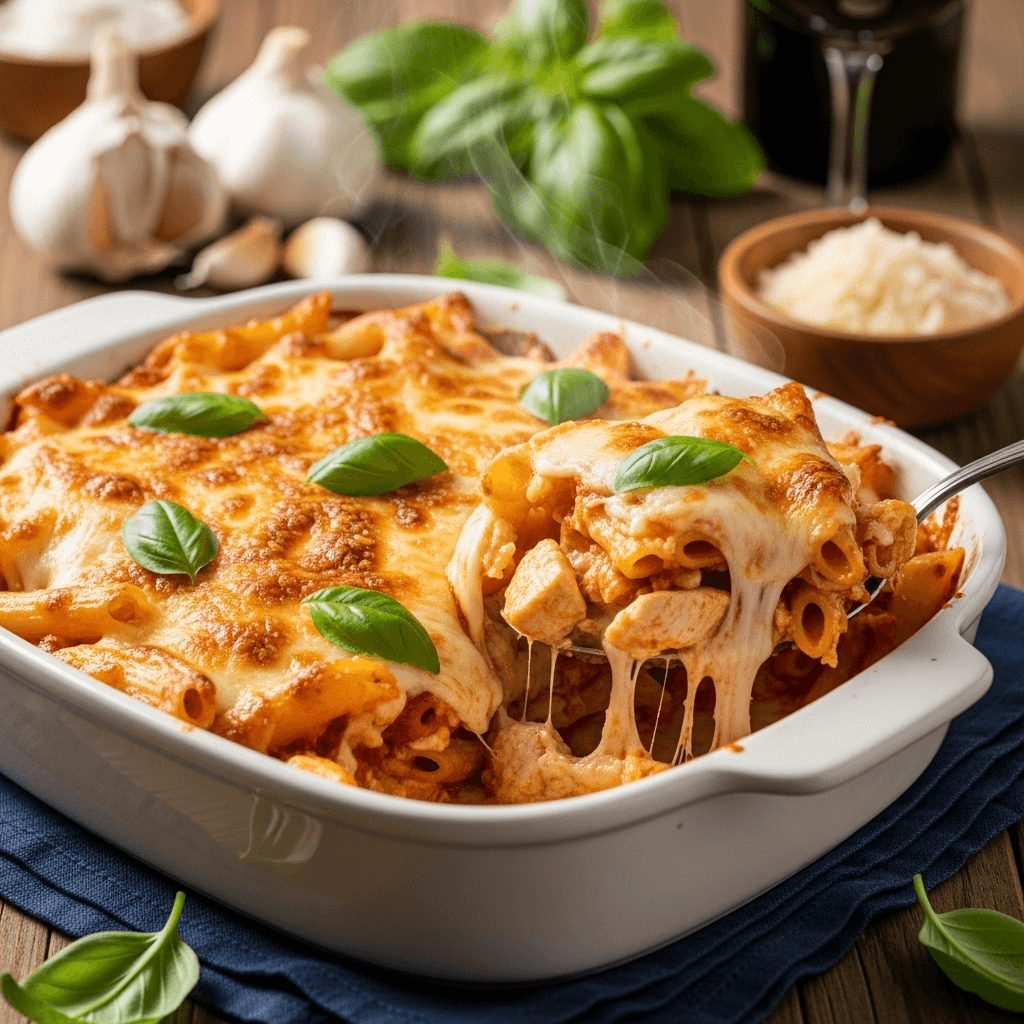

When you need a dinner that brings the whole family running to the table, this baked pasta with chicken recipe is your answer. Imagine tender pasta shells coated in a rich, creamy sauce, studded with juicy pieces of seasoned chicken, and topped with a golden, bubbling layer of melted cheese. This easy baked chicken pasta is the ultimate comfort food that combines convenience with incredible flavor.
What makes this baked chicken pasta casserole so universally loved is its versatility and crowd-pleasing nature. It’s hearty enough to satisfy hungry teenagers, elegant enough to serve to dinner guests, and simple enough to throw together on a busy weeknight. Whether you’re feeding your family after a long day, preparing a dish for a potluck, hosting a casual dinner party, or meal-prepping for the week ahead, this recipe delivers every single time. It’s the kind of dish that tastes like you spent hours in the kitchen, but really comes together in about an hour from start to finish.
This cheesy baked pasta with chicken is perfect for Sunday family dinners, weeknight meals when you need something reliable, holiday gatherings where you want to serve a crowd without stress, or anytime you’re craving that cozy, home-cooked feeling. It reheats beautifully, freezes like a dream, and somehow tastes even better the next day.
History / Background
Baked pasta dishes have a rich heritage that spans multiple cultures and centuries. While Italy gave us the foundation of pasta combined with sauce and cheese—think of classic lasagna and baked ziti—the American version of baked pasta with chicken represents a beautiful evolution of this tradition. It’s a fusion of Italian cooking techniques with American convenience and abundance.
The concept of baking pasta dates back to Renaissance Italy, where wealthy families would layer pasta with various cheeses and bake them in wood-fired ovens. However, the addition of chicken to baked pasta is largely an American innovation that emerged in the mid-20th century as home cooks sought to stretch ingredients and create one-dish meals that could feed families economically.
During the 1950s and 1960s, casserole culture took America by storm. With more women entering the workforce, recipes that could be assembled ahead of time and baked when needed became incredibly popular. Baked pasta dishes fit perfectly into this lifestyle, and adding protein like chicken made them a complete meal. Church cookbooks, community recipe exchanges, and early food magazines spread these recipes throughout American homes.
The beauty of this dish is how it represents American home cooking at its finest—taking inspiration from Italian traditions and adapting them to suit our lifestyle, ingredients, and tastes. Today, baked chicken pasta has become a staple in homes across the country, with each family adding their own twist through different cheeses, sauces, seasonings, and pasta shapes.
Why You’ll Love This Recipe
This baked pasta with chicken recipe has earned its place as a family favorite for so many good reasons. It’s the kind of reliable, delicious dish that you’ll make over and over again because it just works.
Here’s what makes this recipe absolutely irresistible:
- Complete one-dish meal – Protein, carbs, and dairy all baked together in one convenient pan
- Make-ahead friendly – Assemble hours or even a day ahead, then bake when ready
- Budget-conscious – Uses affordable ingredients that deliver maximum flavor and satisfaction
- Kid-approved comfort food – Even picky eaters love this cheesy, familiar combination
- Feeds a crowd easily – One 9×13 pan serves 8-10 people generously
- Freezer-friendly – Make double batches and freeze one for later
- Customizable base recipe – Easily adapt to your family’s preferences and dietary needs
- Minimal cleanup – Everything bakes in one dish, making cleanup a breeze
- Reheats beautifully – Leftovers taste just as good, making it perfect for meal prep
- Impressive presentation – Looks and tastes like restaurant quality with minimal effort
- Uses simple ingredients – No specialty items or hard-to-find components required
Ingredient Notes
Understanding your ingredients helps you make smart substitutions and appreciate why each component matters. Here’s what you’ll need for this delicious baked chicken pasta:
Pasta – Penne, rigatoni, or ziti work best because their tube shapes hold the sauce beautifully. You can use regular or whole wheat pasta. Avoid very small pasta shapes or long noodles like spaghetti—they don’t work as well in baked dishes.
Chicken Breast – Boneless, skinless chicken breasts provide lean protein. You can also use chicken thighs for more flavor and moisture, or rotisserie chicken to save time. About 2 pounds of chicken yields perfect protein distribution.
Marinara Sauce – Use your favorite store-bought marinara or homemade tomato sauce. Quality matters here! San Marzano-style sauces provide the best flavor, but any good marinara works.
Alfredo Sauce or Heavy Cream – This creates the creamy element. You can use jarred Alfredo sauce, make your own, or simply use heavy cream with Parmesan cheese. The creaminess balances the acidity of the tomato sauce.
Mozzarella Cheese – The star of the cheese show! Use shredded mozzarella for that perfect melty, gooey texture. Fresh mozzarella adds a gourmet touch but pre-shredded works great and melts evenly.
Parmesan Cheese – Freshly grated Parmesan adds nutty, salty depth. Don’t use the powdered stuff—real Parmigiano-Reggiano makes a noticeable difference.
Italian Seasoning – A blend of oregano, basil, thyme, and rosemary. You can mix your own or use store-bought. This gives the dish its signature Italian flavor profile.
Garlic – Fresh garlic cloves provide aromatic depth. Minced garlic from a jar works in a pinch, but fresh is always better.
Onion – Yellow or white onion adds sweetness and depth. Diced finely so it melts into the sauce.
Olive Oil – For sautéing the chicken and vegetables. Extra virgin adds the most flavor.
Chicken Broth – Adds moisture and prevents the pasta from drying out during baking. Low-sodium gives you better control over salt levels.
Salt and Black Pepper – Essential for seasoning at every stage. Don’t skip seasoning the chicken before cooking!
Optional Add-ins – Spinach, sun-dried tomatoes, mushrooms, bell peppers, or fresh basil all make excellent additions.
Equipment Needed
Having the right tools makes this recipe come together smoothly and efficiently:
- Large pot – For boiling pasta (at least 6-quart capacity)
- 9×13-inch baking dish – Standard size that serves 8-10 people perfectly
- Large skillet or sauté pan – For cooking the chicken and building the sauce (12-inch recommended)
- Colander – For draining pasta
- Sharp chef’s knife – For cutting chicken and chopping vegetables
- Cutting board – Preferably one designated for raw meat
- Wooden spoon or silicone spatula – For stirring and mixing
- Measuring cups and spoons – For accurate measurements
- Cheese grater – If using block cheese (highly recommended for best flavor)
- Mixing bowls (2-3) – For organizing ingredients
- Aluminum foil – For covering the dish during initial baking
- Meat thermometer – Optional but helpful for ensuring chicken is cooked to 165°F
- Tongs – For tossing pasta with sauce
Baked Pasta With Chicken Recipe
- Total Time: 60 minutes
- Yield: 8 servings 1x
- Diet: Gluten Free
Description
This easy baked pasta with chicken features tender pasta, seasoned chicken pieces, and a creamy tomato sauce all topped with melted mozzarella and Parmesan cheese. It’s the ultimate comfort food casserole that’s perfect for family dinners and meal prep.
Ingredients
Main Components:
- 1 pound penne pasta (or rigatoni/ziti)
- 2 pounds boneless, skinless chicken breasts, cut into 1-inch pieces
- 1 tablespoon olive oil
- 1 medium yellow onion, diced
- 4 cloves garlic, minced
- 24 ounces marinara sauce (about 3 cups)
- 1 cup heavy cream (or 1 cup Alfredo sauce)
- ½ cup chicken broth
- 2 teaspoons Italian seasoning
- 1 teaspoon salt (divided)
- ½ teaspoon black pepper (divided)
- ¼ teaspoon red pepper flakes (optional)
Cheese:
- 2 cups shredded mozzarella cheese (divided)
- 1 cup freshly grated Parmesan cheese (divided)
- ½ cup ricotta cheese (optional, for extra creaminess)
For Garnish:
- Fresh basil leaves, chopped
- Additional Parmesan cheese
- Fresh parsley (optional)
Instructions
- Preheat Oven and Prep: Preheat your oven to 375°F (190°C). Lightly grease a 9×13-inch baking dish with cooking spray or butter. Set aside.
- Cook the Pasta: Bring a large pot of salted water to a rolling boil. Add the pasta and cook until just al dente (about 1-2 minutes less than package directions). You want it slightly undercooked since it will finish cooking in the oven. Drain in a colander and set aside. Do not rinse the pasta.
- Season and Cook Chicken: While pasta cooks, season the chicken pieces with ½ teaspoon salt, ¼ teaspoon pepper, and 1 teaspoon Italian seasoning. Heat olive oil in a large skillet over medium-high heat. Add chicken pieces in a single layer (work in batches if needed to avoid overcrowding). Cook for 5-6 minutes, stirring occasionally, until chicken is golden brown and cooked through (internal temperature should reach 165°F). Remove chicken to a plate and set aside.
- Sauté Aromatics: In the same skillet, add diced onion. Sauté for 3-4 minutes until softened and translucent. Add minced garlic and cook for 1 minute more until fragrant. The brown bits on the bottom of the pan add incredible flavor!
- Build the Sauce: Pour in the marinara sauce, heavy cream, and chicken broth. Stir to combine. Add remaining Italian seasoning, salt, pepper, and red pepper flakes if using. Bring to a gentle simmer and let cook for 3-4 minutes, allowing flavors to meld together. Taste and adjust seasonings as needed.
- Combine Everything: Return the cooked chicken to the skillet with the sauce. Add the drained pasta and stir everything together until the pasta is well coated. Add 1 cup of mozzarella cheese and ½ cup Parmesan cheese, stirring until the cheese begins to melt into the sauce. If using ricotta, dollop it throughout and gently fold it in.
- Transfer to Baking Dish: Pour the entire pasta mixture into your prepared baking dish. Spread it out evenly. If it seems dry, add a splash more chicken broth.
- Add Cheese Topping: Sprinkle the remaining 1 cup of mozzarella and ½ cup of Parmesan evenly over the top. This creates that irresistible golden, bubbly cheese layer.
- Bake Covered: Cover the baking dish tightly with aluminum foil. Bake for 20 minutes. This allows the pasta to absorb moisture and finish cooking without the top burning.
- Bake Uncovered: Remove the foil and continue baking for an additional 15-20 minutes, until the cheese is golden brown and bubbling, and the edges are slightly crispy. For extra browning, turn on the broiler for the last 2-3 minutes, watching carefully to prevent burning.
- Rest and Serve: Remove from oven and let the dish rest for 5-10 minutes before serving. This allows the sauce to thicken slightly and makes serving easier. Garnish with fresh basil, parsley, and extra Parmesan cheese.
- Serve: Use a large serving spoon to scoop generous portions. The layers should hold together nicely after resting.
Notes
- Pasta Doneness: Cooking the pasta al dente is crucial—it will continue cooking in the oven. Overcooked pasta becomes mushy in the final dish.
- Chicken Alternatives: Use 3 cups of shredded rotisserie chicken to save time. Skip steps 3 and just add the chicken to the sauce mixture.
- Sauce Consistency: If your sauce seems too thick, add more chicken broth a few tablespoons at a time. If it’s too thin, let it simmer longer before combining with pasta.
- Cheese Options: Try adding fontina, provolone, or Gruyère for different flavor profiles. A mix of cheeses creates the most complex flavor.
- Make It Spicier: Add more red pepper flakes, use spicy Italian sausage instead of some chicken, or stir in diced jalapeños.
- Vegetable Additions: Fold in 2 cups of fresh spinach, sautéed mushrooms, diced bell peppers, or sun-dried tomatoes before baking.
- Gluten-Free Version: Use gluten-free pasta and ensure all other ingredients are certified gluten-free.
- Prep Time: 20 minutes
- Cook Time: 40 minutes
- Category: Dinner
- Method: Baking
- Cuisine: Italian-American
Nutrition
- Serving Size: 1/8 of recipe (approximately 1.5 cups)
- Calories: 485
- Sugar: 6g
- Sodium: 780mg
- Fat: 18g
- Saturated Fat: 9g
- Unsaturated Fat: 7g
- Trans Fat: 0g
- Carbohydrates: 48g
- Fiber: 3g
- Protein: 35g
- Cholesterol: 95mg
Tips & Variations
Transform this basic baked pasta with chicken into something uniquely suited to your taste preferences:
Chicken Bacon Ranch Pasta Bake: Replace half the marinara with ranch dressing, add 1 cup of cooked, crumbled bacon, and use cheddar cheese instead of mozzarella for a completely different flavor profile that’s incredibly popular.
Mexican-Inspired Version: Use pepper jack cheese, add taco seasoning to the chicken, mix in black beans and corn, and top with crushed tortilla chips for the last 10 minutes of baking.
Mediterranean Style: Add Kalamata olives, sun-dried tomatoes, artichoke hearts, and feta cheese. Use oregano and lemon zest for bright Mediterranean flavors.
Lightened-Up Version: Use whole wheat pasta, substitute Greek yogurt for half the heavy cream, reduce cheese by one-third, and add extra vegetables like zucchini, broccoli, or spinach for added nutrients and bulk.
Buffalo Chicken Pasta Bake: Toss the cooked chicken in buffalo sauce before adding to the pasta. Use ranch dressing instead of marinara and top with blue cheese crumbles.
Pesto Chicken Pasta Bake: Replace the marinara sauce with basil pesto sauce, add cherry tomatoes, and use fresh mozzarella pearls for a fresh, summery version.
Mushroom Lovers: Sauté 2 cups of sliced mushrooms (cremini, shiitake, or button) with the onions and add them throughout the dish.
Extra Veggie-Packed: Fold in roasted red peppers, sautéed zucchini, fresh spinach, and broccoli florets to increase the vegetable content without changing the essential character of the dish.
Pro Chef Tips
Elevate your baked pasta from good to absolutely restaurant-quality with these professional techniques:
1. Season in Layers: Don’t just season once! Season the chicken before cooking, season the sauce while building it, taste before combining with pasta, and always taste one final time before baking. This layering of seasoning creates depth that single-stage seasoning can’t achieve.
2. Use the Right Pasta Shape: Tube-shaped pasta like penne, rigatoni, or ziti aren’t just traditional—they actually catch and hold sauce better than other shapes. The ridged versions (rigate) are even better because the ridges grab onto the sauce.
3. Don’t Overcook the Pasta: This is perhaps the most important tip. Cook pasta 2 minutes less than al dente when you’re going to bake it. It will absorb liquid and continue cooking in the oven. Overcooked pasta before baking means mushy pasta in the final dish.
4. Create Fond for Flavor: When you cook the chicken, let it develop a golden-brown crust and leave those browned bits (fond) on the bottom of the pan. When you add your liquids later, those bits dissolve and add incredible depth to your sauce.
5. Add Pasta Water to Sauce: Before draining your pasta, reserve 1 cup of the starchy cooking water. Add a few tablespoons to your sauce if it’s too thick. The starch helps the sauce cling to the pasta better.
6. Let It Rest: Just like a good steak, baked pasta needs to rest! Let it sit for 10 minutes after coming out of the oven. This allows the sauce to thicken and makes serving so much neater. Cutting into it immediately results in a soupy mess.
7. Mix Cheese into the Pasta: Don’t just top with cheese—mix some into the pasta mixture itself. This creates pockets of melted cheese throughout the dish, not just on top.
8. Finish Under the Broiler: For that gorgeous, golden-brown, slightly crispy cheese top that looks like it came from an Italian restaurant, finish the dish under the broiler for 2-3 minutes. Watch it like a hawk—the line between perfect and burned is thin!
Common Mistakes to Avoid
Learn from these common pitfalls to ensure perfect results every time:
1. Using Pre-Cooked Pasta Instead of Al Dente: This is the biggest mistake! Fully cooked pasta will become mushy and overcooked after baking. Always undercook your pasta by at least 2 minutes. It should still have a firm bite when you drain it because it’ll finish cooking in the sauce in the oven.
2. Not Browning the Chicken Properly: Some cooks are tempted to just add raw chicken to the sauce, but this misses out on crucial flavor development. Taking the time to properly brown the chicken creates a golden crust and develops fond in the pan that adds tremendous depth to the final dish.
3. Skipping the Foil Cover: Baking uncovered from the start causes the top to brown too quickly while the inside remains undercooked, and it dries out the pasta. Always start covered with foil, then uncover for the final browning stage.
4. Making It Too Dry: Pasta absorbs liquid as it bakes, so your mixture should look slightly too saucy when you put it in the oven. If it looks perfect going in, it’ll be dry coming out. Add extra chicken broth or sauce if needed—the mixture should be quite wet.
5. Using Too Much or Too Little Cheese: Too little cheese makes the dish bland and dry. Too much creates a greasy mess. The measurements in this recipe are tested for the perfect balance—two cups mixed throughout plus one cup on top is ideal for a 9×13 pan.
Storage & Meal Prep
This baked chicken pasta is excellent for meal prep and stores beautifully:
Refrigerator Storage: Store cooled leftovers in an airtight container in the refrigerator for up to 4 days. The flavors actually intensify and meld together, so many people think it tastes even better the next day. You can store it in the baking dish covered tightly with plastic wrap or foil, or transfer to individual meal prep containers.
Reheating from Refrigerator: For best results, reheat in the oven at 350°F covered with foil for about 20 minutes, or until heated through. Individual portions can be microwaved on high for 2-3 minutes, stirring halfway through. Add a splash of milk or chicken broth before reheating to restore moisture.
Portioning for Meal Prep: Divide cooled pasta into individual containers (about 1.5 cups per serving) for grab-and-go lunches throughout the week. They reheat perfectly in the microwave at work.
Keeping It Fresh: Always cool the pasta completely before storing. Hot pasta creates steam in a sealed container, which leads to condensation and soggy pasta. Let it cool at room temperature for up to 2 hours, then refrigerate.
Best Practices: Store any fresh garnishes like basil separately and add them when serving. The herbs stay fresher and maintain better color this way.
Make-Ahead & Freezer Notes
This is one of the best make-ahead and freezer-friendly recipes you’ll find:
Assembling Ahead: You can fully assemble this dish (through step 8, before baking) up to 24 hours in advance. Cover tightly with plastic wrap and then foil, and refrigerate. When ready to bake, let it sit at room temperature for 30 minutes, then bake as directed, adding 5-10 extra minutes to the covered baking time since it’s starting cold.
Freezing Unbaked: Assemble the dish in a freezer-safe baking dish, cover tightly with plastic wrap and then a double layer of foil, and freeze for up to 3 months. Write the date and baking instructions on the foil with a permanent marker. To bake, you can either thaw overnight in the refrigerator (then bake as directed) or bake directly from frozen at 350°F, covered, for about 1 hour, then uncover and bake 20 more minutes.
Freezing Baked Leftovers: Cool the baked pasta completely, then cut into individual portions. Wrap each portion tightly in plastic wrap, then place in a freezer bag. Freeze for up to 3 months. This is perfect for single-serve meals you can grab whenever you need them.
Best Reheating for Frozen: Thaw frozen portions in the refrigerator overnight, then reheat in the microwave or oven. For oven reheating, place frozen portions in a baking dish, cover with foil, and bake at 350°F for 30-40 minutes until heated through.
Freezer Container Tip: If you don’t want to tie up your baking dish in the freezer, line it with heavy-duty foil with a long overhang before assembling. Once frozen solid, lift the foil package out, wrap completely, and return to freezer. When ready to bake, unwrap and place the frozen block back in the original pan.
Serving Suggestions
Complete your meal with these perfect pairings for your baked chicken pasta:
Fresh Green Salad: A crisp Caesar salad or simple mixed greens with Italian vinaigrette provides a refreshing contrast to the rich, creamy pasta. The acidity of the dressing cuts through the cheese beautifully.
Garlic Bread: This is practically mandatory! Crusty garlic bread or cheesy garlic breadsticks are perfect for soaking up every drop of sauce. Make it extra special by using fresh herbs and quality butter.
Roasted Vegetables: Roasted broccoli, asparagus, or Brussels sprouts add color, nutrition, and a slightly bitter note that balances the richness of the pasta.
Caprese Salad: Fresh mozzarella, tomatoes, and basil with a drizzle of balsamic glaze echo the Italian flavors while keeping things light and fresh.
Italian Green Beans: Simple green beans sautéed with garlic, olive oil, and a squeeze of lemon provide a light, elegant side that doesn’t compete with the pasta.
Wine Pairing: A medium-bodied red wine like Chianti or Sangiovese complements the tomato sauce beautifully. For white wine lovers, a crisp Pinot Grigio works wonderfully.
Soup First Course: Start with a light Italian wedding soup or simple minestrone for a restaurant-style multi-course meal.
Dessert: Follow this hearty meal with something light like tiramisu, panna cotta, or simple lemon sorbet with biscotti.
FAQs Section
Q: Can I use a different type of pasta?
A: Absolutely! While penne, rigatoni, and ziti are recommended because their shapes hold sauce well, you can use any short pasta shape. Farfalle (bow ties), rotini, shells, or cavatappi all work great. Avoid long thin pasta like spaghetti or angel hair—they don’t work well in baked dishes. Whatever pasta you choose, make sure to cook it al dente!
Q: Can I make this without cream?
A: Yes! You have several options. Use all marinara sauce for a lighter, more traditional tomato-based dish. Add extra chicken broth for moisture. Use milk instead of cream for fewer calories (it won’t be as rich but still delicious). Or use cream cheese stirred into the hot sauce for creaminess with a tangy twist.
Q: How do I know when it’s done baking?
A: The pasta is done when the cheese on top is melted, bubbly, and golden brown, the edges are slightly crispy, and you can see the sauce bubbling around the edges. The internal temperature should reach 165°F. If the top is browning too quickly but the center isn’t hot enough, cover with foil and continue baking.
Q: Can I use chicken thighs instead of breasts?
A: Definitely! Chicken thighs are actually more forgiving because they’re harder to overcook and they add more flavor. Use boneless, skinless chicken thighs and cut them into bite-sized pieces just like you would with breasts. The cooking time remains the same. Many people actually prefer the richer flavor and more tender texture of thighs.
Q: Why is my baked pasta dry?
A: Dry baked pasta usually results from three issues: pasta cooked too long before baking (it absorbs all the sauce in the oven), not enough sauce in the mixture, or baking uncovered the entire time. The mixture should look quite wet when it goes into the oven because pasta continues to absorb liquid as it bakes. Always start baking covered with foil.
Q: Can I add vegetables to this recipe?
A: Yes, vegetables are a wonderful addition! Spinach, mushrooms, bell peppers, zucchini, broccoli, and sun-dried tomatoes all work beautifully. Sauté harder vegetables like mushrooms and peppers with the onions. Add quick-cooking vegetables like spinach directly to the pasta mixture. Roasted vegetables can be layered in before baking.
Q: How do I prevent the cheese from getting rubbery?
A: Use freshly shredded cheese from a block rather than pre-shredded cheese. Pre-shredded cheese is coated with cellulose to prevent clumping, which also prevents smooth melting. Also, don’t overbake—once the cheese is melted and golden, it’s done. Finally, let the dish rest before serving; cutting into it immediately while extremely hot can make the cheese seem rubbery.
Conclusion
This easy baked pasta with chicken recipe is destined to become one of those reliable favorites that you turn to again and again. It’s the kind of recipe that makes you feel like a kitchen rockstar—it tastes incredible, looks impressive, and actually isn’t hard to make at all. From busy weeknight dinners to special family gatherings, this cheesy baked chicken pasta casserole fits every occasion with style.
The beauty of this recipe lies in its flexibility. Once you’ve mastered the basic version, you can customize it endlessly to suit your family’s preferences, dietary needs, or whatever ingredients you have on hand. It’s forgiving, delicious, and always a hit with both kids and adults.
I’d absolutely love to hear how your baked pasta turns out! Did you add any special ingredients? What did your family think? Drop a comment below and let me know. If you loved this recipe, please save it to your Pinterest boards so you can find it again easily, and share it with friends who might need a fantastic new dinner idea. Your feedback and photos truly make my day!
Now go preheat that oven and get ready to make the most comforting, delicious baked pasta your kitchen has ever seen. Happy cooking, friends!