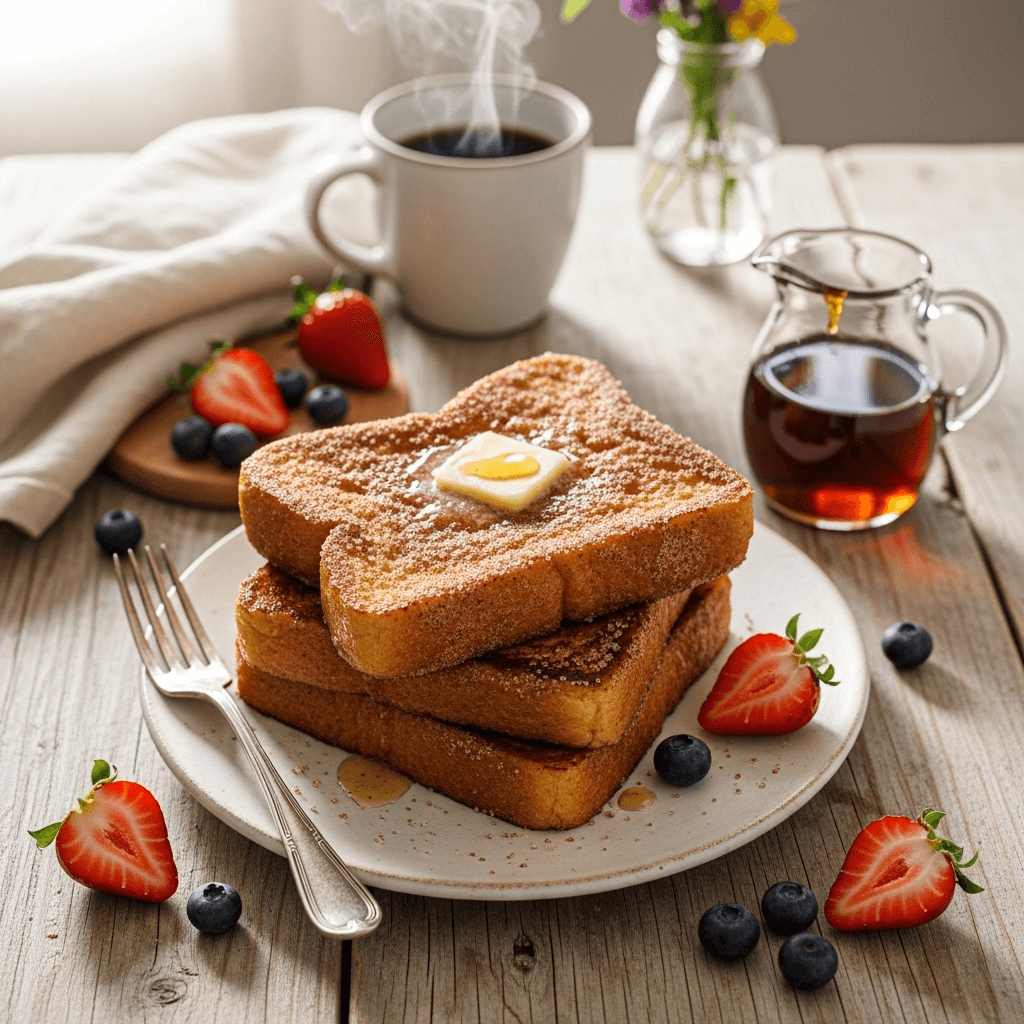

There’s something absolutely magical about waking up to the sweet aroma of cinnamon sugar French toast sizzling in a pan. This classic breakfast favorite transforms simple bread into golden, crispy-on-the-outside, pillowy-soft-on-the-inside slices of pure comfort. Whether you’re planning a special weekend brunch, celebrating a birthday morning, or simply treating yourself to a cozy breakfast at home, this easy cinnamon sugar French toast recipe delivers restaurant-quality results every single time.
What makes this recipe so beloved is its perfect balance of sweetness and warmth from the cinnamon, combined with that irresistible caramelized exterior. It’s the kind of breakfast that turns ordinary mornings into special occasions, and it’s surprisingly simple to make—even on busy weekday mornings. Serve it for Mother’s Day brunch, holiday breakfasts, lazy Sunday mornings, or anytime you want to make someone feel truly special. Trust me, once you master this classic cinnamon French toast, it’ll become your go-to recipe for impressing family and guests alike.
History / Background
French toast has a fascinating history that spans centuries and continents, proving that delicious ideas truly stand the test of time. Despite its name, French toast didn’t actually originate in France. The earliest known reference dates back to ancient Rome, where a similar dish called “Pan Dulcis” appeared in a cookbook from the 4th or 5th century. Romans would soak bread in a mixture of milk and eggs before frying it—sound familiar?
The dish made its way through medieval Europe, where it was known by various names including “pain perdu” in France, which translates to “lost bread.” This name perfectly captures the original purpose of the dish: to rescue stale bread that might otherwise be thrown away. In those times, wasting food wasn’t an option, and transforming day-old bread into something delicious was both practical and economical.
The term “French toast” became popular in America in the 17th century, though some food historians suggest it may have been named after Joseph French, an Albany innkeeper who created the dish in 1724. Whether this story is true or merely legend, French toast has been a breakfast staple in American homes for generations. The addition of cinnamon sugar—a sweet, warming spice combination—became particularly popular in American kitchens, elevating the dish from a simple way to use leftover bread to a truly indulgent breakfast treat.
Today, cinnamon sugar French toast represents comfort food at its finest, combining old-world resourcefulness with modern breakfast luxury. It’s a dish that connects us to centuries of home cooks who understood that simple ingredients, when prepared with care, can create something truly extraordinary.
Why You’ll Love This Recipe
This isn’t just any French toast recipe—it’s the one you’ll make again and again because it delivers perfectly every single time. The combination of cinnamon and sugar creates a delightful crust that caramelizes beautifully in the pan, while the inside stays tender and custardy. It’s the perfect balance of textures and flavors that makes each bite absolutely irresistible.
Here’s why this cinnamon sugar French toast will become your new breakfast favorite:
- Super Quick & Easy – Ready in just 20 minutes from start to finish, making it perfect for busy mornings or last-minute brunches
- Budget-Friendly – Uses simple pantry staples you probably already have on hand, with no expensive or hard-to-find ingredients
- Kid-Approved – Children absolutely love the sweet cinnamon flavor, making breakfast time stress-free and enjoyable
- Customizable – Easily adapt the recipe to suit dietary needs or personal preferences with simple substitutions
- Perfect for Meal Prep – Make a big batch and freeze portions for quick weekday breakfasts throughout the month
- Impressive Presentation – Looks and tastes like something from a fancy brunch restaurant, but costs a fraction of the price
- Foolproof Method – Even beginner cooks can achieve professional-level results with these clear, tested instructions
- Versatile Serving Options – Dress it up with fresh berries and whipped cream for special occasions, or keep it simple with maple syrup for everyday enjoyment
Ingredient Notes
Understanding your ingredients is the first step to making exceptional cinnamon sugar French toast. Let’s break down each component and why it matters for achieving that perfect golden, flavorful result.
Bread – The foundation of your French toast. Thick-cut bread (about ¾ to 1 inch thick) works best because it can absorb the egg mixture without falling apart. Brioche and challah are top choices for their rich, slightly sweet flavor and sturdy texture. Texas toast, French bread, and sourdough also work beautifully. Day-old bread is actually preferable because it’s slightly drier and soaks up the custard mixture better without becoming soggy. Avoid using fresh, soft sandwich bread as it tends to disintegrate.
Eggs – The protein that binds everything together and creates that custardy interior. Large eggs are standard for this recipe. They provide structure and richness. For a fluffier texture, you can separate the eggs and whip the whites before folding them into the mixture, though this isn’t necessary for excellent results.
Milk – Adds moisture and helps create a smooth custard. Whole milk provides the richest flavor and best texture, but 2% milk works well too. For extra indulgence, substitute half-and-half or add a splash of heavy cream. Non-dairy alternatives like almond milk, oat milk, or coconut milk work perfectly for dairy-free versions.
Cinnamon – The star spice that gives this dish its signature warmth and aroma. Ground cinnamon adds sweet, woody notes that complement the sugar perfectly. Ceylon cinnamon is slightly sweeter and more delicate, while Cassia cinnamon (the common grocery store variety) has a stronger, spicier flavor. Either works beautifully.
Granulated Sugar – Sweetens the egg mixture and creates a caramelized coating when it hits the hot pan. Regular white sugar works perfectly, but you can experiment with coconut sugar for a deeper, more caramel-like flavor.
Vanilla Extract – A small amount adds depth and aromatic sweetness. Pure vanilla extract is always preferred over imitation for the best flavor.
Butter – Used for cooking the French toast, butter adds rich flavor and helps achieve that golden, crispy exterior. Use unsalted butter so you can control the salt level. For a neutral option, vegetable oil or coconut oil works, but you’ll miss that classic buttery flavor.
Salt – Just a pinch enhances all the other flavors and balances the sweetness. Don’t skip it!
Cinnamon Sugar Topping – A simple mixture of cinnamon and sugar sprinkled on top while the French toast is still warm. This creates an extra layer of sweetness and a delightful sugary crust.
Equipment Needed
Having the right tools makes preparing cinnamon sugar French toast easier and more enjoyable. Here’s everything you’ll need:
- Shallow Dish or Wide Bowl – For mixing and soaking the bread. A pie dish or 9×13 baking dish works perfectly.
- Whisk or Fork – To thoroughly combine the eggs, milk, and spices into a smooth mixture.
- Large Non-Stick Skillet or Griddle – A 10 or 12-inch pan allows you to cook multiple slices at once. Non-stick coating prevents sticking and ensures even browning.
- Spatula – A wide, flat spatula makes flipping the French toast easy without breaking the slices.
- Measuring Cups and Spoons – For accurate measurements of ingredients.
- Small Bowl – For mixing the cinnamon sugar topping.
- Plate or Tray – To hold the cooked French toast if working in batches.
- Oven (Optional) – If making a large batch, you can keep finished slices warm in a 200°F oven while cooking the rest.

Cinnamon Sugar French Toast Recipe
- Total Time: 20 minutes
- Yield: 4 servings (8 slices) 1x
- Diet: Vegetarian
Description
Classic cinnamon sugar French toast with a perfectly crispy, caramelized exterior and a soft, custardy center. This easy breakfast recipe uses simple ingredients to create a restaurant-quality dish that’s ready in just 20 minutes. Perfect for weekend brunch or special morning celebrations.
Ingredients
For the French Toast:
- 8 slices thick-cut bread (brioche, challah, or Texas toast)
- 4 large eggs
- ⅔ cup whole milk
- 2 tablespoons granulated sugar
- 1 teaspoon ground cinnamon
- 1 teaspoon vanilla extract
- ¼ teaspoon salt
- 2–3 tablespoons unsalted butter (for cooking)
For the Cinnamon Sugar Topping:
- ¼ cup granulated sugar
- 1 tablespoon ground cinnamon
For Serving:
- Maple syrup
- Powdered sugar (optional)
- Fresh berries (optional)
- Whipped cream (optional)
Instructions
- Prepare the Cinnamon Sugar Topping: In a small bowl, mix together ¼ cup sugar and 1 tablespoon cinnamon. Set aside for sprinkling on the finished French toast.
- Make the Custard Mixture: In a shallow dish or wide bowl, whisk together the eggs, milk, 2 tablespoons sugar, 1 teaspoon cinnamon, vanilla extract, and salt until well combined and slightly frothy. Make sure no streaks of egg white remain.
- Heat the Pan: Place a large non-stick skillet or griddle over medium heat. Add 1 tablespoon of butter and let it melt, swirling to coat the bottom of the pan evenly.
- Soak the Bread: Working with one or two slices at a time, dip each slice of bread into the egg mixture. Let it soak for about 20-30 seconds per side, ensuring the bread is well-coated but not so saturated that it falls apart. The bread should absorb the mixture but still hold its shape.
- Cook the French Toast: Place the soaked bread slices in the hot buttered pan. Cook for 2-3 minutes on the first side, or until golden brown and slightly crispy. Flip carefully with a spatula and cook for another 2-3 minutes on the second side until golden brown.
- Add Cinnamon Sugar: Immediately after removing each slice from the pan, sprinkle the cinnamon sugar mixture generously over the top while the French toast is still hot. The residual heat will help the sugar adhere and slightly melt.
- Continue Cooking: Repeat the process with the remaining bread slices, adding more butter to the pan as needed between batches.
- Serve Warm: Serve the cinnamon sugar French toast immediately while hot, with maple syrup, powdered sugar, fresh berries, or your favorite toppings.
Notes
- Bread Choice: Day-old bread works better than fresh bread because it’s slightly drier and absorbs the egg mixture without becoming too soggy.
- Temperature Control: Medium heat is key. Too high and the outside will burn before the inside cooks through; too low and you won’t get that beautiful golden caramelization.
- Soaking Time: Don’t over-soak the bread or it will fall apart. A quick 20-30 seconds per side is sufficient for thick-cut bread.
- Keeping Warm: If making a large batch, keep finished slices warm in a 200°F oven on a baking sheet while you cook the rest.
- Make It Dairy-Free: Substitute almond milk, oat milk, or coconut milk for the dairy milk, and use coconut oil or vegan butter for cooking.
- Prep Time: 10 minutes
- Cook Time: 10 minutes
- Category: Breakfast
- Method: Stovetop
- Cuisine: American
Nutrition
- Serving Size: 2 slices
- Calories: 385
- Sugar: 24g
- Sodium: 420mg
- Fat: 14g
- Saturated Fat: 7g
- Unsaturated Fat: 5g
- Trans Fat: 0g
- Carbohydrates: 52g
- Fiber: 3g
- Protein: 12g
- Cholesterol: 205mg
Tips & Variations
One of the best things about cinnamon sugar French toast is how easily you can customize it to suit your preferences or dietary needs. Here are some delicious ways to make this recipe your own:
Stuffed French Toast – Create a pocket in thick bread slices and fill with cream cheese, Nutella, peanut butter, or fresh berries before dipping in the egg mixture. This turns your French toast into an extra-decadent treat.
Healthier Version – Use whole wheat bread, reduce the sugar to 1 tablespoon, and substitute half the milk with mashed banana for natural sweetness. You can also use egg whites instead of whole eggs to reduce cholesterol.
Extra Crispy – After dipping in the egg mixture, coat the bread in crushed cornflakes or panko breadcrumbs before cooking. This creates an incredibly crunchy exterior.
Pumpkin Spice French Toast – Add ¼ cup pumpkin puree and ½ teaspoon pumpkin pie spice to the egg mixture for a fall-inspired twist. Perfect for autumn mornings!
Chocolate Lover’s Version – Mix 1 tablespoon cocoa powder into the egg mixture and top with chocolate chips, chocolate sauce, or Nutella. Kids absolutely love this variation.
Savory French Toast – Omit the sugar and cinnamon from the egg mixture and add ¼ teaspoon black pepper, ¼ teaspoon garlic powder, and fresh herbs instead. Serve with bacon, cheese, and avocado for a savory breakfast option.
Coconut French Toast – Add ½ cup shredded coconut to the cinnamon sugar topping and use coconut milk in the custard mixture. Top with toasted coconut flakes and tropical fruit.
Vegan Version – Replace eggs with a mixture of ¼ cup flaxseed meal and ¾ cup water (let sit for 5 minutes to thicken). Use plant-based milk and vegan butter for cooking.
Pro Chef Tips
Want to take your cinnamon sugar French toast from good to absolutely outstanding? These professional techniques will help you achieve restaurant-quality results every time:
Use Stale or Day-Old Bread – Fresh bread contains too much moisture and can become soggy when soaked in the egg mixture. Bread that’s a day or two old has dried out slightly, allowing it to absorb the custard perfectly without falling apart. If you only have fresh bread, lay the slices out on a baking sheet for 30-60 minutes to dry out slightly, or toast them lightly in a 250°F oven for 10 minutes.
Create a Proper Custard Ratio – The ideal ratio is approximately 1 egg to 3 tablespoons of milk. This creates a custard that’s rich enough to coat the bread but not so thick that it won’t absorb properly. Whisk vigorously until the mixture is completely homogeneous with no streaks of egg white visible.
Control Your Heat Precisely – Medium heat (around 300-325°F if your pan has a temperature indicator) is the sweet spot. This allows the inside to cook through and become custardy while the outside develops a beautiful golden-brown caramelization. If your pan is too hot, the outside will burn before the center cooks. Too cool, and you’ll get pale, soggy French toast.
Don’t Crowd the Pan – Leave at least an inch of space between slices. Overcrowding lowers the pan temperature and creates steam, which prevents proper browning. Cook in batches if necessary for the best results.
Add a Touch of Cream for Extra Richness – Replace 2 tablespoons of the milk with heavy cream for an ultra-luxurious, creamy interior. This small addition makes a noticeable difference in richness and flavor.
Let the Sugar Caramelize – Don’t rush to flip too early. Wait until you see the edges starting to turn golden brown and the sugar in the custard begins to caramelize. This usually takes a full 2-3 minutes per side.
Finish in the Oven for Thick Slices – If using very thick bread (1.5 inches or more), cook both sides until golden in the pan, then transfer to a 350°F oven for 5 minutes to ensure the center cooks through without burning the exterior.
Use Clarified Butter for Higher Heat – Regular butter contains milk solids that can burn at higher temperatures. Clarified butter (or ghee) has a higher smoke point, allowing you to achieve better browning without burning. Alternatively, use half butter and half neutral oil.
Common Mistakes to Avoid
Even a simple recipe like French toast can go wrong if you’re not careful. Here are the most common mistakes home cooks make and how to avoid them:
Using Bread That’s Too Thin – Thin sandwich bread becomes soggy and falls apart easily. Always choose bread that’s at least ¾ inch thick. Texas toast, brioche, challah, and thick-cut French bread are your best options for French toast that holds together beautifully.
Over-Soaking the Bread – Leaving the bread in the egg mixture for too long results in soggy, falling-apart French toast. The sweet spot is 20-30 seconds per side for thick bread. You want the bread well-coated and slightly absorbed, but it should still hold its shape firmly when you lift it.
Cooking at Too High Heat – This is the number one mistake! High heat burns the outside before the inside cooks through, leaving you with a charred exterior and raw, eggy center. Always use medium heat and be patient. Good French toast takes time to develop that perfect golden crust.
Not Mixing the Custard Thoroughly – Streaks of egg white in your mixture lead to uneven coating and pieces of cooked egg white on your finished French toast. Whisk vigorously until the mixture is completely uniform and slightly frothy.
Forgetting to Season the Custard – The pinch of salt might seem insignificant, but it’s crucial for balancing the sweetness and enhancing all the other flavors. Never skip the salt!
Flipping Too Often or Too Early – Resist the urge to peek and flip constantly. Let each side cook undisturbed for the full 2-3 minutes. Flipping too early or too often prevents proper browning and caramelization. You should only flip once per side.
Not Adjusting for Different Bread Types – Different breads have different absorption rates. Dense sourdough needs a bit longer to soak than airy brioche. Adjust your soaking time based on your bread choice to avoid either soggy or under-coated French toast.
Storage & Meal Prep
One of the best things about cinnamon sugar French toast is that it stores beautifully, making it perfect for meal prep or saving leftovers. Here’s everything you need to know about keeping your French toast fresh and delicious:
Refrigerator Storage – Let the French toast cool completely to room temperature before storing. Place slices in an airtight container or wrap individually in plastic wrap or aluminum foil. Store in the refrigerator for up to 3-4 days. Separate layers with parchment paper to prevent sticking.
Reheating from Refrigeration – For best results, reheat in a toaster or toaster oven at medium heat until warmed through and slightly crispy again (about 3-4 minutes). You can also reheat in a 350°F oven for 5-7 minutes. Avoid microwaving if possible, as it makes the French toast soggy, but if you must microwave, use 30-second intervals on medium power.
Batch Cooking for the Week – French toast is perfect for Sunday meal prep. Make a double or triple batch, let cool completely, and store in the refrigerator. Each morning, just pop a couple of slices in the toaster for a quick, homemade breakfast that’s ready in minutes.
Room Temperature – French toast should not be left at room temperature for more than 2 hours due to the egg content. Always refrigerate leftovers promptly to ensure food safety.
Make-Ahead & Freezer Notes
Cinnamon sugar French toast is incredibly freezer-friendly, making it one of the best breakfast recipes for busy mornings. Here’s how to prepare ahead:
Freezing Cooked French Toast – This is the best make-ahead method. Cook the French toast completely and let cool to room temperature. Arrange slices in a single layer on a baking sheet and freeze for 1-2 hours until solid. This prevents them from sticking together. Once frozen, transfer to a freezer-safe bag or container, separating layers with parchment paper. Freeze for up to 2-3 months.
Reheating from Frozen – No need to thaw! Pop frozen slices directly into the toaster or toaster oven and heat until warmed through (about 5-6 minutes). For oven reheating, bake at 375°F for 8-10 minutes, flipping halfway through. This method actually produces wonderfully crispy French toast that tastes freshly made.
Freezing the Custard Mixture – You can prepare the egg mixture ahead and freeze it in a freezer-safe container for up to 1 month. Thaw overnight in the refrigerator, whisk well to recombine, and use as directed. This saves prep time on busy mornings.
Pre-Soaked French Toast (Not Recommended for Freezing) – While you can soak bread in the custard mixture the night before and refrigerate until morning, freezing pre-soaked, uncooked French toast doesn’t work well. The texture becomes too soggy and doesn’t cook properly. Always freeze after cooking for best results.
Labeling for Success – When freezing, always label your container with the date and any special notes (like “extra cinnamon” or “made with brioche”). This helps you keep track of what you have and when it was made.
Serving Suggestions
The beauty of cinnamon sugar French toast is its versatility. While it’s absolutely delicious on its own, pairing it with the right accompaniments can transform it from a simple breakfast to a spectacular brunch spread. Here are my favorite ways to serve this classic dish:
Classic Sweet Toppings:
- Pure maple syrup (the real stuff makes a difference!)
- Powdered sugar dusted on top
- Whipped cream or whipped coconut cream
- Fresh berries (strawberries, blueberries, raspberries, or blackberries)
- Sliced bananas with a drizzle of honey
- Caramelized apples or pears with a sprinkle of cinnamon
- Nutella or chocolate hazelnut spread
- Peanut butter or almond butter
- Warm fruit compote or berry sauce
Protein Sides:
- Crispy bacon strips
- Breakfast sausage links or patties
- Canadian bacon or ham slices
- Scrambled eggs or fried eggs
- Smoked salmon for a sweet-savory combination
Fresh & Light Options:
- Mixed fruit salad with mint
- Yogurt parfait with granola
- Fresh orange slices or grapefruit segments
- Green smoothie for a nutritious balance
Beverages to Pair:
- Hot coffee (French press or pour-over)
- Fresh-squeezed orange juice
- Chai latte or spiced tea
- Hot chocolate for a decadent breakfast
- Iced coffee for warm mornings
- Mimosas or Bellinis for adult brunch gatherings
Restaurant-Style Presentation: For an Instagram-worthy presentation, stack 3 slices of French toast slightly offset, dust with powdered sugar, add fresh berries on top, drizzle with maple syrup, and place a small pat of butter on top to slowly melt. Add a sprig of fresh mint for color. Serve on a white plate with the syrup in a small pitcher on the side.
FAQs Section
Q: Can I make French toast ahead of time for a crowd?
A: Absolutely! For serving a large group, cook all the French toast ahead and keep it warm in a 200°F oven on a baking sheet. You can hold it for up to 30 minutes this way. Alternatively, make it the day before, refrigerate, and reheat in the oven at 350°F for 10 minutes before serving. The texture holds up remarkably well.
Q: What’s the best bread for French toast?
A: Thick-cut brioche is my top choice because it’s rich, slightly sweet, and has a tender crumb that soaks up the custard beautifully without falling apart. Challah is a close second with similar qualities. Texas toast (thick-cut white bread) is budget-friendly and works great. French bread and sourdough are excellent for a slightly tangy flavor. Avoid thin sandwich bread as it becomes too soggy.
Q: Why is my French toast soggy in the middle?
A: This usually happens for one of three reasons: the bread was soaked too long, the heat was too high (cooking the outside before the inside), or the bread slices were too thick without finishing in the oven. Use medium heat, don’t soak longer than 30 seconds per side, and if your bread is thicker than 1 inch, finish cooking in a 350°F oven for a few minutes after pan-frying.
Q: Can I make this recipe dairy-free or vegan?
A: Yes! For dairy-free, simply replace the milk with almond milk, oat milk, or coconut milk. For fully vegan French toast, replace the eggs with a flax egg mixture (¼ cup ground flaxseed mixed with ¾ cup water, let sit 5 minutes) or use a commercial egg replacer. The texture will be slightly different but still delicious. Use vegan butter or coconut oil for cooking.
Q: How do I get my French toast crispy instead of soft?
A: Crispy French toast comes from proper technique: use day-old bread (not fresh), don’t over-soak, cook on medium heat with plenty of butter, and don’t flip too early. Let each side develop a golden-brown crust before flipping. Some people also add a tablespoon of melted butter to the egg mixture itself for extra crispiness. Make sure your pan is properly heated before adding the bread.
Q: Can I use egg whites only to make it healthier?
A: You can, but the texture won’t be as rich and custardy. Egg yolks provide fat and flavor that make French toast luxurious. If you want to use only whites, you’ll need about 6-8 egg whites to replace 4 whole eggs, and I’d recommend adding a tablespoon of melted butter to the mixture to compensate for the lost richness.
Q: What’s the difference between French toast and eggy bread?
A: French toast is made with a sweetened custard mixture that includes milk, sugar, vanilla, and spices, creating a dessert-like breakfast. Eggy bread (popular in the UK) is typically just bread dipped in beaten eggs with minimal or no milk and sugar, resulting in a more savory, egg-forward flavor. Both are delicious but serve different purposes—French toast for sweet breakfast, eggy bread for a quick savory meal.
Conclusion
There you have it—everything you need to make the most incredible cinnamon sugar French toast right in your own kitchen! This classic breakfast recipe proves that simple ingredients, when prepared with care and attention, can create something truly special. The combination of crispy, caramelized edges, soft custardy centers, and that irresistible cinnamon-sugar coating makes every bite absolutely magical.
Whether you’re treating yourself to a leisurely weekend breakfast, impressing guests at brunch, or creating special memories with your family over a delicious morning meal, this easy French toast recipe delivers every single time. And with the make-ahead and freezer options, you can enjoy homemade French toast even on the busiest weekday mornings.
I’d love to hear how your cinnamon sugar French toast turns out! Did you try any of the variations? What toppings did you use? Leave a comment below sharing your experience, and don’t forget to rate the recipe. If you loved this recipe as much as I do, please share it on Pinterest so other home cooks can discover it too. Your pins help support this blog and allow me to keep creating delicious, tested recipes for you.
Happy cooking, and here’s to many cozy mornings filled with the sweet aroma of cinnamon French toast!