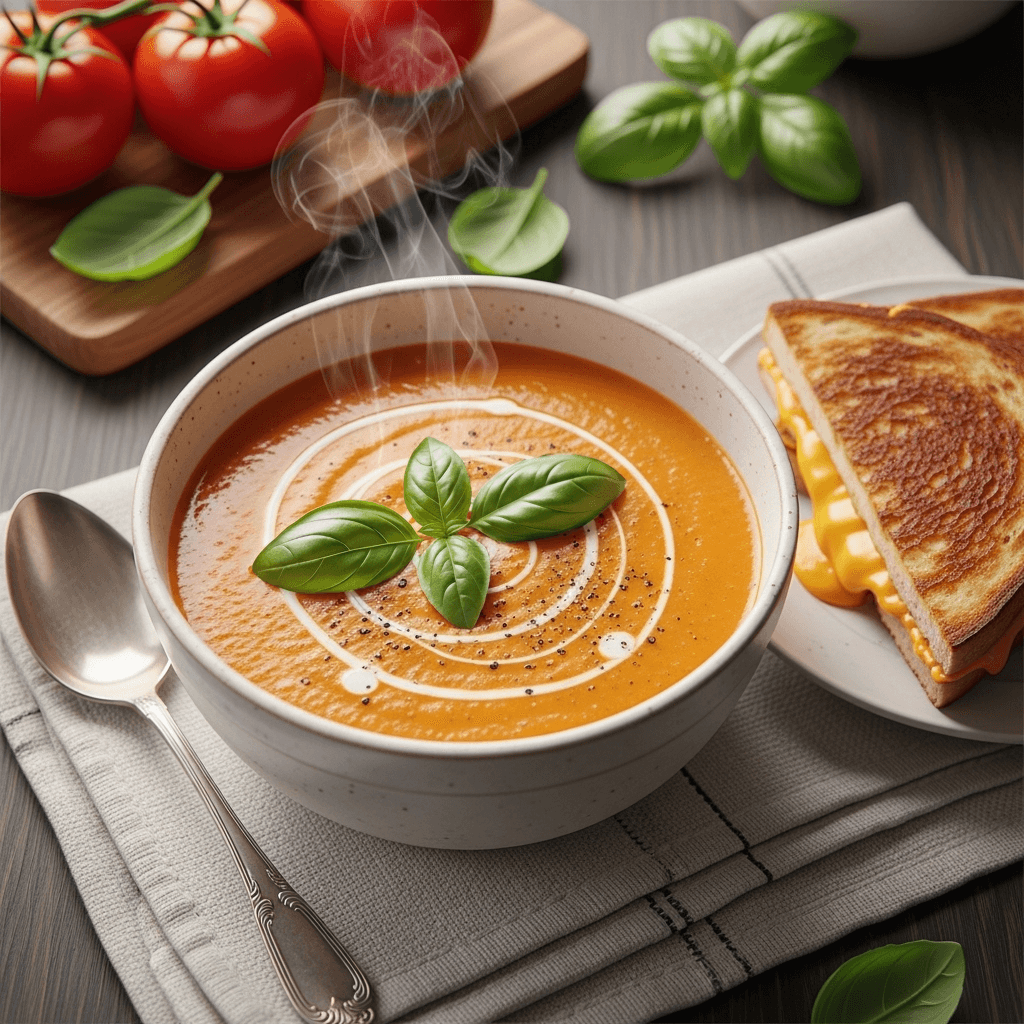

There’s something magical about a bowl of rich, velvety tomato soup that instantly transports you back to childhood. This homemade tomato soup recipe is everything you want comfort food to be: creamy, flavorful, and incredibly satisfying. Whether you’re pairing it with a grilled cheese sandwich on a rainy afternoon or serving it as an elegant starter for dinner guests, this easy tomato soup from scratch hits all the right notes.
Unlike the canned versions you grew up with, this creamy tomato basil soup is made with simple, wholesome ingredients that come together in under 45 minutes. The secret? Fresh tomatoes (or quality canned ones), aromatic garlic, fragrant basil, and just the right amount of cream to create that restaurant-quality silkiness. This recipe has become my go-to for cozy weeknight dinners, sick-day comfort meals, and even elegant entertaining. Once you taste homemade tomato soup, you’ll never go back to the can.
History / Background
Tomato soup has a fascinating culinary journey that spans continents and centuries. While tomatoes originated in South America and were brought to Europe by Spanish explorers in the 16th century, it took quite some time for Europeans to embrace them in cooking. Initially considered poisonous ornamental plants, tomatoes didn’t become a staple in European cuisine until the 18th century.
The tomato soup we know and love today has its roots in both European and American culinary traditions. In the Mediterranean, particularly in Spain and Italy, tomato-based soups and gazpachos became popular as tomatoes were incorporated into regional cooking. However, the creamy, smooth tomato soup that Americans adore was largely popularized in the United States in the late 1800s.
The iconic moment for tomato soup came in 1897 when Joseph A. Campbell Company employee John T. Dorrance invented condensed tomato soup. This convenient, affordable product became an instant success and transformed tomato soup into an American pantry staple. The pairing of tomato soup and grilled cheese sandwiches became a cultural phenomenon, particularly during the Great Depression when both were economical and filling.
Today, homemade tomato soup represents a return to wholesome, from-scratch cooking. While the canned version holds nostalgic value, modern home cooks are rediscovering the superior flavor and nutrition of tomato soup made with fresh ingredients. This recipe honors that tradition while making it accessible for busy home cooks who want restaurant-quality results without complicated techniques.
Why You’ll Love This Recipe
This isn’t just another tomato soup recipe. This is the creamy tomato soup that will become your family’s most-requested comfort meal. After years of testing different variations, I’ve perfected this recipe to deliver maximum flavor with minimal fuss.
The beauty of this homemade version is that you control every ingredient, which means no preservatives, no high-fructose corn syrup, and no mysterious additives. Just pure, wholesome ingredients that create a soup so delicious, you’ll find yourself making it weekly during tomato season (and honestly, year-round when you use quality canned tomatoes).
Here’s why this recipe will become your favorite:
- Ready in 45 minutes – Perfect for busy weeknights when you want something comforting but don’t have hours to spend in the kitchen
- Budget-friendly – Uses affordable pantry staples and simple fresh ingredients that won’t break the bank
- Kid-approved – Even picky eaters love the smooth, creamy texture and familiar flavors
- Naturally vegetarian – Easily adaptable to vegan diets by swapping the cream for coconut milk or cashew cream
- Freezer-friendly – Make a double batch and freeze portions for easy future meals
- Restaurant-quality taste – Tastes like you ordered it from a fancy bistro, but costs a fraction of the price
- Customizable – Easy to adjust the spice level, creaminess, and flavor profile to suit your family’s preferences
- Pairs perfectly with anything – The ultimate companion for grilled cheese, but also delicious with crusty bread, crackers, or a fresh salad
Ingredient Notes
The magic of great tomato soup lies in using quality ingredients and understanding their roles. Here’s what you’ll need and why each component matters:
Tomatoes – The star of the show! You can use fresh tomatoes when they’re in season (late summer is best) or high-quality canned tomatoes year-round. I prefer whole peeled San Marzano tomatoes for their sweet, low-acid flavor and meaty texture. If using fresh, choose ripe, red tomatoes like Roma or beefsteak varieties. In a pinch, fire-roasted canned tomatoes add a wonderful smoky depth.
Onion & Garlic – These aromatics form the flavor foundation. Yellow onions provide sweetness, while garlic adds that essential savory note. Don’t skip the sautéing step as this caramelization process develops rich, complex flavors. Shallots can substitute for onions for a more delicate taste.
Tomato Paste – This concentrated form of tomatoes intensifies the tomato flavor and adds body to the soup. Cooking it briefly with the aromatics removes any tinny taste and deepens its flavor. No substitution really compares, but you can add an extra half-cup of crushed tomatoes if necessary.
Vegetable or Chicken Broth – Provides depth and the right consistency. Vegetable broth keeps it vegetarian, while chicken broth adds savory richness. Use low-sodium versions so you can control the salt level. In a pinch, use water with a bouillon cube.
Heavy Cream – Creates that luxurious, velvety texture we all crave. For a lighter version, use half-and-half. For dairy-free, coconut cream or cashew cream work beautifully. You can also use a splash of whole milk, though it won’t be quite as rich.
Fresh Basil – The classic herb pairing with tomatoes! Fresh basil adds brightness and a slight peppery note that dried basil simply can’t replicate. If you don’t have fresh, use dried Italian seasoning, but add fresh basil as garnish if possible.
Butter & Olive Oil – Using both creates the best flavor. Butter adds richness while olive oil provides fruity notes and prevents the butter from burning. For dairy-free, use all olive oil or vegan butter.
Sugar – Just a touch balances the acidity of tomatoes. This is a common restaurant trick! You can use honey or a pinch of baking soda as alternatives.
Salt & Pepper – Essential for bringing out all the flavors. Always taste and adjust at the end of cooking.
Equipment Needed
You don’t need fancy equipment to make incredible tomato soup. Here’s what you’ll use:
- Large pot or Dutch oven (4-6 quart capacity) – For building flavor and simmering the soup
- Immersion blender – The easiest way to puree the soup right in the pot (my preferred method)
- Standard blender or food processor – Alternative to immersion blender; creates a super-smooth texture
- Wooden spoon or silicone spatula – For stirring and scraping
- Sharp knife – For chopping onions, garlic, and tomatoes
- Cutting board – Standard prep work
- Measuring cups and spoons – For accurate measurements
- Ladle – For serving
- Fine-mesh strainer (optional) – If you want an ultra-smooth, restaurant-style soup

Tomato Soup Recipe
- Total Time: 45 minutes
- Yield: 6 servings 1x
- Diet: Vegetarian
Description
This creamy homemade tomato soup is rich, comforting, and ready in just 45 minutes. Made with simple ingredients like tomatoes, garlic, basil, and cream, it’s the perfect cozy meal paired with grilled cheese or crusty bread.
Ingredients
- 2 tablespoons butter
- 2 tablespoons olive oil
- 1 large yellow onion, diced (about 1½ cups)
- 4 cloves garlic, minced
- 3 tablespoons tomato paste
- 1 (28-ounce) can whole peeled tomatoes with juices (San Marzano preferred)
- 1 (14-ounce) can crushed tomatoes
- 3 cups vegetable or chicken broth (low-sodium)
- 1 teaspoon granulated sugar
- 1 teaspoon dried oregano
- ½ teaspoon red pepper flakes (optional)
- ¼ cup fresh basil leaves, plus more for garnish
- ¾ cup heavy cream
- Salt and black pepper to taste
- Freshly grated Parmesan cheese for serving (optional)
Instructions
- Sauté the aromatics: In a large pot or Dutch oven, heat the butter and olive oil over medium heat. Once the butter melts, add the diced onion and cook for 5-7 minutes, stirring occasionally, until soft and translucent. Add the minced garlic and cook for another minute until fragrant.
- Build the flavor base: Stir in the tomato paste and cook for 2-3 minutes, stirring constantly. This caramelizes the paste and removes any tinny flavor while deepening the tomato taste.
- Add the tomatoes: Pour in the whole peeled tomatoes with their juices, using a wooden spoon to break them up into smaller pieces. Add the crushed tomatoes and stir to combine.
- Add liquids and seasonings: Pour in the broth, then add the sugar, oregano, and red pepper flakes if using. Tear the fresh basil leaves and add them to the pot. Stir everything together.
- Simmer the soup: Bring the mixture to a boil, then reduce heat to low. Cover partially and simmer for 20-25 minutes, stirring occasionally. This allows the flavors to meld together beautifully.
- Blend until smooth: Remove the pot from heat. Using an immersion blender, carefully puree the soup directly in the pot until completely smooth. Alternatively, working in batches, transfer the soup to a regular blender (fill only halfway and hold the lid with a towel) and blend until smooth. Return to the pot.
- Add the cream: Stir in the heavy cream and return the pot to low heat. Warm through for 3-5 minutes, but don’t let it boil. Taste and adjust seasoning with salt and black pepper as needed.
- Serve and enjoy: Ladle the soup into bowls and garnish with fresh basil leaves, a drizzle of cream, freshly cracked black pepper, and grated Parmesan cheese if desired. Serve immediately with crusty bread or grilled cheese sandwiches.
Notes
- For an ultra-smooth, restaurant-style texture, strain the blended soup through a fine-mesh strainer before adding the cream.
- If the soup is too thick, thin it with additional broth or water. If too thin, simmer uncovered for 10 minutes to reduce.
- The soup tastes even better the next day as the flavors continue to develop.
- To make it vegan, substitute coconut cream or cashew cream for the heavy cream and use vegan butter or all olive oil.
- Fresh tomatoes can replace canned: use about 3 pounds of ripe tomatoes, blanched, peeled, and chopped.
- Prep Time: 10 minutes
- Cook Time: 35 minutes
- Category: Soup
- Method: Stovetop
- Cuisine: American
Nutrition
- Serving Size: 1½ cups
- Calories: 245
- Sugar: 9g
- Sodium: 620mg
- Fat: 18g
- Saturated Fat: 9g
- Unsaturated Fat: 7g
- Trans Fat: 0g
- Carbohydrates: 18g
- Fiber: 5g
- Protein: 7g
- Cholesterol: 45mg
Tips & Variations
The beauty of homemade tomato soup is how easily you can customize it to your taste preferences. Here are some delicious ways to make this recipe your own:
Roasted Tomato Soup: Before adding tomatoes to the pot, roast them in the oven at 425°F for 25-30 minutes with garlic cloves and onion wedges. This adds incredible caramelized depth and smoky sweetness.
Spicy Tomato Soup: Double the red pepper flakes or add a diced jalapeño when sautéing the onions. A dash of hot sauce at the end works too!
Tomato Bisque: Increase the heavy cream to 1 cup and add a tablespoon of tomato paste for a richer, more luxurious version.
Chunky Tomato Soup: Skip the blending step or blend only half the soup, leaving the rest chunky for more texture.
Vegan Tomato Soup: Replace butter with olive oil and use full-fat coconut milk or soaked-and-blended cashews instead of cream.
Lighter Version: Use half-and-half or whole milk instead of heavy cream. You can also add a small diced potato for creaminess without dairy.
Herb Variations: Try adding fresh thyme, rosemary, or dill along with the basil for different flavor profiles.
Smoky Version: Add ½ teaspoon smoked paprika and use fire-roasted tomatoes for a campfire-kissed flavor.
Tomato Florentine Soup: Stir in 2 cups of fresh spinach during the last 5 minutes of cooking for added nutrition.
Protein-Packed: Add cooked white beans, chickpeas, or shredded rotisserie chicken for a heartier meal.
Pro Chef Tips
After years of making tomato soup, I’ve picked up some professional tricks that take this dish from good to absolutely incredible:
Balance the acidity: Tomatoes are naturally acidic. The small amount of sugar helps balance this, but you can also add a pinch of baking soda (about ⅛ teaspoon) which neutralizes acid without adding sweetness. Be careful though as it will foam up briefly.
Don’t skip the tomato paste step: Cooking the tomato paste until it darkens slightly (a process called pincage in French cooking) removes the raw, tinny taste and concentrates the tomato flavor. This one step makes a huge difference.
Use San Marzano tomatoes when possible: These Italian plum tomatoes are sweeter, less acidic, and have fewer seeds than other varieties. They’re worth the extra dollar or two for the superior flavor they provide.
Blend while hot but be careful: Hot liquids expand when blended, which is why you should never fill a blender more than halfway. Always hold the lid with a kitchen towel and start on the lowest speed. An immersion blender eliminates this risk entirely.
Temper the cream: If your cream is cold from the refrigerator, let it sit at room temperature for 20 minutes before adding it to the hot soup. This prevents curdling. Alternatively, add a few tablespoons of hot soup to the cream first, whisk, then add the mixture back to the pot.
Season in layers: Add salt at different stages rather than all at once. This builds depth of flavor. Start with a pinch when sautéing onions, add more after adding tomatoes, then taste and adjust at the end.
Fresh basil timing matters: Adding basil early in cooking develops its flavor throughout the soup. Adding fresh basil as garnish at the end provides a bright, fresh contrast. Do both for maximum impact!
Control the texture: For an ultra-silky, restaurant-style soup, strain it through a fine-mesh sieve after blending. This removes any remaining seeds and skin bits. For a rustic version, blend less thoroughly or use a potato masher for a chunkier texture.
Bloom your dried herbs: If using dried basil or oregano, add them to the tomato paste while it’s cooking. The heat releases their essential oils, maximizing flavor.
Finish with fat: A drizzle of quality extra-virgin olive oil or a small pat of butter stirred in just before serving adds richness and makes the soup taste more luxurious.
Common Mistakes to Avoid
Even a simple recipe like tomato soup has pitfalls. Here’s how to avoid the most common ones:
Mistake #1: Using poor-quality tomatoes. Not all canned tomatoes are created equal. Avoid generic brands that use lots of citric acid and have a metallic taste. Invest in good tomatoes like San Marzano, Muir Glen, or Cento. Your soup will only be as good as your tomatoes.
Mistake #2: Not cooking the tomato paste long enough. Raw tomato paste has a harsh, almost metallic flavor. Cook it for at least 2-3 minutes until it darkens a shade and smells sweet and caramelized. This small step prevents that tinny taste many homemade tomato soups have.
Mistake #3: Boiling the soup after adding cream. Once you add dairy, keep the heat low. Boiling causes the cream to separate and curdle, creating an unappetizing grainy texture. Gentle warming is all you need.
Mistake #4: Under-seasoning. Tomatoes need adequate salt to bring out their natural sweetness and depth. Always taste before serving and don’t be shy with the salt. Remember, you can always add more but you can’t take it away.
Mistake #5: Overfilling the blender. This is dangerous! Hot soup expands when blended and can blow the lid off, causing serious burns. Never fill your blender more than halfway with hot liquids, and always hold the lid down with a folded kitchen towel.
Mistake #6: Skipping the aromatics step. Don’t just dump everything in the pot. Properly sautéing the onions and garlic creates a flavor foundation that makes the difference between bland soup and spectacular soup. Take those extra 8 minutes to build flavor properly.
Mistake #7: Not balancing flavors. If your soup tastes flat or too acidic, don’t just add more salt. Try a pinch of sugar, a splash of cream, or a small pat of butter. Sometimes acidity needs sweetness or richness to balance it out.
Storage & Meal Prep
One of the best things about tomato soup is how well it stores, making it perfect for meal prep and batch cooking.
Refrigerator Storage: Allow the soup to cool completely before transferring to airtight containers. Properly stored tomato soup will keep in the refrigerator for 4-5 days. The flavors actually improve overnight as they continue to meld together, so don’t worry if you’re making it ahead.
Reheating Instructions: Reheat tomato soup gently over medium-low heat on the stovetop, stirring occasionally. Avoid high heat which can cause the cream to separate. You can also microwave individual portions in 1-minute intervals, stirring between each, until heated through. If the soup has thickened, thin it with a splash of broth or water.
Freezer Storage: Tomato soup freezes beautifully! However, for best results, freeze the soup before adding the cream. Cool the soup completely, then transfer to freezer-safe containers or heavy-duty freezer bags, leaving an inch of headspace for expansion. Label with the date and freeze for up to 3 months.
Portioning Tips: Freeze the soup in individual portions using freezer-safe mason jars or in larger family-sized portions. Ice cube trays work great for making small portions for kids’ lunches. Just pop out the frozen cubes and transfer to freezer bags.
Thawing and Reheating Frozen Soup: For best texture, thaw overnight in the refrigerator. Reheat in a pot over medium heat, stirring occasionally. Once hot, stir in the fresh cream. If you’re in a hurry, you can reheat from frozen over low heat, adding a splash of broth to prevent scorching. Just be patient and stir frequently.
Meal Prep Strategy: Make a double batch on Sunday and portion it into individual containers for quick lunches throughout the week. Pack with a side of crackers, a small bag of shredded cheese, and some fresh basil for a complete meal.
Make-Ahead & Freezer Notes
Tomato soup is an excellent make-ahead meal that actually benefits from resting time. Here’s how to plan ahead:
Make-Ahead for Same-Day Serving: You can prepare the entire soup up to 8 hours ahead. Complete the recipe through step 6 (after blending), then let it cool and refrigerate. About 30 minutes before serving, reheat gently over medium-low heat and stir in the cream once hot.
Make-Ahead Up to 2 Days: Prepare the soup completely, including the cream, and refrigerate. The soup will thicken as it cools, which is normal. Simply reheat and thin with additional broth if needed.
Freezer-Friendly Method: As mentioned above, the best approach is to freeze the soup before adding cream. Complete steps 1-6, cool completely, and freeze. When ready to serve, thaw, reheat, and stir in fresh cream for the best texture and flavor.
Partial Make-Ahead: You can dice your onions and garlic and store them in the refrigerator up to 2 days ahead. This cuts your actual cooking time down to about 30 minutes.
Reheating from Frozen Without Thawing: If you forgot to thaw your soup, you can still reheat it. Place the frozen soup block in a pot with ¼ cup of broth or water over low heat. Cover and let it slowly melt, stirring occasionally and breaking up the frozen block as it softens. Once completely thawed and hot, stir in fresh cream.
Best Practices for Freezing: Cool soup quickly by placing the pot in an ice bath (a larger bowl filled with ice water). This prevents bacterial growth and preserves quality. Never put hot soup directly into the freezer as it raises the freezer temperature and can compromise other frozen foods.
Serving Suggestions
Tomato soup is incredibly versatile and pairs beautifully with numerous dishes. Here are my favorite ways to serve it:
Classic Combinations:
- Grilled Cheese Sandwich: The ultimate pairing! Use sharp cheddar, Gruyère, or a combination of your favorite melting cheeses on sourdough or white bread.
- Crusty Artisan Bread: Serve with thick slices of warm, crusty bread with butter for dipping. Sourdough, French baguette, or Italian ciabatta all work wonderfully.
- Grilled Cheese Croutons: Cut grilled cheese into cubes and float them in the soup for a fun twist.
Light Meals:
- Caesar Salad: The crisp, tangy salad provides a perfect contrast to the creamy, rich soup.
- Caprese Salad: Fresh mozzarella, tomatoes, and basil with balsamic glaze makes a beautiful Italian-inspired meal.
- Simple Green Salad: Mixed greens with a light vinaigrette keeps things fresh and balanced.
Heartier Options:
- Tomato Soup with Pasta: Stir cooked pasta (especially small shapes like ditalini or orzo) directly into the soup for a heartier meal.
- Panini or Pressed Sandwiches: Any grilled sandwich works beautifully alongside tomato soup.
- Quiche or Frittata: Serve as a starter before a vegetable quiche or frittata for a lovely brunch.
Garnishes That Elevate:
- Freshly grated Parmesan or Pecorino Romano cheese
- A drizzle of extra-virgin olive oil or basil oil
- Crispy bacon bits for a smoky, savory crunch
- Fresh basil leaves, torn or chiffonade
- Homemade or store-bought croutons
- A dollop of pesto swirled into each bowl
- Crème fraîche or sour cream for tanginess
- Freshly cracked black pepper
- Microgreens for an elegant presentation
- Crispy chickpeas for added texture and protein
Drink Pairings:
- Iced tea or lemonade for a casual meal
- Sparkling water with lemon
- Light red wine like Pinot Noir
- Crisp white wine such as Sauvignon Blanc
- Hot apple cider in fall and winter
FAQs Section
Q: Can I use fresh tomatoes instead of canned?
A: Absolutely! You’ll need about 3 pounds of fresh, ripe tomatoes. Roma or beefsteak varieties work best. Blanch them in boiling water for 30 seconds, then transfer to ice water. The skins will slip right off. Core and chop them, then use as directed. Keep in mind that fresh tomatoes are more watery, so you might need to simmer the soup a bit longer to concentrate the flavors. Canned tomatoes are often preferred by professional chefs because they’re picked and processed at peak ripeness, giving consistent results year-round.
Q: How can I make this soup less acidic?
A: There are several tricks! First, add a pinch (about ⅛ teaspoon) of baking soda to the soup after simmering. It will bubble briefly but will neutralize some of the acid. Second, increase the sugar slightly to balance the acidity. Third, using more cream adds richness that mellows the acid. Finally, choosing San Marzano tomatoes makes a big difference as they’re naturally sweeter and less acidic than other varieties. If all else fails, stir in an extra tablespoon of butter at the end.
Q: Why is my tomato soup bitter?
A: Bitterness usually comes from one of three sources. First, the tomato seeds and skins can contribute bitterness, which is why straining the soup helps. Second, burning the garlic or onions makes them bitter, so watch your heat carefully during the sautéing step. Third, some tomato paste brands have a bitter quality, especially when not cooked long enough. Make sure to cook your tomato paste for 2-3 minutes until it darkens slightly. Adding a bit more sugar or cream can also mask minor bitterness.
Q: Can I make this dairy-free?
A: Yes! Replace the butter with olive oil or vegan butter, and use coconut cream, cashew cream, or oat cream instead of heavy cream. For cashew cream, blend ½ cup raw cashews with ¼ cup water until completely smooth. Full-fat coconut milk works wonderfully and doesn’t give the soup a coconut flavor. Some people also use blended white beans or potatoes for creaminess without any dairy.
Q: My soup is too thin. How do I thicken it?
A: The easiest method is to simmer the soup uncovered over medium heat for 10-15 minutes to reduce and concentrate it. You can also add a slurry made from 1 tablespoon cornstarch mixed with 2 tablespoons cold water, then simmer for 5 minutes. Alternatively, blend in a diced cooked potato or stir in a few tablespoons of tomato paste. Some cooks add a slice or two of white bread to the soup before blending, which adds body and a silky texture.
Q: Can I use my Instant Pot or slow cooker?
A: Definitely! For the Instant Pot, sauté the onions and garlic using the sauté function, add the tomato paste and cook for 2 minutes, then add all remaining ingredients except the cream. Pressure cook on high for 10 minutes, then quick release. Blend, then stir in cream. For the slow cooker, sauté your aromatics and tomato paste in a skillet first (this step really matters for flavor), then transfer everything to the slow cooker and cook on low for 4-6 hours or high for 2-3 hours. Blend and add cream at the end.
Q: Why does the cream separate or curdle in my soup?
A: Curdling happens when dairy is exposed to high heat or too much acidity. Always remove the soup from heat before adding cream, or at least reduce to very low heat. Never let the soup boil after adding cream. If your cream is cold from the fridge, it’s more likely to curdle, so let it come to room temperature first. You can also “temper” the cream by mixing a few spoonfuls of hot soup into it before adding it all to the pot. Using heavy cream rather than milk or half-and-half also helps since the higher fat content is more stable.
Q: How do I make this soup taste like restaurant tomato soup?
A: Professional tomato soup has a few secrets. First, chefs always strain the soup after blending for an ultra-smooth texture. Second, they balance flavors carefully: sweetness (sugar), acidity (tomatoes), richness (cream and butter), and saltiness. Third, they finish with quality extra-virgin olive oil and fresh garnishes. Fourth, they use San Marzano tomatoes and take the time to properly caramelize the tomato paste. Finally, many restaurants add a small amount of white wine or sherry during cooking for depth, and finish with a pinch of white pepper for subtle heat.
Conclusion
There you have it—the ultimate homemade tomato soup recipe that’s destined to become a staple in your kitchen! Whether you’re looking for a comforting lunch on a chilly day, an impressive starter for dinner guests, or the perfect companion to your grilled cheese sandwich, this creamy tomato soup delivers every single time.
The beauty of this recipe is how it combines simplicity with incredible flavor. You don’t need fancy techniques or hard-to-find ingredients—just quality tomatoes, fresh aromatics, and a little cream to create something truly special. Once you experience how much better homemade tastes compared to canned, there’s simply no going back.
I hope you love this recipe as much as my family does. It’s one of those dishes that makes your house smell amazing, warms you from the inside out, and reminds you why home cooking is so special. The best part? You can customize it endlessly to suit your taste preferences and dietary needs.
I’d absolutely love to hear how your tomato soup turns out! Did you add any special touches? Did your kids ask for seconds? Are you Team Grilled Cheese or Team Crusty Bread for dipping? Leave a comment below sharing your experience—I read every single one and love connecting with fellow home cooks.
If you enjoyed this recipe, please consider pinning it to your favorite Pinterest board so you can find it easily next time! Share it with friends who would love a cozy bowl of comfort, and don’t forget to snap a photo of your beautiful creation. Tag me on social media—I love seeing your cooking adventures!
Now grab that pot, gather your ingredients, and get ready to make the most comforting bowl of tomato soup you’ve ever tasted. Your kitchen (and your family) will thank you!
Happy cooking, friends! 🍅